After seven years sitting dormant, one of Victoria’s grandest coastal hotels is back – and it’s more glamorous than ever.
The Bellarine Peninsula has long delivered beachy charm, historic piers and low-key summer escapes. But now it has something new to boast about: the return of a heritage-listed grande dame that once welcomed Melbourne’s elite by paddle steamer.
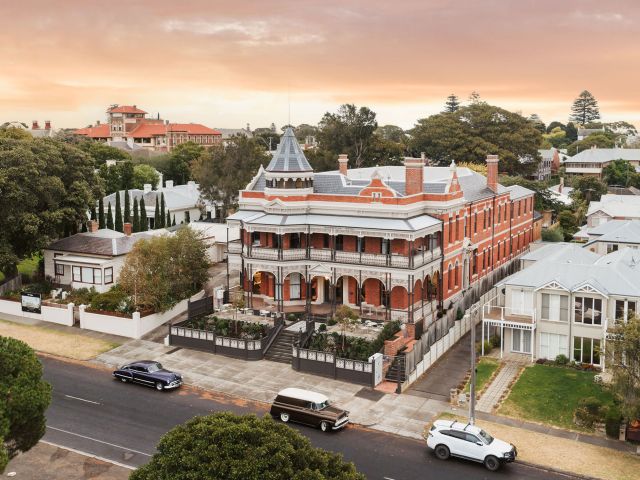
First established in 1888, The Queenscliff Hotel will reopen in March following an extensive three-year restoration, transforming the landmark into a boutique luxury destination while carefully preserving its architectural soul.
And if the photos are anything to go by, this is not just a refresh. It’s a full-scale revival.
A sleeping beauty, reawakened
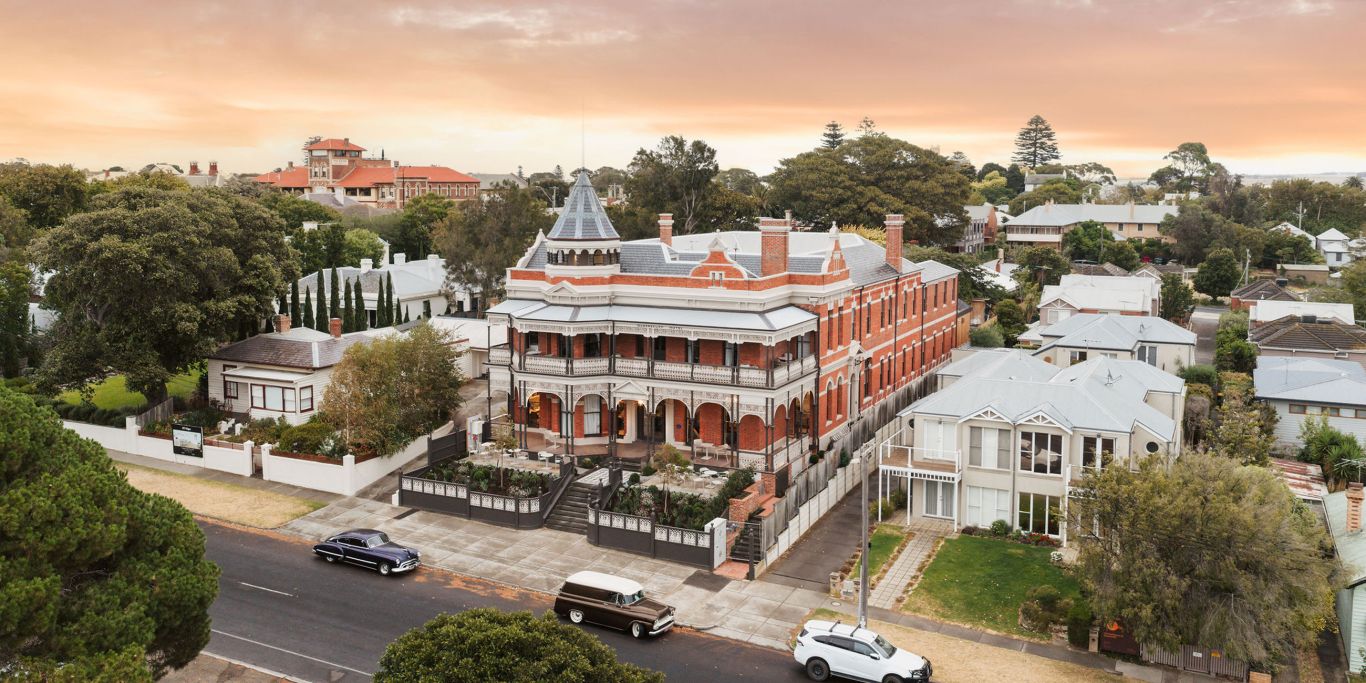
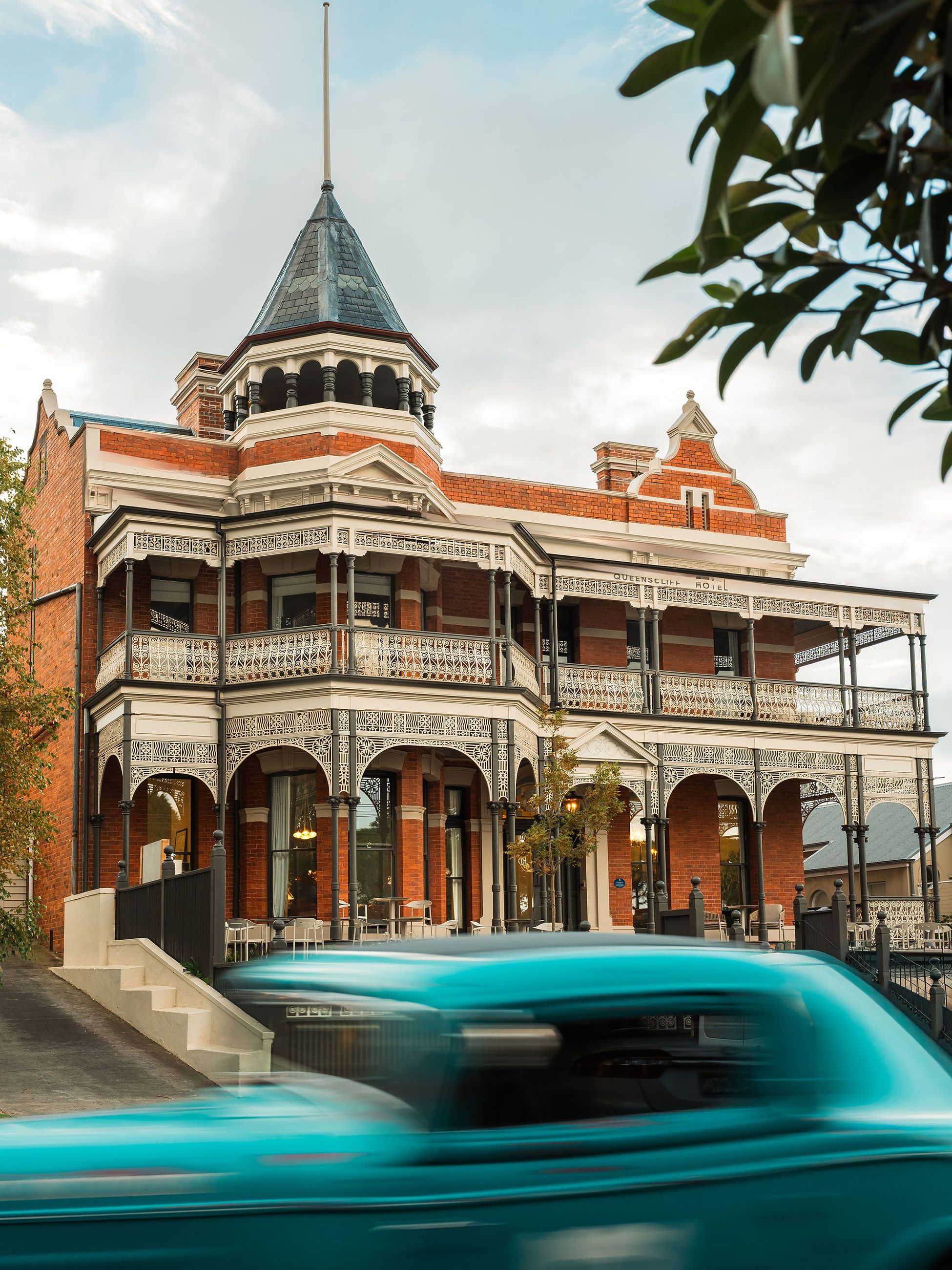
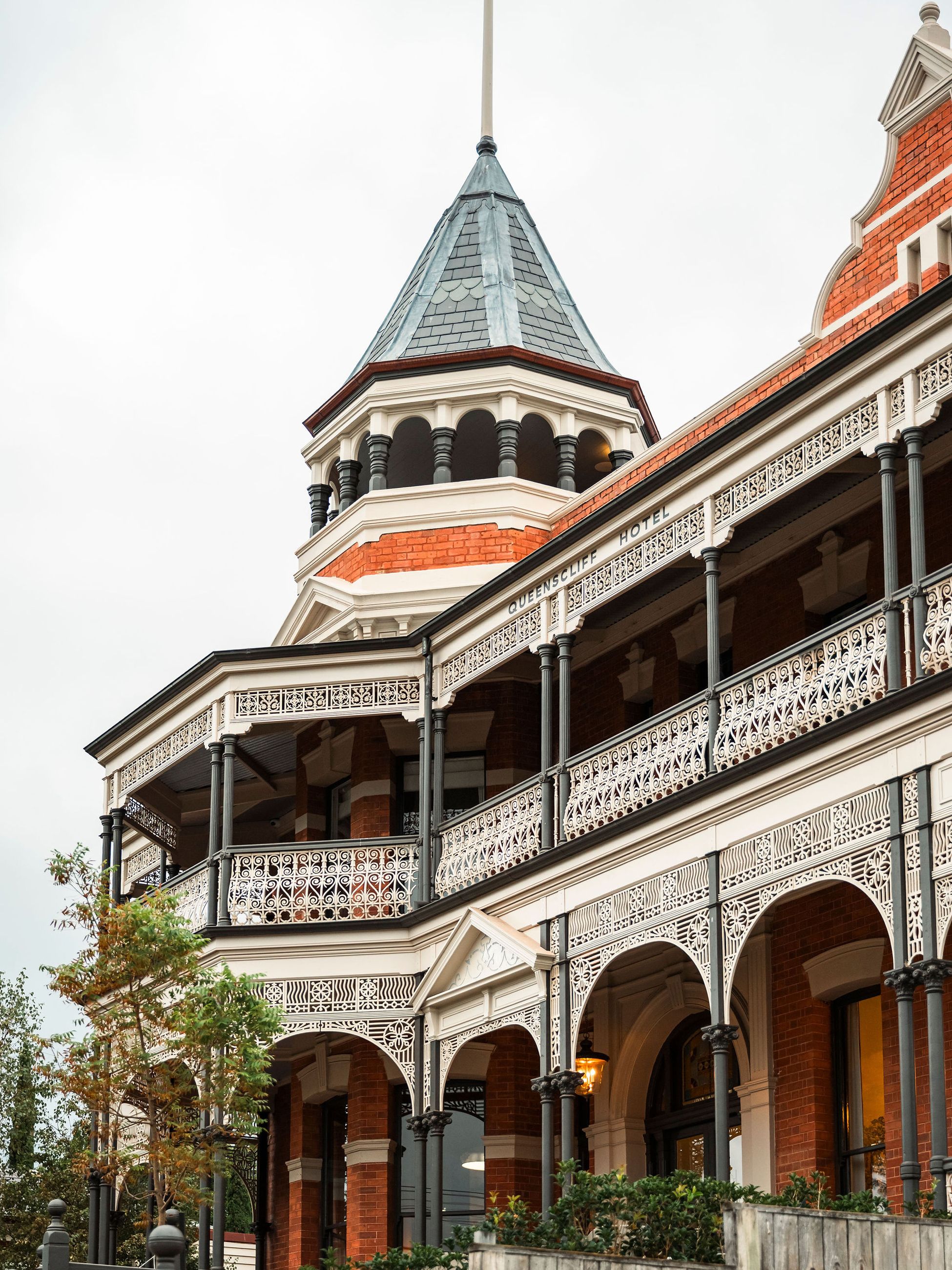
Perched in the heart of Queenscliff, the hotel stood empty for seven years, slowly slipping into disrepair. For locals, it was a sad sight: a heritage icon with a turreted tower and ornate ironwork, waiting for someone to bring it back to life.
That someone turned out to be Rob and Tammy Charter, former Queensland avocado farmers with hospitality backgrounds, who purchased the property in December 2022 as their first restoration project. What followed was a meticulous three-year overhaul in consultation with Heritage Victoria and the Borough of Queenscliff, with restoration works led by Matt Wilson from Geelong-based Built by Wilson, architectural and interior design by Melbourne’s MOLECULE Studio and landscaping by InStyle Gardens.
The Queenscliff Hotel stood empty for seven years. (Credit: Neisha Breen Photography)
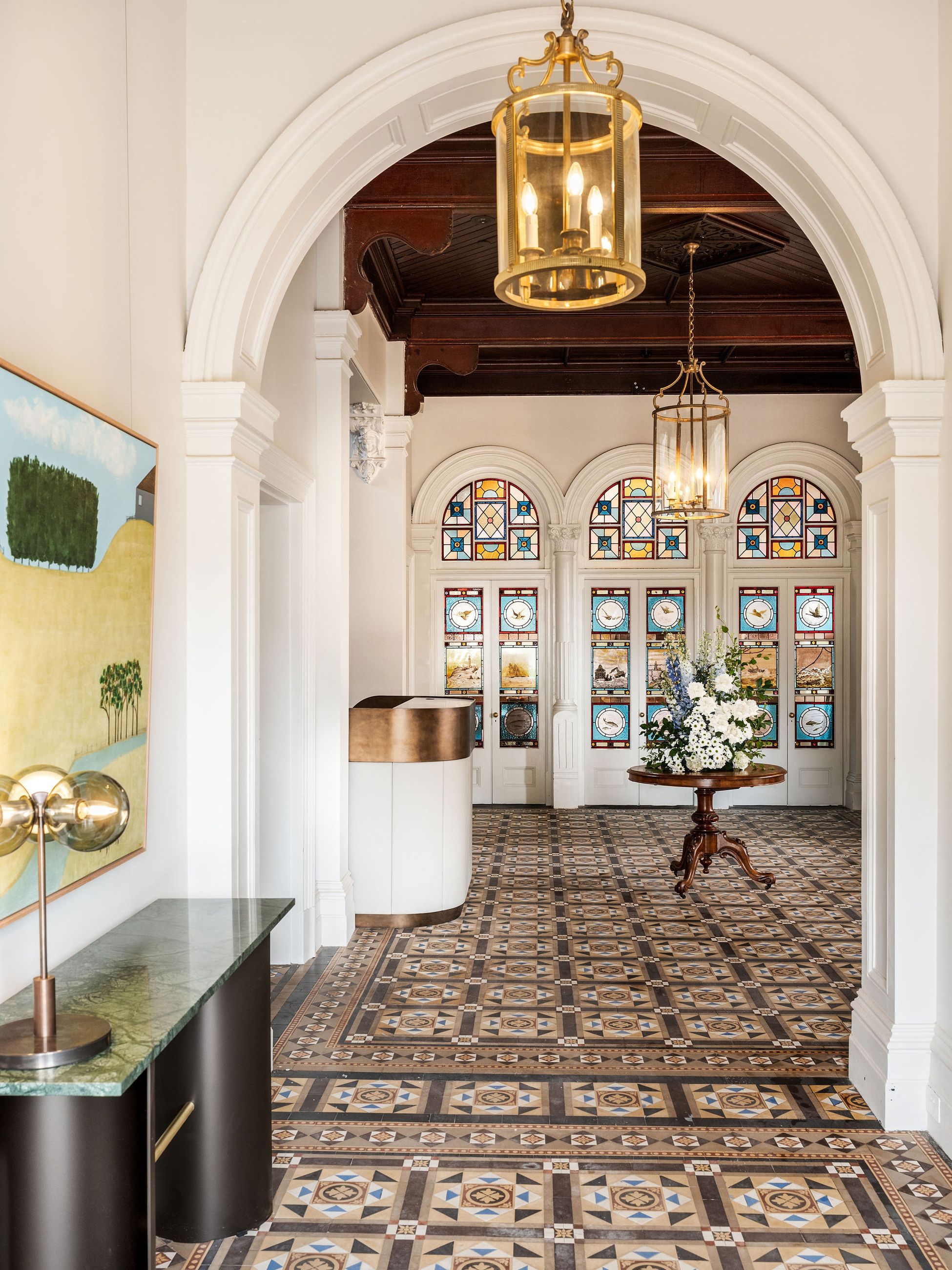
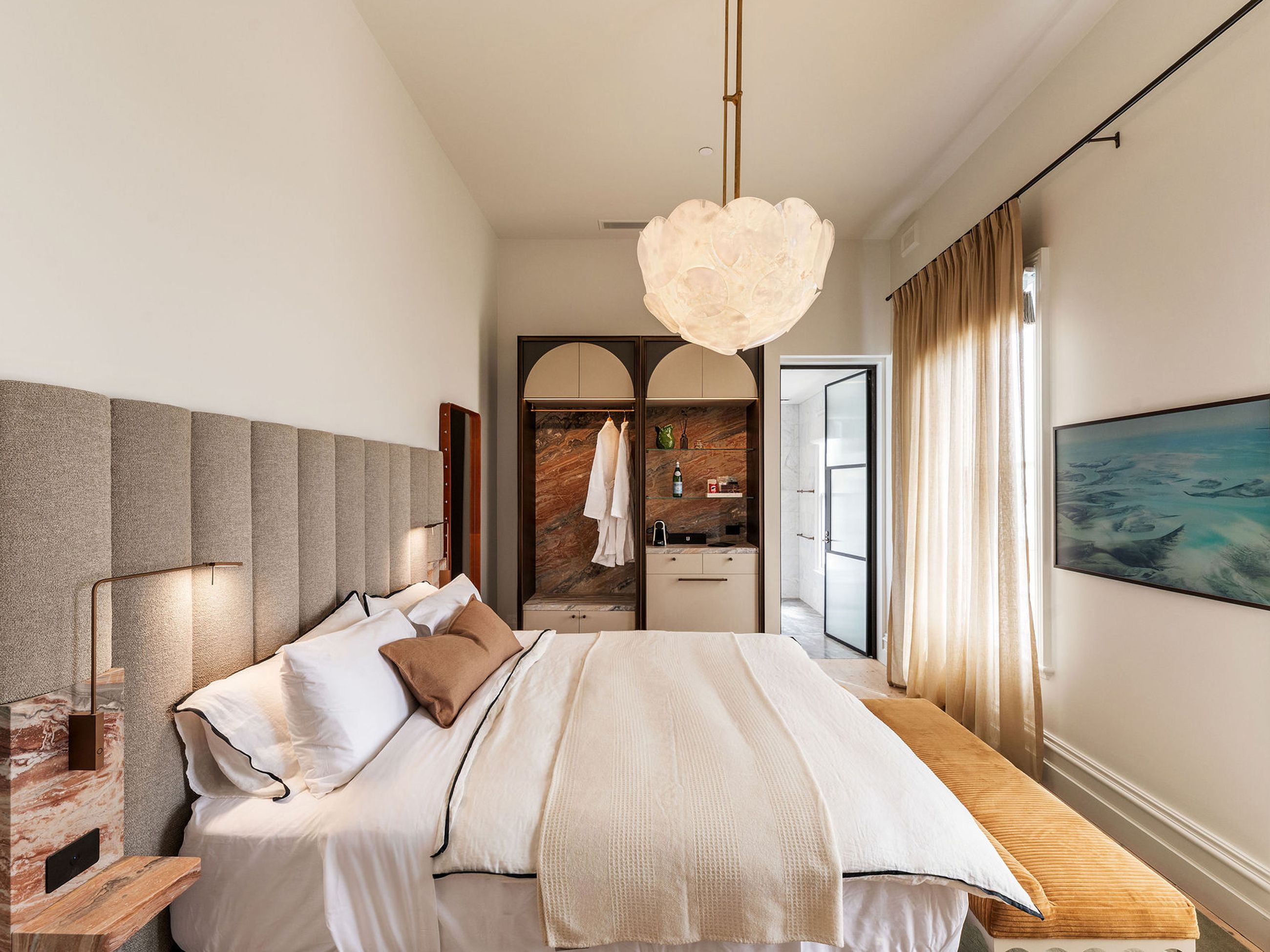
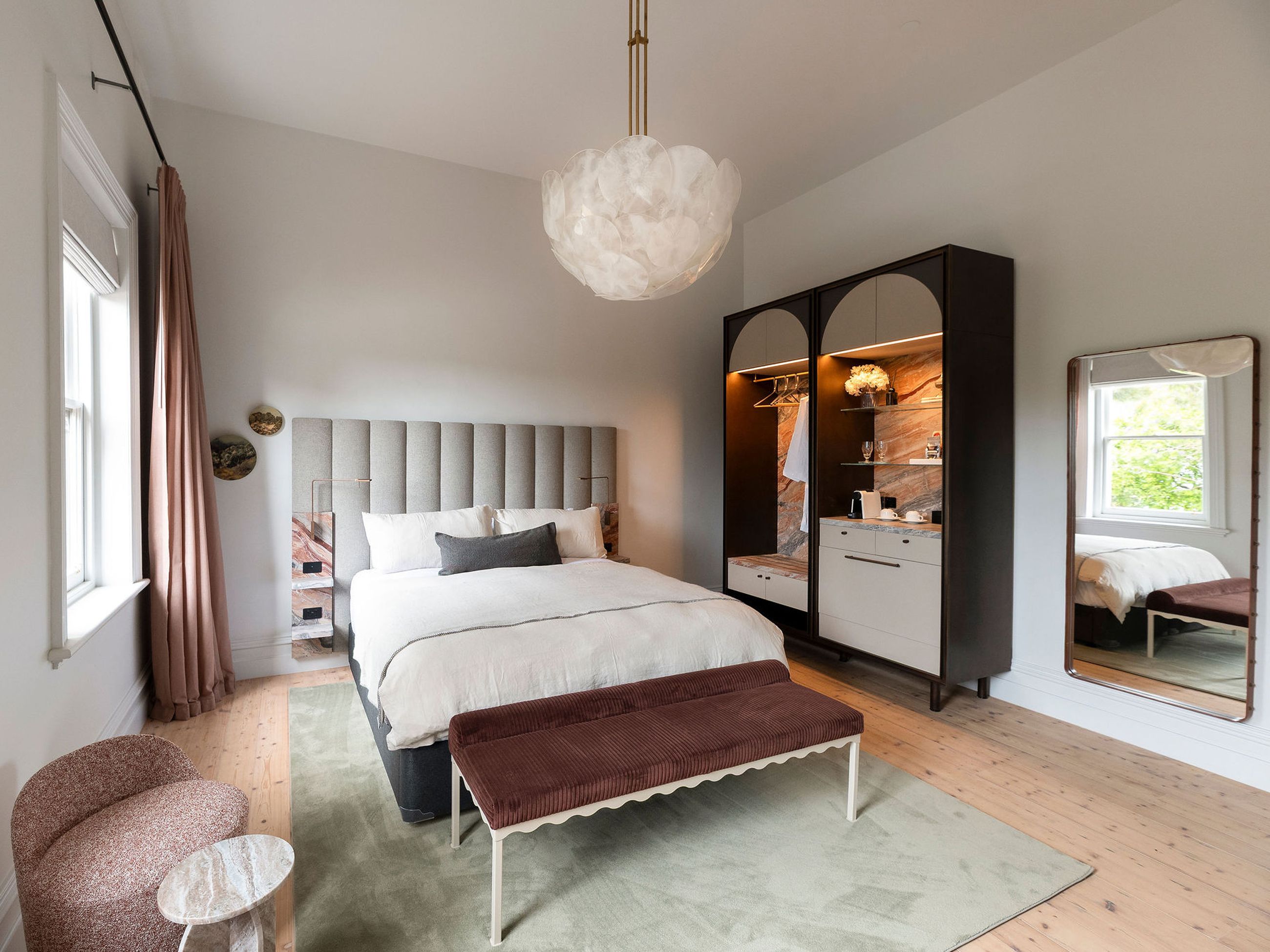
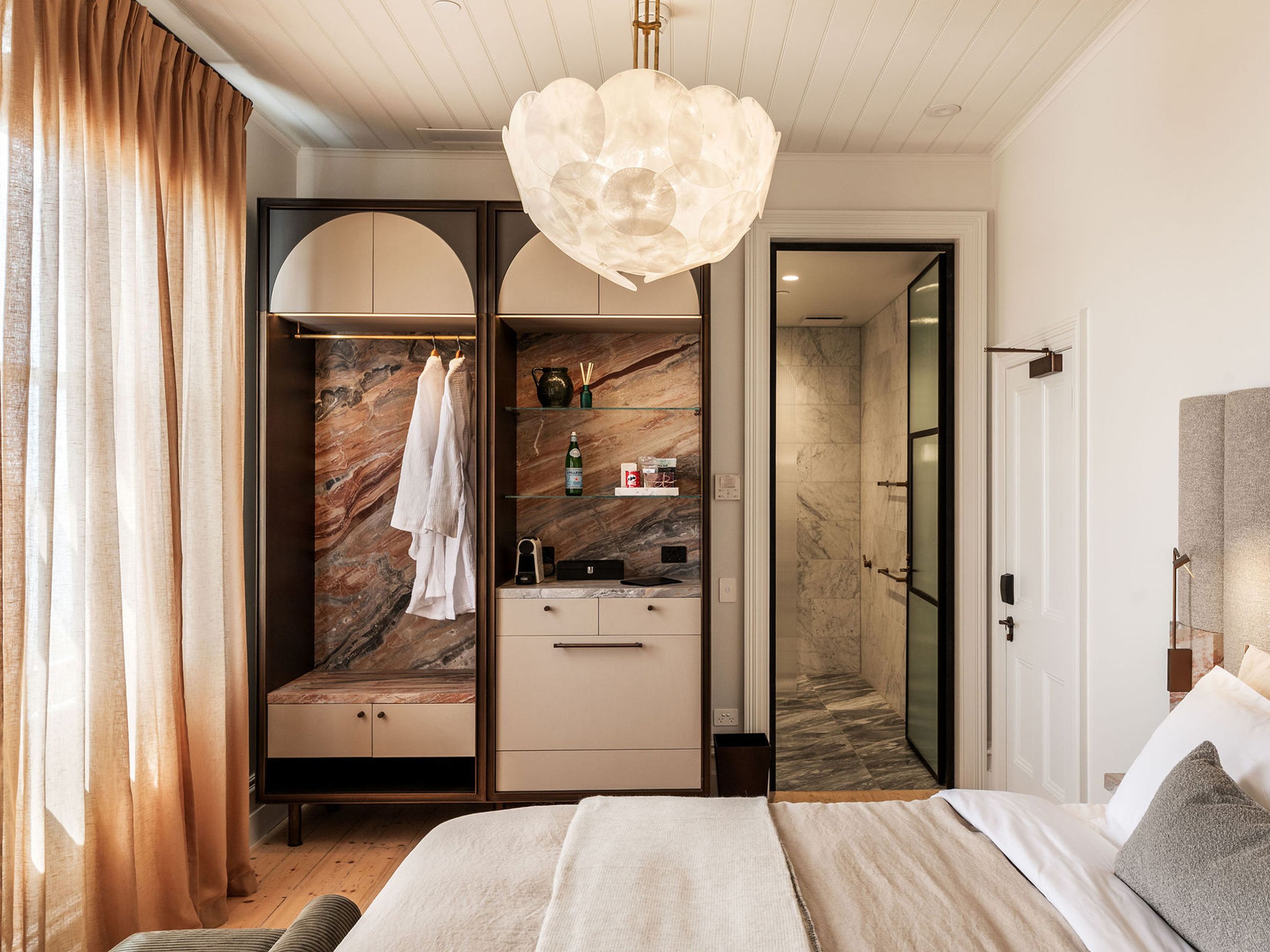
Melbourne’s MOLECULE Studio led the interior design. (Credit: Neisha Breen Photography)
The restoration has carefully preserved the hotel's architectural soul. (Credit: Neisha Breen Photography)
The result? A seamless blend of Queen Anne-style grandeur and contemporary refinement.
The tower is back – and so are the views
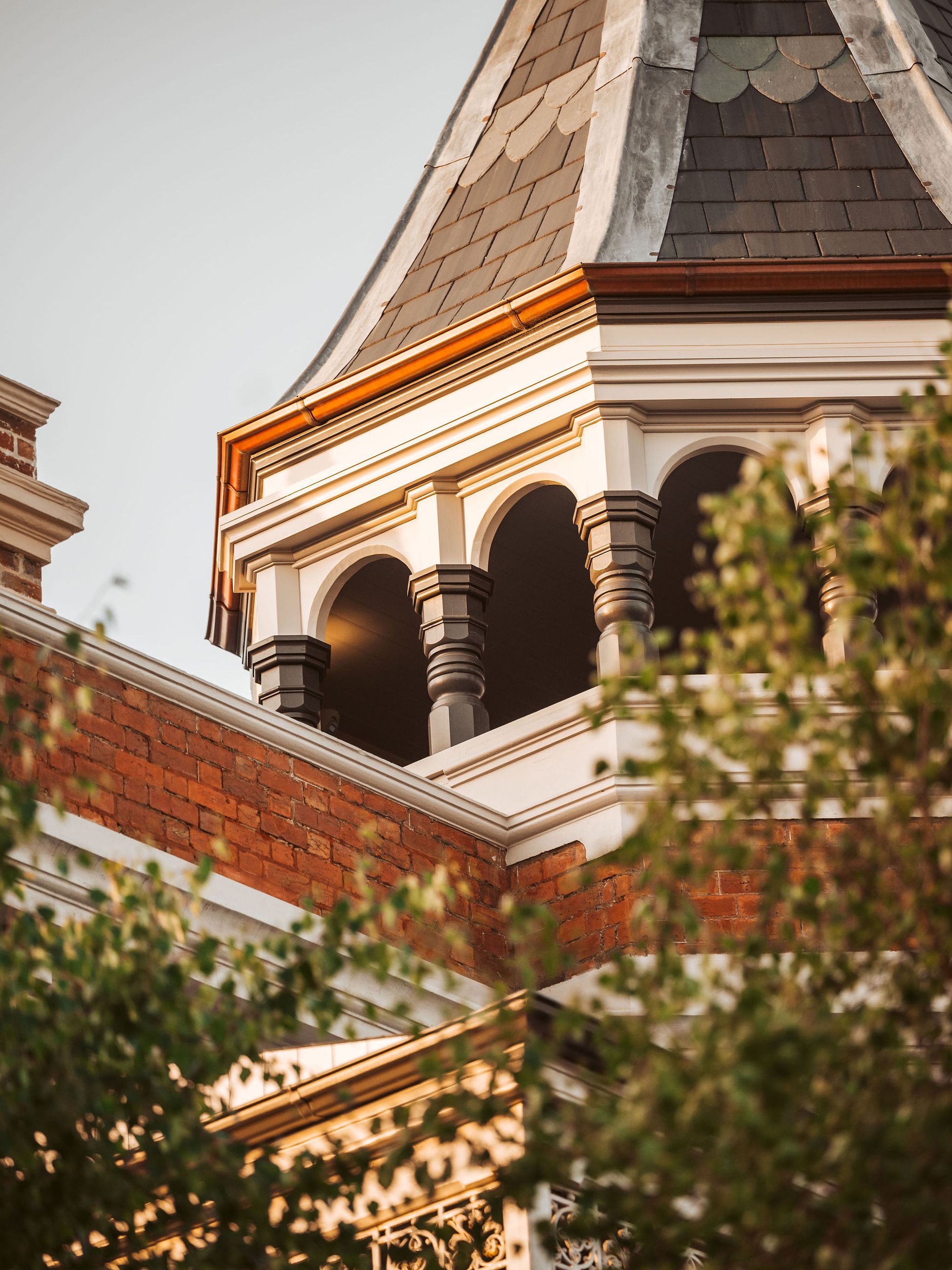
One of the most striking elements of the restoration is the return of the hotel’s turreted viewing tower to its original open-air design. Previously enclosed, it has been structurally rebuilt, complete with a newly crafted spire and turret posts made in Melbourne.
Need tips, more detail or itinerary ideas tailored to you? Ask AT.
AI Prompt
The hotel’s turreted viewing tower was restored to its original open-air design. (Credit: Neisha Breen Photography)
Guests can climb the historic staircase to the top of the tower. (Credit: Neisha Breen Photography)
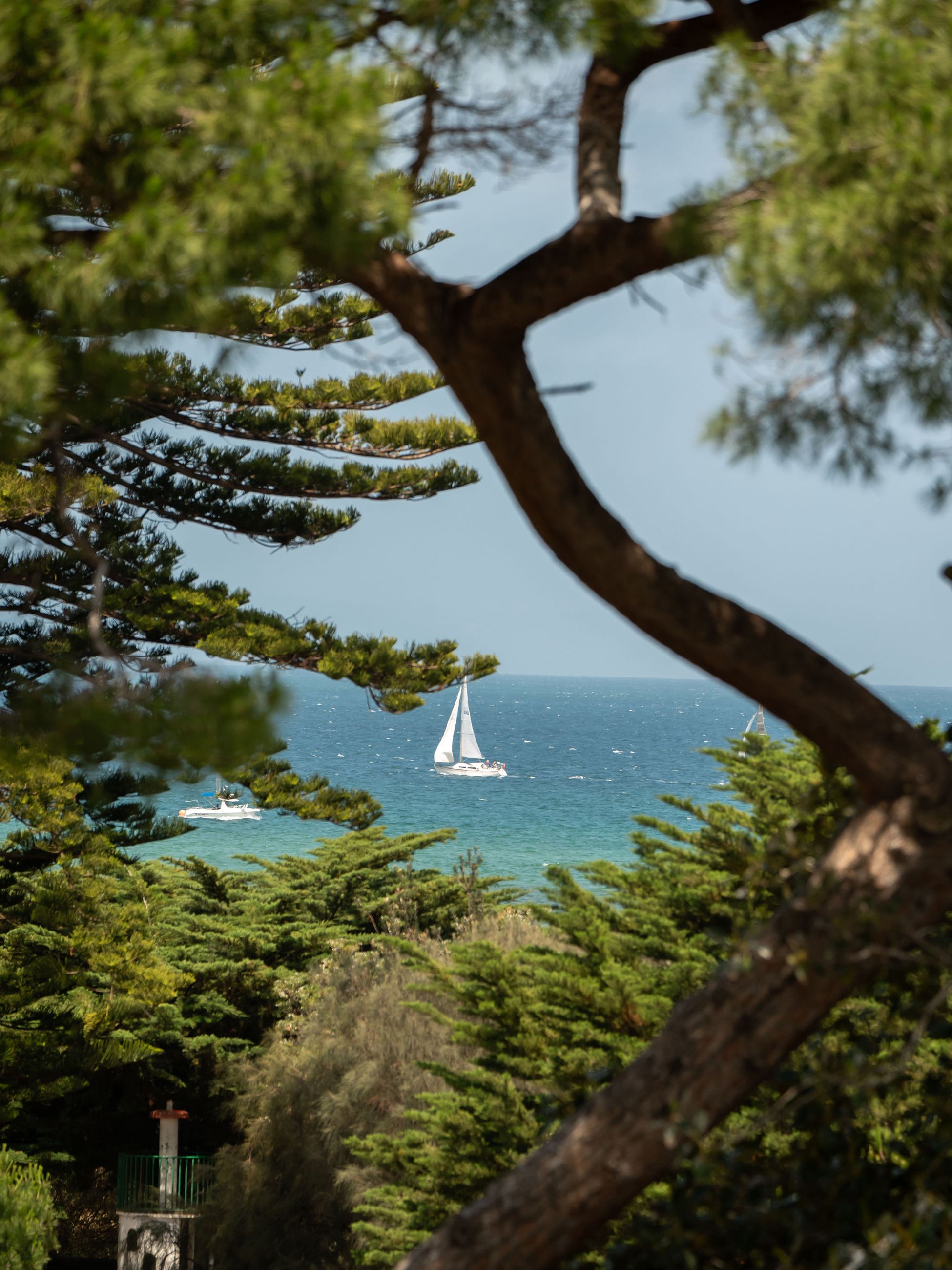
Take in views over Port Phillip Bay from the tower. (Credit: Neisha Breen Photography)
Guests can once again climb the historic staircase and take in sweeping views over Port Phillip Bay. It’s the kind of detail that elevates a stay from pleasant to memorable, especially at sunset.
The original cast-iron front fence has also been faithfully reconstructed by local tradespeople, reinforcing the hotel’s commitment to heritage integrity rather than cosmetic quick fixes.
Inside the new boutique stay
The reimagined hotel now offers 12 individually designed suites, creating an intimate, boutique experience. Some rooms open directly onto the historic verandah. Two suites – the Beach She Oak and Coconut Palm – are pet friendly, complete with an onsite dog wash for sandy paws. There are also wheelchair-accessible and ambulant-friendly suites, and flexible two-bedroom configurations for families.
The Coconut Palm Suite is pet friendly. (Credit: Neisha Breen Photography)
The Blue Jacaranda Suite is one of two accessible rooms in the hotel. (Credit: Neisha Breen Photography)
The Olive Suite is a king suite with a view over Swan Bay. (Credit: Neisha Breen Photography)
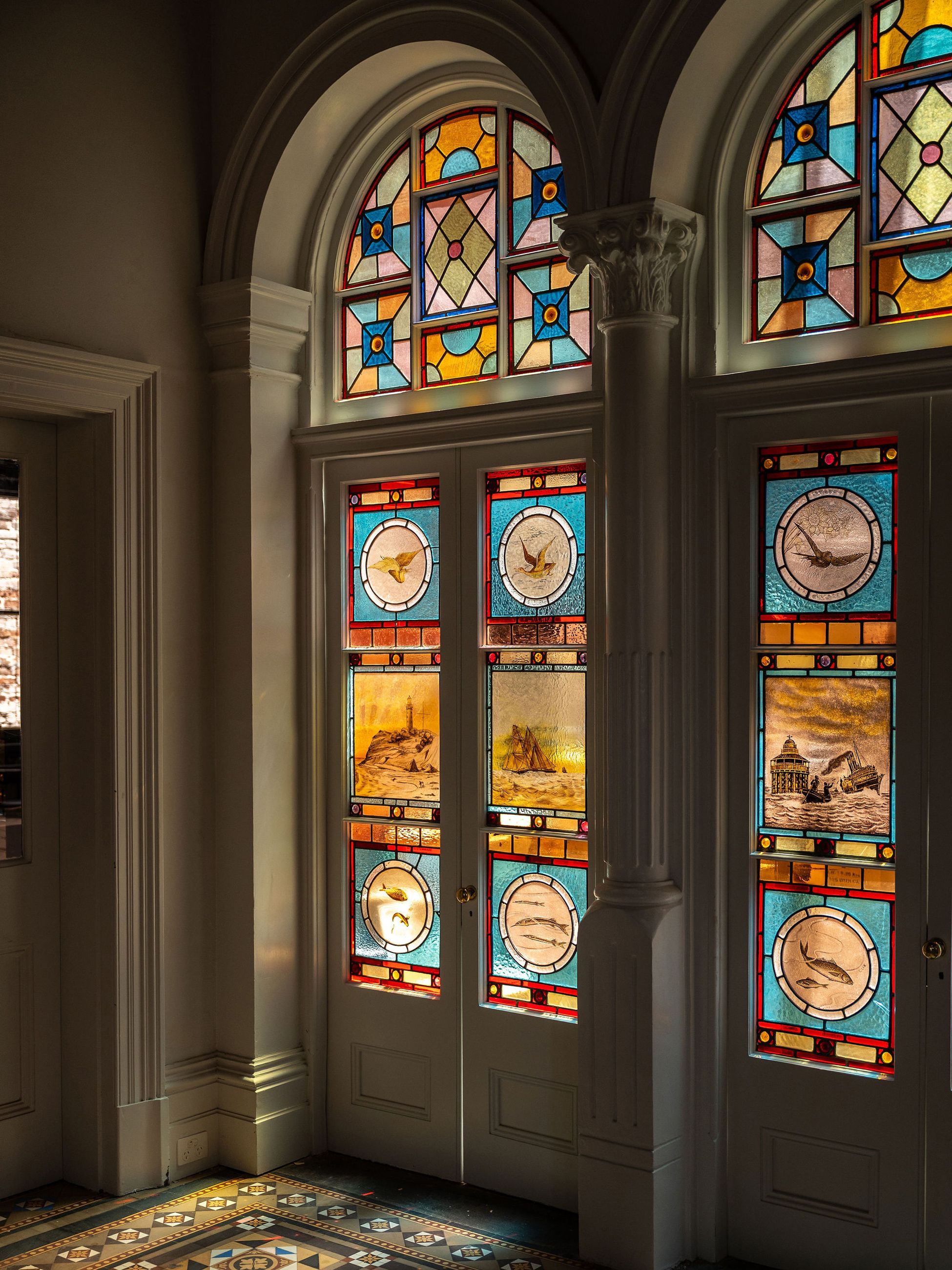
Design-wise, expect a thoughtful interplay between old and new. Heritage features sit alongside contemporary designer furnishings, floor-to-ceiling marble accents and locally crafted details, including alpaca rugs from Creswick Woollen Mills and bespoke Melbourne-made lighting. Original artworks by Bellarine Peninsula artists are displayed throughout and available to purchase.
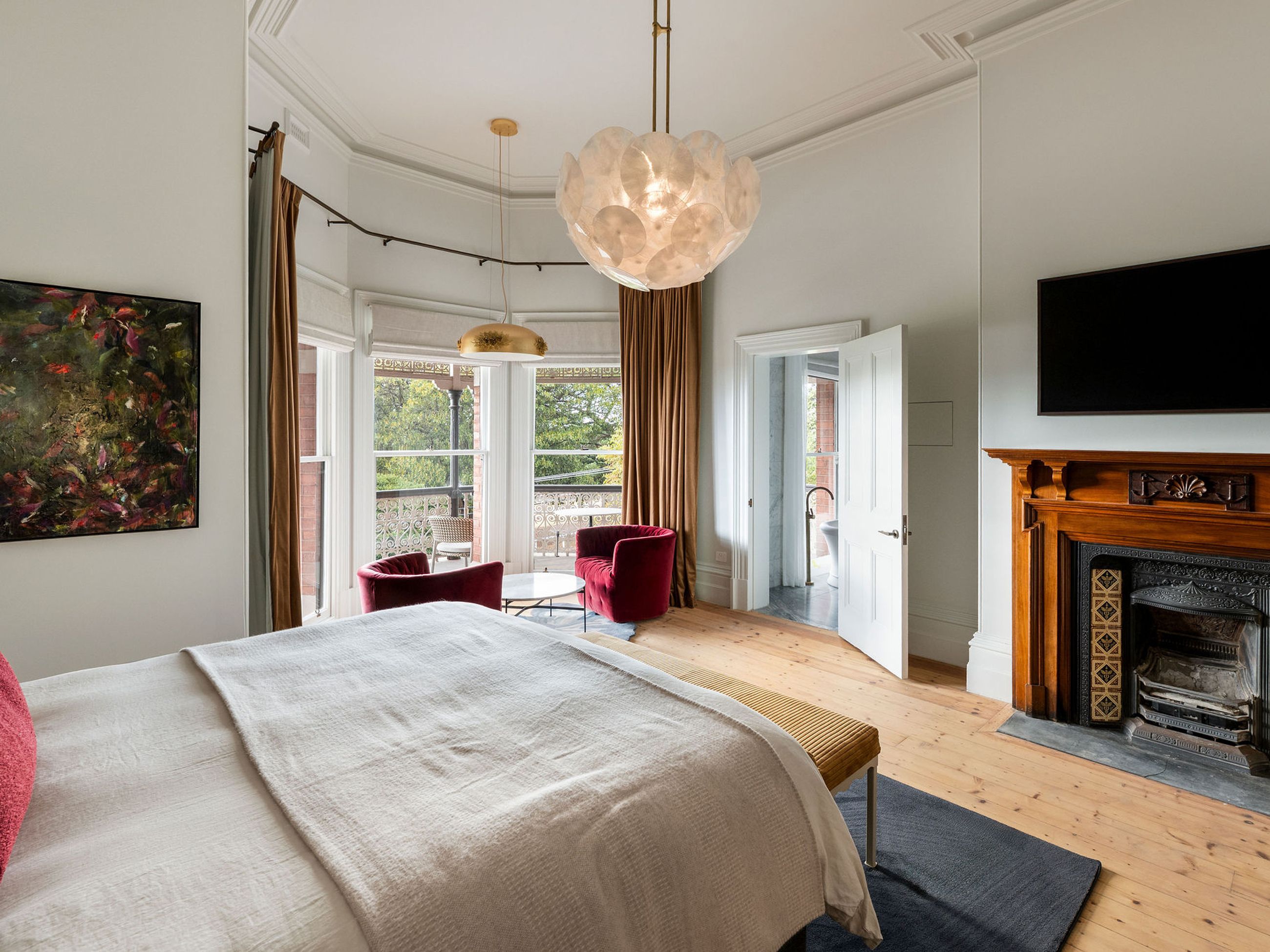
The Stone Pine Suite has a private verandah. (Credit: Neisha Breen Photography)
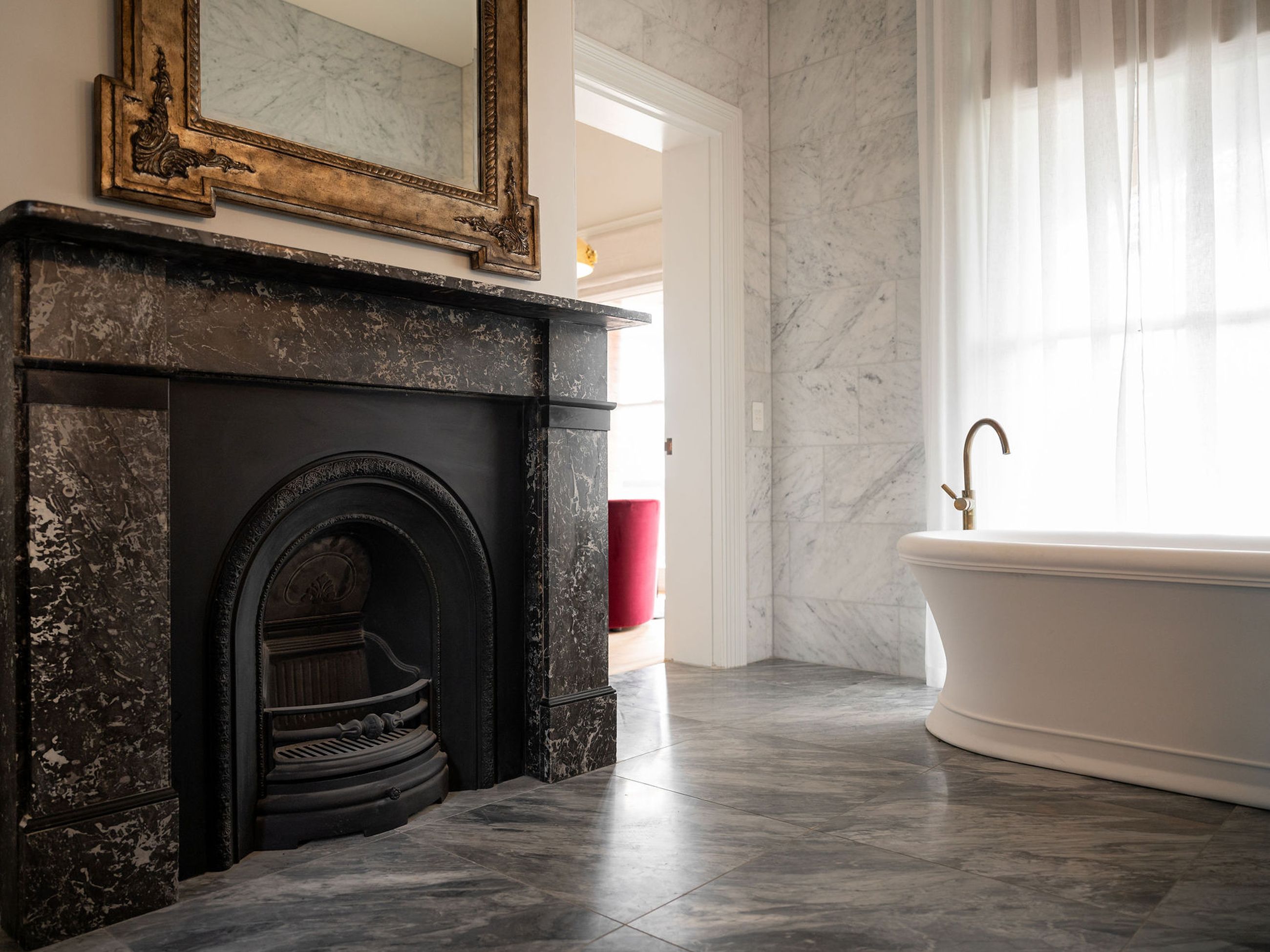
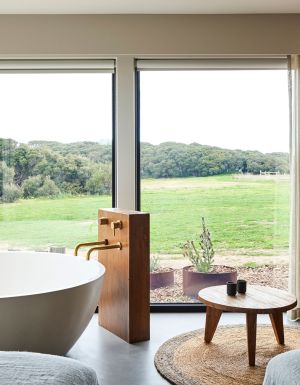
The marble bathtub is a highlight in the Stone Pine Suite. (Credit: Neisha Breen Photography)
The premium Stone Pine Suite is the standout: king bed, original fireplaces in both bedroom and marble-clad ensuite, a deep marble bath, walk-in dual shower and a private verandah with bay views. It’s the kind of space built for slow mornings and long soaks after coastal walks.
All stays include complimentary breakfast for the length of your visit, plus access to a guest lounge stocked with books and board games – and, of course, the tower.
A dining revival with serious pedigree
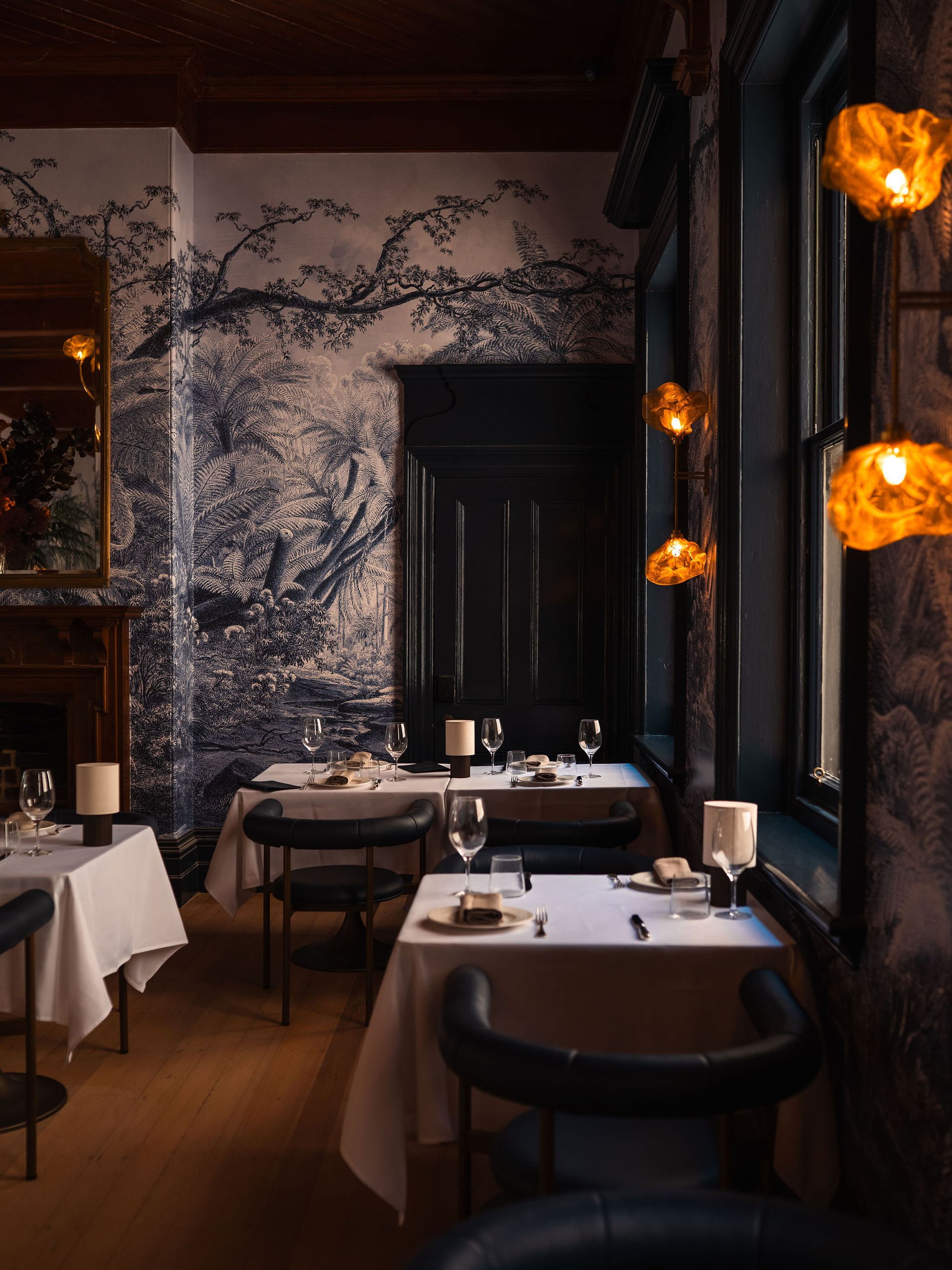
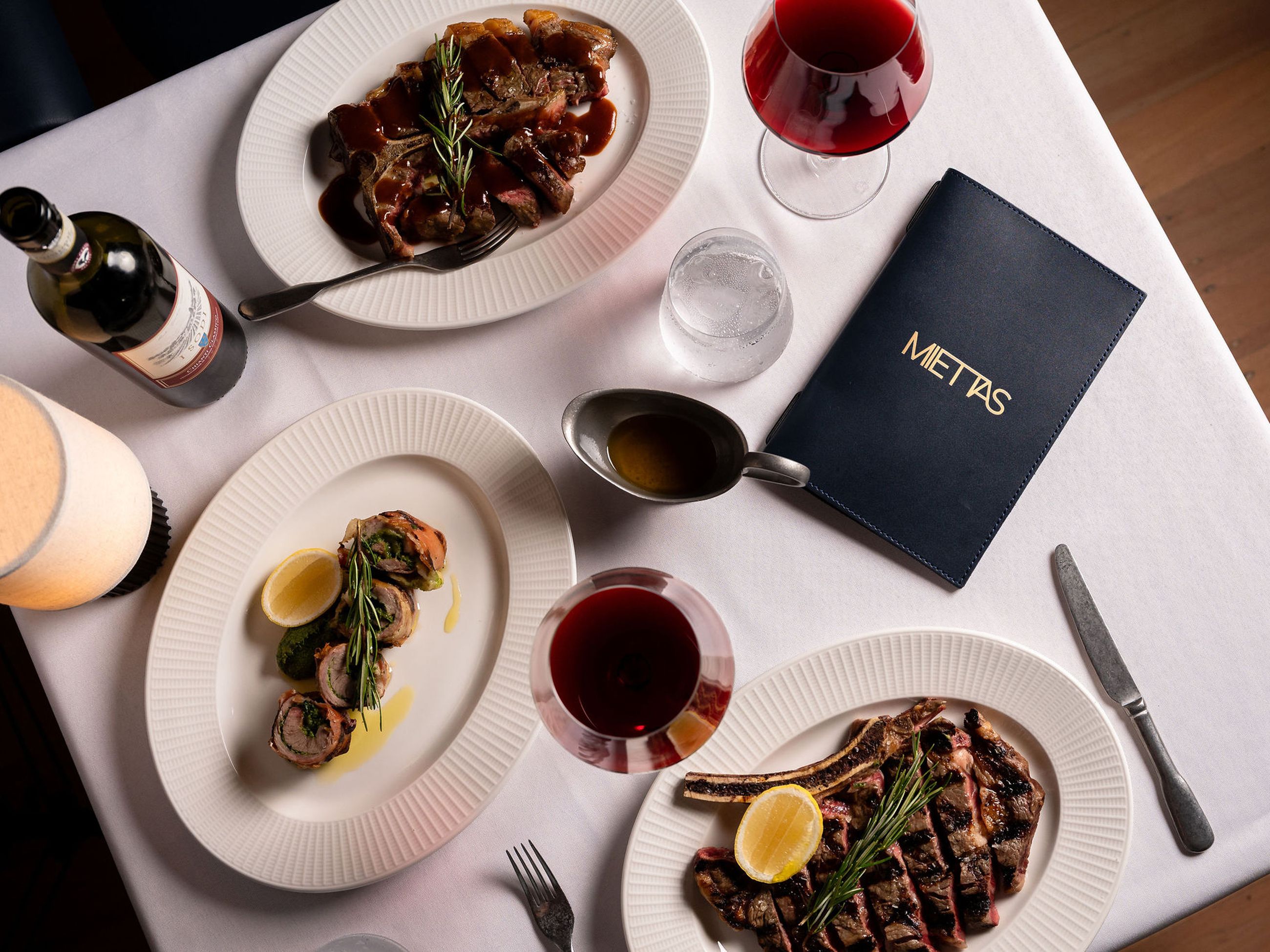
The hotel’s culinary history runs deep. In 1978, culinary icon Mietta O’Donnell brought her celebrated restaurant Miettas to the property. Now, the name returns under executive chef Salvatore Giorgio, with a focus on the richness and diversity of Bellarine Peninsula produce.
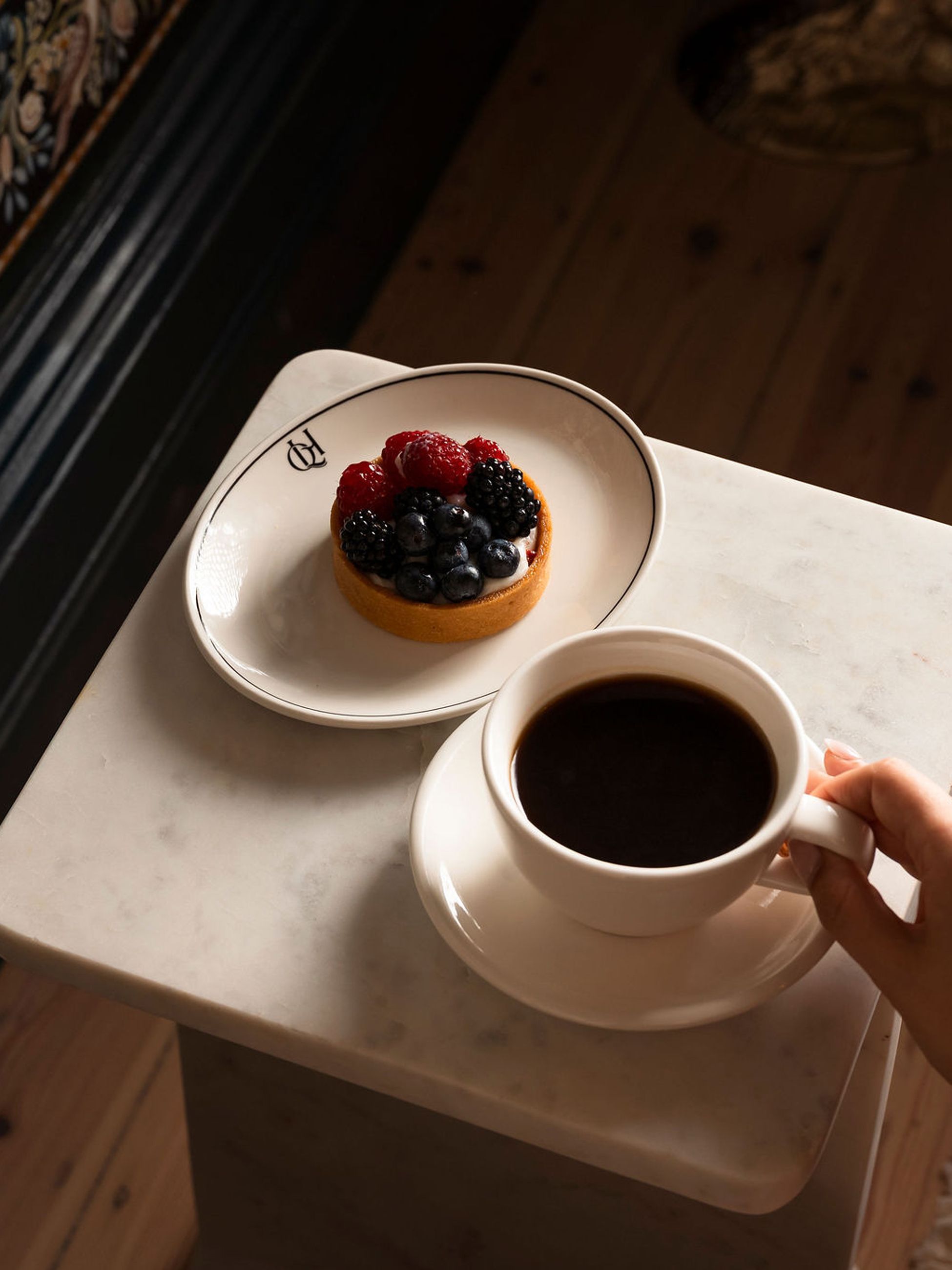
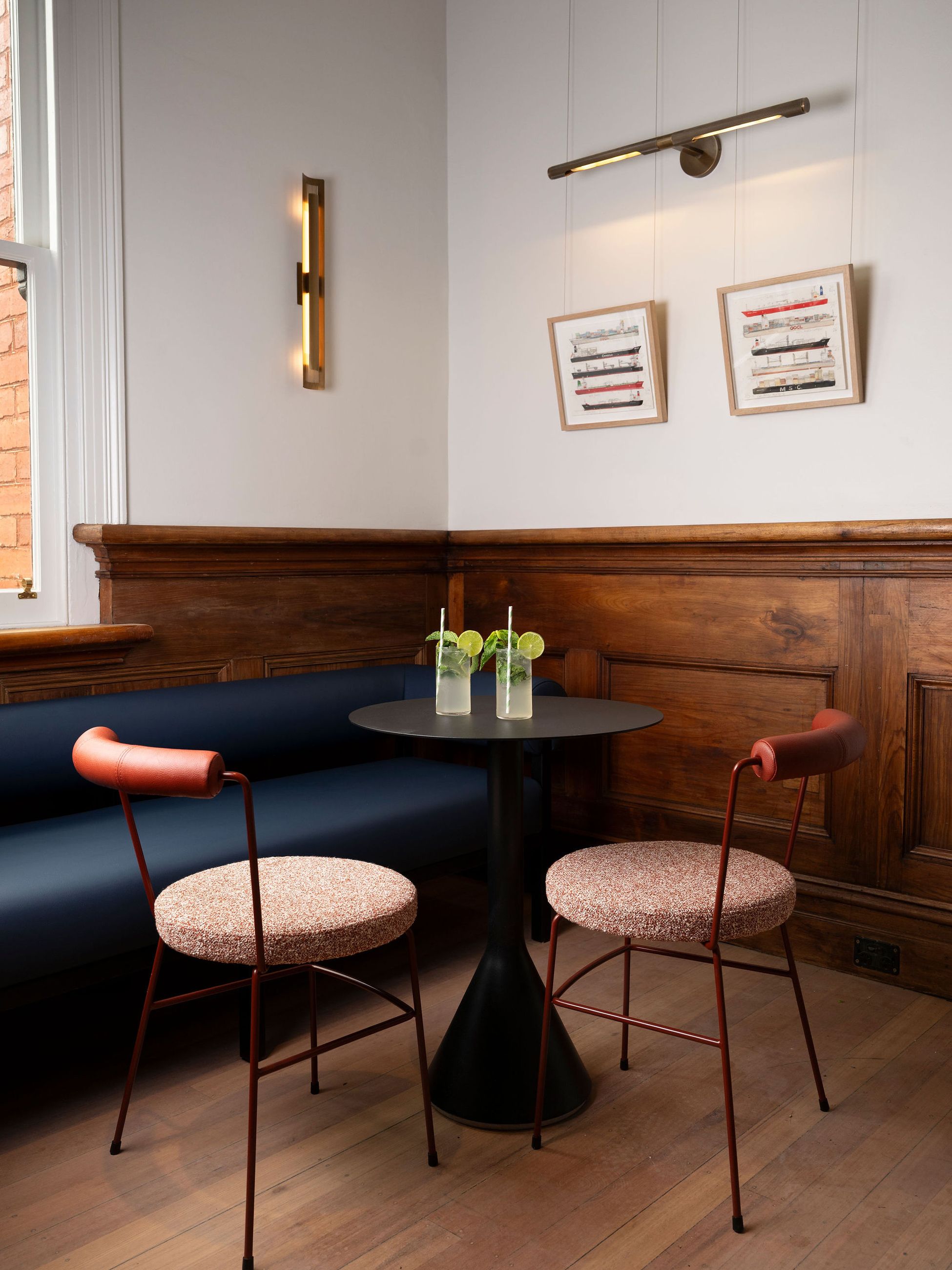
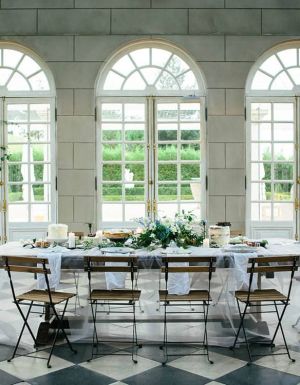
Guests also have access to The Conservatory for relaxed contemporary dining, Cafe 1888 for light bites and coffee, and The Boat Bar for pre-dinner cocktails in a sophisticated coastal setting. It’s a multi-venue offering that feels far more destination-led than your average regional hotel.
Weekly travel news, experiences insider tips, offers, and more.
Miettas has a history at The Queenscliff Hotel. (Credit: Neisha Breen Photography)
Bellarine Peninsula produce will be championed at Miettas. (Credit: Neisha Breen Photography)
Start the day at Cafe 1888. (Credit: Neisha Breen Photography)
Enjoy cocktails at The Boat Bar. (Credit: Neisha Breen Photography)
A bathhouse is coming soon
The hotel is also preparing to launch a dedicated Bathhouse – a future wellness retreat designed as a sanctuary of calm for guests.
While an opening date has not yet been announced, the upcoming space will offer steam and sauna rooms for deep relaxation, plunge pools for hot–cold therapy, and a luxurious hydro jet massage table delivering full-body water therapy. Access will be limited to a small number of guests at a time to preserve a sense of privacy, creating an unhurried experience that feels worlds away from the everyday.
Given the Bellarine’s growing appeal for bathhouse escapes, the addition positions The Queenscliff Hotel firmly in the wellness-luxe category – and makes it far more than just a place to sleep.
Details
This seaside icon is ready to make noise again. (Credit: Neisha Breen Photography)
Address: 16 Gellibrand St, Queenscliff, Victoria 3225
When: Full operations for the accommodation, The Conservatory, Cafe 1888 and The Boat Bar commence on Saturday, 14 March, while Miettas will offer an elevated Italian-inspired dining experience from 28 March.
After seven years of silence, the old seaside icon is ready to make noise again.
Want to see more stories from Australian Traveller in your Google search results?
Tick the box next to "Australian Traveller". That's it.
Emily Murphy is Australian Traveller's Email & Social Editor, and in her 4+ years at the company she has been instrumental in shaping its social media and email presence, and crafting compelling narratives that inspire others to explore Australia's vast landscapes. Her previous role was a journalist at Prime Creative Media and before that she was freelancing in publishing, content creation and digital marketing. When she's not creating scroll-stopping travel content, Em is a devoted 'bun mum' and enjoys spending her spare time by the sea, reading, binge-watching a good TV show and exploring Sydney's vibrant dining scene. Next on her Aussie travel wish list? South Australia and The Kimberley.
Switch the hustle and bustle for a weekend of birdsong and greenery on the border.
Straddling the Murray River where New South Wales meets Victoria, Albury Wodonga is just hours by car or train (or even a quick flight) from many major cities, but it feels a million miles away from the everyday.
Here, you’ll find a blend of relaxed country lifestyle and modern city amenities, where a booming culinary scene and vibrant arts offerings meet a rich Indigenous history and stunning natural vistas. Spend time amongst river red gums, wildlife-filled wetlands and winding waterways.
Ready to roll on the river? Here’s where to begin.
1. Birdwatch in Wonga Wetlands
Walk along Wonga Wetlands, looking for local birdlife. (Credit: Destination NSW)
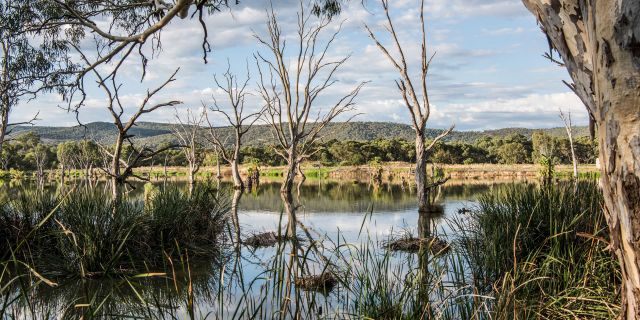
It might be close to Albury’s CBD, but Wonga Wetlands feels a watery world away. This former grazing land has been restored to 80 hectares of lagoons, billabongs and river red gums, and you can now wander three kilometres of walking trails as you spot cormorants, spoonbills, egrets and sacred kingfishers. More than 170 bird species call the wetlands home, thanks to the Murray’s cycle of flooding and drying, so pack a picnic, settle in at a bird hide, and pull out those binoculars.
2. Explore the Murray River
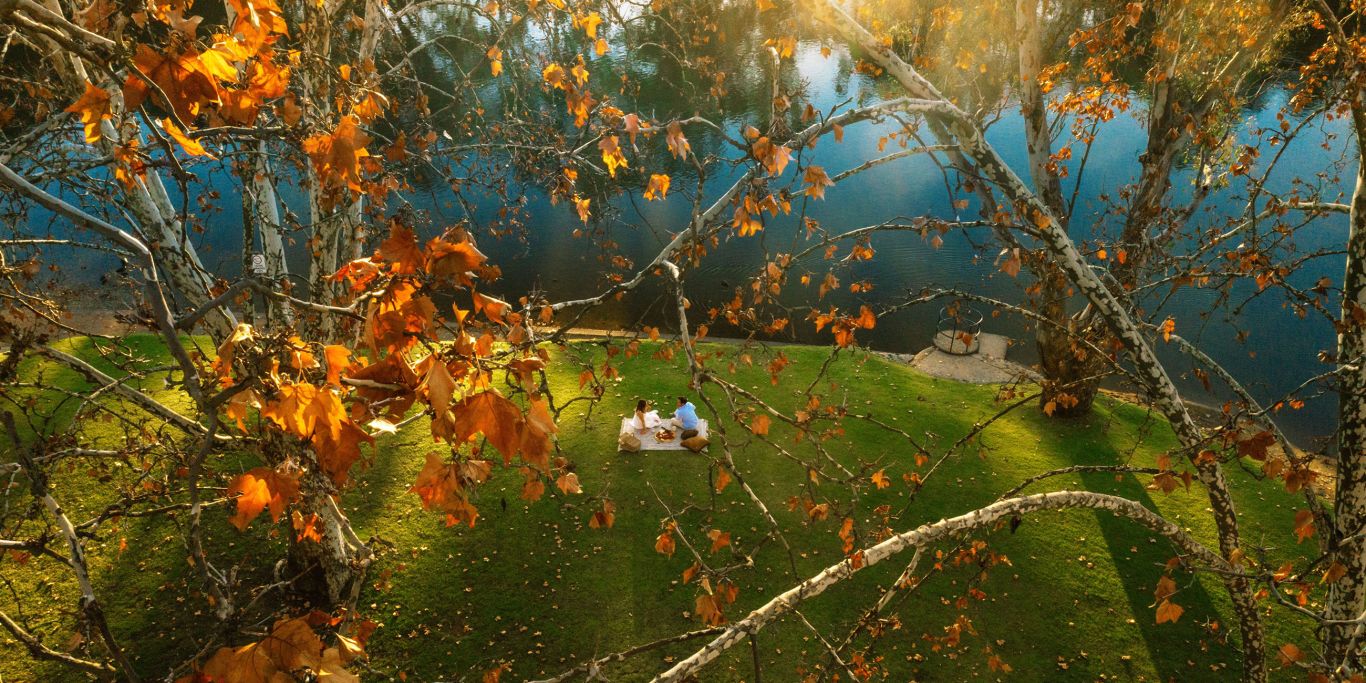
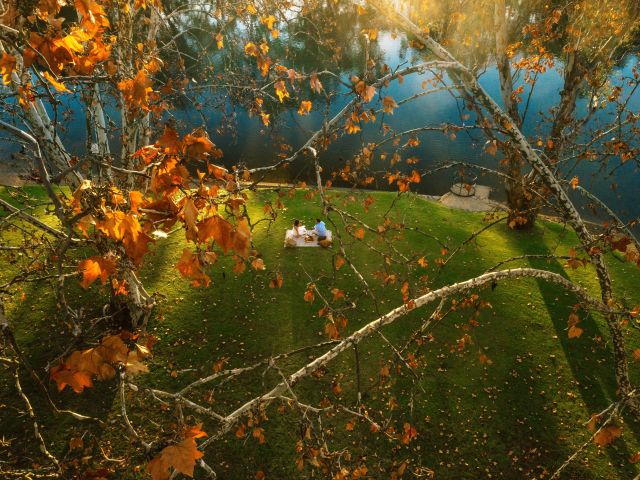
Take a picnic to enjoy in Noreuil Park. (Credit: Destination NSW)
The Murray River runs between Albury and Wodonga, where locals swap desks and deadlines for shaded riverbanks. Less than a kilometre from Albury’s CBD sits Noreuil Park, the city’s favourite stretch of riverfront. Cool off on the famous loop float, hire a kayak, launch a stand-up paddleboard or cast a line.
Afterwards, chuck a rug on the lawn under a plane tree, fire up one of the free barbecues and watch the water as you munch on some Murray cod.
3. Take a sculpture walk
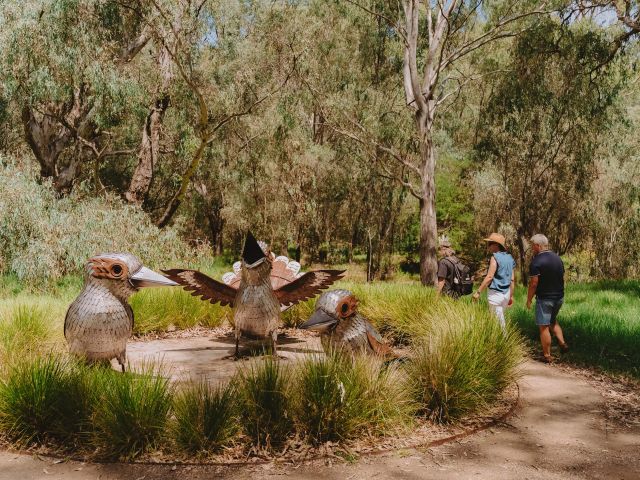
See the art along the Yindyamarra Sculpture Walk.
Albury Wodonga’s three sculpture trails showcase the Murray through First Nations tales on foot or by bike. Along the Yindyamarra Sculpture Walk, 15 contemporary Aboriginal artworks celebrate kinship and Country. The Crossing Place Trail passes the Wodonga Scar Tree, where local Indigenous people once harvested bark to craft canoes, and the Gateway Island trail tells you how the Murray sustained First Nations people for millennia.
4. Get moving on local tracks and trails
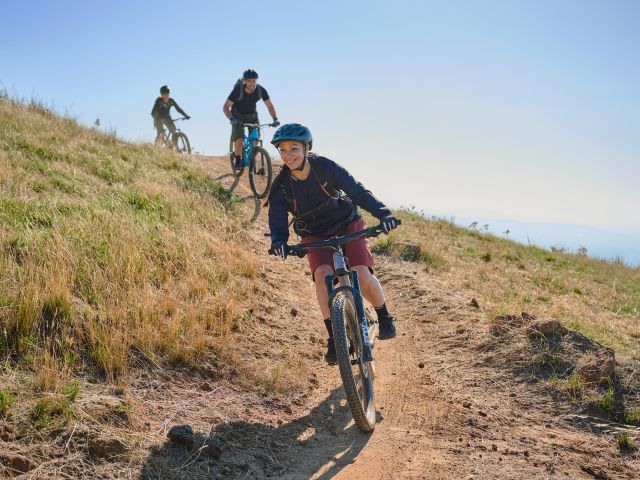
Take your bike to Hunchback Mountain Bike Park.
More than 100 kilometres of trails cross Albury Wodonga’s hills, reserves and riverbanks. Mountain bikers can tackle the championship-calibre descents of Nail Can Hill, weaving through eucalyptus forest where the rare crimson spider orchid blooms, or hone their skills at Hunchback Mountain Bike Park‘s 29 graded trails.
Keen to explore on foot? Huon Hill makes the sore legs worth it, with lookouts across Lake Hume and the Kiewa Valley, while McFarlanes Hill meanders through stringybark woodland and rocky outcrops.
For a slower pace, the 44-kilometre High Country Rail Trail hugs the shores of Lake Hume, crossing the red-pillared Sandy Creek Bridge before rolling into Tallangatta.
5. Check into restorative stays
Check into one of Albury Wodonga’s over 60 accommodation options. (Credit: Destination NSW)
Some moments call for a boutique hotel. Others call for backing the caravan up beside the lake. Whether you’ve spent the day splashing in the Murray, furiously clocking kilometres on the bike trails or entertaining kids in playgrounds at the water’s edge, there’s somewhere to lay your head.
From motels shaded by river red gums to lakeside holiday parks and boutique hotels, Albury Wodonga’s 60-plus accommodation options mean you’re never far from a morning walk along the Murray or dinner on Dean Street. But be warned: book ahead. You might not be the only one craving a weekend by the Murray, especially in the school holidays.
6. Enjoy delicious dining options
Enjoy incredible meals in Albury Wodonga.
Every paddle, bushwalk and bike trail deserves a proper meal afterwards. Once you’ve swapped out your damp swimmers or your dusty trainers and start to sniff out a feed, you’ll quickly discover you’re surrounded by one of Australia’s richest agricultural regions.
Unsurprisingly, Albury Wodonga’s dining scene is all about that Riverina produce. We’re talking Murray cod (of course) but also premium local beef from the valleys, olive oil from nearby groves, cool-climate wines and European-style cheeses.
The restaurants, wine bars and breweries around Dean Street and Junction Square are all within easy reach, serving everything from modern Australian and Mediterranean to Thai, Vietnamese, Italian and classic wood-fired steakhouse fare. Looking for a riverside brunch? A comforting bowl of dumplings on a winter evening? Or up the ante with the vibrant flavours of Europe? Whatever the craving, there’s a table waiting.
7. Get out on Lake Hume
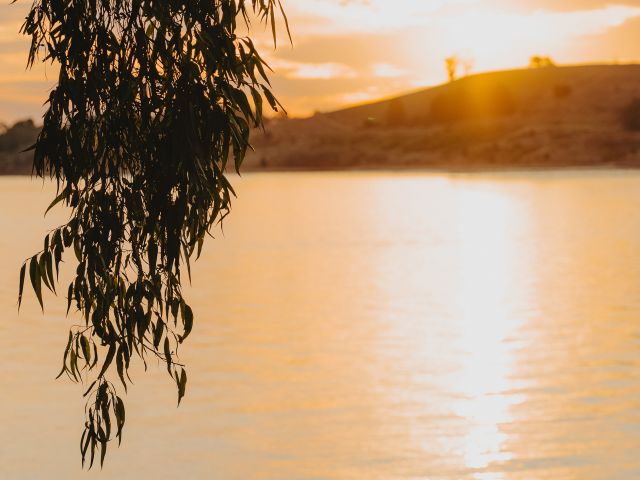
Be sure to stay for a Lake Hume sunset.
When you’re ready to dial up the solitude, trade the river for a veritable inland sea: Lake Hume. Just 15 minutes from Albury and Wodonga, it’s one of Australia’s largest water storage reservoirs. In other words, there’s plenty of space to swim, paddle and stake out a patch of shoreline all to yourself.
Take the long way through Riverina farmland, stopping at the dam wall to appreciate just how enormous Lake Hume is. Cast a line for Murray cod, rainbow trout, golden perch or redfin and unpack a bag of bakery treats beneath the trees before launching a kayak into the vastness.
Afterwards, stop by the Bonegilla Migrant Experience, where the remaining accommodation blocks tell the stories of more than 320,000 post-war migrants who passed through between 1947 and 1971. Give yourself time to walk through the preserved camp, stopping to digest the photographs, personal stories and artworks that reveal what it meant for residents to begin a new life at the edge of the world.
Even if you’re exhausted, stay until twilight. The sunset is about to put on a hell of a leaving show for you.