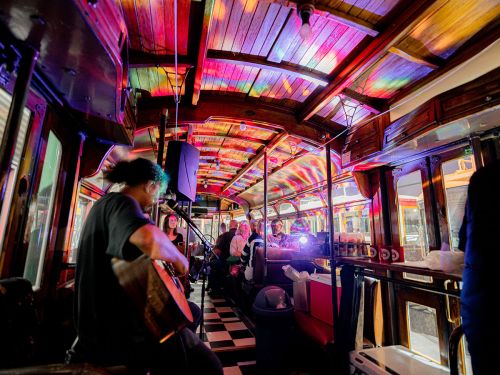
Bendigo’s Groove Tram rolls on with live music, local brews and wine

hero media
Bendigo is bringing the groove to their historic tramway.

If there’s one thing I’ve always said, it’s that trams should be 70 per cent groovier. Thankfully, Bendigo has taken me seriously and will be sending off a Groove Tram over twice a month.

The small Victorian town of Bendigo, just two hours by train from Melbourne, has already made a name for itself by combining its historic beauty (the town was established in 1851) with modern gastronomic delights, thanks to an incredible restaurant scene and delicious wineries to boot. But nothing exemplifies the old and new more than Bendigo’s historic tramway.
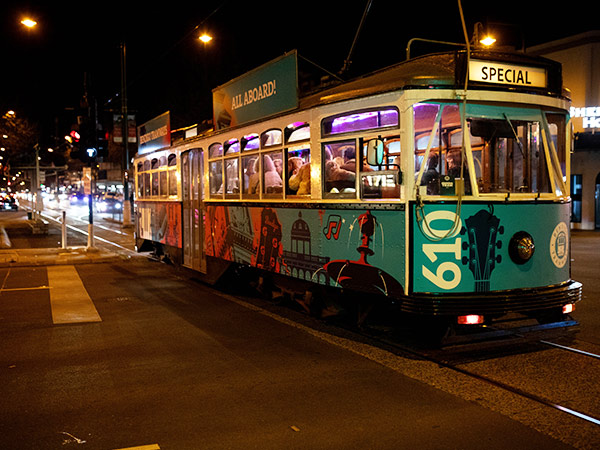
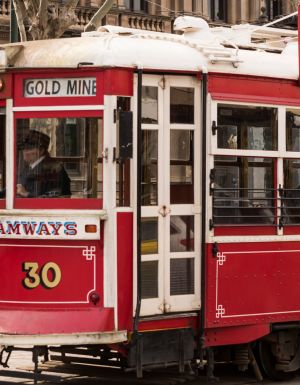
bendigo groove tram exterior
Get your groove thang on Ballarat’s iconic trams.

Stretching the full length of the town, the trams first started operating in 1890, in an on-again, off-again fashion. That old-world charm is maintained even today, thanks to Bendigo being the only place in Australia that left track, trams and a depot behind after closing its tramway system. Today, the tram system in Bendigo is not only a fun way to get around town (even though it’s a very walkable destination), but it’s Australasia’s largest tourist tramway, with over 40,000 visitors flocking to ride it annually.

So, all pretty cool, as is. But like I said – pump up the groove.

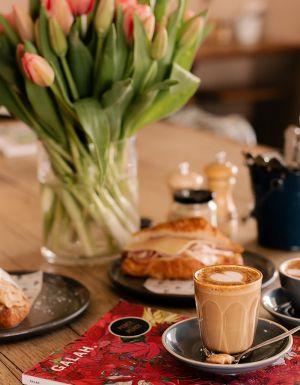
On select nights, tram punters can book one of two, adults-only, Groove Tram rides, which Bendigo Tramways itself describes as a way to “be transported to a world of pure entertainment, where live music, local brews and fine wine are all enjoyed against the picturesque backdrop of Bendigo’s rolling vistas". Heavenly.

Each night will have its very own groovy flavour, thanks to a rotating headline of Bendigo’s best musicians. Upcoming performers include David Turpie, Slide, Ally G and Caitie & Co.
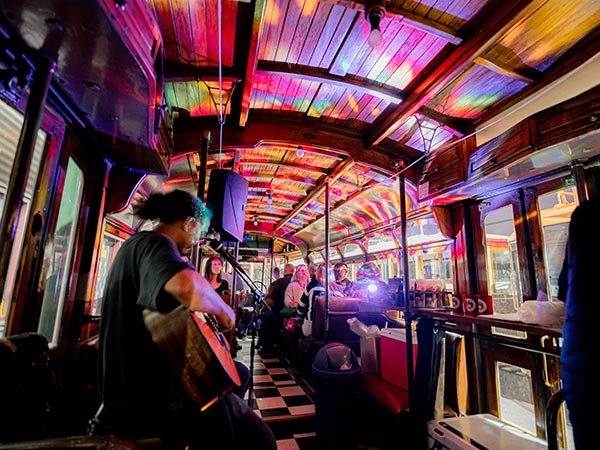
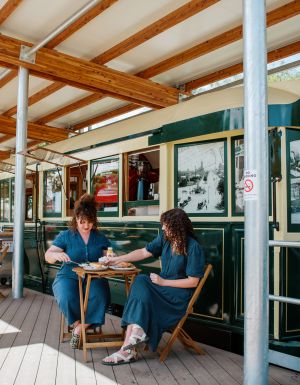
bendigo groove tram interior
Boogie on down.

Need tips, more detail or itinerary ideas tailored to you? Ask AT.

AI Prompt

The details

Price: $25 per person. Drinks and nibbles at bar prices. No BYO.

Duration: 1.5 hours

Times: The first Groove Tram pulls out from 5:30pm to 7:00pm, the second of the night from 8:00pm to 9:30pm.

Dates: Check the website for upcoming dates.

Location: Pick-up and drop-off at Alexandra Fountain

Wondering where to stay between tram rides? These are our top picks of Bendigo hotels and quaint Airbnbs.

Want to see more stories from Australian Traveller in your Google search results?

  1. Click here to set Australian Traveller as a preferred source.
  2. Tick the box next to "Australian Traveller". That's it.
Kassia Byrnes
Kassia Byrnes is the Native Content Editor for Australian Traveller and International Traveller. She's come a long way since writing in her diary about family trips to Grandma's. After graduating a BA of Communication from University of Technology Sydney, she has been writing about her travels (and more) professionally for over 10 years for titles like AWOL, News.com.au, Pedestrian.TV, Body + Soul and Punkee. She's addicted to travel but has a terrible sense of direction, so you can usually find her getting lost somewhere new around the world. Luckily, she loves to explore and have new adventures – whether that’s exploring the backstreets, bungee jumping off a bridge or hiking for days. You can follow her adventures on Instagram @probably_kassia.
View profile and articles
hero media

The iconic Victorian beach where true Aussie surf culture was born

    Craig Tansley Craig Tansley
    Torquay’s Bells Beach is considered one of the best surf beaches in the world.

    It’d be easy to think Australian surf culture was born around the right-hand point breaks of the Gold Coast and Byron Bay. These regions seem the epitome of how the world views Aussie surfers – bronzed (or burnt), languishing in warm water and sunshine. The reality is a lot different.

    The rise of surf culture along Victoria’s coastline

    surfers at Bells Beach in Australia
    Surfers stand on the shore at Bells Beach, where the country’s biggest surfing competition is held each year. (Image: Getty/Filed Image)

    True Aussie surf culture was born on the chilly waves of Victoria’s winters, when huge swells from the Great Southern Ocean hit cliff-lined beaches along the Great Ocean Road. These beaches were the ultimate proving ground – surfers from all over Australia arrived in panel vans and VWs to do battle with the biggest waves they could find.

    huge swells from the Great Southern Ocean at Bells Beach
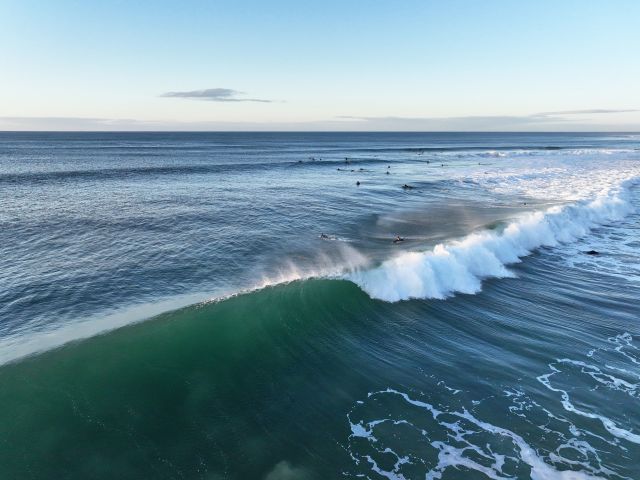
    Surfers take advantage of the huge swells from the Great Southern Ocean at Bells Beach. (Image: Tourism Australia/Cameron Murray)

    There are surf breaks all along this very picturesque coast – but those around Torquay were most revered. The ultimate test of a surfer’s ability – and durability – however, was Bells Beach: Australia’s answer to Hawai‘i’s Pipeline. Just beyond, the breaks at Jan Juc and Winkipop beckoned.

    an aerial view of surfers at Bells Beach
    Hit the waves along the picturesque coast. (Image: Tourism Australia)

    Torquay became surfing’s Silicon Valley: HQ for the entire Australian surf culture revolution. Four young locals worked out of their backyards in Torquay to create two of the world’s biggest surf labels – Rip Curl and Quiksilver, which soon became the region’s biggest employers.

    surfers out at Bells Beach
    Surfers out at Bells Beach, Victoria’s most famous beach. (Image: Tourism Australia/Cameron Murray)

    Rip Curl started sponsoring the Bells Beach Pro in 1973 – and have done ever since. It’s been going since 1962 – making it the world’s longest continually run surfing contest. Held every Easter, it’s part of the world surfing tour. Spectators line its 30-metre-high cliffs to watch the world’s best take on enormous waves – it’s the ultimate coliseum for the sport and has inspired generations of Aussie surfers to join the list of heroes whose names are on its iconic bell.

    Follow the waves through Victoria’s surfing heartland

    Australian National Surfing Museum, Torquay
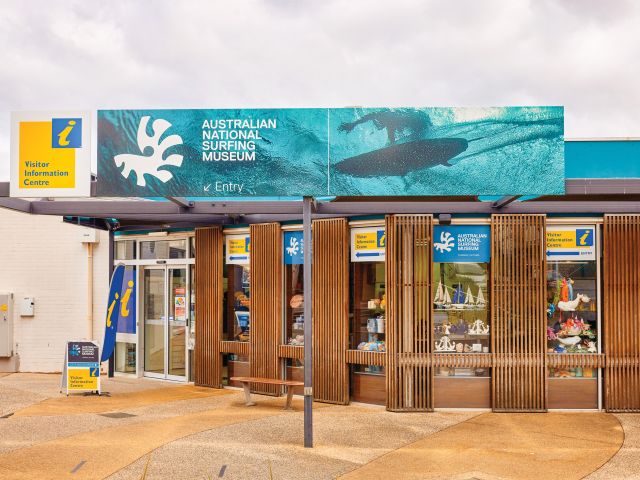
    The Australian National Surfing Museum in Torquay. (Image: Tourism Australia)

    Just behind Torquay’s main drag, you can see all that history on display at the world’s best surf museum – the Australian National Surfing Museum. Here you can take your time absorbing the 100-year-or-so history of Australian surfing and check out the 150-strong surfboard collection.

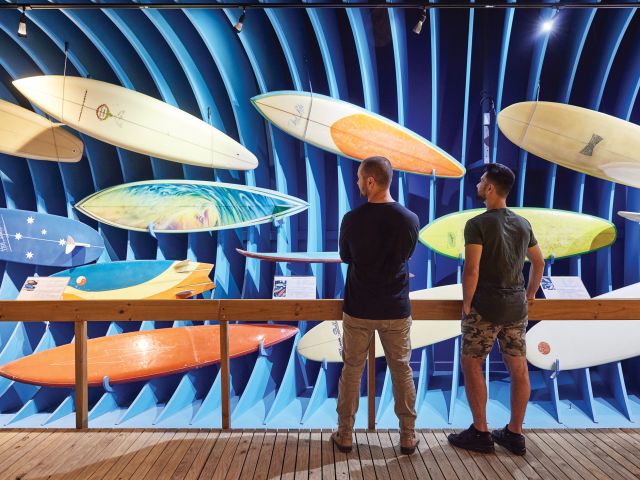
    surfboards on display at Australian National Surfing Museum
    The museum holds surfing memorabilia, including a room dedicated to the history of boards. (Image: Tourism Australia)

    But classic Aussie surf culture can be observed in everyday life all over the Great Ocean Road and Torquay. Surfing dictates life here; no work is done until the big swells have come and gone. Just being here provides a window into 60-odd years of rebellion against convention; for no-one likes nine-to-five living on the Great Ocean Road.

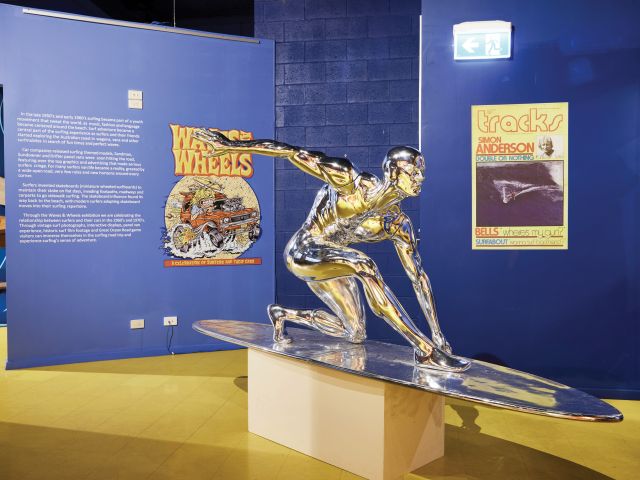
    surfing memorabilia at Australian National Surfing Museum
    The varied displays celebrate the Bells Beach competition, surfing legends and Aussie surf culture. (Image: Tourism Australia)

    There’s less panel vans and VW Beetles these days, but surf culture still rules life. Surfers run this coast; you’re better off keeping out of their way when they’re running down past you to face the biggest swells – then hear them swap stories at cafes, restaurants and bars all around you.

    surfing at Bells Beach
    The beach near Torquay is Australia’s answer to Hawai‘i’s Pipeline. (Image: Visit Victoria/William Watt)
    Bendigo’s Groove Tram rolls on with live music, local brews & wine