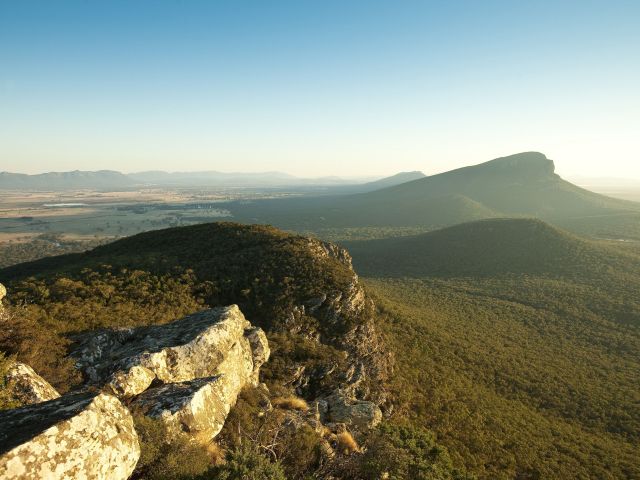
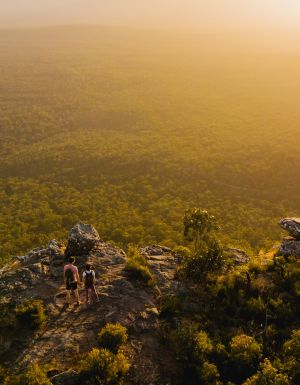
The entire 164km trail is walkable again for the first time since the 2024–25 season.
The Grampians Peaks Trail has fully reopened to hikers, marking the most significant milestone yet in the recovery of Grampians (Gariwerd) National Park following the devastating 2024–25 bushfire season.
Five hike-in campgrounds – Barri Yalug, Duwul, Durd Durd, Yarram and Wannon – reopened this month, joining the previously restored Bugiga campground to complete the Grampians Peaks Trail (GPT)’s full 164-kilometre route from Mount Zero (Mura Mura) in the north to Dunkeld in the south. It’s the first time the entire trail has been accessible since the fires swept through more than 135,000 hectares of the national park.
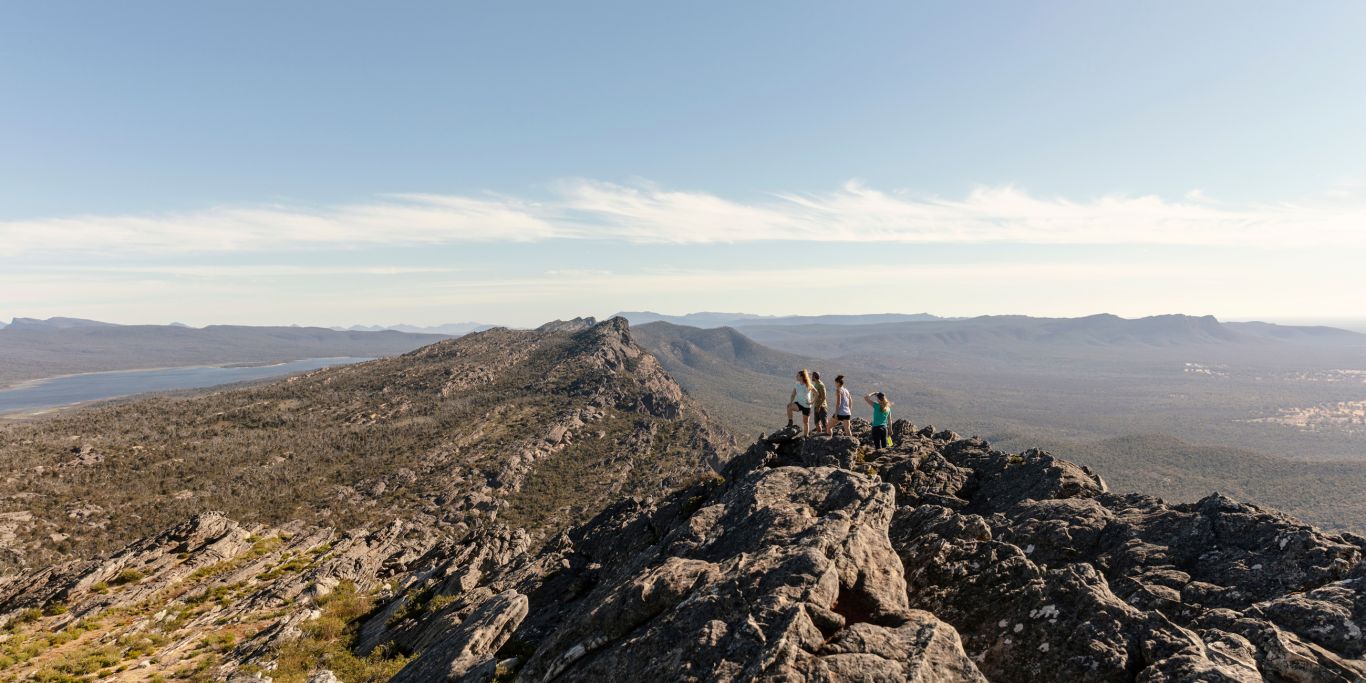
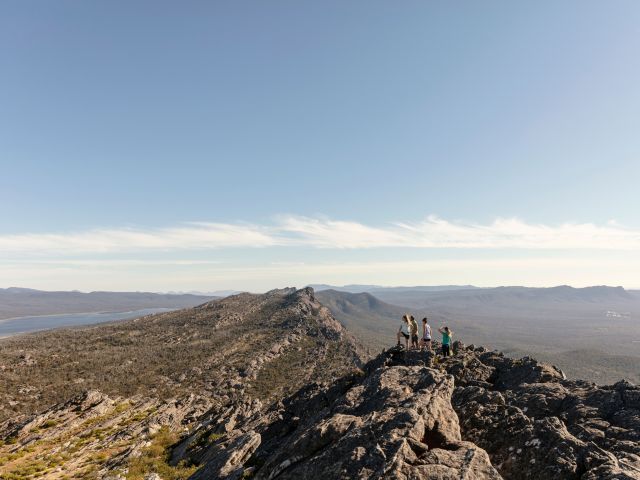
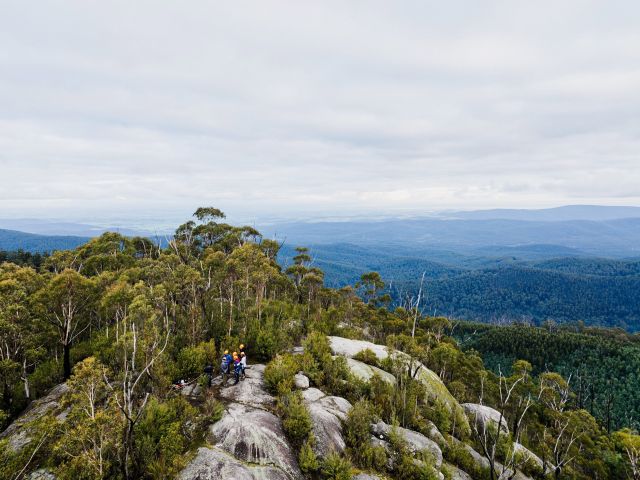
The full trail takes 13 days to complete. (Credit: Tourism Australia/Visit Victoria)
Most of the trail had reopened by July last year, but the remoteness and scale of damage to the central and southern sections meant overnight hiking remained off-limits while extensive repair works were underway. In total, six hike-in campgrounds were damaged, and large sections of track required rebuilding.
Recovery efforts have been supported by $36 million in funding from the Victorian and Commonwealth Governments.
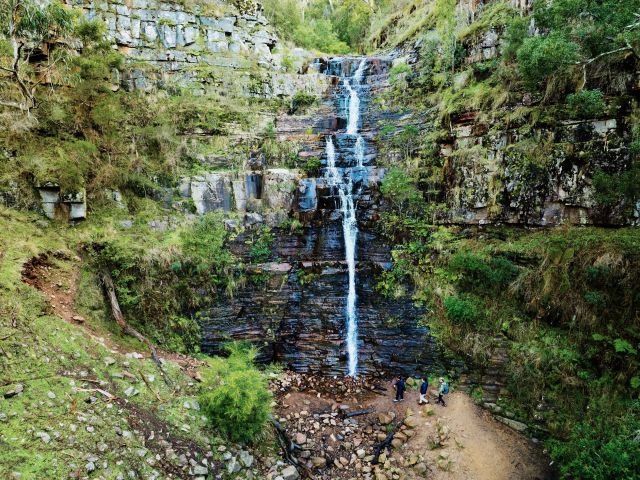
Large sections of track required rebuilding. (Credit: Tourism Australia/Visit Victoria)
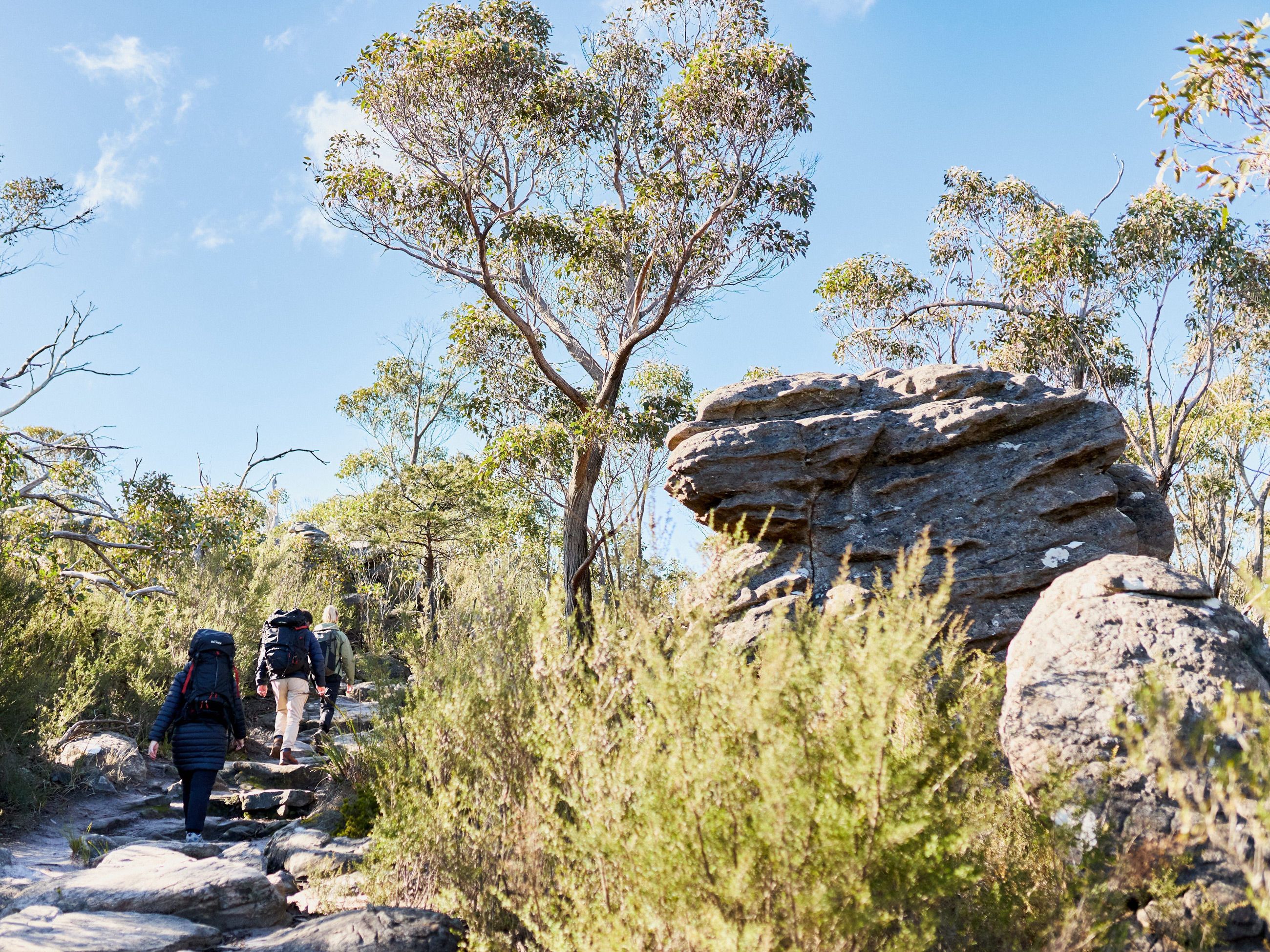
Around 100 stone steps were installed to manage steeper gradients. (Credit: Tourism Australia/Visit Victoria)
Parks Victoria recovery project officer, Kyle Hewitt, described arriving at a trail that had effectively vanished. “The post-fire inspections of the track quickly identified large sections which no longer had the cut-vegetation corridors which once guided people on their journey – it was like the track had disappeared," he said.
Works included stabilising and redefining approximately 20 kilometres of track, and around 100 stone steps were also installed to manage steeper gradients in what Hewitt describes as a now “fragile environment."
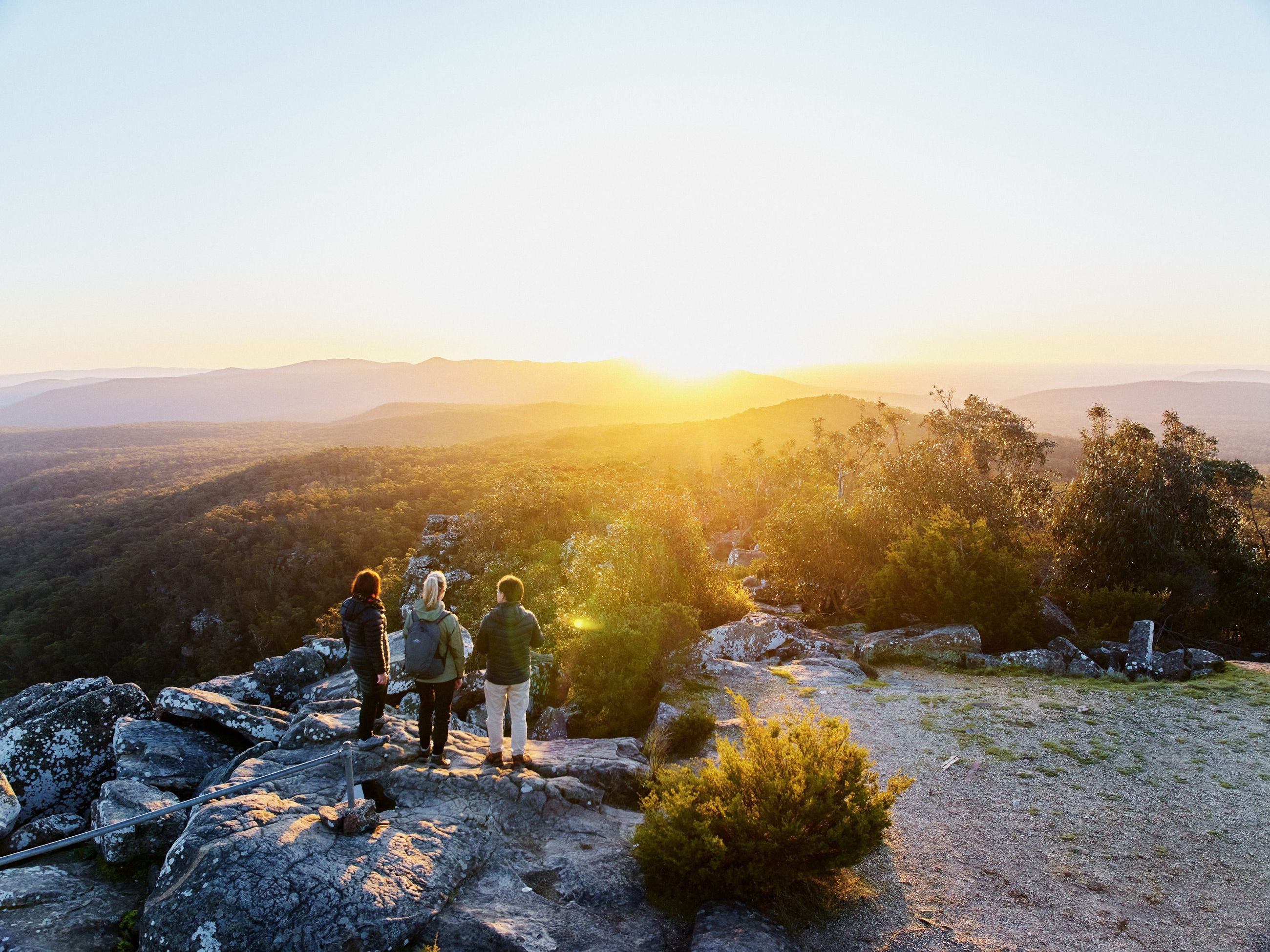
Mt Sturgeon (Wurgarri) is the final mountain of the journey. (Credit: Parks Victoria)
Of the affected campgrounds that reopened, Barri Yalug and Duwul sustained the most damage, though Hewitt noted that none were completely destroyed. Works included new timber tent pads, replacement water tanks and tank-landings, new windows at the Yarram shelter, and repairs to solar power systems. The remoteness of some sites required two helicopter sling-load operations to transport materials in and remove debris, while the Yarram shelter’s window height demanded professionally erected scaffolding reaching seven metres.
Nature, too, has been doing its own repairs. “There are lots of epicormic shoots coming back, and some of the ground cover has returned," Hewitt said – though shade remains scarce in the hardest-hit areas around Barri Yalug and Duwul.
Tick the box next to "Australian Traveller". That's it.
Emily Murphy is Australian Traveller's Email & Social Editor, and in her 4+ years at the company she has been instrumental in shaping its social media and email presence, and crafting compelling narratives that inspire others to explore Australia's vast landscapes. Her previous role was a journalist at Prime Creative Media and before that she was freelancing in publishing, content creation and digital marketing. When she's not creating scroll-stopping travel content, Em is a devoted 'bun mum' and enjoys spending her spare time by the sea, reading, binge-watching a good TV show and exploring Sydney's vibrant dining scene. Next on her Aussie travel wish list? South Australia and The Kimberley.
Winding down in the Yarra Valley, where ‘work from home’ becomes ‘work from wine country’.
Steam from my morning coffee curls gently into the cool valley air, mist-veiled vineyards stretch out in neat rows below me. Magpies warble from trees, and the morning’s quiet carries the soft bleating of lambs from a nearby paddock. Midweek in the Yarra Valley has its own rhythm. It’s slower, quieter, with more empty tables at cafes and cellar doors, and walking trails I can claim all to myself. It’s as if the entire region takes a deep breath once the weekend crowd leaves.
You’ll find walking trails are less crowded during the week. (Image: Visit Victoria)
I haven’t come here for a holiday, but to do a little work somewhere other than my home office, where I spend too much time hunched over my desk. Deadlines still loom, meetings still happen, but with flexible work evolving from ‘work from home’ to ‘work from anywhere’, I’m swapping the view of my front yard to the vineyards.
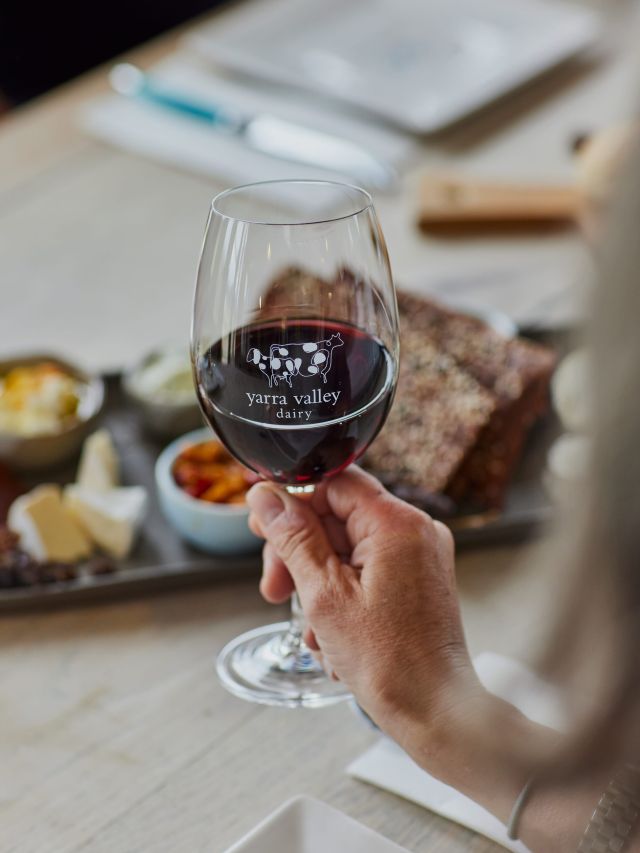
A quiet afternoon at Yarra Valley Dairy
Wine time at Yarra Valley Dairy, where you can enjoy a toastie or bagel in the cafe. (Image: Visit Victoria)
With the Yarra Valley just over an hour from the CBD, many Melburnians could drive here in their lunch break. I arrive late in the afternoon and am delighted to discover the Yarra Valley Dairy still open. On weekends, I’ve seen queues spilling out the door, but today there’s only one other couple inside. There’s no need to rush to secure a table; instead I browse the little store, shelves stacked with chutneys, spices, artisan biscuits and gorgeous crockery that would look right at home in my kitchen. It’s hard not to buy the lot.
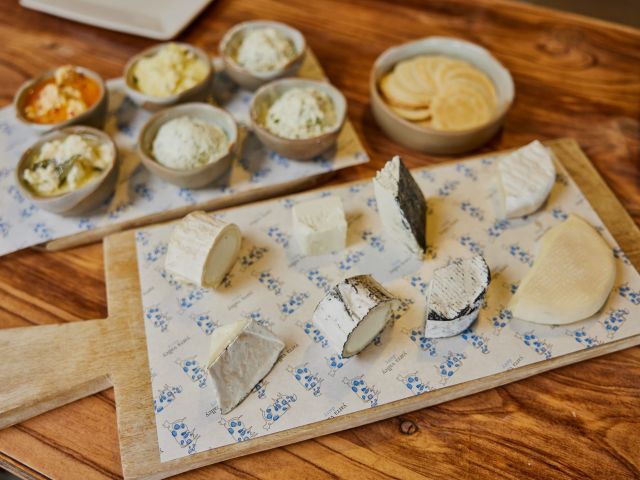
A cheese tasting plate at Yarra Valley Dairy.
I order a coffee and a small cheese platter, though the dairy has a full menu, and choose a wooden table with bentwood chairs by a wide window. The space feels part farm shed, part cosy café: corrugated iron ceiling, walls painted in muted tones and rustic furniture.
Outside, cows meander toward milking sheds. If pressed for time, there’s the option of quick cheese tastings – four samples for five dollars in five minutes – but today, I’m in no rush. I sip slowly, watching a grey sky settle over the paddock. Less than an hour ago I was hunched over my home-office desk, and now my racing mind has slowed to match the valley’s pace.
Checking in for vineyard views at Balgownie Estate
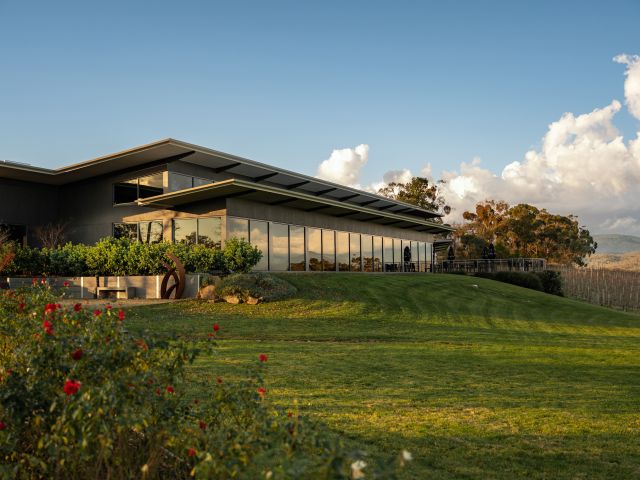
Restaurant 1309 at Balgownie Estate has views across the vines.
As my car rolls to a stop at Balgownie Estate, I’m quietly excited, and curious to see if my plan to work and play comes off. I’ve chosen a suite with a spacious living area and a separate bedroom so I can keep work away from a good night’s sleep. I could have booked a cosy cottage, complete with open fireplace, a comfy couch and a kettle for endless cups of tea, but as I am still here to get some work done, I opt for a place that takes care of everything. Dinner is served in Restaurant 1309, as is breakfast.
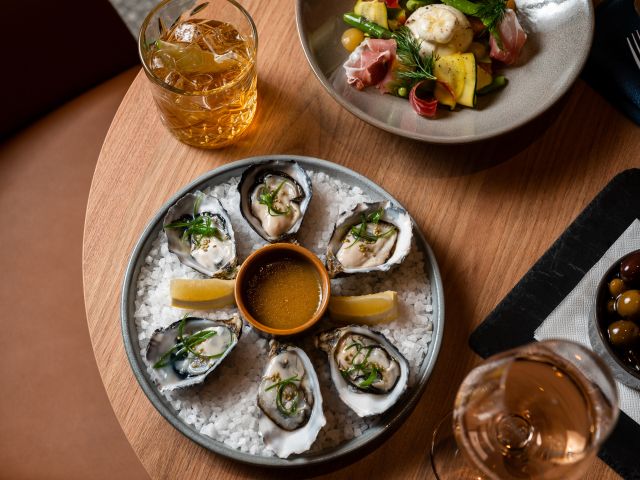
Oysters pair perfectly with a crisp white at Restaurant 1309.
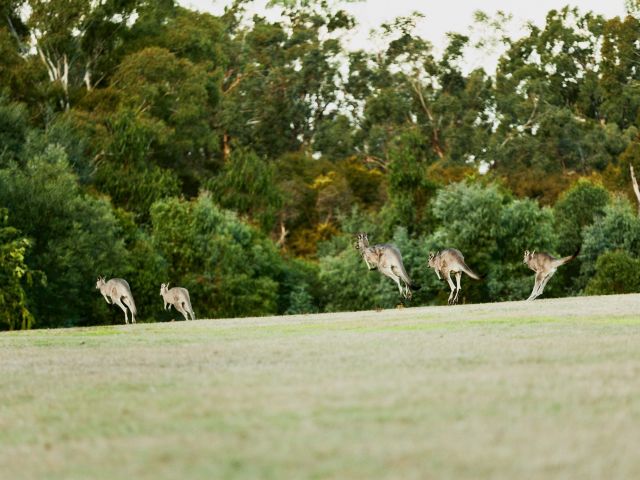
On my first evening, instead of the usual walk about my neighbourhood, I stroll through the estate at an unhurried pace. There’s no need to rush – someone else is preparing my dinner after all. The walking trails offer beautiful sunsets, and it seems mobs of kangaroos enjoy the view, too. Many appear, grazing lazily on the hillside.
I wake to the call of birds and, after breakfast, with the mist still lingering over the vineyards, I watch two hot-air balloons silently drift above clouds. Perched on a hill, Balgownie Estate sits above the mist, leaving the valley below veiled white.
Spotting the locals on an evening walk. (Image: Visit Victoria)
Exploring the Yarra Valley on two wheels
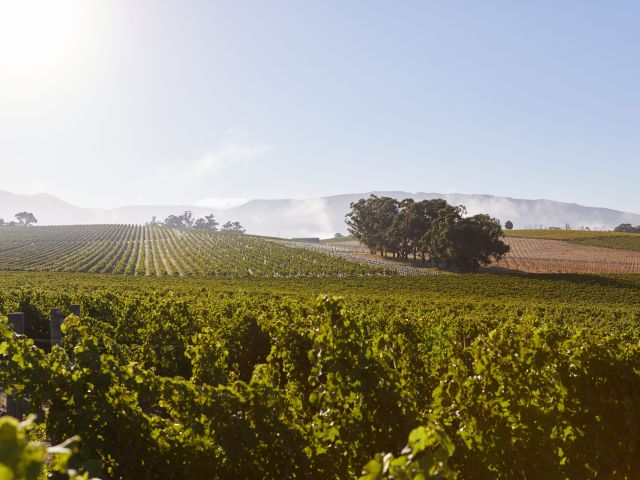
Swap your home office for a view of the vineyards. (Image: Visit Victoria/Cormac Hanrahan)
Perhaps because the Yarra Valley is relatively close to where I live, I’ve never considered exploring the area any way other than by car or on foot. And with a fear of heights, a hot-air balloon is firmly off the table. But when I discover I can hop on two wheels from the estate and cycle into Yarra Glen, I quickly realise it’s the perfect way to step away from my laptop and experience a different side of the region.
COG Bike offers pedal-assist e-bikes, and while the bike trail and paths into town aren’t particularly hilly, having an extra bit of ‘oomph’ means I can soak up the surroundings. Those lambs I heard calling early in the morning? I now find them at the paddock fence, sniffing my hands, perhaps hoping for food. Cows idle nearby, and at a fork in the bike path I turn left toward town.
It’s still morning, and the perfect time for a coffee break at The Vallie Store. If it were the afternoon, I’d likely turn right, in the direction of four wineries with cellar doors. The ride is about 15 kilometres return, but don’t let that put you off. Staying off the highway, the route takes you along quiet backroads where you catch glimpses of local life – farmers on tractors, weathered sheds, rows of vines and the kind of peaceful countryside you don’t see from the main road.
A detour to the Dandenong Ranges
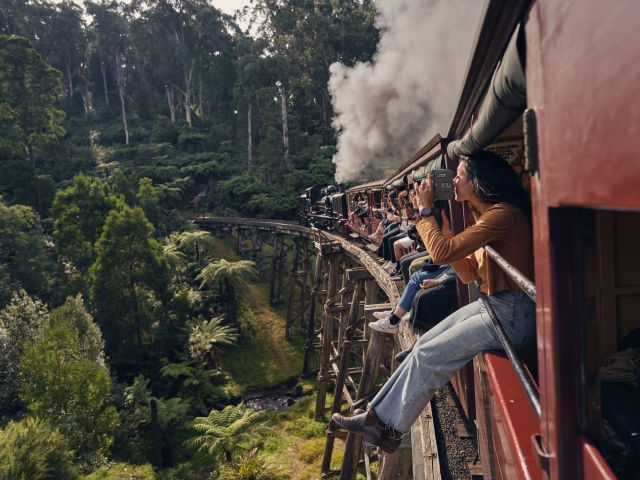
The iconic Puffing Billy runs every day except Christmas Day.
The beauty of basing myself in the Yarra Valley is how close everything feels. In barely half an hour I’m in the Dandenong Ranges, swapping vineyards for towering mountain ash and fern-filled gullies. The small villages of Olinda and Sassafras burst with cosy teahouses, antique stores and boutiques selling clothing and handmade body care items.
I’m drawn to RJ Hamer Arboretum – Latin for ‘a place for trees’. Having grown up among tall trees, I’ve always taken comfort in their presence, so this visit feels like a return of sorts. A stroll along the trails offers a choice: wide open views across patchwork paddocks below, or shaded paths that lead you deeper into the quiet hush of the peaceful forest.
The following day, I settle into a quiet corner on the balcony of Paradise Valley Hotel in Clematis and soon hear Puffing Billy’s whistle and steady chuff as the steam train climbs towards town. Puffing Billy is one of Australia’s most beloved steam trains, running through the Dandenong Ranges on a narrow-gauge track. It’s famous for its open carriages where passengers can sit with their legs hanging over the sides as the train chugs through the forest. This is the perfect spot to wave to those on the train.
After my midweek break, I find my inbox still full and my to-do list not in the least shrunken, just shifted from one task to another. But I return to my home office feeling lighter, clearer and with a smug satisfaction I’d stolen back a little time for myself. A midweek wind-down made all the difference.
A traveller’s checklist
Staying there
Balgownie Estate offers everything from cellar door tastings to spa treatments and fine dining – all without leaving the property.
Playing there
Visit the TarraWarra Museum of Art. (Image: Visit Victoria)
Wander through Alowyn Gardens, including a stunning wisteria tunnel, then explore the collection of contemporary artworks at TarraWarra Museum of Art. Cycle the Yarra Valley with COG Bike to visit local wineries and cellar doors.