A road trip along the Great Victorian Bathing Trail

hero media
From the coast to the bush, a leisurely road trip along the Great Victorian Bathing Trail is a ticket to chill.

Ever come back from a trip feeling more frazzled than before you left? Whatever happened to chilled-out breaks that leave you feeling relaxed, rested and restored? Thankfully, Victoria is bringing back the bliss with a bounty of thermal bathing experiences from the bush to the sea connected by the Great Victorian Bathing Trail.

With Gippsland Lakes in the east, Hepburn Springs in the north, Mornington Peninsula down south and the western reaches of the Great Ocean Road, you could go wild and try them all on the mother of all road trips. Or, like me, you could choose the greatest hits of Victoria’s bathing scene to get your fill of restorative, mineral-rich waters over a few days.

Mornington Peninsula

Melburnians visit the Mornington Peninsula for many reasons, from beach walks to cellar door-hopping. But increasingly, wellness is enticing visitors to make the 90-minute drive south from the city.

Alba Thermal Springs & Spa, Fingal

Alba Thermal Springs & Spa in Fingal is Victoria’s hottest new open-air, geothermal bathing destination. Launched in late 2022, Alba is sleek, sophisticated and somewhat surprising. Stepping into the imposing, Brutalist-inspired main building (which could easily double as a modern museum or contemporary art gallery), I’m shown the way towards bathing bliss.
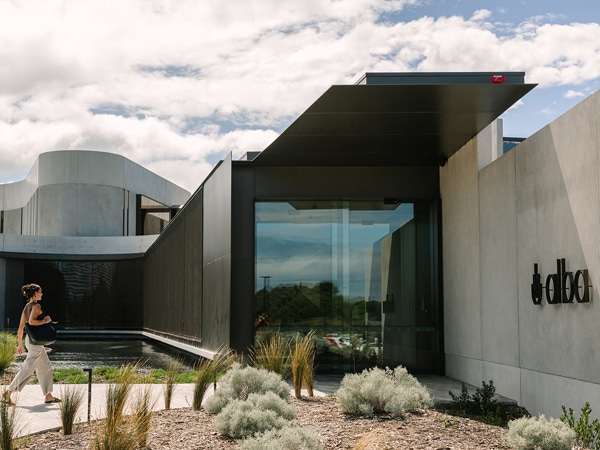
Alba building's main entrance
Alba’s design uses stone and concrete to express its setting in a rural context on the Mornington Peninsula. (Image: Visit Victoria)

After changing into a robe in the luxe change rooms (that are kitted out with lockers, showers and Dyson hair dryers), I sweat it out in the sauna then pool-hop for an hour or so, strolling up and down the landscaped property in search of my next hot haven. There are 22 pools of varying sizes, designs and temperatures (most are naturally heated to sit between 37°C and 41°C), but the views from the upper Cascades pool make it a stand-out.
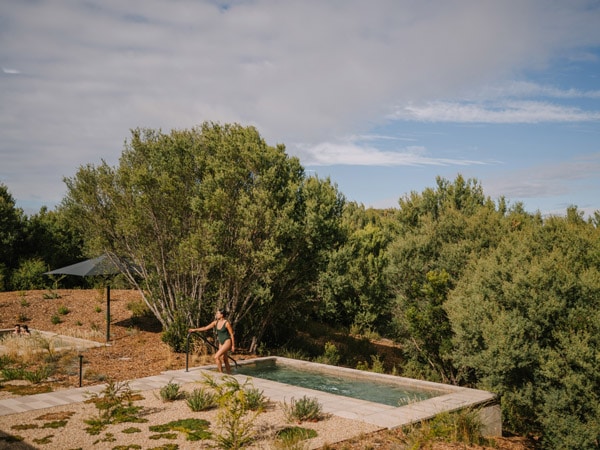
a woman came out from the pool at Alba after taking a dip
One of a series of plunge pools at Alba, which is surrounded by drifts of native grasses. (Image: Visit Victoria)

You might not associate bathing in outdoor mineral springs with fine dining, but both concepts coexist at Alba. Melbourne chef Karen Martini has created a dining experience perfectly suited to the unique environment at Thyme restaurant. I can’t remember the last time I arrived at a nice restaurant with wet hair, sans make-up. But I see I’m in good company once I clock the other robe- and slipper-wearing diners.
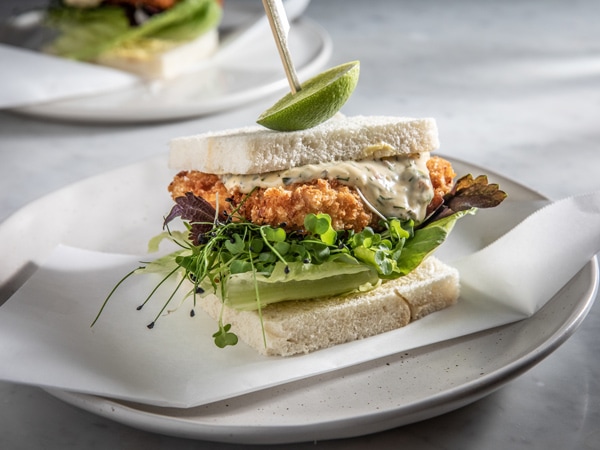
a close-up shot of a dish at Thyme Restaurant
It’s Thyme for lunch. (Image: Tourism Australia)

The menu’s light, fresh dishes deftly walk the fine line between health and indulgence. There are lots of veggies and lean proteins, but you could also order yourself a sneaky schnitzel or a serving of fries. Thermal bathing is thirsty work. Fortunately, the drinks list is a mighty one. If you’re avoiding booze, order a herbal tea, chai latte, cold-pressed juice, mocktail, non-alcoholic wine or coffee from nearby roaster, Little Rebel. If you’re in the mood for a tipple, there are also wines, spritzes and cocktails on offer, including four different riffs on the martini.

After a veg-packed meal (and a cheeky glass of local white), I float up the grand, spiral staircase to the spa for a treatment that’s so good, I fall asleep mid-massage. Mission accomplished.
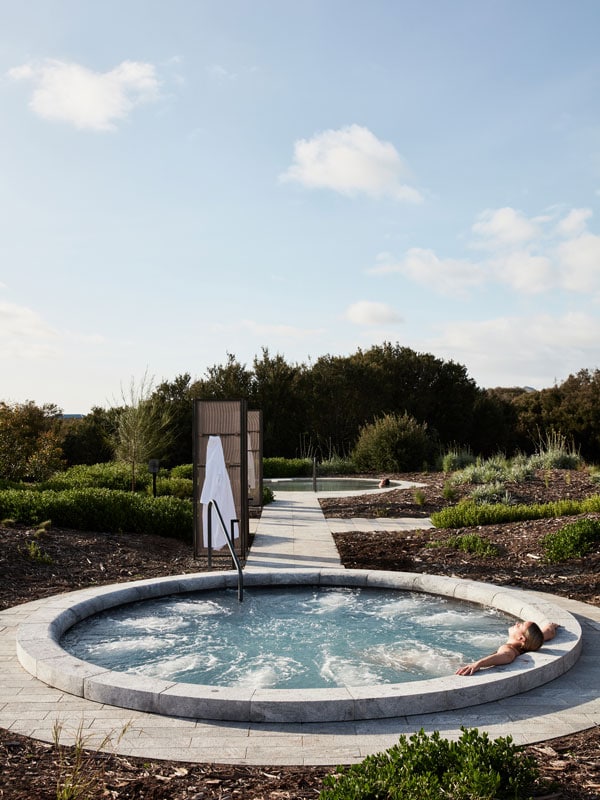
a man dipping in a thermal pool at Alba Thermal Springs & Spa
Alba is positioned in beautiful, landscaped gardens that reflect the wildness of the location. (Image: Visit Victoria)

Peninsula Hot Springs, Fingal

Just a few minutes down the road from Alba, which will add boutique accommodation to its offering in 2024, is Peninsula Hot Springs where I’m spending the night. A destination that has kickstarted a state-wide bathing renaissance since opening in 2005, the award-winning, bush-fringed hot springs have welcomed streams of folk from far and wide, all keen to tap into the benefits of balneotherapy.
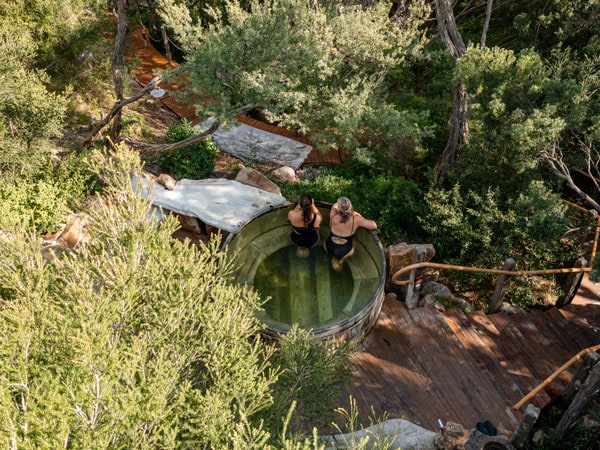
two women dipping in one of the pools at Peninsula Hot Springs
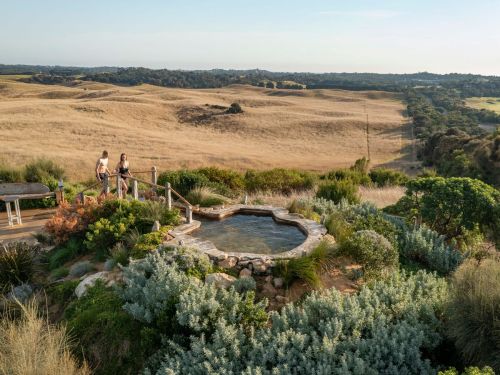
Peninsula Hot Springs pools are surrounded by native bushland, grasses and reeds. (Image: Tourism Australia)

What began as a simple series of geothermal baths in the bush has grown to include a day spa, kitchen garden and glamping, so visitors like myself can stay overnight. Upon arrival, I change straight into my bikini and walk the winding path in search of a pool to slip into. It’s an overcast day, but the springs are packed with groups of friends chatting and laughing while unwinding.
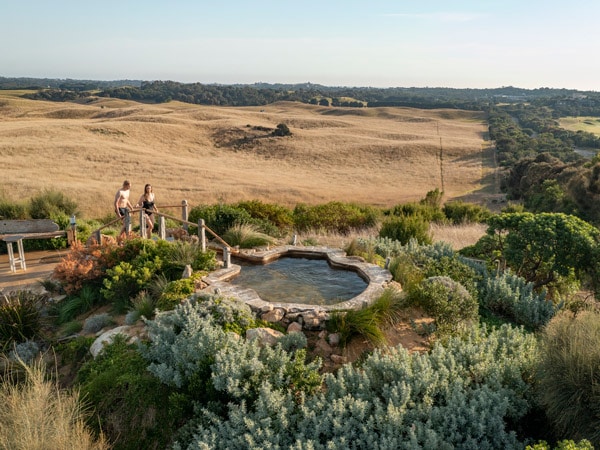
a couple heading towards the thermal pool at Peninsula Hot Springs
With its bush-fringed geothermal pools, Peninsula Hot Springs has helped kickstart a state-wide bathing renaissance. (Image: Tourism Australia)

With more than 70 bathing and wellness experiences on offer, such as Nepalese massaging mineral showers, a reflexology walk and ice cave, I’m overwhelmed by choice. In the end, I ditch the spa map and dabble in many different pools containing trace minerals touted to reduce stress and improve ailments such as arthritis and skin conditions.
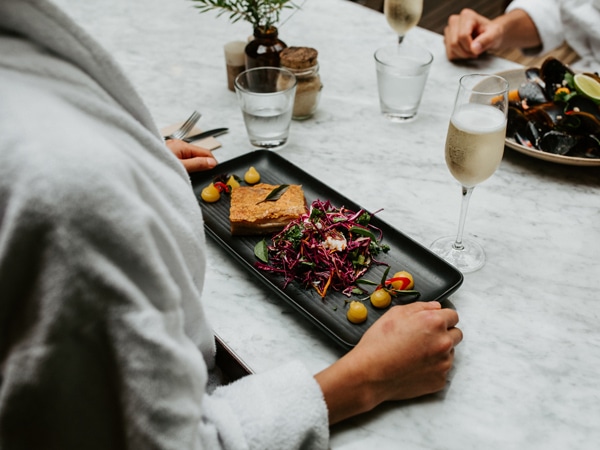
holding a tray of food on the table at Spa Dreaming Centre
Dine on nourishing fare at Spa Dreaming Centre. (Image: Tourism Australia)

After a hearty yet healthy dinner in the Spa Dreaming Centre dining room, I retreat to my glamping tent to get an early night. Peninsula Hot Springs puts the ‘glam’ in glamping with a cushy king bed and underfloor heating. Listening to the distinct ‘bonk’ of eastern banjo frogs calling in the nearby wetlands, I nod off within minutes.

From steaming mineral pools surrounded by bushland to curious ducks joining in on the fun, Peninsula Hot Springs is pure rejuvenation, and a place where time seems to pause. Gather your crew and soak it all in.

After waking at dawn to birdsong, I’m confident I’ve just experienced the most gloriously deep and rejuvenating slumber ever. And it appears I’m not alone, with an observational study conducted by RMIT University’s School of Health and Biomedical Sciences revealing that 82 per cent of bathers at Peninsula Hot Springs reported sleeping better after a visit.

My morning agenda includes a lazy breakfast of eggs, sourdough and coffee before another soak in the pools and a heavenly spa treatment. My once-tight shoulders never stood a chance against this schedule.
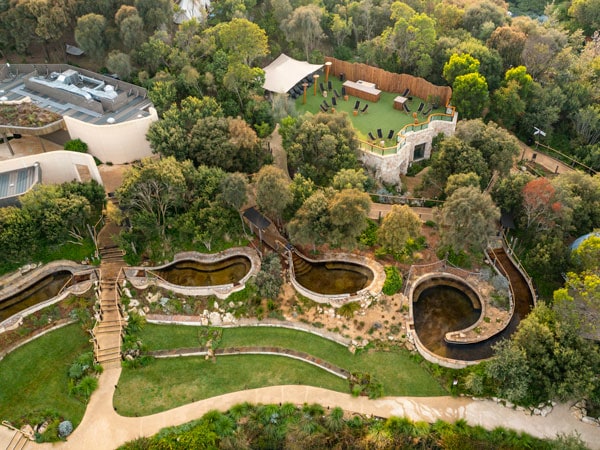
an aerial view of the plunge pools at Peninsula Hot Springs
Many of the plunge pools at Peninsula Hot Springs are set in peaceful surrounds. (Image: Tourism Australia)

Need tips, more detail or itinerary ideas tailored to you? Ask AT.

AI Prompt

Refuel in Sorrento

With lunch on my mind, I make the 20-minute drive to Sorrento, a town that had a moment in Australian pop culture in the mid-1990s with the release of a film called Hotel Sorrento and Tina Arena’s ballad Sorrento Moon (still a favourite with easy listening radio stations). It’s easy to see why the town has a song written about it. Sorrento has all the calling cards of a classic seaside holiday town. There’s a pretty wooden pier, sailing club and fish and chip shops. But it’s the grand, limestone pub overlooking the sea that’s calling my name.
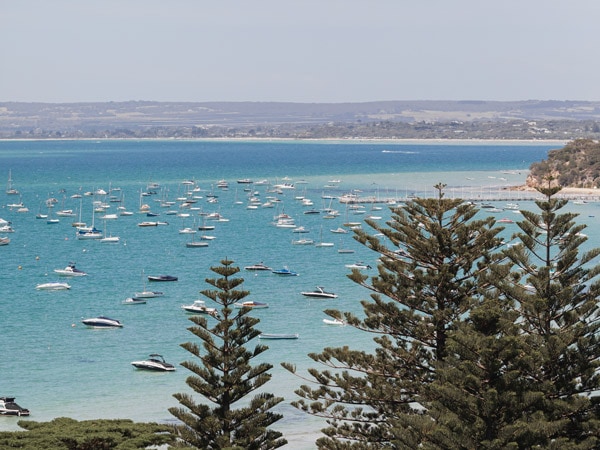
coastal views at Hotel Sorrento
Hotel Sorrento offers views of the sea and sky. (Image: Threefold Social)

A landmark that’s stood since 1872, Hotel Sorrento is an institution. Owned by a local family for three generations, this heritage beauty is frequented by everyone from tradies getting together for knock-off pints in the front bar to tourists enjoying a coastal getaway in the upstairs accommodation. When I arrive, the dining room is abuzz with lunch crowds. Looking around at my fellow diners, seafood and wine seems to be the order of the day. But I can’t go past the winning combination of saganaki, figs and honey – a sublime dish that’s the next best thing after a trip to Greece.
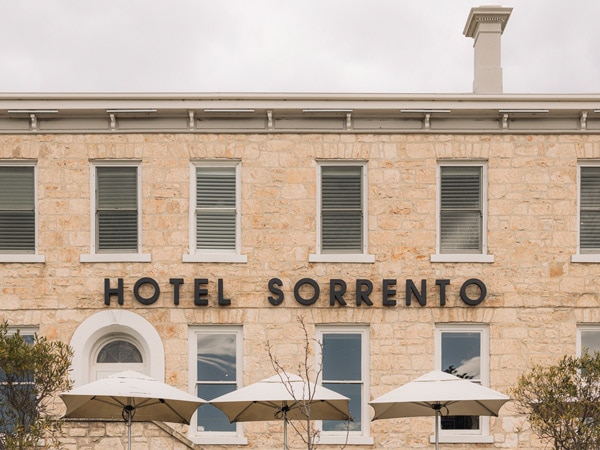
the building exterior of Hotel Sorrento
Hotel Sorrento, established in 1872, is an iconic landmark in seaside Sorrento.

A breezy spot to throw back a few beers on a sunny afternoon, I’m reluctant to leave. If you’ve got time to explore the Bellarine Peninsula and beyond, head to Sorrento Pier and drive your car onto the Searoad Ferry. You’ll reach Queenscliff in about 40 minutes, which is way faster (not to mention more fun) than driving all the way around Port Phillip Bay.
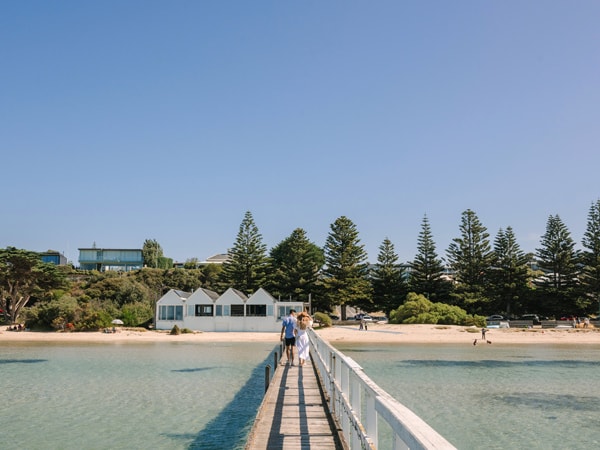
a couple walking along the Sorrento Pier
Sorrento Pier provides access across the bay to Queenscliff via ferry. (Image: Visit Victoria)

Lon Retreat & Spa, Point Lonsdale

Mineral-fed soaking tubs beckon at Lon Retreat & Spa in Point Lonsdale, while Warrnambool’s geothermal waters wait near the end of the Great Ocean Road (more on that below). Otherwise, drive north back to Melbourne like I did (visiting a cellar door on the way home is almost mandatory in these parts, so factor in a stop at Red Hill, Shoreham or Merricks if you can).
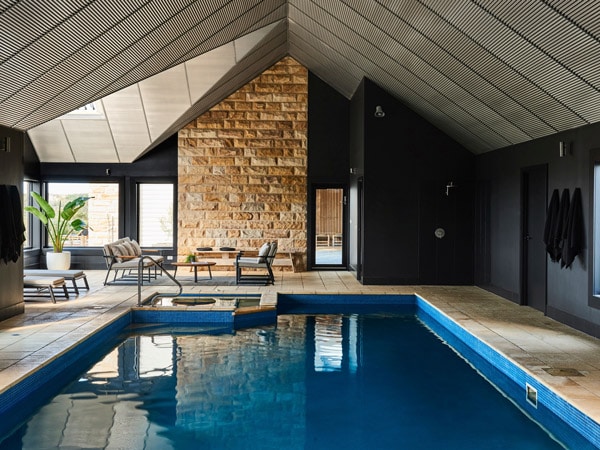
the indoor pool at Lon Retreat & Spa
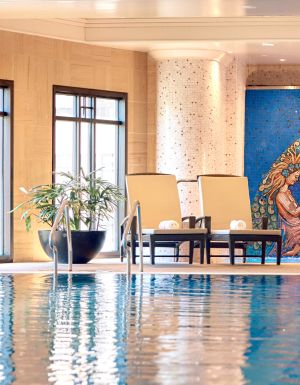
Soak in the mineral-fed tubs at Lon Retreat & Spa. (Image: Visit Victoria)

Hepburn Springs

While the Peninsula might have the new kids on the bathing block, up north is where you’ll find one of the originals. Just an 80-minute drive north-west of Melbourne Airport, Hepburn Springs is a slow-paced, peaceful town that feels so far removed from the hectic highway traffic that it takes a little while to switch gears. People have been travelling to the region seeking respite from the stresses of the Big Smoke for more than a century. And for good reason. Home to 80 per cent of Victoria’s mineral springs and Australia’s first ‘Mineral Reserve’ (created back in 1865), this corner of Victoria is paradise for lovers of down-to-earth wellness experiences.

Hepburn Spa Retreat

Checking into a Hepburn Spa Retreat villa, I activate relaxation mode immediately when I realise that the recently refurbished accommodation is truly self-contained. Absolutely everything has been thought of. There’s an air purifier, gas fireplace, two flat-screen TVs, comfy lounge, fully equipped kitchen (including a fridge loaded with breakfast provisions) and an oversized spa bath (complete with robes, slippers and bath salts). Thoughtful touches include a yoga mat, a supreme collection of herbal teas and a bedside notepad to commit your wellness goals to paper.
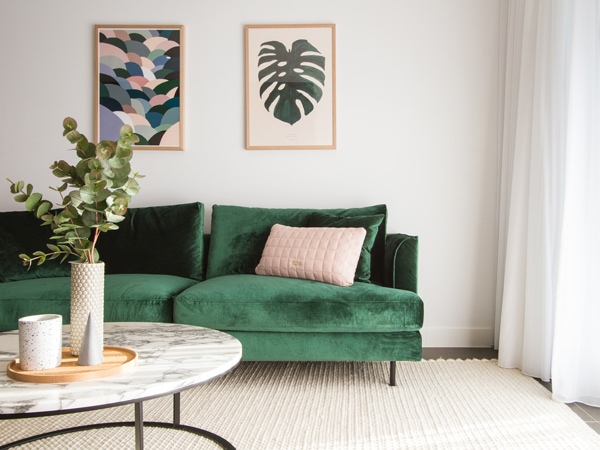
a look inside the villa at Hepburn Springs Escape
The Spa Escape is one of several accommodations you can stay in at Hepburn Spa Retreat.

The beauty of Hepburn Springs is that it’s small, so you can leave your car behind and explore on foot. You’re never far from a bushwalking trail here, like the 2.9-kilometre Argyle Walk – an easy loop I complete in less than an hour without sharing the track with another soul (except flocks of native birds and a solitary, shy echidna).

By night, the town is eerily quiet if you’re accustomed to the constant, low-humming buzz of the city. Just off the main street, I find The Surly Goat, a little restaurant doing big things with food and wine. Here you’ll be offered four courses that change from day-to-day.

Email ahead with your dietary requirements if you’re vegetarian, allergic to nuts or seafood, and dishes will be crafted to suit your needs. Otherwise, just sit back and let chef David Willcocks take the wheel (trust me, he knows what he’s doing). Every dish at this convivial hatted restaurant is an understated triumph, from a carefully constructed daikon roll to a deceptively simple dessert of Morningswood Farm strawberries with cream. Overhearing gushing words of praise coming from other diners confirms I’m not alone in this thinking.

Hepburn Bathhouse & Spa

Having a spa experience is obviously on my bingo card, so I make a beeline for Hepburn Bathhouse & Spa the following morning. Arriving early in the day is the key to success here.
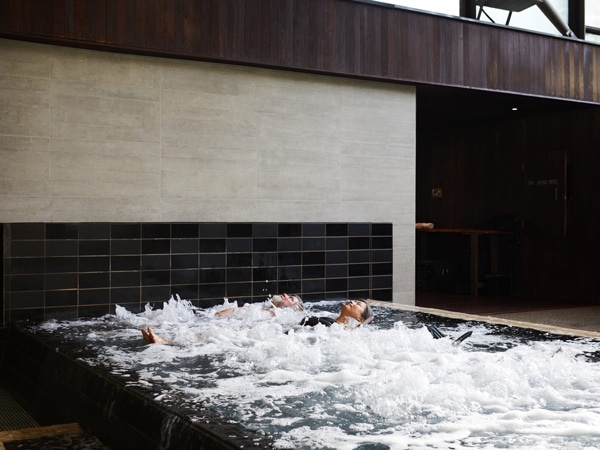
a couple enjoying a relaxing dip at Hepburn Bathhouse
There are two main pools to experience in  Hepburn Bathhouse. (Image: Visit Victoria)

There are two main pools, but the 90-minute Sanctuary Mineral Bathing experience is a more private affair. Stepping through the door into the private area, I hop between the hammam, aroma steam room and salt and magnesium pools.
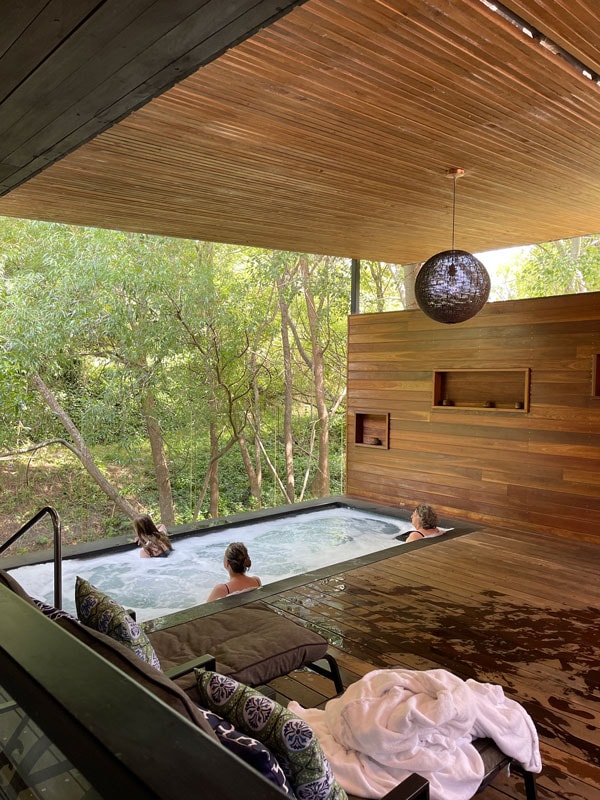
people enjoying a dip in the wellness pool at Hepburn Bathhouse
Take in the views from the salt and magnesium pools. (Image: Visit Victoria)

A Fire & Frost Cryo facial in the day spa caps off the experience – I leave feeling a decade younger. Have I discovered the Fountain of Youth? The mineral-rich water is prized in these parts, and not just for bathing. Most local shops stock sparkling water from Daylesford and Hepburn Mineral Springs Co., a locally owned business bottling the region’s famous H2O. But before I leave, I fill my bottle with water pumped from one of the town’s mineral spring bores – the ultimate way to take a bit of Hepburn home.

Weekly travel news, experiences
insider tips, offers, and more.

Great Ocean Road

Deep Blue Hot Springs, Warrnambool

Towards the western end of the Great Ocean Road, Warrnambool’s Deep Blue Hot Springs is a top spot to decompress after a long drive. Here, the geothermal waters drawn from 850 metres below the surface are fed into a series of open-air rock pools and sensory caves that are open, day and night. Stay onsite in an ocean-view room at the Deep Blue Hotel to make the most of the scenic seaside locale.
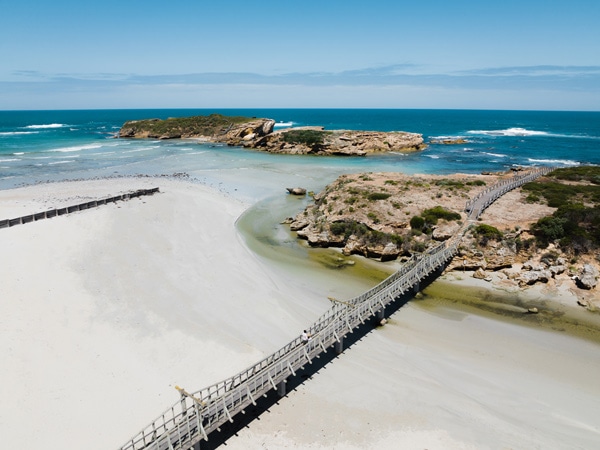
an aerial view of Warrnambool and its surrounding hot springs
Warrnambool is a hot springs hotspot. (Image: Visit Victoria)

12 Apostles Hot Springs & Resort, Great Ocean Road

You’ll have to wait until 2026 to experience Australia’s biggest hot springs development. In addition to natural hot springs, there are plans for a wellness centre, amphitheatre, restaurant, bar, cafe and luxury eco-pod accommodation across the 78-hectare site.

Gippsland

Metung Hot Springs, East Gippsland

In the East Gippsland town of Metung, you can sink into a pool surrounded by native flora, slip into a barrel with a view, enjoy a massaging mineral shower or sweat it out like a Scandinavian in a hot sauna. A new lagoon precinct opens this year, including its largest pool yet, a cold plunge pool, geothermal showers and a floating sauna.
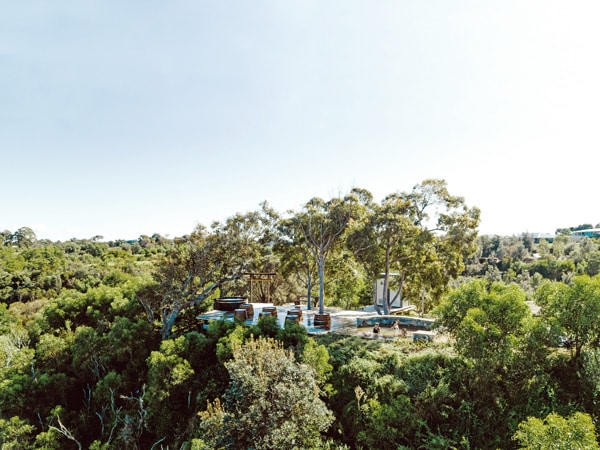
an aerial view of three girls dipping in Metung Hot Springs
Metung Hot Springs is set on a natural undulating site. (Image: Visit Victoria; Ben Savage)

With Metung being a four-hour drive from Melbourne, staying overnight at the springs’ own lagoon-side glamping accommodation is a genius move.
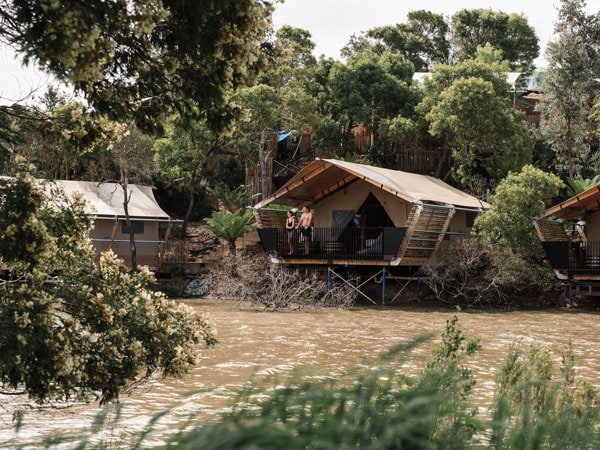
glamping tents by the river at Metung Hot Springs
Glamp at Metung Hot Springs. (Image: Tourism Australia)

Phillip Island

Phillip Island Hot Springs

Slated to open later this year, this hotly anticipated development will give visitors yet another reason to make the trip across the bridge to Phillip Island, home to the world-famous penguin parade. Come to Phillip Island for the penguins; stay for some relaxation.

Want to see more stories from Australian Traveller in your Google search results?

  1. Click here to set Australian Traveller as a preferred source.
  2. Tick the box next to "Australian Traveller". That's it.
Jo Stewart
Jo Stewart is a freelance features writer who pens stories about nature, pop culture, music, art, design and more from her home in the Macedon Ranges of Victoria. When not writing, you can find her trawling through vinyl records and vintage fashion at op shops, antique stores and garage sales.
View profile and articles

This scenic Victorian region is the perfect antidote to city life

    Craig Tansley Craig Tansley

    Video credit: Visit Victoria/Tourism Australia

    The Grampians just might be the ultimate antidote for the metropolis, writes one returning Aussie ready to disconnect from the modern world and reconnect to the Great outdoors.

    There are no kangaroos back in Chicago: they’re all here in the Grampians/Gariwerd. In the heart of the Grampians National Park’s main gateway town, Halls Gap, pods of eastern greys are eating grass beside my parked rental car beneath the stars. Next morning, when I see the backyard of my rented villa on the edge of town for the first time, there are kangaroos feeding beside a slow-moving creek, lined with river red gums.

    Five hundred metres up the road, 50 or so of them are eating by the side of the road in a paddock. I pull over to watch and spot three emus. Yellow-tailed black cockatoos fly overhead towards the tall green mountains just beyond town.

    ‘Kee-ow, keee-oww’… their calls fuse with the maniacal cackle of a kookaburra (or 10). Gawd, how I’ve missed the sound of them. Far above, a wedge-tailed eagle watches, and there you go: the ‘great birds of Australia’ trifecta, all half a kay from the town limits.

    Exchanging city chaos for country calm

    kangaroos near Halls Gap, Grampians National Park
    The park is renowned for its significant diversity of native fauna species. (Image: Visit Victoria/Robert Blackburn)

    I’ve come to the Grampians to disconnect, but the bush offers a connection of its own. This isn’t just any bush, mind you. The Grampians National Park is iconic for many reasons, mostly for its striking sandstone mountains – five ridges run north to south, with abrupt, orange slopes which tumble right into Halls Gap – and for the fact there’s 20,000 years of traditional rock art. Across these mountains there are more than 200 recorded sites to see, created by the Djab Wurrung, Jardwadjali and Gunditjmara peoples. It’s just like our outback… but three hours from Melbourne.

    I’ve come here for a chance at renewal after the chaos of my life in America’s third-largest city, Chicago, where I live for now, at the whim of a relative’s cancer journey. Flying into Melbourne’s airport, it only takes an hour’s drive to feel far away from any concept of suburbia. When I arrive in Halls Gap two hours later, the restaurant I’m eating at clears out entirely by 7:45pm; Chicago already feels a lifetime ago.

    The trails and treasures of the Grampians

    sunrise at Grampians National Park /Gariwerd
    Grampians National Park /Gariwerd covers almost 2000 square kilometres. (Image: Ben Savage)

    Though the national park covers almost 2000 square kilometres, its best-known landmarks are remarkably easy to access. From my carpark here, among the cockatoos and kangaroos on the fringe of Halls Gap, it only takes 60 seconds’ driving time before I’m winding my way up a steep road through rainforest, deep into the mountains.

    Then it’s five minutes more to a carpark that serves as a trailhead for a hike to one of the park’s best vantage points, The Pinnacles. I walk for an hour or so, reacquainting myself with the smells and the sounds of the Aussie bush, before I reach it: a sheer cliff’s edge lookout 500 metres up above Halls Gap.

    walking through a cave, Hollow Mountain
    Overlooking the vast Grampians landscape from Hollow Mountain. (Image: Robert Blackburn)

    There are hikes and there are lookouts and waterfalls all across this part of the park near town. Some are a short stroll from a carpark; others involve long, arduous hikes through forest. The longest is the Grampians Peaks Trail, Victoria’s newest and longest iconic walk, which runs 160 kilometres – the entire length of Grampians National Park.

    Local activities operator Absolute Outdoors shows me glimpses of the trail. The company’s owner, Adrian Manikas, says it’s the best walk he’s done in Australia. He says he’s worked in national parks across the world, but this was the one he wanted to bring his children up in.

    “There’s something about the Grampians,” he says, as he leads me up a path to where there’s wooden platforms for tents, beside a hut looking straight out across western Victoria from a kilometre up in the sky (these are part of the guided hiking options for the trail). “There are things out here that you won’t see anywhere else in Australia.” Last summer, 80 per cent of the park was damaged by bushfire, but Manikas shows me its regrowth, and tells me of the manic effort put in by volunteers from town – with firefighters from all over Australia – to help save Halls Gap.

    wildflowers in Grampians National Park
    Spot wildflowers. (Image: Visit Victoria)

    We drive back down to Halls Gap at dusk to abseil down a mountain under the stars, a few minutes’ walk off the main road into town. We have headlamps, but a full moon is enough to light my way down. It takes blind faith to walk backwards down a mountain into a black void, though the upside is I can’t see the extent of my descent.

    Grampians National Park at sunset
    Grampians National Park at sunset. (Image: Wine Australian)

    The stargazing is ruined by the moon, of course, but you should see how its glow lights up the orange of the sandstone, like in a theme park. When I’m done, I stand on a rocky plateau drinking hot chocolate and listening to the Aussie animals who prefer nighttime. I can see the streets of Halls Gap off in the distance on this Friday night. The restaurants may stay open until 8pm tonight.

    What else is on offer in The Grampians?

    a boat travelling along the Wimmera River inDimboola
    Travelling along the Wimmera River in Dimboola. (Image: Chris McConville)

    You’ll find all sorts of adventures out here – from rock climbing to canoeing to hiking – but there’s more to the Grampians than a couple of thousand square kilometres of trees and mountains. Halls Gap may be known to most people, but what of Pomonal, and Dimboola, and Horsham? Here in the shadow of those big sandstone mountains there are towns and communities most of us don’t know to visit.

    And who knew that the Grampians is home to Victoria’s most underrated wine region? My disconnection this morning comes not in a forest, but in the tasting rooms and winery restaurants of the district. Like Pomonal Estate, barely 10 minutes’ drive east of Halls Gap, where UK-born chef Dean Sibthorp prepares a locally caught barramundi with lentil, pumpkin and finger lime in a restaurant beside the vines at the base of the Grampians. Husband-and-wife team Pep and Adam Atchison tell me stories as they pour their prize wines (shiraz is the hero in these parts).

    dining at Pomonal Estate
    Dine in a restaurant beside vines at Pomonal Estate. (Image: Tourism Australia)

    Three minutes’ drive back down the road, long-time mates Hadyn Black and Darcy Naunton run an eclectic cellar door out of a corrugated iron shed, near downtown Pomonal. The Christmas before last, half the houses in Pomonal burnt down in a bushfire, but these locals are a resilient lot.

    The fires also didn’t stop the construction of the first art centre in Australia dedicated to environmental art in a nature-based precinct a little further down the road (that’s Wama – the National Centre for Environmental Arts), which opened in July. And some of the world’s oldest and rarest grape vines have survived 160 years at Best’s Wines, outside the heritage town of Great Western. There’s plantings here from the year 1868, and there’s wines stored in century-old barrels within 150-year-old tunnels beneath the tasting room. On the other side of town, Seppelt Wines’ roots go back to 1865. They’re both only a 30-minute drive from Halls Gap.

    Salingers of Great Western
    Great Western is a charming heritage town. (Image: Griffin Simm)

    There’s more to explore yet; I drive through tiny historic towns that barely make the map. Still part of the Grampians, they’re as pretty as the mountains behind them: full of late 19th-century/early 20th-century post offices, government offices and bank buildings, converted now to all manner of bric-a-brac stores and cafes.

    The Imaginarium is one, in quirky Dimboola, where I sleep in the manager’s residence of an old National Australia Bank after a gourmet dinner at the local golf club, run by noted chef and teacher, Cat Clarke – a pioneer of modern Indigenous Australian cooking. Just south, I spend an entire afternoon at a winery, Norton Estate Wines, set on rolling calico-coloured hills that make me think of Tuscany, chit-chatting with owners Chris and Sam Spence.

    Being here takes me back two decades, when I lived here for a time. It had all seemed as foreign as if I’d driven to another planet back then (from Sydney/Warrane), but there seemed something inherently and immediately good about this place, like I’d lived here before.

    And it’s the Australian small-town familiarity of the Grampians that offers me connection back to my own country. Even in the better-known Halls Gap, Liz from Kerrie’s Creations knows I like my lattes with soy milk and one sugar. And while I never do get the name of the lady at the local Ampol station, I sure know a lot about her life.

    Kookaburras on a tree
    Kookaburras are one of some 230 bird species. (Image: Darren Donlen)

    You can be a local here in a day; how good is that? In Chicago, I don’t even know who my neighbour is. Though each day at dusk – when the kangaroos gather outside my villa, and the kookaburras and the black cockatoos shout out loud before settling in to sleep – I prefer the quieter connection I get out there in the bush, beneath these orange mountains.

    A traveller’s checklist

    Staying there

    Sleep beside the wildlife on the edge of Halls Gap at Serenity.

    Playing there

    abseiling down Hollow Mountain
    Hollow Mountain is a popular abseiling site.

    Go abseiling under the stars or join a guided hike with Absolute Outdoors. Visit Wama, Australia’s first environmental art centre. Check out Dimboola’s eccentric Imaginarium.

    Eating there

    steak, naan bread and beer at Paper Scissors Rock in Halls Gap
    Paper Scissors Rock in Halls Gap serves a great steak on naan bread.

    Eat world-class cuisine at Pomonal Estate. Dine and stay at much-revered icon Royal Mail Hotel in Dunkeld. The ‘steak on naan’ at Halls Gap brewhouse Paper Scissors Rock, can’t be beat.

    Dunkeld Arboretum in Grampians National Park
    The serene Dunkeld Arboretum.

    For Halls Gap’s best breakfasts head to Livefast Cafe. Sip local wines at Great Western’s historic wineries, Best’s Wines, Seppelt Wines and Norton Estate Wines.

    two glasses of beer at Paper Scissors Rock in Halls Gap
    Sink a cold one at Paper Scissors Rock.