Feel like hiking around Melbourne? While clinging close to the CBD might offer you plenty of classic Melbourne walks, you’ll need to venture outside of the city to find those hard-won hiking trails.
There are numerous picturesque hikes near Melbourne, from the Yarra Bend Loop to Neds Gully Track, all varying in difficulty, terrain and distance. So next time you’re feeling like you need to bathe yourself in nature, leave Melbourne’s storied restaurants, cafes, bars and museums behind and head on out to these 13 glorious hiking trails.
Easy hikes in Melbourne
If you’re after some easy hikes in Melbourne then take note of the below options, all featuring relatively smooth trails that are wheelchair accessible, have very few obstacles or elevation gains, and are suitable for people of all ages and fitness levels.
1. Yarra Bend Loop, Fairfield
Time from Melbourne CBD: 15 minutes
Starting from the Studley Park Boathouse, the Yarra Bend Loop is an easy 9.5 kilometres and should take you around two hours to complete. This trail is a popular hike for families and couples with the added benefit of being within 15 minutes of the CBD.
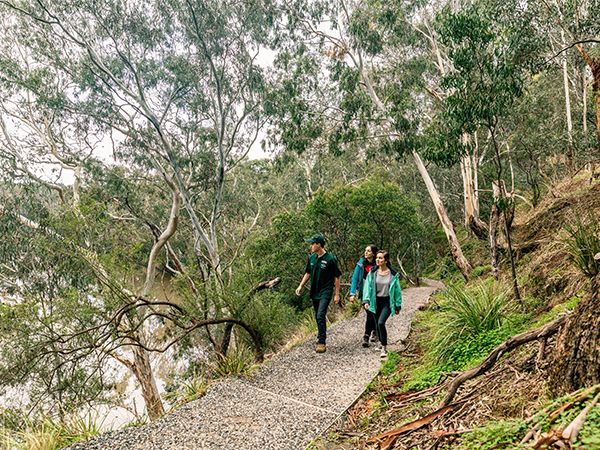
The loop spans Yarra Bend Park, Studley Park and Dights Falls with plenty of natural landscapes to admire along the way. The parks also have numerous other signposted trails that are much shorter, but given it is an easy drive from the city, most visitors don’t mind hiking the longer loop and making a day of it.
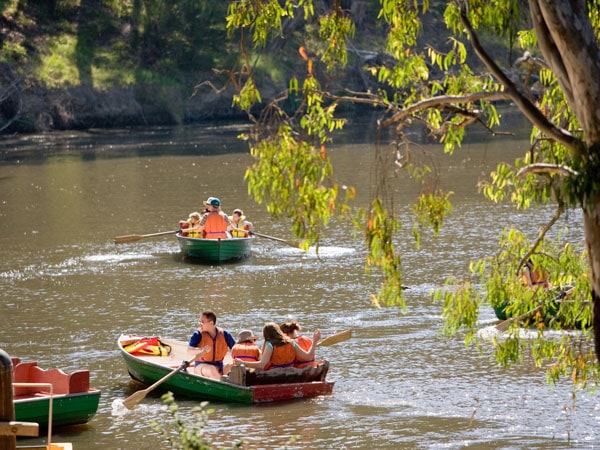
Distance: 9.5 kilometres
Getting there: Take the 15-minute drive to Studley Park Boathouse
Accessibility: The hike is wheelchair accessible
Facilities: Parking and toilets are available at the boathouse
2. Steavenson Falls, Marysville
Time From Melbourne CBD: 1.5 hours
One of the best Melbourne hikes for beginners is this inspiring jaunt up to one of Victoria’s highest waterfalls. The roaring magic of the impressive 84-metre waterfall is a pot of gold at the end of a very short, easy hike that’s framed by majestic eucalyptus trees.
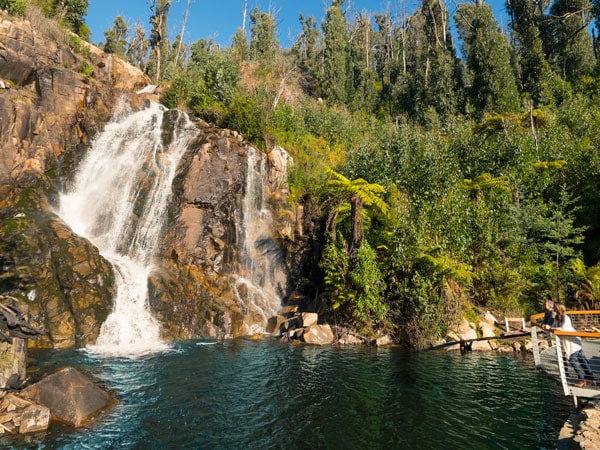
You’ll find this path just outside of the town of Marysville, which is northeast of Melbourne. The path is very well-maintained, winding up the side of the hill to a top viewing platform for stunning views of the cascading falls.
Distance: 700 metres
Getting there: Take the 1.5-hour drive to Steavenson Falls car park
Accessibility: The hike is wheelchair accessible
Facilities: Picnic areas, toilets and parking are all available near the car park
3. Organ Pipes National Park, Calder Park
Time from Melbourne CBD: 30 minutes
Organ Pipes National Park is another super easy hike near Melbourne CBD, home to unique rock formations including the namesake Organ Pipes; it’s endlessly photogenic.
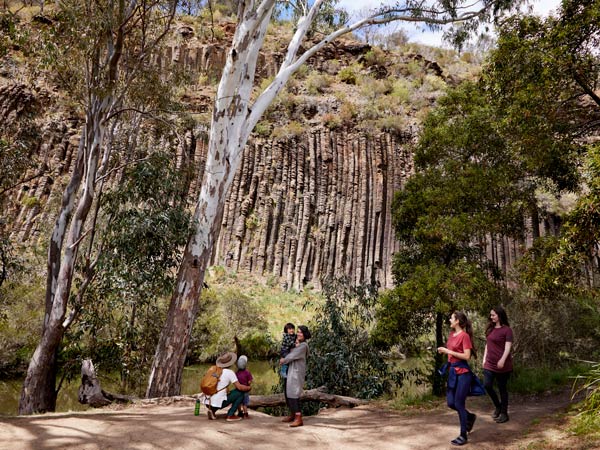
It should only take you just over an hour to complete the three-kilometre loop, taking you through a river valley that screams serenity and sucks you out of Melbourne’s endless hustle.
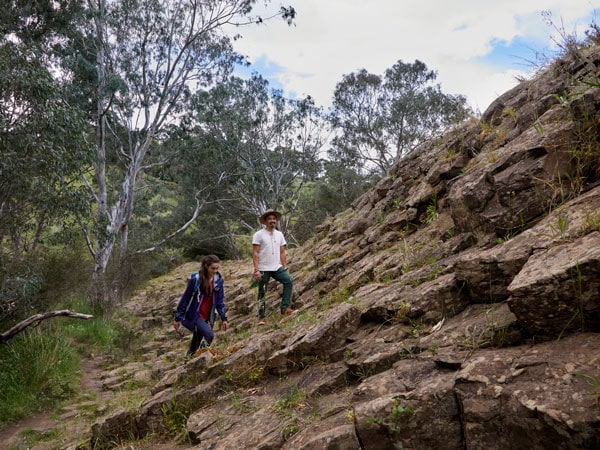
This one is a great way to reset the mind and refocus your energy, given it cradles you in nature and has too many visual distractions for you to even think about the city. Given its proximity to the CBD, this is a popular choice for a family outing should the whole crew want to take advantage of nature close to Melbourne.
Distance: Three kilometres
Getting there: Take the 30-minute drive out to Organ Pipes car park
Accessibility: The hike is wheelchair accessible
Facilities: Parking and toilets are available near the car park
4. 1000 Steps Walk, Ferntree Gully
Time from Melbourne CBD: 40 minutes
Melbourne’s most popular bushwalk, 1000 Steps, takes place in the cinematic Dandenong Ranges National Park. The park, which has numerous other trails including the magical Sherbrooke Falls, is known as one of Australia’s most beautiful sights so this is very much considered a rite of passage for locals.
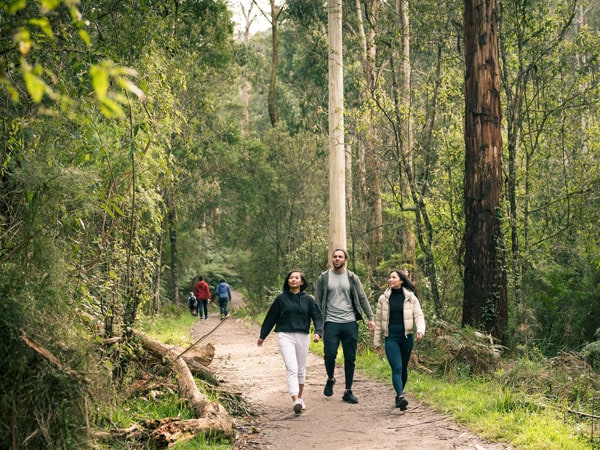
It’s part of the larger Kokoda Track Memorial Walk so you can easily continue down that path if you so wish. However, 1000 Steps is the most accessible and the best part of the trail, offering an easy, life-affirming walk that’s only slightly moderate so would be suitable for all ages and fitness levels.
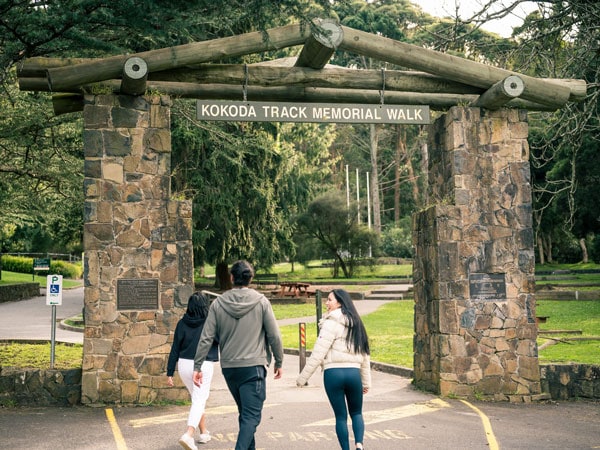
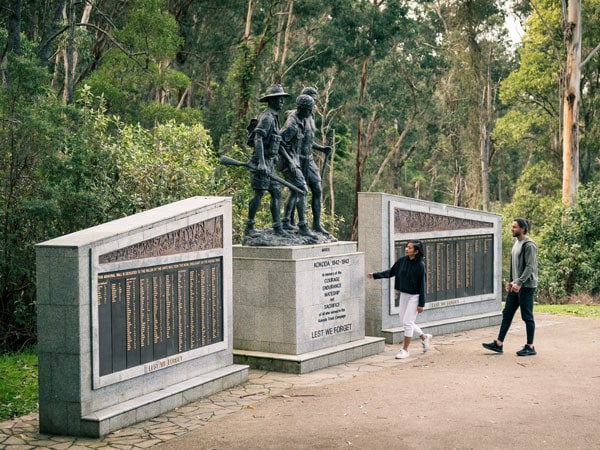
The trail is a popular spot for bird watching, with both bushlands and wetlands bringing in an abundance of rare species. Make sure you learn about the walk’s close association with the Australian Military Force with a series of signs retelling an important part of local history.
Distance: Three-kilometre return
Getting there: Take the 40-minute drive to Ferntree Gully Picnic Area
Accessibility: The hike is wheelchair accessible
Facilities: Parking, picnic areas, toilets and a cafe are all available near the starting point
Need tips, more detail or itinerary ideas tailored to you? Ask AT.
AI Prompt
5. Red Hill Rail Trail, Red Hill
Time from Melbourne CBD: 1 hour and 15 minutes
Whether you start at Merricks Station Reserve or Red Hill Recreation Reserve, the Red Hill Rail Trail is easily one of the best hikes just outside of Melbourne and should only take you around two hours to complete.
Suitable for all ages and fitness levels, the path follows a former railway line taking you through an incredible part of the Mornington Peninsula hinterland. You’ll stroll through various orchards, a few vineyards and plenty of farmland, featuring many points of interest without stalling you with any steep climbs. It’s perfect for a family outing or a meditative day outside of Melbourne.
Distance: 9.5 kilometres
Getting there: Take the 1 hour and 15 minutes drive to Merricks Station Reserve
Accessibility: The hike is wheelchair accessible
Facilities: Parking and toilets are available at the reserve
Moderate hikes in Melbourne
If you’re after some more challenging hikes in Melbourne then take note of the below options, some of which feature steep climbs and treacherous areas that need to be navigated with caution. Some parts of these trails may be wheelchair accessible, but most will have limited accessibility considering there may be obstacles and elevation gains. They are suitable for people of all ages if they have intermediate fitness levels.
6. Hanging Rock Summit Walk, Newham
Time from Melbourne CBD: 1 hour
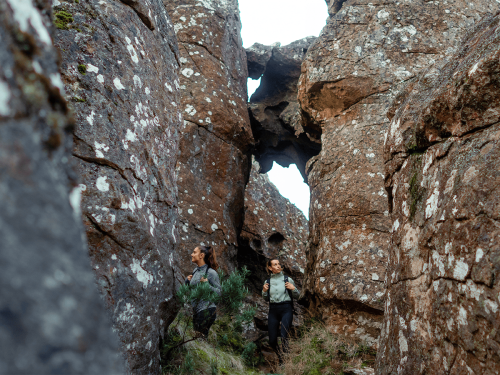
Numerous trails lead from the Hanging Rock Reserve car park, and they are all various distances. Most are quite easy and appropriate for all ages and fitness levels, with trails defined by the six-million-year-old formations of the Macedon Ranges.
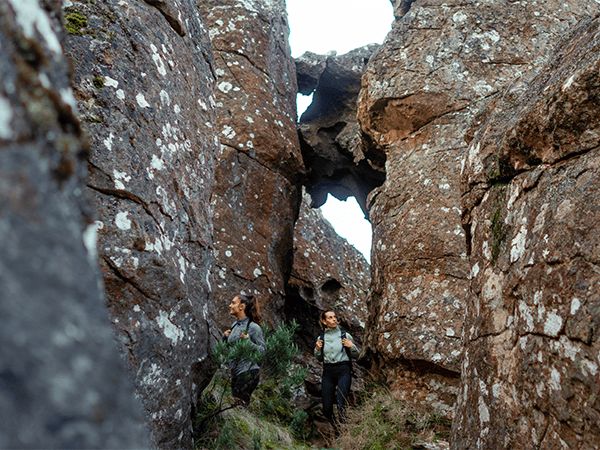
The ease and maintenance of the trails means you’ll find many families taking the stroll as well, making this one of the most popular day trips from Melbourne. Not only does the Hanging Rock Summit Walk offer a unique hiking experience, but it’s also one of the most relaxing: a perfect set-up to practice mindfulness while hiking.
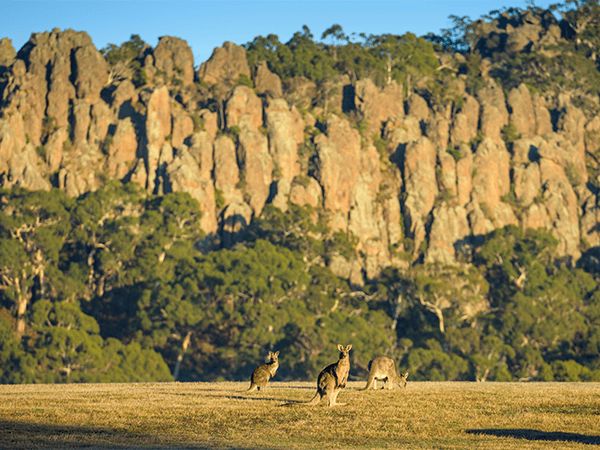
Aim for the top of Hanging Rock’s summit, which is slightly steeper and requires a higher level of fitness. You’ll be rewarded with some of the most beautiful vistas in the state.
Distance: Varies
Getting there: Take the one-hour drive to Hanging Rock Reserve Park
Accessibility: The hike is wheelchair accessible
Facilities: Parking and toilets are available at the reserve
7. Sherbrooke Falls Trail, Ferntree Gully
Time from Melbourne CBD: 40 minutes
If 1000 Steps is too busy, a great alternative would be to venture a bit deeper into the Dandenong Ranges Tourist Track and conquer the slightly more challenging Sherbrooke Falls Trail.
From O’Donohue Picnic Ground, you will take a short hike beneath the towering canopy for about 2.4 kilometres as you venture deeper into the picturesque area. Given that 1000 Steps is much better recognised (it’s Insta-famous after all), you’re more likely to find a bit of that peace and tranquillity on this track.
Distance: Three-kilometre return
Getting there: Take the 40-minute drive to Ferntree Gully Picnic Area
Accessibility: The hike is wheelchair accessible
Facilities: Parking, picnic areas, toilets and a cafe
8. Bushrangers Bay and Cape Schanck Trail, Mornington Peninsula
Time from Melbourne CBD: 1.5 hours
As one of the best hiking trails on the Mornington Peninsula, this epic 10-kilometre journey takes you through inspiring, postcard-perfect views of Bushrangers Bay while following the well-marked Cape Schanck Trail.
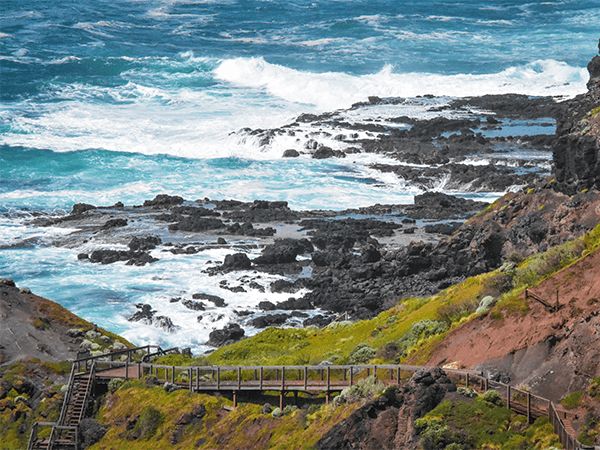
The coastal walk tracks plenty of bushland while leading to the rugged cliffs of the picturesque southern tip of the Mornington Peninsula. During the trek, you’ll likely spot many kangaroos going about their business. Stop at some of the hidden gem beaches of Bushrangers Bay on your way up to the lighthouse which marks your turnaround point. The walk is part of the much larger Mornington Peninsula National Park.
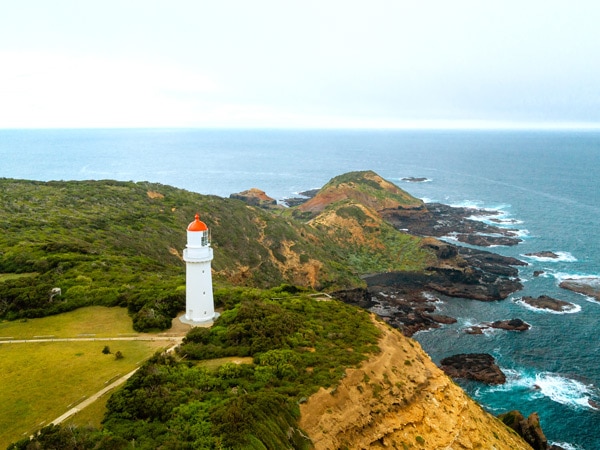
Distance: 10-kilometre return
Getting there: Take the 1.5-hour drive down to Cape Schanack and you’ll spot the starting point by the Boneo Road car park
Accessibility: Much of the hike is wheelchair accessible
Facilities: Picnic areas, toilets and parking are all available at the starting point
9. Flinders Blowhole, Mornington Peninsula
Time from Melbourne CBD: 1.5 hours
The Flinders Blowhole is one of the most stunning hikes outside of Melbourne, and it’s suitable for all ages and fitness levels. It’ll only take around an hour to make the loop, passing by incredible rock formations and dramatic cliffs before reaching the namesake Flinders Blowhole. Watching the waves crash through a narrow opening is impressive at any time of day, backed by stunning views of the ocean.
This easy-to-moderate hike is found just outside of the town of Flinders, which holds plenty of cafes, shops and galleries that you can explore before or after your coastal adventure.
Distance: 2.5 kilometres
Getting there: Take the 1.5-hour drive down to Blowhole car park
Accessibility: The hike is wheelchair accessible
Facilities: Parking and toilets are available at the starting point
10. Werribee Gorge Circuit Walk, Bacchus Marsh
Time from Melbourne CBD: 1 hour
Werribee Gorge Circuit Walk, like the more challenging Lerderderg Gorge Circuit, starts from either the Myers or Quarry Picnic Area car parks near Bacchus Marsh. The hike should take you around 4.5 hours to complete and is most popular for its mid-hike swimming hole, so make sure to bring your swimmers.
You’ll mostly be passing through incredible rocky woodlands as you trek to the gorge rim, offering endless photo opportunities or just bringing you out of your head and into nature with unforgettable scenery.
Distance: 10-kilometre return
Getting there: Take the one-hour drive down to either the Myers or Quarry Picnic Area car parks
Accessibility: Only part of the trail is wheelchair accessible
Facilities: Picnic areas, toilets and parking are available at either starting point
Weekly travel news, experiences
insider tips, offers, and more.
11. Flinders Peak Walk, You Yangs National Park
Time from Melbourne CBD: 1 hour and 15 minutes
Located in You Yangs Regional Park, the Flinders Peak Walk is a moderately difficult hike just over an hour outside of Melbourne CBD. It’s easily one of the most popular for intermediate and expert hikers, offering a broad view of Melbourne’s skyline as well as Geelong and Port Phillip Bay.
You’ll pass some massive boulders along the way to the peak and should have plenty of company with kangaroos and koalas in the park.
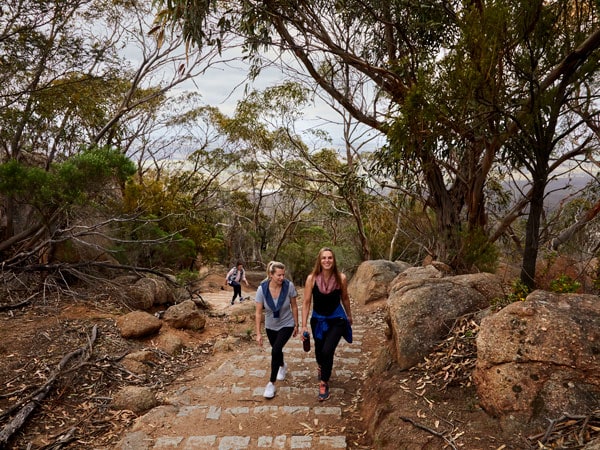
The well-signposted trail is surrounded by some of the most beautiful parts of the regional park so this is a popular day trip for nature lovers and picnickers.
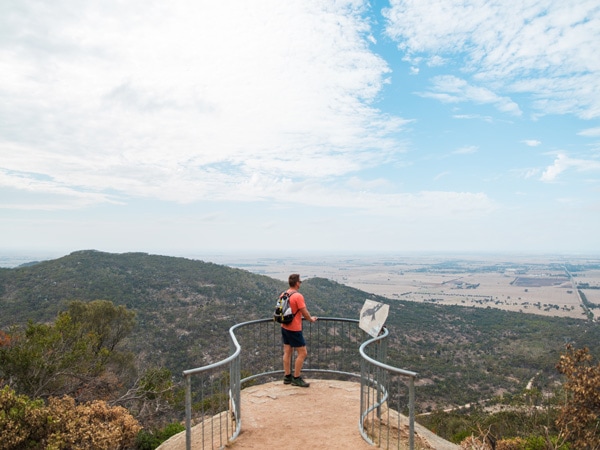
Distance: 3.2-kilometre return
Getting there: Take the 1 hour and 15 minutes drive down to Turntable car park
Accessibility: Much of the hike is wheelchair accessible
Facilities: Picnic areas, toilets and parking are all available at the starting point
Hard hikes in Melbourne
Some of the most challenging hikes in Victoria can be found under two hours outside of Melbourne. Below, we’ve listed two of those arduous paths, which may feature treacherous areas and steep climbs. They are only appropriate for experienced bushwalkers and hikers and may not be suitable for people without a sufficient level of fitness.
12. Lerderderg Gorge Circuit, Bacchus Marsh
Time from Melbourne CBD: 1 hour
Be warned, this is one of the hardest hiking trails in the state and an incredibly popular path for more experienced hikers. This 13-kilometre loop trail is found near Bacchus Marsh with an elevation gain of around 386 metres, following the Lerderderg River downstream with inspiring views.
The popular trail can be very steep in some areas and isn’t quite as well signposted as some of the other popular hikes in Victoria. Dogs aren’t allowed as such, but you’ll spot plenty of other people enjoying the impressive scenery year-round.
Note that some sections of this challenging hike may be mildly washed out if water levels are high so you could encounter some river crossings along the way.
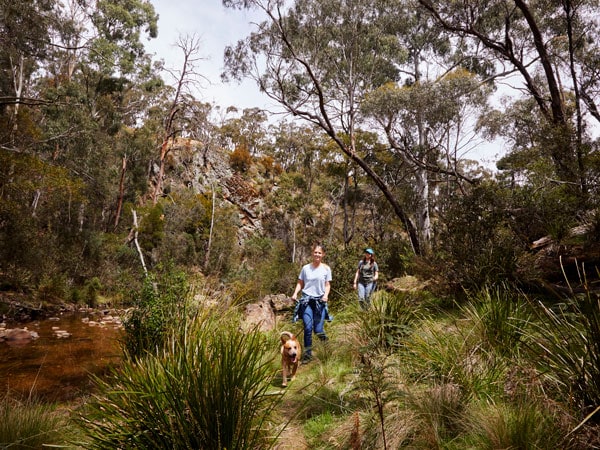
Distance: 13-kilometre return
Getting there: Take the one-hour drive to either Myers or Quarry Picnic Area car park
Accessibility: This trail is not wheelchair accessible
Facilities: Picnic areas, toilets and parking are all available at either starting point
13. Neds Gully Track, Cathedral Ranges
Time from Melbourne CBD: 1 hour and 40 minutes
You’ll want to be equipped with a sufficient level of fitness and some bushwalking experience before tackling Neds Gully Track. This steady uphill hike is located just under two hours outside of Melbourne and is known as the most exciting of the many trails that zip around the Cathedral Ranges.
You’re heading on up to a peak that’s around 840 metres above sea level. It’s very well-marked and straightforward, but once you reach those drier woodlands the track gets much steeper and more arduous. Safety is paramount so make sure you are well prepared for a hike and take your time – the wildlife is very active in this area, so you’ll spot many kangaroos and koalas. Your reward: some of the best views in Victoria.
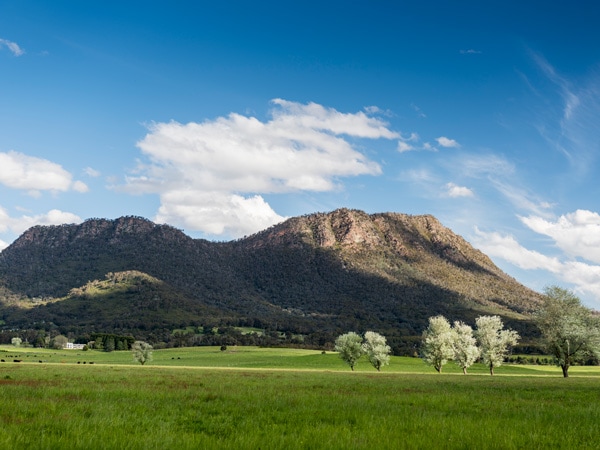
Distance: 4.5-kilometre return
Getting Here: Drive one hour and 40 minutes to Neds Gully Camping Area
Accessibility: This trail would not be wheelchair accessible
Facilities: Picnic areas, toilets and parking are all available at the starting point
How to prepare for a hike in Melbourne
If you’re wondering how to pack for a hike in Melbourne, then you’ll first need to consider what kind of distance you’re looking at. Packing for a two-kilometre hike and a 10-kilometre hike are slightly different.
First and foremost, you’re going to need comfortable shoes or hiking boots with strong grip. Some of these hikes can be slippery, especially the harder ones. Not having the right footwear is a recipe for disaster.
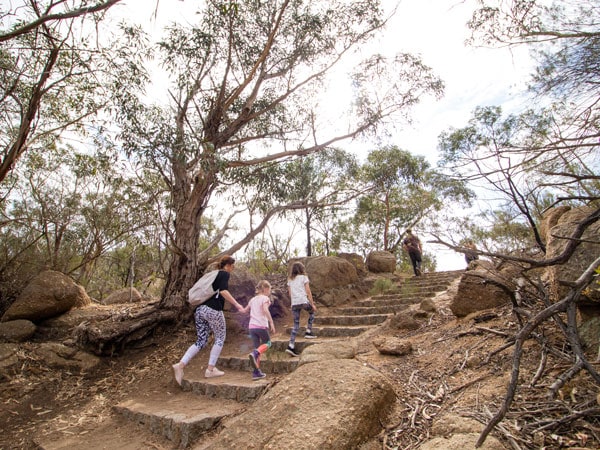
For all of the hikes listed above, it’s a good idea to bring sun protection as well as plenty of water. If you’re tackling those harder hikes like Neds Gully Trail, then it’s advisable to bring trekking poles. And while most of them are well-maintained with significant signage, it’s always a good idea to bring a map and a compass for navigation on longer trails. Always pack a first aid kit just in case.
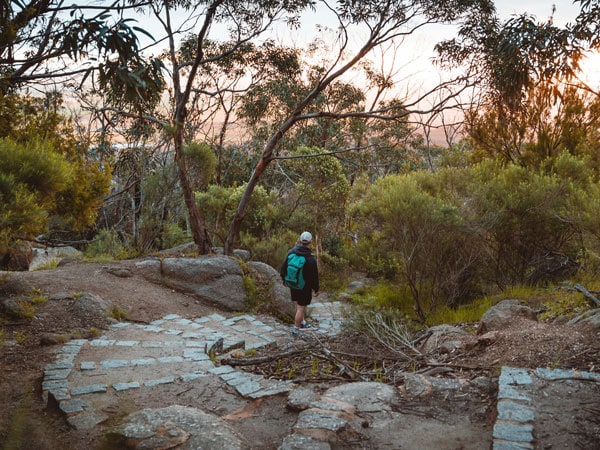
You’ll also want to consider the weather. The best time for hiking in Melbourne is generally during the cooler months like March, April and May (autumn) or September, October and November (spring). This means the trails will be less crowded and it won’t be as hot.
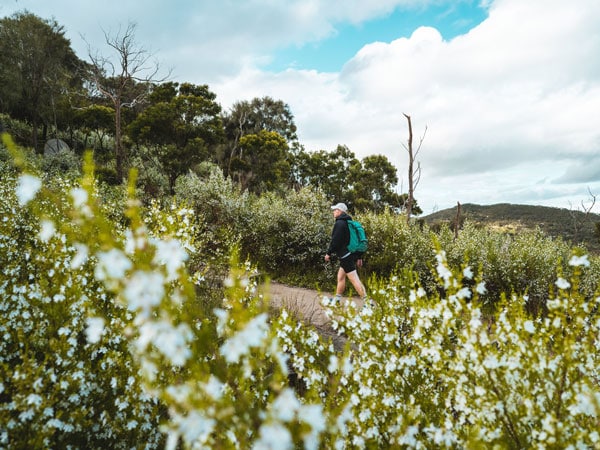
Finally, should you bring your dog? There are many dog-friendly hikes in Melbourne but do pay attention to any specific park and trail regulations. Regional parks are usually okay with dogs as long as they are on a leash, but National parks in Victoria generally do not permit dogs.
Discover the best beaches in Melbourne
Want to see more stories from Australian Traveller in your Google search results?
- Click here to set Australian Traveller as a preferred source.
- Tick the box next to "Australian Traveller". That's it.