A tour of the world’s first non-alcoholic cellar door reveals complex flavours hidden behind a nondescript building in suburban Melbourne, as Jo Stewart discovers.
April 6, 2019 is a date that is very close to the heart of Aaron Trotman. As founder of non-alcoholic wine alternative NON, it was the day his vision finally hit pay dirt with his very first sale to Beaconsfield fine dining restaurant O.MY. Since then, the NON juggernaut has rolled on, with the zero-alcohol tipple now stocked in restaurants and bars across Australia, Singapore, Japan, Malaysia, USA and beyond. There have also been other highlights, including hosting a fine dining experience at New York’s three Michelin-starred Eleven Madison Park and more recently, the opening of the NONHQ cellar door for tours and tastings.
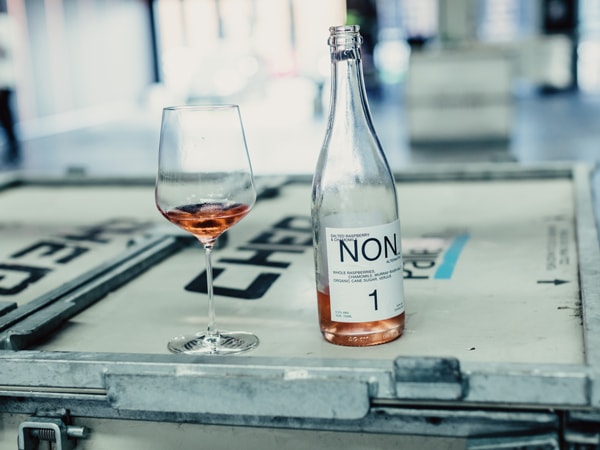
NON is a sophisticated wine alternative. (Image: Glen Wilkie)
The location
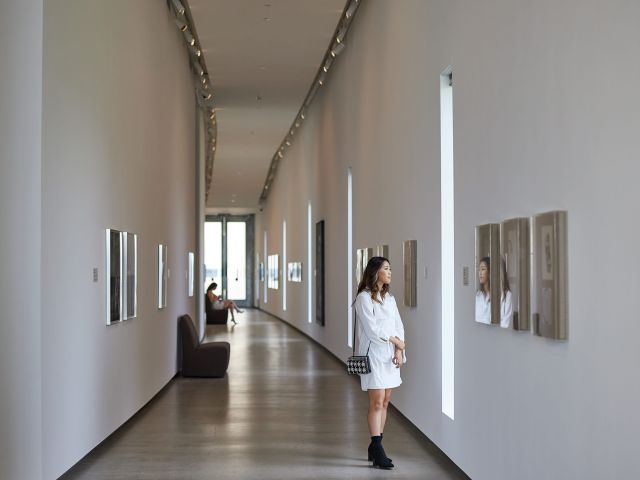
Located in suburban south-east Melbourne on a street mostly populated by industrial manufacturing businesses, the NONHQ cellar door is a surprise package. The ultra-modern, clean and sleek interiors signal to visitors that we’re in for an out-of-the-ordinary cellar door experience.
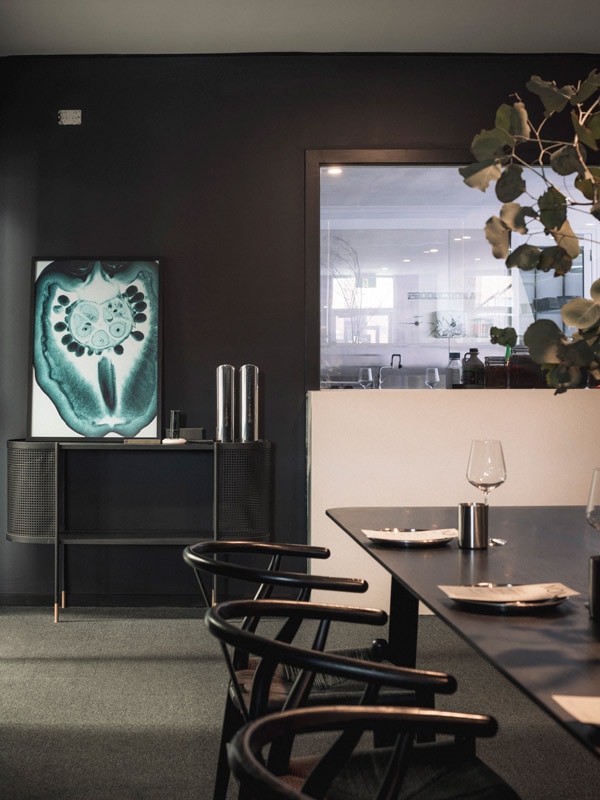
The tasting room has sleek interiors. (Image: Nic Stephens)
The tour tasting experience
Stepping into the state-of-the-art kitchen, I’m introduced to the methods, techniques and ingredients the team use to perfect the balance of tannin, salinity, acidity and fruit that end up in each bottle of NON.

The NON ingredients create a depth of flavour.
From hand-steeping Egyptian chamomile to roasting batches of fresh cherries in the oven, much time and care is dedicated to creating a depth of flavour that lingers on the palate.
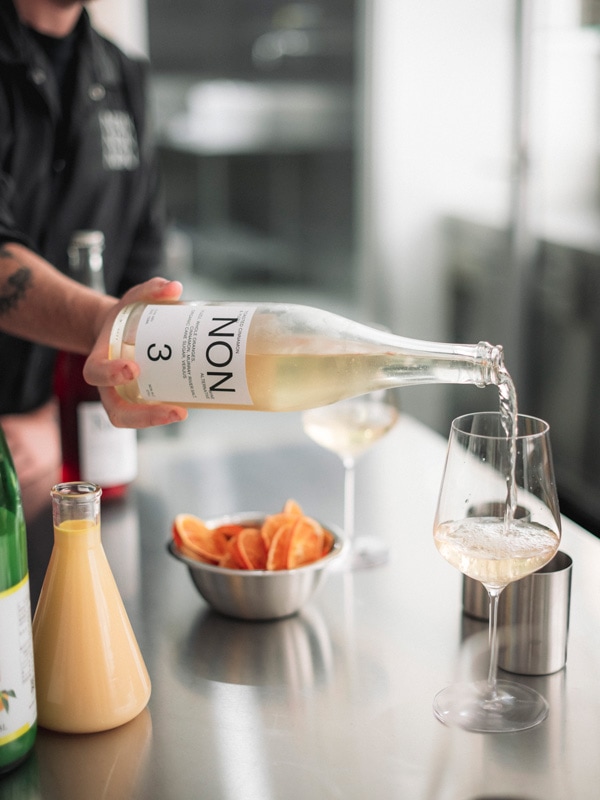
NON 3 Toasted Cinnamon & Yuzu is the perfect accompaniment to a summer picnic.
In the moody, intimate tasting room, I’m treated to a sensory journey as each glass is paired to cheese and charcuterie, with Aaron sharing tasting notes and some stories of what went on behind the scenes to create each variety.
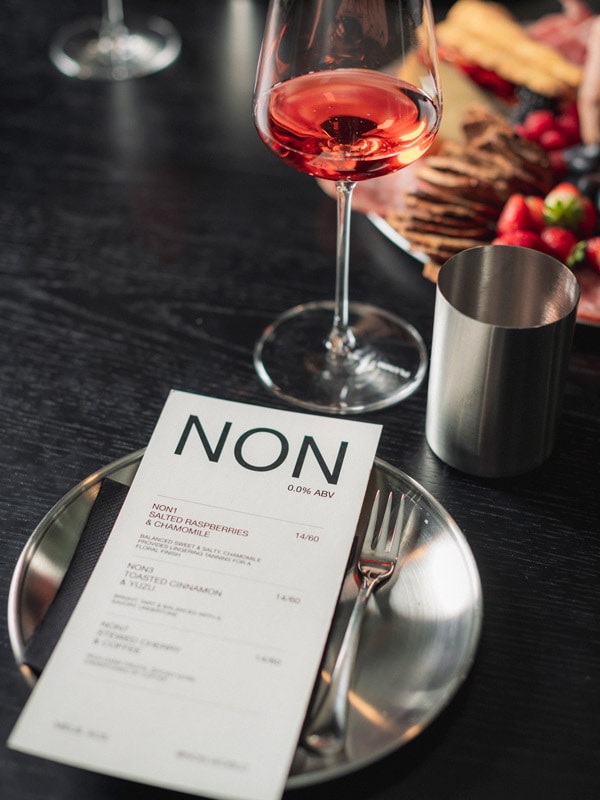
Treat yourself to a sensory journey at NONHQ. (Image: Nic Stephens)
The tart and slightly savoury NON3 Toasted Cinnamon & Yuzu screams summer picnic while a bottle of NON7 Stewed Cherry & Coffee would be a great addition to a cosy winter dinner by an open fireplace.
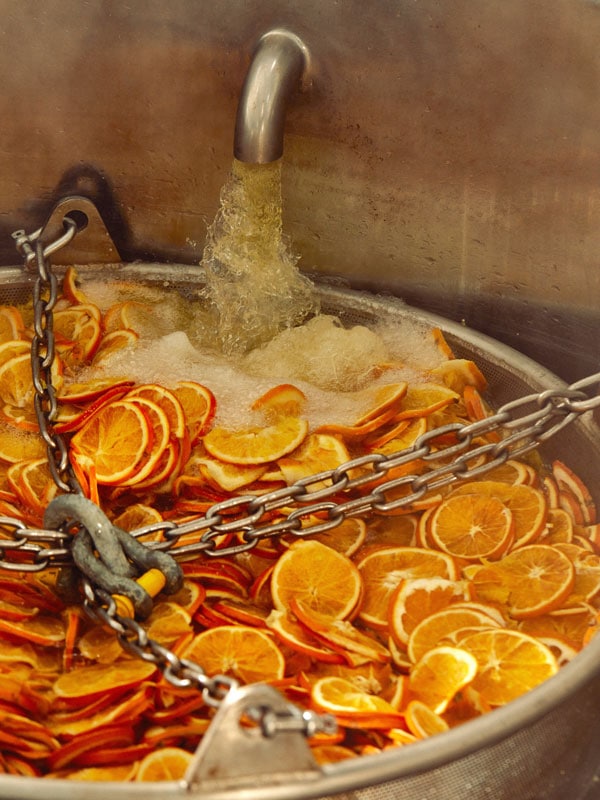
The team balances the tannin, salinity, and acidity of fruit in each bottle of NON. (Image: Annika Kafcaloudis)
Aaron explains that NON is “a solution to an empty wine glass" by giving both drinkers and non-drinkers a sophisticated wine alternative that pairs well with food. NON drinks are also vegan, gluten-free and halal-certified, meaning people from all walks of life have embraced the brand.
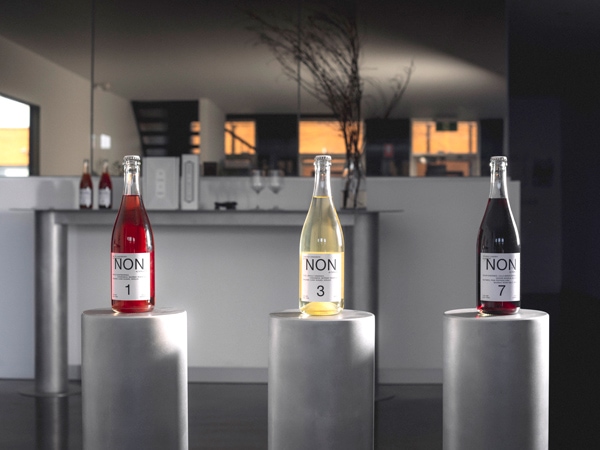
NON beverages draw upon flavours like salted raspberry, toasted cinnamon and coffee. (Image: Nic Stephens)
Need tips, more detail or itinerary ideas tailored to you? Ask AT.
AI Prompt
Elevating the wine-tasting experience
The road to creating an innovative alt-wine product from scratch hasn’t been easy. Tenacity and grit were required to get the brand up and running, but with the cellar door tours experiencing strong bookings, Aaron feels he’s onto a winner, despite running mostly on blind faith.
“I literally jumped off a cliff and built a plane on the way down. And I still am," says Aaron.

Meet NON founder Aaron Trotman. (Image: Glen Wilkie)
The NONHQ Tour details
The NONHQ Tour experience includes a meet the makers and experts behind NON, a flavour workshop in the NON kitchen, an intimate behind-the-scenes tour of the production process, a tasting experience of the range paired with cheese and charcuterie, and a complimentary bottle of NON to take home (RRP $30).
Jo Stewart is a freelance features writer who pens stories about nature, pop culture, music, art, design and more from her home in the Macedon Ranges of Victoria. When not writing, you can find her trawling through vinyl records and vintage fashion at op shops, antique stores and garage sales.
A change is as good as a holiday, but never more so than in the Bendigo region when it’s the seasons putting in the transformative work.
With its gold rush history, opulent architecture and booming food and wine industry, there’s no denying that the Bendigo region is beautiful to visit at any time of year. Visit between March and May, however, and you’ll find the Bendigo in autumn really comes alive. Foliage erupts in a canvas of golden colours and the cooling air makes immersing yourself in nature all the more enticing.
Need a few ideas to get you started? We’re so glad you asked.
1. Tackle the bike trails
Pink Cliffs Reserve in Heathcote can be seen on the O’Keefe Rail Trail. (Image: Visit Victoria/Emily Godfrey)
Welcome to a region that punches well above its weight when it comes to cycling. This is where hammies are tested on multi-day rides, and first-timers fall in love with the sport on short (and ridiculously pretty) trails.
The 49-kilometre O’Keefe Rail Trail is the headline act, following the old railway line between Bendigo and Heathcote. Cross the Campaspe River at Axedale Recreation Reserve and pause at the Platypus Compass Sculpture and the First Nations mural marking the connection between Djaara and Taungurung Country, with Axedale acting as the perfect halfway stop to refuel at a pub or cafe.
Pedal a little further Heathcote’s Pink Cliffs Geological Reserve to be rewarded with views of sculpted pink clay cliffs and narrow gorges that are perfect for a photo stop. Searching for a different type of reward? The Heatchote Wine Region is full of inviting cellar doors.
There are plenty of other options in the Bendigo region, from the 210-kilometre Goldfields Track, to the Bendigo Creek Trail and Back Creek Trail – both ideal for riders of all abilities. The 3.7 kilometre Little Lake Boort loop is a great family-friendly option.
Prefer something more adventurous? Spring Gully Mountain Bike Park has been keeping BMX Bandits’ dreams alive for years.
2. Enjoy the crunch of autumn leaves
Pack a picnic and head to the Valley of Liquidambers.
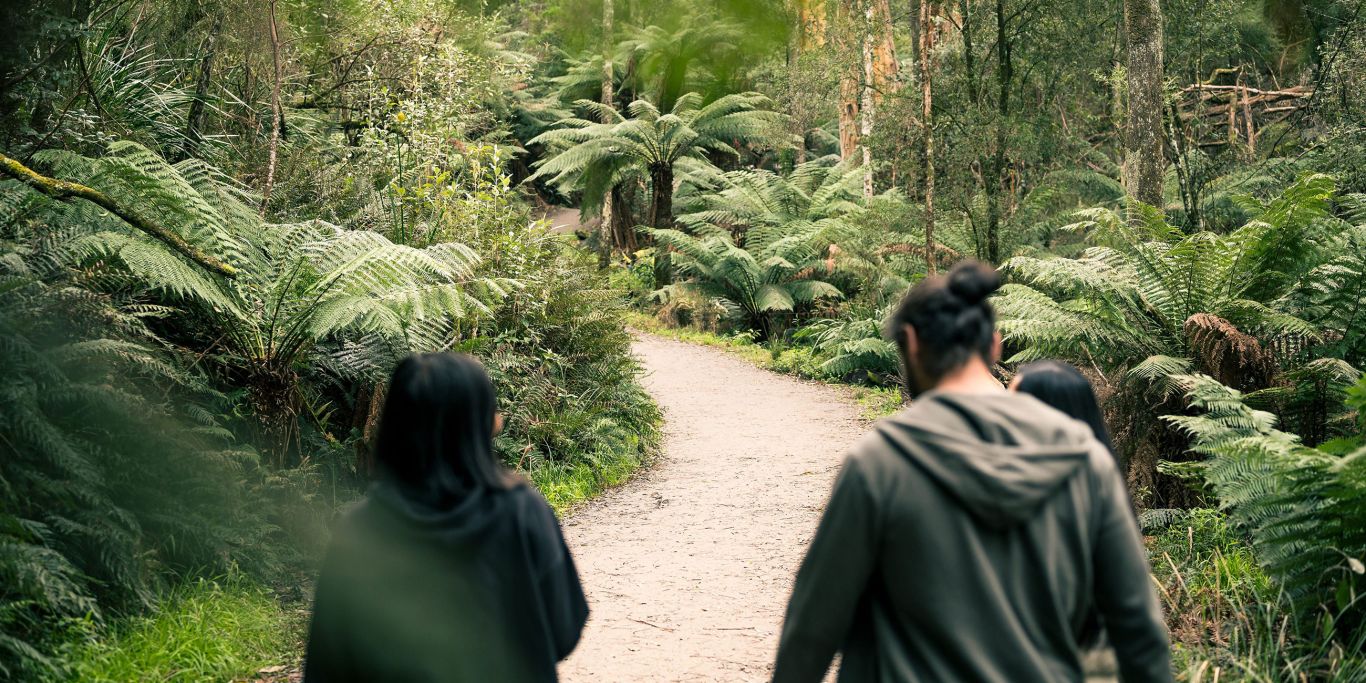
Blinding clusters of crimson, burnt orange and brilliant yellow; here, autumn leaves are crisp confetti of fire and gold. See the magic up close with a slew of parks seemingly dedicated to showcasing Mother Nature’s colour wheel, especially from mid April to early June.
Pack a picnic for an afternoon at Valley of Liquidambers in Heathcote, where Liquidamber trees transform into a wonderworld of magical foliage. Don’t miss taking a leisurely stroll across the swinging bridge back towards the main street.
Rosalind Park might be celebrated for its annual tulip display come springtime, but it’s hard to compete with the theatre of autumn. Here, many trees date back to the 1800s, and there’s no better place for a romantic stroll than along the elms, oak and Queensland Kauri that dominate this park.
Head straight to Lake Weeroona, where an ornamental lake begs for a leisurely lap around its edges, either on foot, or with pedal power.
3. Immerse yourself in First Nations culture
Explore Kooyoora State Park on a cultural tour.
Its ‘Mountain of Light’ (Guyura in the Dja Dja Wurrung language) title is impressive, but so too is Kooyoora State Park’s rugged landscape of granite outcrops, rocky ridgelines and wide-open skies.
While there’s nothing to suggest you couldn’t explore Kooyoora’s walking tracks on your own, the best way to understand the 40,000 years of history behind its natural wonders is to book a 2.5-hour Kooyoora Cultural Tour with Dumawul Tours.
Led by Djaara cultural guides, expect a traditional Welcome to Country smoking ceremony, before engaging storytelling rewinds the clock to reveal the deep cultural significance of the land, its flora, fauna and its continuing connection to Country.
Keen to stay a little longer? Consider staying overnight at the campground and committing to the park’s wealth of walking trails, such as the 5.3-kilometre hike from the camping ground to the lookout on the Long Rock Walking Track.
4. Splash in the region’s waterways
Paddle through Serpentine Creek Canoe Trail. (Image: Visit Vic)
Water babies rejoice: the Bendigo region offers a wealth of waterways to explore.
Flowing 392-kilometres from the Great Dividing Range to the Murray River, the best way to enjoy Loddon River is with a stop at Bridgewater. Here you can swim in the natural infinity pool or tackle the all-abilities, five-kilometre Serpentine Creek Canoe Trail before browsing the cute stores in town. Hungry? Grab a bite at Bridgewater Hotel.
Lake Eppalock is popular for water activities, but don’t miss a visit to Little Lake Boort and Big Lake Boort. Birders, in particular, will love the former, thanks to the large variety of bird species that nest in the boardwalk area surrounding the lake.
Meanwhile, Big Lake Boort is celebrated for its significant Indigenous history and over 400 scarred trees, and offers an opportunity to spot birds and go canoing.
Meanwhile, watersports and recreational activities at Crusoe Reservoir, located on the outskirts of Bendigo, are the order of the day. Take a walk to the picnic spots of No. 7 Park nearby, and maybe even camp there for the night.
5. View epic lookouts
Spend time at Peregrine Ridge.
Sometimes a holiday requires a phenomenal spot on which to perch as you survey your temporary kingdom below. The Bendigo region, happily, doesn’t do anything by halves.
Located in Heathcote-Graytown National Park, Viewing Rock Lookout – a rocky outcrop offering spectacular views over Heathcote and surrounds – remains a popular choice. Take the hour-long Viewing Rock Circuit Walk and try your hand at gold prospecting nearby.
Prefer the romance of sunrise or sunset? Pyramid Hill, a stunning granite hill rising 187-metres above sea level, is the place to be (preferably with a coffee and a bagel)
Over in Terrick Terrick National Park, a walk to the summit delivers a full 360-degree panorama of woodlands, farms and open-sky plains. Pack lunch – and perhaps a tent – as picnic tables and camping are available.
Carve out time for Peregrine Ridge, a vineyard situated at the eastern side of Mt Camel Range with an elevation ranging from 250-290 metres. Be rewarded with delicious wine and a cellar door which offers floor-to-ceiling views.
6. Enjoy the Bendigo region’s parks and gardens
Stroll through Bendigo’s best gardens. (Image: Visit Vic)
Rosalind Park, located right in the centre of town, is considered Bendigo’s backyard and rightly so. Home to the Bendigo Easter Festival, it’s just as popular year-round for its sixty acres of rolling lawns, towering elms, fernery and winding paths – not to mention the playground which has plenty of little fans of its own. A short drive away, Bendigo Botanic Gardens– established in 1857 – offers a more tranquil space for deep-level nature immersion.
Those who favour something a little more formal, cottage-style Canterbury Park Gardens– famous for its dahlias in autumn – delivers. Stroll through its meticulously maintained ornamental gardens before checking out Lake Tom Thumb and Lake Neangar nearby.