The do’s and don’ts of scoring that photo with Rottnest Island’s star attraction.
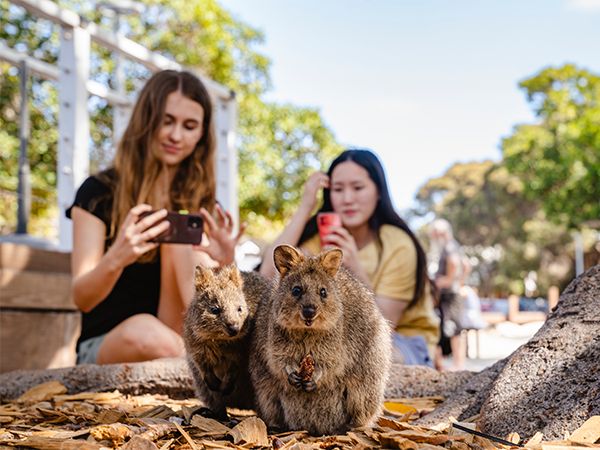
If Rottnest Island isn’t already part of your WA travel plans, lock it in now and get your selfie stick at the ready: you’re about to witness the cutest marsupial in town, the ever-so-sweet and camera-ready quokka (or kwoka in Noongar).
Often described as the ‘happiest animal in the world,’ these adorable creatures are endemic to Western Australia and somewhat famous—there are around 10,000 quokkas that live on Rottnest Island.
If you haven’t heard of them, first of all, how’s that rock you’ve been living under? And secondly, you’re in for a treat.
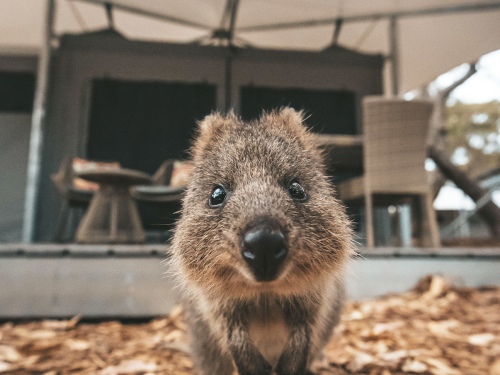
Capture the joy of a quokka while respecting their safety and comfort. (Image: Tourism Western Australia)
The quokka selfie phenomenon
About 650,000 visitors head to Rottnest each year to bask in the sunshine and explore this island playground. However, thousands of tourists also come for the chance to post ‘selfies’ on social media with the friendly creature, including some famous faces—Hugh Jackman, Roger Federer and Margot Robbie, anyone?
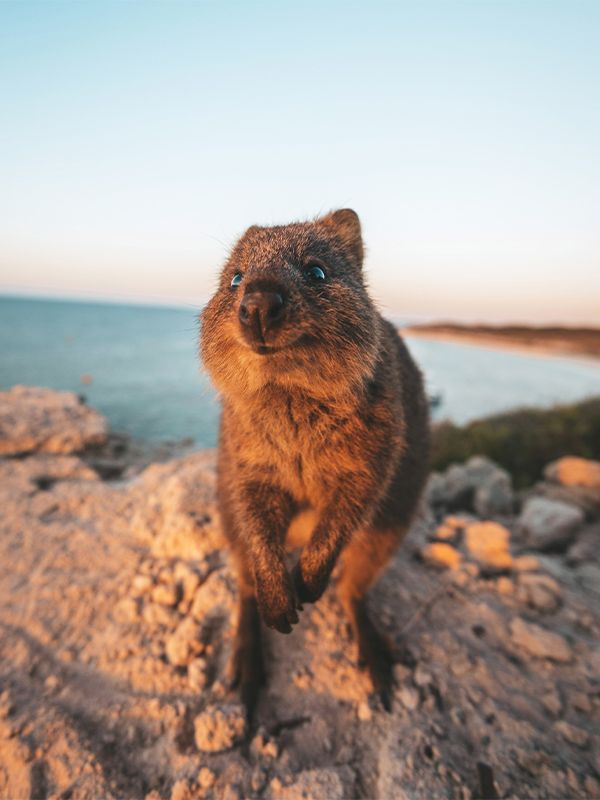
Smile with the happiest animal on Earth. (Image: Tourism Western Australia)
Expert tips for quokka encounters
While most quokkas love the attention and don’t mind photobombing your ultimate Instagram-worthy shot, there are a few expert tips and tricks that can come in handy. So to help you maximise your time (and selfie) with the quokkas, we enlisted the help of an expert.
Shane Kearney, acting general manager at the Rottnest Island Authority of Environment, Heritage and Parks has shared his tips and tricks on how to get the ultimate experience with their resident quokkas in an ethical and sustainable manner.
“Quokkas are fairly trusting, [and if you are] patient they will happily come to you," he says. “They are naturally nocturnal, so you’ll generally find them in the morning and early evening year-round, especially around the settlement precinct."
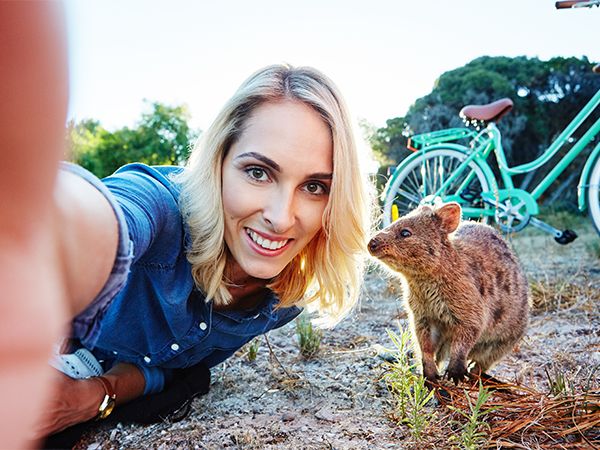
Quokkas are nocturnal animals that primarily sleep during the day in dense vegetation. (Image: Tourism Western Australia)
Need tips, more detail or itinerary ideas tailored to you? Ask AT.
AI Prompt
The do’s and don’ts of quokka photography
As for capturing the perfect photo? “[Be sure] to use a selfie stick to maintain a respectful distance for both human and animal safety," he continues. “If you happen upon one that is camera shy, do not attempt to feed them with food or water. It changes their behaviour and [food that is not in their natural diet] can potentially make them ill." Kearney also stresses the importance of disposing of your rubbish and riding your bike with care around the island.
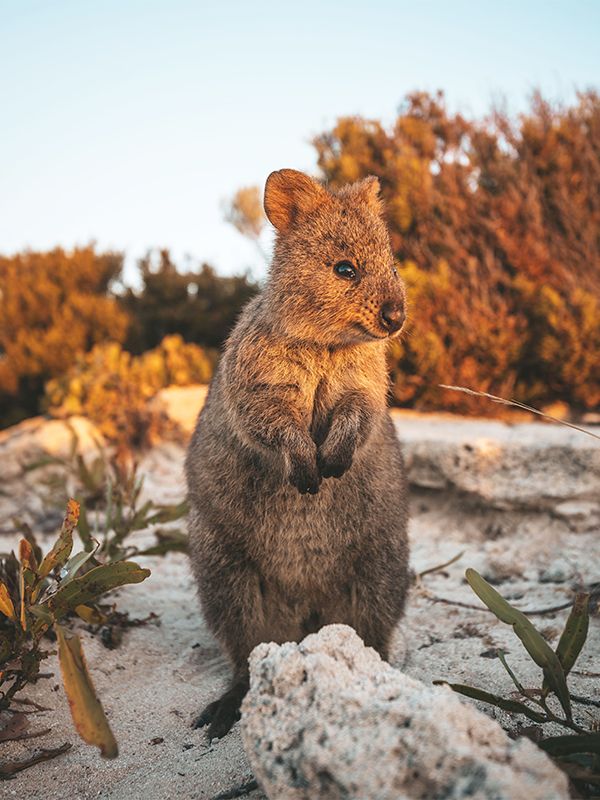
Respect nature while capturing these lovely moments. (Image: Tourism Western Australia)
Final advice for the ultimate quokka experience
But his overall recommendations for ensuring the ultimate experience? “Get your smile and camera ready, enjoy the moment and [let the quokkas] come to you."
A 25-minute drive from Perth is all you need to be amongst generations of grape growers.
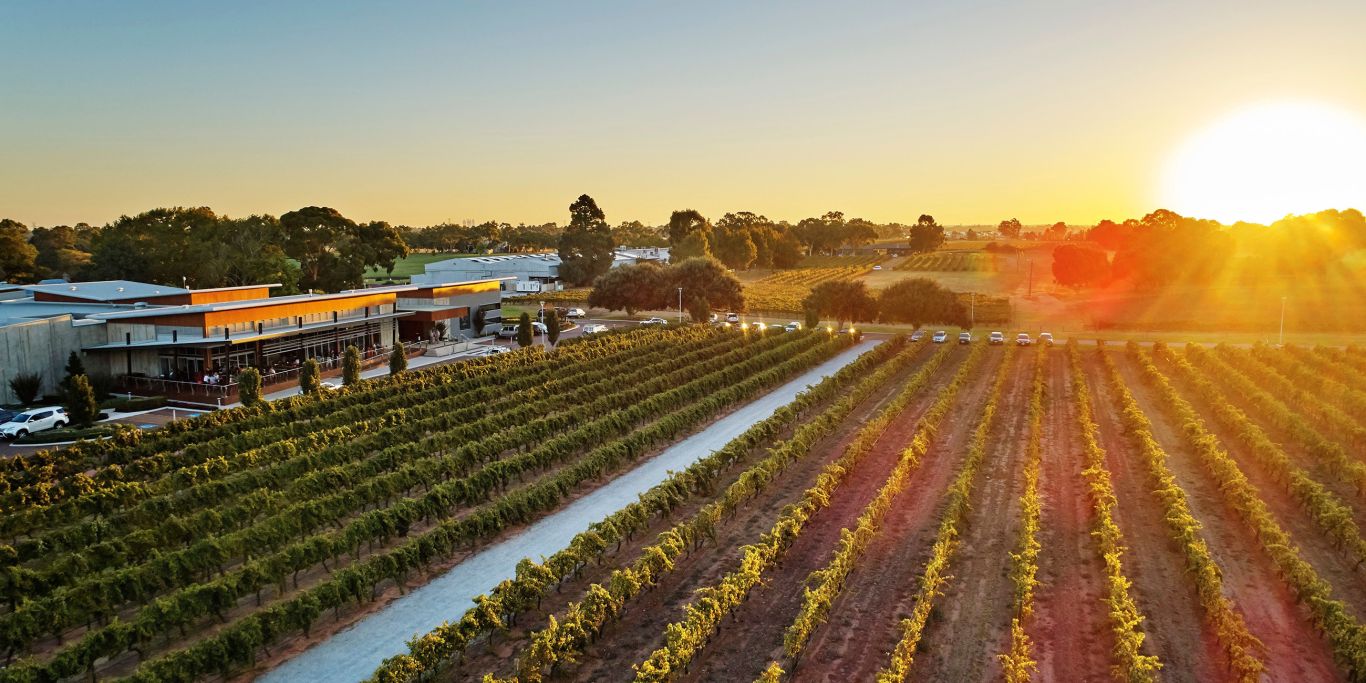
You might not know Swan Valley, but the vines here twist through almost 200 years of history. Today, plump grapes are still plucked, pressed by juice-stained hands and fermented into wine – a journey led by the same families who will pour it into your glass. And with that first taste, you’ve unknowingly become part of a generations-old tradition.
So, sit back and take a sip of a crisp white under that sun-speckled pergola and listen to the warbling of magpies – here’s what makes the Swan Valley so special.
Western Australia’s oldest wine region
Sip your way through Swan Valley’s rich wine heritage. (Image: Tourism WA)
In 1829, the very year Europeans settled in Perth, the first vines were planted in the Swan Valley. Later, Croatian and Italian migrants blended their southern European winemaking traditions into the local viticulture, a combination that works so well in the Mediterranean climate here.
The result today is crisp, tropical Verdelho, dark, fruity Shiraz and plenty of Chenin Blanc – a third of the country’s Chenin Blanc is crushed here.
So where to start uncorking? Mandoon Estate has an Aboriginal art gallery and a sculpture trail, where you can taste an Indigenous food platter of smoked crocodile and emu sausages.
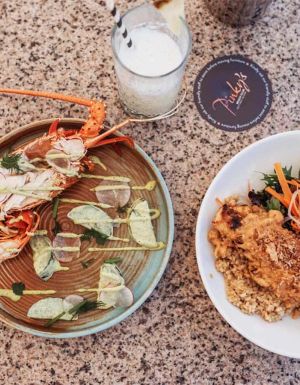
For a taste of the valley’s Italian heritage, head to Pinelli Estate Winery. Or, for something indulgent – and a little unusual, considering the inland location – RiverBank Estate Winery serves lobster straight from tanks, paired with that Chenin Blanc.
If you prefer something stronger in your glass, Talijancich Wines knows a thing or two about fortified drops: try its aged tawny, Muscat and liqueur Verdelho.
Sensational dining
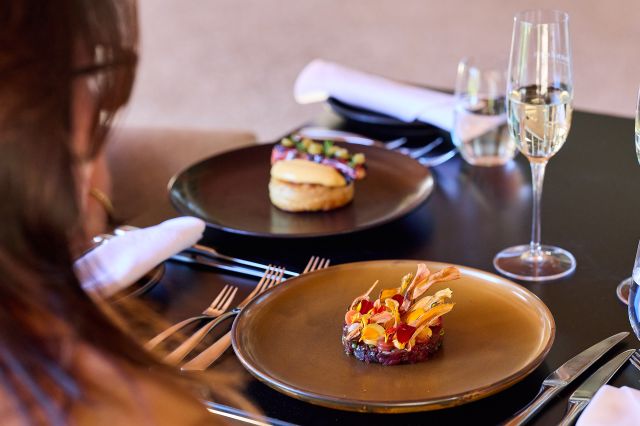
Pair great food with a scenic winery setting. (Image: Tourism Caversham)
The Swan Valley follows that great Australian wine-country tradition, with everything from unfussily fantastic pub meals and beer gardens to unexpected fine dining at cellar doors.
Start at Edgecombe Winery, which does brunch as well as drops. Their brioche French toast with raspberry and rhubarb coulis, poached pear and roasted pistachios will taste best when you’re perched at a table outside. Don’t forget to explore their orchard and wetland afterwards.
Pick up a box of freshly baked macarons from Maison Saint-Honoré (bien sûr) before heading to Valley Social for a North American barbecue-inspired feed. Chow down on beef brisket burnt ends and wash them down with a hemp-infused craft beer.
Baskerville Tavern is brewing beer again in the former Feral Brewpub. Order their Monday special – a classic chicken parmi – and try Slumdog Brewing’s regular range, including a tart blueberry sour made with fresh and freeze-dried berries. In winter, it’s time for their seasonal seven-malt stout, with notes of dark chocolate, coffee and caramel.
An unbeatable visitor’s centre
In Guildford is the Swan Valley Visitor Centre in a restored 1866 courthouse. Its award-winning staff know everything about anything happening in the Swan Valley. Pick their brains (and pick up a free map) before setting off. But, check out the centre’s Welcome to Country mural by local Whadjuk artist Chloe Caylon first.
Scenic drives
Use that handy Visitor Centre map to get a bit of everything on the Swan Valley’s 32-kilometre scenic loop, which connects over 150 attractions. Think roadside produce stalls, art galleries and historic buildings. Just remember to organise that designated driver if you’re extra keen on the vineyard stops.
Other drops
If the thought of wine makes your temples pulse, there are plenty of other tipples to tickle your fancy. Txoko Brewing in Baskerville takes its name from a Basque gathering place for cooking, drinking and socialising. Work through its rotating beers and plates of Spanish croquettes and sardines, then settle on the grass while the kids let off steam in the playground.
AmberChes Spirits Distillery uses locally sourced botanicals and fruit to make saltbush gin, lemon myrtle gin and Gincello, a twist on limoncello. Try its award-winning sloe gin, which was named Australia’s best at the 2025 Gin Guide Awards. Better yet, have a go at making your own in a hands-on gin-blending and distilling class among the vines.
Historic architecture and an arts scene
Explore the stories behind the Swan Valley. (Image: Tourism WA)
Next: Guildford. It is one of WA’s earliest colonial settlements – but the history here goes back much further. The Whadjuk Noongar people are the land’s Traditional Custodians, whose Dreaming tells of the Wagyl serpent creating the gum tree-lined Swan River. Today, Guildford’s original town layout remains largely unchanged. Follow one of four heritage walks past 19th-century buildings, galleries and James Street’s antique shops.
Take home pantry staples
Treat yourself to a chocolate-filled detour. (Image: Tourism WA)
Sometimes the little stops are just as good as the big hitters. Pull over at Margaret River Chocolate Company for free tastings of white, milk and dark chocolate. Then stop by Harvey Cheese Swan Valley for Lemon Myrtle Ash Brie or St Duke’s Red. End at The House of Honey, where you can sample local honey and get buzzy on honey ice cream pancakes.
Nature and wildlife
Add a little wildlife adventure. (Image: Tourism WA)
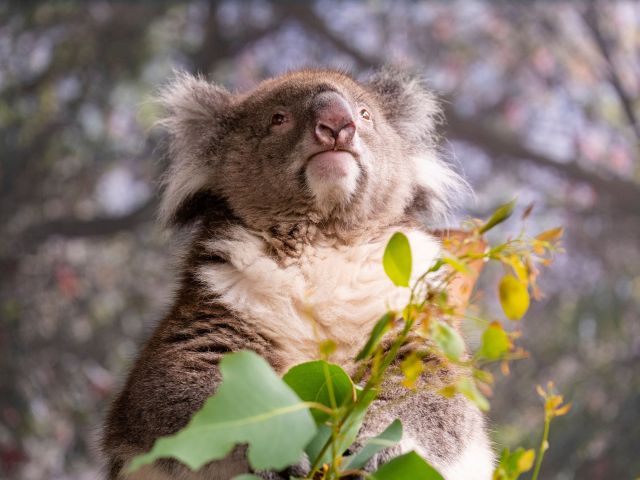
If the kids have had enough of winery lawns, save the bottles for later and head to Caversham Wildlife Park. Here, you can hand-feed kangaroos and meet koalas and wombats. Catch working sheepdogs and sheep-shearing demonstrations at the Farm Show. Elsewhere in Whiteman Park, hop aboard a vintage train or tram, or cool off in the splash pool.
Finish at Bells Rapids, where fuchsia grevillea, crimson bottlebrush and yellow wattles bloom each spring.