Data from Airbnb has revealed that in 2025, Australian domestic travel will be all about sun, sand, seafood, and shiraz.
Thinking about exploring your own backyard in 2025? Airbnb has unveiled the must-visit Aussie destinations you won’t want to miss.
In their latest report, Airbnb reveals the top trending destinations that have captured the attention of Australian travellers, based on searches from January to September 2024. There’s a clear preference for coastal escapes and vineyard retreats – truly the best of both worlds – showcasing Australians’ desire for relaxation, adventure, and quality produce.
1. Jervis Bay
The pristine white sands of Hyams Beach. (Image: Destination NSW
Located on the South Coast of NSW, just a three-hour drive from Sydney, Jervis Bay is renowned for its pristine white beaches and laidback coastal vibe. There’s something for everyone here: Animal lovers can admire whales, dolphins and seals; foodies can savour a beer tasting at one of Shoalhaven Coast’s biggest drawcards, the Jervis Bay Brewing Co; and nature lovers can relish sun-soaked days at Hyam’s Beach and hike in lush national parks.
2. K’gari, Queensland
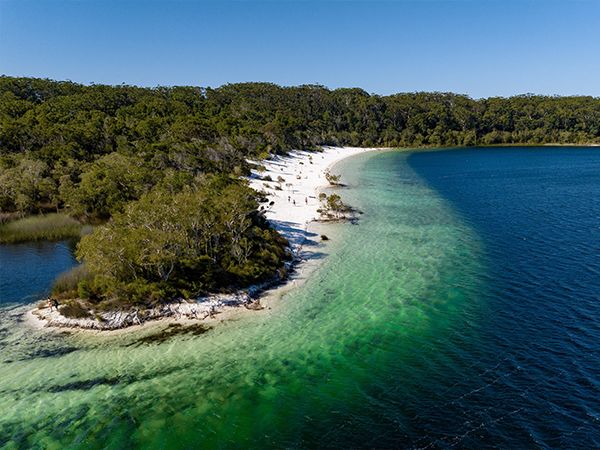
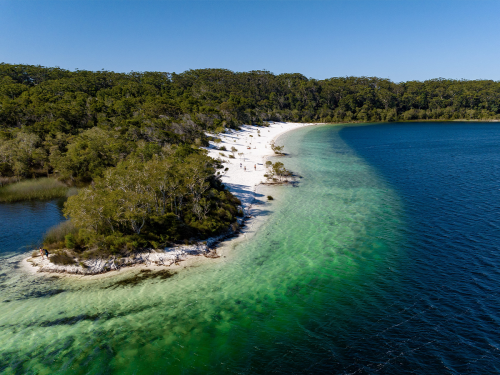
Pristine white sands, crystal-clear waters, and lush greenery await. (Image: Tourism Australia)
With pristine white sandy beaches, turquoise waters, breathtaking lakes, untouched rainforests, and rich wildlife, the World Heritage-listed K’gari offers plenty of activities for nature and adventure enthusiasts as well as those seeking relaxation. This unique destination 15 kilometres off Hervey Bay is the world’s largest sand island where visitors can experience thrilling 4WD and sand dune adventures, hiking, camping, and spectacular whale watching. It’s also home to a pure strain of dingoes that roam freely across the island.
Another unique way to experience the island is the Illumina show at the Kingfisher Bay Resort. The creative genius behind Uluṟu’s Wintjiri Wiṟu has created permanent light, laser and projection installations that bring to life the island’s cultural stories and natural wonders.
3. Yarra Glen, Victoria
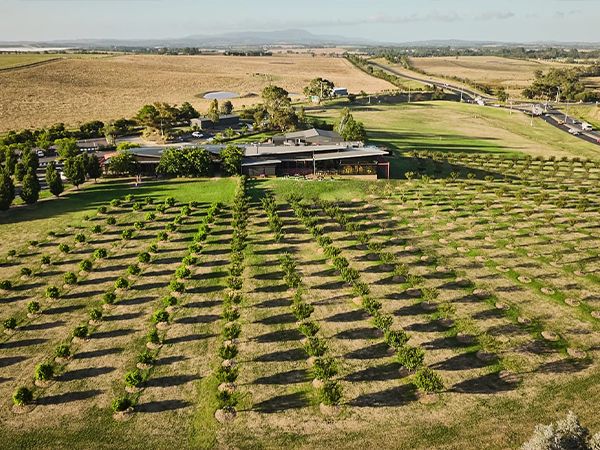
Yarra Glen boasts rolling vineyards, lush green hills, and a charming small-town atmosphere. (Image: Tourism Australia)
Yarra Glen is a gourmet haven nestled in the heart of the Yarra Valley. Wine lovers have access to world-class wineries and the chance to sample some of Australia’s finest drops from the likes of Yering Station, De Bortoli Wines, and Domaine Chandon. The town oozes country charm, with quaint streets, historic shops, and cosy cafes.
Spend your days sipping top-notch wine, hot air ballooning over the picturesque landscapes, and cycling along the many bike paths that wind through the valley. The area also has a vibrant local market scene including The Yarra Glen Market and Yarra Glen Farmers Market which offer fresh produce, handmade goods, and artisan products.
4. St Helens, Tasmania
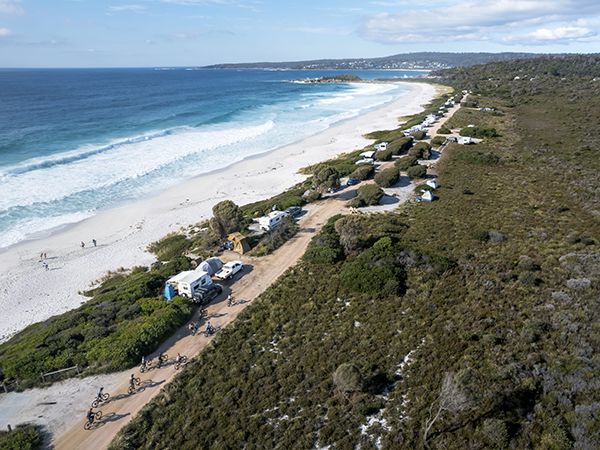
This picturesque town is known for its beautiful beaches, pristine natural environments, and vibrant fishing culture. (Image: Tourism Australia)
This delightful coastal town offers a mix of natural beauty, outdoor activities, a rich history, and some of the most delicious seafood you’ll ever have. Renowned as a seafood haven, this vibrant fishing community is home to world-class oysters, mussels, scallops, and flathead, all freshly harvested from its pristine waters. It is also considered a gateway to the Bay of Fires, whose 10-kilometre stretch of beaches has been revealed as the best in Australia for 2025 so basing yourself here means you’re spoilt for choice with where to take a dip.
5. Tanunda, South Australia
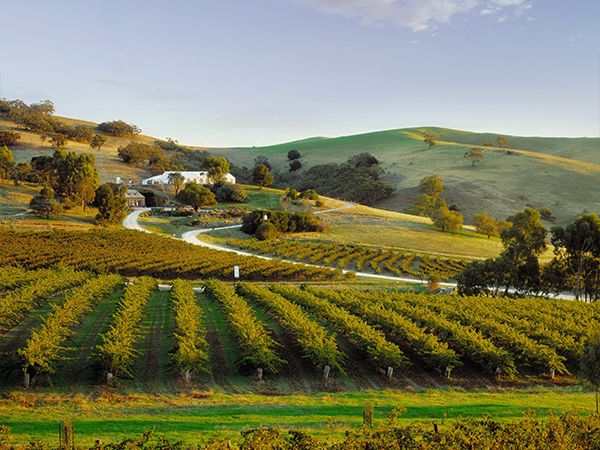
Bethany Wines produce high-quality wines, including shiraz, grenache, and cabernet sauvignon.
Another destination for wine enthusiasts and gourmands, Tanunda is located in the heart of the Barossa Valley and is known for its rich history, wine production, and beautiful landscapes. Its strong German heritage is reflected in its architecture, festivals, and food which brings a unique charm to the area. Visitors can explore the charming streets lined with historic buildings, enjoy wine tastings from renowned wineries like Jacob’s Creek and Penfolds, and indulge in local produce, from gourmet cheeses at The Barossa Valley Cheese Company to artisanal chocolates at Barossa Valley Chocolate Company.
Rachael Thompson is Australian Traveller's Evergreen Editor and a self-proclaimed cheese and Chablis connoisseur. In her role, she creates and manages online content that remains relevant and valuable over time. With a background in publishing and e-commerce in both interior design and travel, Rachael is dedicated to curating engaging content that informs and inspires. She began her career at Belle magazine, then went on to become Senior Content Producer at Homes to Love focusing on Australian House & Garden and Belle, followed by Editor at Bed Threads. Her work has also appeared in Qantas Travel Insider. When she's not writing, editing, or optimising content, Rachael enjoys exploring the city's newest restaurants, bars, and hotels. Next on her Aussie travel wish list are Uluṟu-Kata Tjuṯa National Park and Lord Howe Island.
Located just an hour north-west of Melbourne, the largely undiscovered Macedon Ranges quietly pours some of Australia’s finest cool-climate wines and serves up some of Victoria’s best food.
Mention the Macedon Ranges and most people will think of day spas and mineral springs around Daylesford, cosy weekends away in the countryside or the famous Hanging Rock (of enigmatic picnic fame). Or they won’t have heard of the Macedon Ranges at all.
But this cool-climate destination has been inconspicuously building a profile as a high-quality food and wine region and is beginning to draw serious attention from oenophiles and epicureans alike.
The rise of Macedon Ranges wine
Barrels of liquid gold at Kyneton Ridge Estate Winery. (Image: Chloe Smith Photography)
With elevations ranging from 300 to 800 metres, Macedon Ranges vineyards are among the highest in the country. This altitude, combined with significant day/night temperature swings, makes for a slow ripening season, in turn nurturing wines that embody elegance and structure. Think crisp chardonnays, subtle yet complex pinot noirs and delicate sparkling wines, along with niche varietals, such as gamay and nebbiolo.
Despite the region’s natural advantages – which vary from estate to estate, as each site embodies unique terroir depending on its position in relation to the Great Dividing Range, soil make-up and altitude – the Macedon Ranges has remained something of an insider’s secret. Unlike Victoria’s Yarra Valley or Mornington Peninsula, you won’t find large tour buses here and there’s no mass marketing drawing crowds.
Many of the 40-odd wineries are family-run operations with modest yields, meaning the wineries maintain a personal touch (if you visit a cellar door, you’ll likely chat to the owner or winemaker themselves) and a tight sales circle that often doesn’t go far beyond said cellar door. And that’s part of the charm.
Though wines from the Macedon Ranges are just starting to gain more widespread recognition in Australia, the first vines were planted in the 1860s, with a handful of operators then setting up business in the 1970s and ’80s. The industry surged again in the 1990s and early 2000s with the entry of wineries, such as Mount Towrong, which has an Italian slant in both its wine and food offering, and Curly Flat , now one of the largest estates.
Meet the new generation of local winemakers
The Clydesdale barn at Paramoor. (Image: Chloe Smith Photography)
Then, within the last 15 years, a new crop of vignerons like Andrew Wood at Kyneton Ridge Estate , whose vineyard in 2024 was the first in the Macedon Ranges to be certified by Sustainable Winegrowing Australia; Geoff Plahn and Samantha Reid at Paramoor , who have an impressive cellar door with a roaring fire and studded leather couches in an old Clydesdale barn; and Ollie Rapson and Renata Morello at Lyons Will , who rapidly expanded a small vineyard to focus on top-shelf riesling, gamay, pinot noir and chardonnay, have taken ownership of local estates.
Going back to the early days, Llew Knight’s family was one of the pioneers of the 1970s, replacing sheep with vines at Granite Hills when the wool industry dwindled. Knight is proud of the fact that all their wines are made with grapes from their estate, including a light, peppery shiraz (some Macedon wineries purchase fruit from nearby warmer areas, such as Heathcote, particularly to make shiraz) and a European-style grüner veltliner. And, as many other wineries in the region do, he relies on natural acid for balance, rather than an additive, which is often required in warmer regions. “It’s all about understanding and respecting your climate to get the best out of your wines,” he says.
Curious residents at Kyneton Ridge Estate. (Image: Chloe Smith Photography)
Throughout the Macedon Ranges, there’s a growing focus on sustainability and natural and low-intervention wines, with producers, such as Brian Martin at Hunter Gatherer making waves in regenerative viticulture. Martin previously worked in senior roles at Australia’s largest sparkling winemaking facility, and now applies that expertise and his own nous to natural, hands‑off, wild-fermented wines, including pét‑nat, riesling and pinot noir. “Wild fermentation brings more complexity,” he says. “Instead of introducing one species of yeast, you can have thousands and they add different characteristics to the wine.”
The estate’s vineyard, where cool-climate grapes are grown. (Image: Chloe Smith Photography)
Most producers also focus on nurturing their grapes in-field and prune and pick by hand, thus avoiding the introduction of impurities and the need to meddle too much in the winery. “The better the quality of the fruit, the less you have to interfere with the natural winemaking process,” says Wood.
Given the small yields, there’s also little room for error, meaning producers place immense focus on quality. “You’re never going to compete in the middle [in a small region] – you’ve got to aim for the top,” says Curly Flat owner Jeni Kolkka. “Big wineries try to do things as fast as possible, but we’re in no rush,” adds Troy Walsh, owner and winemaker at Attwoods . “We don’t use commercial yeasts; everything is hand-harvested and everything is bottled here, so we bottle only when we’re ready, not when a big truck arrives.” That’s why, when you do see a Macedon Ranges product on a restaurant wine list, it’s usually towards the pointy end.
Come for the wine, stay for the food
Dining at Lake House Daylesford is a treat. (Image: Chloe Smith Photography)
If wine is the quiet achiever of the Macedon Ranges, then food is its not-so-secret weapon. In fact, the area has more hatted restaurants than any other region in Victoria. A pioneer of the area’s gourmet food movement is region cheerleader Alla Wolf-Tasker, culinary icon and founder of Daylesford’s Lake House.
For more than three decades, Wolf-Tasker has championed local producers and helped define what regional fine dining can look like in Australia. Her influence is palpable, not just in the two-hatted Lake House kitchen, but in the broader ethos of the region’s dining scene, as a wave of high-quality restaurants have followed her lead to become true destination diners.
The hatted Midnight Starling restaurant is located in Kyneton. (Image: Chloe Smith Photography)
It’s easy to eat well, whether at other hatted restaurants, such as Midnight Starling in the quaint town of Kyneton, or at the wineries themselves, like Le Bouchon at Attwoods, where Walsh is inspired by his time working in France in both his food offering and winemaking.
The beauty of dining and wine touring in the Macedon Ranges is that it feels intimate and unhurried. You’re likely to meet the winemaker, hear about the trials of the latest vintage firsthand, and taste wines that never make it to city shelves. And that’s worth getting out of the city for – even if it is just an hour down the road.
Delicate dishes on the menu at Midnight Starling. (Image: Chloe Smith Photography)
A traveller’s checklist
Staying there
Stay at the Cleveland Estate. (Image: Chloe Smith Photography)
Enjoy a four-course menu at the one-hatted Surly Goat in Hepburn Springs, Japanese-inspired fare at Kuzu in Woodend or unpretentious fine dining at Mount Monument , which also has a sculpture park.
Drinking there
A tasting at Passing Clouds Winery. (Image: Chloe Smith Photography)
Settle in for a tasting at Boomtown in Castlemaine, sample local drops at the cosy Woodend Cellar & Bar or wine-hop around the many cellar doors, such as Passing Clouds .
Boomtown Winery and Cellar Bar. (Image: Chloe Smith Photography)
Playing there
Idyllic scenes at Castlemaine. (Image: Chloe Smith Photography)
Wander through the seasonal splendour of Forest Glade Gardens , hike to the summit of Hanging Rock, or stroll around the tranquil Sanatorium Lake.
Purple flowers hanging from a tree. (Image: Chloe Smith Photography)