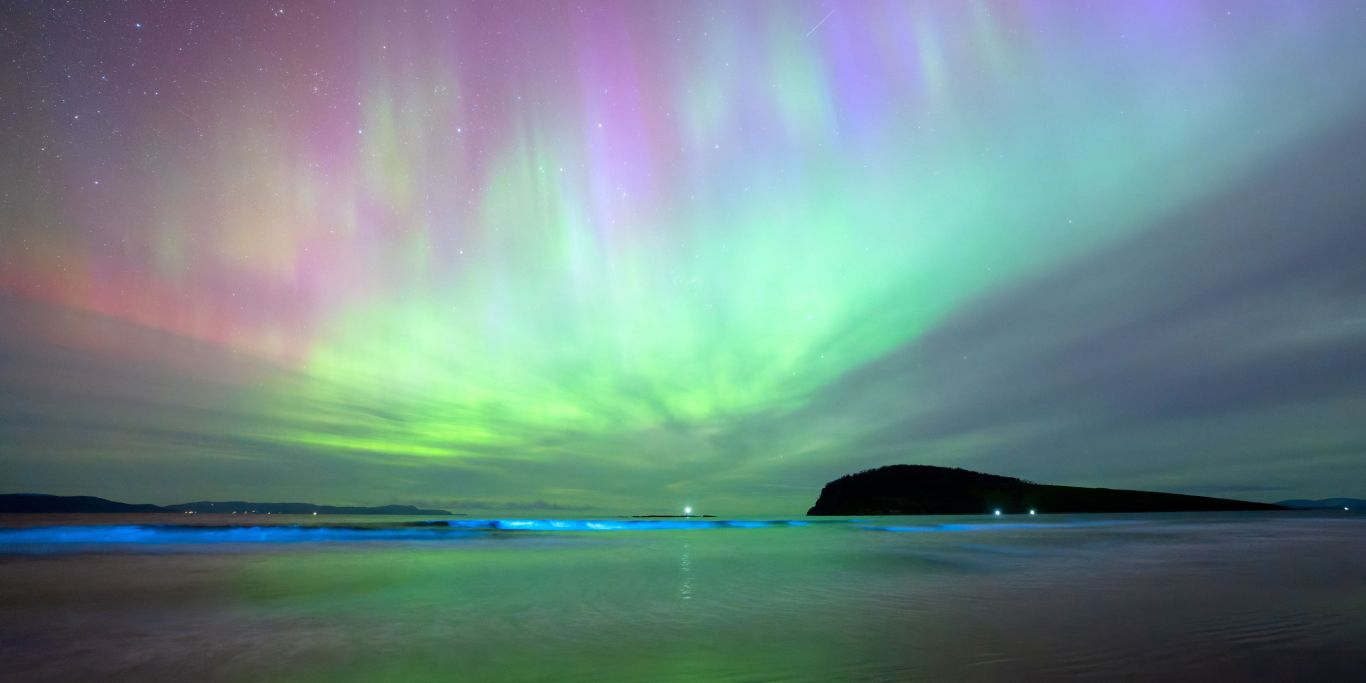

As conditions align, the potential for a southern lights display increases. Here’s who could see it – and how to boost your odds.
Just a few months into 2026 and Australia’s skies have already delivered a run of celestial highlights, including a spectacular total lunar eclipse. Only weeks later, we could be in for another celestial show.
The NOAA Space Weather Prediction Center has officially issued a G2 alert, meaning the aurora australis could be visible tonight. Here’s what we know so far – and how to increase your chances of catching a glimpse.
The G2 alert: what does it tell us?
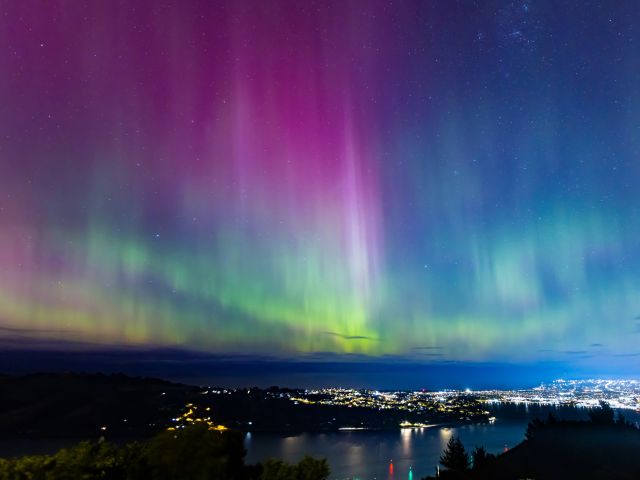
It might sound like space jargon, but a G2 alert is simpler than it seems. Similar to a notification on your phone, it’s essentially a heads-up about what is happening above us – and what that means for us.
The US-based NOAA Space Weather Prediction Centre will usually issue this alert when it detects a geomagnetic storm, ranging from G1 (minor) to G5 (extreme).
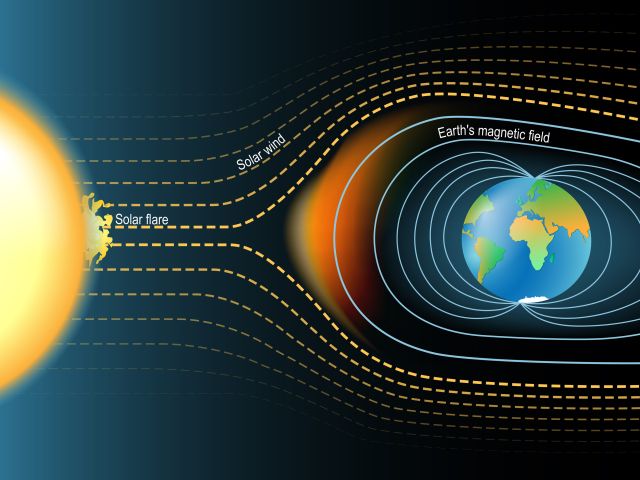
It’s all caused by high solar activity – typically a sudden expulsion of plasma or high-speed solar winds – which sends charged particles into Earth’s magnetic field. This interaction creates a geomagnetic storm, a temporary (albeit powerful) disturbance in Earth’s magnetosphere.
While this can cause power-grid disruptions and impact satellite operations, it also creates the ideal environment for auroral activity, AKA the southern lights.
How good are our chances?
The conditions seem just right. The forecast looks promising. But the question remains: will the aurora australis actually be visible tonight? The short answer is, it depends (I know, I’m sorry).
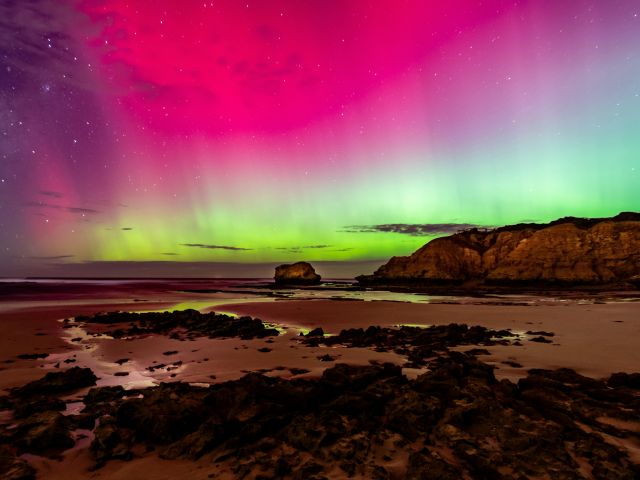
According to NOAA’s Space Weather Scale, the current geomagnetic storm is moderate in strength. While enough to summon the aurora, it may appear faint and sit lower on the horizon.
There are several other factors at play, with weather the biggest wildcard. Cloud cover, rain or smog can quickly obscure any activity, even during strong solar events. Forecasts can shift by the hour and the storm’s strength can fluctuate, too.
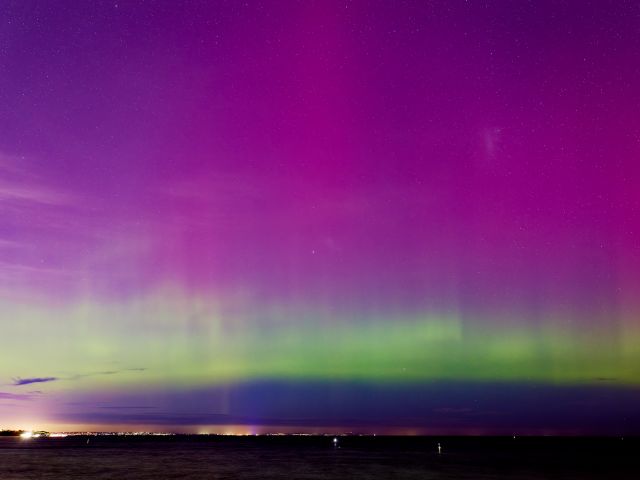
Still, it’s far from a lost cause. The Australian Space Weather Forecasting Centre is officially on Aurora Watch, promising that “aurora alerts will follow if significant geomagnetic activity actually occurs." Ultimately, the southern lights are as unpredictable as they are beautiful. Its magic lies in that spontaneity, making a sighting all the more special.
Need tips, more detail or itinerary ideas tailored to you? Ask AT.
AI Prompt
Here’s how to boost your odds
As G2-level storms tend to sit lower in the sky, Tasmania, Victoria, South Australia and the southern parts of WA are best placed for a sighting. Those in NSW and the ACT may need a little extra cosmic luck, but a glimpse isn’t out of the question.
To give yourself the best chance, head somewhere dark with a clear southern outlook, well away from city lights. Across Australia, there are plenty of prime stargazing spots – and you could be closer to one than you realise. Aim to be set up by sunset at 7:30 pm; the aurora is most likely to appear roughly 75 minutes later.
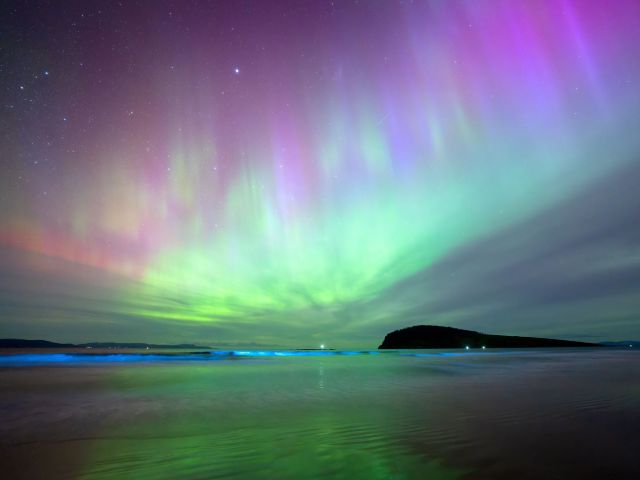
Using a dim red light instead of a torch can help preserve your night vision, while warm layers and a few snacks will make the wait a bit more bearable. Check updates regularly, monitor weather conditions and most importantly, be patient. Sometimes it only takes a minute for magic to spark, and even a faint glimmer makes for a memorable moment.
In these circumstances, it’s also important to remember that knowledge is power. Now that you know where to find aurora alerts – and how to read them – you’re more equipped than most to catch a glimpse. And even if you don’t see the southern lights tonight, the sky still has a way of rewarding those who look up.