It’s a small act with a big impact – your vote matters!
From the unmistakable garble of magpies to the colourful flash of rainbow lorikeets, Australia’s native birds are as vibrant as the country they call home. To spotlight our often-underappreciated Aves, The Guardian and Birdlife Australia have teamed up to bring you the nation’s most charming wildlife competition, and your vote counts.
Australian Bird of the Year explained
Originally launched in 2017 and held every two years since, the Australian Bird of the Year competition is a celebration of our birds, one of the country’s most unique wildlife species. But it also serves a deeper purpose – to highlight the importance of our native bird species and the challenges they face in a rapidly changing environment.
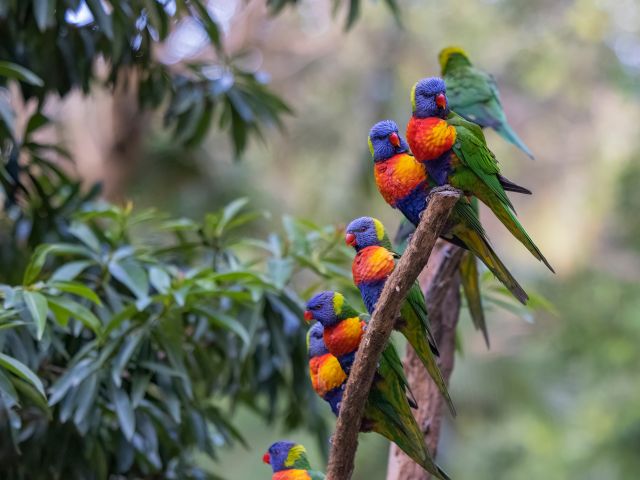
Rainbow lorikeets are one of Australia’s most recognisable birds. (Image: Getty/Matthew Starling)
Australia is home to roughly 850 native bird species. A significant portion of those are also endemic, meaning they cannot be found anywhere else on the planet – mainly due to Australia’s geographical isolation.
The troubling news? Under the government’s Environment Protection and Biodiversity Conservation Act 1999, 22 native bird species are already completely extinct, with 77 classified as vulnerable, more than any other species on the list. Over 65 are listed as endangered and 18 critically endangered, including some of the competition’s nominees.
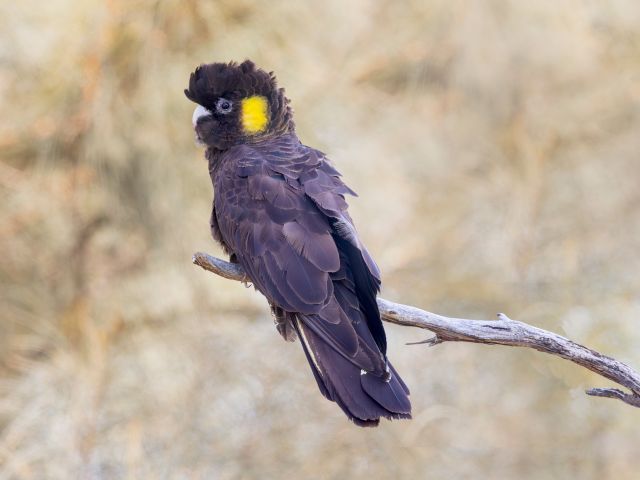
The black cockatoo one of 77 species listed as vulnerable. (Image: Getty/Jeremy Edwards)
Take one of the previous Australian Bird of the Year winners. The swift parrot took out top spot in 2023 – and it’s no surprise. The endemic species, usually found in Tasmania, is one of just three migratory parrots on Earth. But it’s also critically endangered, with demographic studies predicting it could be completely extinct as soon as 2031.
Need tips, more detail or itinerary ideas tailored to you? Ask AT.
AI Prompt
Here’s how you can help
We still have time to make a difference, and it really doesn’t take much. If you’re in a position to do so, Birdlife Australia accepts donations, which are funnelled into protecting endangered species, restoring habitats, building conservation partnerships and educating the public. Or you can volunteer your spare time to monitor birds, collect data and repair damaged habitats.
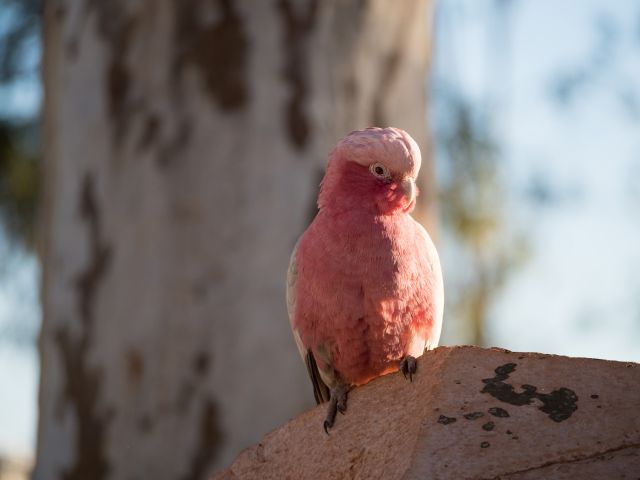
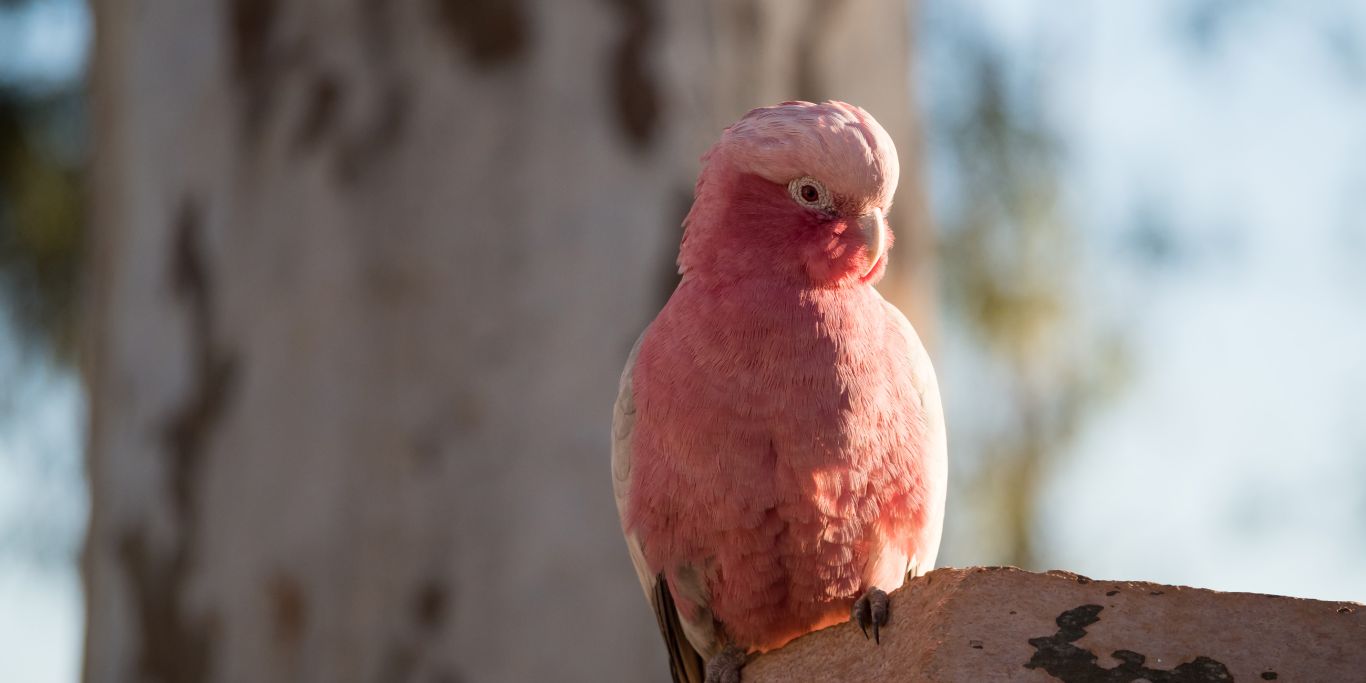
Birdlife Australia helps restore habitats for species like the pink galah. (Image: Getty/Christine Williger)
I get it though, we’re all busy. But just by voting for your favourite Australian Bird of the Year, you’re not only raising awareness, you’re also supporting an organisation that is working hard to save our native birdlife. And even though this year’s competition has closed, you don’t have to miss out. The Australian Bird of the Year is a recurring event and returns in 2027.
So, who won?
In the end, it came down to 10 finalists: the tawny frogmouth, Baudin’s black cockatoo, gang-gang cockatoo, willie wagtail and bush stone-curlew, southern emu-wren, kookaburra, little penguin, spotted pardalote and wedge-tailed eagle. Voting went dark for 24 hours as the final votes were counted. But on Thursday morning, the results were in and the winner revealed – a moment many are calling poetic justice.
Now, drum roll please! The 2025 Australian Bird of the Year is officially the tawny frogmouth! The adorable nocturnal owl narrowly missed out in 2023, coming in second to the swift parrot. And while the competition might be over for another year, the fight to protect Australia’s native birds is only just beginning.
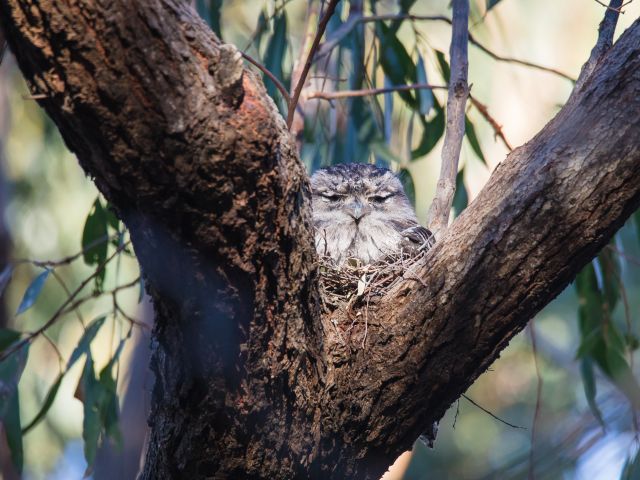
The tawny frogmouth is 2025’s Australian Bird of the Year. (Image: Getty/Brayden Standford)
Want to see more stories from Australian Traveller in your Google search results?
Tick the box next to "Australian Traveller". That's it.
Taylah Darnell is Australian Traveller's Writer & Producer. She has been passionate about writing since she learnt to read, spending many hours either lost in the pages of books or attempting to write her own. This life-long love of words inspired her to study a Bachelor of Communication majoring in Creative Writing at the University of Technology Sydney, where she completed two editorial internships. She began her full-time career in publishing at Ocean Media before scoring her dream job with Australian Traveller. Now as Writer & Producer, Taylah passionately works across both digital platforms and print titles. When she's not wielding a red pen over magazine proofs, you can find Taylah among the aisles of a second-hand bookshop, following a good nature trail or cheering on her EPL team at 3am. While she's keen to check out places like Scotland and North America, her favourite place to explore will always be her homeland.
From cabins to canvas, craft distillers to destination dining, Heathcote locals reveal their eco-savvy passions in ways that resonate with those seeking to travel lightly.
Heathcote, on traditional Taungurung Country in Central Victoria, is synonymous with its garnet-hued shiraz, but wine isn’t the only string to its bow. The town itself is sprinkled with heritage buildings from the gold rush era, and beyond that a growing collection of sustainable gastronomy and eco-friendly escapes. Nearby Bendigo, one of only 65 cities in the world recognised as a UNESCO Creative City and Region of Gastronomy, plates up an astonishing calibre of produce, wine and food for its size. Increasingly the entire region is taking up the challenge, though Heathcote in particular shines with its focus on sustainability.
The dramatic landscape of Heathcote’s Pink Cliffs Geological Reserve. (Image: Visit Victoria/Emily Goodfrey)
The eco-stays bringing sustainability to Heathcote
Yellow Box Wood’s safari-style tents are nestled on 40 hectares of bushland. (Image: Emily Goodfrey)
Andee and Lisa Davidson spent years working in southern Africa before settling in Heathcote. “We had a vision of how this could be,” explains Andee. “We wanted a retreat, but one that was off-grid and environmentally sustainable.” Now, at Yellow Box Wood, two luxury safari-style tents are at the heart of 40 hectares of rolling hills and native bush, with kangaroos, wallabies, echidnas, goanna and birdlife aplenty. It’s all solar-powered, wood for the fire is mainly fallen timber, and water is collected on the carport roof. No lack of creature comforts though – en suite with rain shower, espresso coffee maker, comfy seating, wood-burning fire all set to go. There’s also a solar-heated, mineral salt pool in a bush setting, walking tracks, and even a mini bush golf course. On my visit, I put the vision to the test. Cocooned in the plush four-poster bed I can glimpse the stars, while the heater casts a golden glow on the canvas. In the morning, I wake to a blush-pink sunrise, kangaroos feeding and a soundtrack of magpies.
Mt Ida Eco Cabin is rustic and simple but oozes comfort. (Image: Graham Hosking)
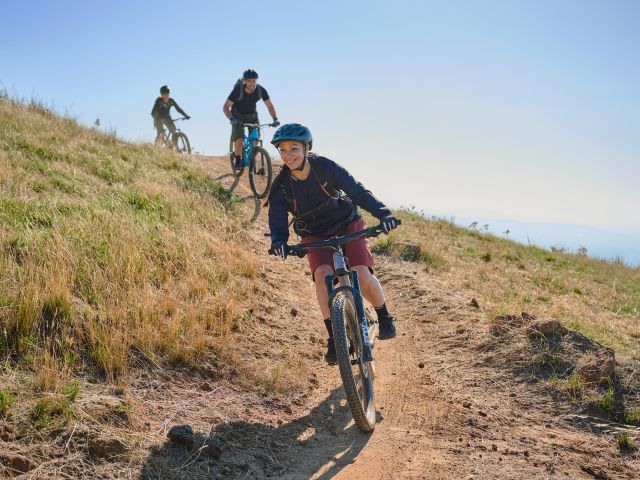
If a tent is not your style, Stephen and Cally Trompp’s carbon-neutral Mt Ida Eco Cabin might entice with its generous deck and farmland views. Inside the cabin, corrugated iron walls as rusty as a shearing shed, gleaming (recycled) floorboards, timber truss ceiling (crafted by Stephen), wood-fired heater and an old-school turntable with a pile of vinyls to spin. It’s fun, and a little boho.“Everything is recycled. The cabin takes maximum advantage of the sun in winter. It’s all solar-powered. Don’t panic, though,” says Stephen, “you can still charge your phone and get 4G reception!” Settle into an Adirondack chair on the deck or pedal off on a mountain bike to suss out the wineries.
A taste of Spain in Central Victoria
Three Dams Estate make Spanish-style wine.
Another person with a vision is Evan Pritchard at his Three Dams Estate where the wines reflect his deep love of Spain and of Spanish-style grapes, such as tempranillo. Afternoons in the ‘wine shed’ or cantina are matched with music (flamenco is a favourite), Spanish bites from tapas to paella (with Evan on the pans!) and views to Mount Alexander. Sustainability is also a passion. “You don’t need to buy anything. We decided to be off-grid from the start, but it is a lifestyle change,” he says. “You need to think about it and be careful.” Everything here is recycled, reassembled, refurbished. Evan has an electric car (with solar-powered charger), solar-power for the winery, and even a jaunty little electric tractor/forklift. “I love the idea of all the things you can do using the sun.” Sipping a crisp rosado (a Spanish rosé) with Evan in the sunshine, I couldn’t agree more.
The vineyard redefining sustainable winemaking
The Silverspoon Estate winery is completely off-grid. (Image: Graham Hosking)
On the other side of Heathcote, Silver Spoon Estate demonstrates sustainability on a more extensive scale. Tracie and Peter Young’s winery, cellar door, award-winning restaurant and their own house are all solar-powered and off the grid. Sustainability is intrinsic to everything they do. The property sprawls across 100 hectares, with 20 hectares under vine – shiraz, viognier, grenache, tempranillo. As the climate has changed, so too has the approach. These are dry-grown vineyards. “We prune for drought. That means lower yields but more intense flavours,” says Peter. The fine-dining restaurant offers sweeping views, a wood-burning fire and a deck for languid lunches. Head chef Ben Hong sources regional, sustainable ingredients and weaves estate wines into the menu – think crispy wild mushroom arancini, viognier-infused chicken breast.
Silver Spoon’s award-winning restaurant.
Heathcote’s other hidden gems
Heathcote Wine Hub is housed in a 1855-built timber church.
Not all local wineries have a cellar door, but I find local treasures at the Heathcote Wine Hub, a petite 1855 timber church in the main street, lovingly returned to life by Karen Robertson and Carey Moncrieff. “Carey is a scrounger,” says Karen. “He doesn’t throw a single thing away.” He does, however, craft things into something quite special. Heritage floors, light-filtering lancet windows and shelves of regional wines create the perfect ambience for wine tasting. Or order a glass and linger over a cheese platter.
Heathcote is not all wine, of course. Nathan Wheat and partner Vanessa Curtis run Envy Distilling with a committed sustainable ethic – and a serious love of gin. Their small-batch distillery produces grape-based gin, and soon brandy. Distilled water is reused in an ingenious cooling system. All waste is treated on site. They buy excess wine from winemakers to distil and buy recycled barrels. “Distilling with the sun,” as Nathan says. Each Envy gin has its own story. Spicy, award-winning The Dry, is designed to capture the region’s dry, rugged nature. Pull up a stool at the bar (reclaimed timbers and tiles, of course), order a Gin Flight, or kick back with a cocktail and let Nathan share his eco journey.
Sample gins at small-batch distillery Envy.
A traveller’s checklist
Getting there
It’s less than two hours’ drive from Melbourne. The scenic route we take goes past Sunbury, then along a splendid country road through Romsey and the magic, boulder-strewn landscape of Lancefield. Watch for kangaroos on the road!
Staying there
Go off-grid in style at Yellow Box Wood for glamping or try Mt Ida Eco Cabin for a couple’s weekend hideaway.
Eating there
Award-winning French restaurant Chauncy.
At award-winning Chauncy, French chef Louis Naepels and sommelier wife Tess Murray have created a tiny, elegant pocket of rural France. Meticulously restored 1850s sandstone building, sun-drenched dining room, impeccable service, a menu suffused with local flavours and thoughtful wine pairings.
Fodder is both cafe and social hub. Chef Mo Pun and sister Lalita serve classic Aussie breakfast-to-lunch fare, though their Nepalese heritage sneaks through.
Playing there
Sip on wines among the vines at Sanguine Estate. (Image: Visit Victoria/Emily Godfrey)
Sanguine Estate’s cellar door and terrace overlook bucolic vineyards. Its award-winning, dry-grown wines include the distinctive D’Orsa Blanc dessert wine, reflecting the family’s Swiss-Italian heritage. Order a charcuterie board and stay a while. Keep it carbon neutral by cycling some (or all) of the 50-kilometre O’Keefe Rail Trail to Bendigo.
At Bridgeward Grove, learn about the property’s Old Mission Grove heritage olive trees, do a sommelier olive oil tasting, and stock up on sustainably grown olives and oil. Explore the unique landscape, wildflowers and wildlife of pink cliffs geological reserve.