Where to see Australia’s unique wildlife

hero media
Australia boasts a weird and wonderful menagerie of creatures on land, sea and air.

Kangaroo

One half of the national coat of arms (the other is the emu), the kangaroo is one of the country’s most celebrated animals. There are four different species of kangaroo: The Red; Antilopine; Eastern Grey; and Western Grey. The Red holds the distinction of being the world’s largest marsupial; some males stand as tall as six feet and weigh in at 200 pounds.

Fast fact: There are more kangaroos than humans in Australia (roughly 50 million versus 25.7 million), with an estimated 15.8 million red kangaroos alone.

Where to see them: You’ll find kangaroos all over Australia. They’re social creatures, so chances are if you see one there are more close by. They rest during the heat of the day, so the best time to catch sight of them is at dawn and dusk.
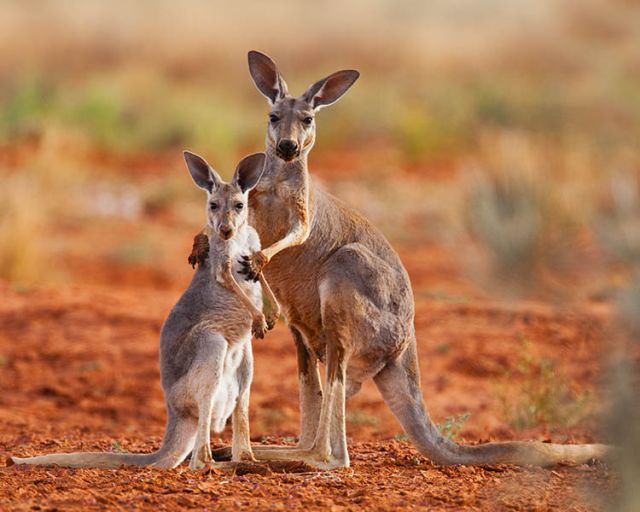
Kangaroo with its joey
The kangaroo is one of Australia’s most celebrated animals.

Koala

When it comes to the Aussie animal most visitors want to tick off their list, chances are it’s the koala. This impossibly cute tree-dwelling marsupial mammal survives on a diet exclusively made up of eucalyptus leaves. The trees are also their home, with koalas spending up to 19 hours a day sleeping in them before waking up to feed at night, making them largely nocturnal. While koalas have a pouch like kangaroos, they are more closely related to the wombat.

Fast fact: While they look all chubby and cuddly, koalas have seriously sharp claws and when threatened can run as fast as a rabbit.

Where to see them: Due to the fact that they spend most of their time up trees, koalas can be elusive to spot in the wild. Keep an eye out for them along the Great Ocean Road and on Raymond Island in Victoria, and around Port Stephens and Port Macquarie in New South Wales.
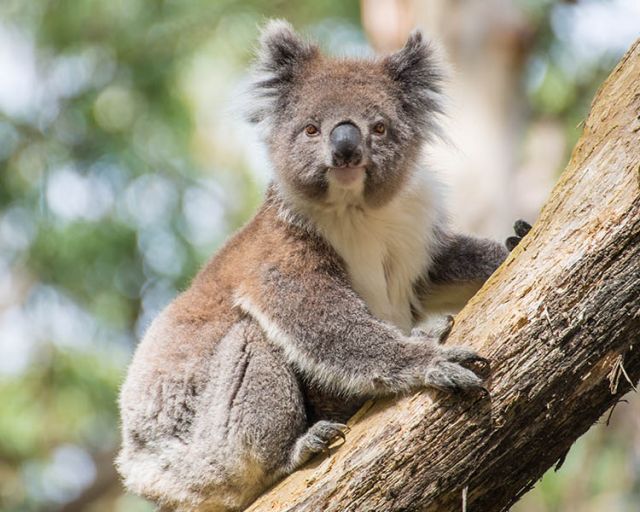
A Koala holding onto a branch
Koalas survive on a diet exclusively made up of eucalyptus leaves.

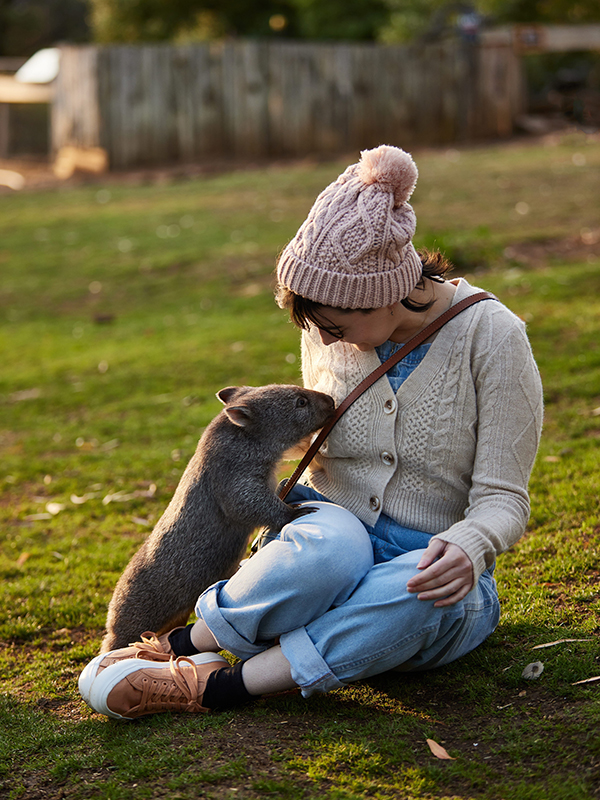
Wombat

These chubby creatures live in burrows and emerge at night to feast on a diet of grasses, bark and roots. Consisting of three species – the Common Wombat, the Northern Hairy-Nosed Wombat and the Southern Hairy-Nosed Wombat – wombats are an evolutionary wonder: they have a pouch like other marsupials but it faces backwards so that it doesn’t fill with dirt when they are digging. And its rump consists mostly of cartilage so that when it retreats headfirst into its hole it is almost impossible for predators to get a grip on.

Fast fact: Wombats’ poop is shaped like a cube. The theory is that as they mark their territory by defecating, the shape stops it from rolling away.

Where to see them: Wombats thrive in cool, damp environments, so you have a good chance of spotting them in places like Cradle Mountain-Lake St Clair National Park and Maria Island in Tasmania, Wilsons Promontory National Park in Victoria, and the Southern Highlands, less than two hours from Sydney.
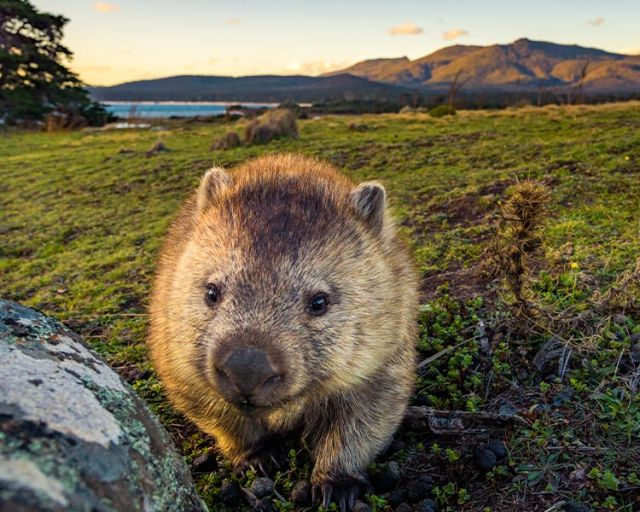
Wombat looking at the camera
Wombats live in burrows and emerge at night to feast on a diet of grasses, bark and roots.

Possum

When you are out and about at night in Australia, whether in the heart of Sydney or in the wilds of Freycinet National Park in Tasmania, chances are you will catch a glimpse of either a Common Brushtail Possum or a Common Ringtail Possum, the most prolific of Australia’s 23 species of possums.

With their soft fur and sweet faces, possums are one of the easiest marsupials to spot as they are quite adventurous in the pursuit of food. And if you can’t see them, you’re sure to hear them; researchers have identified at least 18 different sounds made by possums including screeching, hissing and grunting.

Fast fact: Both brushtail and ringtail possums have prehensile tails, which they use as a type of hand to cling to trees and carry things.

Where to see them: Brushtail and ringtail possums are found all over the country and are easy to spot when feeding at night – just look up.
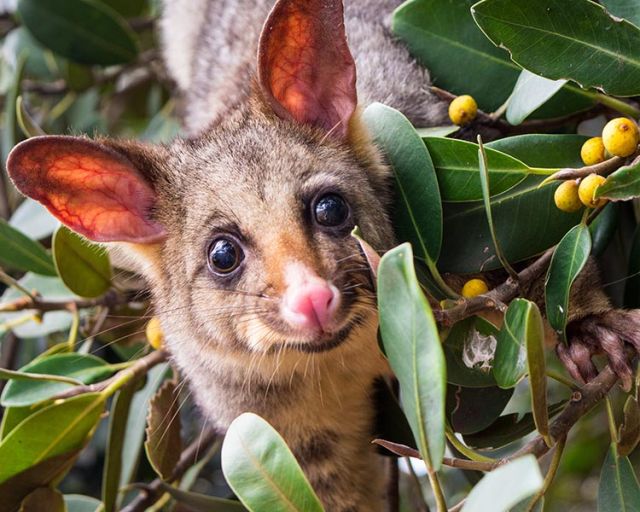
Possum looking into the camera
Possums are one of the easiest marsupials to spot.

Wallaby

A marsupial cousin of the kangaroo, wallabies are widely found across the country. Smaller than kangaroos, there are some 30 species of wallaby in Australia including the Rock Wallaby, Swamp Wallaby and the Tammar Wallaby, all of which hop to get around, tend to be more active at dawn and dusk, and carry their young in a pouch. Unlike kangaroos, however, wallabies are solitary creatures.

Fast fact: If a wallaby becomes pregnant while she still has a joey (baby) in her pouch, she can pause the gestation of the new embryo until its sibling has vacated the space.

Where to see them: Wallabies are widespread and plentiful, which means you are in with a good chance of seeing these delightful little creatures in any of Australia’s abundant National Parks.
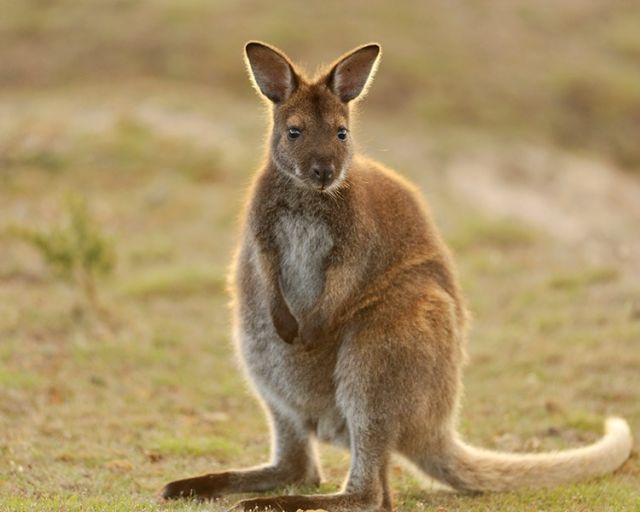
Wallaby
Wallabies are marsupial cousins of the kangaroo.

Kookaburra

Australia is home to abundant birdlife, but none is more genuinely wondrous than the kookaburra. Also known as the Laughing Kookaburra, this Kingfisher is famous for its loud and clear call that sounds like a hearty belly laugh but is actually a method to warn other birds off its territory.

Fast fact: Kookaburras are believed to pair for life, so when you see one bird its mate will most likely be nearby.

Where to see them: Found predominantly on the East Coast, you will usually hear them before you see them.
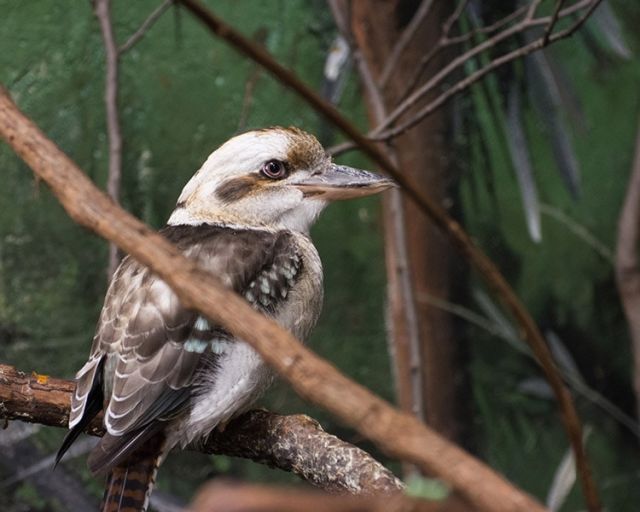
Kooraburra
Kookaburras are famous for their loud and clear call that sounds.

Tasmanian Devil

Found exclusively on the island state from which it gets its name, this carnivorous marsupial is actually a lot like its Looney Tunes cartoon persona, a snarling, irascible whirlwind of teeth and attitude. With a vocabulary of growls, grunts and snarls, they are vociferous (and slightly vicious) when threatened or protecting their food.

Fast fact: Further cementing its reputation, the Tasmanian Devil has the most powerful bite of any animal in the world based on its size.

Where to see them: As the devil is nocturnal, it is difficult to see in the wild; instead visit the Tasmanian Devil Conservation Park in Taranna, an easy drive from Hobart, Bonorong Wildlife Sanctuary, north of Hobart, or Devils @ Cradle Wildlife Park near Cradle Mountain National Park.
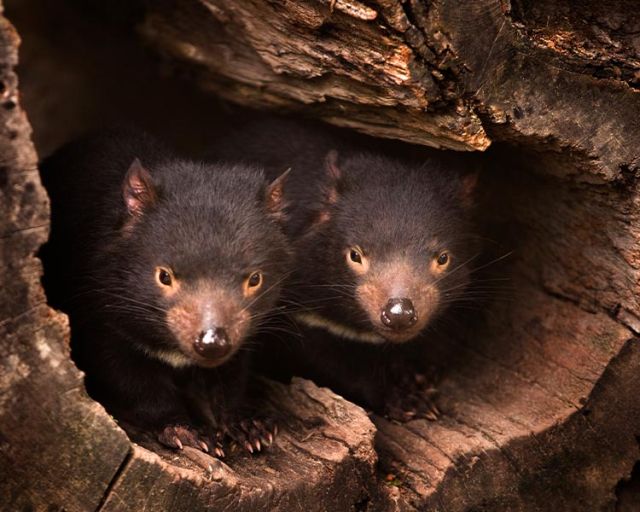
Two Tasmanian Devils
Tasmanian Devils are found exclusively on the island state from which it gets its name.

Also watch out for…

Echidna

This little egg-laying mammal is covered in sharp spikes and eats a diet largely made up of ants, hence its alternative name, the spiny anteater. They thrive in all manner of habitats, too.
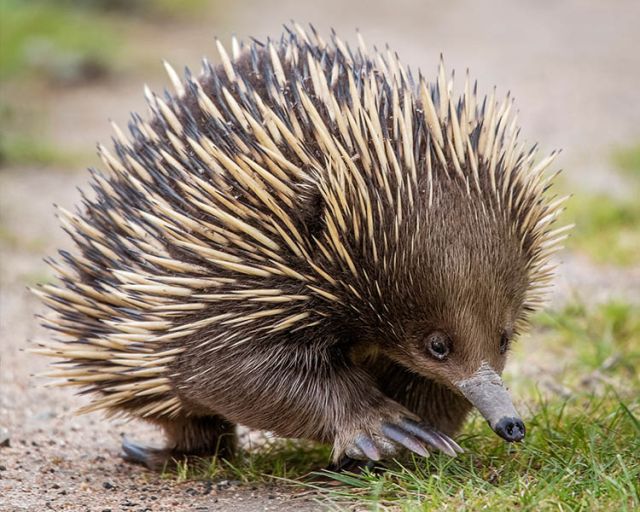
Echidna
The echidna eats a diet largely made up of ants.

Emu

The other half of the coat of arms, this flightless bird is the second biggest in the world after the ostrich; they can grow up to 6.5 feet tall. You’ll find them across mainland Australia.
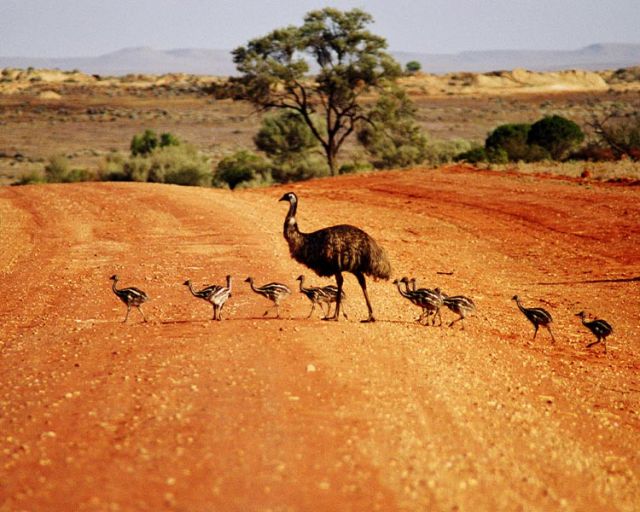
Emus crossing the road
Emus are the second biggest birds in the world after the ostrich.

Platypus

One of only two egg-laying mammals in the world (the other is the echidna), the platypus has a ducklike bill, webbed feet, is covered in fur and sleeps 14 hours a day on average.
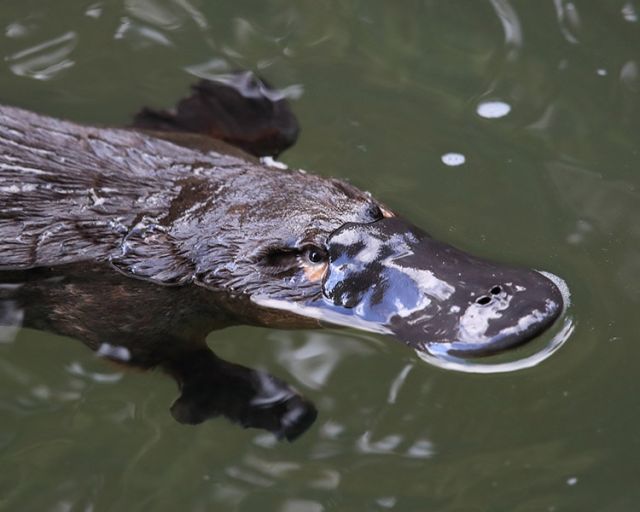
Platypus
One of only two egg-laying mammals in the world.

Dingo

Australia’s native wild dog, dingoes are found throughout the mainland states, including in the Northern Territory, and are known for their characteristic howl.
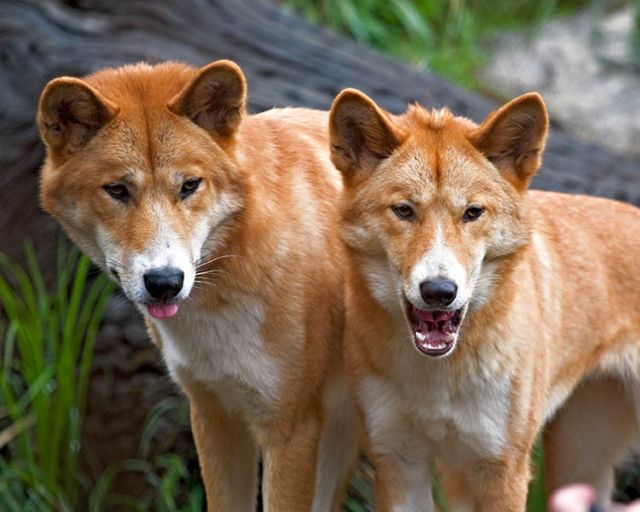
Two dingos
Dingoes are found throughout the mainland states.

Sulphur-crested Cockatoo

You’ll hear these cheeky native birds screeching loudly during the summer months as they dart from tree to tree or hang upside down from electricity wires.
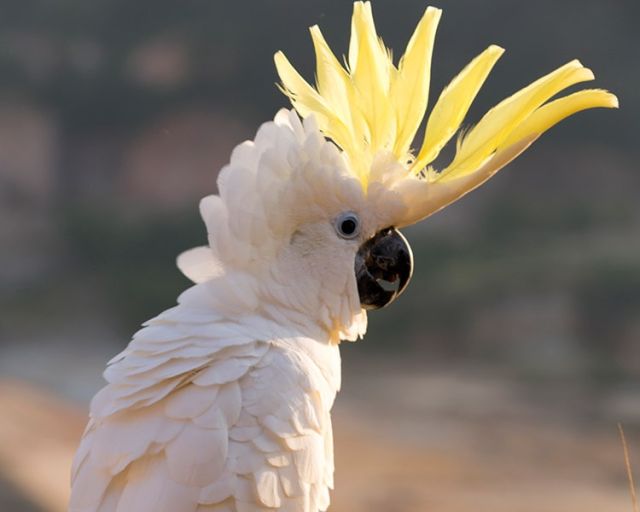
A white Sulphur Crested Cockatoo
Keep your eyes peeled for a Sulphur Crested Cockatoo.

Quokka

Native to Rottnest Island in Western Australia, the cuddly quokka is quite possibly Australia’s happiest marsupial, whose delightful grin has featured in many a cute selfie and social media post.
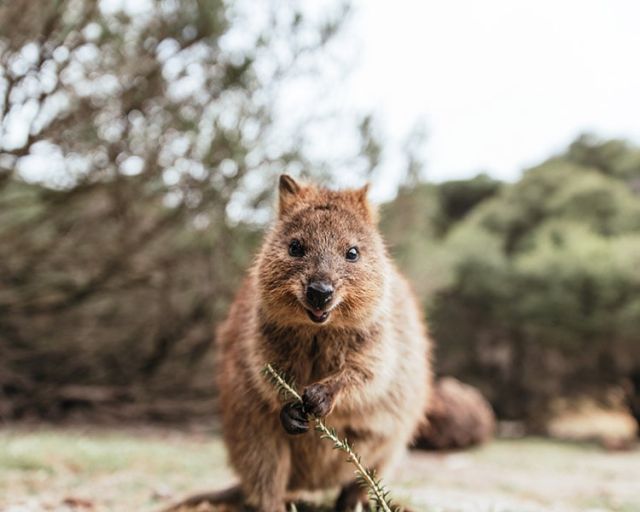
Quokka smiling at the camera
The cuddly quokka is quite possibly Australia’s happiest marsupial.
hero media

Inspire your senses with these iconic East Kimberley stays

The East Kimberley should be on every bucket list, and here’s why.

Livistona palms soar out of chasms the colour of Valencia oranges. Shady waterholes beckon travellers daring to venture off the bitumen. From the air, fruit farms give way to vast plains that meet rolling hills and fascinating geological formations centuries in the making. The East Kimberley is one of Australia’s most treasured wilderness areas, but don’t be fooled by its rust-coloured roads. This north-eastern corner of Western Australia is home to some of Australia’s most iconic stays by Discovery Resorts  that should be on everyone’s bucket list.

A group of people enjoy an intimate dining experience at El Questro Homestead.
Dine in the heart of nature.

Your guide to Lake Argyle

The backstory

With rolling hills that glow amber at sunrise and glassy water that reflects the Kimberley’s bright blue sky, a visit to Lake Argyle is nothing short of awe-inspiring. As Australia’s second-largest man-made freshwater lake, travellers flock here to soak in the views from boats, helicopters and Discovery Resorts – Lake Argyle .

The latter is a lakeside oasis, a resort where travellers crossing from Western Australia into the Northern Territory (or vice versa) converge. Fifty minutes’ drive south of Kununurra, the property is perched atop a cliff overlooking the sprawling Lake Argyle.

Discovery Resorts – Lake Argyle was originally built in the late 1960s to provide accommodation for builders of the Ord River dam, which formed Lake Argyle. In the decades that followed it had several owners, until a Kununurra local took the reins in 2004 and reinvented the property with luxury villas and its now world-famous infinity pool. The iconic property was added to the Discovery Resorts portfolio in 2021, undergoing a major upgrade that took the resort from a beloved campground to an all-encompassing resort with premium waterfront villas.

A boat glides across the expansive waters of Lake Argyle, surrounded by the breathtaking landscapes of the Kimberley. As part of the Discovery Holiday Parks experience, this unforgettable journey offers adventure and relaxation.
Glide across the vast, shimmering waters of Lake Argyle.

The rooms

A lakeside resort like no other, Discovery Resorts – Lake Argyle offers something for everyone, from campsites to villas and cabins . The Deluxe Lakeview Cabins have views of the opposing cliff and are surrounded by bush, ensuring plenty of privacy, while both the Deluxe and Standard Cabins are ideal for families, with contemporary furnishings and one, two or four bedrooms. The campsites also come in a variety of sizes.

The facilities

There’s no doubt the biggest drawcard to Discovery Resorts – Lake Argyle is the lake, 20 times the size of Sydney Harbour. One of the best ways to experience it is on the Kimberley Durack Sunset Explorer Cruise , during which you’ll see freshwater crocodiles nesting along the banks (it’s home to 30,000 freshies) and even get the chance to swim in their waters. The cruise also takes in Mt Misery, towering above the original and now submerged Argyle Downs Homestead.

If you have young children who need to get to bed early, a great alternative is the three-hour Lunch Explorer Cruise . You’ll tour around the lake’s bays as you learn about the local wildlife before stopping at a remote island for a swim.

Refuel between adventures at the onsite pub-style eatery, The Lake Argyle Cafe. The cafe is the heart of the resort, bringing together friends new and old over a steak, cold beer and live music. Hours vary with the seasons, but rest assured you’ll be able to enjoy a good feed year-round, with a well-stocked general store also open during the day.

Cool off from a day of exploring in the striking infinity pool with some of the best views in the country (you’ll find sweeping views of the lake below). Or enjoy a flight with HeliSpirit, or clear your mind during a yoga class on the lawn.

Two people unwind in an infinity pool, overlooking stunning Lake Argyle at Discovery Holiday Parks.
Take a dip in the infinity pool and soak in breathtaking Lake Argyle views.

Your guide to El Questro

The backstory

One of the most famous stays in Australia is El Questro . A former cattle station, it’s evolved into one of the country’s most recognisable tourism destinations over the past 30 years, and is now embarking on a new chapter to elevate the region’s rich First Nations culture.

The property draws travellers seeking to reconnect with nature and the beauty of this country. Wild in spirit but immaculate in style, El Questro is a 283,000-hectare property like no other; surrounded by dramatic gorges, impressive mountain ranges, thermal springs, secluded waterfalls and even rainforest, it’s the perfect base for adventurous souls.

A person floats leisurely in the river at Discovery Holiday Parks, immersed in nature’s tranquillity.
Float along Zebedee Springs and immerse in nature.

The rooms

Across the sprawling El Questro are three properties catering to the wide variety of travellers who journey this way. The most impressive is the luxurious Homestead , where 10 suites perch at the edge of a burnt-orange cliff, with cantilevered bedrooms over the peaceful Chamberlain River. The adults-only, all-inclusive Homestead is a member of the prestigious Luxury Lodges of Australia collection and offers a backdrop of thick bushland; riverside, you’ll find an immaculate lawn and a shaded pool that lures guests out of their rooms.

At Emma Gorge , travellers will be immersed in the beauty of the Cockburn Ranges, falling asleep to the sounds of wildlife in safari-style tented cabins. This is where you come if you want to completely connect with your environment while retaining a few creature comforts. The Emma Gorge Tented Cabins sleep three or four people and feature private ensuites and ceiling fans.

Families also love The Station , home to simple yet comfortable air-conditioned rooms, as well as a large, leafy campground. Sitting by the Pentecost River, The Station is open from April to October and has a range of accommodation, from unpowered and powered campsites to air-conditioned tents for two people and a Gardenview Family Room for five.

Two people stand beside a suite perched on the edge of a striking burnt-orange cliff, gazing out over the serene Chamberlain River below.
Take a breather with stunning views of nature all around.

The facilities

Located in the heart of the Kimberley, El Questro retains its strong connection with its Traditional Owners, the Ngarinyin people. A highlight of a stay here is the Injiid Marlabu Calls Us experience ; over two hours, guests are immersed in the soul of Country by witnessing ancient healing rituals, listening to generational stories and learning about the land’s ancestral heritage.

Other experiences include bird watching, cruising through Chamberlain Gorge, hiking through Emma Gorge, horse riding, four-wheel-driving and soaking in Zebedee Springs. At the properties, you can also cool off in the pools, and relax in the restaurants or at private dining locations. A bonus of staying at The Homestead is the exclusive service of El Questro’s dedicated reservations team, who will craft a bespoke itinerary tailored to your travel tastes.

A group of people stand beside a tree, with a car parked nearby, taking in the surrounding natural beauty.
Experience thrilling nature activities.

Book your East Kimberley adventure today with Discovery Resorts.