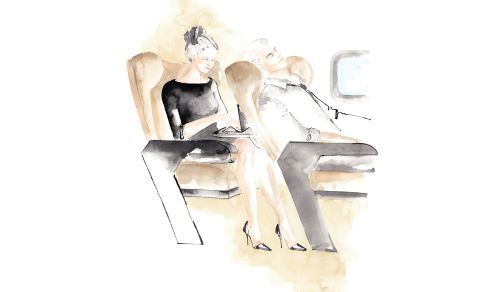
Plane bad behaviour – a flight attendant’s confessions

hero media
Manners can often disappear above the clouds. We chat to a flight attendant on the frontline of bad behaviour to find out what causes mile-high anxiety.

What is it about soaring above the clouds in a metal bullet that has the capacity to turn a normally rational individual into an unhinged rage monster?


Flying used to be a civilised affair, complete with cocktails and pleasantries. But these days it seems more and more flights teeter on the edge of grudging courtesies and all-out-brawl.


If you’ve been paying attention, you will have noticed an increase in passenger-related disputes popping up in your news feeds.


Most recently, we heard of Grant Hackett and the Nipple-gate fiasco, whereby our great Olympic hope, furious that the (male) passenger in front of him dared to recline, lurched forward to administer a nipple cripple on the unsuspecting recipient.


Hackett has since apologised and admitted being inebriated at the time, but really, does that excuse a mid-flight teat-tweak?


There has also been a proliferation in the US of bad manners en route, including a situation whereby a ‘knee-blocker’ device was employed by a passenger, preventing the person in front from reclining.


The situation escalated to a point where the victim threw a cup of water at the perp and the flight had to be diverted.


What is going on up there? Surely travelling at great speed some 38,000 feet above the ground should engender a we’re-all-in-it-together kind of spirit? Yet it seems tensions increase with altitude.


It used to be that bad behaviour on board was reserved for the Mile High Club and pinching a few extra miniatures from the drinks trolley, but now we’re having hissy fits over where we sit, hogging the overhead compartment, and waging passive-aggressive wars for the armrest.


The need for airlines to effectively keep costs down while not making huge losses has seen an increase in seats on planes.


Thus, the trade-off for low airfares is slightly more cramped conditions, but surely given the choice, most of us would happily sacrifice a few centimetres to save a few dollars.


The sad truth is the glamour of flying is now as lifeless as the in-flight meal and while we expect to scuttle here and there, we don’t seem prepared to acknowledge flying is just another mode of public transport.


Daily commuters learn a certain level of resigned tolerance for the excessive invasion of personal space, but in the air our fuse is shorter.


While the vast majority of flights do hum along to their destination without any animosities, there’s little denying air travel can be a crucible of malcontent, so we wanted to chat to someone who sees it all, from the good to the bad and the earth-shatteringly ugly.


We chat to a real-life Virgin Australia flight attendant, who we’ll call Karen Singleton for the purpose of this article, about what actually happens up there and how we can all be better passengers.

Need tips, more detail or itinerary ideas tailored to you? Ask AT.

AI Prompt

How long have you been a flight attendant with Virgin?

KS: Twelve years. Ten flying domestically and two internationally.

What’s with all the bad behaviour?

KS: There’s a lot of passenger shaming going on at the moment, with people taking videos and photos and sharing them on social media. It’s always difficult to contain that.

Do people generally behave on flights?

KS: The majority do but there’s always one who’s a bit needy. There always seems to be one person that you have to take care of.

What’s the most common cause of bad behaviour between passengers?

KS: It’d have to be anything to do with personal space invasion, such as hogging the arm rest or when people put their feet into the space next to them. Or sometimes a passenger will come up to us and say they can’t sit next to someone because they smell.

Whoa, how do you handle that?

KS: It’s a difficult one, it puts us in an awkward position. I can’t go up to someone and say, “Hey, you smell!" and hurt their feelings. It’s hard when we don’t have an extra seat to move people to.


We can use sprays, or there is an old trick of putting coffee on as it draws out the odour, but you have to be discreet about it. The last thing we want is an altercation.

Are there any hygiene issues from travellers that surprise you?

KS: When people go to the toilet with bare feet. You don’t want to be doing that.

At what point do the cabin crew intervene in a dispute between passengers?

KS: If I see two passengers having a heated conversation I ask if I can help, give them suggestions or offer amenities. We’re there to help, we want everybody to get along.


People think they are there by themselves, but we’re 200 or 300 people crammed in and we all have to get along harmoniously.

Weekly travel news, experiences
insider tips, offers, and more.

When is it OK to recline?

KS: Don’t recline during meal service, that’s a courtesy to everyone so they can enjoy the meal. At other times, turn around and see if there is anyone there and if they are working on a laptop or using the tray table.


If they are, ask if it’s OK to put your seat back. Everyone has a right to recline.

Who gets the arm rest?

KS: I’d say the middle person, because there has to be some kind of compensation for that seat. The window seat can lean on the window, and the aisle seat has toilet access.

What do you think makes people intolerant in the air?

KS: It must be that we’re closed in, you can’t open the windows and there is that claustrophobic feeling. Also, people travel for different reasons, someone could be travelling for a funeral and the person next to them for a wedding or holiday. There’s also stress with holidays and getting everyone ready for a trip.

What are your tips for containing the rage when in air?

KS: Just breathe and put yourself in the shoes of the person annoying you. Mental health is a big issue we have on planes, because it’s hard to see.


It’s not visible until people are stressed about things. There are also people who will drink alcohol excessively because they are nervous flyers and all sorts of things.

What’s the best thing passengers can do if a fellow passenger is being aggressive?

KS: Definitely get the attention of the cabin crew, because they have the training, experience and skills to deal with situations.

How can people help the cabin crew?

KS: ‘Please’ and ‘thank you’ go a long way. About 95 per cent of people just say, ‘I’ll have chicken’, instead of saying ‘thank you’. Manners stand out so much for us. It’s crazy, but no one says it.

Anything else we should know?

KS: Treat the crew and the plane with respect; it’s our little home. We’ve had people cut their toenails or peel their sunburn and flick it on the ground. I don’t go to your workplace and do that, so don’t do it in mine.

hero media

Unforgettable First Peoples tours and experiences in Victoria

    Angela Saurine Angela Saurine
    From ancient aquaculture systems to sacred rock art shelters, Victoria’s First Peoples cultural experiences offer a powerful connection to one of the world’s oldest living cultures – where every site, story and smoking ceremony invites a deeper understanding of the land beneath your feet. 

    Victoria’s sweeping landscapes hold stories far older than any road map can trace – stories etched into stone, sung through generations and woven into every bend of river and rise of hill. From the lava flows of Budj Bim to the ancient middens of Moyjil/Point Ritchie and the volcanic crater of Tower Hill, the state is home to some of the most significant First Peoples cultural sites in Australia. These places, along with other immersive experiences, offer not only a window into a 60,000-year legacy, but a profound way of understanding Country itself. As more travellers seek connection over checklists, guided tours by Traditional Owners offer respectful, unforgettable insights into a living culture that continues to shape the land and the people who walk it. 

    Budj Bim cultural landscape  

    Budj Bim Cultural Landscape
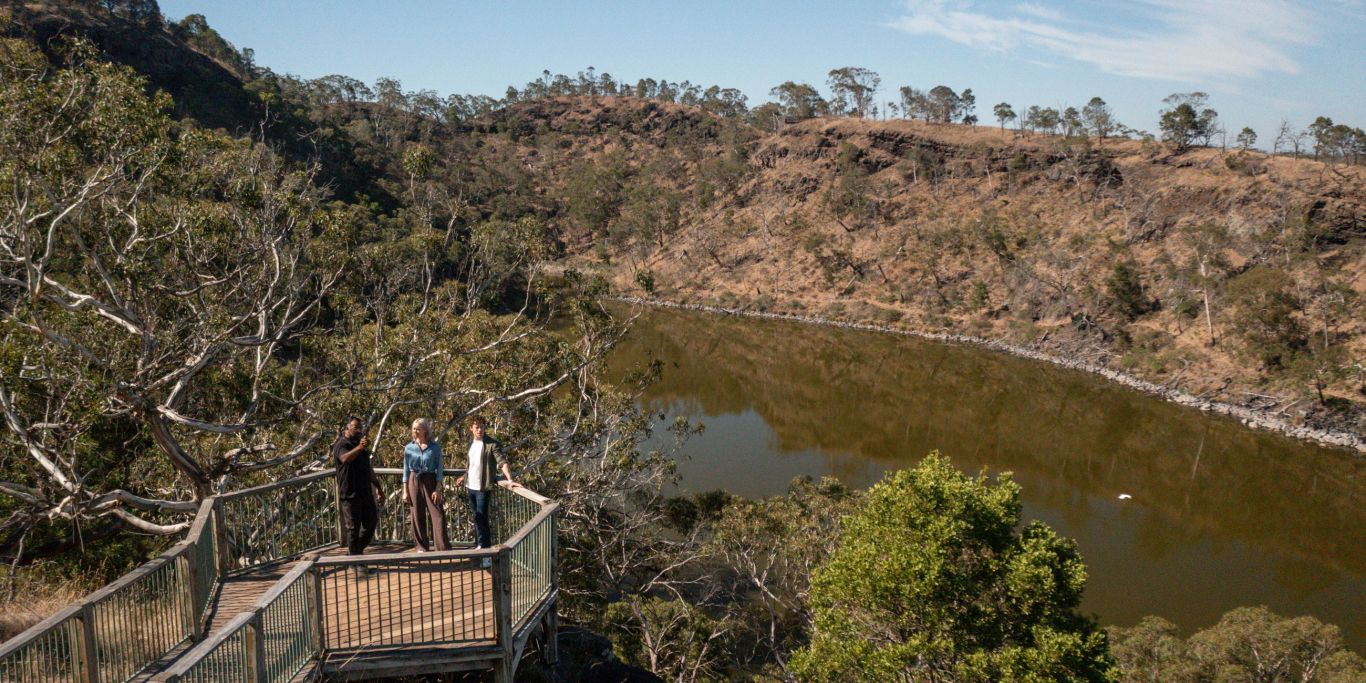
    Budj Bim Cultural Landscape is on Gunditjmara Country. (Image: Visit Victoria)

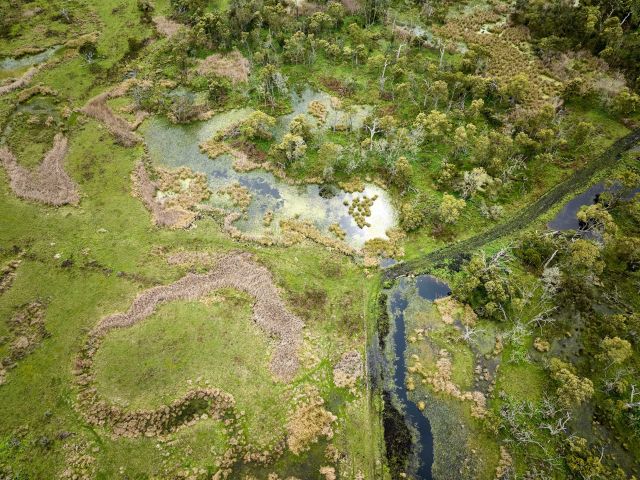
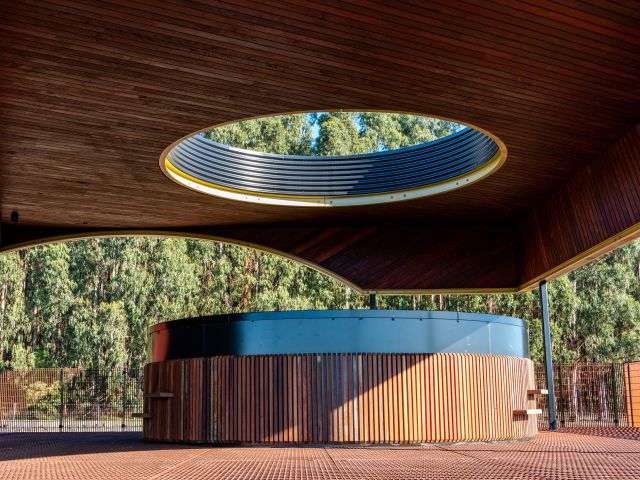
    Venture beyond the surf and sand of the Great Ocean Road to discover a deeper story etched into the volcanic landscape. At Budj Bim , ancient aquaculture channels built by the Gunditjmara people to trap, store and harvest kooyang (short-finned eel) reveal one of the world’s oldest living cultures. While you’re in the area, head over to the state-of-the-art Tae Rak Aquaculture Centre, where you can observe the eels in a special tank, wander the shores of Tae Rak (Lake Condah), and enjoy a bite at the Bush Tucker Cafe. Also nearby is Tower Hill, a dormant volcano reborn as a wildlife reserve, offering trails through bushland teeming with emus and koalas. 

    eel tank
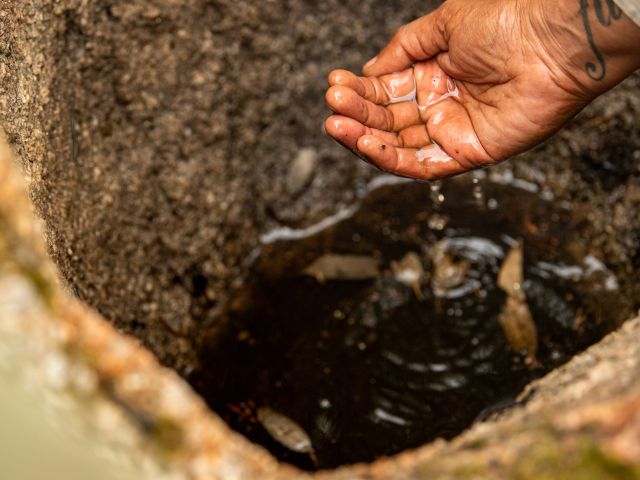
    The kooyang (eel) tank at Tae Rak. (Image: Visit Victoria)

    Dumawul Kooyoora Walking Tour 

    Dumawul walkingtour
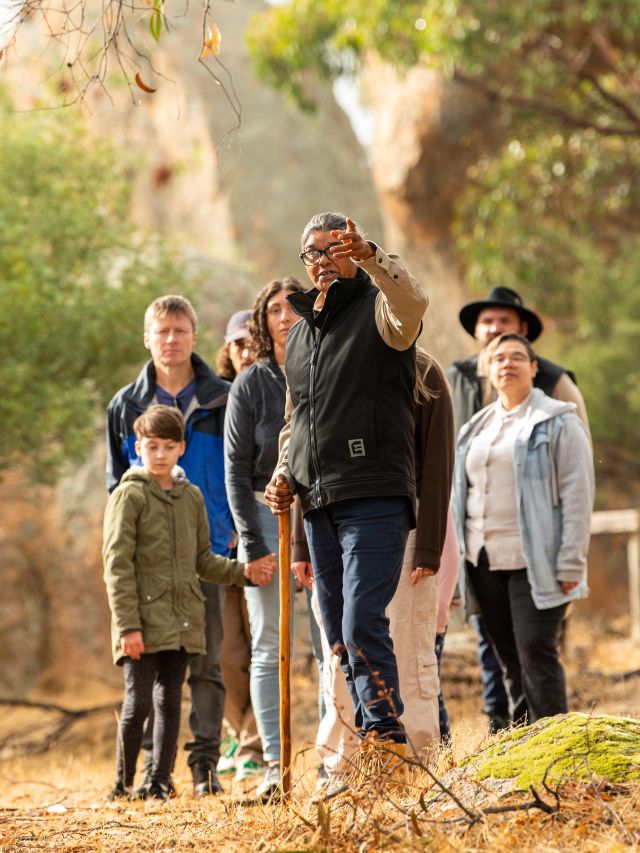
    Guests are guided through Kooyoora State Park on the Dumawul walking tour. (Image: Visit Victoria)

    Step into a timeless landscape with Dumawul’s guided tour through Kooyoora State Park, around an hour’s drive west of Bendigo in north-central Victoria. Led by Djaara guides, this immersive half-day journey breathes life into Country, weaving together stories, bush tucker and ancient rock art. Known to the Dja Dja Wurrung people as Guyura – the ‘mountain of light’ – this dramatic granite range is rich with cultural and spiritual significance.  The adventure begins with a meet-up at the Bridgewater Hotel on the banks of the Loddon River, before guests are welcomed onto Country with a traditional Smoking Ceremony – a powerful ritual that honours ancestors and cleanses those who walk the land. From there, it’s a gentle wander through rugged outcrops and open bushland, with sweeping vistas unfolding at every turn. Along the way, guides share their knowledge of how the Dja Dja Wurrung peoples have cared for and adapted with this land for generations, offering a rare and moving window into an ancient way of life that continues to thrive today.  

    Kooyoora walking tour
    Knowledge of the Dja Dja Wurrung is shared on the trail. (Image: Visit Victoria)

    Kingfisher Cruises  

    Kingfisher Cruises
    Cruising the Murray with Kingfisher Cruises. (Image: Visit Victoria)

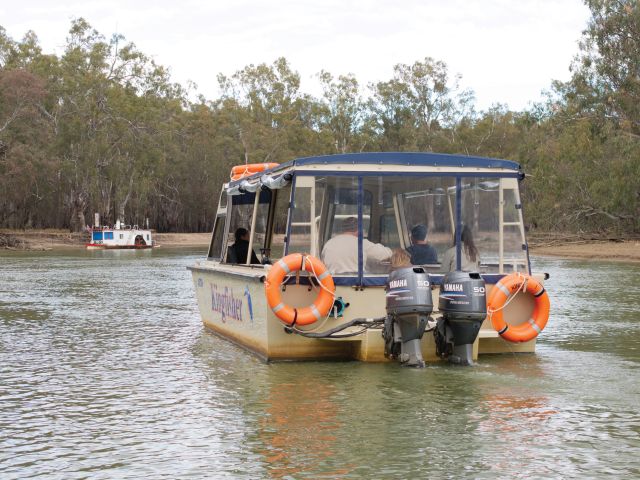
    Glide quietly through the Barmah-Millewa forest – the nation’s largest river red gum ecosystem – on a scenic journey along the Murray River and into the Barmah Lakes with Kingfisher Cruises . Led by passionate guides who share stories of the cultural significance of this ancient landscape, these cruises reveal the stories, totems and traditional knowledge of the Yorta Yorta people. As you navigate narrow waterways and spot native birds, you’ll gain a richer understanding of how First Peoples have lived in harmony with this floodplain for tens of thousands of years. It’s a gentle, immersive experience that leaves a lasting impression – one where every bend in the river carries echoes of culture, connection and Country.  

    wawa biik 

     Taungurung leaders
    Exploring Nagambie with Taungurung leaders. (Image: Visit Victoria)

    Translating to ‘hello, Country’ in the language of the First Nations People and Custodians of the rivers and mountains of Taungurung Country in Central Victoria, wawa biik guides a range of authentic and deeply immersive experiences. Leaving from either Nagambie or Euroa, the tours are woven with ancient stories of the Taungurung, telling how a sustained connection and responsibility ensures the continued health of biik – benefitting the people, animals and plants that live in and around the Goulburn River. During the wawa Nagambie experience, guests participate in a Welcome Smoking Ceremony, and enjoy lunch and conversation with two Taungurung leaders as they cruise through the wetlands of tabilk-tabilk (place of many waterholes). The 4.5-hour tour begins at Tahbilk Winery, which is set in the wetlands of Nagambie on Taungurung Country and collaborates with Taungurung Elders to share knowledge of biik. 

    Bataluk Cultural Trail  

    Bataluk Trail
    Cape Conran on the Bataluk Trail. (Image: Visit Victoria)

    The Bataluk Cultural Trail winds through East Gippsland like a thread stitching past to present, tracing the deep connection between the Gunaikurnai people and their land. Starting at the Knob Reserve in Stratford, visitors walk among scarred trees and ancient stone tools once used for survival and ceremony. At the Den of Nargun near Mitchell River, the earth holds stories of women’s sacred spaces, cloaked in myth and legend. Further along, Legend Rock at Metung tells of greed and consequence, its surface etched with ancient lore. At Cape Conran, shell middens lie scattered like breadcrumbs of history – 10,000 years of gatherings, stories and saltwater songs still echoing in the wind.  

    Healesville Sanctuary  

    echidna at Healesville Sanctuary
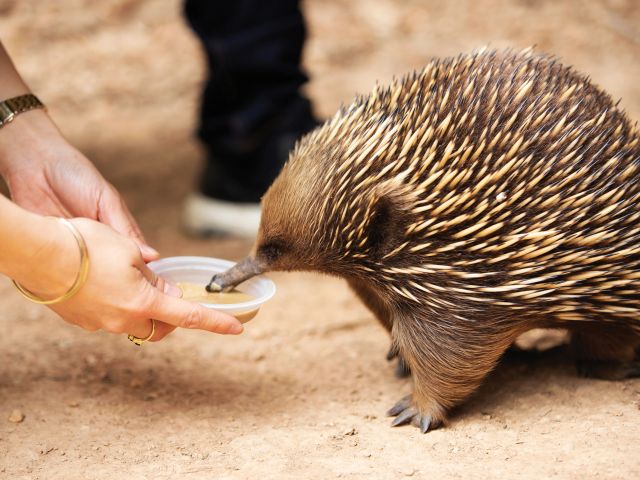
    Get up close with a resident echidna at Healesville Sanctuary. (Image: Visit Victoria)

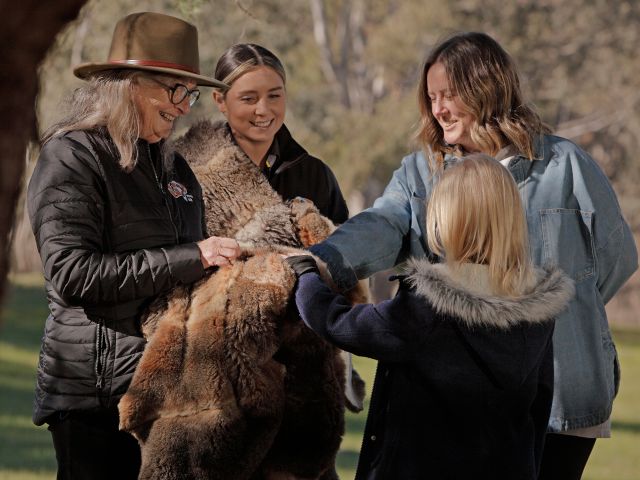
    Set on the historic grounds of Coranderrk Aboriginal Station, Healesville Sanctuary honours the Wurundjeri people of the Kulin Nation through immersive storytelling and connection to Country. Along Wurundjeri Walk, visitors are invited to reflect on the land’s rich First Peoples history, with native plants revealing their traditional uses. Wurundjeri Elder and educator Murrundindi shares culture in-person with the Wominjeka Aboriginal Cultural Experience every Sunday, and most days during Victorian school holidays. Murrundindi’s smoking ceremonies, storytelling and bush tucker knowledge reveal the sacred relationship between people, animals and the environment. Bird-lovers can’t miss the incredible Spirits of the Sky show featuring native birds daily at 12pm and 3pm. 

    The Grampians 

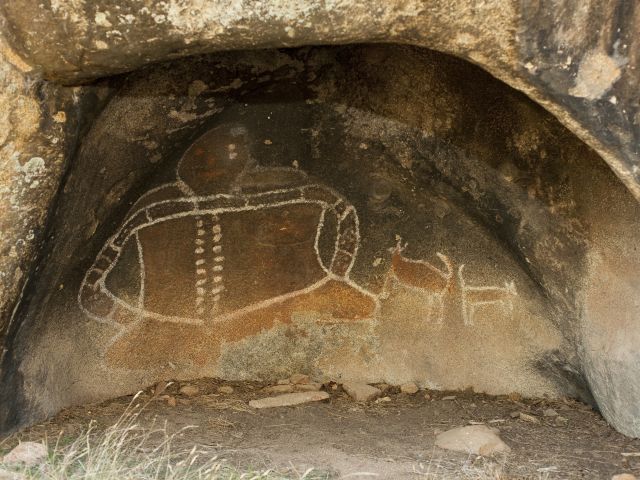
    Rock art at Bunjil Shelter in The Grampians
    Rock art at Bunjil Shelter in The Grampians. (Image: Visit Victoria)

    Known as Gariwerd to Traditional Owners, the Grampians is a place of immense cultural and spiritual significance. This rugged landscape holds more than 80 per cent of Victoria’s known First Peoples rock art, offering a powerful window into the region’s deep heritage. Visitors can respectfully explore five remarkable rock art sites: Billimina and Ngamadjidj in the Wartook Valley, Manja Shelter near Hamilton, Gulgurn Manja shelter near Laharum, and the Bunjil Shelter near Stawell, where the creator spirit is depicted. Each site tells a unique story of connection to Country, shared through ancient handprints, dancing figures and Dreaming narratives etched into stone.