Guide to choosing the best bag for your next adventure

hero media
When you’re planning an adventure, you need to be prepared. You need to pack the right clothes, ensure your phone and other electronics are taken care of, and include food and drink where necessary.

But before you can do any of that, you need a bag. And let’s be honest, with so many different options on the market, finding the right bag for your adventure can be a little daunting.


Before you start shopping, we recommend you write down details of the adventure you’re planning, the expected weather and if it might impact your journey, and the items you need to carry. This will help you determine the type of bag you’re after.
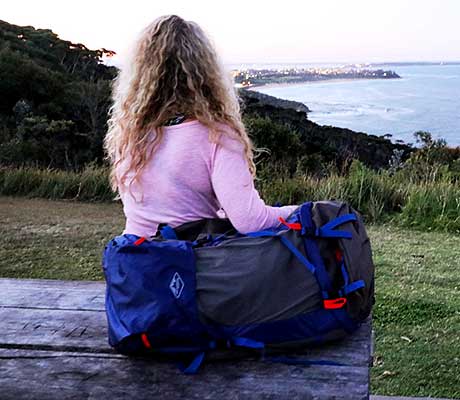
Mountain Design travel pack
Mountain Design travel pack. Image courtesy Mountain Designs

When choosing a bag, there are a few other things you should also consider, starting with the brand.


Choose a good-quality brand with a superior reputation for bag manufacturing.


Mountain Designs has been around since the 1970s and has continually improved on the quality and functionality of its products, including bags.

Now we have the quality sorted, other things to look for include:

  • water resistance – imperative if you’re heading out in the rain or snow;
  • different compartments – the more pockets you have, the easier it will be to store and find everything you need;
  • size – you might only want something as small as 20L for a simple trip, or you could be looking at 120L for longer journeys;
  • padding – if you’re spending a lot of time wearing a backpack, or you’re planning a hike or climb with a bag on your back, you want to make sure it’s comfortable; and
  • durability – depending on the activity, you may need a bag that can withstand any inclement weather and the constant scratching and scraping against nature.

Which bag is best?

There are many bag types available and the bag you choose really depends on why you want it, and what you need to put into it.

Bags for short day trips

If you’re planning short day trips, you might prefer to use a bag that is small and lightweight.
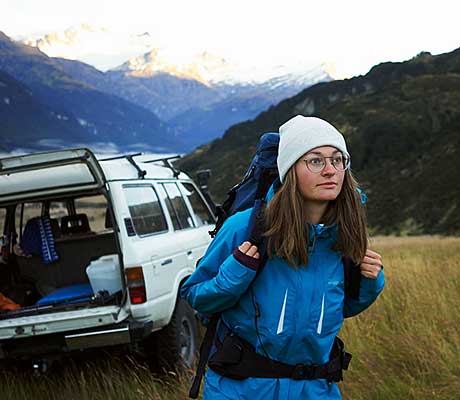
Mountain Design travel pack
Mountain Design travel pack. Image courtesy Mountain Design

Day packs (20L to 40L) and hiking bags (45L to 75L) are ideal for day trips, or if you’re simply heading out on a hike, paddle or bike ride, you might go even smaller with a hydration pack – inclusive of a reservoir.


These are great for catering to your thirst, no matter where you’re headed, and generally also include extra pockets where you can hide your keys and wallet.

Bags for big adventures

Travel packs will protect your gear while also providing you plenty of storage space when you’re off on a big adventure or you need to bulk up your bag with snow gear.
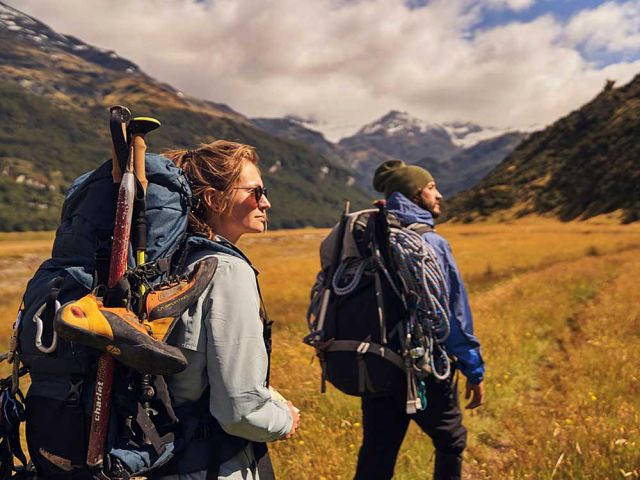
Mountain Design travel pack
The right bag makes travel that much easier and more enjoyable. Image courtesy Mountain Design.

They’re available in a range of sizes, up to 80L, and can come with an added daypack attached for convenience.

Casual bags

Backpacking around the world or hiking the mountains might not be on your to-do list at the moment, but if you’re in need of a casual bag for an overnight hotel stay, or something to fill with your sports gear, duffle bags are a great casual use option.


From a compact 30L, right up to 120L, they’re highly durable and can often even be converted into a backpack.

Storage bags

Whether you’re travelling for a day or a year, if you want to keep your gear safe, storage bags are the way to go.


From packing cells that have dual compartments so you can keep your underwear and socks separate; to toiletry bags and dry bags – storage bags are designed to protect all your important belongings from getting wet.


It doesn’t matter what level of adventure you’re planning, finding the right bag is easy with the right advice. Mountain Designs offers a full range of bags and packs , so you’re sure to find something to suit every occasion.


Quentin Long
Quentin Long is the Co-Founder and Managing Director of Australian Traveller Media. Quentin is a sought-after travel media commentator. He is Australia’s most trusted source for travel news and insights, having held weekly radio segments across the country since 2006, and regularly appearing on Channel 9’s Today and A Current Affair programs from 2010. Don't ask him his favourite travel experience as that's like asking him to choose a favourite child. However he does say that Garma Festival is the one travel experience that changed him the most.
See all articles
hero media

The iconic Victorian beach where true Aussie surf culture was born

Torquay’s Bells Beach is considered one of the best surf beaches in the world.

It’d be easy to think Australian surf culture was born around the right-hand point breaks of the Gold Coast and Byron Bay. These regions seem the epitome of how the world views Aussie surfers – bronzed (or burnt), languishing in warm water and sunshine. The reality is a lot different.

The rise of surf culture along Victoria’s coastline

surfers at Bells Beach in Australia
Surfers stand on the shore at Bells Beach, where the country’s biggest surfing competition is held each year. (Image: Getty/Filed Image)

True Aussie surf culture was born on the chilly waves of Victoria’s winters, when huge swells from the Great Southern Ocean hit cliff-lined beaches along the Great Ocean Road . These beaches were the ultimate proving ground – surfers from all over Australia arrived in panel vans and VWs to do battle with the biggest waves they could find.

huge swells from the Great Southern Ocean at Bells Beach
Surfers take advantage of the huge swells from the Great Southern Ocean at Bells Beach. (Image: Tourism Australia/Cameron Murray)

There are surf breaks all along this very picturesque coast – but those around Torquay were most revered. The ultimate test of a surfer’s ability – and durability – however, was Bells Beach: Australia’s answer to Hawai‘i’s Pipeline. Just beyond, the breaks at Jan Juc and Winkipop beckoned.

an aerial view of surfers at Bells Beach
Hit the waves along the picturesque coast. (Image: Tourism Australia)

Torquay became surfing’s Silicon Valley: HQ for the entire Australian surf culture revolution. Four young locals worked out of their backyards in Torquay to create two of the world’s biggest surf labels – Rip Curl and Quiksilver , which soon became the region’s biggest employers.

surfers out at Bells Beach
Surfers out at Bells Beach, Victoria’s most famous beach. (Image: Tourism Australia/Cameron Murray)

Rip Curl started sponsoring the Bells Beach Pro in 1973 – and have done ever since. It’s been going since 1962 – making it the world’s longest continually run surfing contest. Held every Easter, it’s part of the world surfing tour. Spectators line its 30-metre-high cliffs to watch the world’s best take on enormous waves – it’s the ultimate coliseum for the sport and has inspired generations of Aussie surfers to join the list of heroes whose names are on its iconic bell.

Follow the waves through Victoria’s surfing heartland

Australian National Surfing Museum, Torquay
The Australian National Surfing Museum in Torquay. (Image: Tourism Australia)

Just behind Torquay’s main drag, you can see all that history on display at the world’s best surf museum – the Australian National Surfing Museum . Here you can take your time absorbing the 100-year-or-so history of Australian surfing and check out the 150-strong surfboard collection.

surfboards on display at Australian National Surfing Museum
The museum holds surfing memorabilia, including a room dedicated to the history of boards. (Image: Tourism Australia)

But classic Aussie surf culture can be observed in everyday life all over the Great Ocean Road and Torquay. Surfing dictates life here; no work is done until the big swells have come and gone. Just being here provides a window into 60-odd years of rebellion against convention; for no-one likes nine-to-five living on the Great Ocean Road.

surfing memorabilia at Australian National Surfing Museum
The varied displays celebrate the Bells Beach competition, surfing legends and Aussie surf culture. (Image: Tourism Australia)

There’s less panel vans and VW Beetles these days, but surf culture still rules life. Surfers run this coast; you’re better off keeping out of their way when they’re running down past you to face the biggest swells – then hear them swap stories at cafes, restaurants and bars all around you.

surfing at Bells Beach
The beach near Torquay is Australia’s answer to Hawai‘i’s Pipeline. (Image: Visit Victoria/William Watt)