holiday with teens and both actually enjoy it

hero media
When holidays with kids become holidays with teens, parents need to traverse a whole new landscape beyond the one they are actually exploring together, as Ann Hamilton discovers.

Children make brilliant travel companions. When they are small (and portable) you can take them almost anywhere, and as they grow, their wide-eyed wonder at new sights, sounds and experiences has a way of rubbing off on everyone around them. It’s what makes family holidays so much fun. But what happens when time away with tots turns into family vacations with teens? Can a guileless appreciation of the world survive Google, smartphones and hormones?


As our children get bigger it sometimes seems that the world around them shrinks in equal proportion. Via Instagram they have already seen the backstreets of Paris, the street tribes of Tokyo and the beaches of Bondi before ever boarding a plane. And the 24-hour news cycle fills in the gaps of what’s going on around the globe – both good and bad.


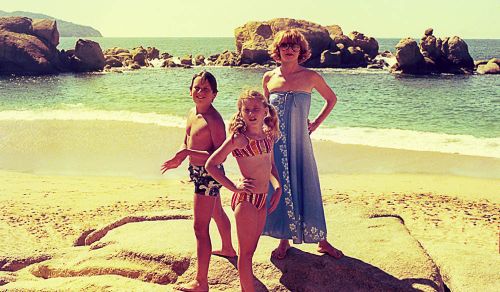
A recent sun, sand and sea trip with my teenage daughter presented a new landscape to navigate, beyond the one we were exploring together. Where in the past, flying was the ultimate adventure, and furnishing her with unfettered access to a swimming pool, sweet treats (preferably ice-cream) and a theme park with some sort of Harry Potter guise to it would assure holiday happiness for everyone involved, it’s harder to rest on your laurels as they grow older.


Now her reactions are a lot more muted; she doesn’t love flying any more due to a heightened awareness of how things work (and the contribution of a friend’s macabre fascination with the Air Crash Investigations TV show); the pool outside our room went largely untouched; the sweet treats weren’t consumed with as much glee as they used to be. I became fixated on coaxing positive responses from her. It was all increasingly annoying for her and tiring for me.


But as our holiday progressed I slowly started to figure out that the issue wasn’t actually with my daughter, it was with me. I had somehow failed to notice that my darling child was no longer a baby (although she’ll always be my baby).


Maybe the whirlwind pace of daily life had masked the change or maybe it was just wishful thinking on my part (if she wasn’t ageing then neither was I), but when the lightbulb moment came it was a revelation. It turns out I had been gauging her enjoyment levels on outdated measures harking back to when she was eight years old instead of paying attention to what was resonating with her at the age of 13.


Deliberating over ice-cream flavours now comes a distant second to browsing sunglasses in the resort shop; pool time needs to be interspersed with ‘me time’; and Harry Potter, while not yet superannuated, now plays second fiddle to more cerebral and challenging experiences.


So, midway through our getaway I recalibrated my approach. I let her decide what she wanted to do with her day instead of planning things down to the last detail for her; I stopped insisting she do things with me when all she wanted was to stretch out on a cushion-strewn daybed and read; I let her foster friendships independent of me. And I stopped worrying and started noticing that she was actually having fun.


Family holidays often throw our day-to-day life into stark relief. Maybe it has something to do with being at such close quarters with each other or not having the usual distracting touchstones around. And they often result in ongoing change once you get back home based on what you learn about each other during the journey. I returned home as a fully-fledged teenager’s mum; my daughter as an increasingly independent young woman, albeit one with the beginnings of a very nice sunglasses collection.

Need tips, more detail or itinerary ideas tailored to you? Ask AT.

AI Prompt

Want to see more stories from Australian Traveller in your Google search results?

  1. Click here to set Australian Traveller as a preferred source.
  2. Tick the box next to "Australian Traveller". That's it.
hero media

This new tour takes you to the best and most unexpected parts of NSW’s outback

Credit: Destination NSW

    Dilvin Yasa Dilvin Yasa

    The outback is calling, and the adventure is made all the easier with this hot new AAT Kings’ tour.

    It’s the desert palette of rust-red earth and vast cobalt sky that calls you at first, for where better to get away from it all than the outback? Of course, once you start driving, taking note of all the weathered pubs, dusty tracks and tiny towns held together with humour, resilience and more corrugated iron than ever deemed possible, something else grabs a hold of you: the idea that far from the celebrated icons and landmarks associated with Australia, you’re finally immersed in an authentic slice of local life that few have ever experienced.

    Ancient landscapes, proud pastoral histories, ghost towns, culinary powerhouses and a rich Indigenous heritage; there are plenty of facets to life on the land. The best way to experience all of the above with both ease and like-minded friends? AAT Kings’ new Outback New South Wales Adventurer, a 9-day small group tour. This Sydney-return itinerary is designed to connect travellers not only with iconic outback destinations, but with the characters, culture and experiences that bring each place to life.

    Highlights? The Adventurer has more than a few, but here are eight to start.

    1. Broken Hill

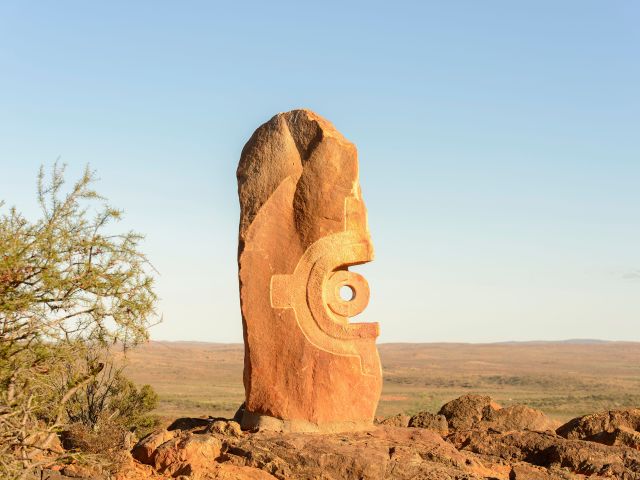
    See the striking art at Living Desert and Sculptures. (Credit: Destination NSW)

    Welcome to Broken Hill, where mining history, outback eccentricity and a surprisingly rich arts scene unite in a rusty desert landscape. In Australia’s first heritage-listed city, exploration is quickly rewarded. Begin with a guided walking tour taking in the city’s grand Victorian and Art Deco architecture. Later, enjoy visits to both the Broken Hill City Art Gallery and the Living Desert and Sculptures – the perfect place to enjoy the changing colours of an outback sunset. Of course, no visit to Broken Hill is complete without a stop at the historic Palace Hotel Broken Hill, famous for its role in The Adventures of Priscilla, Queen of the Desert. Happily, it makes for the perfect spot for dinner.

    2. White Cliffs

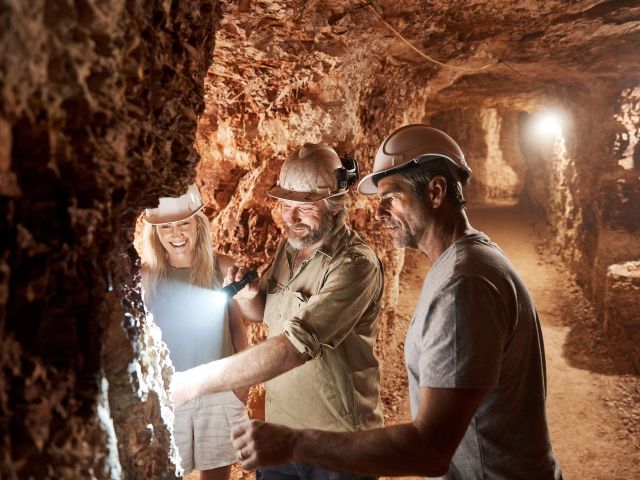
    people in a mine in white cliffs nsw
    Strap on your hardhat and head underground. (Credit: Destination NSW)

    Strap on your hardhat and start spending your imaginary fortunes; White Cliffs, Australia’s oldest commercial opal field, is begging you to come in search of rare pineapple opals. Admittedly, you’re much more likely to find white opals, but the true gems of White Cliffs – where much is built underground to escape the desert heat – are everywhere.

    Here, you’ll descend 13.5 metres underground into a working mine to learn about the region’s heritage, and observe how miners continue the search for these prized gemstones. Perhaps you’ll even find a couple yourself?

    3. Mungo National Park

    mungo national park nsw outback
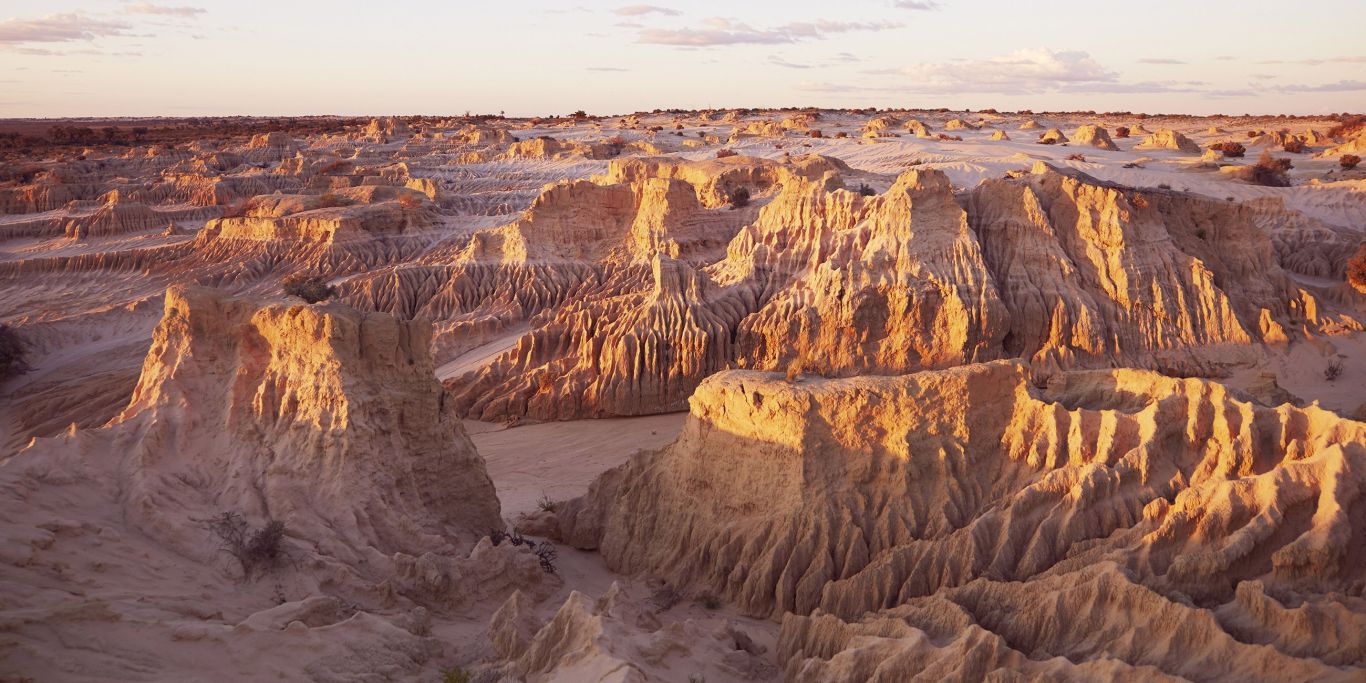
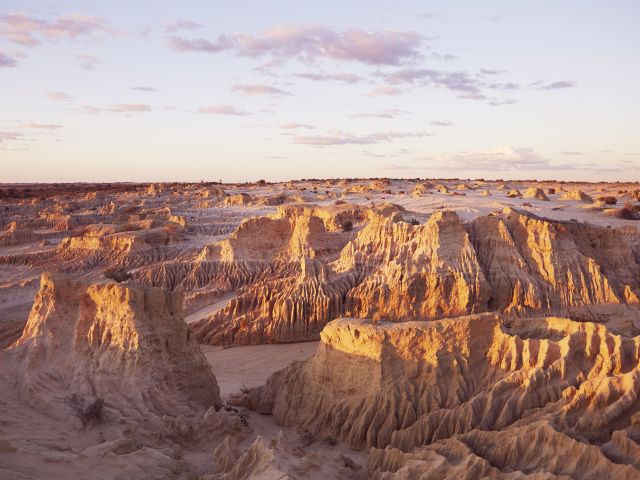
    Spend time in the striking, lunar-like landscape of Mungo National Park. (Credit: Destination NSW)

    With its lunar-like landscape made up of ancient, dried lake basins and sculpted sand and clay formations, a drive into UNESCO World Heritage-listed Mungo National Park is somehow two things all at once: uniquely Australian with vast outback skies, and somehow otherworldly, as though you’ve been dropped off by spaceship. At its heart lies the iconic Walls of China, a 30-kilometre sand-and-clay lunette shaped by thousands of years of erosion.

    Understanding more than 40,000 years of Barkindji, Mutthi Mutthi and Ngiyampaa history begins with a visit to the Visitor Centre, and concludes with a sunset tour led by local Aboriginal guides. A key experience? Learning about the discovery of Mungo Man and Mungo Lady. At 40,000+ years old, these are among the oldest human remains found anywhere in the world.

    4. Kinchega National Park

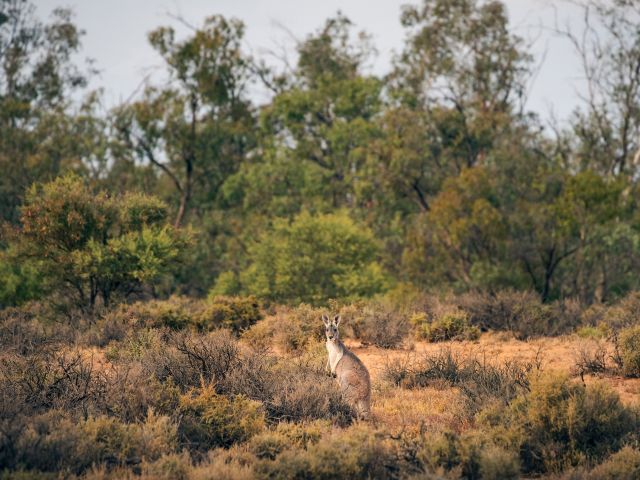
    kangaroo in Kinchenga National Park nsw
    Meet the locals of Kinchega National Park. (Credit: Destination NSW)

    Some come to Kinchega National Park for its iconic Darling River landscapes full of birdlife and haunting river red gums; others visit for its rich First Nations and pastoral history. Your visit will encompass all of the above, with a guided tour (part of AAT Kings’ MAKE TRAVEL MATTER Experience) designed to give a deeper understanding of Barkindji cultural heritage, history and traditions.

    Walk with local guide David as he shares ancestral knowledge and creation stories, and explains how native plants – through bush food and bush medicine – have sustained Indigenous communities for thousands of years. Then sit back and enjoy those views alongside native tea and sweet treats.

    5. Griffith

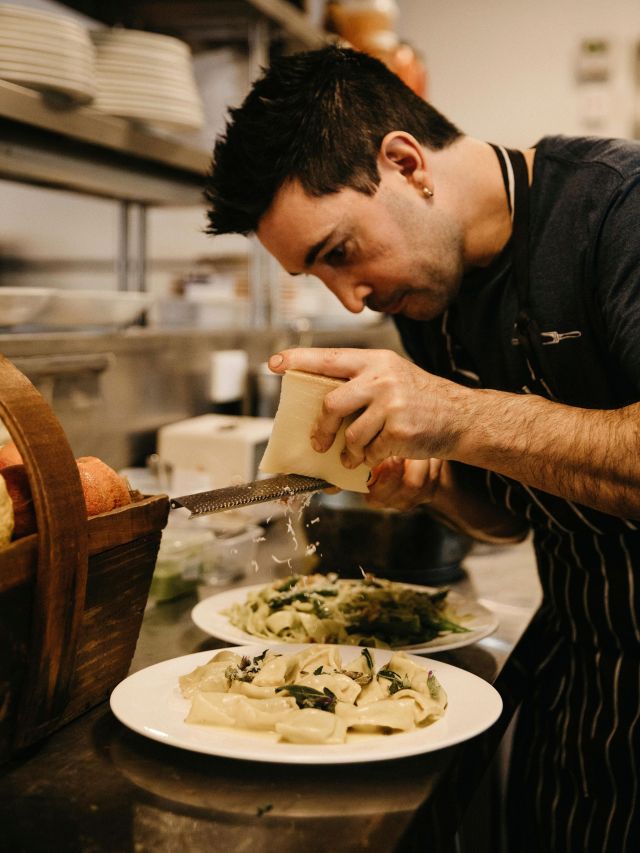
    chef at zecca restaurant in griffith
    Treat your tastebuds to ‘the food bowl of Australia’. (Credit: Destination NSW)

    How can you say no to a visit to a destination widely regarded as ‘the food bowl of Australia’? Shaped by fertile farmland and home to approximately 75 per cent of New South Wales’ wine grapes, this is a day to roll up your sleeves and enjoy the best gastronomy the state has to offer. Think vineyards, cellar doors, cafes and restaurants largely shaped by its multicultural heart (Griffith is not only home to over 60 nationalities, but has the highest proportion of Italian ancestry anywhere in Australia).

    6. Mudgee

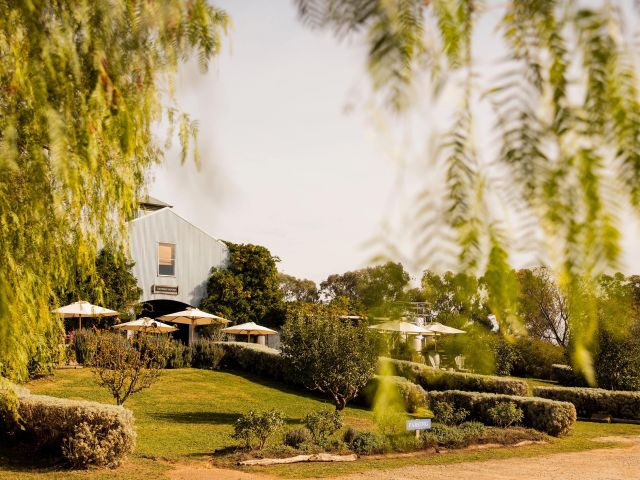
    exterior of lower wines in mudgee nsw
    Visit some of Mudgee’s best wineries. (Credit: Destination NSW)

    Nestled by the Cudgegong River, Mudgee packs a big punch for a heritage country town, having carved a reputation for itself as one of the country’s leading (and award-winning) wine regions, a key epicurean destination, and a regional arts centre growing in both visibility and vibrancy.

    Take a moment to enjoy the town’s 19th-century charm before heading to Lowe Family Wine Co. for a guided tasting of organic and biodynamic wine, followed by a relaxed lunch featuring a feast of homegrown and local produce. Will you walk away with bottles of Mudgee’s iconic reds under your arms? It’s a distinct possibility.

    7. Silverton

    see the living ghost town of silverton on AAT Kings new NSW outback tour
    See the living ghost town of Silverton.(Credit: Destination NSW)

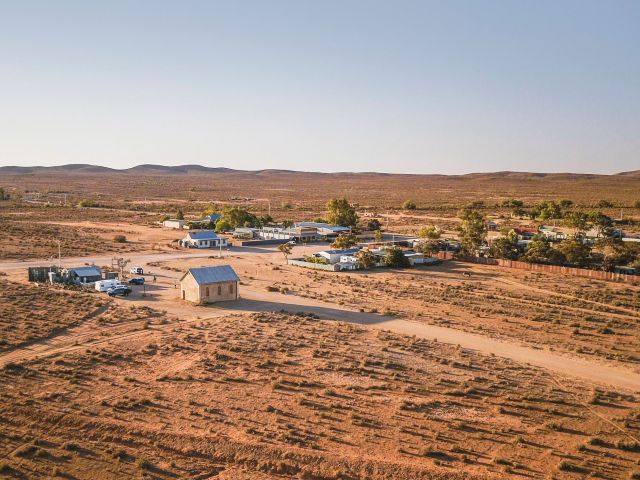
    A once-booming silver mining hub, the dystopian setting for Mad Max 2, and now a tranquil settlement that’s home to around 50 people; Silverton is considered a living ghost town and remains a sight to behold.

    Take time to explore its heritage streets (and perhaps take a look at the quirky Mad Max 2 Museum) and the Silverton Hotel, an iconic outback pub, before a visit to Silverton Gaol & Historical Museum. It’s home to a wealth of colonial artefacts, early mining equipment and stories from the outback’s pioneering past which will serve to anchor you firmly in place.

    8. Shear Outback

    man working at shear outback in nsw
    Get a glimpse behind the wool curtain. (Credit: Destination NSW)

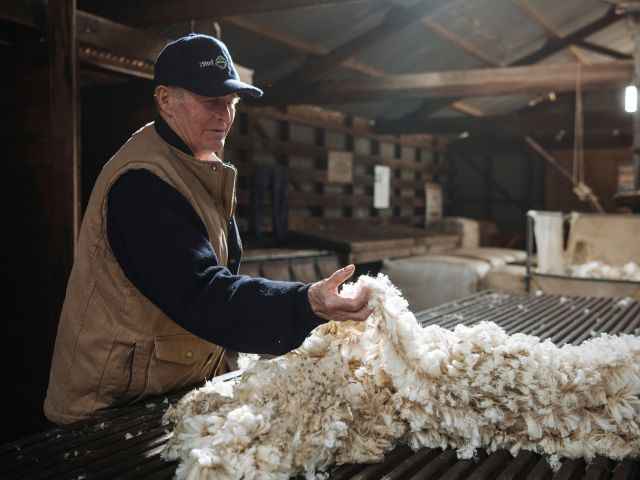
    If you ever find yourself singing, “click go the shears boys, click, click, click…”, you’ve come to the right place. Shear Outback, an award-winning tourist and education attraction located in Hay, brings to life the traditions and stories of one of the outback’s most enduring industries: sheep shearing.

    Here, in the heart of the Riverina, you’ll enjoy live shearing demonstrations, meet the shearers, shedhands, sheepdogs and yes, sheep, who come together to show guests exactly what it takes to provide Australians with all that glorious wool.

    Discover more of Outback NSW with AAT Kings. Visit aatkings.com.