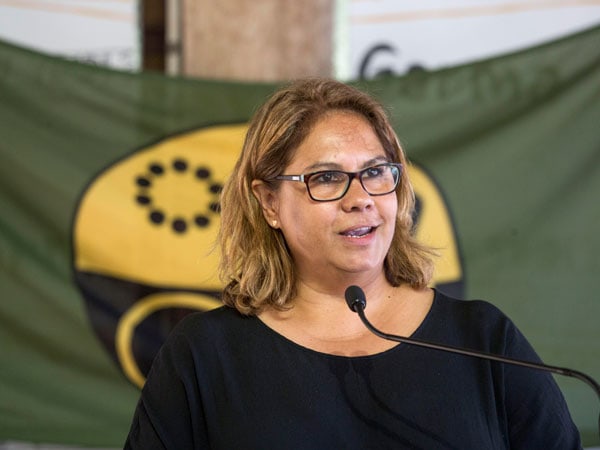
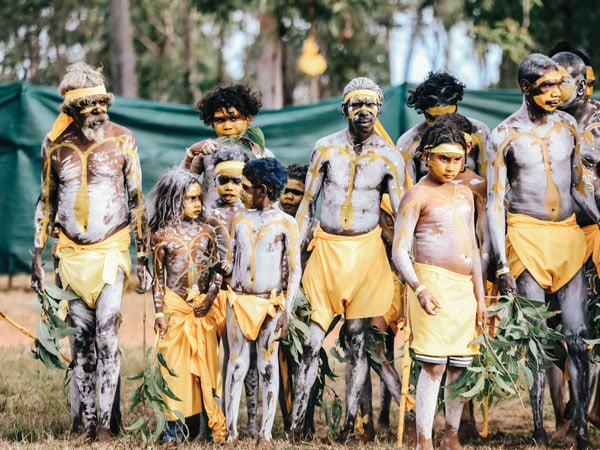
Denise Bowden is the chief executive officer of the Yothu Yindi Foundation and the director of Garma, Australia’s leading Indigenous event that celebrates the ancient culture and traditions of the Yolngu people and provides an environment where people from all over the country can gather to listen, learn and exchange ideas.
There’s got to be something in 60,000-plus years, right? There’s got to be something of some quality for it to have survived, and not only survived, but in our neck of the woods out in Arnhem Land it’s prospering. It’s rich and it’s culturally authentic. Some of Australia’s most prolific Indigenous artists come from Arnhem Land and they’re exhibiting over in New York and Paris, but there’s more substance to it than being purely pretty art. It’s got to be more than just seeing the beauty in the art because if you don’t understand it holistically, you’re only a tiny bit into something that is so deep and philosophical. There’s extensive historical components to Indigenous cultural art, religious components even, and you really do have to be prepared to throw yourself into it to understand its angles. I find a lot of people are terrified of doing that, and you know what, we know.
A reciprocal relationship of respect
We’re waiting for you. Indigenous people have a profound respect for Western civilisation and church and religions and the way that people live in their certain lifestyles, however, it should be a reciprocal relationship. There’s got to be something in seeing that Indigenous culture is also quite sophisticated. If you’re just going to sit there and say, ‘Look, it’s just a bit of a sermon, a dance’, it tells me that you don’t know very much about Indigenous culture at all.
Wouldn’t it be wonderful to be able to talk about Indigenous culture in an amazingly positive and reconciled, true way? We could be leaders in an international field, however, we haven’t quite gotten there yet. I think that a lot of the resistance is due to the fact that it’s terrifying: what happens if I make a mistake along the way? But our community knows you’re going to make a mistake and we’re OK with that.
We’ve also got to stop doing things like hurling racial abuse on the football oval and understand what impact that has on society. Surely we’ve got to be a little bit more mature about the way that we manage that. It does nobody any good. The mindset that exists when that sort of thing happens sets our nation back many years. But I also see positivity.
I’ve been at the Yothu Yindi Foundation for 11 years now, and I have seen a fundamental shift and it’s been measured in little bits and pieces.
The Garma Festival is an invitation
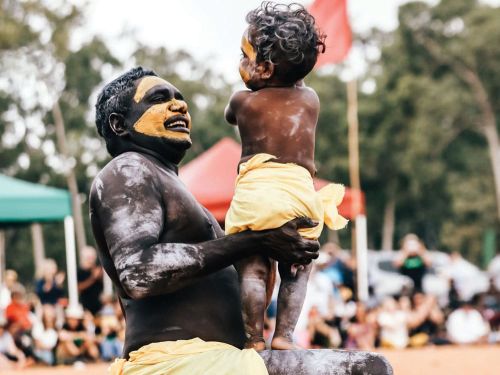
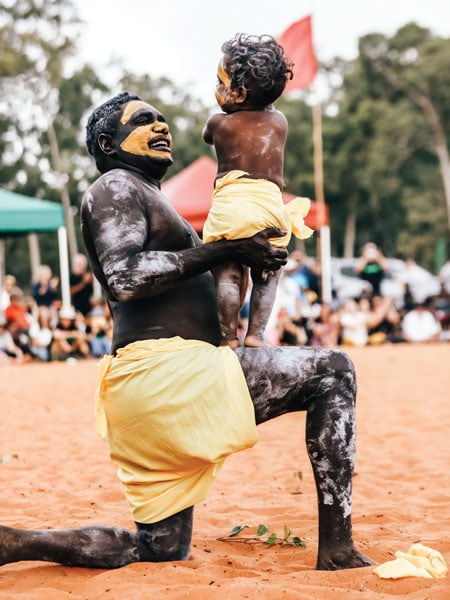
The Garma Festival is the epitome of how you can showcase the beauty of culture. For me personally, the most amazing part is that this sharing of culture is done with a genuine generosity of spirit. What you do with the gift is up to you.
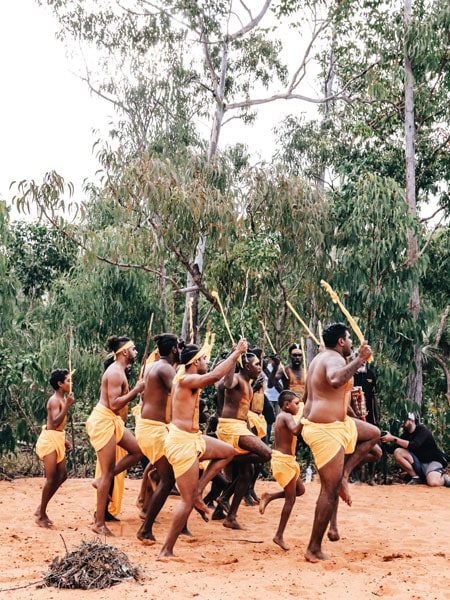
If you choose to deep dive into it, that’s your journey. But I think a really important part of this is not to underestimate the gift at hand, because it’s such a long and profound journey through the whole thing. It’s so rich and it’s just so authentic. If you’re not prepared to go through the process of understanding it, you’re not going to understand what its value is, right? That’s up to you, but also don’t criticise it if you don’t understand it holistically.
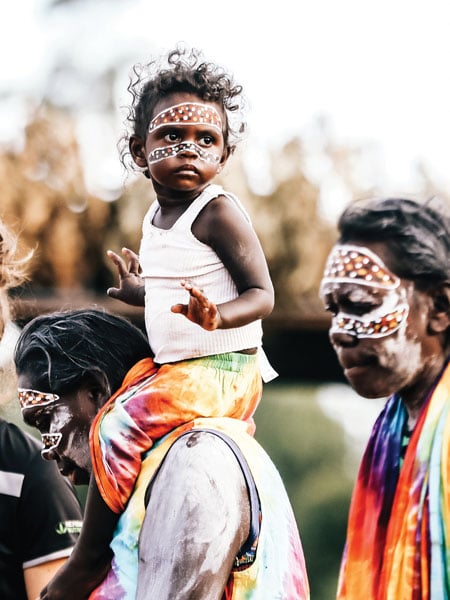
You don’t need to come to the Garma Festival to learn about culture. Engage with the local people, understand what the challenges are for them, because Indigenous people don’t have a level of self-entitlement like non-Indigenous people do so the mindset for an Indigenous person is very different. And you shouldn’t be terrified of it, you just have to understand the way people’s brains work.
Need tips, more detail or itinerary ideas tailored to you? Ask AT.
AI Prompt
The conversation we need to have
Racism is very real in Australia. I really check myself when I say that, but it is prevalent in Australia. Why can’t we have a conversation about why it ends up being about the colour of someone’s skin? I think that conversation has to happen, whether you’re better than that person next to you because of the pores of your skin. I think it’s a maturity conversation for our nation, to be honest. I mean, the Garma Festival has been having this conversation for quite some time. We’ve been talking about truth-telling and talking about Makarrata for many years now. And we see the traction.
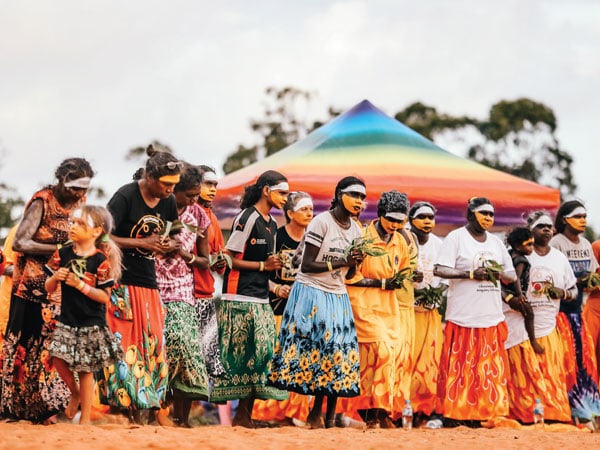
I have seen people actively change their thinking; they call the festival life altering. I had a very nice elderly non-Indigenous man come up to me and say, ‘Denise, you do understand that I don’t deliberately try to be racist’. And I said, ‘Well, tell me what’s going on’. And he said, ‘Well, it’s in my DNA. I don’t know any different because that’s how I was taught. So I don’t know any different when you throw me into an unknown situation, I don’t know what the hell I’m doing. I’m completely out of my comfort zone’. He was wrestling with his own conscience, bless.
Don’t stay in your comfort zone
I think as a nation, we’re doing ourselves a disservice if we don’t seize the opportunity to educate ourselves. Unless you’re digging down into the detail you don’t actually realise what amazing qualities there are in Indigenous culture. There’s a beauty in each of our states’ Indigenous communities. They have a flair about them and different colours and different beauty and different structures and different ways of being, different ways of conversing. And, the lifestyle is very different from one to the next. Ideally you wouldn’t have to force people to understand this. You’d just think that they’d see it for themselves. But it’s easier to stay at arm’s length in your comfort zone.
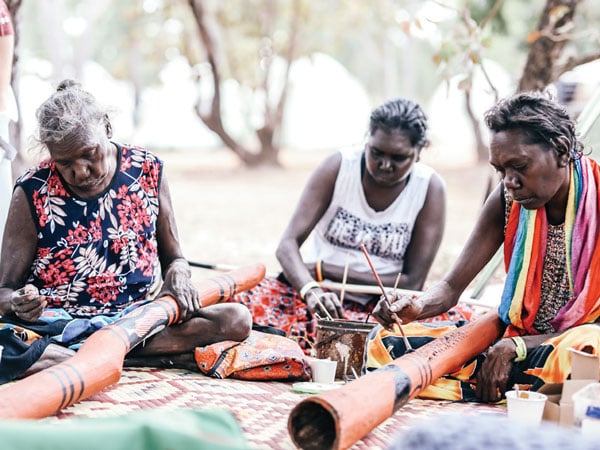
I don’t want to be bogged down in negativity. I’m in a world of positivity in terms of what I see happening in my community. There’s a great deal of pride and ability for people to showcase what they’re capable of doing. And it’s not just art. It’s also social enterprises, educational elements, understanding how bush pharmacy happens out this way. So yeah, please get stuck in to knowledge everybody.
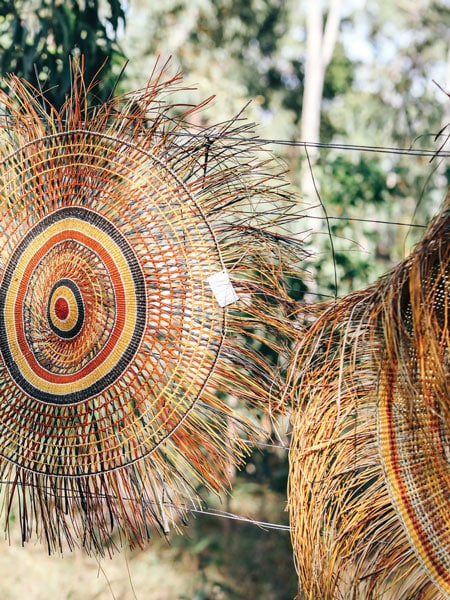
What is the Uluru Statement from the heart?
The Uluru Statement from the Heart was created during the First Nations National Constitutional Convention and released on 26 May 2017. The document represents a historic consensus of First Nations leaders in seeking constitutional change to recognise First Australians through a voice in parliament.
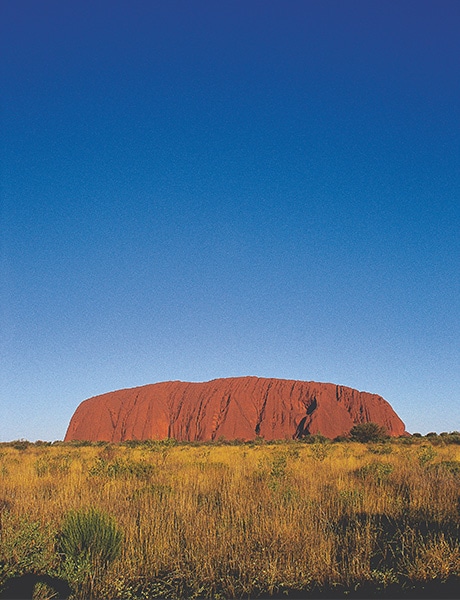
The debate over constitutional recognition has raged for years, but the Uluru Statement is the result of a collective agreement from the 250 Indigenous leaders who gathered together from across the country, and following engagement with more than 1200 Aboriginal and Torres Strait Islander representatives over a six-month period.
With the guiding principles of voice, treaty and truth, the Statement invites all Australians to join Aboriginal and Torres Strait Islander people in a movement for a better future, and calls for meaningful structural reforms to be made, including the establishment of a Voice to Parliament enshrined within the Constitution. While previous documents have petitioned Parliament, the Uluru Statement addresses all Australians.
The Voice to Parliament would give Aboriginal and Torres Strait Islander people an opportunity to contribute to and influence the laws and policies that directly impact them, by establishing a permanent institution to provide advice to Parliament and Government.
The Statement and the agenda it represents calls for Makarrata, a concept belonging to the Yolngu people of north-east Arnhem Land that describes a coming together after a struggle in order to heal the divisions of the past. The Statement recommends the establishment of a Makarrata Commission to oversee the processes of agreement between the government and First Nations people.
As yet, the principles of the document, given in good faith and with high hopes, have not been enacted. You can read the Uluru Statement from the Heart and support its ideals at ulurustatement.org and fromtheheart.com.au
Weekly travel news, experiences
insider tips, offers, and more.
Want to see more stories from Australian Traveller in your Google search results?
- Click here to set Australian Traveller as a preferred source.
- Tick the box next to "Australian Traveller". That's it.

Australian Traveller
View profile and articles