How to travel the Australian Outback

hero media
How far do you have to travel into Australia’s outback, before you’re actually heading back in? Peter Robinson ventures passed Broken Hill through Uluru and Alice Springs to the Kimberley and back to find out exactly where the Great Australian Outback begins . . . .

There’s been a 4WD sitting in my driveway for the past 20 years. Not fulltime, you understand; it gets driven often, being the only vehicle I own.


And, yep, it gets driven around town a fair bit, which means I get my fair share of grief from doubting do-gooders who view any large-base vehicle in a metro setting as the ultimate in environmental terrorism.


But the fact is, I’ve chalked up tens of thousands of kilometres in the outback. And that’s where a big, capable 4WD comes into its own.


In 1813, when Gregory Blaxland struck out eastward from Sydney to forge a track through the Blue Mountains, it was a great adventure into the unknown.


Not that he probably thought that at the time, given the hardship involved. It must have been much the same for any of the other pioneering Europeans who made first forays east to west, south to north, edge to baking centre – the likes of Charles Sturt, John McDouall Stuart, Burke and Wills.


“It’s not actually delineated on any map, although many books refer to the outback nonchalantly as if the reader knows just where it is."


Now, in air-conditioned luxury, we can take a smooth, black ribbon towards the vast interior of Australia and find places where Google Earth and GPS units give way to good old-fashioned map reading. But first, it’s a huge country out there, and most of it’s outback – so let’s have a look at exactly where you’re going.


It’s not actually delineated on any map, although many books refer to the outback nonchalantly as if the reader knows just where it is. International tourists have heard of it and come to visit only to find a week in a hire car doesn’t cut it.


“…draw an imaginary line 200km inland starting from Adelaide, all the way around the east coast to Cairns, and call anything north and west of that line The Outback."


It’s been defined by various authoritarian tomes as “remote, sparsely inhabited back country", and “remote inland districts or back country of Australia." But these are no help at all.


Neither is the old saying that the outback consists of “anything out the back o’ Bourke." Beyond the Black Stump? Perhaps. But no two people can agree on which stump near what town is the real deal.


As a rough guide, here’s what AT reckons: draw an imaginary line 200km inland starting from Adelaide, all the way around the east coast to Cairns, and call anything north and west of that line The Outback.


Apart from a few larger towns, that’s a pretty good stretch of country to call outback (with apologies to Perth and Darwin) and there’s hardly anyone there (more apologies to Perth and Darwin and anyone stuck in-between).


For a final word on the matter, we asked long-time AT supporter and former Deputy PM the Honourable Tim Fischer to give us his first impressions of exactly where the outback might be.


“…once you’ve exhausted two tanks of fuel you’re in back country, where the population is sparse and mobile phone coverage is even worse. You’ll be allocated a batch of flies, which will enjoy your company and your food."


“Everything 50km or more north of the Sydney to Perth Transcontinental Railway Line," he asserts, “that’s also 100km or more west of the Newell Highway and 100km west of the NSW and Queensland east Pacific Coast. Alternatively, excluding all of Victoria and Tasmania, the ‘Great Outback’ is, by rule of thumb, everything north of a line from Sydney to Spalding, Port Lincoln to Esperance via the coastline of the Bight, and thence to Perth, but more than 100km inland from the Queensland east coast, 200km inland from the NSW east coast, and Cervantes on the northwest coast of WA. And I prefer that first one." Glad we got that settled.


On the practical side, once you’ve exhausted two tanks of fuel you’re in back country, where the population is sparse and mobile phone coverage is even worse.


You’ll be allocated a batch of flies, which will enjoy your company and your food. Locusts will hitch a free ride in your radiator, and corrugations will rattle your fillings loose.


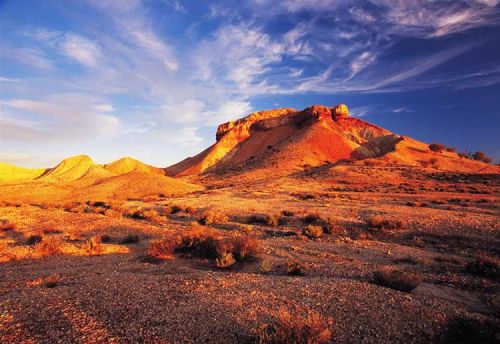
Stand just about anywhere in the outback, wave away the flies and look down at your feet. Discard any notions that this is the “dead" heart of Australia; though it’s a harsh environment amid the spinifex and saltbush, a surprisingly dynamic and resilient microcosm of life survives.
A downpour in the outback can produce – literally overnight – an ephemeral carpet of colourful wildflowers midst stone and red sand. In the same timeframe, it also produces impassable roads.


And, if Cooper Creek floods into Lake Eyre, another miracle occurs: vast saltpans become an inland sea teeming with myriad aquatic and bird life until the cycle begins all over again. With luck you might get a once-in-a-lifetime sight – a waterfall on Uluru, or snow on St Mary’s peak in the Flinders Ranges. Or simply a cold beer in a remote country pub.

hero media

An insider’s guide to Noosa’s best-kept winter secrets

As the cooler weather rolls in, head to this popular Sunshine Coast destination to enjoy stunning natural beauty, culinary wonders and mild temperatures.

As southern Australia’s weather starts to cool – the frost visiting every morning and the evening chill descending at dusk – you might reach for your thickest cable knit sweater and warmest blanket. But why not reach for your suitcase and sunglasses and book a ticket to Noosa in winter instead?

Sure, it’s a favourite destination for sun-seeking summer travellers. But as locals will readily tell you, winter is the best time to uncover hidden gems across the region – not only is the weather mild and enjoyable, but the beaches and hinterland are picture-perfect, too. You might even spot a whale or two if you visit from June to September.

Discover how to spend your winter surrounded by Noosa’s stunning natural beauty.

Noosa Rivermouth And Main Beach
Make the most of mild temperatures of Noosa in winter.

Where to eat in Noosa

Known for its dynamic cuisine, Noosa is an overflowing foodie destination. Whatever your tastebuds fancy, the region has it covered.

There are the classic eateries, like lively beachfront Bistro C (try the caramelised pork belly), popular Season Restaurant on Hastings Street (order the spanner crab pasta) and stylish Locale (our pick is the slow roasted White Pyrenees lamb shoulder).

There are also chic new restaurants offering tasty dishes, like the Mediterranean fare at Pelis , Cantonese-inspired dim sums at Sabrosa , organic sourdough pizza from El Capitano , traditional recipes and tequila at Dona Cocina Mexicana and modern Italian-Australian creations from Lucio’s Marina .

diners at Lucio's Marina in noosa in winter
Taste modern Italian-Australian at Lucio’s Marina. (Image: Nickolas May)

Where to stay in Noosa

Once you’re full, you’ll need to find a place to lay your head, and Noosa has no shortage of accommodation options. From five-star resorts with palm-fringed lagoon pools to self-catered apartments and family-friendly budget options, stays in the heart of the action on Hastings Street to sleeping steps from the beach or in more spacious and relaxed accommodation along the river, Noosa offers something for everyone.

There’s the laid-back luxury of Netanya Noosa overlooking Noosa Main Beach, which offers studios, two- and three-bedroom apartments, or the family-oriented Ivory Palms Resort in Noosaville, with its three pools, jumping pillow and playground. Guests also love the versatile RACV Noosa Resort and its numerous pools, waterslides and tennis courts.

For a wildlife experience, hop on a ferry and travel to the eco-friendly Senses Noosa North Shore . Surrounded by 16 hectares of native bushland, the beautiful architect-designed property blends indoor and outdoor living and offers three stunning pools and a spa. Guests can even spot kangaroos and rainbow lorikeets from shaded verandahs.

a beachfront swimming pool at Netanya Noosa
Gaze over Noosa Main Beach at Netanya Noosa. (Image: Lumea Photo)

Things to do on land

There’s no denying it, the main beach – with its creamy-coloured sand, consistent breaks and epic coastline views – is Noosa’s shining star attraction. Bordering this is the wildly popular Noosa National Park, where you can explore over 15 kilometres of walking tracks, including options like the Coastal Walk, Tanglewood Walk and Palm Grove Walk.

A short stroll away is busy Hastings Street, which is full of life during the day and long into the night. Enjoy a little shopping, a late brunch, dinner out and a cocktail as the sun goes down.

Climb onto a fully electric tuk tuk with Noosa e-TukTuk to get an insider’s tour of the region. For a more in-depth exploration, book a bespoke tour with Joel’s Journeys and head to the lush green hinterland, or discover the rugged landscapes of Great Sandy National Park with Sunny Jeeps to spend the day with the wind in your hair and sand underfoot.

woman enjoying the view after hiking through Noosa National Park, noosa in winter
Take in views of the beautiful Noosa Hinterland. (Image: Demy Gavin)

Things to do in the water

Noosa isn’t just about the beach, the national parks and shopping; one of the most popular ways to embrace winter is to explore on water.

You could brave the waves on a surfboard, explore the languid Noosa River on a stand-up paddleboard or even head to the Noosa Everglades for a day adventuring on a boat, canoe or kayak.

Enjoy the winter sunsets aboard the newly launched HV Stillwater , a luxury, hybrid-powered catamaran that glides silently along Noosa’s waterways. You can also book a table on the only floating restaurant on the river – Noosa Cruiser – and dig into freshly cooked cuisine.

For a little more adventure, head out with Kingfisher Safari Co and cruise around the Noosa River Inlet and Lake Cootharaba. Or search for whales and dolphins (from June to September) on a small charter boat tour with WhaleSongs Noosa ; with an onboard researcher to explain what you’re seeing, as well as a hydrophone, you’ll be able to listen to the haunting songs of some of the world’s biggest animals while enjoying a winter’s day in the sun.

women kayaking through Noosa everglades noosa in winter
Explore the gorgeous Noosa Everglades. (Image: Emily Redfern)

Book your winter getaway in Noosa at visitnoosa.com.au.