The most astonishing outback inventions and innovations

hero media
 If necessity is the mother of invention, then the harsh Australian outback has provided the absolute mother of all incentives to find easier and better ways to do things over the decades. AT presents some of our most famous, and most astonishing, outback inventions and innovations.

Australian ingenuity has seen the invention of some world-altering technologies, gadgets and ideas – from simple yet revolutionary concepts like Hargrave’s box kite in 1893 to the famous Black Box flight recorder, brainchild of Melbourne’s Dr David Warren in 1956. But it’s the inventions born of the harsh and challenging conditions of surviving and thriving in the outback that are the most fascinating.

The Coolgardie Safe

Under the white-hot desert sun, it was damn near impossible to chill beer in the 1800s. All well and good if you’d just arrived from England and loved warm beer, but for the majority, this was unacceptable! Refrigeration technology was in its infancy, too cumbersome and far out of the reach of the average prospector’s pay packet. Sick of rapidly rotting food and warm beer, Arthur McCormick, a contractor in Coolgardie in WA’s eastern goldfields, rectified this problem with what became known as the Coolgardie Safe. Here’s how he did it: placing a wooden or steel frame in the shade where a breeze would regularly come through, a water tray then sat on top with Hessian sheets dipped in and draped over the sides. The water soaked in and dripped down. When a breeze hit, the water evaporated, drawing the heat out and leaving a cooler interior for the food (and beer). McCormick went on to become Mayor of Narrogin, but we firmly believe that, for his beer-cooling invention alone, he could have made it all the way to PM.
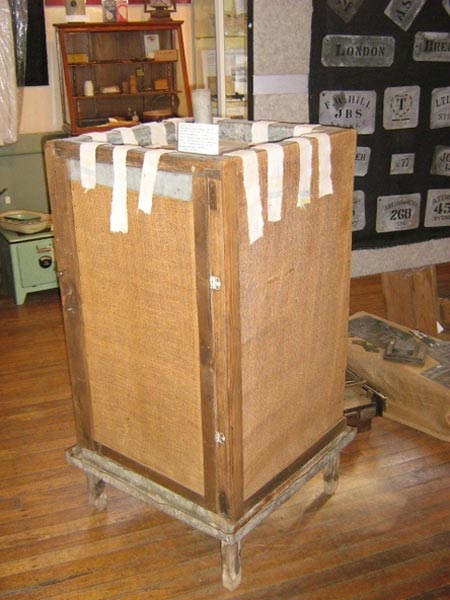
Coolgardie Safe
In lieu of a refrigerator, Arthur McCormick invented the Coolgardie Safe to keep his beers cold. (Image: Victorian Collections)

The Stump Jump Plough

The Mallee Bush is a stubborn character. So stubborn that in 1878 the SA government put a £200 bounty on its head for anyone who could come up with a technique to pull out the exasperating stumps. But the simple brilliance of inventor Richard Smith was to ignore the trivialities of stump removal altogether. He decided it was just as easy to find a way to jump over them than to waste energy pulling them up, by taking a regular fixed ploughshare and hinging and weighting it. The forward force of a dray dragging the blade would no longer stick it in the ground at every obstacle; instead the hinge would allow it to lift from the ground and fall back in when it cleared the other side. Though considered unconventional at the time, this basic design proved so cost-effective that it’s now used right across the agricultural world.
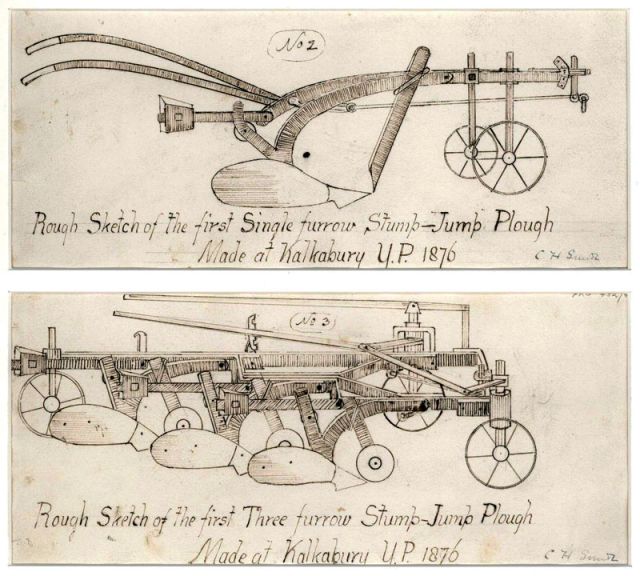
The Stump Jump plough design
The Stump Jump design used to defeat the stubborn Mallee. (Image: State Library of SA)

The Boomerang

The humble boomerang is thought to be the world’s first manmade, heavier-than-air controlled flying object. And while other cultures have developed similar sticks using an aerofoil uplift design, Aboriginals invented a boomerang that is unique in its ability to return to its thrower. This is because the boomerang relies not on a straight edge, but a curved one, allowing for an elliptical flight path. They’ve been variously used for hunting, hand-to-hand combat, musical instruments and cutting off fingers in Mel Gibson films. They’re even used the world over as a modern sports item these days. All this became possible without intimate knowledge of Newton’s Laws of Physics, the need for wind tunnels, taxpayer-funded laboratories or supercomputers. It was created out of nothing more than trial and error and the need to catch tonight’s dinner.
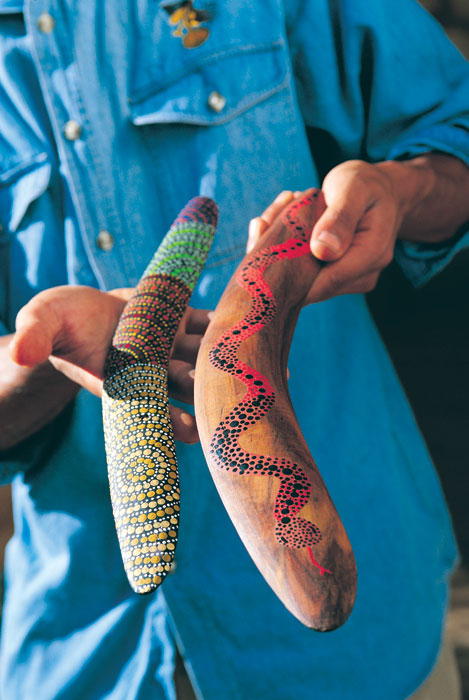
Who invented the returning boomerang?
Uplift aerofoil designed stick with an elliptical flight path a.k.a. the boomerang. (Image: Tourism SA)

Genius inventor David Unaipon

It either takes a special kind of genius or a fool to chase the dream of perpetual motion. Ngarrindjeri inventor David Unaipon is saved from fool status by his lifetime of ingenuity and achievement against seemingly insurmountable obstacles. But that’s not to say he wasn’t treated the fool. He was. Not because of his pursuits – perpetual motion had its fans during Unaipon’s lifetime – no, David was treated the fool for being Aboriginal.


As a youth, Unaipon was busy filling his mind with science, literature and music, defying the racist beliefs that Aboriginals could barely participate in civilisation, let alone contribute in any meaningful manner. He applied for multiple patents on inventions he created – but was granted just ten. Among these were a centrifugal engine and multi-radial wheel. His most recognised was a then new mechanical handpiece for sheep shearing but, as an Aboriginal, he was unable to raise the cash to fund his own production. The design was pilfered and he never saw a cent from the subsequent explosion in demand.
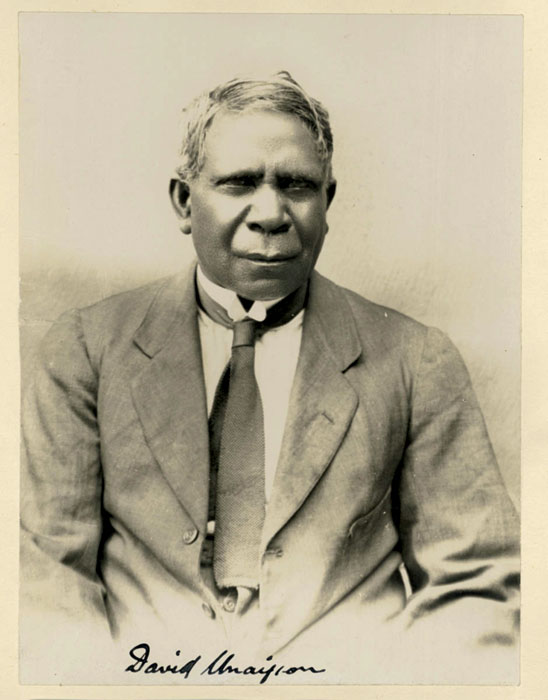
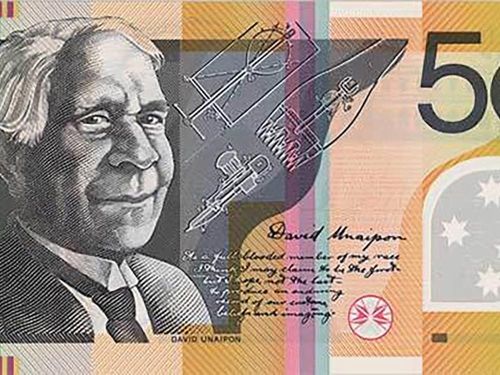
David Unaipon features on the $50 bill
David Unaipon made numerous inventions during his life, including the centrifugal engine and multi-radial wheel. (Image: State Library of NSW)

Unaipon also saw the potential for a fixed-blade helicopter that utilised the aerofoil design of the boomerang, overturning the conventional ideology of the time that was still fixated on the “airscrew" design of some guy named Leonardo DaVinci. Aside from his love affair with science, Unaipon became the first Aboriginal writer to ever be published, and he travelled extensively throughout Australia arguing for better treatment for all Aboriginals. We can only wonder how much more enriched Australia would have been had he not been ignored.


While Unaipon died a destitute inventor, the irony is that he can now be found on the $50 bill, seen on billions of dollars around the country.
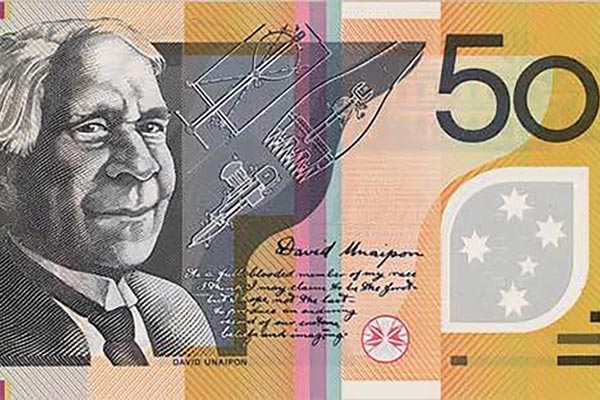
Australia's 50 dollar bill
David Unaipon features on Australia’s 50 dollar bill.

Pedal wireless

Lack of communications between remote stations and settlements was a huge obstacle in the early days of the Royal Flying Doctor Service. In order to find help, often you’d need to travel hundreds of kilometres to find a telegraph or telephone. With this difficulty in mind, Rev John Flynn set SA engineer Alf Traeger the task of developing a simple and affordable way for outback stations and settlements to call for immediate help.


In 1927, Traeger set up his first model, a Morse code system that used a hand-cranked generator. But that needed at least two people to operate, which isn’t always possible in an emergency. Traeger soon refined the system, offering pedal power and leaving the hands free to operate the transceiver.


Later he added a Morse keyboard, making Morse knowledge redundant for operation. It didn’t take long for the new technology to be used for things other than medical emergencies. The gulfs between far distant next-door neighbours were soon sliced away and radio “galah sessions" became the norm. Traeger succeeded in not only drastically cutting down response times, but he also gave the outback a voice.
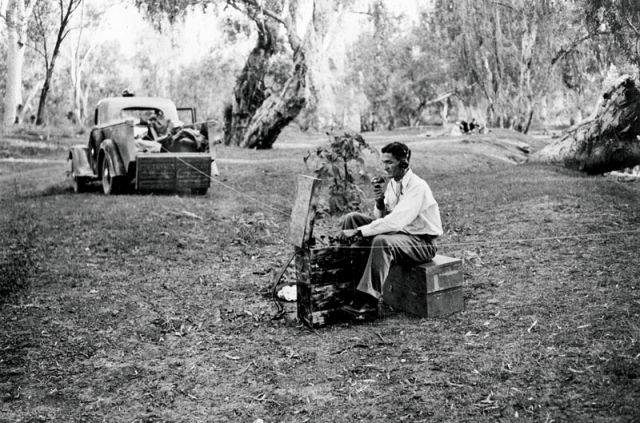
National Archive of Australia
The Pedal Wireless in action. (Image: National Archives of Australia)
hero media

Wine, art and good food: 15 ways to spend your time in Albury Wodonga

More than just a stopover, Albury Wodonga is an elevated city escape immersed in nature.

Perhaps best known as a road trip stop between Sydney and Melbourne, Albury Wodonga offers a combination of natural beauty, cultural experiences and a vibrant food scene that make it well worth its own journey.

Nestled on the banks of the mighty Murray River and surrounded by famed wine and gold rush regions, this riverside town packs a broad punch. Discover how best to spend your days on the border.

Exploring the Murray River

1. The Crossing Place Trail

woman looking at sculpture along Crossing Place Trail loop
Admire sculptural works from local Indigenous artists.

Head to the original crossing places of the Murray River since 1848 – at the junctions of Bungambrawatha Creek and Oddies Creek. Today, these crossings are still used by cars and cattle, but the five-kilometre Crossing Place Trail loop connects the two bridges for bike riders and walkers.

Wander through gum trees, and maybe even spot local platypus and birdlife. Stop along the way to admire sculptural works from local Indigenous artists, see evidence of a scar tree and learn about the importance of this billabong environment to Aboriginal and Torres Strait Islander peoples.

2. Canoe The Murray

two people kayaking along the murray river at Noreuil Park
Hire canoes or kayaks and get out on the river.

What better way to get a feel for the Murray River than by getting out on its waters? Hire canoes or kayaks from Canoe the Murray , then explore solo or join one of the offered tours. Get up early for a Sunrise and coffee tour, watch the sun dip below the water on a sunset tour or choose one of several daytime trips.

Stand-up paddleboard hire and other water sports, fishing and swimming are also available to river explorers.

3. Noreuil Park Foreshore

aerial of Noreuil Park albury wodonga
Cool off at Noreuil Park Foreshore. (Image: Visit Victoria)

Just outside Albury’s CBD, the riverside Noreuil Park becomes a hub of activity as the weather heats up. Set up on picnic tables under shady trees, use the public barbecues (or pop into the nearby cafe) and cool off with a float down the river.

4. Mungabareena Reserve and Water Works

Mungabareena Reserve albury wodonga
Spend time at Mungabareena Reserve. (Image: Visit Albury Wodonga)

Delve into nature and culture at the beautiful Mungabareena Reserve . Recognised by state law as a ‘Declared Aboriginal Place’, it was once a historical meeting point for trade and journeys to Mount Bogong for the local Wiradjuri people and still holds deep significance.

It’s another popular spot for fishing, swimming and picnics, while the nearby Water Works area is a great place for spotting wildlife. Try your luck seeing platypuses, wood ducks or rainbow bee-eaters.

Adventuring on Lake Hume

1. Walk the dam wall

parent and child look at the view from the damn wall walk at lake hume
Enjoy the view from the dam wall. (Image: Visit Albury Wodonga)

The majestic Lake Hume – a massive man-made reservoir on the Murray River – was once the largest dam in the Southern Hemisphere.

A great way to get acquainted is by walking along the dam wall, taking in views of outflows, electricity turbines and the transmission plant from above. Not to mention vistas of the lake and the Murray. It’s a particularly gorgeous spot for sunsets and sunrises.

A wide sealed walkway gives easy access to the wall, and informative signs and displays along the way educate on the dam’s construction.

2. The High Country Rail Trail

This 44-kilometre trail hugs the shoreline. Stop along the way at the historic town of Tallangatta, relocated to its current position in the 1950s after its original location was flooded. Cross the lake over the bright red Sandy Creek Bridge. Enjoy a lakeside picnic or go for a swim at Ebden, Ludlow’s or Huon Reserve.

3. Water sports

two people watching SUP boarders and a boat our on the water at lake hume
Dive into water sports on Lake Hume.

Lake Hume is a popular local spot for boating, fishing, and swimming. Drop a line or dive right into the clear waters.

Sip and Savour

1. Dux Albury

two people sitting at counter drinking wine inside Dux Albury
Sit down to delicious meals and wine at Dux.

Those looking for a high-end dining experience need to book a table at Dux Albury in the heart of Albury Wodonga. Sit down for curated wine lists, cocktails and share plates. Think starters like burrata with beetroot, chervil, caper berry and sherry, mains like Wagyu sirloin with Café De Paris, red wine and caramelised onions and all manner of fresh seafood.

2. Murray Towns Brewing Co.

people being served lunch at Murray Brewing Co.
Recharge at Murray Brewing Co.

Perched on the banks of the river, Murray Towns Brewing Co . has come a long way since two mates started experimenting in their backyard chook shed. With all beer brewed onsite and a sun-drenched beer garden to drink them in, it’s a perfect stop along a bike ride or walk.

3. Temperance and General

Step into Albury’s original laneway bar, Temperance and General . Set inside a historic building, but offering a modern vibe, the bar is locally famous for its cocktail list. Stop in before or after dinner for a creative tipple.

4. BeanStation Cafe

two people drinking coffee at Bean Station albury wodonga
Dine on a modern Australian menu.

Dine on a modern Australian menu , inside the historic Wodonga train station building, dating back to 1873. Pop over in the morning and line up with the locals for great coffee and all-day brekkie, or head over after midday to swap the beans for local wines and Aussie boutique beers.

5. River Deck Cafe

waiter holding two dishes at Riverdeck Cafe albury wodonga
Soak in views and good food at Riverdeck Cafe. (Image: Visit Victoria)

Another dining destination next to the Murray, the award-winning River Deck Cafe provides a large deck covered in dappled sunlight that makes for the ideal long lunch spot. Here, menus focus on natural, native and local ingredients sourced from regional farmers and producers across Albury Wodonga and surrounds.

Museums, murals and more

1. Albury Wodonga Public Art Trail

Gain a sense of Albury Wodonga’s vibrant arts community while wandering the Public Art Trail. Works range from sculptures and murals to wrapped infrastructure. Be sure to check the council map before you head out, so you don’t miss a thing.

2. Murray Art Museum Albury (MAMA)

couple admiring the art at Murray Art Gallery
Stop into one of the most visited galleries outside of Sydney. (Image: Visit Albury Wodonga)

MAMA forms the heart of art and culture in Albury Wodonga, some may say the entire Murray region. In fact, it’s one of the most visited galleries outside of Sydney. What makes it so lauded? The museum has earned a reputation for curating innovative, original exhibitions from some of the best contemporary Australian and international artists.

3. HotHouse Theatre

Originally built in 1928 as the Butter Factory Theatre, HotHouse Theatre has been a home of performance since 1997. Stop by to see the best of new Australian theatre. Continue to explore unique architecture on the Historic Building Walking Tour of Albury, the perfect way to round out your stay.

Start planning your Albury Wodonga getaway at visitalburywodonga.com.