Outback survival stories that’ll stop your heart

hero media
The outback is a very beautiful place – but venture into it unprepared and you’ll soon find out just how hazardous it can be. Lauren Camp explores a few of the more miraculous (and ridiculous) stories of wilderness survival in what can often be a harsh and unforgiving place.

1. Spiritual quest goes awry

One of Australia’s most famous outback desert rescues occurred in 1999, when 33-year-old Alaskan fire fighter Robert Bogucki was found after 43 days wandering lost and alone in the Great Sandy Desert on a quest to “make peace with God". A little unluckily for Bogucki (and pray this never happens to you), he was found in some gorges east of Broome, not by police, Aboriginal trackers or the professional team of rescuers brought in from the US, but by Channel Nine’s A Current Affair news team.
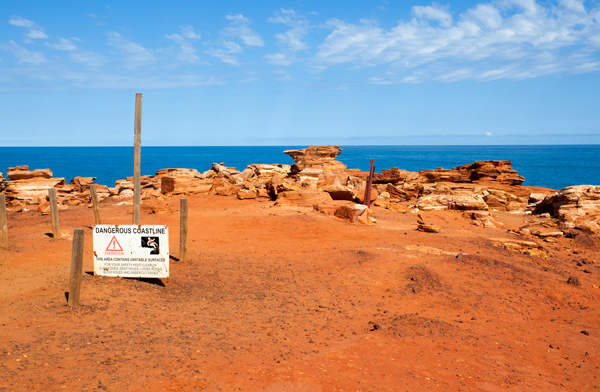
Gantheaume Point, Broome.

ACA came under intense scrutiny when it was revealed that, instead of flying him to a nearby camp to receive medical treatment, they spent almost 20 minutes interviewing Bogucki before flying him an hour back to Broome with their own TV reporter.


All-told, the rescue cost police and Bogucki’s parents around $150,000 – and Bogucki, who lost 20kg and survived by drinking muddy water and eating flowers and plants, told BBC News that he’d definitely “scratched the itch" that had him out there in the first place.

2. Addicted to getting lost

In September 2006 in Alice Springs, 50-year-old English tourist Martin Lake earned himself the nickname “the Bumbling Brit" when he got lost, in the words of local police, “within shouting distance of help".
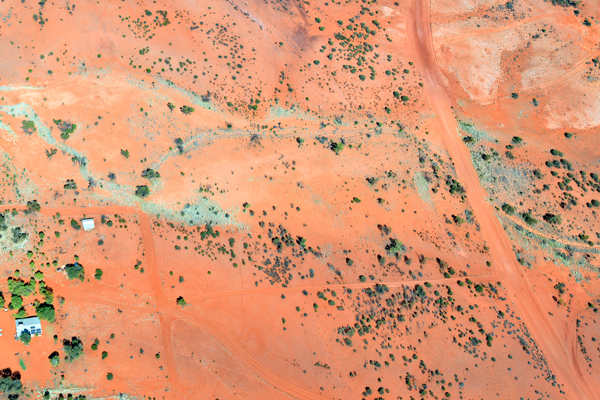
Alice Springs, NT.
Australia, NT, aerial view to farm in outback south of Alice Springs.

Wearing a black T-shirt and shorts, with no water, no hat and an almost-flat phone battery, he wandered off the path while looking for the old telegraph station north of town and wasn’t found for three days. But that’s not the absurd part. After apologising and receiving a stern lecture from rescue services, less than a week later he became lost again, under a mile from the exact same spot.


The helicopters and search parties were organised once more, to the tune of tens of thousands of dollars for local taxpayers, and Lake was re-rescued, this time after four days of wandering. It’s believed that he returned to the area because he dropped something the first time around and wanted to retrieve it.

Need tips, more detail or itinerary ideas tailored to you? Ask AT.

AI Prompt

3. Always carry a gizmo
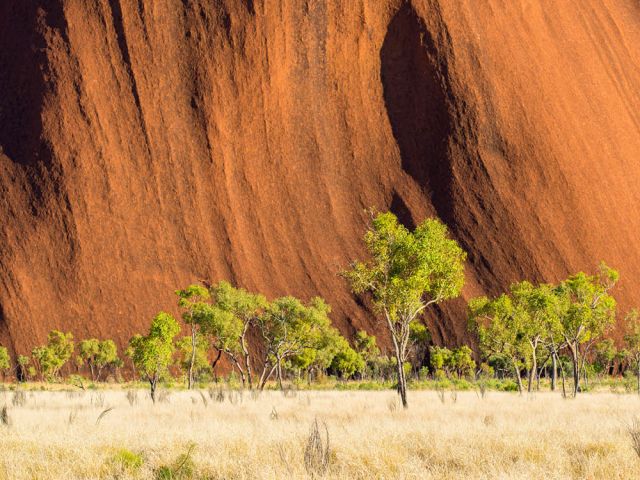
Uluru (Ayers Rock), Uluru-Kata Tjuta National Park, Northern Territory.
Uluru (Ayers Rock), Uluru-Kata Tjuta National Park, Northern Territory, Central Australia.

In January 2009, an experienced Romanian hiker, who’d previously trekked through the likes of South America and Asia, got a nasty fright when he became lost for six days during a 45km walk near Uluru.


He ran out of food and water on day three and had to head sluggishly back. Once within mobile phone range – which is pretty incredible because the reception is very dodgy out there – he managed to alert rescuers by getting a message to his family back in Romania, including his GPS location.


Rescuers said it was this fact alone that saved the man, which proves how important it is to be well prepared in the food, water and GPS stakes before venturing into the unknown.

4. Survival of the fittest

When 35-year-old Ricky Megee from Brisbane was heading to Port Hedland in late January 2006, he stopped to help a group of stranded motorists near the WA/NT border and agreed to ferry the smallest of the group to the nearest town.
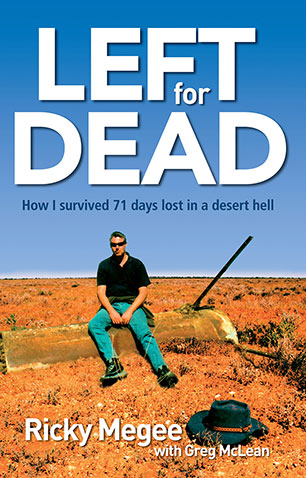
Left for Dead, the true story of Ricky Megee's outback survival.
Left for Dead, the true story of Ricky Megee’s outback survival.

That fateful day ended with Megee being drugged by his passenger and left for dead in a ditch, covered by a tarpaulin weighted down with rocks. He then wandered aimlessly for ten days before setting up camp under an old cattle trough beside a dam, which allowed him a constant flow of water and a diet of toads and lizards.


He survived in this fashion for ten weeks, before being discovered and rescued by two passing station hands – 60kg lighter, lucky to be alive.


Check out his book Left for Dead.

Weekly travel news, experiences
insider tips, offers, and more.

5. No water, plenty of beer

In October 2002, 36-year-old German man Kim Hardt sat alone in his 4WD for three days after getting bogged at Lake Disappointment on the rugged Canning Stock Route. He’d heard about the challenge the CSR presented to outback drivers on a German TV show, which must have been missing a few salient survival details because Hardt showed up by himself with hardly any water, no phone or GPS, but carrying ten litres of beer and a packet of bikkies.


Nothing like being well prepared. Some fellow tourists discovered Hardt and were able to leave some more water while they trundled off to alert a rescue team. By the time the team returned, Hardt was drinking the salt water from Lake Disappointment. Apparently he’d thought it would take about three days to traverse the 1700km CSR, 900 sand dunes and all.

6. Where there’s smoke, there’s a fire engine

This might not quite qualify as a survival story, but back in 2000, 43-year-old Edward Furtak got it into his head that a good way to give up smoking would be to drive his ancient converted fire engine into the desert and camp by himself for six months. “I needed to actually get out in the middle of nowhere where I just couldn’t have a smoke," he said later in an ABC radio interview.


While he claimed he “had a great time", his parents certainly didn’t, reporting him missing after three months. A police search was mounted but proved fruitless. The mystery of his disappearance from Sydney was finally solved after another three months went by, and he emerged from the desert into the small town of Forrest, 1150km east of Perth, to call his mum on her 78th birthday.


Still keen for an outback holiday? Of course you are! You now have your wits about you, so check out our guide to outback holidays right here.

Want to see more stories from Australian Traveller in your Google search results?

  1. Click here to set Australian Traveller as a preferred source.
  2. Tick the box next to "Australian Traveller". That's it.
hero media

Discovering East Arnhem: Australia’s most unique and rewarding corner

    Joanne Millares Joanne Millares

    Hard to reach and harder to forget, East Arnhem offers something rare in modern travel: the chance to slow down and experience Country on its own terms.

    The sky feels bigger in East Arnhem. It stretches wide and uninterrupted above rouged earth, stringybark woodland and beaches so empty they seem to belong to another era. The coastline curves for kilometres without a footprint and the horizon runs on forever.

    For comedian Lou Wall, the scale of the place was the first thing that hit them.

    “The sheer openness,” they say. “The sky feels infinite and the land stretches out endlessly. It’s pretty breathtaking visually.”

    But the physical landscape is only part of the story. The real reward isn’t only the scenery but the shift in perspective the journey brings. Visitors stop trying to tick off the destination and a real engagement takes over.

    “It made me never want to travel again,” Wall jokes. “In that I never wanted to leave East Arnhem.”

    Getting there

    Aerial shot of East Arnhem’s coastline as cars trace the curve of the shore.
    Sail along the remote coastline on an expedition cruise.

    Reaching East Arnhem is part of the adventure. Travellers typically fly into Gove Airport near Nhulunbuy via Darwin or Cairns, or arrive by expedition cruise along the remote coastline. Others make the journey overland along rutted dirt roads that cut through East Arnhem’s small pockets of monsoon forest.

    However you arrive, there’s a distinct feeling of crossing into somewhere different. Permits are required to visit the region, reflecting the fact that this is Yolŋu land where communities and traditional owners maintain deep cultural connections to Country.

    The extra planning becomes part of the experience. By the time visitors arrive, they understand they’re entering a place not just of respect, but also patience and curiosity.

    At one with nature

    East Arnhem’s  landscapes leave a strong imprint. For Wall, one place in particular still lingers in their memory: Ngalarrkpuy, also known as Lonely Beach, near Bawaka Homeland.

    “I genuinely felt like I was living inside an Instagram filter,” they say. “One of the most stunning feats of nature I’ve ever seen. The water was so clear I swear I could see even the fish smiling.”

    Across the region, natural experiences unfold at a slower pace. Fishing, beachcombing and island hopping reveal the rhythm of the coastline. The tides shape daily life and the vastness of the landscape makes even simple moments feel downright cinematic.

    For visitors with limited time, Wall says the Bawaka Homeland experience is unmissable.

    “I just left and I’m already planning when I can get back there.”

    The sense of remoteness is part of the appeal. In a country where many beaches are crowded and well-trodden, East Arnhem’s coastline still feels wonderfully wild.

    Immersing in local culture

    A visitor spends a meaningful moment alongside Yolŋu guides, gaining insight into their deep cultural knowledge and connection to the land.
    Experience authentic moments with the locals.

    Culture is woven through every experience in East Arnhem. Visitors have the opportunity to spend time on Country with Yolŋu guides and knowledge holders who share stories and traditions that have been passed down for generations.

    For Wall, one of the most powerful moments came during a conversation with a Yolŋu elder.

    “I got to meet a traditional elder, Mayalil, in Nhulunbuy,” they say. “Listening to her talk about her home made the land feel alive in ways I couldn’t have imagined.”

    The region is also home to internationally recognised Aboriginal art centres where artists shape works deeply connected to land and family knowledge.

    Music carries the same cultural energy. East Arnhem has produced globally recognised artists such as King Stingray and Baker Boy, blending Yolŋu language, storytelling and contemporary sound.

    Wall experienced this musical spirit first-hand.

    “A jam session around the fire was it for me,” they say. “Letting the deep joy and history of their music wash over me…  and meeting a few of the King Stingray musicians was unreal.”

    These moments of human connection often become the most memorable part of a visit.

    Spotting local wildlife

    An aerial view of the beach shows tiny figures lined up across the white sand, moving as if in a rhythmic dance.
    Step into a world where nature reigns.

    The wildlife of East Arnhem adds another layer to the experience. The region is home to an extraordinary range of animals, from waterbirds and turtles to dugongs, dolphins and the formidable saltwater crocodile.

    Wall admits they didn’t actually spot a croc during their visit.

    “Devastatingly, I didn’t see one,” they laugh. “But with all the stories from the locals I definitely gained a healthy respect for caution.”

    Some of the most memorable wildlife encounters can be surprisingly small., At Banubanu Beach Retreat on Bremer Island, Wall remembers walking along the beach one morning and watching it come alive.

    “As you walk through the sand you see hundreds of crabs scurrying into their holes as you pass by,” they say. “Such a small thing, but it was completely magical.”

    Moments like this reveal the quieter rhythms of East Arnhem, where even the smallest creatures seem to play a part in the landscape.

    Visitors who make the journey soon learn the most important travel tip of all.

    “Go in open-minded with a sense of curiosity,” Wall says. “Be prepared to ditch your plans. The land and the locals will guide you on an adventure no spreadsheets could ever compete with.”

    And most importantly, they add, don’t rush.

    “The land and people deserve your time and attention. You’ll be all the better for slowing down.”

    For more information on visiting East Arnhem, head to eastarnhem.com.au.