The 10 most Instagrammed places in Australia

hero media
Every wondered where the most Instagrammed places in Australia are? We did, so we asked those in the know at Instagram to find the most-tagged travelled-to destinations in this wide brown land.

1. Sydney Opera House

No surprise here. The Opera House is the centrepiece of the most populous city in the country with a benchmark New Year’s Eve celebration of global significance – just like number one on our sister titles’ ‘10 Most Instagrammed Places in the World’ list.


Other events like the million-people-drawing Vivid light festival will see the sails long illuminated in this list.

2. Darling Harbour, Sydney

On the other side of Sydney’s CBD, Darling Harbour is still first or second stop on many international tourists’ itineraries for a spot of harbourside dining and shopping, even if local visitors have plateaued recently.


Watch this space when the current redevelopment – which includes the demolishment of Entertainment Centre – is complete, particularly given its proximity to entertainment and foodie hubs like Chinatown.

3. Surfers Paradise Beach, Gold Coast

Let’s just say that Surfers Paradise has never topped our best beach in Australia list, yet, but the Gold Coast’s beach-de-résistance certainly attracts its share of digital natives.


Family holidays and the Instagram (and Snapchat) frenzy of Schoolies will help keep Surfers near the top of this Instagram wave.

4. Bondi Beach, Sydney

Sydney’s most famous beach destination for a generation was destined to pop up its head here.


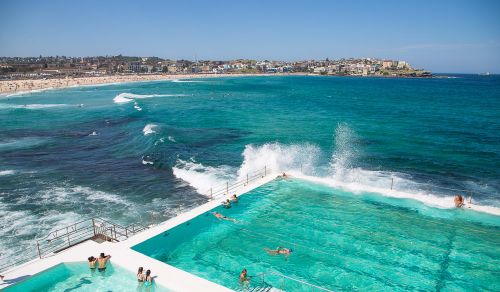
Of course, backpackers and ever-changing trendy restaurants, cafes and bars beef up Bondi’s Instagram credential, but it’s the beach and blue sky that still feature in most Grams. The classic shot across the Bondi Icebergs is one of our faves.

Need tips, more detail or itinerary ideas tailored to you? Ask AT.

AI Prompt

5. Melbourne Cricket Ground (MCG)

A winter full of AFL and perhaps the most famous cricket game in the world, the Boxing Day test, during summer bring ‘The G’ into Instagram focus.


Consequently the MCG feed is more for sport worshippers than travel dreamers, with a slew of at-the-game selfies and ‘duallies’ of punters in their battle dress of choice.

6. Sydney Harbour

Even when you’re not facing the other two harbour icons on this list, the Opera House or the bridge, there are a million places and spaces that will forever see Sydney Harbour in this top 10 in Australia, if not the world.

7. Sydney Harbour Bridge

How many angles can you Gram the Coathanger from? On top on a bridge climb, from the air in a seaplane, directly underneath from an old ferry or from innumerable spaces from afar, from Taronga Zoo to The Rocks.


Not surprisingly one of our demographics’ more popular vantage points is from directly opposite in the Opera Bar, wine in hand.

8. St Kilda Beach, Melbourne

Without doubt, St Kilda attracts the artiest variety of images in this list, thanks to its bo-ho by the beach vibe.


Expect lots of tattoo shots, foodie Grams among the beach shots and Insta-images of Luna Park’s unhinged-looking clown (see: The St Kilda You Always Wanted to Meet).

Weekly travel news, experiences
insider tips, offers, and more.

9. The Grounds of Alexandria, Sydney

The fact that Sydney’s busiest (if not trendiest) coffee precinct in the barely post-industrial inner-city suburb of Alexandria makes the list may surprise some.


To understand, stand outside the Grounds of Alexandria on a Saturday morning and marvel at the hive of people and traffic buzzing around this coffee-driven collective of utterly Instagrammable spaces.

10. South Bank, Brisbane

South Bank is still Brisbane’s river-side meeting place of choice (see Hip Hood: South Bank).


It has evolved over the past few years, moving on from just a sometimes-rowdy outdoor space to a multi-faceted and personalitied part of Brisbane’s persona with growing cultural cred.


That’s why it’s Brisbane’s favourite Instagram subject.


MORE… The 10 Most Instagrammed Places in the World

JOIN US… See Australian Traveller’s Instagram community

Want to see more stories from Australian Traveller in your Google search results?

  1. Click here to set Australian Traveller as a preferred source.
  2. Tick the box next to "Australian Traveller". That's it.
hero media

Good food, beautiful nature & history: your guide to a long weekend in West Gippsland

(Credit: Rob Blackburn)

    Carla Grossetti Carla Grossetti
    From rainforest walks and scenic drives to historic gold-rush towns and standout regional dining experiences, you can find it all in West Gippsland.

    Hover over West Gippsland on Google Earth and you’ll see vast tracts of land spread out like green velveteen around the Toorongo Falls Reserve. It’s a landscape that feels almost impossibly lush for a region sitting little more than an hour from Melbourne.

    Track southeast in late autumn and early winter and you’ll see pockets of the Mt Baw Baw Plateau dusted in snow. In addition to the forests of mountain ash veined with creeks and rivers, there are pastures and farmland cross-stitched together to form pretty patchworks.

    But West Gippsland isn’t defined by scenery alone: in addition to its awe-inspiring nature, a Venn diagram of the region includes gold-rush history and great culinary experiences.  Spend a long weekend here and it quickly becomes clear how often these three overlap.

    Getting there

    Messmates Dining west gippsland
    Spend the weekend eating and exploring in West Gippsland. (Credit: Messmates Dining)

    Getting to West Gippsland involves as easy drive – it’s just over an hour out of Melbourne along the Monash Freeway.

    Not driving? Catch the train from Melbourne on the Gippsland line, terminating at either Traralgon or Bairnsdale, and hop off at Warragul or Drouin.

    Visit historic villages

    Walhalla historic township
    Wander into Australia’s Gold Rush history at Walhalla. (Credit: Rob Blackburn)

    The West Gippsland region is on the Traditional Lands of the Kulin and Kurnai nations, specifically linked to the Bunurong, Gunaikurnai and Wurundjeri Peoples, whose connection to Country stretches back thousands of years.

    European settlement occurred in the 19th century as timber cutters, farmers and gold seekers pushed into the region’s dense forests. Small towns grew around sawmills and railway lines, and many of those gold rush settlements, timber towns and railway villages still shape the character of the region today.

    The most evocative of these is Walhalla Historic Township, a remarkably preserved gold-rush township tucked deep in the mountains. In the late 1800s, it was one of Victoria’s richest goldfields. Today visitors can step inside that history at the Long Tunnel Extended Gold Mine, where underground tours reveal the scale of the mining operation that once powered the town’s prosperity. Nearby, the Walhalla Goldfields Railway retraces part of the original narrow-gauge line through the valley, offering a slow journey past forest and river scenery.

    Further west, Noojee is a classic mountain village. It’s surrounded by dense forest and waterfalls and has become a natural base for exploring the Baw Baw region. Just outside town, Noojee Trestle Bridge stands as one of West Gippsland’s most striking relics of the rail era. The towering wooden structure is the tallest surviving trestle bridge in Victoria and today forms the centrepiece of an easy scenic walk with wide views across the valley.

    Alpine Trout Farm west gippsland
    Catch your own lunch at Alpine Trout Farm. (Credit: Nicky Cawood)

    At Alpine Trout Farm near Noojee, visitors can fish for trout in mountain-fed ponds before enjoying the catch prepared fresh onsite. It’s a simple experience that reflects the area’s long connection to the surrounding waterways.

    Back in Warragul, the region’s main service town, the story shifts from heritage to modern regional life. With galleries, restaurants and sweeping views across the rolling farmland of Gippsland, the town has become a lively hub linking the district’s past with its evolving food and cultural scene. Drive through the town and you’ll find heritage buildings, old pubs and weatherboard cottages that hint at the area’s early days as a frontier landscape.

    In other towns the past survives in quieter ways – a historic hall here, a century-old bakery there.

    Walks, waterfalls and wild places

    Toorongo Falls in west gippsland
    Stroll Toorongo Falls Reserve. (Credit: Nicky Cawood)

    Even simple roadside stops can feel cinematic in West Gippsland. The region also delivers plenty of opportunities to lace up your walking shoes.

    One of the region’s most rewarding nature escapes lies just outside Noojee at Toorongo Falls Reserve. A network of walking tracks winds through the cool-temperate rainforest where towering mountain ash trees filter the light and the air smells of rich, damp earth. The 2.2-kilometre trail to the viewing platform overlooking Toorongo Falls is short, but spectacular, as the water cascades down over moss-covered rock faces into a cool, green gully in Little Toorongo River.

    Further north, the Mount Baw Baw Alpine Resort offers year-round adventures. In winter, the mountain attracts skiers and snowboarders. The warmer months are just as compelling, with scenic drives to see alpine wildflowers, mountain bike trails and panoramic hiking routes that open across the plateau.

    Cyclists and walkers looking for a more relaxed pace can follow the Rokeby Neerim Rail Trail, which traces a former railway line through farmland and small Gippsland villages. The mostly flat trail passes rolling paddocks, creeks and historic bridges, making it an easy way to drop it down a gear when exploring the countryside.

    Taste the best eats of West Gippsland

    Hogget Kitchen west gippsland
    Taste the best of the region at Hogget Kitchen.

    For many travellers, the real drawcards of West Gippsland are the food and wine. The region sits in the heart of Victoria’s fertile dairy country, and that agricultural backdrop has helped shape a dining scene where seasonal produce and local provenance take centre stage.

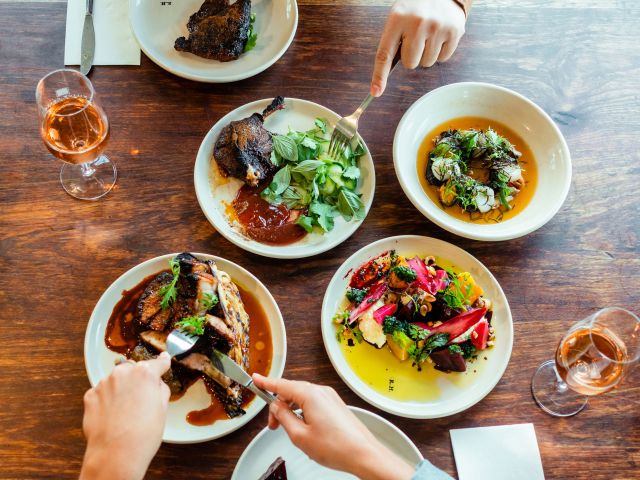
    Hogget Kitchen has helped put Warragul firmly on the radar for serious regional dining in West Gippsland. Here, head chef and owner Trevor Perkins runs the kitchen alongside well-known winemakers William (Bill) Downie and Pat Sullivan. Hogget Kitchen lives up to its promise of exceptional destination dining; what lands on the table depends largely on what nearby farms have harvested that week as well as a wine list from Wild Dog Winery and other Gippsland producers.

    Warragul is also where you’ll find Messmates Dining where the kitchen team is led by Michelin-trained chefs. The Euro-leaning bistro and wine bar brings a polished edge to the local dining scene using produce sourced from across West Gippsland.

    For something more casual, the century-old Noojee Hotel is the kind of hub that every traveller dreams of finding after a long drive. Expect generous pub classics served on the sunny deck in summer or beside the crackle of a log fire in winter.  Nearby, rustic Toolshed Bar, Bistro & Cabins is the place to go for a wood-fired pizza topped with smoked local trout paired with Gippsland wine, making it a rewarding stop for lunch or an overnight stay.

    Time your visit with the Truffle Festival

    Food lovers visiting in winter should consider timing their trip to coincide with Noojee Truffle Festival, running from 10 July to 2 August 2026. The inaugural event celebrates the region’s emerging truffle industry with tastings, special menus and events built around one of winter’s most prized ingredients.

    Start planning your long weekend in West Gippsland at visitgippsland.com.au.