10 natural wonders to see around Australia

hero media
Deep chasms, cascading waterfalls, emerald waterholes. Rocks that pierce blue skies. Hyper-green rainforest. Night-sky phenomena. This wide, brown land holds plenty of natural colour and beauty.

This article is part of our 100 Australian Wonders series. Throughout the series, we explore our nation’s wonders across culture, nature, food, islands and many more. We hope it inspires your own exploration of Australia’s many wonders.

1. Tasmanian Wilderness World Heritage Area

Travelling with: Fleur Bainger

Bring tissues on a nature cruise down the Gordon River, meandering through the lesser-visited western edge of Tasmania where the Franklin Dam project was proposed. You may well be brought to tears by the beauty of Huon pines rising from riverbanks, reflected in mirror-like stillness. Some of these conifers are aged at up to 3000 years, mere saplings at the time of Alexander the Great. They were nearly all lost to damming in the 1980s – cue more tears.
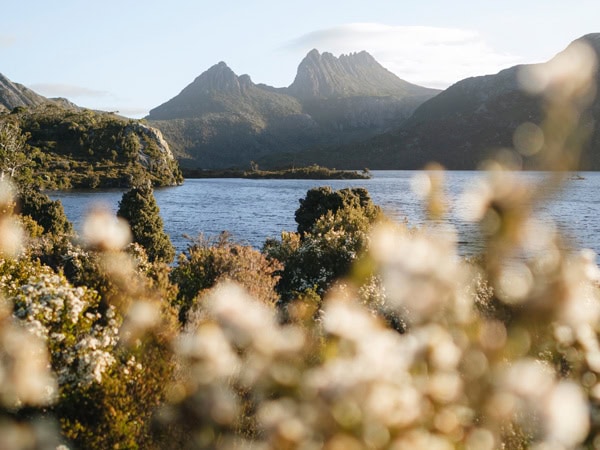
scenic views from the Cradle Mountain
The bushland surrounding Cradle Mountain is home to Australia’s most unique wildlife. (Image: Tourism Australia/Ain Raadik)

This, and about one-fifth of Tasmania, is protected by the Tasmanian Wilderness World Heritage Area. It’s one of only two places on the planet to meet seven out of 10 UNESCO criteria.
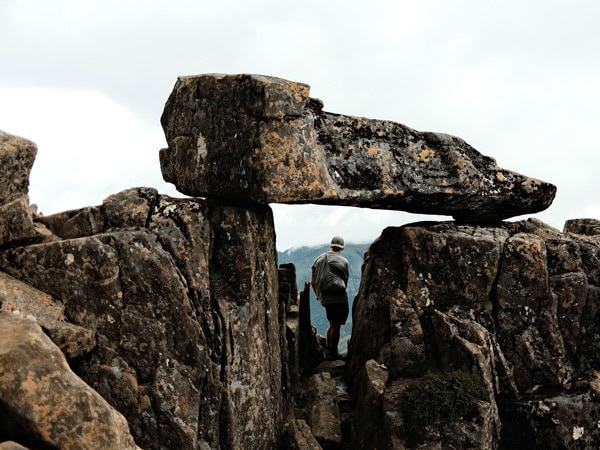
a man standing in the middle of a megalith
Explore stunning landscapes on one of the 20-plus self-guided walks. (Image: Tourism NT)

The zone also scoops up Cradle Mountain, where more than 20 self-guided walks, most on narrow, slatted boardwalks, encourage repeat visitation. The Dove Lake Circuit, with its Instagrammable boatshed, might be the most recognisable, and the Overland Track the most challenging. But it’s the Enchanted Walk and King Billy Walk that will steal your heart as you’re enveloped by moss-clad trees that will shelter you from the feathery rain.
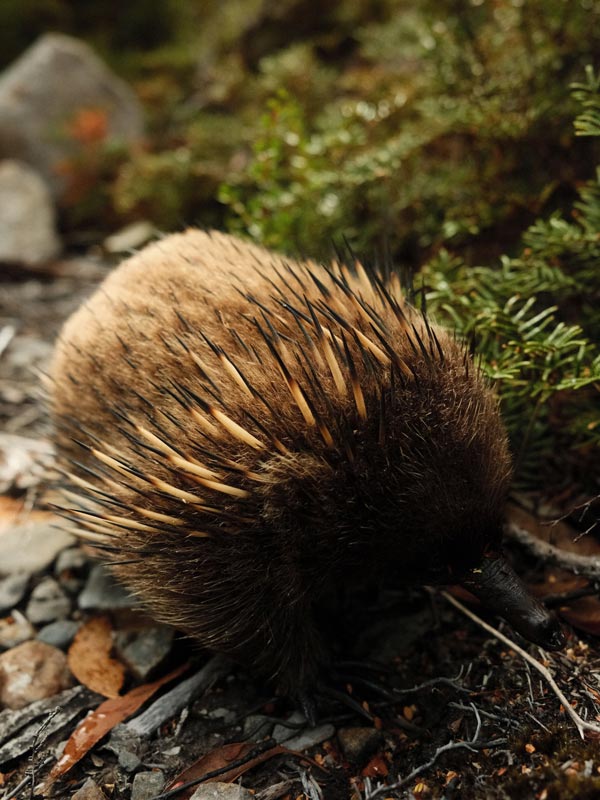
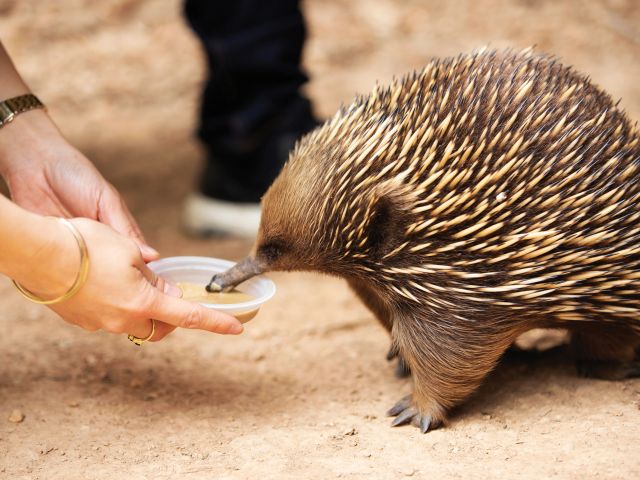
An echidna in the wilds of Tasmania
Spot an echidna. (Image: Blake Lisk – Pillar Creative)

2. Aurora australis, Tas

Travelling with: Elizabeth Whitehead

The northern lights top bucket lists around the globe, but this natural phenomenon is closer than many realise. The aurora australis, or the southern lights, are often spotted dancing across Tasmania’s otherworldly starscapes.
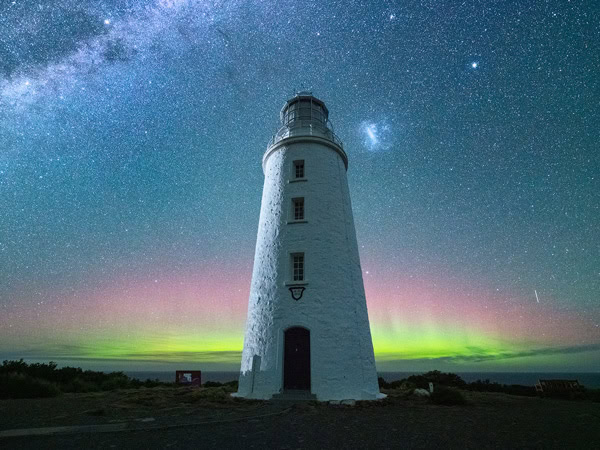
the Aurora Australis at Cape Bruny Lighthouse
See the spectacular Southern Lights at Cape Bruny Lighthouse. (Image: Luke Tscharke)

The further south you go, the more likely you’ll catch the mysterious ribbons of light billowing out in a technicolour show of red, green and blue. Some of the best spots to stake out include Bruny Island, Cradle Mountain and kunanyi/Mt Wellington. Bring a camera and a coat.
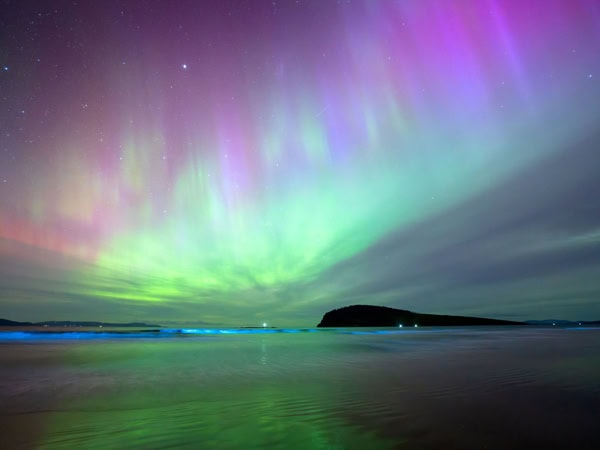
incredible views of Aurora Australis
Bask in the glory of Aurora Australis. (Image: Luke Tscharke)

3. Gorgeous gorges across Australia

Travelling with: Megan Arkinstall

The second widest gorge in the world, pipped only by the Grand Canyon, is in NSW’s backyard. Capertee Valley is cradled by sandstone cliffs that have been carved over millions of years.

Australia’s vast landscape is punctuated by manifold gorges, including Nitmiluk (Katherine) Gorge in the Top End, which comprises 13 ravines sliced by the Katherine River.
the Joffre Gorge at Karijini National Park
The Joffre Gorge is a standout with its curved rock formations. (Image: Tourism Western Australia)

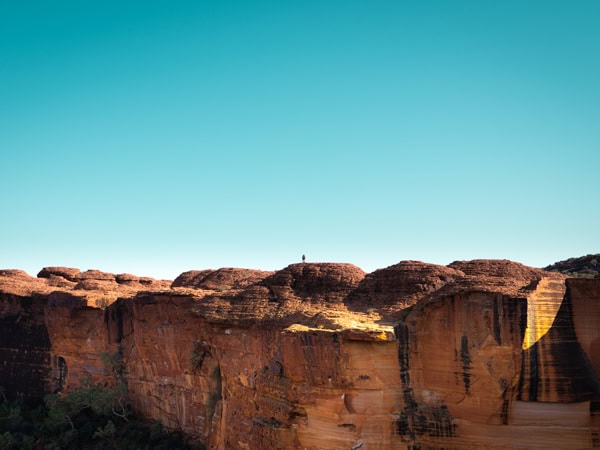
Towards the navel of the country, the mighty red cliffs of Kings Canyon span up to 300 metres in height, providing breathtaking views across the desert.

Western Australia’s claim to gorge fame is the spectacular Karijini National Park, a tropical semi-arid landscape where fern-lined swimming holes and gushing waterfalls are hidden within the vertical rock faces.
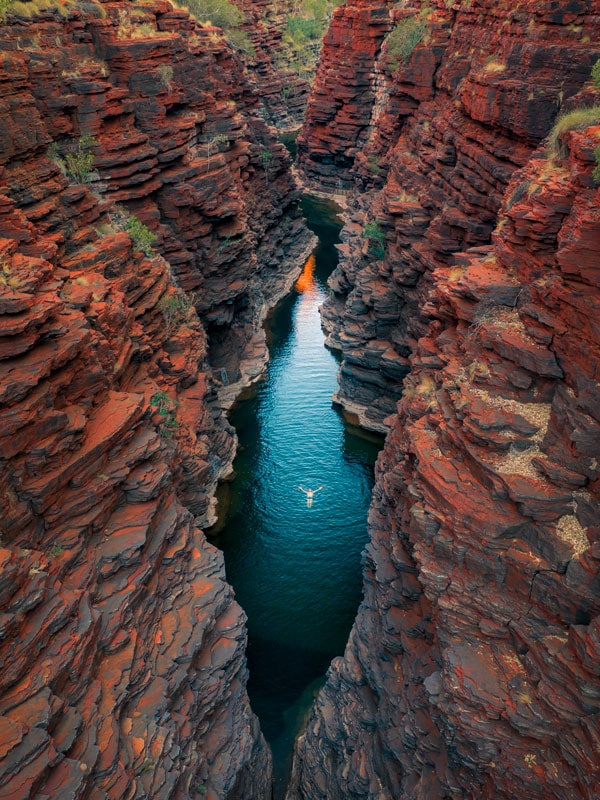
an aerial view of an ancient gorge at Karijini National Park
Swim through the ancient deep gorges at Karijini National Park. (Image: Tourism Western Australia)

Need tips, more detail or itinerary ideas tailored to you? Ask AT.

AI Prompt

4. Kiama Blowhole, NSW

Travelling with: Carla Grossetti

When the tide is right, the whoosh of water that blasts out of Kiama Blowhole splits the silence open. In fact, when the vertical blowhole on the NSW South Coast hits its peak at more than 30 metres, it is so loud that it drowns out the delighted squeals of the thousands of visitors who congregate here each year. The foundation for this geological wonder – the largest blowhole in the world – was laid from volcanic lava more than 260 million years ago. And while the nearby Little Blowhole is not as flamboyant, it’s also a wonderful place to watch the water wash in.
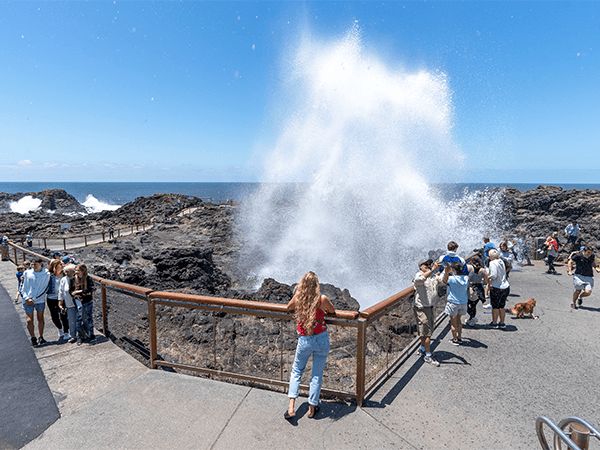
Kiama Blowhole
Kiama Blowhole releases plumes of water as high as 30 metres. (Image: Kiama Municipal Council)

5. Australia’s wonderous waterfalls

Travelling with: Carla Grossetti

Waterfalls in Australia can go from a tumbling trickle to a thundering roar after a sheeting downpour in the wet season.

Expect a couple of jungle nymphs to swing from the liana vines near Fairy Falls in Tropical North Queensland. Pack your bathers for a bracing dip in the natural rock pool at Kondalilla Falls, which you’ll often find swathed in mist in the Sunshine Coast Hinterland. Seek out the falls and swimming holes of El Questro and spectacular four-tiered Mitchell Falls (Punamii-Uunpuu) in WA’s mighty Kimberley region.

And while Horizontal Falls (Garaanngaddim), also in the Kimberley, is not technically a waterfall, it deserves special mention for being spectacular when the tides are at their highest in the winter months and it morphs into a churning mass of fury.
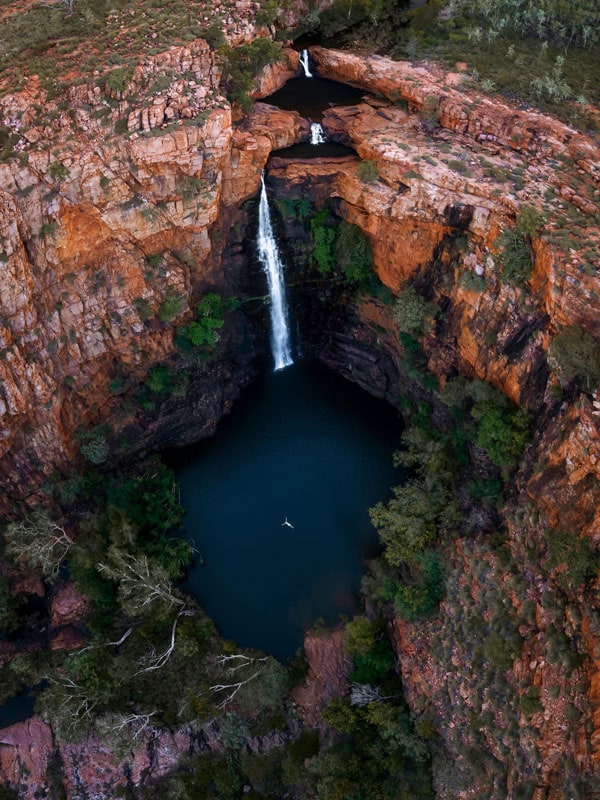
the falls and swimming hole at El Questro
Seek out the falls and swimming holes of El Questro. (Image: Tourism Australia)

6. Remarkable rocks

Travelling with: Megan Arkinstall

Billions of years in the making, unique rock formations draw people in far and wide for ogling and photo ops. Some are easy to get to – such as the Blue Mountains’ Three Sisters and Victoria’s 12 Apostles – but others rise out of barren landscapes seemingly in the middle of nowhere, making them even more awe-inspiring.
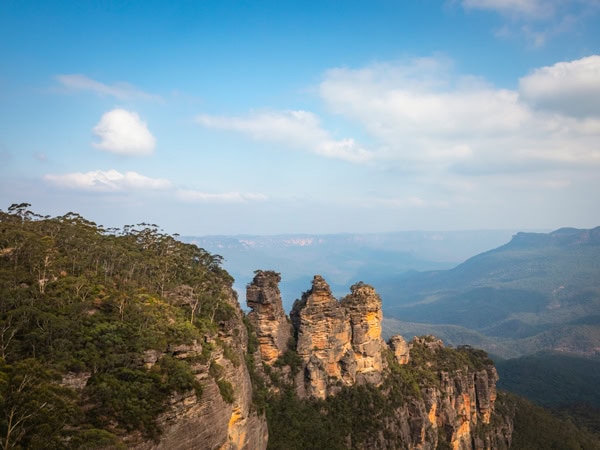
an aerial view of the Blue Mountains’ Three Sisters
Take in the jaw-dropping vistas at the Blue Mountains’ Three Sisters. (Image: Destination NSW)

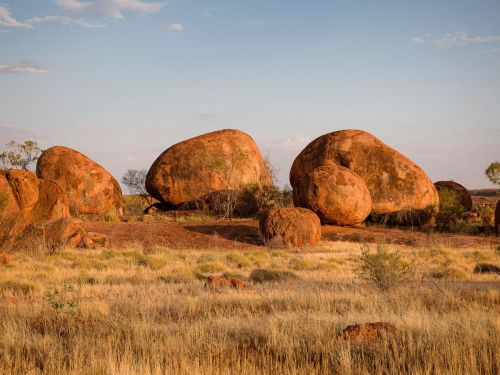
On WA’s Coral Coast, thousands of natural limestone Pinnacles stand up to five metres tall. Four hours inland, the 110-metre-long, 15-metre-high Wave Rock is the only swell you’ll find this far from the coast. Kangaroo Island’s Remarkable Rocks perch above the sea in Flinders Chase National Park. And the NT’s Karlu Karlu (Devils Marbles) is a sacred site for the Warumungu, Kaytetye, Alyawarra and Warlpiri peoples, comprising giant granite boulders mysteriously scattered across a wide valley.
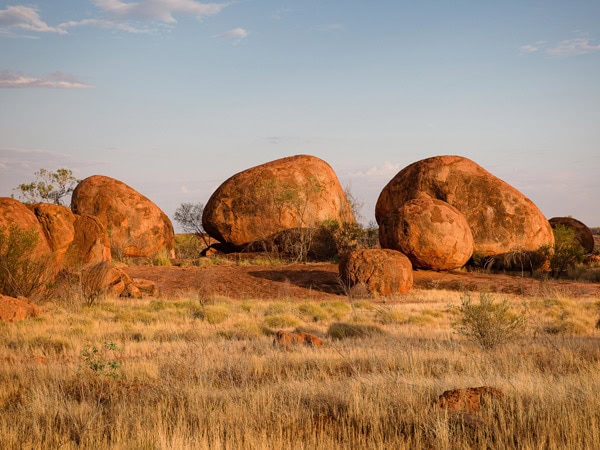
the Devils Marbles in NT
More than just rocks, the Karlu Karlu (Devils Marbles) is a sacred site for the Warumungu, Kaytetye, Alyawarra and Warlpiri peoples. (Image: Tourism NT/Kate Flowers)

7. Cassowaries of Mission Beach, Qld

Travelling with: Steve Magdwick

A few chilled days in utopian Mission Beach, two hours south of Cairns, is its own reward but also perhaps your best chance to see a weird, wonderful cassowary in the wild. Don’t go chasing the tropical dino bird, just observe it* (Mother Nature willing) from a safe distance as you explore the surrounding rainforest and beaches. Cruise down to South Mission Beach by bike. Stride through the flourishing forest of the Dreaming Trail circuit. Eat breakfast at hippy-chic Bingil Bay Cafe . Mission Beach overflows with tributes, from the aptly named Cassowary Drive to kitsch effigies and murals galore. (*A sticky beak around Garners Beach and behind Tasman Holiday Parks may be fruitful.)
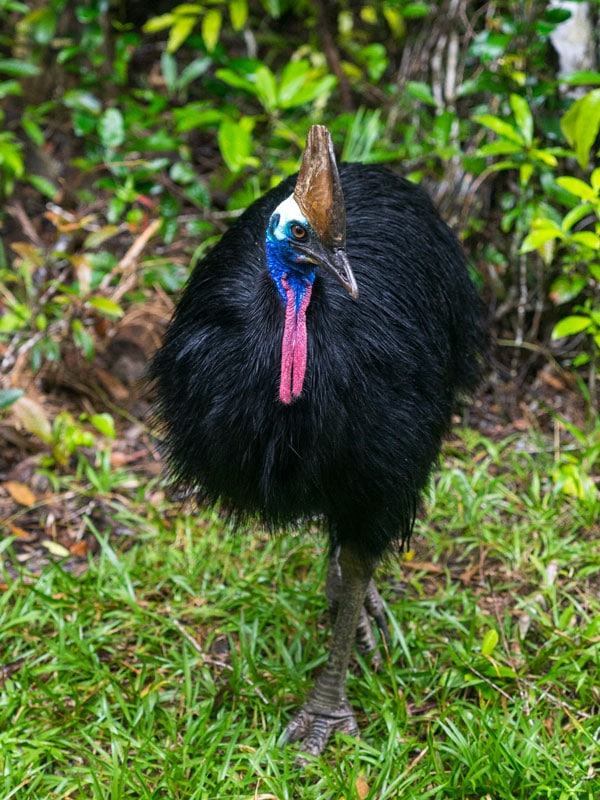
a cassowary at Wallaman Falls
See a cassowary in the wild. (Image: Tourism and Events Queensland/ Narelle Bouveng)

Weekly travel news, experiences
insider tips, offers, and more.

8. Daintree Rainforest, Qld

Travelling with: Carla Grossetti

Standing in the beautiful green dappled light of the Daintree in Tropical North Queensland is akin to being in a cathedral. The world’s oldest living rainforest was recognised by UNESCO in 1988 as having one of the most important ecosystems in the world containing relics of the Gondwanan era, which existed more than 180 million years ago.
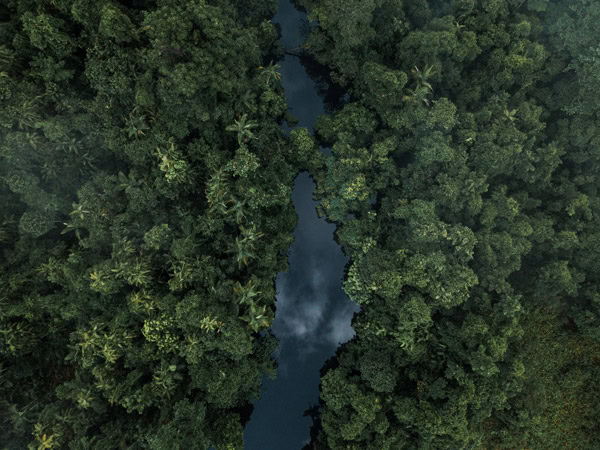
an aerial view of the Daintree Rainforest, Qld
Explore the world’s oldest living rainforest. (Image: Tourism Australia)

Take a guided tour deep into the Daintree with one of the Traditional Owners from the Mossman Gorge Cultural Centre. Here you will hear birds that only know how to screech, not sing. Inhale air that is thick with the cloying perfume of the forest floor. And understand why the Daintree is so deserving of our devotion.
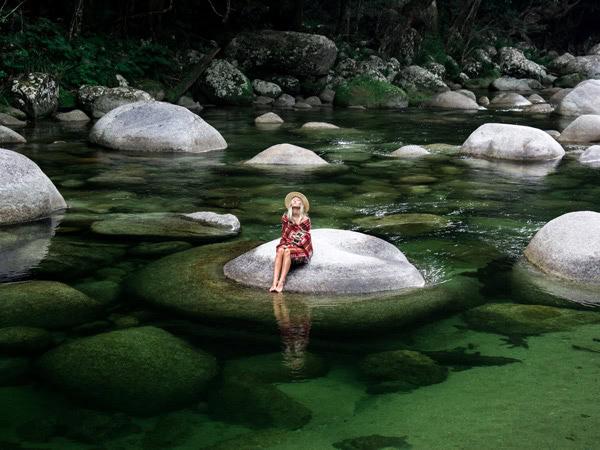
a woman sitting on a huge rock at Mossman Gorge
The magic of Mossman Gorge needs to be experienced. (Image: Silky Oaks Lodge)

9. Christmas Island

Travelling with: Fleur Bainger

The Jurassic feel of Christmas Island’s black volcanic rock and fluttering leafy plants is elevated when you look up to the skies and down to the forest floor. Creatures synonymous with the Galápagos Islands are found here: brown booby birds shrouding fluffy white chicks or nesting atop sheer cliffs, and inky frigatebirds soaring overhead with bright throat pouches flashing red.
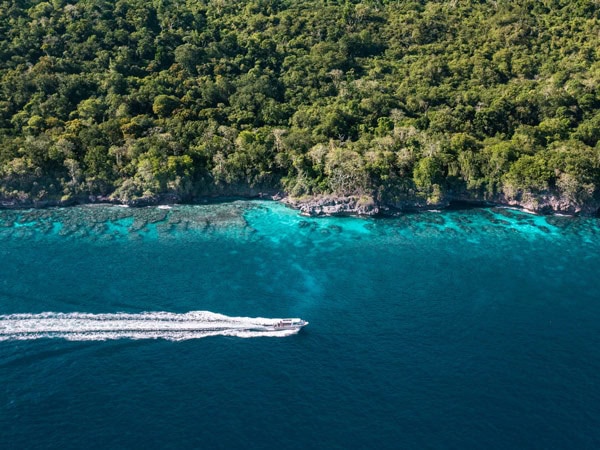
a drone shot of a boat sailing across Christmas Island
Christmas Island is a secluded gem in the Indian Ocean. (Image: Christmas Island Tourism Association)

There are more than 20 species of crab, with an estimated 60 million iconic red crabs flooding the streets during their October or November migration to spawn.

Christmas Island National Park covers 63 per cent of the wild isle and efforts to protect it are collaborative. Regular marine debris clean-ups are held on beaches to clear reams of ocean plastics – voluntourism at its best. WA’s Tangaroa Blue Foundation is holding a series of clean-ups from 14–21 June as part of its Keep Christmas Island Beautiful Week.
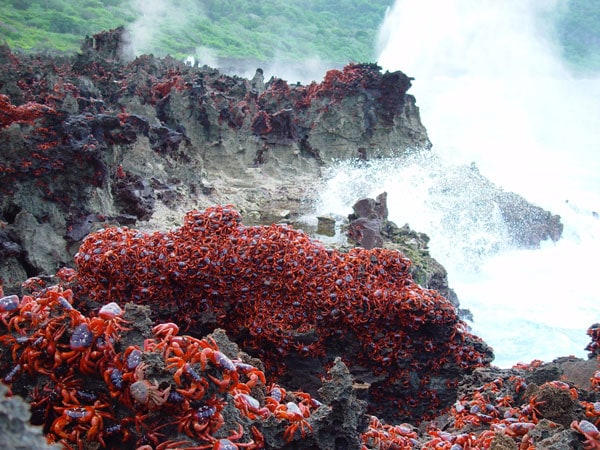
a group of red crabs on a cliff at Christmas Island
The Galapagos of Australia is home to the world’s weirdest creatures. (Image: Christmas Island Tourism Association)

10. Ningaloo/Nyinggulu, WA

Travelling with: Christine Aldred

While Ningaloo/Nyinggulu is rightly known for its coast-hugging reefs and stunning ocean blues, the adjoining desert landscapes and nearby gulf are more than worthy counterpoints.

The superlatives used to describe life-spawning reef that hugs the north-west coast of Australia – the remarkable sea creatures that live there including the famous whale sharks, and the vibrance of its colours – are all accurate.
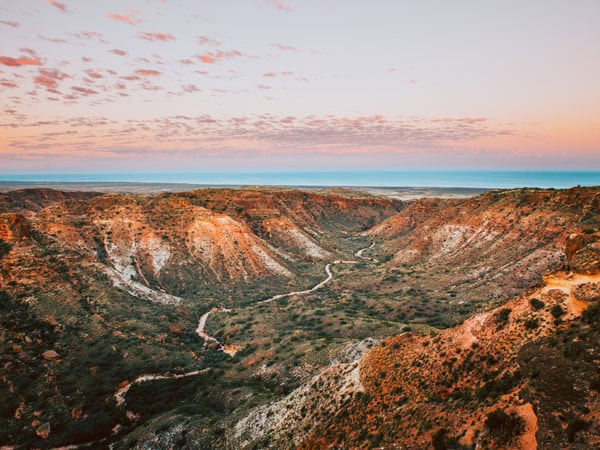
Charles Knife Gorge, Cape Range National Park
Views of Charles Knife Gorge in Cape Range National Park.

But the other two arms of this triple treat of nature also deserve attention: the rugged wilderness of Cape Range National Park; and Exmouth Gulf, the reef nursery where whales, dugongs and turtles go to rest and play, and the home of ancient life forms. Book into tented eco-luxury resort Sal Salis, the only serviced accommodation within the national park, for the awe of the landscape to be really revealed.

Keep reading our 100 Australian Wonders series; from road trips, outback and cultural wonders to foodie wonders and many more.
hero media

8 Red Centre locations to explore after seeing the new movie, Kangaroo

    Lucy Cousins Lucy Cousins
    Spend a few days visiting the real-life Central Australian locations that inspired the new film everyone is talking about, and discover why Alice Springs is such an important part of Australian culture.

    In the credits of the new Australian film Kangaroo , the first name under ‘cast’ should read ‘The Northern Territory ’. Not only is Alice Springs (and the surrounding landscape) integral to the movie itself, but the spiritual heart of Australia and its local Indigenous owners also inform the look and feel of every frame, explains Producer Trisha Morton-Thomas of Brindle Films, who also plays Charlie’s grandmother Gwennie.

    “By setting Kangaroo in Alice Springs (Mparntwe), the film embraces how visible Aboriginal people are here, and the living Aboriginal culture that is woven through this community,” she explains.

    still from kangarro film
    See Kangaroo, then visit the real-life filming locations.

    And while shooting in such a sacred part of the Northern Territory required extra planning, it was something the cast and crew were highly invested in.

    “There are incredibly significant sacred sites and places of deep cultural stories in the area, that at times are very gender-specific, which we’ve kept out of the production,” she explains. “Even if overhead drone footage captures a sacred site that isn’t meant to be seen by other people outside of that clan, we’ve made sure to omit it from the film.”

    If Kangaroo piqued your interest in a Central Australian holiday, we don’t blame you. Read on to discover eight places featured in the movie that you can visit in real life – and get planning. Don’t forget to pack sunscreen and a hat.

    1. Alice Springs/ Mparntwe

    artist at Many Hands Art Centre
    Visit the galleries of Alice Springs, like Many Hands Art Centre. (Image: Tourism NT/ Helen Orr/ Many Hands Art Centre)

    The red and dusty streets of the film’s fictional town of Silvergum were filmed on the outskirts of Alice Springs. And, while the art gallery featured in the film is fictional, Alice Springs is a hub of creativity. See the work of local artists at the Araluen Art Centre , Yubu Napa Art Gallery , Iltja Ntjarra (Many Hands) Art Centre and the famous Tjanpi Desert Weavers .

    2. The Kangaroo Sanctuary & Kangaroo Rescue Centre

    The Kangaroo Sanctuary Alice Springs, the inspiration for the Kangaroo move
    Visit the movie’s inspiration at Kangaroo Sanctuary. (Image: Tourism NT/ Kangaroo Sanctuary)

    Kangaroo was inspired by the journey of Chris ‘Brolga’ Barns, who founded the now world-renowned Kangaroo Sanctuary based in Alice Springs. For lead actor, Aussie Ryan Corr, the animals were central to the movie, alongside the landscapes.

    “The animals in this story were a real calling point for me,” he explains. “What this story tries to tell us about the connection between humans and animals is beautiful.”

    To gain a real insight into the fauna and flora of the Red Centre, you can visit the Kangaroo Sanctuary on a sunset tour, where you might even get the chance to hold a baby kangaroo.

    3. Ormiston Gorge

    woman walking along the edge of Ormiston Gorge near alice springs
    Take a dip in Ormiston Gorge. (Image: Tourism NT/ @domandjesso)

    The film captures the raw beauty of the West MacDonnell Ranges, known in the Arrernte language as Tjoritja. This national park is rich in Indigenous culture and stark geological wonders.

    Only a 15-minute drive from Alice Springs, Tjoritja offers visitors the chance to camp, hike and swim among ancient landscapes (most attractions are less than a three-hour drive away).

    Ormiston Gorge , a cooling oasis in among the red desert sands, is one of the most popular destinations, no doubt because of the permanent swimming hole and towering red cliffs. From here, visitors can also embark on the beautiful Ormiston Pound Walk and the shorter – more accessible – Ghost Gum Walk. Bring your bathers – it’s safe for swimming.

    4. Standley Chasm

    woman walking through Standley Chasm near alice springs
    Wander through Standley Chasm. (Image: Tourism NT)

    The 1.2-kilometre walk to nearby Standley Chasm will be a highlight for any visitor as the imposing 40 metre-high chasm walls project strength and ancient wisdom.

    Visit at midday to experience the path illumined by the midday sun. Not only will you fill your camera roll with vibrant red images of the gorge and its intoxicating shadows, but you can also camp nearby in a powered or unpowered site so you can watch the brilliance of the desert stars fill the night sky after dusk.

    5. Simpsons Gap

    three people walking on path through simpsons gap near alice springs
    Walk the trails of Simpson’s Gap. (Image: Tourism NT/ Helen Orr)

    Closer to Alice Springs, the photogenic Simpsons Gap is the perfect place to spot the endangered Black-footed Rock wallaby near the permanent watering hole. While swimming isn’t permitted, soaking up the sun and views certainly is.

    Explore the area’s numerous walking trails, appreciate the soaring cliffs on either side of the ‘gap’ and pick out the shooting locations of Kangaroo in the area.

    6. Ellery Creek Big Hole

    aerial of Ellery Creek Big Hole near alice springs
    Dive into Ellery Creek Big Hole. (Image: Tourism NT/ Tourism Australia)

    When it comes to classic Northern Territory landscapes, you can’t go past Ellery Creek Big Hole/ Udepata : tall gum trees sidling up to a refreshing watering hole (fed by the West MacDonnell Ranges and surrounded by rugged red cliffs.

    Swim in the cooling waters, hike the cliff tops, watch for birds and even stargaze as you camp here overnight. It’s locations like this that attracted the film’s director Kate Woods to the project.

    “It humbles you to be in this environment: it’s so beautiful, so old and so vast,” she explains. “I was thrilled to get a chance to … shoot such a beautiful story in the incredible landscape of the Northern Territory.”

    7. Larapinta Drive

    aerial of Larapinta Drive into alice springs
    Drive along Larapinta Drive. (Image: Tourism NT)

    There is no better way to get a feel for how the characters arrived at the fictional Central Australian town of Silvergum than to travel along the iconic state road, Larapinta Drive.

    Connecting Alice Springs to the mighty King’s Canyon in the west, via the historic community of Hermannsburg, this road takes in the West MacDonnell National Park, Alice Springs Desert Park and artist Albert Namatjira’s house, among other attractions. Take your time, bring a camera and prepare for numerous stops along the way.

    8. Todd River

    competitors in Henley on Todd Regatta, alice springs
    Join in the fun of the quirky Henley on Todd Regatta. (Image: Tourism NT/ TImparja Creative)

    Meandering through Alice Springs like a lazy Western Brown snake, the Todd River is a central part of Alice Springs culture. Known as an ‘intermittent river’, the Todd can go from a dry dusty riverbed to a flowing waterscape in less than 15 minutes after heavy rainfall.

    When it’s dry, the famous Henley on Todd Regatta fills the sandy riverbed with handmade ‘boats’ carried by sailors. This is the world’s only dry river boating event, and it’s referenced in the ‘Silvergum Boat Race’ in the movie. Inspired by the real-life event, the characters built quirky “Flintstones-style boats” and competed in teams.

    See Kangaroo in cinemas now, and start planning your NT getaway at northernterritory.com.