hero media

The lucky few cities that’ll catch the Perseid meteor shower this week

Credit: Getty Images/Jerry Hamblen

Get ready – the Perseid meteor shower is just around the corner.

The night sky above Australia has been putting on a show this year, with a flurry of interstellar activity on display throughout 2026. But August is delivering the celestial drama, as the Perseid meteor shower begins its roughly one-month journey past Earth.

What is the Perseid meteor shower?
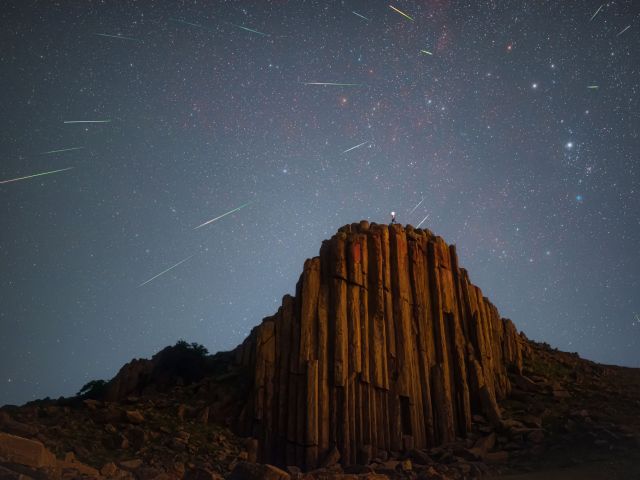
Perseids meteor shower
The Perseid meteor shower is about to pass Earth again. (Credit: Getty Images/bjdlzx)

The Perseid meteor shower is often dubbed the best of its kind. Characterised by its swift and bright meteors that are visible from both the northern and southern hemispheres, it’s one of the most highly anticipated celestial events around the world.

This natural light show has long been a favourite among astronomy enthusiasts, famed for the vibrant trains of light left in its wake and the dazzling fireballs that often accompany it. Not only can we Earth dwellers easily spot it with the naked eye, but we’re also able to make out different colours and sizes.

When will it be active?

The Perseids originate from comet 109P/Swift-Tuttle, which left a large trail of detritus as it cruised past us back in 1992. When Earth passes through this debris stream during its orbit around the sun, the cometary material collides with our atmosphere.
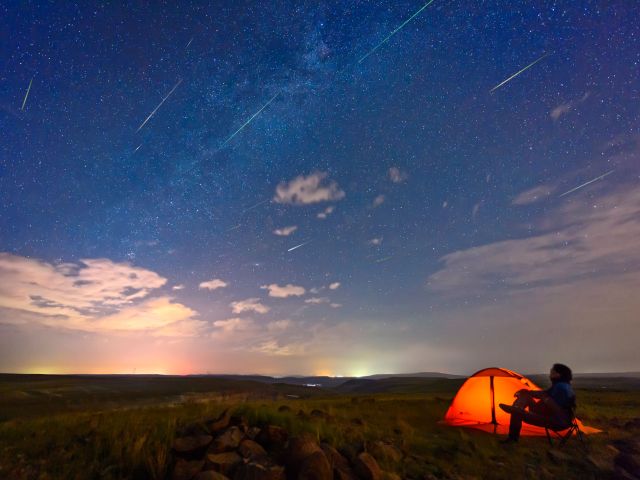
Perseids meteor shower
The celestial shower is visible to the naked eye. (Credit: Getty Images/bjdlzx)

Extreme speeds create air friction, and that, combined with atmospheric compression, causes the objects to heat up, break apart and burn out. That’s what we see during a meteor shower. Earth enters comet 109P/Swift-Tuttle’s debris trail once a year and takes around a month to fully clear it, so we’re treated to the show every year.

Need tips, more detail or itinerary ideas tailored to you? Ask AT.

AI Prompt

Where can I see it?

This year, the Perseids meteor shower is expected to peak overnight on 12–13 August. This is when Earth passes through the most concentrated part of the debris trail, resulting in the most meteor activity.

Unfortunately for Aussies, the Perseids’ radiant point – the direction in which meteors appear from – is in the northern hemisphere. This means it sits very low on the northern horizon for countries like Australia, putting us at a visual disadvantage. However, if you’re in the right place at the right time, you can still catch a glimpse.
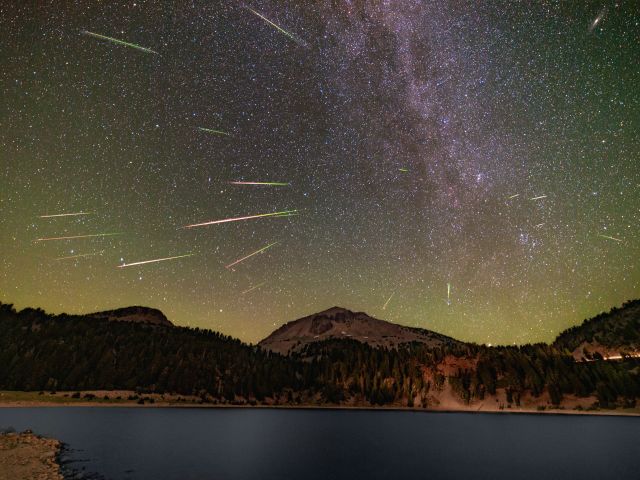
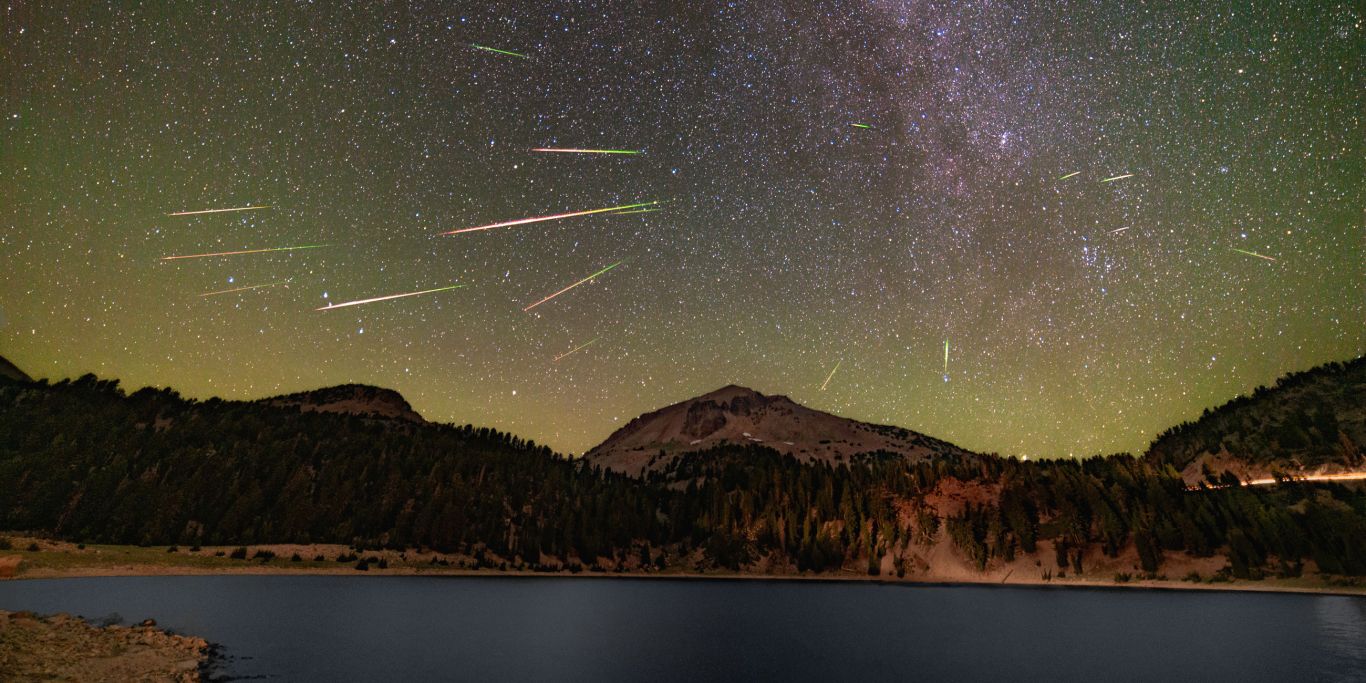
Perseids meteor shower
Low light pollution is key to the viewing experience. (Credit: Getty Images/Jerry Hamblen)

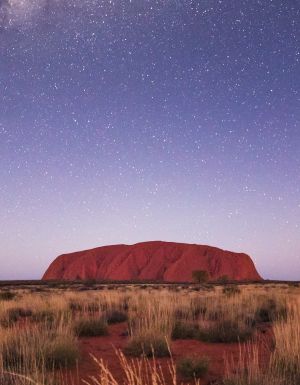
The further north you are, the better your chances of spotting them. In cities like Cairns, Darwin and Broome, celestial viewers should be able to spot a handful of meteors streaking through the sky overhead. To give yourself the best shot, head to one of Australia’s prime stargazing spots for darker skies and less light pollution.

Get the most out of your experience by heading outside roughly 30 minutes before peak viewing time, as it gives your eyes enough time to fully adjust to the darkness. While gear like binoculars and telescopes can certainly help, you don’t need them to enjoy the show – just bring a cosy blanket and a bit of patience.

Want to see more stories from Australian Traveller in your Google search results?

  1. Click here to set Australian Traveller as a preferred source.
  2. Tick the box next to "Australian Traveller". That's it.
Taylah Darnell
Taylah Darnell is Australian Traveller's Writer & Producer. She has been passionate about writing since she learnt to read, spending many hours either lost in the pages of books or attempting to write her own. This life-long love of words inspired her to study a Bachelor of Communication majoring in Creative Writing at the University of Technology Sydney, where she completed two editorial internships. She began her full-time career in publishing at Ocean Media before scoring her dream job with Australian Traveller. Now as Writer & Producer, Taylah passionately works across both digital platforms and print titles. When she's not wielding a red pen over magazine proofs, you can find Taylah among the aisles of a second-hand bookshop, following a good nature trail or cheering on her EPL team at 3am. While she's keen to check out places like Scotland and North America, her favourite place to explore will always be her homeland.
View profile and articles
hero media

This geological wonder is hiding in the heart of Victoria

    Michael Turtle Michael Turtle
    Mythical, historical and most of all, spectacularly beautiful, Buchan Caves demands you take your time – and a tour. 

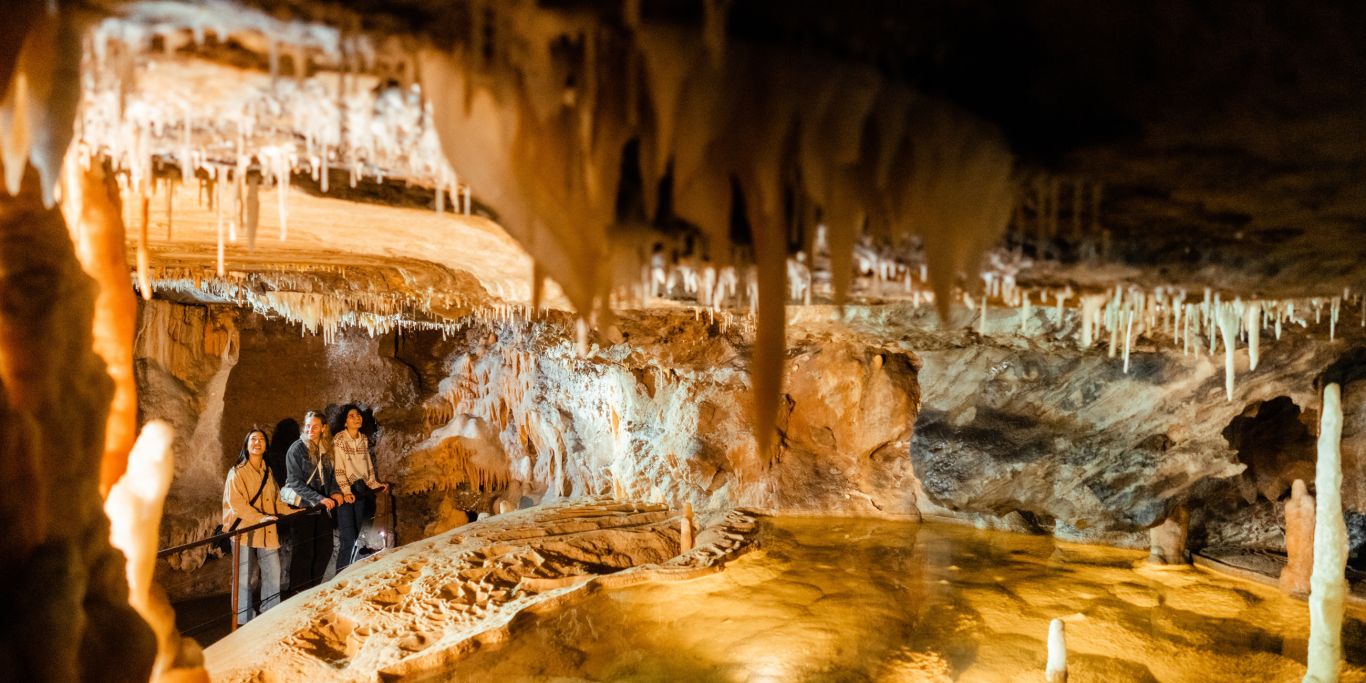
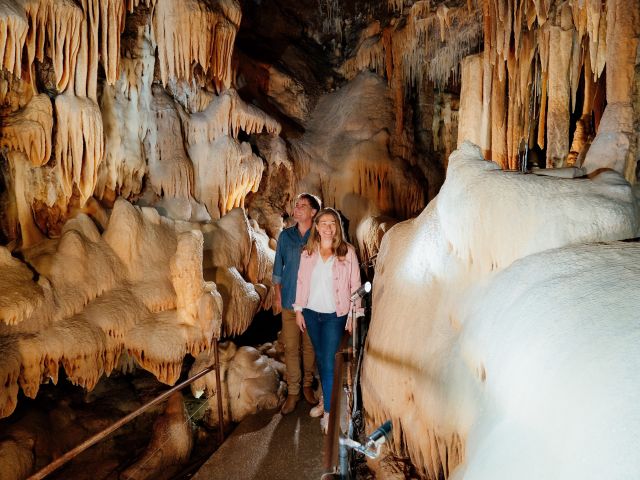
    In the pools of water, so still they could be mirrors, the reflections of the stalactites make these limestone towers seem even taller. Almost 400 million years ago, an underground river carved through the rock to create the Buchan Caves. Now, artworks created by dripping water adorn these subterranean galleries: stalactites hanging from the ceiling, pillars connecting some to the ground, even curtain-like wave formations clinging to the stone.

    Caves House
    Visit the caves for the day or stay onsite in the campground or at the self-contained Caves House. (Image: Ben Savage)

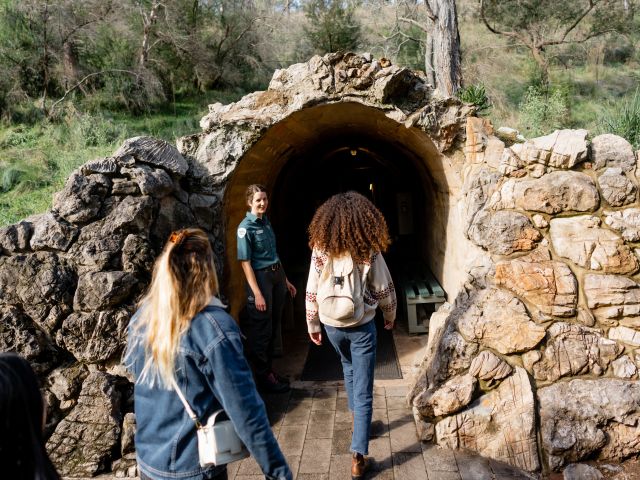
    “This is called the Fairy Cave because it’s full of fairy dust,” a guide tells visitors as they enter a cavern glittering with “calcite that’s solidified into thousands of tiny little diamond shapes”.  Buchan Caves is Victoria’s largest cave system, but Fairy Cave is a highlight and, along with nearby Royal Cave, is accessible only by tour. Naturally cold, naturally dark, these caverns deep below the surface light up as the local experts tell their stories. 

    couple walking in cave
    You’ll need to book a guided tour to see the caves. (Image: Tourism Australia)

    Among the hundreds of caves, some can be easily accessed from the surface. For instance, a casual stroll along the FJ Wilson Interpreted Walk, as kangaroos watch on from beneath acacia trees, leads into the 400-metre-long Federal Cave and its natural steps of white limestone. A slightly longer track, the Granite Pools Walk heads through soaring forest down into moss-covered gullies where the calls of lyrebirds trill through the leaves. 

    A quick history lesson on Buchan Caves 

    Buchan Caves
    Buchan Caves are a must-visit attraction in Gippsland. (Image: Tourism Australia)

    Among the geology and the nature are millennia of history. This part of East Gippsland connects the high country to the coast and was long a place of refuge for the local Gunaikurnai people on seasonal migrations to the mountains. Archaeological studies show humans lived here up to 18,000 years ago, with artefacts such as small stone tools found around the site. But not too far into the caverns – oh no! The Gunaikurnai didn’t dare venture deep into the dark at Buchan Caves, telling stories they were inhabited by gnome-like nyols (small grey-skinned creatures that could steal memories). 

    Buchan Caves Hotel
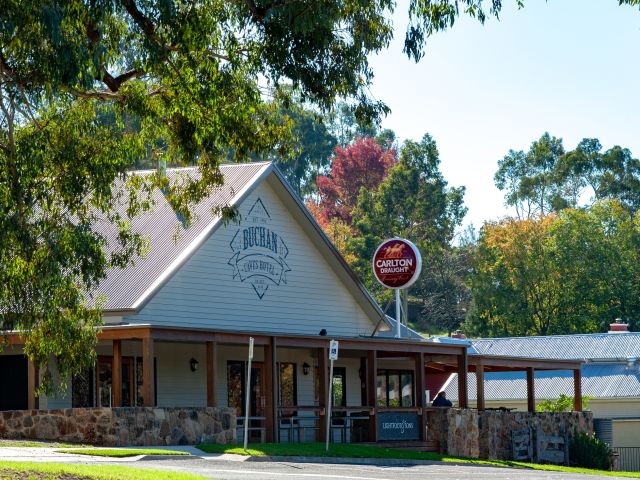
    The Buchan Caves Hotel was rebuilt after burning down in 2014. (Image: Jess Shapiro)

    By the early 1900s, more people had started to hear about these incredible caves and so the Moon family set up home at the site and started to run tours below ground for intrepid visitors. More than a century later, their historic residence is available as accommodation, with the three-bedroom house sleeping up to eight people and now equipped with modern amenities the Moons could only have dreamt of. 

    But whether you stay overnight or just spend the day here, it’s worth taking your time to explore more than just the main caves, to get a deeper understanding of one of Victoria’s fascinating geological attractions.