Mythical, historical and most of all, spectacularly beautiful, Buchan Caves demands you take your time – and a tour.
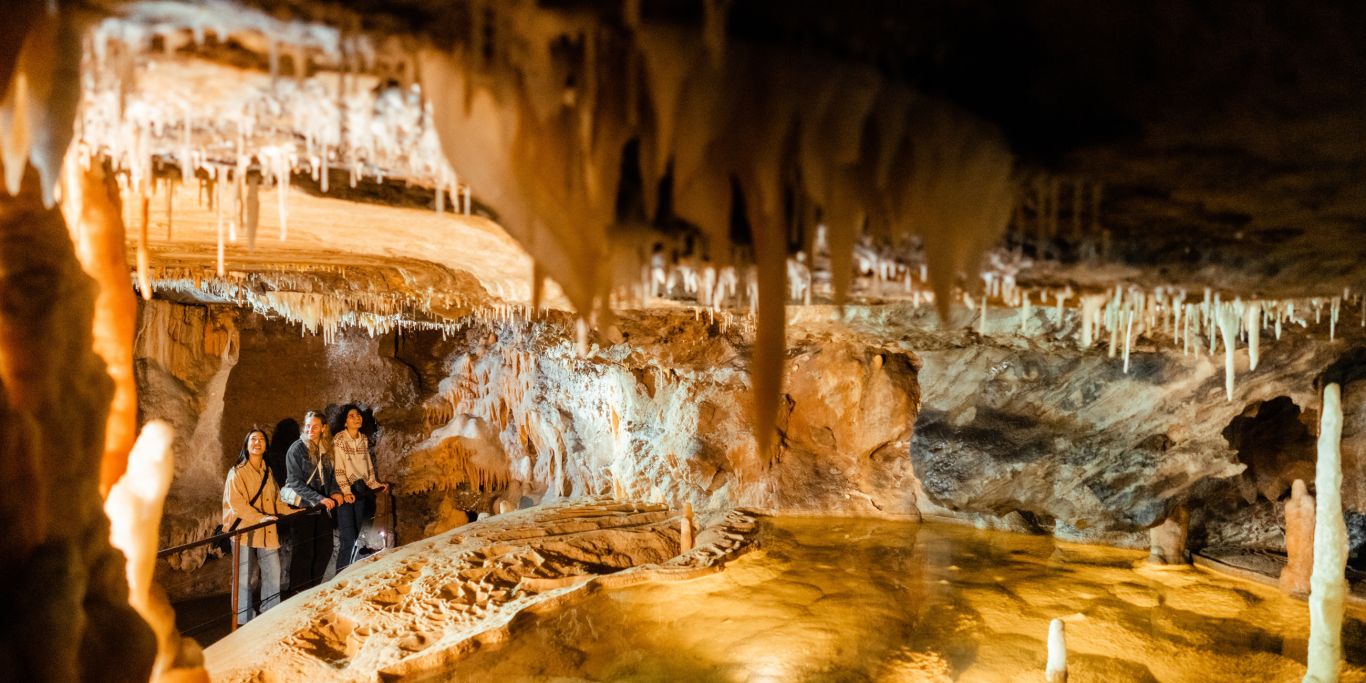
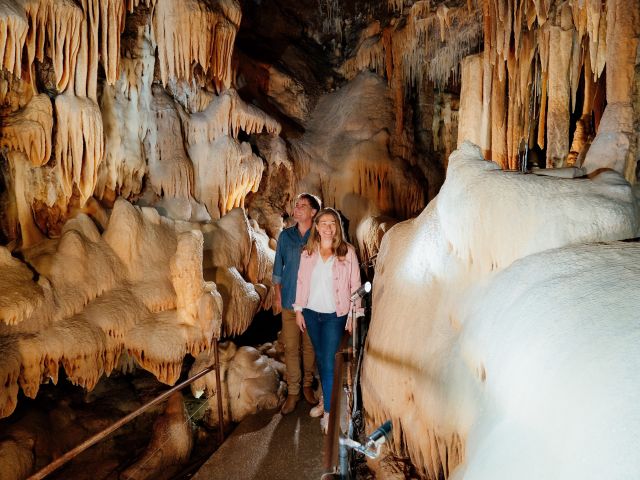
In the pools of water, so still they could be mirrors, the reflections of the stalactites make these limestone towers seem even taller. Almost 400 million years ago, an underground river carved through the rock to create the Buchan Caves. Now, artworks created by dripping water adorn these subterranean galleries: stalactites hanging from the ceiling, pillars connecting some to the ground, even curtain-like wave formations clinging to the stone.
Visit the caves for the day or stay onsite in the campground or at the self-contained Caves House. (Image: Ben Savage)
“This is called the Fairy Cave because it’s full of fairy dust," a guide tells visitors as they enter a cavern glittering with “calcite that’s solidified into thousands of tiny little diamond shapes". Buchan Caves is Victoria’s largest cave system, but Fairy Cave is a highlight and, along with nearby Royal Cave, is accessible only by tour. Naturally cold, naturally dark, these caverns deep below the surface light up as the local experts tell their stories.
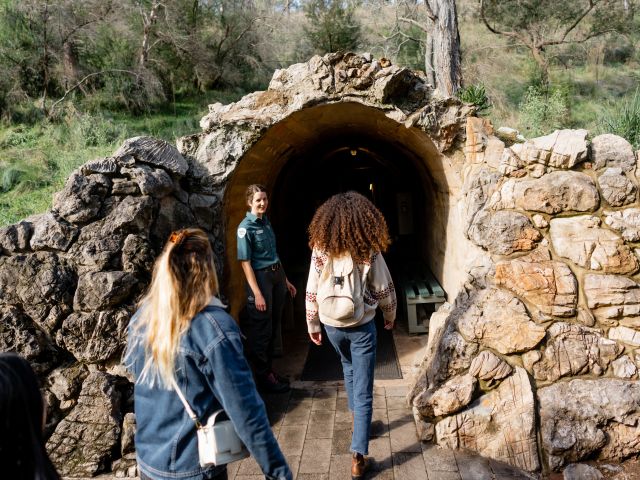
You’ll need to book a guided tour to see the caves. (Image: Tourism Australia)
Among the hundreds of caves, some can be easily accessed from the surface. For instance, a casual stroll along the FJ Wilson Interpreted Walk, as kangaroos watch on from beneath acacia trees, leads into the 400-metre-long Federal Cave and its natural steps of white limestone. A slightly longer track, the Granite Pools Walk heads through soaring forest down into moss-covered gullies where the calls of lyrebirds trill through the leaves.
A quick history lesson on Buchan Caves
Buchan Caves are a must-visit attraction in Gippsland. (Image: Tourism Australia)
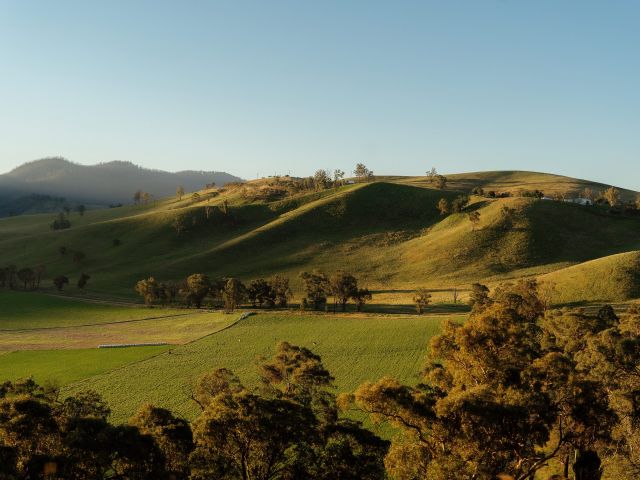
Among the geology and the nature are millennia of history. This part of East Gippsland connects the high country to the coast and was long a place of refuge for the local Gunaikurnai people on seasonal migrations to the mountains. Archaeological studies show humans lived here up to 18,000 years ago, with artefacts such as small stone tools found around the site. But not too far into the caverns – oh no! The Gunaikurnai didn’t dare venture deep into the dark at Buchan Caves, telling stories they were inhabited by gnome-like nyols (small grey-skinned creatures that could steal memories).
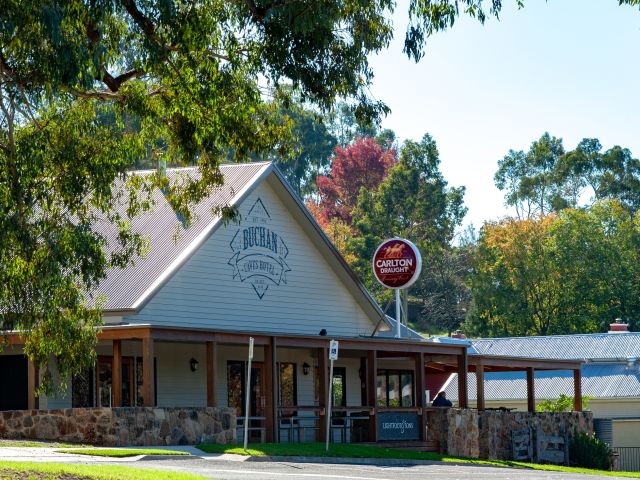
The Buchan Caves Hotel was rebuilt after burning down in 2014. (Image: Jess Shapiro)
By the early 1900s, more people had started to hear about these incredible caves and so the Moon family set up home at the site and started to run tours below ground for intrepid visitors. More than a century later, their historic residence is available as accommodation, with the three-bedroom house sleeping up to eight people and now equipped with modern amenities the Moons could only have dreamt of.
But whether you stay overnight or just spend the day here, it’s worth taking your time to explore more than just the main caves, to get a deeper understanding of one of Victoria’s fascinating geological attractions.
Want to see more stories from Australian Traveller in your Google search results?
Tick the box next to "Australian Traveller". That's it.
Michael Turtle left Australia in 2011 to explore the world – and ended up travelling nomadically as a blogger for almost a decade! A little pandemic brought him home, where he rediscovered his love of Australia and all its fascinating stories. Michael is just as happy sipping a shiraz at a vineyard as hiking in the Outback, but his special place is a sunrise walk along Sydney Harbour.
From cycling and comedy to boating and begonia appreciation, there’s an event in regional Victoria that’s sure to have you circling dates on your calendar.
1. Festival of Sails
The Melbourne to Geelong passage race will be held for its 183rd year. (Image: Salty Dingo)
When: 24–26 January Where: Melbourne and Geelong
This five-day regatta of sailing and onshore entertainment at Geelong’s waterfront includes Australia’s oldest sporting event, the Melbourne to Geelong passage race which, in 2026, will be held for its 183rd year. But you don’t have to be a yachtie, sailor or boat-enthusiast to enjoy the nautical excitement; there’s also a three-day line-up of entertainment, food and live music, including the anchoring of tall ships – ever a firm family favourite.
2. Cadel Evans Great Ocean Road Race
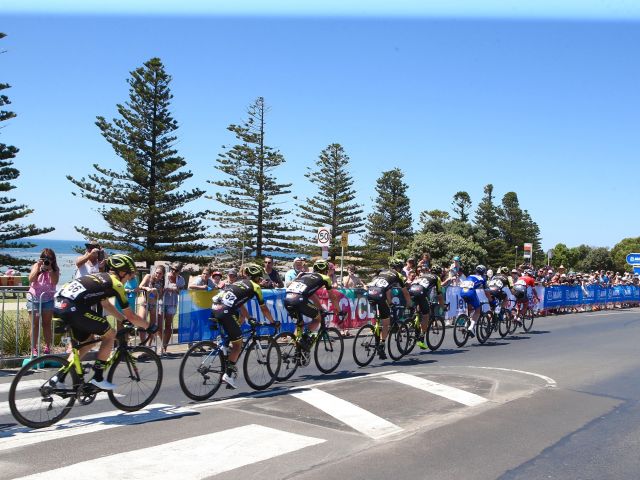
Catch the best cyclists as they wind through Victoria’s coastal towns. (Image: Visit Victoria)
When: 31 January – 1 February Where: The Bellarine Peninsula
Meandering (at pace) along the Bellarine Peninsula and the Surf Coast is this annual cycling event that welcomes everyone from families to serious athletes. Since its beginnings in 2015, the race has become a huge hit with spectators flocking along to cheer on Lycra-clad competitors. Starting and finishing in Geelong’s Velo Village, this is the hub of the non-race activity with food and drink, roaming performers, lawn games and face painting.
3. Riverboats Music Festival
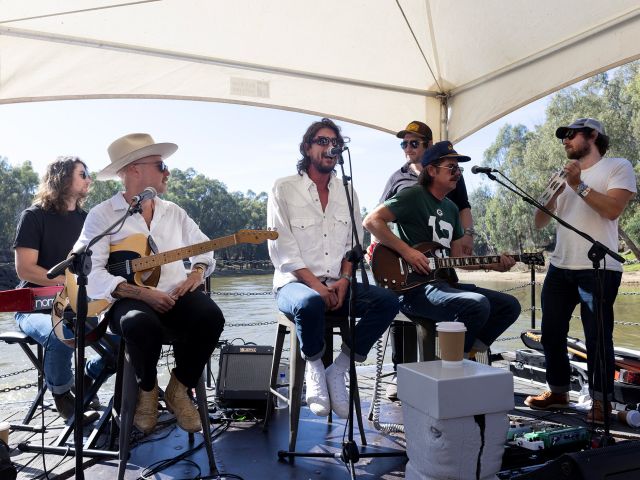
The annual music festival is staged under majestic red gums by the Murray River.
When: 13–15 February Where: Echuca–Moama
Get along to bop and sway under the canopy of red gums at this annual music festival. Hosted by the twin towns of Echuca–Moama, the stage is set for Murray River-adjacent revelling as historic paddlesteamers peacefully chug alongside the event. As well as music, there’s dancing, food trucks and plenty of atmosphere to absorb.
4. Neerim ArtsFest
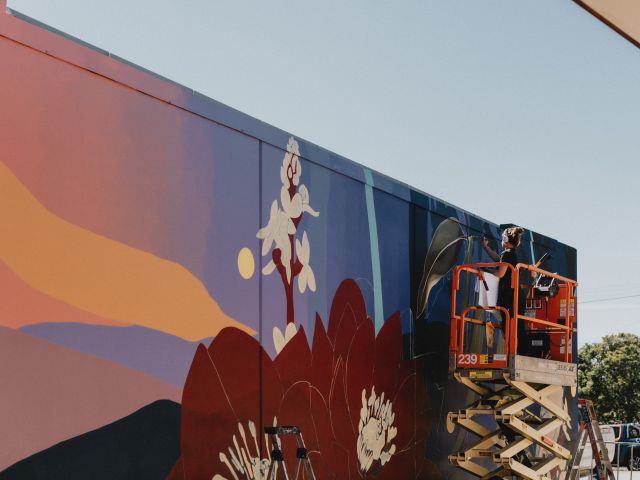
Admire stunning works at Neerim ArtsFest. (Image: Nicky Cawood)
When: 28 February – 15 March Where: Gippsland
This biennial Gippsland festival celebrates sculptural artists with an esteemed award in two categories, large outdoor and small indoor. The public is invited to enjoy the works over the exhibition period as they’re placed throughout Neerim South and surrounding venues. For 2026, the theme ‘The Spirit Soars’ leads artists to create stunning pieces that explore the expression of freedom in a thrilling visual capacity.
5. ChillOut Festival
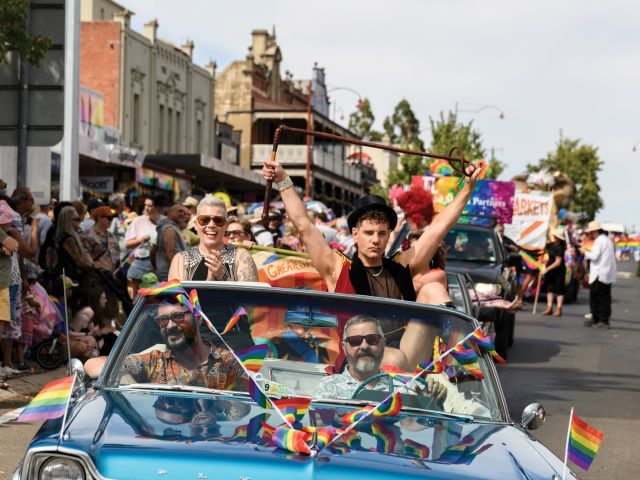
Think colourful street parades and burlesque performances.
When: 5–9 March Where: Daylesford
Pride in the country has been cheered on every March in Daylesford since 1997 with the riotous annual LGBTQIA+ ChillOut Festival. This colourful regional spectacle is an inclusive celebration of diversity that plays out across a vibrant parade, burlesque performances, a bush dance and a carnival. Get bedazzled, find a wig and stick on the false eyelashes for this fun party.
6. Port Fairy Folk Festival
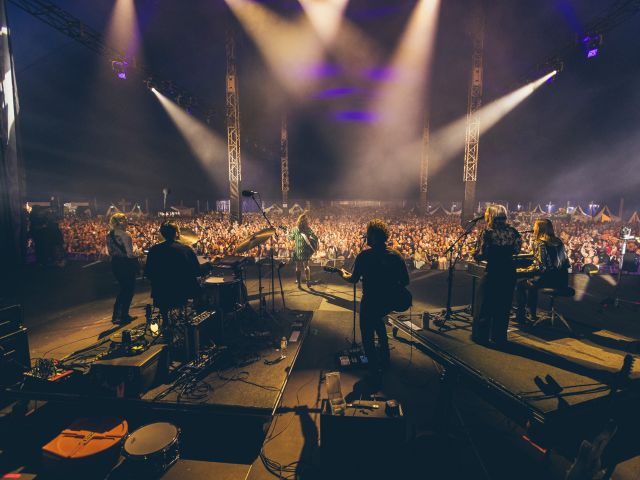
Celebrate folk music at the Port Fairy Folk Festival. (Image: Lucinda Goodwin)
When: 6–9 March Where: Port Fairy
In 2026, this beloved festival will be one year shy of its 50th anniversary. From folk fans to festival-lovers, this long-running event brings plenty of good vibes to guarantee an incredible experience. While music is at the heart of the festival, there’s also a range of workshops, exhibitions and family entertainment across dance, film and folk art. For its 49th year, the line-up so far includes Blair Dunlop, Elephant Sessions, and the musical duo Felicity Urquhart and Josh Cunningham.
7. The Ballarat Begonia Festival
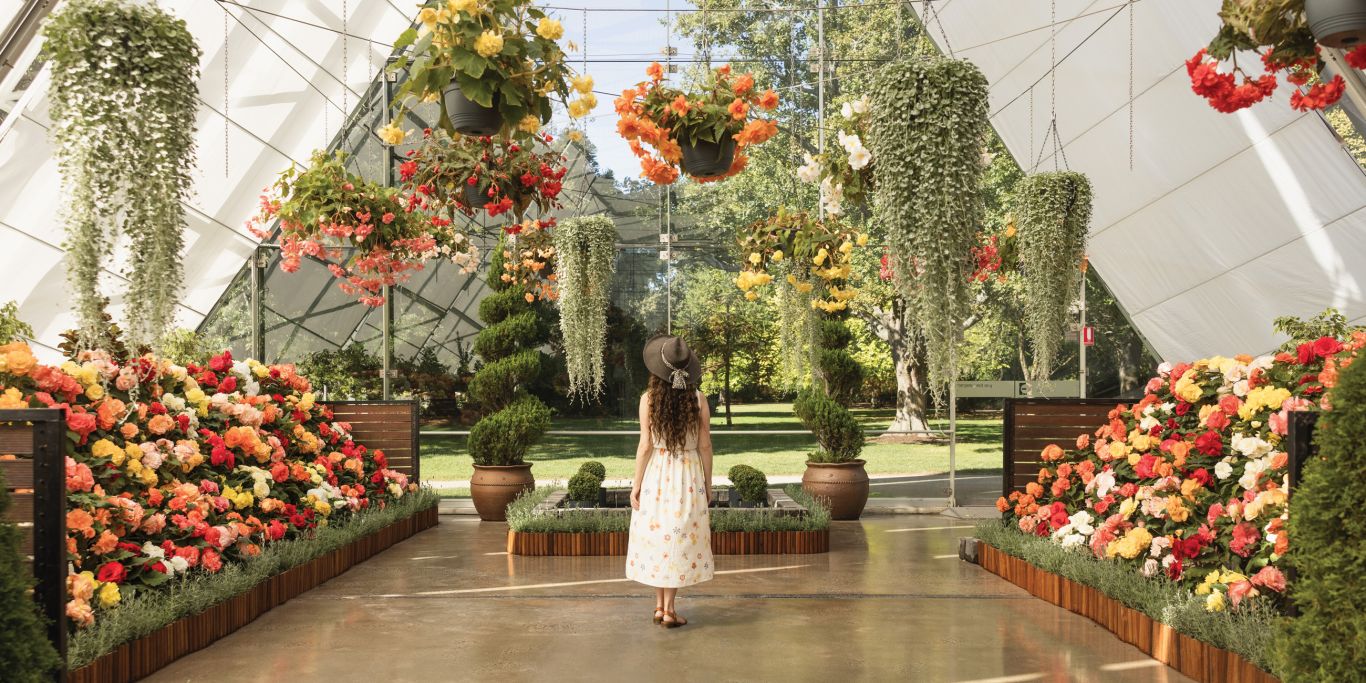
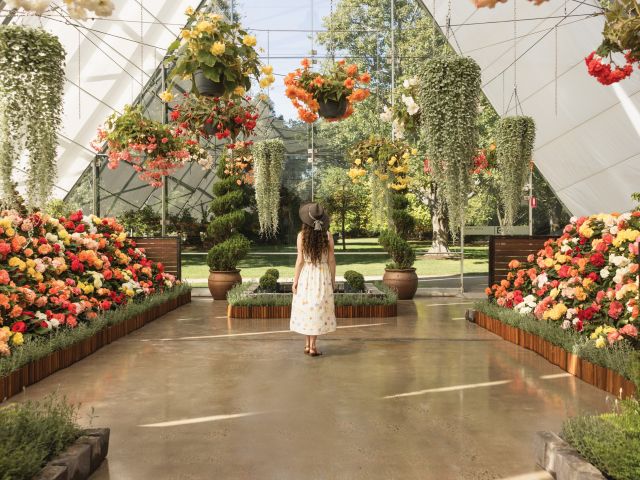
Gasp at delicate blooms at The Ballarat Begonia Festival.
When: 7–9 March Where: Ballarat
In bloom since 1953, this horticultural event places a collection of rare begonias at the centre of festivities, honouring the flower’s presence in Ballarat since the 1800s. During its history, the event has been visited by Queen Elizabeth II and, in 2015, it featured the launch of the largest outdoor Lego flower. Apart from a display of around 500 species of the flower of the moment, there’s also a begonia parade, entertainment, live music, food and presentations.
8. The Bendigo Easter Festival
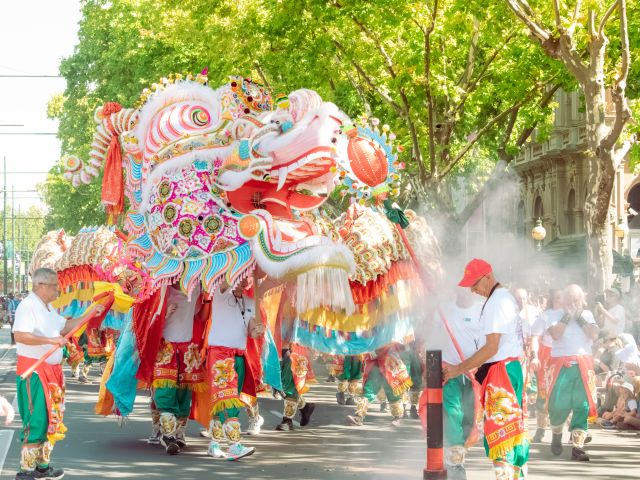
The majestic Chinese dragon Dai Gum Loong dance is an annual tradition at The Bendigo Easter Festival.
When: 3–6 April Where: Bendigo
Held in the city’s Rosalind Park, the annual Easter Festival has been a highlight of Bendigo’s calendar of events since 1871. A carnival of colourful activity, the festival welcomes everyone and rolls out the good times with everything from a Good Friday Easter egg hunt to live music and performances, a Rotary market and Gala Parade. Don’t miss the world’s longest imperial dragon rhythmically roaming the historic streets as part of the Easter Sunday festivities.
9. Grape Escape
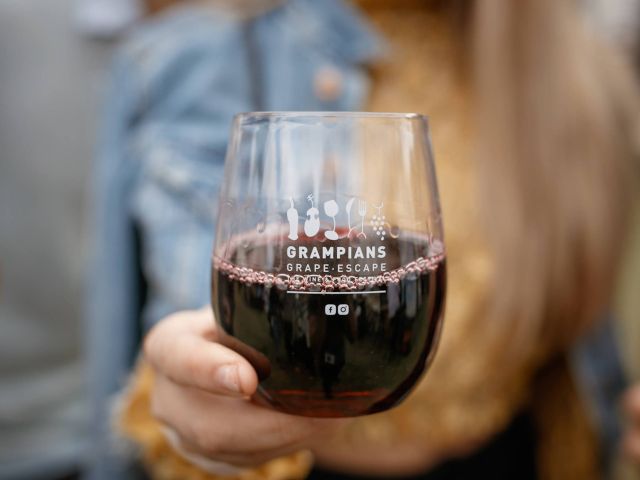
Enjoy a wine tasting experience. (Image: Anthony Evans Photography)
When: 1–3 May Where: The Grampians
Backdropped by gorgeous Grampians/Gariwerd National Park, this much-loved bacchanalian-inspired festival of food, wine and music is a high-priority for gourmands. Held at Halls Gap Reserve, a Tasting Ticket includes a tumbler that unlocks free wine, beer and cider tastings and, if you are partaking, there’s a shuttle bus to get you back to your digs afterwards. Be sure to book your accommodation early for this one – its popularity is undisputed.
10. Comedy in the Vines
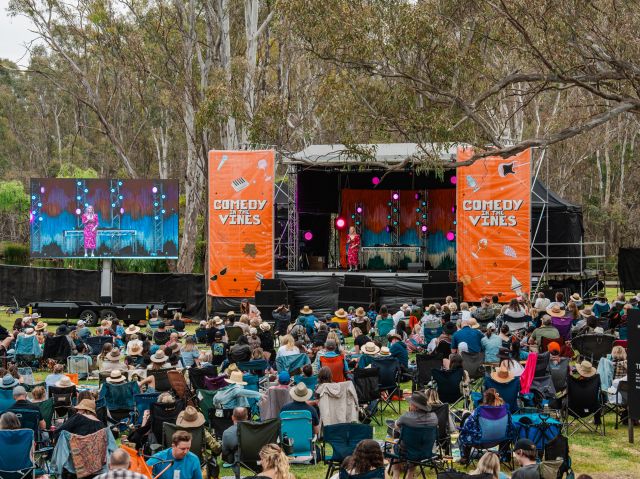
Get the good times rolling at Cherryhill Orchards. (Image: Saige Prime)
When: 24–26 October Where: Yarra Valley
The premise of Yarra Valley’s Comedy in the Vines, held at Cherryhill Orchards, is that wine and laughs pair well. Few arguments can be made, so get along this month (or next year), to have a giggle and a gamay. This year, taking the stage is the likes of Merrick Watts, Tommy Little, Ray O’Leary and Takashi Wakasugi. There are also masterclasses, a riesling and oyster shot bar, and plenty of food and music between gigs.