
This may just be the celestial event of the century.
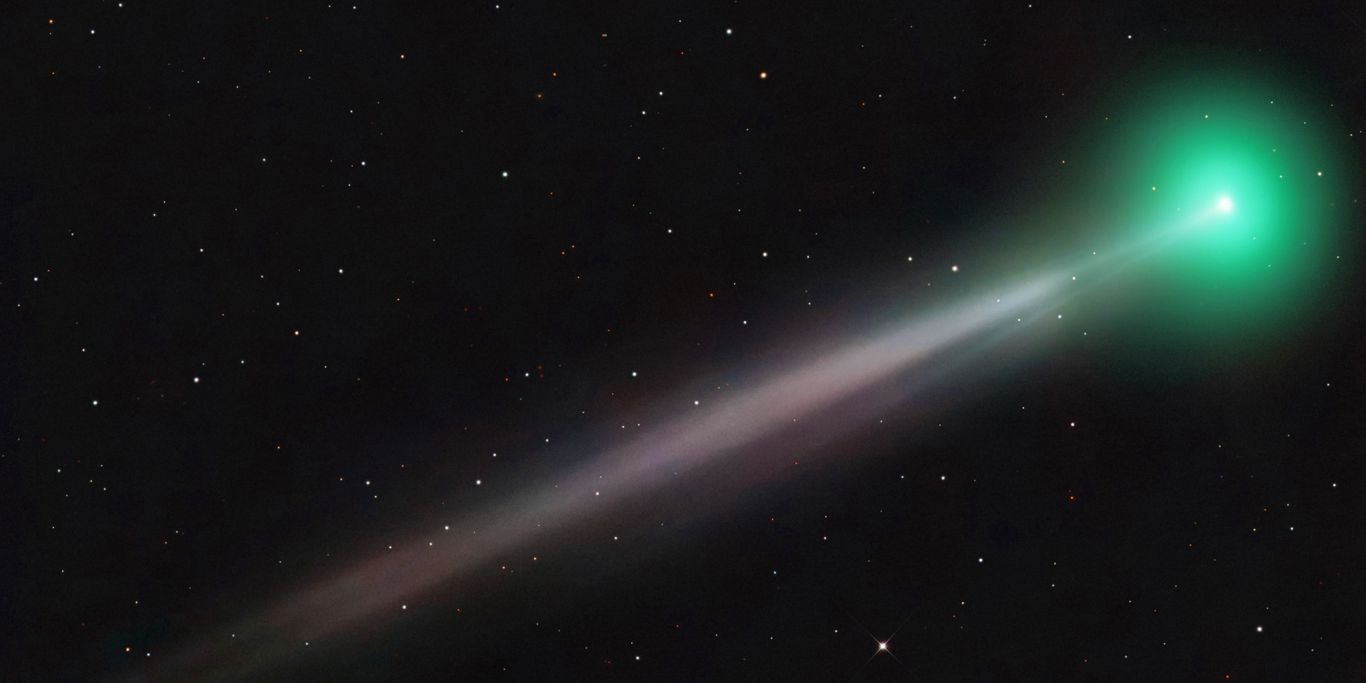
Look up into the night sky this October and you may just catch a rare celestial visitor. Known as C/2025 R2 (SWAN), it takes more than 600 years to pass Earth. In other words, this is the first and last time you’ll ever be able to see it.
What makes C/2025 R2 (SWAN) so special?
Identified on 11 September by an amateur astronomer in Ukraine, C/2025 R2 (SWAN) is a completely new visitor to our solar system. Vladimir Bezugly, from the central Ukrainian city of Dnipro, first spotted the comet when viewing images from SOHO (Solar and Heliospheric Observatory), a joint-project spacecraft between NASA and the ESA tasked with observing the sun.
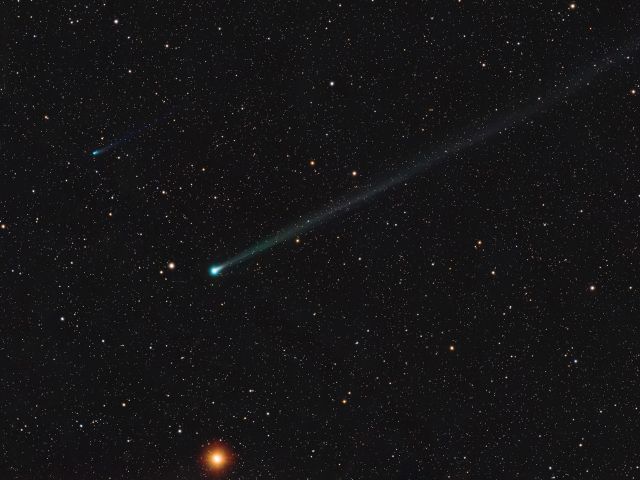
C/2025 R2 (SWAN) seemingly appeared out of nowhere, a “bright blob" moving close to the sun. It’s not only one of the brightest findings ever made via SOHO, but also happens to be one of the newest comet discoveries in the world. Characterised by its gorgeous green glow and exceptionally long tail (the stream of gas and dust left in its wake), it’s a true sight to behold – and you’ve got one opportunity to catch it.
Experts have been working hard to learn more about the object, which has been classified as a long-period comet with an orbital cycle of over 600 years. For context, Earth’s orbital cycle is just one year, meaning that’s how long it takes us to complete one full lap around the sun. So if C/2025 R2 (SWAN) is about to pass Earth, it won’t be back until 2625.
What’s the likelihood of seeing it in Australia?
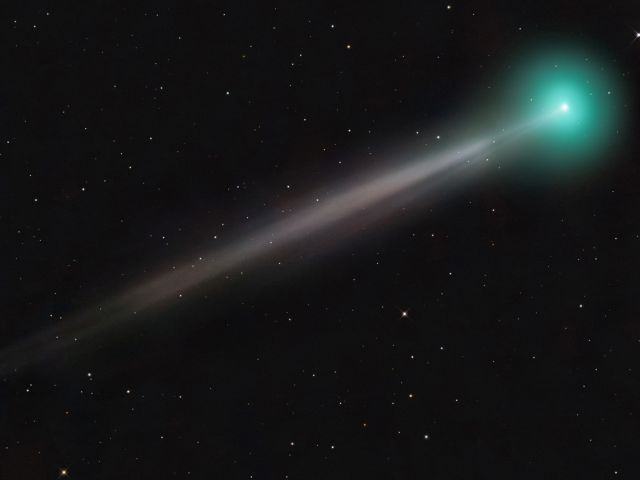
At its most recent, C/2025 R2 (SWAN) clocked a magnitude of +7 (magnitude being the scale astronomers use to measure the brightness of celestial objects). The lower the number, the brighter the object, with +6.5 considered the limit for naked-eye visibility under a non-polluted sky.
While C/2025 R2 (SWAN)’s rating is relatively low compared to others of its kind – Halley’s Comet sat at +2.1 and 96P/Machholz at +2.2 when they last passed Earth – it doesn’t mean you won’t see it. Our interstellar guest is estimated to pass through around mid-October, approximately 40 million kilometres away. For us Earth-dwelling folk, that sounds quite far. But in space talk, it’s quite the opposite!
Need tips, more detail or itinerary ideas tailored to you? Ask AT.
AI Prompt
Hot tips for comet chasers
While a celestial sighting can never be guaranteed, there are definitely ways to improve your chances. One of the easiest ways is simply finding a patch of sky as far-removed from the big smoke as you can get. Light pollution significantly decreases the likelihood of catching an astronomical event, because it’s artificial, it washes out fainter light, reducing the overall contrast of the sky and preventing the human eye from fully adjusting to the dark.
That’s why places like the outback, national parks and other areas are among Australia’s best stargazing spots – they’re isolated by design. Or head to Kestrel Nest EcoHut in NSW, the first official International DarkSky Approved Lodge in Australia.
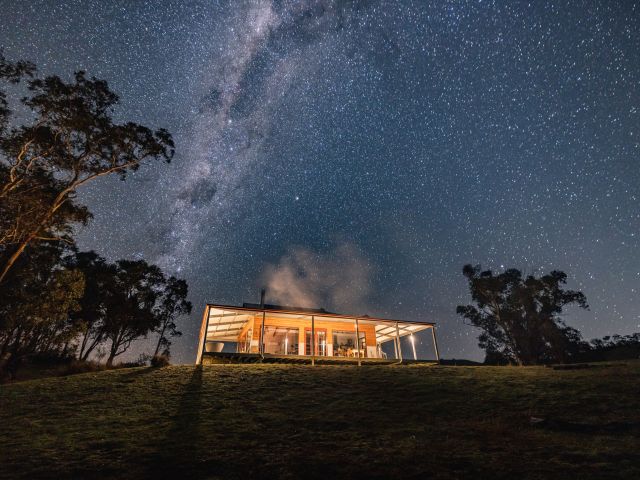
Be sure to pack a good pair of binoculars, too. For those who take the sport a little more seriously, opting for a telescope is your best bet. You’ll also want to bring a camp chair, bug spray, blankets, snacks and a red-light lamp. If you’re determined to catch the show, you may be waiting for a while, so these items will not only keep you comfy but also allow you to stay out later and for longer.
Aussies usually aren’t too lucky when it comes to catching comets, but it seems the odds are in our favour this time. Right now, C/2025 R2 (SWAN) has primarily been visible from the southern hemisphere. Currently tracking further from the sun and closer to Earth, it will reach perigee (its closest point to our planet) on 21 October. C/2025 R2 (SWAN) will then continue on its centuries-long orbit, making this a truly once-in-a-lifetime experience.
You can stay up to date with C/2025 R2 (SWAN)’s movements via The Sky Live .