Celebrating its 95th anniversary with the launch of a Gold Premium travel style, The Ghan’s new look connects to the landscapes it journeys through, bringing transcontinental train travel into the modern era while paying tribute to its history. We explore the evolution of an icon.
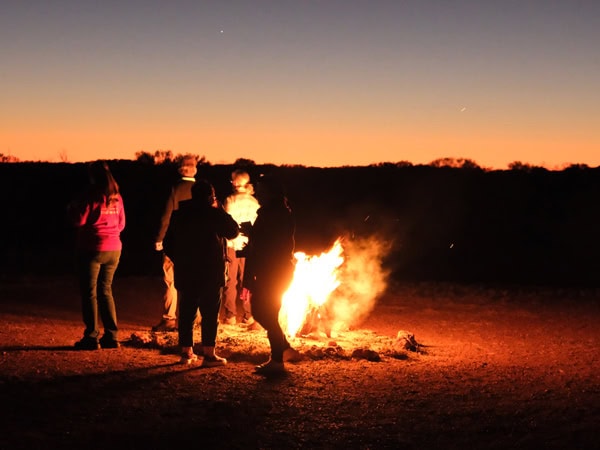
We step off the train and into the dark. The desert night is still as we make a beeline towards the bonfire glowing like a beacon in the near distance. Flames lick the cool air as fellow travellers gather round, hot coffee and bacon and egg roll in hand. A sense of anticipation settles as a streak of orange smoulders on the horizon. It burns brighter and the sky shifts from inky dark to a kaleidoscope of colours: green, yellow, pink, lilac.
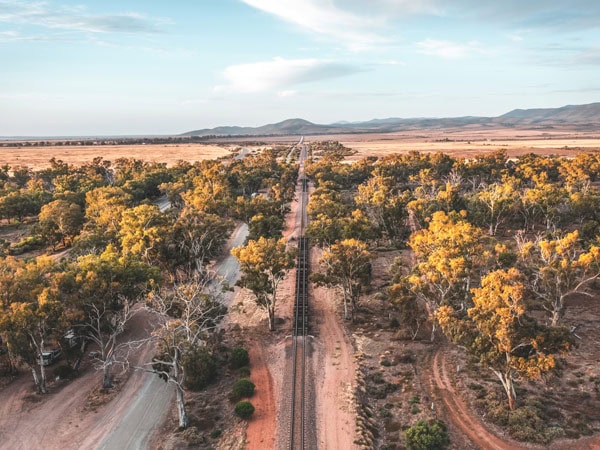
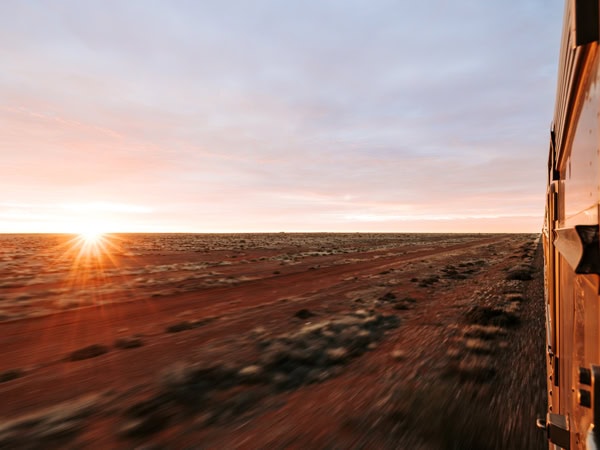
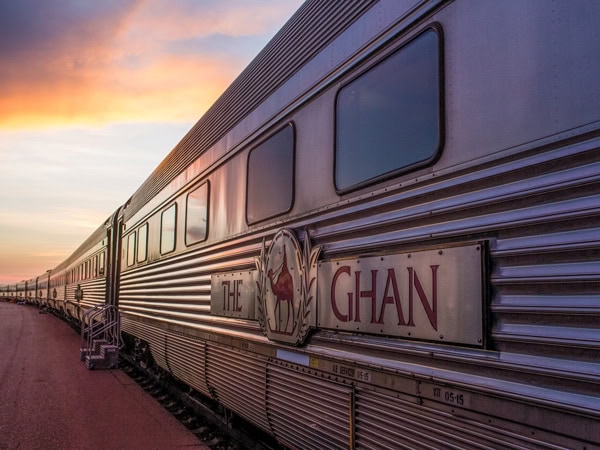
We gaze outwards and wait for the moment the sun springs up above the silhouetted mulga scrub to mark a brand-new day. And it paints in the details of the scene around us: an old middle-of-nowhere railway siding in the South Australian outback marked only by a single tin shed and a sign, Marla. A gleaming silver train livery, bearing that unmistakable camel insignia.
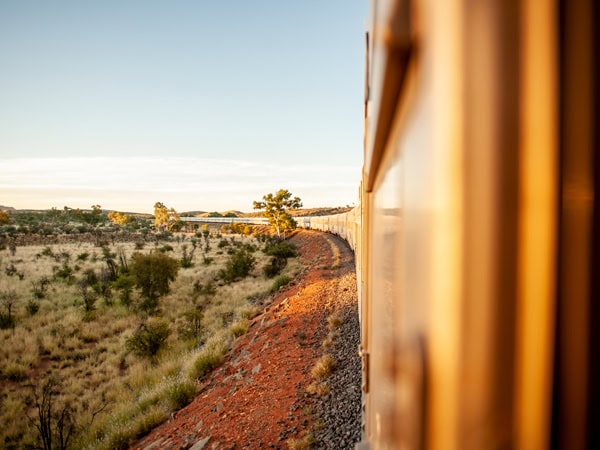
It’s our first morning onboard The Ghan when we alight at Marla for this unique outback experience, some 1000 kilometres into the journey and closer to Alice Springs/Mparntwe than our departure point, Adelaide. By sunset the next day we will arrive in Darwin, having travelled 2979 kilometres on Australia’s most legendary railway journey.
But for now, we clamber back onboard and – for a couple of hours while the sun continues to rise in the sky – back into bed. We cross the South Australia/Northern Territory border at 10:06am before heading to the dining carriage for brunch. Outside the window, the country’s interior unspools before us.
A storied history
The Ghan turns 95 this year. On 4 August 1929, the train – then called The Afghan Express – left Adelaide Railway Station. It was farewelled by an excited crowd and headed north along the route of a permanent trail into the Red Centre blazed by the so-called Afghan cameleers more than 150 years ago (these cameleers, brought here in the 1860s to help explore inland Australia, were in fact from several places, including Afghanistan, Kashmir, Persia and the Punjab).
Loaded with 100 passengers and supplies, the steam-hauled train arrived two days later in the remote town of Stuart, later named Alice Springs. And while it was always the plan to connect on to Darwin, it wasn’t until 20 years ago that the last section of rail was finally completed.
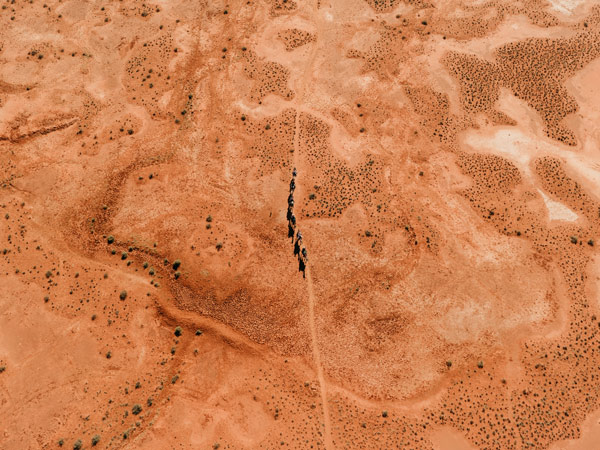
In the near-century since its inaugural journey, The Ghan has served different functions. During the Second World War, it transported servicemen for training and deployment and during the 1960s and ’70s, its transportation of supplies played a crucial role in helping to grow major industries such as agriculture, transport and mining.
Its later connection to Darwin helped herald a new era of tourism for the Northern Territory. And when flying became cheaper and more convenient, The Ghan needed to reinvent itself again and emerged as the luxury tourism experience we know today. But while these days you can relax into the journey in comfort while nursing a barista-made flat white, it still embodies a frontier spirit that keeps it high on the bucket list of most Australians. And it is still evolving.
Evolution of an icon
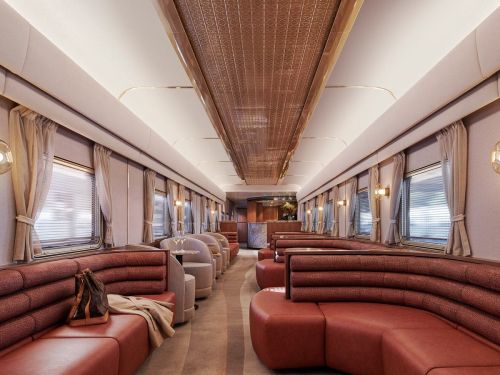
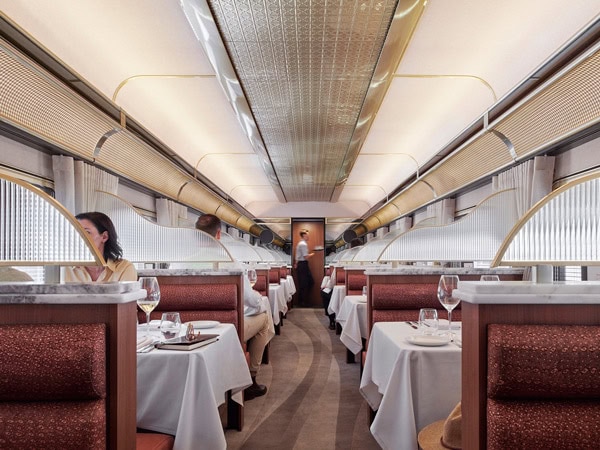
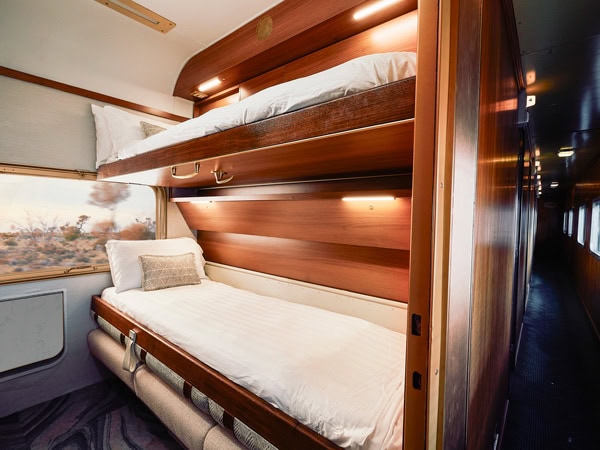
The Ghan has had a makeover in time for its 95th birthday in the form of a Gold Premium service level to complement its existing Gold and Platinum suites and carriages. Passengers travelling in Gold Premium sleep in redesigned contemporary cabins and commune in new-look lounge and restaurant carriages. The feel is cool and contemporary quiet luxury with Art Deco leanings in tribute to The Ghan’s original 1930s carriages.
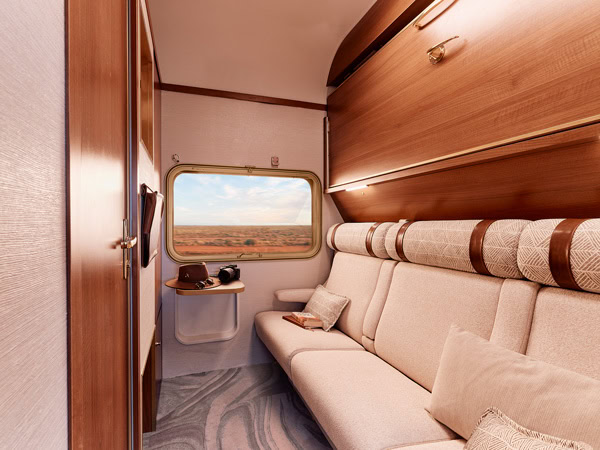
Its colour palette – earthy tones of terracotta, walnut timber and stone, elevated with touches such as gold-plated light fittings and polished brass – is drawn from the landscapes we’re travelling through.
Home-grown architecture studio Woods Bagot was briefed to bring the carriages into the modern era while introducing a sense of place to the interior spaces. Respecting the legacy and historical narrative of Australia’s most iconic railway while restoring the glamour of transcontinental rail travel for a new era was key for the design team.
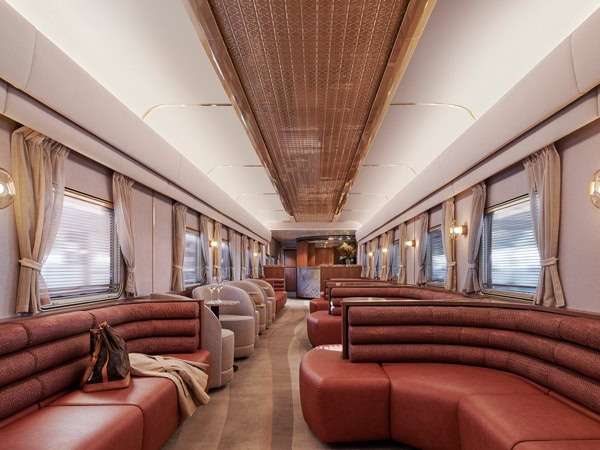
“The carriages convey the beauty and romance long associated with slow travel, with a design response that is deeply contextual to the history and topography of Australia," says Woods Bagot principal, Rosina Di Maria.
It’s a sustainable design. Where possible, existing features – such as joinery, furniture and materials – have been restored and renewed and natural materials including real stone surfaces and woollen carpets have been employed to reduce the presence of synthetic materials and chemicals. Woods Bagot has also championed local makers and manufacturers.
Original seats have been reupholstered courtesy of Willie Weston, a profit-for-purpose business based in Melbourne that works with First Nations artists to create fabrics and wallpapers; the print chosen for the dining and lounge carriages, Terra by Kathleen Korda of Durrmu Arts in the Top End, creates the foundation of Gold Premium’s earthy palette in its clay tones. And you can’t miss the pièce de résistance: a recreation of the historic pressed-metal ceiling from the first Queen Adelaide dining car, by the artisans – Adelaide Pressed Metals – who crafted the original.
The layered and textural design is understated and pared back. Ultimately, it’s about letting the landscapes sing. “We wanted to honour what was outside of the train, without being too ostentatious inside the train, and create a harmonious connection to landscape," says project leader Bonnie Hamilton. “The most amazing thing is just being able to see the ever-changing landscape. We wanted to enhance that experience by designing a beautiful space for guests to do so."
Need tips, more detail or itinerary ideas tailored to you? Ask AT.
AI Prompt
Drawn from the landscape
The Gold Premium colour palette is plucked from Australia’s environment and heritage, referencing the lands the train traverses and the people of those places. Inspired by First Nations landscape artist Albert Namatjira, the interior palette responds to Namatjira’s works, from the silvers of majestic ghost gums to the terracotta tones of the red earth.
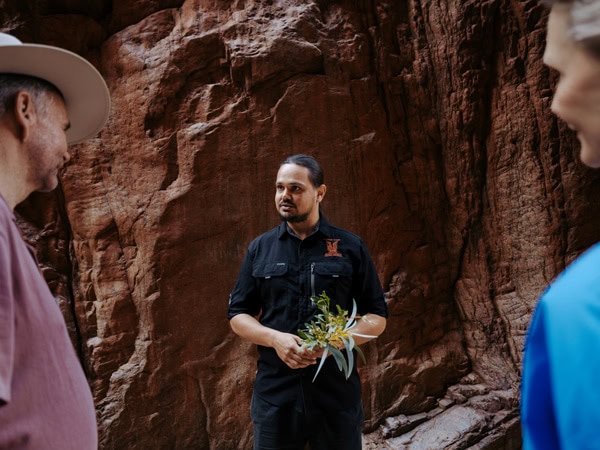
By early afternoon on our second day, we’re pulling into Alice Springs. My partner and I opt for the Simpsons Gap Discovery Walk to stretch our legs and take in some of the majestic landscapes of West MacDonnell Ranges/Tjoritja.
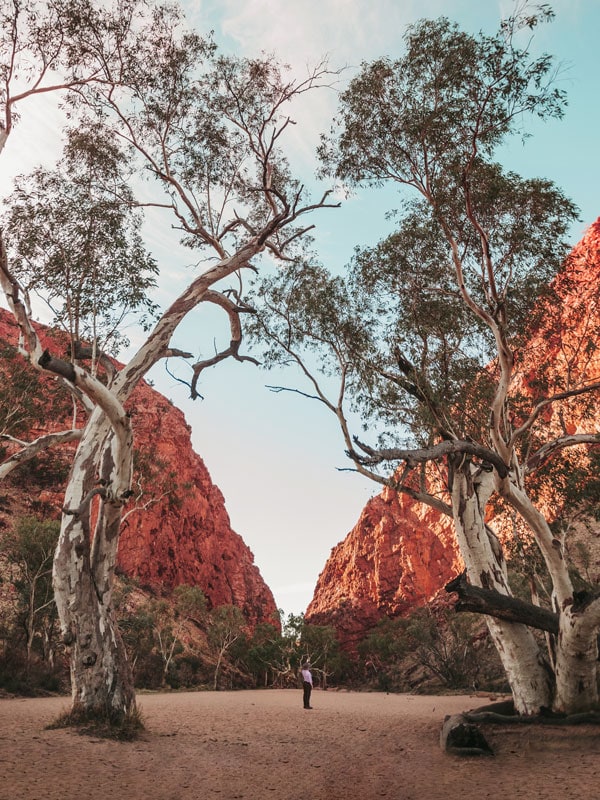
“This is Namatjira Country", says our guide as our group stands at the top of Cassia Hill with a 360-degree view of the surrounding landscape, with its rugged red ridgelines and grey-green scrub.
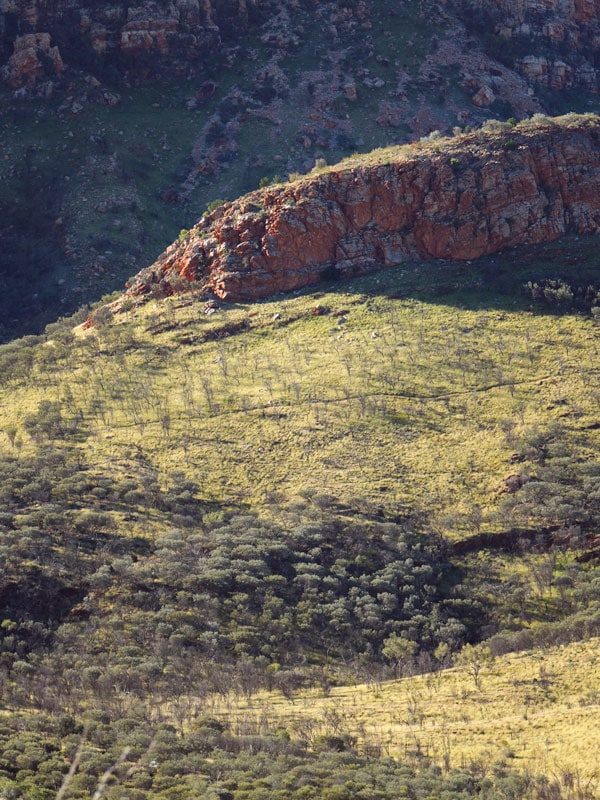
The homelands of the artist lie some 100 kilometres west of here near Hermannsburg/Ntaria. We find ourselves in a panoramic painting. After a walk into Simpsons Gap/Rungutjirpa, we head back to the train in time to watch the sun set through the window over a pre-dinner drink and mingle with other guests in this communal gathering spot.
The journey of the day onboard was as much a part of the design. “The experience varies throughout the day, so your morning experience is going to be different to your night experience," says Hamilton. “And so it was about creating a space that really held passengers, and throughout each of those timeframes too, and made each of those experiences just as beautiful as the next."
Menu inspiration
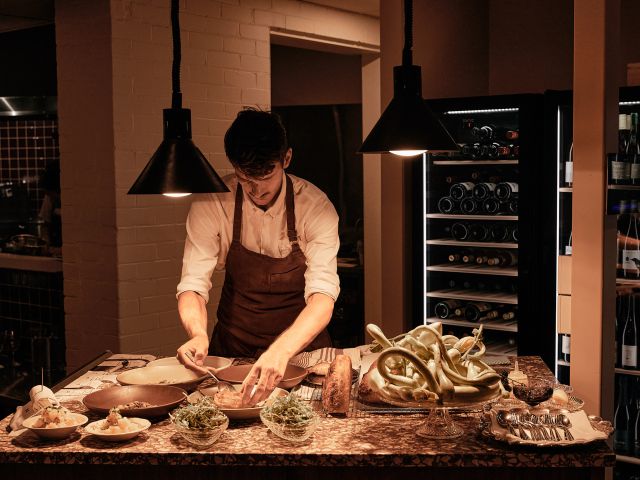
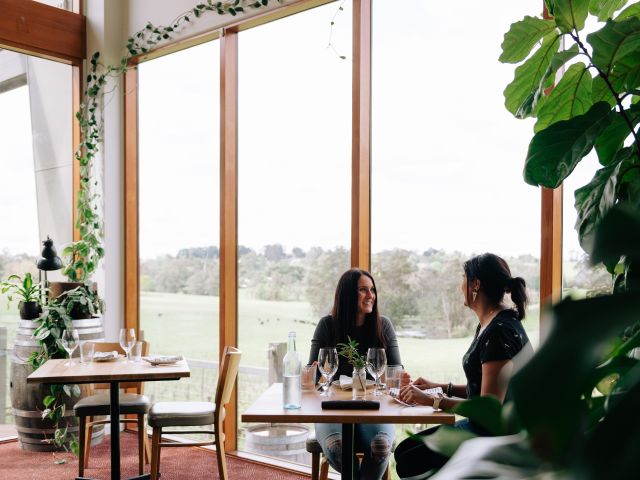
Mealtimes prove the touchpoints of the journey and another way to draw from the landscape. Menus onboard reflect The Ghan’s promise to deliver guests experiences that are ‘of the place’, says Matthew Snare, food and beverage manager for Journey Beyond, the experiential tourism company that operates The Ghan.
Having spent 10 years honing his craft with Neil Perry at Rockpool before a stint at Qantas, Snare’s background is in research and development. For him, a map of Australia is a palette to work from across all the train journeys in his purview – Indian Pacific, the Great Southern as well as The Ghan – and he is passionate about working with producers all over the country. “Like all of our trains, our menus are inspired by local produce and cultures."
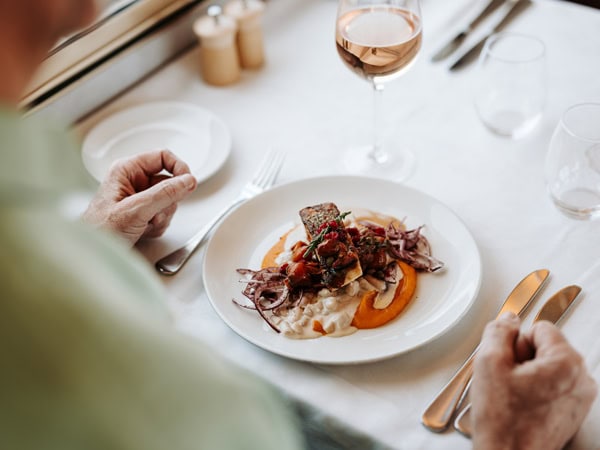
Unique ingredients from the regions the trains travel through are the starting point for Snare’s menus. “Incorporating Australian native ingredients adds texture and interest and also a unique accent as they are used in menus close to the traditional growing regions," he says.
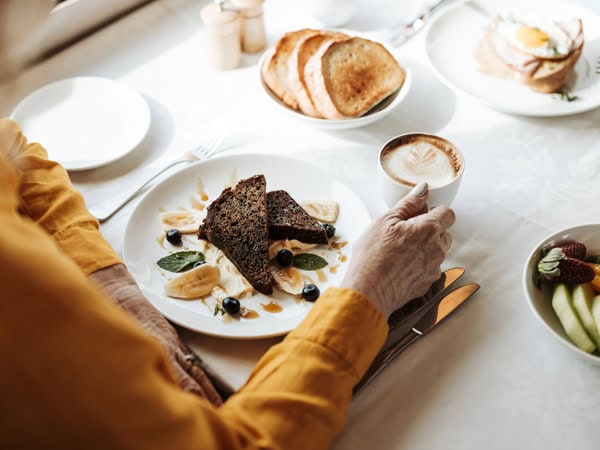
Menus are refreshed frequently, incorporating new or seasonal flavours and ingredients as presented to him throughout the year by suppliers. Gold Premium menus were thoughtfully developed in line with the launch of the beautifully refurbished carriages, complemented by premium Australian wines and beverages. Future menu design will explore the health benefits of various native fruits and herbs.
The Ghan travels between Adelaide and Darwin and draws on seafood from the southern waters, such as Spencer Gulf prawns and Coorong mulloway as well as South Australian legumes from the Yorke Peninsula and fresh produce from the Adelaide Plains.
“As we journey past Alice Springs into the sub tropics of the Northern Territory, the menus evolve reflecting that region," says Snare. “Menus will include Humpty Doo saltwater barramundi, crocodile, buffalo braised in a delicious Massaman Thai curry and Katherine mangos. The heat from this region calls for more refreshing, lighter menu offerings on train."
Weekly travel news, experiences
insider tips, offers, and more.
Connection to Country
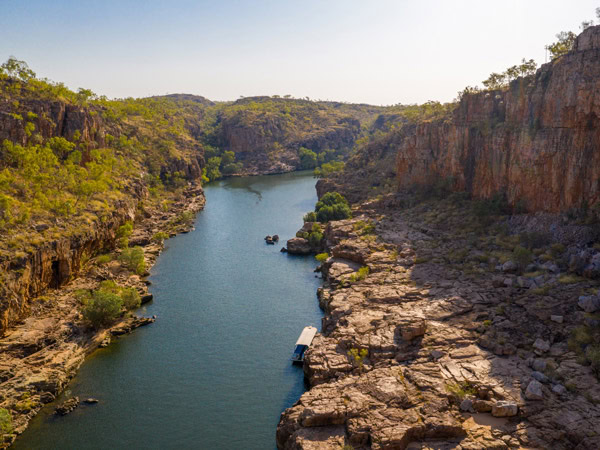
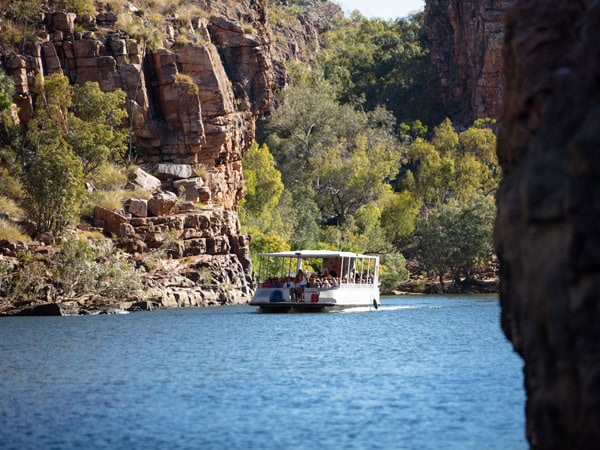
On our third day, we feel that heat as we unfurl from the train for our final excursion. We stop at Katherine, in the Northern Territory’s Top End, and sign up for a cruise of Nitmiluk Gorge. The gorge is the jewel in the crown of Nitmiluk National Park. Here, tourism ventures are operated by the Jawoyn people, who are united by a vision to develop economic independence, care for Country and share it with visitors.
We cruise through Nitmiluk’s first two gorges: rocky sandstone cliff faces towering over us, river pandanus dipping its fronds into turquoise waters not yet given the green light for swimming after the wet season and risk of migrating salties. It’s our first taste of the tropics.
We roll into Darwin, Australia’s northernmost capital, just a few hours later. It’s the end of an epic transcontinental journey that has taken us through the heart of Australia and connected us to history and the landscape around us across multiple touchpoints.
Next on the horizon, the Gold Premium design is set to be rolled out across the other trains – the Great Southern for its 2024/25 summer season and the Indian Pacific in 2025. The Ghan and its sister trains are an integral part of Australia’s tourism story, and the new design contributes to this sense of place and connection forged for guests throughout the journey “in a more intimate form than just flying over it", says Di Maria.
“We looked at the legacy of The Ghan and made sure that we were bringing in the fold of this layering: of legacy, romanticism, connection to Country and the future of what rail travel is," says Hamilton. “It’s about attracting a wider demographic to rail travel as well, and breathing in new life."
A traveller’s checklist
The Ghan travels in both directions between Adelaide/Tarndanya and Darwin/Gulumerrdgen on an all-inclusive two-night journey. Choose from a variety of Off Train Experiences available in Alice Springs/Mparntwe and Katherine. Gold Premium packages start from $3895 twin share.
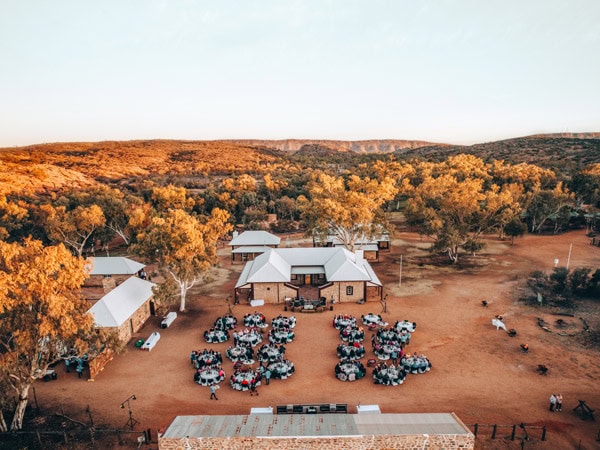
The Ghan Expedition travels between Darwin and Adelaide over three nights and includes Off Train Experiences in Katherine, Alice Springs, Coober Pedy and Manguri, plus dinner under the stars at historic Alice Springs Telegraph Station. Gold Premium packages start from $5095 twin share.
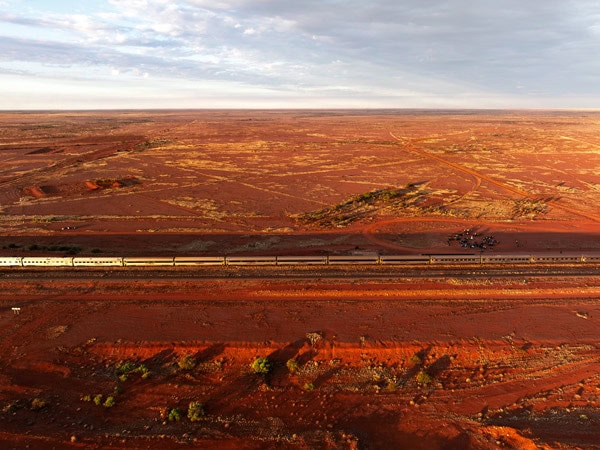
Shorter one-night itineraries between Alice Springs and Darwin/Alice Springs and Adelaide are also available. Extend your journey with a holiday package. The 2025 season includes the Red Centre Spectacular, which combines a trip onboard The Ghan with a seven-night small-group Red Centre tour with Outback Spirit. Or the Top End Explorer, which includes The Ghan with two nights’ touring Kakadu and Litchfield with Outback Spirit.
The 14-night Ultimate Territory Tour combines all. Supercharge your itinerary with the addition of a 12-night Arnhem Land Adventure. Or combine your train journey with packages designed to get you acquainted with the cities at either end: Adelaide and nearby Barossa Valley and Darwin with its laid-back vibes and a sensational harbour cruise.