Marion’s foodie journey

hero media
She may not have made it all the way on MasterChef, but that wasn’t going to stop Marion Grasby from taking on the world (words: Lara Picone, photography: Lauren Bamford).

Marion Grasby is describing her ultimate toasted sandwich with a great deal of animation and detail: “It has to be a dark rye walnut sourdough, but not heavy, you still want a bit of give.


Then a salted, churned, European-style butter. Followed by an Italian mostarda for a bit of sweetness, and an aged comté – no less than 24 months!" When it comes to building the perfect toastie, she’s worth listening to.


The MasterChef graduate-turned-international-business-owner proudly estimates her toasted sandwich consumption at about 700 units during a two-year stint working at an Italian providore in Adelaide.


The fact she’s taken the time to calculate this bit of trivia is typical of her encompassing love for food – she isn’t someone to deny the pleasure of carbs.

Sandwich obsessed

“When I come back to Australia, I’m sandwich obsessed," she says, tucking into a meatball version at a Mount Martha bakery in Victoria’s Mornington Peninsula. “You just can’t get bread like this in Thailand."


For the past three years, Bangkok has played home base for Marion as she’s set about building her successful food range, Marion’s Kitchen.


Her Asian-themed, make-at-home recipe kits proved so popular in Australia that Marion and her husband, Tim, set their sights State-side.


Now her products, bearing an image of the smiling cook in her signature glasses, can be found in 3500 stores in the US. From Thai to Sri Lankan curries and san choy bow to Singapore noodles, Marion’s Kitchen pumps out 150,000 kits each month to locations as diverse as Tamworth and Texas.


Considering the demand for her classic Asian meals, it’s somewhat ironic that a “claggy" satay sauce brought about her demise on a show that, in its second year, had kept an increasingly food-savvy Australia on the edge of its seat.


It’s doesn’t take a sharp eye to see why dedicated MasterChef fans reeled at Marion’s jarring elimination back in 2010.


Her culinary talent is obvious, but it’s her warm and genuine nature that pervades, even under the crafty edits of a competitive cooking show.


Gracious and intelligent, Marion’s post-show success couldn’t have been so complete were she not so likable.

Reflections on MasterChef

She has nothing but kind words for her MasterChef experience and fellow alumni, fondly dubbing her one-time rival and Season 2 winner, Adam Liaw, “a legitimate genius".


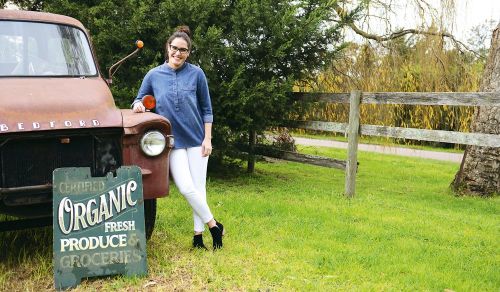
During our photoshoot, her grounded, self-assured manner is evident as we bundle a live and slightly perturbed chicken under her arm, and she handles it with aplomb (as does the chicken, to be fair).


“It’s funny because when you’re on the show, you don’t know whether people like you or not – you’re shut off," explains Marion.


“I went in with all these things I wanted to do, but it’s all up in the air. You could be eliminated early and not have a profile."


Once the curtain fell following the satay incident, Marion’s grace in defeat assured her a foothold from which to leverage her MasterChef experience.


Rather than wallow, sleeves were rolled and the very next day she began researching ingredients and producers.


The following week, she and Tim were Thailand-bound with a folder of her recipes tucked under arm. “I look back now and think, ‘Oh my god, that was the most naive thing to do’," she laughs.


If necessity is the mother of invention, naiveté may well be the mother of entrepreneurs, but Marion certainly wasn’t clueless.


In fact, her path leading to that fateful satay sauce had equipped her with a particular set of skills needed to turn Marion’s Kitchen into the sustainable business she’d imagined.

Need tips, more detail or itinerary ideas tailored to you? Ask AT.

AI Prompt

Marion Grasby, the Australian Traveller

Growing up in Darwin, surrounded by the region’s tropical produce and with a Thailand-born chef for a mother, Marion’s culinary inquisitiveness was nurtured from an early age.


Over the years, she flitted between Brisbane, Sydney, and Adelaide (where she devoured those 700 toasted sandwiches).


She collected a law degree, journalism degree, and a job as an ABC cadet along the way, but it wasn’t until she crossed paths with her wine-merchant, future husband, who exposed her to a world of food producers, that she considered earning a living from her passion.


Giving up a promotion at the ABC to study her masters in food and wine history, Marion performed a career U-turn, alarming friends and family in the process.


“When I quit my job to study food, people said, ‘Are you crazy? You have a law degree, a journalism degree, and a great job as a TV journalist, what are you doing?’" she says.


The gamble paid off once the MasterChef train arrived on the scene, no doubt putting an end to those incredulous questions.


After the train moved on and the dust settled, the next thing to arrive was a shipment of Marion’s Kitchen green curry.

Green curry forever?

“I said to Tim, ‘Holy shit! We have container-loads of green curry. If it doesn’t sell, we’ll be eating it forever!" she says as she throws her head back with the kind of laugh that only comes with hindsight.


Luckily, it’s not green curry forever, although it will probably remain a fixture in their lives as long as Marion’s Kitchen continues flying off shelves, which it seems set to do with the addition of some hungry Texans.


With an eye on the UK market next and a lot of work still to be done in the US, it looks like a homecoming for Marion is a little way down the track.


“I definitely want to come back to Australia, but right now it makes sense to be in Bangkok to keep an eye on production, and to be closer to the States," she says.


“I take any chance I can to come back, though, even if it’s for a few days."


Indeed, she has flown especially to Melbourne for a handful of days just to join our photoshoot, and not once have the words ‘tired’ or ‘jet-lagged’ passed her lips. Instead, she offers to get up as early as required to help wrangle the aforementioned chicken.

Weekly travel news, experiences
insider tips, offers, and more.

With a little help from mum and dad

Any disconnect from living away from home is smoothed thanks to Mum and Dad Grasby, who picked up and resettled down the road from their only daughter to lend their palates to the business.


“Mum helps me with the recipes. She’s quite bossy – like me. We argue a lot about the flavours. But my 80-year-old dad always has the final say; he’s really good, he can see the end picture," says Marion.


With Team Grasby in position to keep it all on an even keel, we may soon see more Marion on our screens and our bookshelves but, first up, is a relaunch of the Marion’s Kitchen packaging.


“It’s a fresher me on the box," she laughs, adding, “I don’t know what I’ll do when I get old and wrinkly!"


With such a dream business to pursue, it’s hard to imagine a furrowed brow appearing on the 32-year-old’s face anytime soon, and she concedes she’s well down the track in the pursuit of happiness: “If I’m still doing what I’m doing now in another five to 10 years, I’ll be one happy person. I don’t need too much more."

Want to see more stories from Australian Traveller in your Google search results?

  1. Click here to set Australian Traveller as a preferred source.
  2. Tick the box next to "Australian Traveller". That's it.

From coast to bush: these are Gippsland’s best hikes

    Michael Turtle Michael Turtle

    Video credit: Tourism Australia

    From coast to mountains, hiking in Gippsland offers a stunning array of landscapes, with trails that take you deep into the region’s heritage.

    I step out onto the sand and it cries out underfoot. Kweek! I take another step and there’s another little yelp. Screet! Picking up the pace, the sounds follow me like my shadow, all the way down to the water. It’s obvious how this spot got its name – Squeaky Beach – from the rounded grains of quartz that make the distinctive sounds under pressure.

    For many, Wilsons Promontory National Park is the gateway to Gippsland, and the best way to explore it is by walking its network of hiking trails, from coastal gems such as Squeaky Beach through to the bushland, among the wildlife. But it’s still just a taste of what you’ll find on foot in the region.

    Venture a bit further into Gippsland and you’ll discover the lakes, the rainforest, and the alpine peaks, each changing with the season and offering summer strolls or winter walks. Just like that squeaky sand, each step along these trails has something to tell you: perhaps a story about an ancient spirit or a pioneering search for fortune.

    The best coastal hikes in Gippsland

    sunset at Wilsons Promontory National Park
    Wilsons Promontory National Park is a sprawling wilderness with many coastal bushland trails. (Image: Mark Watson)

    Wilsons Promontory National Park (or ‘The Prom’, as you’ll end up calling it) is an easy three-hour drive from Melbourne, but you might ditch the car when you arrive, with much of the park’s 50,000 hectares accessible only by foot. From the inky water of Tidal River (dyed dark purple by abundant tea trees), I like the easy walks along the coast, among lichen-laden granite boulders, to golden beaches and bays.

    a couple on Mount Oberon
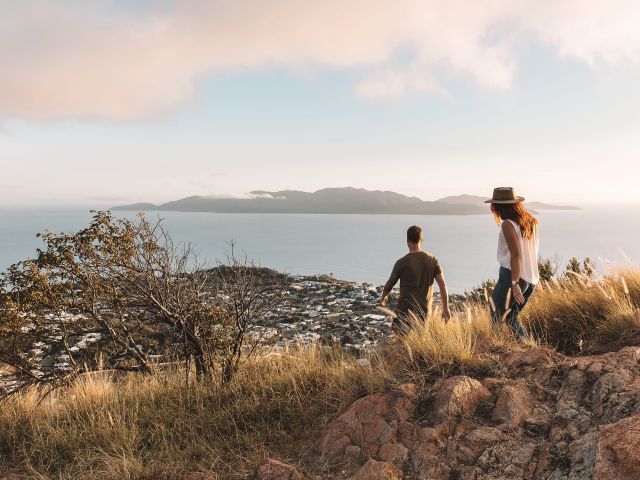
    Panoramic views from the summit of Mount Oberon. (Image: Everyday Nicky)

    The trail to the panoramic views at the summit of Mount Oberon is a bit harder, up steep timber and granite steps, but it’s a popular 6.8-kilometre return. The more remote hikes are found through the open banksia and stringybark woodland of the park’s north, or along the multi-day Southern Circuit, which ranges from about 35 to 52 kilometres, with sunrises and sunsets, kangaroos and cockatoos, and maybe even whales.

    a golden sand beach at Wilsons Promontory National Park
    Walk ‘The Prom’s’ golden sand beaches. (Image: Tourism Australia/Time Out Australia)

    You might also see whales on the George Bass Coastal Walk, even closer to Melbourne on the western edge of Gippsland. This dramatic seven-kilometre trail along the clifftops takes in sweeping views of the wild ocean, occasionally dipping down from grassy green hills to coastal gullies and a secluded beach. It also now links into the Bass Coast Rail Trail for an extra 14 kilometres.

    the George Bass Coastal Walk
    George Bass Coastal Walk trails for seven kilometres along clifftops. (Image: Visit Victoria/Time Out Australia)

    Over at the eastern edge of Gippsland, in Croajingolong National Park, you can wander along the lakeshores beneath koalas and around goannas (I keep my distance since one chased me here!). For those who are even more adventurous, the park is also the starting point for the 100-kilometre Wilderness Coast Walk, usually done over seven days.

    the Croajingolong National Park, Gippsland
    Wander along the lakeshores in Croajingolong National Park. (Image: Tourism Australia)

    The best bush hikes in Gippsland

    the Baw Baw National Park
    The alpine heath of Baw Baw National Park. (Image: Everyday Nicky)

    Deep in the Long Tunnel Extended Gold Mine at Walhalla, mining guide Richard tells me how this small town in the mountains east of Melbourne boomed when prospectors found gold here in 1862. These days, you’ll find most of the town’s treasure – its heritage – above ground, with the Walhalla Tramline Walk a wonderful way to explore it.

    Just seven kilometres long, the walk takes you through decades of Gold Rush history, following the original rail trail from lush bushland to the mining sites, and through the charming village of just 20 residents with its wooden cottages and old shopfronts adorned with turn-of-the-century advertising posters. Blazing a trail where trailblazers once opened up the region, this is also the starting point for the 650-kilometre Australian Alps Walking Track.

    Nearby, Baw Baw National Park has walks through gnarled snow gums and alpine heaths that show off the colourful wildflowers in summer and the pristine carpet of white in winter. Several trails are perfect for snowshoes, including a 45-minute route from St Gwinear up to vast views across the Latrobe Valley.

    Further up into the mountains, the Toorongo and Amphitheatre Falls Loop Walk is an easy 2.2-kilometre path that serenades you with the sound of flowing water as you pass mossy rocks and tree ferns en route to two sets of waterfalls cascading over boulders in the remote wilderness.

    The best cultural hikes in Gippsland

    the Mitchell River National Park, Gippsland
    Hike the Mitchell River National Park. (Image: Parks Victoria/Grace Lewis)

    Across a pool in a natural sandstone amphitheatre, deep within a cave behind a waterfall, it’s said the Nargun has its lair. A fierce creature, half human and half stone, that abducts children and can’t be harmed by boomerangs or spears, the story of the Nargun has been told around the campfires of the local Gunaikurnai people for generations.

    As a culturally significant place for women, hikers are asked not to go into the Den of Nargun, but a 3.4-kilometre loop walk leads you through a rainforest gully to the entrance where you can feel the powerful atmosphere here in Mitchell River National Park, along Victoria’s largest remaining wild and free-flowing waterway.

    the bee-eaters at Mitchell River National Park
    Bee-eaters at Mitchell River National Park. (Image: Parks Victoria/Grace Lewis)

    The Den of Nargun is part of the Bataluk Cultural Trail, a series of important traditional Gunaikurnai sites through central Gippsland. Another location is Victoria’s largest cave system, Buchan Caves Reserve, with trails to important archaeological sites of human artefacts up to 18,000 years old. The FJ Wilson Interpreted Walk includes the naturally sculpted white limestone steps of the 400-metre-long Federal Cave, while the Granite Pools Walk goes among tall timber and moss-covered gullies.

    the ancient rainforest of Tarra-Bulga National Park
    The ancient rainforest of Tarra-Bulga National Park. (Image: Josie Withers)

    Also important to the Gunaikurnai people is Tarra-Bulga National Park, known for its ancient myrtle beeches and enormous mountain ash trees. Just 40 minutes return, the Tarra Valley Rainforest Walk offers a taste of this verdant landscape, while the Grand Strzelecki Track takes you deep into the lost world of forest giants on an epic 100-kilometre trail rich with tradition.

    A traveller’s checklist

    Staying there

    the WildernessRetreats in The Prom
    Wilderness Retreats in The Prom. (Image: Christian Pearson)

    Wilderness Retreats in Wilsons Promontory offers glamping-style tents with luxurious queen beds. Star Hotel is a reconstruction of a Gold Rush-era hotel from 1863 in the heart of heritage Walhalla. Caves House is a historic three-bedroom house with views over the Buchan River.

    Eating there

    the Carrajung Estate, Gippsland
    Enjoy a post-hike lunch at Carrajung Estate. (Image: Everyday Nicky)

    Kilcunda General Store serves great coffee and meals of local produce at the George Bass Coastal Walk. Alpine Trout Farm is located near Toorongo Falls in Noojee. Fish for your own lunch and barbecue it with the provided cookware.

    Carrajung Estate is a short drive from Tarra-Bulga National Park. The winery’s restaurant offers a seasonal menu of regional ingredients and you can stay at The Lodge.

    a seafood feast at Carrajung Estate, Gippsland
    The table is set for a seafood feast at the estate.

    Video credit: Tourism Australia