Ten Aussie caravanning tips everyone needs to know

hero media
Thinking of joining the ever-increasing number of Aussies hitting the open road with a caravan in tow? Here, then, are the Top Ten things you should know before pulling into your first tourist park.

1. There’s no such thing as sleeping in

People in caravan parks like to rise early. They have places to be and they need to get there ASAP. I know, I know, they’re on holidays – but there’s no rest for the wicked and the early bird gets the best site at the next van park.


Plus, many caravanners are older retirees and they’ll be the first to tell you they usually wake by 5am anyway. So expect a lot of clatter and banging, car engines starting and loud morning greetings before the sun is even in the sky.

2. Privacy is a thing of the past

You may dream of quiet nights in a tranquil bush setting with a book and a folding chair, but while that can happen if you head off the beaten track, most of the time you’re on a small site (grassed, if you’re lucky) with another caravan a few feet either side of you.


Quite possibly one behind as well. Most have flimsy walls and lots of open screens, so sound travels a long way. Your own conversations, and those of people around you, will bounce around your not-so-quiet oasis for all to hear.
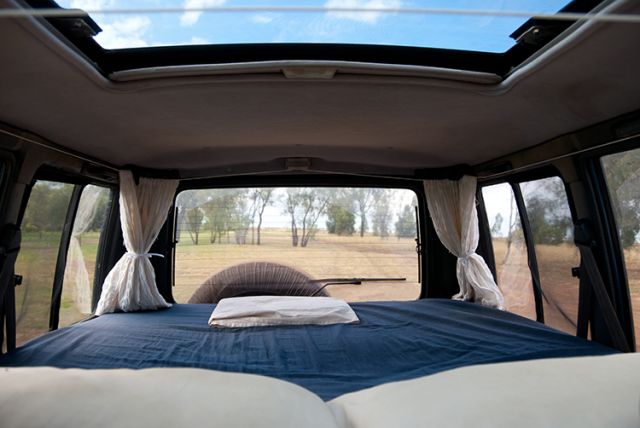
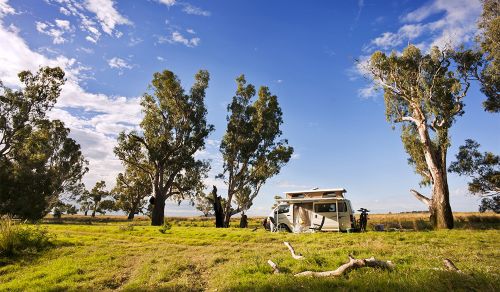
Build in bed in 4WD. Backpacking Australia with camper van.

And that’s before the lights go out and the snoring starts. You can hit your own husband (or, to be fair, wife) when they start to grunt and snort, but you can’t do much about the foghorn five caravans down.

3. People like to watch

Caravan parks are like mini theatres, with an ever-changing cast and crew watched by an openly curious, often downright nosy, audience. New arrivals are like a new set of actors taking the stage.


Oldies sit at their outdoor tables and stare as the latest travellers struggle to reverse their vans, maybe exchanging a few harsh words to each other in the process. A good domestic during the treacherous setting-up-of the-van process can brighten any caravan park afternoon.


If you’re young and appear inexperienced, so much the better. If, like my husband and I, you’re still in your 30s and on your first long-haul caravan journey, you’ll draw plenty of attention. Try not to show fear.

4. The toilets stink in the morning

We humans often follow a fairly set routine when it comes to eating and, um, expelling our waste. The post-breakfast trip to the amenities block is, therefore, never a pleasant experience. Often there’s a queue and the toilets invariably stink.


There are also all those embarrassing bodily function noises emanating from the cubicles while those in line cringe and await their turn.

5. Someone will always know better than you

There are tens of thousands of people currently on the road around Australia. Many of them have lapped the country more than once and, let me tell you, they know a thing or two (or three or four) about caravan travel.


They know where the cheapest petrol is, where the best views are, and which places not to bother with. And they won’t be backwards in coming forwards when it comes to telling you the things you should be doing or shouldn’t have done. There’s no solution to this. Just nod politely and agree.

6. The honeymoon is over

Living in a confined space for an extended period will test the strongest of relationships, no matter how much you love your partner. Especially if your chosen mode of transport is lean (in our case a 12ft, 26-year-old caravan).


Being with someone 24/7 can be tough, especially when you can’t move from one side of the van to the other without crashing into each other. Tension between couples on the road is the subject of many jokes.


Expect it and do your best to create space when it’s needed. The other alternative is to have a good old fight and add to that afternoon’s caravan park entertainment (refer to Point No. 03).

7. Things go wrong

No matter how well laid your plans, things will invariably come undone from time to time. The caravan park you want might be booked. Your warm tropical week in northern Australia might be windy and rainy. You might blow a tire or your vehicle might suffer some other type of mechanical problem. Be prepared and stay flexible. Throwing the odd tantrum sometimes helps, too.

8. The washing lines are always full

Washing and drying clothes when on the road can be a difficult chore to complete, especially when the limited number of clotheslines and driers seem always to be full.
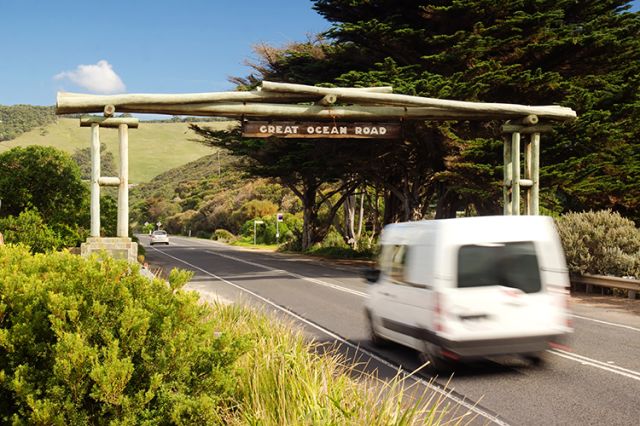
A campervan passes beneath the memorial arch on the Great Ocean Road in Victoria. The scenic road winds down the coast of Victoria and is popular with tourists.

Unless you’re one of the aforementioned early birds, my advice is to wash at night. Get in and hang your clothes up way before the sun has come up.

9. You instantly become a slow driver

Before we began caravanning, my husband and I complained about caravans driving below the speed limit and holding up long lines of cars. “Bloody caravanners," we’d been known to mutter. Now we are one of those moving roadblocks.


We drive carefully and usually sit just under the speed limit, not because we have to, but because we get better fuel consumption that way. And with petrol one of the biggest on-road expenses, I guarantee your hooning days are over once you start towing a caravan.


Of course, some people do take this concept to new levels, crawling along at a snail’s pace . . . bloody caravanners.

10. Caravanning is one of the best things you’ll ever do

Despite points one to nine, nothing beats the freedom of the open road; the sense of adventure and fun as you explore new places and the flexibility that comes from taking your accommodation with you.


Australia is a fantastic country full of beauty and diversity and there are lots of great people to meet. Don’t put it off. Hook up that caravan and hit the road.

hero media

Why the Central Coast is a foodie mecca

Underpinned by grassroots hospitality and award-winning organic produce, the Central Coast’s gastronomy scene is thriving, with the region quickly becoming one of the best destinations in NSW for epicures.

Revered for its rugged natural splendour and laid-back seaside charm, NSW’s Central Coast has soared in popularity in recent years, becoming a top choice for an affordable slice of weekend escapism for Sydneysiders. Just a short 45-minute drive north of Sydney, it’s the kind of place that, no matter how many times you visit, leaves you with the sense that there’s always more to uncover. But while the ocean pools, bushwalks and beaches have (rightly) taken the spotlight, it’s the Central Coast food offerings which have been quietly simmering in the background.

From fresh-as-it-gets seafood and juicy organic citrus you can pluck yourself, through to regenerative farming and reputable farm-to-fork dining, this coastal gem has become an idyllic foodie mecca. Here are some of the best ways to immerse yourself in grassroots hospitality and gastronomic glory on the NSW Central Coast.

vegetables in a basket at Bells Garden at Bells At Killcare
From picking your own, to farm-to-table, discover the best Central Coast food experiences. (Image: Remy Brand)

Central Coast oyster experiences

From humble grub to opulent delicacy, oysters have ascended into a league of their own. Epicureans are fascinated by them – willing to pay upwards of $35 per dozen (double at some of Sydney’s reputable fine dining restaurants) – and ‘shuck bars’ seem to be popping up at every milestone celebration.

But it’s rare to find places that really draw back the curtain on how they’re farmed and why everyone is mad for these molluscs. The Central Coast , however, is home to several of these venues. With its pristine waters, mild climate and nutrient-rich estuaries, it’s the perfect breeding ground for oysters.

Learn about oyster farming and, importantly, how to shuck them at Sydney Oyster Farm Tours . Nestled on the Hawkesbury River at Mooney Mooney, Sheridan Beaumont and her team offer a hands-on foodie experience where you can feast on dozens of oysters (white tablecloth and all) while wading through the calm waters. You can even bring your own bottle of bubbles to wash them down.

guests in the water for an experience at Sydney Oyster Farm - Central Coast food
Learn tricks of the trade at Sydney Oyster Farm Tours. (Image: Remy Brand)

Elevate your oyster knowledge even further by heading north over the Hawkesbury River Bridge to the Hawkesbury River Oyster Shed . Tour their scenic oyster leases and saltwater paddocks by boat to uncover the distinct characteristics of the Sydney rock oyster and creamy Pacific oyster. They’ve also partnered with Broken Bay Pearl Farm to offer a one-of-a-kind oyster and pearl farming guided tour, showcasing the Central Coast’s very own pearl oyster, the Broken Bay ‘Akoya’. But if you’re simply in the mood to devour a dozen delectable oysters while soaking in the tranquil river views, pull up a chair at the shed. It’s friendly in every sense of the word: pets, families and BYO welcome.

shucking oysters at Broken Bay Pearl Farm
Taste freshly shucked oysters at Broken Bay Pearl Farm. (Image: James Horan)

Central Coast farms to pick your own fruit

While the Central Coast is known for its breathtaking 40 beaches and 80-kilometre coastline, its lush hinterland is equally impressive – abundant with orchards and agriculturally rich farmland. And when it comes to the simple joy of picking your own fruit, the Central Coast is a ripe playground.

Family-owned Meliora Farm at Peats Ridge is an orchard that blends conventional, biodynamic and organic philosophies. Third-generation farmer Tim Kemp and his wife Elise are dedicated to honouring the family legacy by growing a rich variety of oranges, lemons, limes, mandarins and avocados. In late May, roam the sustainable and nutrient-dense property during ‘Pick Your Own’ weekends.

Eastcoast Beverages is another bountiful citrus orchard boasting over 60 hectares of fruit. From June you can learn about the cultivation of high-quality ingredients – like lemons, limes, grapefruit and oranges – by touring both the farm and factory before setting out and picking your own straight from the source. You can also sample an array of citrus-inspired sweet and savoury treats at their on-site cafe, Bambino’s .

If it’s just juicy oranges you’re after, Cedar Farm in Dooralong is a must-visit. Located about 30 minutes north of Peats Ridge, it features 15 flourishing orchards and over 3000 orange trees – with take-home bags during the season (from July) at low prices. Not bad for a fruity weekend haul.

woman picking oranges at Oranges at Dooralong
Pick your own citrus fruits on the Central Coast. (Image: James Vodicka)

Organic dining

What makes the Central Coast hinterland so special is the unwavering respect the communities have for their cherished backyard. Locally owned and operated farms are all striving for more sustainable practices and methods to both enhance biodiversity and reduce environmental impact, each with a heartwarming food philosophy.

The Food Farm in Wyong Creek believes good food is worth both the work and the wait. Devoted to regenerative farming, first-generation ‘farmily’ Tim Eyes and Hannah Greenshields are recognised for their grass-fed, grass-finished beef and pasture-raised, gold medal-winning chickens. With an open gate policy, The Food Farm encourages visitors to swing by and try some of their slow-grown produce at their small ‘honesty’ farm shop. With no staff, you can pick up a few quality cuts of meat and pasteurised eggs, leaving the owing amount in cash or via eftpos.

Keeping the spirit of generational organic farming alive is Fanelli Organics . Nestled in the Central Coast’s scenic and sleepy Mangrove Mountain, founders Eden and Louise Fanelli own over 45 hectares of plentiful farmland and orchards that produce a huge range of organic fruit and vegetables, like purple Dutch carrots, blood oranges, broccoli and Tuscan kale. A true home-grown operation, Fanelli Organics shares its fresh produce with local restaurants and community markets, including the beloved markets at Like Minds Cafe at Avoca Beach every Wednesday afternoon.

farmers holding fresh produce picked at Fanelli Organics
See where your food comes from at Fanelli Organics.

Paddock-to-plate dining

High-quality ingredients go hand in hand with premium dining, and the Central Coast is home to several paddock-to-plate restaurants that showcase its diverse and rich agriculture. Paired with warm, grassroots hospitality, there are culinary triumphs, new menus and revered chefs constantly popping up, putting the local dining scene firmly on the map.

Award-winning Mount White restaurant Saddles is a quintessential Australian dining destination, dedicated to country-style cooking and seasonal produce. Nestled in thick bushland with wraparound verandahs, floral gardens and an idyllic dam, the gourmet homestead and bakehouse is unlike any restaurant on the Central Coast. Here, head chef Reece Collins and his team serve up an impressive breakfast and lunch menu that oozes rustic charm. Pull up a comfy armchair on the expansive deck, listen to birdsong, and tuck into flavoursome dishes like the farmhouse Benedict with honey-cured ham, lemon myrtle hollandaise and Warrigal gremolata, or the hearty beef brisket pie with confit garlic potato purée and rainbow chard.

woman writing in notebook next to a table of food at Saddles, Central Coast food
Taste country-style cooking at Saddles. (Image: Destination NSW)

Delivering a slice of sophistication and luxury to the shores and bushland of Bouddi Peninsula is Bells at Killcare . One of the few boutique resorts on the Central Coast, it’s known for its premium service and five-star suites, as well as its bountiful kitchen gardens that boast an orchard, olive trees, avocado trees, free-range hens and a honey bee hive.

Cameron Cansdell has returned to Bells at Killcare as head chef, bringing his expertise to the casual yet refined menus that feature a raw bar with Oscietra caviar, freshly shucked Sydney rock oysters and Moreton Bay bugs, all served alongside optional matched wines. Sample some of Australia’s best regional wines and standout dishes, like roasted Wollemi duck with grilled leeks, rocket, grilled grapes and 10-year-aged balsamic, or the shareworthy salt-crusted snapper with herb salad and salsa, before roaming the picturesque gardens, wine in hand.

cocktail at Bells At Killcare
Sample incredible wine, cocktails and dishes at Bells At Killcare. (Image: Nikki To)

Plan your next visit to the delicious Central Coast.