Why you should travel during a ‘dead week’ (and when to do it)

hero media
Avoid the crowds, save big and enjoy top holiday spots in peace – here’s why you should book your next trip during a ‘dead week.’

Picture this: fewer crowds, cheaper stays and a chance to experience Australia’s most popular destinations without the chaos of peak holiday seasons. Welcome to the magic of ‘dead weeks’ – those rare travel sweet spots when demand takes a dip and savvy travellers can cash in on great deals.

According to Stayz’ 2025 Holiday Planning Guide , timing your trips around these underrated periods could be the smartest way to secure your dream getaway without the usual stress.

So, what exactly is a dead week?

These are short, specific periods that immediately precede or follow peak travel times – when families are back at work and school, and the average nightly rates for accommodation take a welcome nosedive. Here’s how to plan your next break during a dead week and make the most of these golden windows of opportunity.

March: The pre-Easter escape
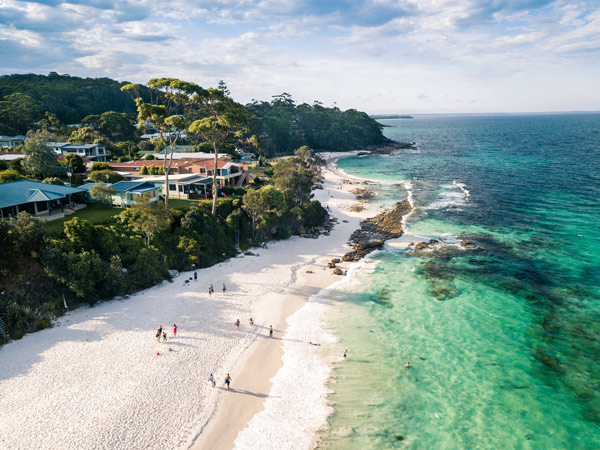
Aerial Drone Picture of the White Sand Hyams beach in New South Wales, Australia
Stay in Jervis Bay for your pre-Easter holiday. (Image: Getty Images/Roman Skorzus)

Easter is one of the most competitive travel periods of the year, with popular coastal spots like Noosa, Batemans Bay and Jervis Bay booking out well in advance. But if you can sneak in a break before the Easter madness, mid-March offers the perfect opportunity. Expect milder temperatures, quiet beaches and better rates on holiday homes.

Need tips, more detail or itinerary ideas tailored to you? Ask AT.

AI Prompt

June: The calm before the winter rush

skiers Falls Creek
Falls Creek is the ideal winter destination.

Winter school holidays send skiers and snow lovers flocking to Jindabyne and Thredbo, but mid-June – before the school bells signal the start of the break – is an ideal time to book a last-minute winter escape. Whether you’re after crisp mountain air or a cosy beachside getaway, you’ll find better availability in winter hotspots like Coffs Harbour, Falls Creek, Surfers Paradise, Hervey Bay and Port Douglas, before the winter crowd settles in.

October: The secret spring getaway
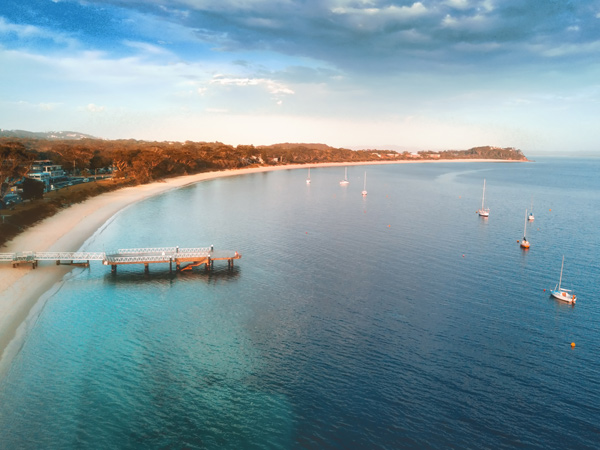
First light on Shoal Bay, Port Stephens, located in the Hunter region of NSW
Discover Port Stephens in springtime. (Image: Getty Images/lovleah)

Spring school holidays see families heading to sunny spots across the country, but the magic of late October lies in its post-holiday lull. This is the perfect time to score discounted stays in coastal havens before summer prices start creeping up. Forster, Noosa and Port Stephens all offer incredible value at this time of year.

January: The summer dead week you should know about
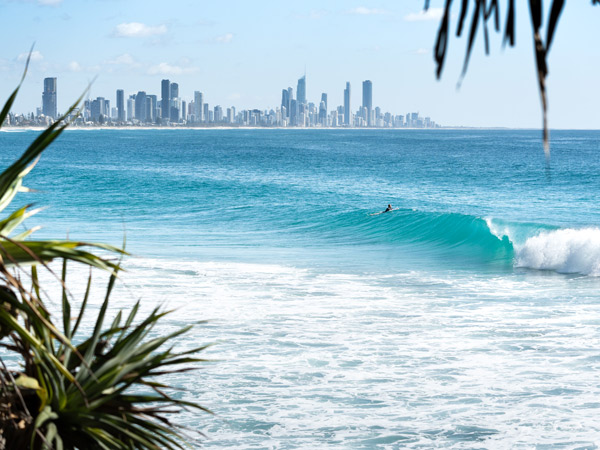
Gold Coast Cityscape
Head to the Goldie when most people go back to work. (Image: Getty Images/Still Horizon Studio)

The post-New Year lull in mid-January is one of the best-kept secrets for scoring a summer getaway without the peak-season price tag. While the Christmas/New Year period sees a rush of travellers filling up Australia’s top holiday spots, demand starts to drop from the second week of January, making it the perfect time to secure a last-minute escape. Destinations like Jervis Bay, the Mornington Peninsula, Noosa and the Gold Coast often have better availability during this time, meaning you can still enjoy the height of summer without the peak-season crowds. Plus, with many families heading home for school and work, beaches, restaurants and attractions become far more relaxed.

Weekly travel news, experiences
insider tips, offers, and more.

How to maximise your dead week travel
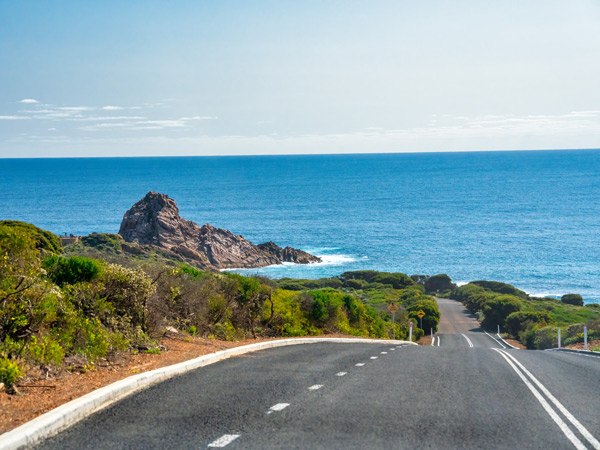
Cape Naturaliste coastline in South Western Australia
The Margaret River region is a holiday hotspot to book in advance. (Image: Getty Images/Paola Giannoni)

Flexibility is key when planning a trip, even during a dead week. Even shifting your stay by a day or two can unlock significant savings, as accommodation prices fluctuate based on demand. Look for discounts on holiday homes, as many offer reduced rates for longer stays or early bookings.

Booking in advance is still crucial – while dead weeks see lower occupancy, the best properties can still be snapped up quickly. Additionally, consider travelling mid-week rather than over weekends for even better deals. Airlines and hotels may also offer hidden perks, such as free upgrades or discounted add-ons, so it’s always worth asking. Finally, use price-tracking tools or sign up for travel deal alerts to ensure you’re getting the best possible rate.

If you really must travel in peak periods, here’s your deadline
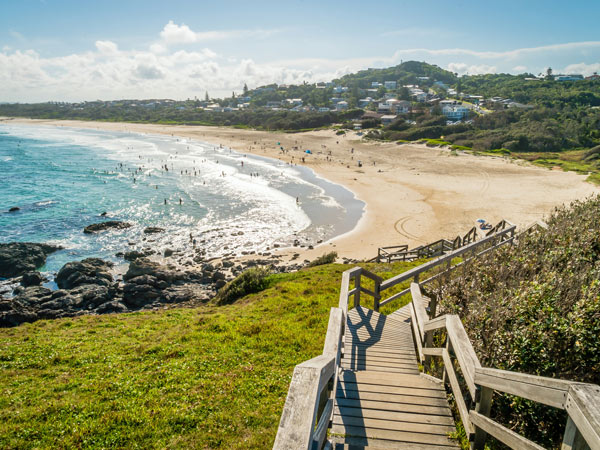
Lighthouse beach seen from the lighthouse in Port Macquarie in the summer
Book your Port Macquarie trip soon to avoid disappointment. (Image: Getty Images/Stephane Debove)

Timing is everything when securing accommodation, especially during peak travel periods.

For the Easter long weekend (18–21 April 2025), availability is already tightening in popular destinations such as Forster, Port Macquarie, the Gold Coast and the Margaret River. Stayz data suggests that less than 50 per cent of properties will still be available by the end of February, with that number dropping to under 30 per cent by early March.

Planning ahead is even more critical for summer holidays, as the last week of December is expected to be the busiest travel period of the year. Demand for holiday homes in hotspots starts surging by mid-June, and availability continues to tighten through July and August, so securing your summer stay by 21 August is highly recommended.


Emily Murphy
Emily Murphy is Australian Traveller's Email & Social Editor, and in her time at the company she has been instrumental in shaping its social media and email presence, and crafting compelling narratives that inspire others to explore Australia's vast landscapes. Her previous role was a journalist at Prime Creative Media and before that she was freelancing in publishing, content creation and digital marketing. When she's not creating scroll-stopping travel content, Em is a devoted 'bun mum' and enjoys spending her spare time by the sea, reading, binge-watching a good TV show and exploring Sydney's vibrant dining scene. Next on her Aussie travel wish list? Tasmania and The Kimberley.
View profile and articles

This luxe trawler tour is redefining Victoria’s seafood experience

    Chloe Cann Chloe Cann
    Victoria’s ‘mussel capital’ is the source of exceptional shellfish used by top chefs far and wide. Step aboard a beautifully refurbished trawler to see how these plump and juicy bivalves are sustainably cultivated.

    A curtain is slowly winched from the placid, teal waters just off Portarlington , like a floating garland beside our boat. The ropes heave with blue mussels, the star attraction of our tour. But as we reach to pluck our own, it’s quickly clear they’re not alone; a mass of weird and wonderful creatures has colonised the ropes, turning them into a living tapestry. ‘Fairy’ oysters, jelly-like sea squirts, and tiny, wriggling skeleton shrimp all inhabit this underwater ecosystem.

    We prize our bivalve bounty from the ropes, and minutes later the mussels arrive split on a platter. The plump orange morsels are served raw, ready to be spritzed with wedges of lemon and a lick of chilli as we gaze out over the bay. They’re briny, tender and faintly sweet. “This wasn’t originally part of the tour,” explains Connie Trathen, who doubles as the boat’s cook, deckhand and guide. “But a chef [who came onboard] wanted to taste the mussels raw first, and it’s now become one of the key features.”

    A humble trawler turned Hamptons-style dreamboat

    inspecting bivalve bounty from the ropes
    Inspecting the bounty. (Image: Visit Victoria/Hannyn Shiggins)

    It’s a crisp, calm winter’s day, and the sun is pouring down upon Valerie, a restored Huon pine workhorse that was first launched in January 1980. In a previous life she trawled the turbulent Bass Strait. These days she takes jaunts into Port Phillip Bay under the helm of Lance Wiffen, a fourth-generation Bellarine farmer, and the owner of Portarlington Mussel Tours . While Lance has been involved in the fishing industry for 30-plus years, the company’s tour boat only debuted in 2023.

    holding Portarlington mussels
    See how these plump and juicy bivalves are sustainably cultivated.

    It took more than three years to transform the former shark trawler into a dreamy, Hamptons-esque vessel, with little expense spared. Think muted green suede banquettes, white-washed walls, Breton-striped bench cushions, hardwood tables, bouquets of homegrown dahlias, and woollen blankets sourced from Waverley Mills, Australia’s oldest working textile mill. It’s intimate, too, welcoming 12 guests at most. And yet there’s nothing pretentious about the experience – just warm, down-to-earth Aussie hospitality.

    As we cruise out, we crack open a bottle of local bubbles and nibble on the most beautifully curated cheese platter, adorned with seashells and grey saltbush picked from the water’s edge that very morning. Australasian gannets soar overhead, and I’m told it’s not uncommon for guests to spot the odd seal, pod of dolphins, or even the occasional little penguin.

    The sustainable secret behind Victoria’s best mussels

    blue mussels off Portarlington
    Blue mussels sourced just off Portarlington.

    Connie and Lance both extol the virtues of mussels. They’re delicious. A lean source of protein and packed with omega-3 fatty acids, vitamin B12, iron, selenium, and zinc. They’re cooked in a flash (Connie steams our fresh harvest with cider and onion jam). And they’re also widely regarded as one of the most sustainable foods in the world.

    Portarlington mussels with lemon and chilli
    Mussels served with lemon and chilli.

    “Aquaculture is [often] seen as destructive, so a lot of our guests are really surprised about how environmentally friendly and sustainable our industry is,” Lance says. “[Our mussels] would filter 1.4 billion litres of water a day,” he adds, explaining how mussels remove excess nitrogen and phosphorus from the water. “And through biomineralisation, we lock carbon into mussel shells.”

    a hand holding a Portarlington mussel
    Mussels are a sustainable food.

    Despite their glowing list of accolades, these molluscs have long been seen as the oysters’ poorer cousins. “It was a really slow start,” explains Lance, who says that in the early days of his career, “you could not sell mussels in Victoria”.

    But word has slowly caught on. Chefs as globally acclaimed as Attica’s Ben Shewry and even René Redzepi of Noma, Denmark, have travelled to these very waters just to try the shellfish at the source, sharing only the highest praise, and using Lance’s mussels in their restaurants.

    guests sampling Portarlington mussels onboard
    Sampling the goods onboard. (Image: Visit Victoria/Hannyn Shiggins)

    According to Lance there’s one obvious reason why the cool depths of Portarlington outshine other locations for mussel farming. “The water quality is second to none,” he says, noting how other regions are frequently rocked by harvest closures due to poor water quality. “We grow, without a doubt, some of the best shellfish in the world.” And with Lance’s bold claims backed up by some of the industry’s greatest names, perhaps it won’t be much longer until more Aussies uncover the appeal of Portarlington’s mussels.