You Will Decide the New 7 Wonders of Nature

hero media
Uluru and the Great Barrier Reef: Wonders of the nation, or great natural wonders of the world? You decide. Words by Flora King

By mid 2011, a predicted one billion members of the population will have cast a vote and participated in an epic global poll to determine the new seven wonders of the natural world. The New7Wonders of Nature campaign was launched in 2007 and is a contemporary effort to recognise our planet’s most phenomenal natural sites and landscapes, as seen through the eyes of its public. With the announcement of these new wonders scheduled for two years from now, and with two of our national icons in the running against 26 other finalists, it is time for Australia to mark her ballot.


Breathtaking to behold and rich in cultural significance, it is without doubt the quintessential image of the Australian outback.

Uluru

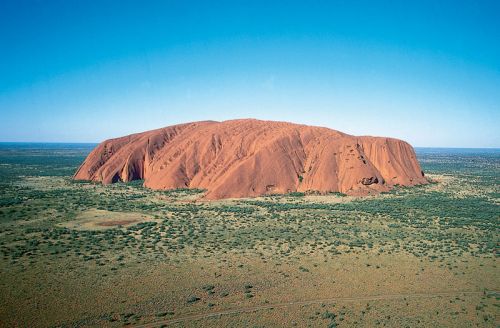
Uluru, or Ayers Rock as it is also known, is the world’s largest monolith and an isolated remnant of what was once a full mountain range in the Kata Tjuta National Park. Grandly rising 340m above the surrounding plains it is perhaps Australia’s most recognisable natural site. Anyone who has stood before the huge rock formation at sunset and watched its smooth sandstone surface blaze a million shades of red in the changing evening light would wish to argue that it’s up there with the world’s best in terms of awe-inspiring natural beauty. Uluru is to the Aboriginal people and traditional Anangu owners of the land a scared place, emanating energy and containing the spirits of the ‘Dreamtime’ legend. Breathtaking to behold and rich in cultural significance, it is without doubt the quintessential image of the Australian outback.

The Great Barrier Reef

Australia is the only continent that can boast of having 340,000km2 of intricate live coral cays scattered across its warm, turquoise northeastern shores, and the stunning Great Barrier Reef is the world’s largest coral reef system. Made up of a myriad of over 3000 individual reefs and 900 sun-soaked golden islands, it is the only living organic collective visible from outer space. It is also one of the world’s richest areas in terms of biological diversity and home to a vast variety of sea life, including 30 species of whales and porpoises, 125 species of sharks and stingrays and over 15,000 species of fish. While the reef has been an important part of indigenous culture and spirituality for thousands of years, and parts are believed to be as much as 18 million years old, this ancient natural gift remains a dazzling jewel in Australia’s crown.

A brief look at some of the potential wonders we are up against;

The Amazon

Covering an area of 2.5 million miles, shared by nine different countries, home to a third of the world’s species, and provider of more than 20 percent of the oxygen we breathe, the sprawling, majestic Amazon represents half of our planet’s remaining rainforest and is often described as the “lungs of the world".

Puerto Princessa Underground River

Around 50km north of the city of Puerto Princesa in Palawan, Philippines is the Puerto Princesa Subterranean River National Park. Beneath the park’s spectacular limestone karst landscape flows an extraordinary underground river, which winds through 8.2km of underground caves and dark, cavernous chambers before it spills dramatically in to the South China Sea.

The Dead Sea

Landlocked between Jordan, Israel and the West Bank, the Dead Sea – at 400m below sea level – is the lowest body of water on Earth. A 30 percent salinity content means it is nearly nine times saltier than the ocean, and with little plant or animal life able to flourish in the immediate area, the sea possesses its own sparse and haunting kind of beauty.

The Grand Canyon

The Grand Canyon in northern Arizona has for many years been a world-renowned symbol of nature’s tremendous power, and almost two billion years of natural history are revealed in its layers of beautifully preserved rocks. From the top of the mile-high gorge are vistas stretching for hundreds of miles over the multicoloured, arid and strikingly inhuman landscape.

Kilimanjaro

At 5895 metres high, Tanzania’s Mount Kilimanjaro is the highest mountain in Africa, and the highest free-standing, snow-covered equatorial mountain in the world. Once a live volcano, and with a summit crater measuring 1.5 miles across, the isolated snowy peak rises spectacularly from the fertile green savannah, and is a potent motif of the country’s geographical extremes.

The Black Forest

The Black Forest is an area of mountain ranges, highland plateaus and dense fir and pine woods spread in a distinguishable rectangular shape across the Baden-Württemberg region of southwestern Germany. Once believed to be inhabited by werewolves, witches and dwarves, but perhaps now more renowned for the cuckoo clock and black forest cake, the forest remains rooted in traditional culture and mythology.

hero media

No time to hibernate: experience the best of winter in NSW

Whales breaching, fires crackling and slow-cooked feasts that make the cold so cosy, one might wish it lasted longer. Winter is no time to stay at home in NSW.

When the mercury drops, winter in NSW comes into its own. Beaches are quieter, the air is crisper and hearty food tastes even better when there’s ice on the windows.

Winter here isn’t for hiding away. It’s for long walks, deep baths, deeper reds and the kind of fireside lounging that feels simultaneously indulgent and entirely deserved after a day of exploring. From whale-watching up north to moodily lit bushwalks and pastry pilgrimages, we’ve mapped out your new favourite season.

a beach winter in nsw
From coastal walks to tasty delights, winter in NSW is a time to get out and about.

The Tweed

In winter, the NSW north coast has a front-row seat to one of nature’s greatest migrations. From May to November, humpbacks cruise past the Tweed coast between Antarctica and the Great Barrier Reef. Spot them from the Cabarita Beach headland or get up closer with a boat cruise.

Inland, find the Tweed Regional Gallery & Margaret Olley Art Centre , which is home to a rotating cast of big-name exhibitions (including Monet).

Later, grab a table at Bistro Livi , where the modern Spanish menu features whipped salt cod on toast and spanner crab with curry butter and spelt flatbread. Stick around to poke through the artist studios and indie boutiques of M|Arts Precinct .

visitors at Tweed Regional Gallery & Margaret Olley Art Centre
Browse the art. (Image: Destination NSW)

The next day, jump aboard the Indigenous Lunch Cruise with Tweed Escapes. You’ll cruise upriver listening to yarns from local Indigenous guides, stop at the Minjungbal Aboriginal Cultural Museum and tuck into lemon myrtle-crusted snapper.

Next, drive out to Farm & Co to pull apart some juicy smoked lamb shoulder with green olive tapenade while gazing out over the macadamia fields and avocado groves of this working farm.

End the day at Mantra on Salt Beach where you’ll enjoy beach access, a heated rock spa and a lagoon pool.

dining room at Bistro Livi
Taste modern Spanish at Bistro Livi.

Blue Mountains

The cold season is hands down the best time to visit the Blue Mountains. Temperatures are perfect – sunny enough for hikes, and crisp enough at night for snuggling up.

For a trip that equally soothes and stirs, start with a meditative meander through the national park’s eucalypts and Australian wildflowers. Brave the steepest passenger railway in the world, Scenic Railway , then hop the Skyway aerial cable car for unrivalled Three Sisters views.

Thaw out at the Japanese Bath House in South Bowenfels. Soak in steamy outdoor onsens filled with natural mineral water and mountain views, wander the rose and zen gardens, or sip hot drinks in the tea house.

group leader at Blue Mountains Stargazing
Rug up for Blue Mountains Stargazing. (Image: Destination NSW)

Afterwards, head to Ates in Blackheath, where everything revolves around a 150-year-old ironbark-fuelled oven – like the wood-roasted duck with nectarines and Szechuan spice. Or visit Tempus Katoomba , which leans experimental and sustainable, serving up dishes like braised fennel with cumin, spiced yogurt and Aleppo pepper.

Rug up and head into the night with Blue Mountains Stargazing . Sessions are guided by astrophysicists, helping you understand what you’re looking at as you look into deep space.

Wrap it all up at Fairmont Resort Blue Mountains – MGallery Collection . There’s a whiskey bar in the basement (and crackling fires that make a dram taste even better), indoor and outdoor pools and a day spa. Kids will love the mirror maze and ice rink, too.

dishes laid out on table at Fairmont Resort Blue Mountains
End the day with delicious meals at Fairmont Resort Blue Mountains. (Image: Destination NSW)

Southern Highlands

Good food and wine by the fire, experienced between sifting through second-hand treasures, is a winter vibe in Bowral.

Start with a lap around Dirty Janes , an antique and vintage market. Recover from your shopping frenzy at Bendooley Book Barn , where floor-to-ceiling shelves and a roaring fire set the tone for an afternoon of red wine or hot coffee.

When it’s time to eat, head to Hickory’s Restaurant & Bar , Peppers Craigieburn Bowral’s onsite restaurant. Try the crispy pork belly with Granny Smith crisps and apple gel, or ocean trout with wakame, lemon gel and pickled radish.

couple looking through Dirty Janes in bowral
Wander the antiques at Dirty Janes. (Image: Destination NSW)

Another option, Onesta Cucina , does Italian with flair. For something more casual (with cocktails), Flour Bar swings between brunch and dinner, with an onsite bakery, over 400 wines and a hidden deli in the old bank vault.

Later, clamber Mt Gibraltar , where trails wind through eucalypt forest to views over Bowral and Mittagong.

Stay at Peppers Craigieburn Bowral , a century-old estate with open fires, elegant lounges and a nine-hole golf course.

woman and her dog winter in nsw at Peppers Craigieburn Bowral
Stay cosy at Peppers Craigieburn Bowral.

Penrith

Shake off winter inertia with an adrenaline boost out in Penrith. Kick things off with a kayak paddle on the Nepean River with Horizon Line, or head to Cables Wake Park , where cold-weather wetsuits take the edge off a wipeout.

For something a bit more cruisy, opt for the Nepean Belle Paddlewheeler for slow-floating views and a hot cuppa.

kayakers on the nepean river in penrith
Head out on the Nepean River. (Image: Destination NSW)

Refuel at Marcel Bar & Bistro , where reimagined European comfort food – like seafood risotto in bisque with little neck clams and Moreton Bay bugs – is king. Then check in at the Pullman Sydney Penrith , the area’s first international five-star hotel, to enjoy your well-earned rest.

Pullman Penrith
Set yourself up at Pullman Penrith.

Start planning your NSW winter getaway at all.com.