These days, NSW may be best known for its picture-postcard coastline, rugged mountains, and sparkling skyscrapers, but travel a little further or dig a little deeper, and you’ll soon see the rusty trail of breadcrumbs leading back to life in the early days of the colony.
In 1850, the discovery of gold in outback NSW brought tens of thousands of settlers to the shores of Australia. The allure of underground riches led to new arrivals traipsing across the red-desert landscapes, snow-covered mountains, and rainforest, picks in hand, hoping to strike lucky.
Once the gold-diggers arrived, the settlements didn’t take long to follow. From tent cities to towns, they were tasked with bringing the “old world" to the new; pubs and dance halls to celebrate and commiserate, gaols and banks to protect and punish, post offices to send news out to the world, and all the other necessities to keep spirits up and picks down.
Yet, like the miners, while a few got lucky, most towns didn’t. Their fortunes were tied to the earth, and the earth to them. While the miners and townsfolk moved on, sometimes even bringing their houses with them, everything else was left behind, abandoned to the elements.
While some have since experienced new leases of life as tourist attractions or big-screen stars, most have simply fallen from grace, the long-abandoned ghost towns now offering visitors who brave the trek across the state a glimpse of the past – or a spectre of a dystopian future.
1. Silverton
Better known by its face, rather than its name, Silverton is arguably one of Australia’s best-known ghost towns, with the half-abandoned town site having made it big on the silver screen over the last few years. Yet, despite its rising popularity with movie crews, just a handful of year-round residents live here; a far cry from the 3,000 folks who, at the turn of the 19th century, filled the now-empty streets with life.
While the town’s beginnings began with a false discovery of gold – later found out to be a ruse by a station hand to steal a horse, it didn’t stop hopeful miners from making the trek out west. Fortunately, their efforts were rewarded. Named after the silver found nearby, Silverton’s ranks quickly swelled to 3,000 people by 1888.
Unfortunately, like most early mining towns, the bust came just as quickly. By 1901, there were less than 300 people left in the town; and fewer buildings, too. Many residents quite literally upped and left, using trains and teams of camels, donkeys, and bullocks to transport their homes to nearby Broken Hill.
However, Silverton’s shining star wasn’t quite done. By the 1970s, the town was back in the limelight, although for entirely different reasons this time. After its big-screen debut in 1970’s Wake Up in Fright, the town has since held starring roles in everything from Mad Max II and Adventures of Priscilla, Queen of the Desert to Mission Impossible II.
Highlights
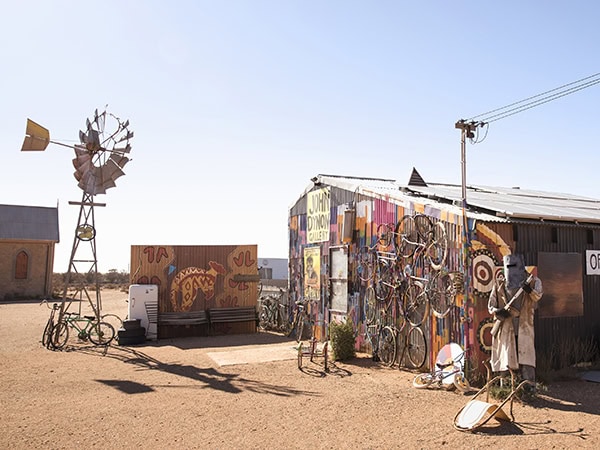
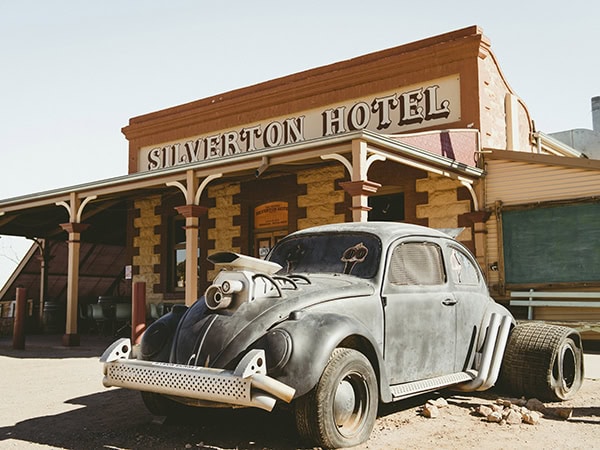
Silverton’s combination of ghostly and living buildings includes art galleries – John Dynon’s Gallery is well worth a stop-off – the Mad Max 2 Museum , and, of course, the iconic Silverton Hotel, which was built in 1918 to replace the original pub which was destroyed in a fire.
Travellers can also swing by the Silverton Gaol Museum and see the old lockup along with the bath used to preserve bodies for the coroner, the Silverton Public School and Museum, the Masonic Lodge, the Methodist Church, and the Catholic Church (which is now a private residence).
Just outside of town, the Historic Daydream Mine, which operated between 1883 and 1983, is open for tours five days a week (pre-booking required) . The Scenic Lookout at Mundi Mundi is also well worth a quick stop. Another local spot to have its breakout role in Mad Max 2, the otherworldly view is especially picturesque at sunset.
How to get there
Silverton is located right on the edge of the NSW-SA border, 25 minutes east of Broken Hill, six hours northeast of Adelaide, 13 hours west of Sydney, and 9.5 hours north of Melbourne. Travellers who don’t fancy a long drive can also fly straight to Broken Hill and pick up a car from there.
Accommodation
Thanks to its brush with fame, Silverton has plenty of options for overnight visitors. History lovers and film buffs likely won’t want to miss the opportunity to spend a night (or two) in the Original Silverton Hotel – the pub has photos from all its starring roles lining the walls. There are also local farm stays, a campground at Penrose Park, and, if you fancy following in the footsteps of those early miners, plenty of options down the road in Broken Hill.
2. Yerranderie
Established on an ancient volcanic dyke with seams of silver, gold, and lead, Yerranderie was once a prosperous mining town of around 2,200 people. Just under 100 years ago, the town, which was easily accessed from Sydney, had a police station, courthouse, post office, school, hotel, two butchers, three churches, and even a movie theatre.
In the end, though, even the successes of the mine weren’t able to compete with the combination of the First World War, a Spanish Flu epidemic, a miner’s strike, and the construction of the Warragamba Dam, which flooded the main access road to the town.
Now, only accessible via dirt roads, the ghostly remnants of the historic town lie within Yerranderie Regional Park. After being sold in their entirety in 1947 to a mining company, they then passed into the hands of Valerie Anne Leude, who turned it into a tourist attraction, gifting it to the National Parks and Wildlife Service in 2011.
Highlights
Thanks to the intrepid preservation efforts of Valerie Anne Leude, Yerranderie feels like it’s frozen in time. Visitors to the ghost town can wander freely around the historic buildings and the silver mining fields, camp or stay overnight in the converted accommodation, and go 4WDing and bush-walking through the nearby forest.
How to get there
Yerranderie is located near Kanangara-Boyd National Park in NSW’s central tablelands. The closest town, Oberon (2.5 hours west of Sydney), is the last stop for fuel and supplies, but reaching Yerranderie from there still requires driving 76 kilometres along dirt roads. Visitors with 4WDs can also reach Yerranderie via Kowmung Fire Trail and Dingo Dell . Note: this route involves river crossings and steep ridges.
Accommodation
Despite its relative isolation, Yerranderie has a surprising amount of accommodation options, including the Post Office Lodge (which sleeps up to 26 people), Slippery Norris Cottage , and the Bank Room , along with two campgrounds: Government Town and Private Town.
3. Hartley Historic Village
Now a sleepy historic site on the outskirts of the Blue Mountains, it’s hard to believe that nearly 200 years ago, Hartley was a bustling hub of rough-hewn sandstone buildings, horse-drawn carriages, and criminal and judicial proceedings. An important hub on the Great Western Highway between the goldfields and Sydney, Hartley may have been small but, as one of the first villages built west of the Blue Mountains, its influence was mighty. In many ways, it still is, although for different reasons.
Highlights
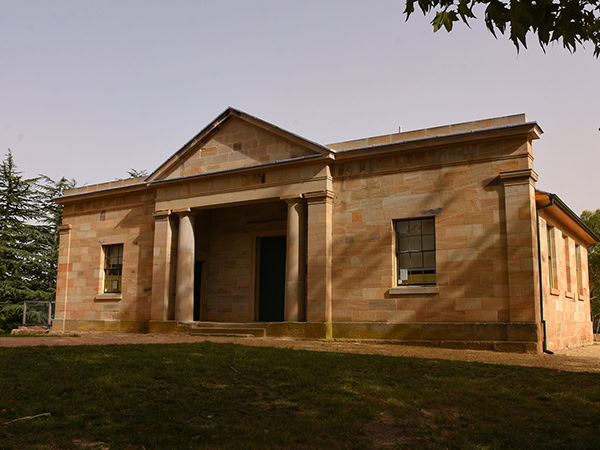
Built to last, travellers can still explore much of the old town site. Of the 17 buildings in town, the Hartley Courthouse is the biggest draw. Built in 1837 in the Grecian Revival style, the imposing courthouse has three separate entrances; one for prisoners, one for the public, and one for magistrates. Visitors can even still see the cells and stocks, which once held a succession of bushrangers, cattle thieves, and convicts.
Other highlights include the Corneys Garage-turned-antiques shop and the Post Office Cafe, where you can grab a cuppa in what was once one of the most important buildings in town.
Need tips, more detail or itinerary ideas tailored to you? Ask AT.
AI Prompt
How to get there
Hartley is just under two hours drive from Sydney. On the western edge of the Blue Mountains, the historic village is almost exactly halfway between Mount Victoria and Lithgow, with both reached in around 10 minutes.
Accommodation
While many visitors opt to stay in nearby Lithgow, there are a couple of lovingly restored NPWS houses nearby for folks who want to enjoy the full heritage experience. Old Trahlee , which sleeps up to six people, and St Bernard’s Presbytery cottage , which sleeps up to four.
4. Hill End
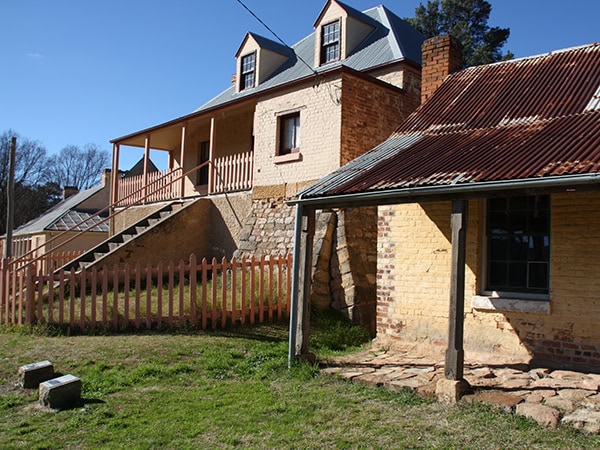
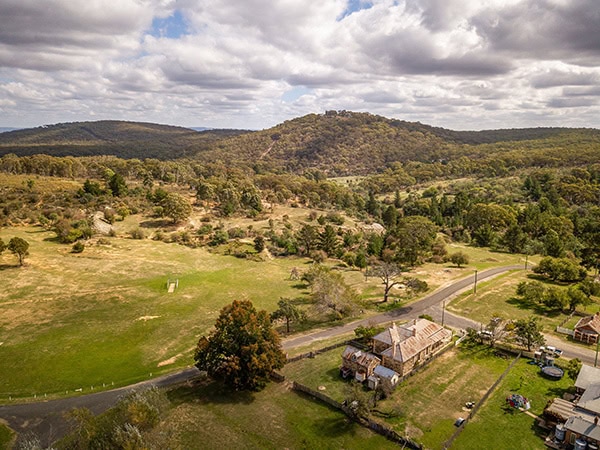
Hill End is a heritage-listed former gold rush town close to Bathurst. After gold was discovered in the Hill End goldfields, the town’s population exploded and it went on to become the largest inland settlement in the colony of NSW. While Hill End is still home to an estimated 120 people, it is still a far cry from the 8,000 or so folks who called the town (and its 28 pubs) home in the 1870s.
Highlights
Now managed by NPWS, visitors to Hill End can take a self-guided tour of the abandoned town, grab a bite to eat at the General Store, stay overnight in heritage accommodation, go fossicking for gold, and even join a twilight ghost tour or 4WD trip .
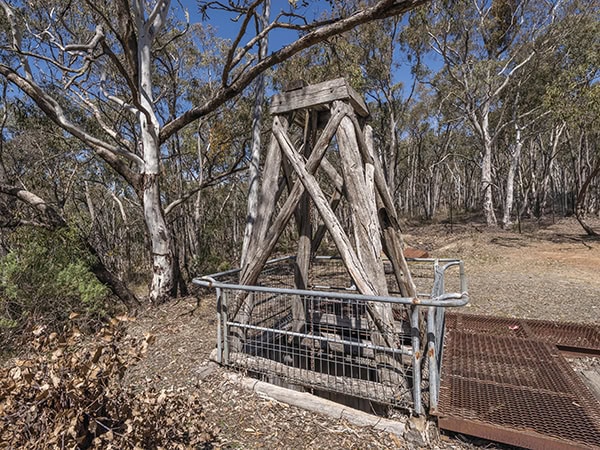
Other nearby attractions include Bald Hill tourist mine , where you can journey underground into the old mine, Valentines mine , which still has an old water tank and stamper battery, and the Cornish Quartz Roasting Pits . About 10 minutes north of the town site, the old brick quartz roasting pits were built in 1855.
How to get there
Easily reached by road, Hill End is roughly 3.5 hours west of Sydney and just over an hour northeast of Bathurst. Those who fancy taking the more adventurous route can also take the 4WD route via Capertree and the Turon River. Tag-along overnight tours are also available.
Accommodation
A great spot to stay overnight – especially if you fancy your chances at seeing some ghosts – Hill End has a variety of accommodation options , including the Royal Hotel and two campgrounds; the Village campground or Glendora campground. Travellers fancying some more unusual accommodation can also spend the night in one of the many converted houses, cottages, and apartments in town, which range from 1800s wattle-and-daub cottages to a first-floor apartment above the town shop, which first opened in 1873.
5. Milparinka
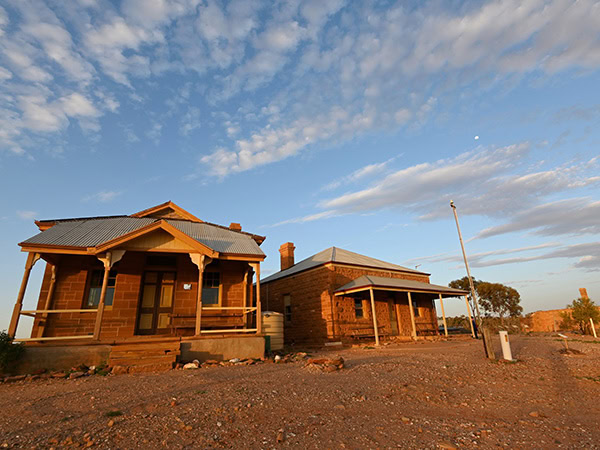
Milparinka may be one of NSW’s most remote ghost towns, but those who brave the long, dusty drive to the historic town site will be rewarded with a beautiful site: a classic outback pub. First opened in 1882, the Albert Hotel may be a popular draw card to this out-there town on the edge of the desert, but the heritage-listed historic buildings and local national parks are well worth the trek, too.
In recent years, Milparinka has undergone significant restoration , with efforts to preserve and beautify the town led largely by volunteers. The visitor centre, which operates out of the former courthouse, includes artifacts, artwork, and photographs, along with a cultural heritage room, which focuses on the connection between the town and the local Malyangapa people, who called the region home long before the settlers arrived in the 1880s.
Highlights
Along with the visitors centre’s historic exhibitions and the Albert Hotel, which has been in operation almost continually since it opened, the town’s post office has also been turned into a museum, with rooms dedicated to the history of post, transport, and the Rabbit Proof Fence, which was erected nearby in the 1880s. Other local highlights include a Dark Sky park, along with the old bakery, blacksmith, bank, pharmacy, and newspaper buildings.
How to get there
Milparinka is located in Corner County, three hours north of Broken Hill, nine hours north of Adelaide, 16 hours from Sydney, and 12 hours from Melbourne.
Accommodation
Visitors to Milparinka can stay overnight in the Albert Hotel, which has a handful of rooms for travellers, or camp in the Milparinka Caravan Park. There are also other accommodation options along the Sturt’s Steps Touring Route, including roadhouses and station stays.
6. Joadja
One of the closest ghost towns to Sydney, Joadja’s heyday was short-lived, with the once-thriving town only settled in 1870 before being abandoned by 1911. Unlike many of NSW’s other ghost towns, miners didn’t come here to Joadja in search of precious metals; instead, they came to mine kerosene.
Thanks to its remoteness, the town, which mostly consisted of skilled Scottish workers and their families, was almost entirely self-sufficient. For the first decade, everything was transported in and out using teams of bullocks. While the railway eventually made transporting goods – and humans – a little easier, eventually the shale deposit ran dry and the town was sold off to a fruit orchard.
Highlights
The nearby Joadja Distillery offers guided tours of the overgrown and crumbling ruins of Joadja. While tours of the ghost town don’t run every day (check the website for more details ), the award-winning distillery is usually open from Thursday to Monday so visitors can swing by for a tipple and glimpse the town from afar.
How to get there
Joadja is just over 1.5 hours south of Sydney and two hours northeast of Canberra. Roughly halfway between the two capitals, visiting the ghost town requires just a quick detour off Remembrance Driveway and can even be visited as a quick stopover between the two. The road in is gravel, but is usually kept in fairly good nick.
Accommodation
There are a couple of places to stay near Joadja, including The Seidler House . Offering spectacular views over Joadja and the Wingecarribee River gorge, this luxury, award-winning house was built by the late, great Harry Seidler.
Weekly travel news, experiences
insider tips, offers, and more.
7. Kiandra
Best known as the birthplace of Australian skiing, Kiandra is an abandoned gold mining town in the Snowy Mountains. The town, which was established in 1839, also held the record for being Australia’s highest town for more than a century.
However, despite both of these claims to fame, Kiandra, which was once home to 10,000 people and housed some pretty incredible-looking winter festivities (the photos of the skiing mailman and women in full Victorian-era garb snowshoeing are especially great), was all but abandoned by the 1930s.
Despite enjoying a short-term renaissance as a ski resort, complete with chalets, a ski rope tow, and Australia’s first T-bar lift, the town was eventually taken over by NPWS in 1974. While they demolished most of the buildings, the few remaining were unfortunately severely damaged during a bushfire in January 2020.
Highlights
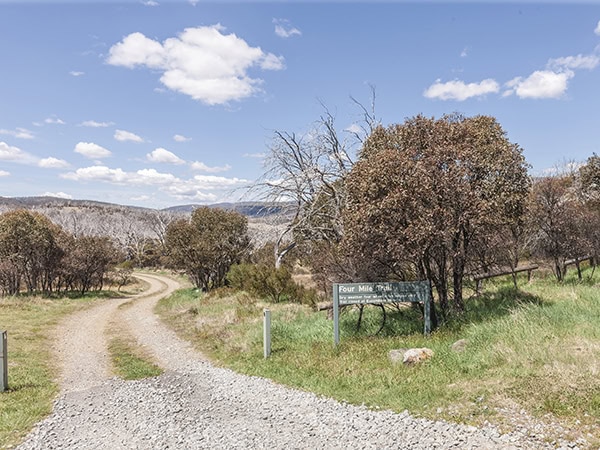
Despite undergoing significant restorations over the decade preceding the bushfire, all the remaining buildings in Kiandra are now closed to entry. However, the town site and walking trails are open to visitors. Other nearby attractions include Four Mile Hut , which is accessible via a 10-kilometre return walk, and Three Mile Dam.
How to get there
Kiandra Heritage Precinct is on the Snowy Mountains Highway in the Selwyn area of Kosciuszko National Park. Roughly halfway between Abaminaby and Talbingo, the old town is just under 2.5 hours southwest of Canberra. It is accessible via 2WD, however, travellers heading to the site during the winter months (June to October) are advised to carry snow chains.
Accommodation
Visitors to Kiandra can opt to either stay overnight in heritage accommodations, like the historic Daffodil Cottage, the Yarrangobilly Caves House , and Currango Homestead , or camp at the Three Mile Dam campground , which is just a short drive from the heritage site.
8. Newnes
Sitting at the edge of the Wolgan Valley in Wollemi National Park, Newnes was once a shale mining town home to nearly a thousand people. Now though, little remains other than the Newnes Hotel, a row of red-brick coke ovens, and a bunch of industrial ruins that have largely been reclaimed by nature.
Highlights
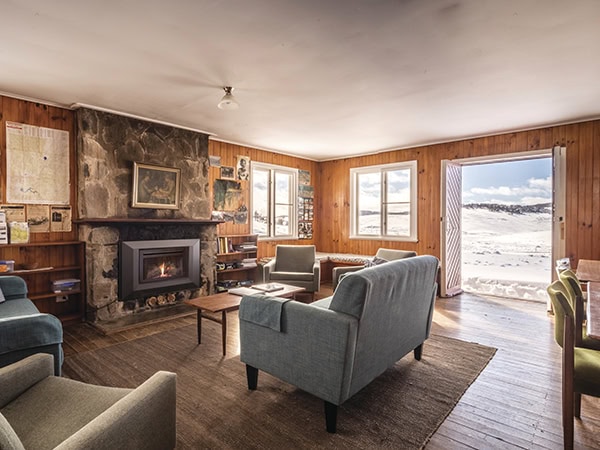
The main highlight of Newnes is the old Newnes Hotel , which was moved piece-by-piece after floods threatened to destroy it in 1986. The beehive-shaped kiln coke ovens at the start of the Newnes Industrial Ruins walk , are also pretty spectacular.
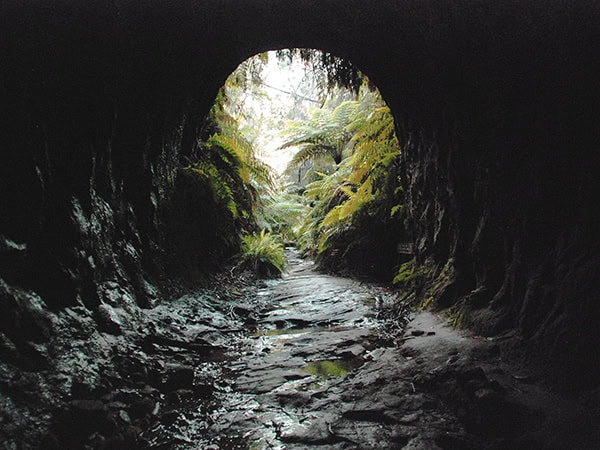
The walk, which follows the lines of the old railway track, also features plenty of other mining paraphernalia, including paraffin sheds and a distillation area, along with the ruins of the town itself. NSW’s famed Glow Worm Tunnel and the spectacular Gardens of Stone National Park are also nearby.
How to get there
Newnes is 2.5 hours west of Sydney and 45 minutes northeast of Lithgow via Wolgan Road. While in the past, the historic site was accessed via the Wolgan Valley, the collapse of the Wolgan Gap Road in 2022 has made getting to the town site trickier. Now, visitors can either access the historic attraction by crossing the river on foot or by 4WD.
Accommodation
Although it’s a bit trickier to get to these days thanks to the closure of the road, the Newnes Hotel has accommodation and cabins available. Access is currently via escorted 4WD access only (visitors with a 2WD car can park at the top). Newnes campground is still open, but it’s a long walk in.
9. Dalmorton
Dalmorton is another NSW ghost town that grew fast and then faded away. At its peak in the 1860s, the town in the northern NSW goldfields was home to an estimated 1,000 people, and somewhere between seven and 13 pubs, along with a police station, courthouse, and school. By 1877, however, only one pub was left open, along with three stores.
During the 1920s and 30s, it faced a small revival as a timber milling town. However, the construction of the new highway, which bypassed Dalmorton, led to the final closure of the post office in 1966. Now, little remains of the town other than a handful of buildings and the “convict tunnel"; a hand-dug tunnel that is believed to be haunted.
Highlights
These days, Dalmorton’s main attractions are the old tunnel (which was actually built using low-cost labour, not convicts) and the butcher shop, along with a handful of run-down houses, including some on private property. The area is also spectacular in spring, when wildflowers pop up throughout the old town site.
How to get there
Dalmorton is located in NSW’s Northern Rivers region, 7.5 hours north of Sydney, 5.5 hours south of Brisbane, and halfway between Glen Innes and Grafton – a route that used to take the old Cobb & Co stagecoaches three days to complete, but now takes just under 3.5 hours to drive.
Accommodation
Visitors to Dalmorton can camp in the nearby Dalmorton campground in Guy Fawkes River State Conservation Area. Visitors hoping for a little more luxury are best off heading to either Grafton or Glen Innes.
Still fascinated to read more about ghost towns? We’ve got a round-up of fascinating ghost towns in WA and Tasmania.