Can you swim at any beaches in Darwin? Here’s what you need to know

hero media
Darwin’s beaches stretch out in shades of soft turquoise, easy on the eyes and tempting in the heat. In the dry season, locals and visitors alike wade in, but swimming here comes with a few caveats best not ignored.

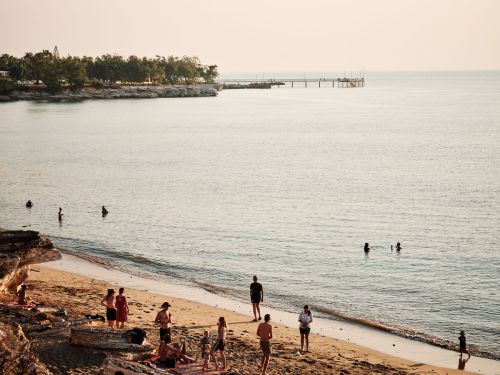
The risks? Crocs and stingers – because, well, this is the Top End. But on a dry season weekend, you’d be forgiven for thinking you’ve teleported to Bondi Beach, with 30 or so people splashing about at Nightcliff Beach and plenty more braving the ocean at Casuarina for a proper swim.

Swimming at the beach in Darwin is a personal call. Weigh up the risks, get informed, stick to patrolled areas when surf lifesavers are on duty, wear protective gear if it makes you feel better – and jump in if it feels right.

Here’s the lowdown on where you can swim, where to stay dry and how to enjoy Darwin’s beaches safely.

Where’s the safest place to swim in Darwin?

Darwin beaches
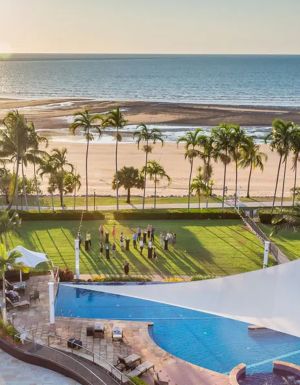
Swim and play at Darwin Waterfront (Image: Tourism & Events NT/Shaana McNaught)

Zero stress, zero surprises? Head to the saltwater lagoon beach at Darwin Waterfront, separated from the adjacent Darwin Harbour by a sea wall. It’s man-made, croc- and jellyfish-free and patrolled all year. There’s even a netted section and grassy banks for lounging, as well as wheelchair accessibility. The Wave Pool is nearby, with timed swells for boogie boarding. It’s the safest splash you’ll find.

Best beaches in Darwin for swimming

From June to August, things shift. The water’s clearer, jellyfish numbers drop and locals start dipping their toes – and more – in the ocean.

Nightcliff Beach
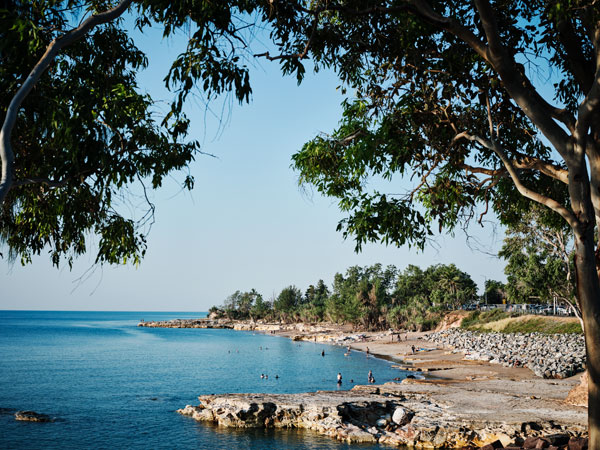
a scenic view of Nightcliff Beach, Darwin
The picturesque Nightcliff Beach feels like a hidden gem. (Image: Jeremy Simons)

At high tide, Nightcliff Beach is magic. The water turns turquoise, locals swim and wade, and confident swimmers jump from the rocks (safely). The Darwin Surf Life Saving Club patrols on Sundays during the dry season, and there’s a laid-back vibe that makes it feel like a hidden gem.

Early riser? Join the Darwin Dippers at 6.30am on Wednesdays for a group swim and post-dip coffee at the Foreshore Restaurant & Cafe .

Need tips, more detail or itinerary ideas tailored to you? Ask AT.

AI Prompt

Casuarina Beach
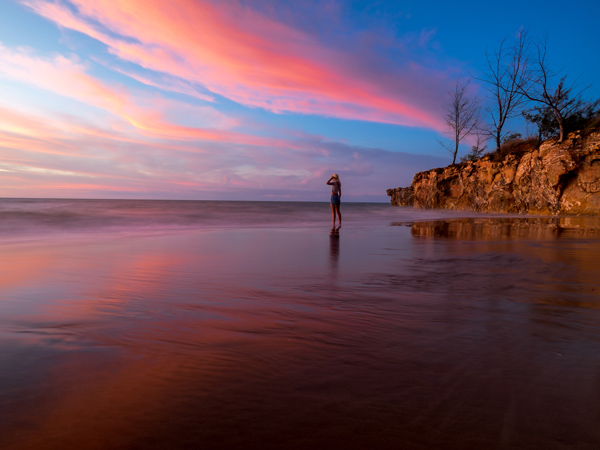
sunset at Casuarina Beach in Darwin
Witness a pretty, pink-hued sunset at Casuarina Beach. (Image: Tourism NT/ James Maddock)

Part of the Casuarina Coastal Reserve, this wide 4.5km beach is home to Darwin Surf Life Saving Club and its little nippers’ training sessions (Sundays, June to September). It’s also where ocean swims happen each August, with lifesavers patrolling on boards and watercraft.

No rock jumping here – just calm waves and wide-open space. After your swim, refuel at De La Plague cafe – one of the city’s best spots for post-beach brunch. It’s dog-friendly, too.

Mindil Beach
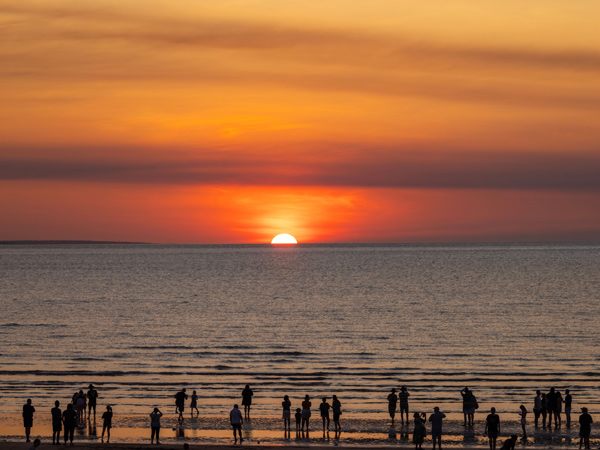
sunset at Mindil Beach, Darwin
Soak up magnificent sunsets at Mindil Beach. (Image: Tourism NT/Sean Scott)

People do swim at Mindil Beach during the dry season, but let’s be honest – you’re really here for the Mindil Beach Sunset Market . Grab a laksa, sit on the sand, and soak up that famous sunset – swimming optional. Lifeguards patrol from 2pm to 6pm, Thursday to Sunday (and during high tides earlier in the week).

East Point Beach
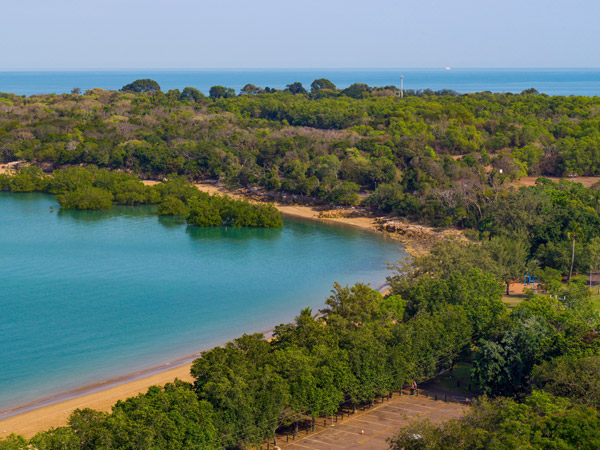
an aerial view of East Point Beach in Darwin
East Point Beach is surrounded by dense and thick mangroves. (Image: Tourism NT)

Patrolled by Mindil Beach Surf Life Saving Club on Sundays in the dry season, East Point Beach is part of the East Point Recreation Reserve, a curved 1.5km stretch ending in mangroves and rocky outcrops. Bonus: Lake Alexander is right behind the beach, offering a croc-free alternative if you’re not keen on the ocean.

Weekly travel news, experiences
insider tips, offers, and more.

What about stingrays?

Box jellyfish and Irukandji are no joke. They’re dangerous, sometimes deadly, and hard to spot. Stinger season runs from October to May, but stings have happened year-round. Kids are more at risk, and since 1975, all 14 recorded stinger-related deaths in the NT have been children.

Box jellyfish are clear with a boxy body and long venomous tentacles and their stings can be fatal. Irukandji (a group of smaller, highly venomous species) are tiny, but nasty. Some species are only the size of a thumbnail. If stung, pour vinegar on the area (not fresh water) and call 000 or find a lifeguard.

Are there crocs at Darwin beaches?
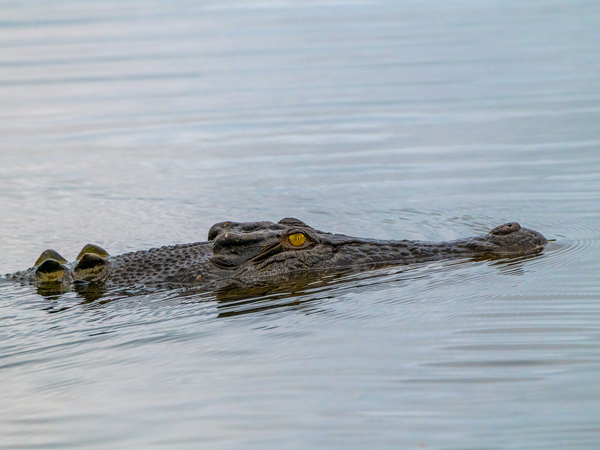
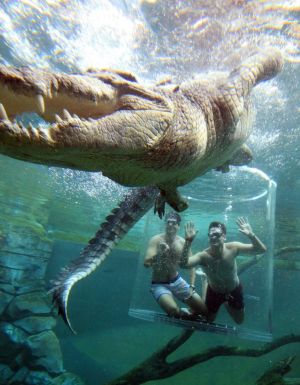
a wild saltwater crocodile swimming in the Northern Territory
Darwin is home to dangerous saltwater crocodiles. (Image: Caroline Brundle Bugge)

Yes, saltwater crocs live in Darwin’s waters, but there hasn’t been a fatal attack at these beaches in over 120 years. Why? Because lifesavers manage the risks and beaches close immediately if crocs are spotted. But always check the water before you enter when swimming at the beach. Any natural body of water in the Top End may contain large and potentially dangerous crocodiles.

What about tides?
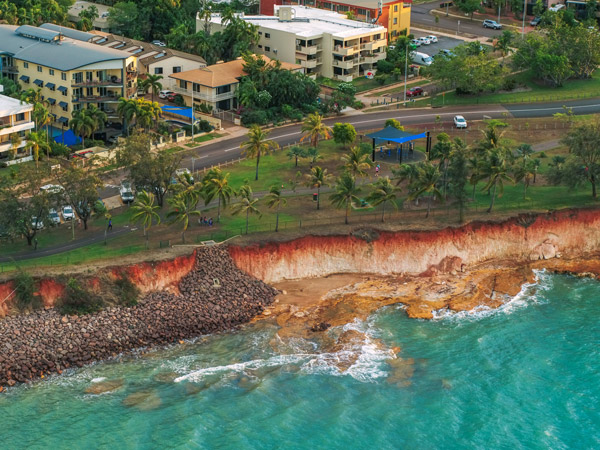
an aerial view of Nightcliff Beach, Darwin
Nightcliff Beach is moderately steep and narrow at high tide. (Image: Tourism NT)

Darwin has some of the biggest tidal shifts in the country, with changes of up to eight metres between low and high tide. At low tide, beaches can turn into vast stretches of exposed mudflats, making swimming tricky (and unappealing). High tide is your best bet – the water is deeper, clearer, and safer, with fewer sharp rocks and critters underfoot.

Top tips for beach swimming in Darwin

  • Stick to patrolled beaches.
  • Swim in the dry season (June–August).
  • Check signs for warnings and the water for crocs before diving in.
Leah McLennan
Leah McLennan is a freelance writer based in Darwin. She was a journalist in Sydney for over a decade and counts her time as travel editor for Australian Associated Press as one of the highlights of her career. From exploring remote campsites in the Top End with her family, to seeking out new art galleries in faraway cities, she’ll grab an adventurous or arty travel experience within her reach.
View profile and articles
hero media

Discovering East Arnhem: Australia’s most unique and rewarding corner

    Joanne Millares Joanne Millares

    Hard to reach and harder to forget, East Arnhem offers something rare in modern travel: the chance to slow down and experience Country on its own terms.

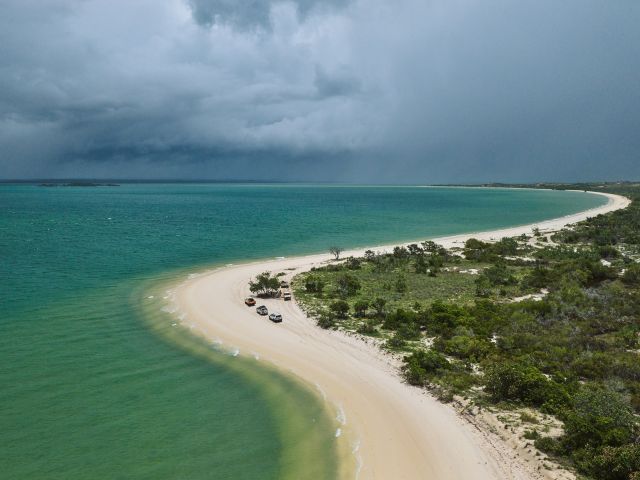
    The sky feels bigger in East Arnhem . It stretches wide and uninterrupted above rouged earth, stringybark woodland and beaches so empty they seem to belong to another era. The coastline curves for kilometres without a footprint and the horizon runs on forever.

    For comedian Lou Wall, the scale of the place was the first thing that hit them.

    “The sheer openness,” they say. “The sky feels infinite and the land stretches out endlessly. It’s pretty breathtaking visually.”

    But the physical landscape is only part of the story. The real reward isn’t only the scenery but the shift in perspective the journey brings. Visitors stop trying to tick off the destination and a real engagement takes over.

    “It made me never want to travel again,” Wall jokes. “In that I never wanted to leave East Arnhem.”

    Getting there

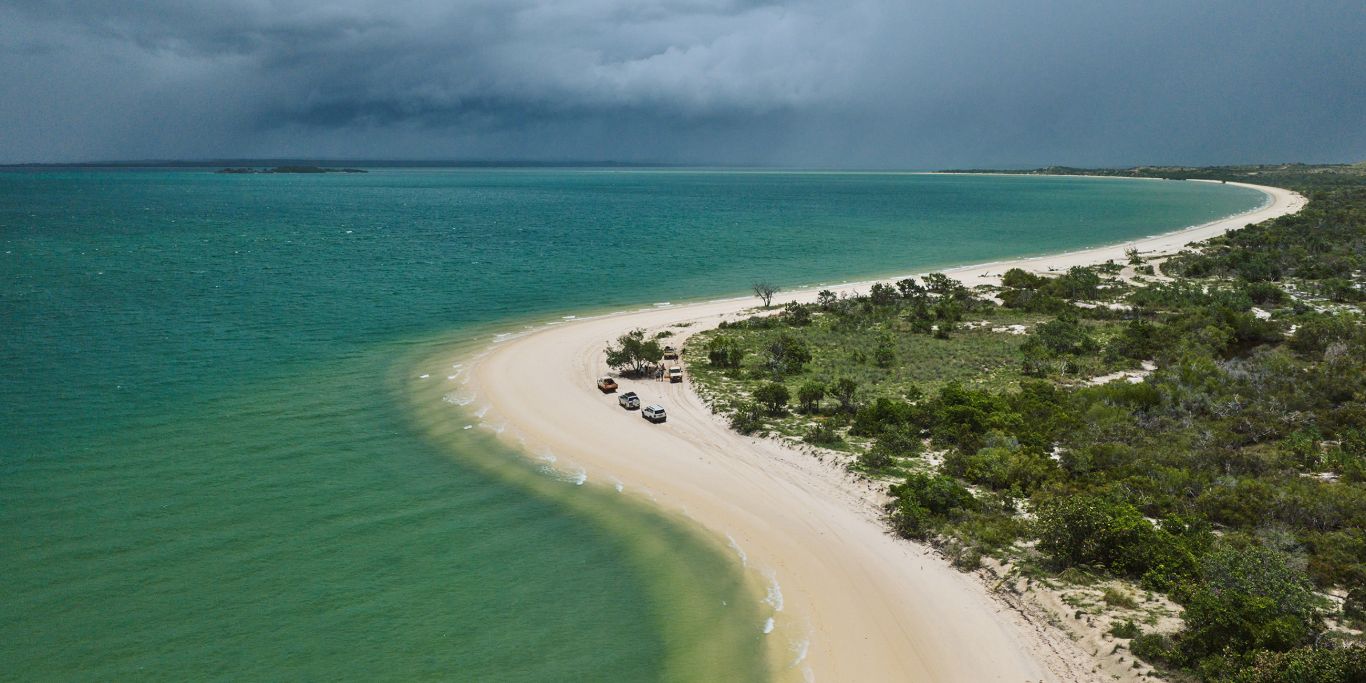
    Aerial shot of East Arnhem’s coastline as cars trace the curve of the shore.
    Sail along the remote coastline on an expedition cruise.

    Reaching East Arnhem is part of the adventure. Travellers typically fly into Gove Airport near Nhulunbuy via Darwin or Cairns, or arrive by expedition cruise along the remote coastline. Others make the journey overland along rutted dirt roads that cut through East Arnhem’s small pockets of monsoon forest.

    However you arrive, there’s a distinct feeling of crossing into somewhere different. Permits are required to visit the region, reflecting the fact that this is Yolŋu land where communities and traditional owners maintain deep cultural connections to Country.

    The extra planning becomes part of the experience. By the time visitors arrive, they understand they’re entering a place not just of respect, but also patience and curiosity.

    At one with nature

    East Arnhem’s  landscapes leave a strong imprint. For Wall, one place in particular still lingers in their memory: Ngalarrkpuy , also known as Lonely Beach, near Bawaka Homeland.

    “I genuinely felt like I was living inside an Instagram filter,” they say. “One of the most stunning feats of nature I’ve ever seen. The water was so clear I swear I could see even the fish smiling.”

    Across the region, natural experiences unfold at a slower pace. Fishing, beachcombing and island hopping reveal the rhythm of the coastline. The tides shape daily life and the vastness of the landscape makes even simple moments feel downright cinematic.

    For visitors with limited time, Wall says the Bawaka Homeland experience is unmissable.

    “I just left and I’m already planning when I can get back there.”

    The sense of remoteness is part of the appeal. In a country where many beaches are crowded and well-trodden, East Arnhem’s coastline still feels wonderfully wild.

    Immersing in local culture

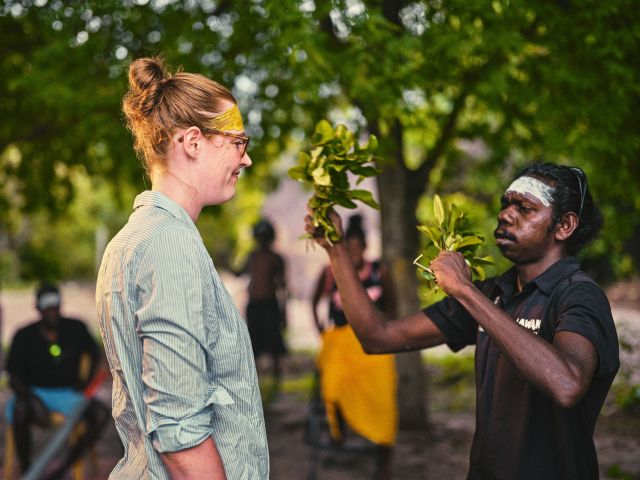
    A visitor spends a meaningful moment alongside Yolŋu guides, gaining insight into their deep cultural knowledge and connection to the land.
    Experience authentic moments with the locals.

    Culture is woven through every experience in East Arnhem. Visitors have the opportunity to spend time on Country with Yolŋu guides and knowledge holders who share stories and traditions that have been passed down for generations.

    For Wall, one of the most powerful moments came during a conversation with a Yolŋu elder.

    “I got to meet a traditional elder, Mayalil, in Nhulunbuy,” they say. “Listening to her talk about her home made the land feel alive in ways I couldn’t have imagined.”

    The region is also home to internationally recognised Aboriginal art centres where artists shape works deeply connected to land and family knowledge.

    Music carries the same cultural energy. East Arnhem has produced globally recognised artists such as King Stingray and Baker Boy, blending Yolŋu language, storytelling and contemporary sound.

    Wall experienced this musical spirit first-hand.

    “A jam session around the fire was it for me,” they say. “Letting the deep joy and history of their music wash over me…  and meeting a few of the King Stingray musicians was unreal.”

    These moments of human connection often become the most memorable part of a visit.

    Spotting local wildlife

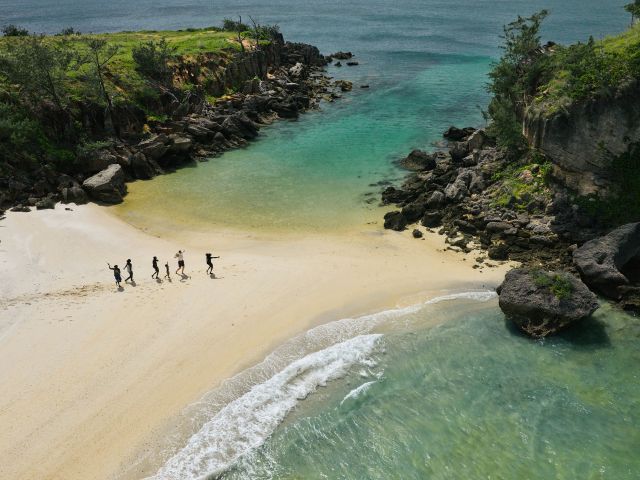
    An aerial view of the beach shows tiny figures lined up across the white sand, moving as if in a rhythmic dance.
    Step into a world where nature reigns.

    The wildlife of East Arnhem adds another layer to the experience. The region is home to an extraordinary range of animals, from waterbirds and turtles to dugongs, dolphins and the formidable saltwater crocodile.

    Wall admits they didn’t actually spot a croc during their visit.

    “Devastatingly, I didn’t see one,” they laugh. “But with all the stories from the locals I definitely gained a healthy respect for caution.”

    Some of the most memorable wildlife encounters can be surprisingly small., At Banubanu Beach Retreat on Bremer Island, Wall remembers walking along the beach one morning and watching it come alive.

    “As you walk through the sand you see hundreds of crabs scurrying into their holes as you pass by,” they say. “Such a small thing, but it was completely magical.”

    Moments like this reveal the quieter rhythms of East Arnhem, where even the smallest creatures seem to play a part in the landscape.

    Visitors who make the journey soon learn the most important travel tip of all.

    “Go in open-minded with a sense of curiosity,” Wall says. “Be prepared to ditch your plans. The land and the locals will guide you on an adventure no spreadsheets could ever compete with.”

    And most importantly, they add, don’t rush.

    “The land and people deserve your time and attention. You’ll be all the better for slowing down.”

    For more information on visiting East Arnhem, head to eastarnhem.com.au .