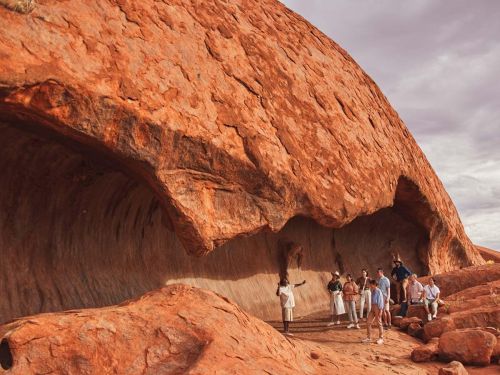
We take a look at the incredible variety of things to do in Uluru at Uluru-Kata Tjuta National Park above and beyond scaling the Rock.
Anangu traditional owner and artist Malya Teamay – whose artwork appears on the entry ticket to Uluru-Kata Tjuta National Park – has never liked seeing people run the risk of injury – or worse – by attempting to scale the Rock. “Anangu are very sad whenever anybody gets hurt or dies on the climb," he says. “It’s better if they take a photo."
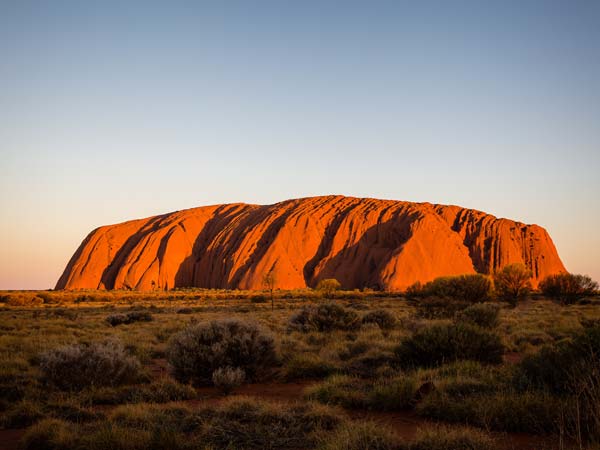
Since a chain was installed on Uluru’s steep western face in 1964, climbing the monolith has been a tourist attraction; but it has always flown in the face of Anangu’s spiritual beliefs and their polite requests to visitors to refrain from the activity due to cultural and safety reasons.
But on 26 October 2019, the Uluru climb was officially closed thanks to a unanimous decision from the Uluru-Kata Tjuta National Park board. And in case you’re wondering what other things there are to do in Uluru during a visit to this UNESCO World Heritage-listed cultural landscape, the answer is a lot – more than 100 tours and experiences, in fact.
Taking a photo is just the beginning. Here are 24 of our favourite things to do at Uluru by experience.
Art & Culture | History & Heritage | Food & Dining | Luxury | Outdoor | Family | Self-guided
Art and culture
1. Visit Field of Light
Since its inception in 2016, Field of Light – Bruce Munro’s site-specific light installation at the base of Uluru – has become a Red Centre bucket-list item in its own right. The good news for those who haven’t visited yet is that its run has been extended again – this time indefinitely.
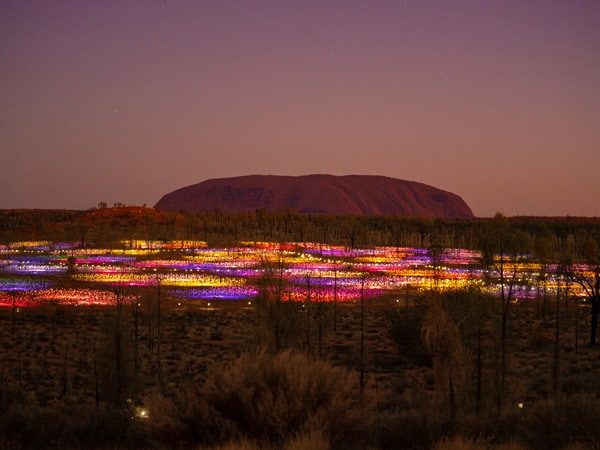
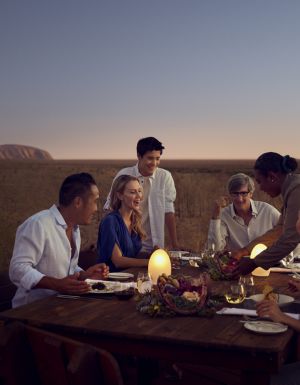
There are a number of ways to experience it (including the Field of Light Pass, which starts at $43 and includes your transfer to the site and a self-guided walk), but the pièce de résistance is A Field Of Light Dinner , an exclusive outback dining experience that marries Voyages Ayers Rock Resort’s classic Sounds of Silence dinner with Munro’s installation.
The evening begins with canapés and views of Uluru at sunset (plus Field of Light’s carpet of 50,000 solar-powered glass spheres beginning to come to life for the night below) and evolves as the sun goes down to encompass a three-course bush tucker-infused menu (think native dukkha-crusted kangaroo or barramundi slicked with lemon myrtle cream) and a star talk that guides you through the southern night sky from an Indigenous perspective.
It’s capped off by a self-guided tour through the twinkling Field of Light, which looks spectacular in photos but blows you away in real life.
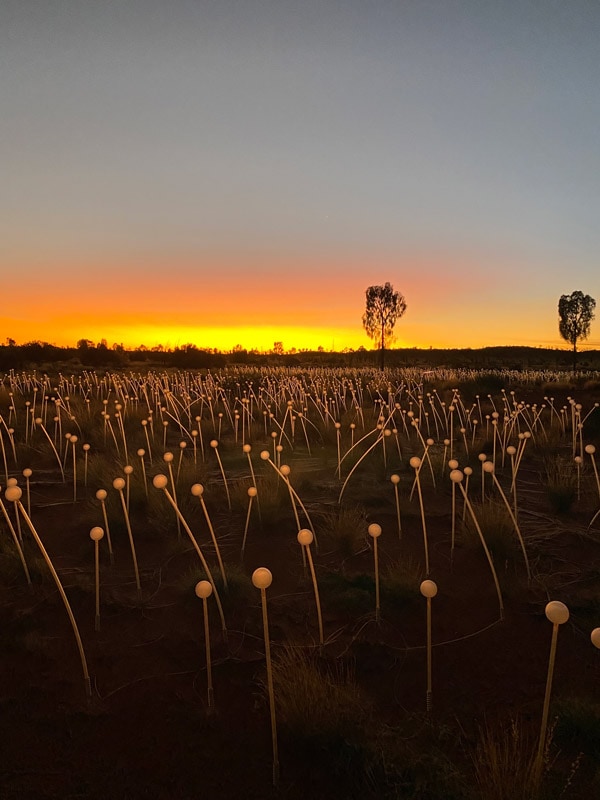
Start the evening by arriving by camel – where a leisurely amble through the red sand dunes at golden hour affords you your first glimpse of Uluru before you’re met with a glass of sparkling on arrival at the viewing platform – or better yet, helicopter.
2. Do a dot painting workshop
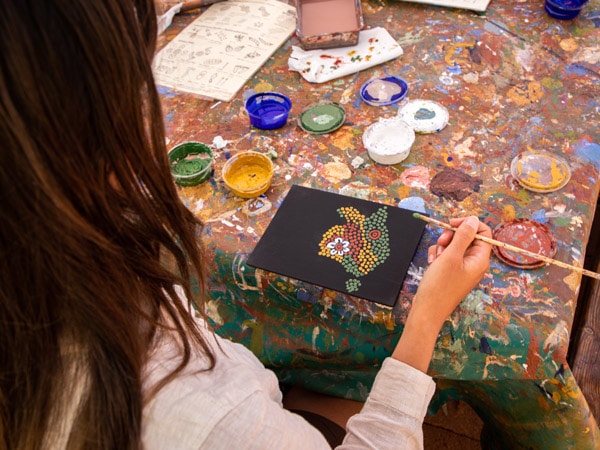
Get an insight into the Aboriginal Art created in the surrounds of Uluru with a visit to Maruku . it is a not-for-profit art and craft corporation owned and operated by Anangu and made up of around 900 artists from over 20 remote communities across the Central and Western deserts. Take part in one of their dot painting workshops at Voyages Ayers Rock Resort to gain an insight into their practice and have fun creating your own artwork.
Anangu paintings are produced for educational and ceremonial purposes as well as the telling of events. In this workshop, you’ll come to understand how Tjukurpa – creation, law, stories – is the basis of Anangu culture and worldview and that it’s what each piece of artwork is based on and expresses. You’ll learn the different symbols that make up Tjukurpa and, with the help of a Maruku guide and local artist, recreate your own life story in pigment.
3. Discover local Indigenous art
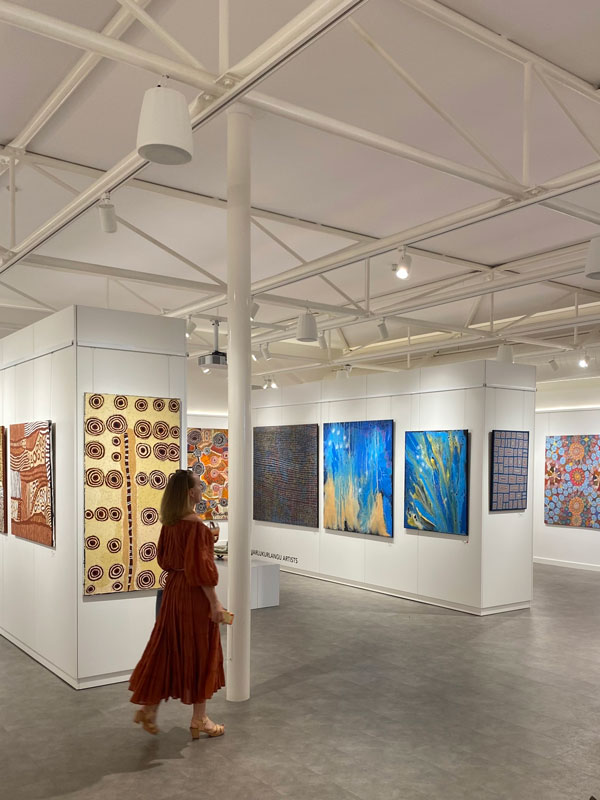
You can also check out the three art galleries at Voyages Ayers Rock Resort : the Gallery of Central Australia (GoCA), Mulgara Gallery and Mingkiri Arts. The newly created GoCA opened in 2021, and houses over 300 artworks that support current and emerging artists.
4. Go onto Country with SEIT Patji
Gain a better understanding of the Anangu history and stories of the area with a tour with Seit Patji . Named after the Anangu homelands (Patji), listeners on this Aboriginal-guide-led tour will learn about the story of Paddy Uluru, and how he fought for Aboriginal land rights, as well as how the original inhabitants survived in this harsh environment.
5. See Opera in the desert
As of 2023, expect to see opera divas return to the desert. Opera Gala at Uluru is set to be an unforgettable experience, with performers belting out their hearts into the vastness of the surrounding landscape.
History and heritage
6. Visit the Uluru-Kata Tjuta Cultural Centre
Start your trip by learning about the history of the park, as well as the activities available in the area. You can also get an insight into the rich culture of the local Anangu people, who have been living on the land and its surrounds for at least 22,000 years.
7. Walk or cycle Uluru
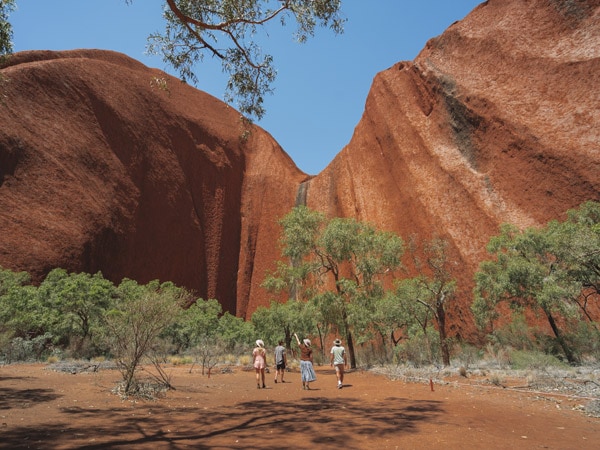
Join a free ranger-guided Mala Walk to circumnavigate Uluru on foot and visit the painted caves and waterholes of the traditional custodians, or cycle the pathway around the base to explore at your own pace.
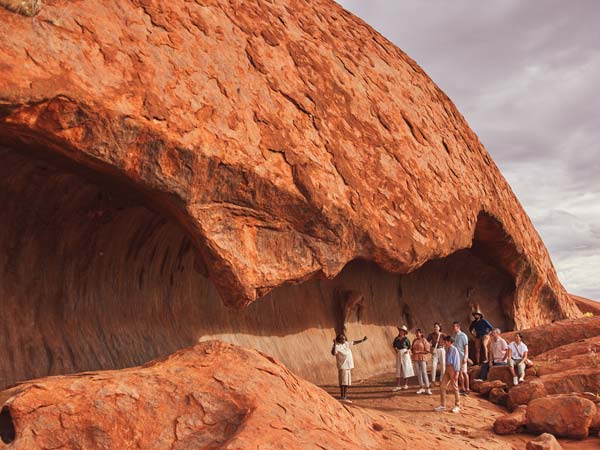
There is also the Uluru Base Walk – an unguided 10km loop that not only offers a chance to get up, close and personal with the spectacular and sacred formation but passes through desert, woodlands and rock art.
Need tips, more detail or itinerary ideas tailored to you? Ask AT.
AI Prompt
Food and dining
8. Tali Wiru dune-top dining
One of the most unforgettable things you can do during your time in the Red Centre is the open-air fine-dining experience Tali Wiru (it is one of several dining experiences and restaurants in Uluru to try). Its name means ‘beautiful dune’ in the local Anangu language, Pitjantjatjara, and sees guests travelling out to a remote southern dune for a champagne arrival at golden hour with musical accompaniment by way of the didgeridoo.
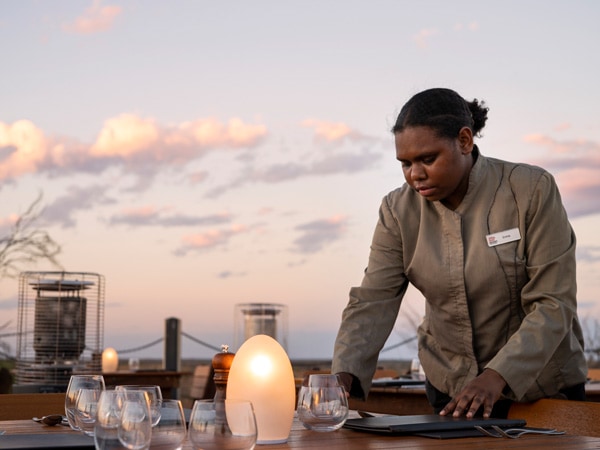
While you snack on canapés crafted from bush tucker – think ingredients like green ants, aka gulguk, wild-harvested here in the Northern Territory – you’ll take in a 360-degree view of the desert, the distant domes of Kata Tjuta, and of course Uluru in all its various shades of sundown.
As the still desert night descends, you’ll be seated for an intimate four-course dinner under the stars. Once again, dishes feature native ingredients: think pressed wallaby with charred witlof, pickled grapes, wild garlic, quandong glass and Davidson plum; and toothfish with kombucha and bush honey roasted heirloom carrots, Jerusalem artichoke puree and bush grains. Tali Wiru operates seasonally from April to October.
9. Go on a bush tucker journey
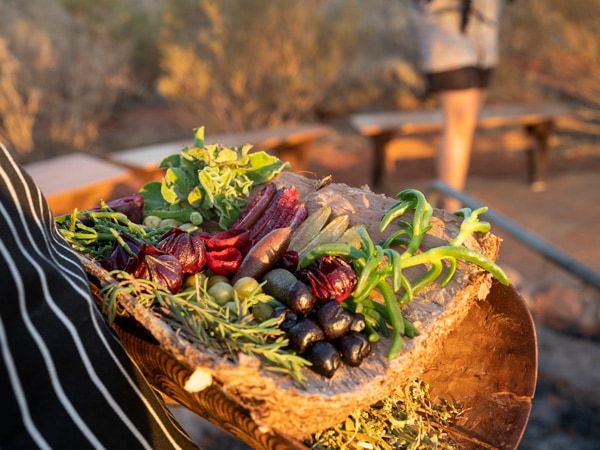
Discover the mystery, energy and wisdom of Australia’s Indigenous people by participating in one of the free guest activities available around the resort. The Bush Food Experience is a favourite among guests at Ayers Rock Resort, where you can learn about native Australian bush foods and traditional food preparation methods. Taste seasonal plants, seeds, fruits and spices before enjoying a cooking demonstration.
10. Sip on a cocktail at the Walpa Lobby Bar
Stop by for a pre-dinner drink or nightcap after a sunset tour, or sip away the afternoon with an Indigenous-inspired cocktail at the relaxed and inviting Walpa Lobby Bar . You’ll find classic cocktails alongside more exotic concoctions using ingredients sourced from all over Australia; the signature lemon myrtle martini is a standout!
Luxury
11. Book in for desert glamping
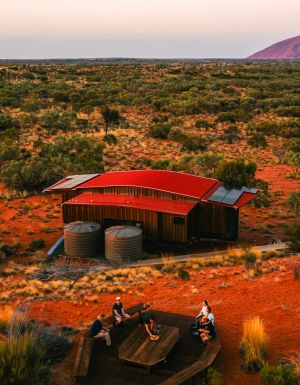
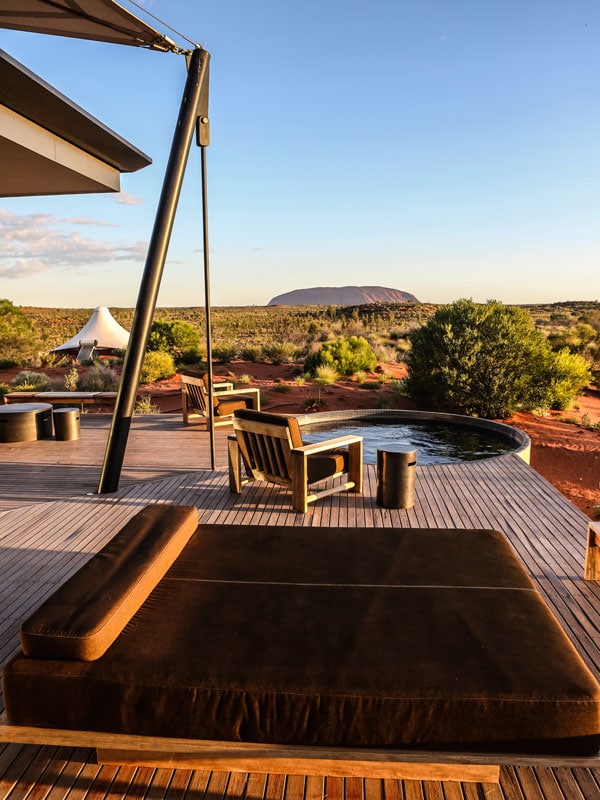
If you want the freedom of camping but with all the trimmings, we recommend you book in for an unforgettable glamping stay at Longitude 131. Desert glamping at its finest with views over Uluru beyond your wildest dreams, you can check out our review of the luxurious Longitude here.
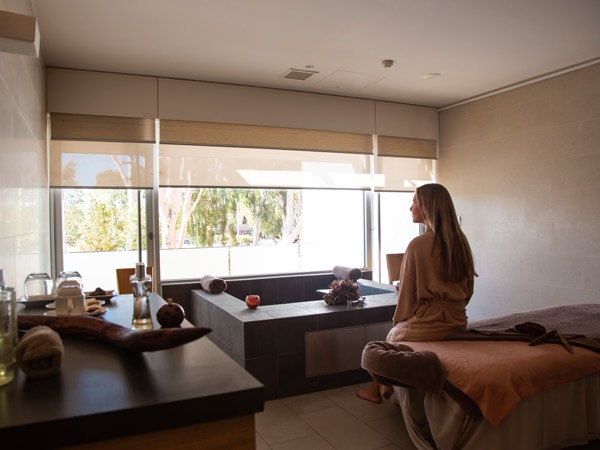
12. Unwind at the Red Ochre Spa
Red Ochre Spa , located in Sails of the Desert, is an outback oasis in the heart of Uluru. Swap an accidental ‘exfoliation by red dirt’ for an Elixir Body Exfoliation or spoil yourself with one of its Signature Journeys, such as the Desert Awakening or Uluru Recovery; designed to alleviate weary bodies after action-packed days spent exploring.
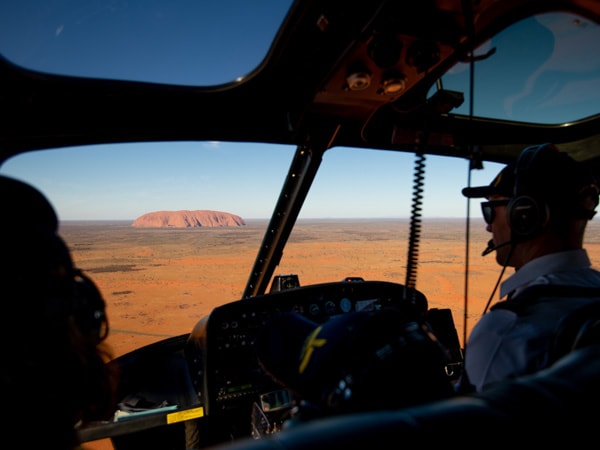
13. See Uluru and Kata Tjuta from the air
Book a flight for two to enjoy 360-degree, uninterrupted views of the great Australian outback and two of its most unique and impressive monoliths: Uluru and Kata Tjuta.
This once-in-a-lifetime experience is made even more special when you take flight at sunrise or sunset, as the vast desert landscape becomes smudged with shades of purple, pink, orange, red and yellow. Both helicopter and plane rides are available.
Outdoor activities
14. Walk Kata Tjuta
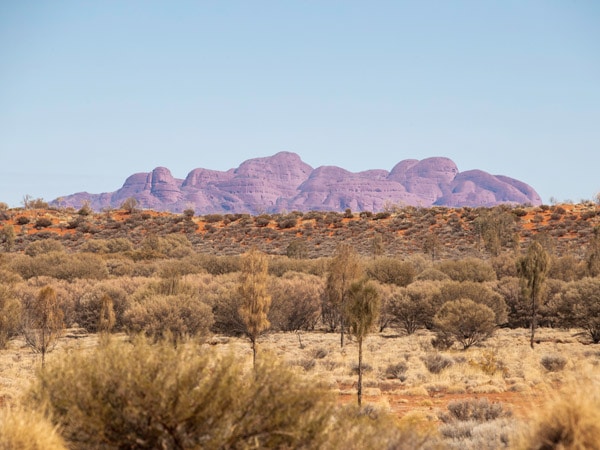
Make a pilgrimage to Uluru-Kata Tjuta National Park’s other iconic rock formations with one of SEIT Outback Australia’s off-the-beaten-track tours. Once known as the Olgas, Kata Tjuta is a Pitjantjatjara term that means ‘many heads’; the 36 domes in question rise up to 546 metres above the desert plain and were formed by the same geological events – beginning 550 million years ago – that left the monolith of Uluru exposed to the elements.
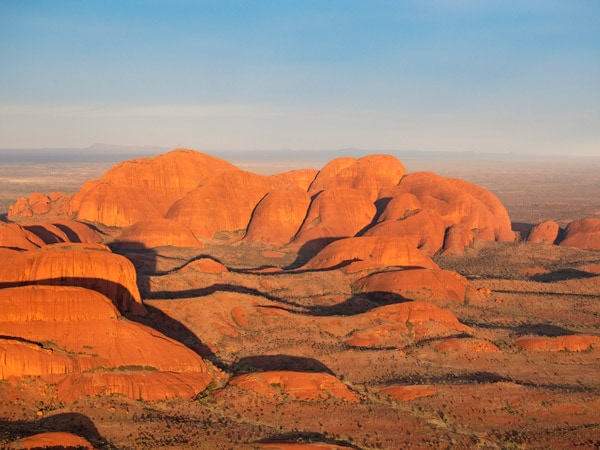
The area is sacred under Anangu men’s law and is only accessible to visitors via the Walpa Gorge walk and slightly more challenging Valley of the Winds.
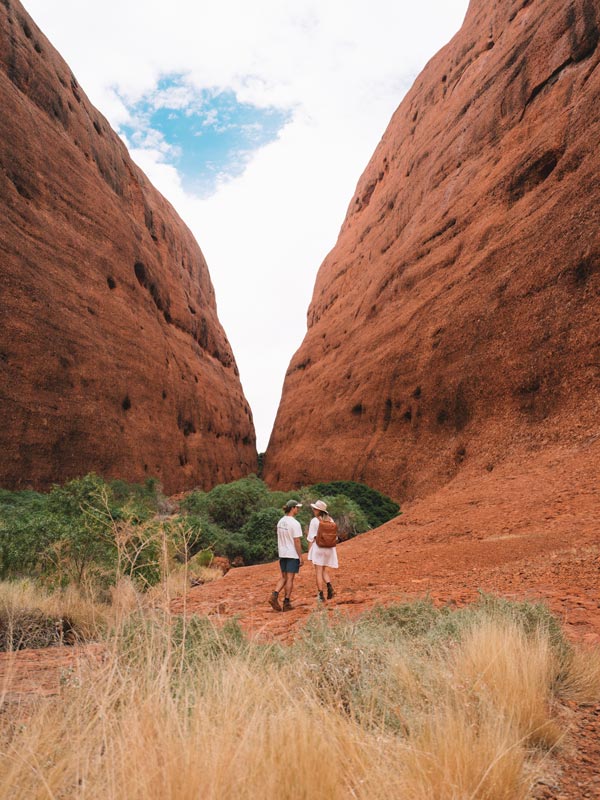
Walk the 7.5-kilometre Valley of the Winds early in the morning before the sun beats down too hard to take in awe-inspiring scenery and feel the iron-rich sandstone almost vibrating underfoot.
15. Head out to Watarrka National Park (Kings Canyon)
You’re already in the centre – why not venture a little further? It’s a three-hour road trip to the red rock ridges of Watarrka National Park (Kings Canyon). Head out hiking on the Kings Canyon Rim Walk, indulge in an Under a Desert Moon dinner at Kings Canyon Resort and explore the lush valley under the Garden of Eden.
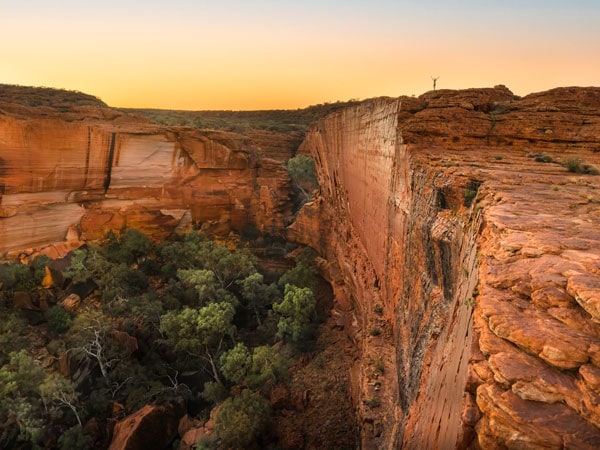
If you’d rather have an expert show you the ropes, there is also an Uluru to Kings Canyon tour with AAT Kings .
Weekly travel news, experiences
insider tips, offers, and more.
16. Skydive Uluru
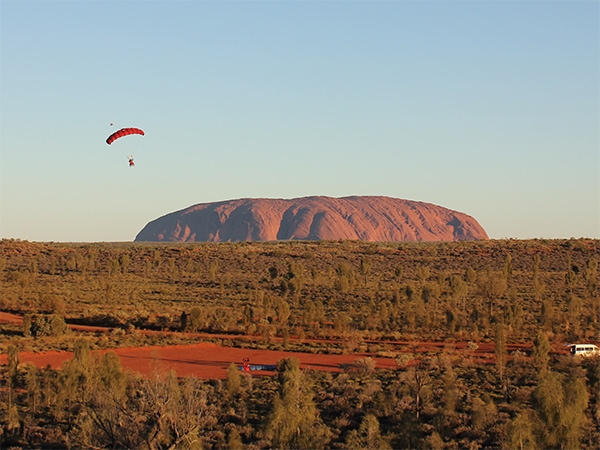
True thriller-seekers apply here: for a tandem skydive taking in the best bits of the Red Centre, from Uluru to Kata-Tjuta, Lake Amadeus and Mt Conner.
17. Take a sunrise tour
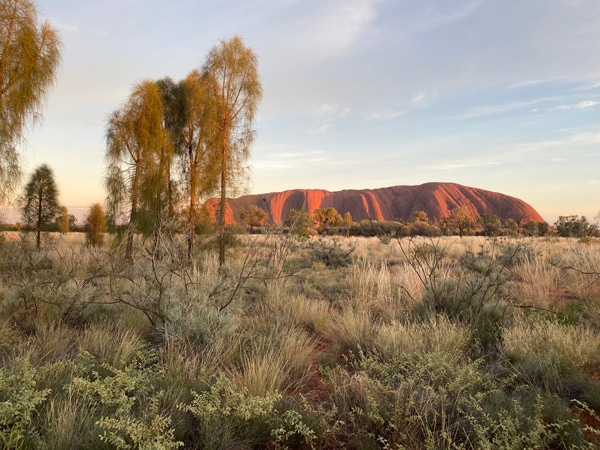
Rise before the sun to welcome the dawn of a new day as the night stars fade and an array of colours signal a new beginning on the Desert Awakenings Tour . Enjoy a traditional Aussie bushman’s breakfast before an introduction from your guide on the ancient landscape, ecology, culture, heritage and history of Australia’s spiritual heartland.
Armed with this new, deeper understanding of the landscape, you can then follow in the footsteps of the ancestral beings that helped shape this special part of our country on a guided tour around the base of Uluru.
18. Run the Australian Outback Marathon
Line up a visit to one of the most extreme environments on earth with an extreme challenge. Slated to run mid-year, the Australian Outback Marathon sees sporty types come from all over the world to charge through the red dust at breakneck speed.
Family activities
19. Watch the night sky
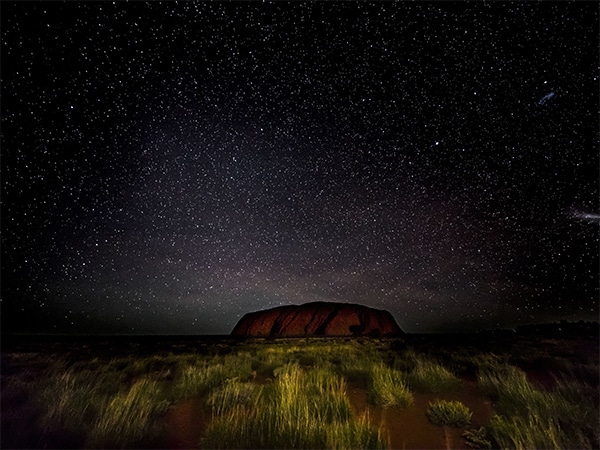
There aren’t many places on the planet better suited to stargazing than right here at Uluru. Outback Sky Journeys provides the chance to explore the galaxy of stars in the southern night sky with Voyages Ayers Rock Resort’s resident astronomer: taking in everything from how ancient cultures used it as a canvas for mythology (the Southern Cross as a possum, anyone?) to exploring different constellations, stars and planets with telescopes.
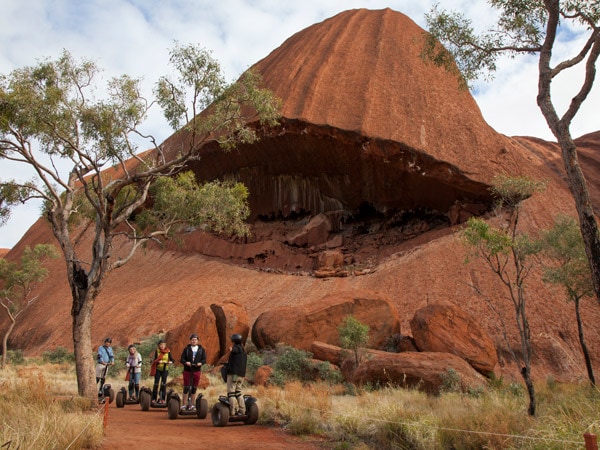
20. See Uluru by Segway
Segway sceptics, prepare to have your preconceptions dashed as you circle Uluru’s full 12-kilometre base in (relative) speed and style. Fifteen minutes’ practice will have you ready to go – intuitive and self-balancing, Segways are surprisingly easy to operate and perhaps not-so-surprisingly fun, too.
You’ll pass walkers, cyclists and joggers as you cruise along the red-dirt path at a pace that not only whips up a cool breeze but, crucially, allows you to take in both the magnitude of the monolith as well as its texture and nuances: from a distance and in photos we don’t see the many caves, ridges and grooves erosion has left on the Rock but from this vantage point it’s all there to observe.
Along the way your guide will share stories about the incredible geology of Uluru as well as the culture of its traditional owners, Anangu. The tour is suitable for children 12 and over.
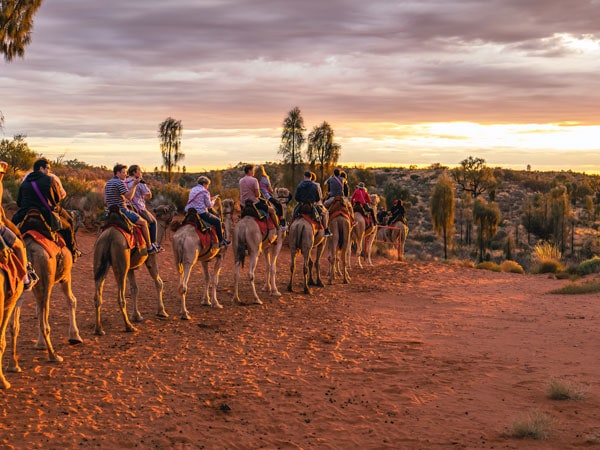
21. Take a camel ride across the dunes
Time this with sunrise or sunset, and enjoy a quiet, leisurely stroll on board a ‘ship of the desert’ (aka a camel).
Self-drive touring/or self-guided tours
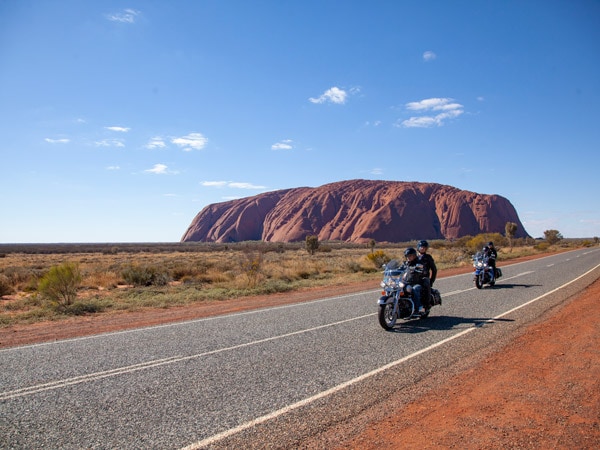
22. Ride a Harley Davidson
Segway not your speed? Try a ride round the Rock on an iconic Harley Davidson motorbike instead .
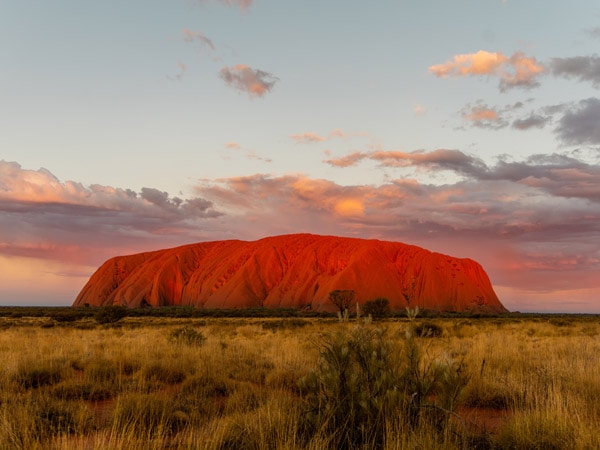
23. Watch the sun set over Uluru
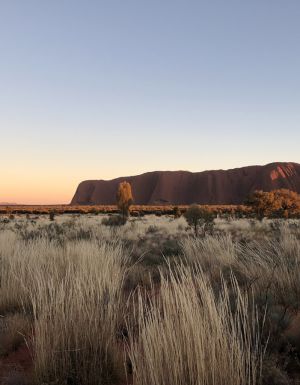
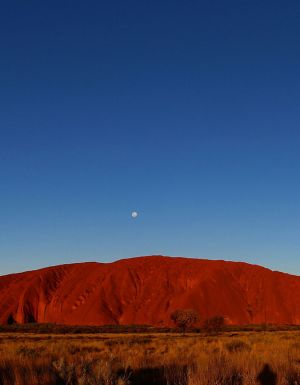
Sunrise and sunset is when you will catch that iconic red glow – so make sure not to miss out. Make the most of it by taking a seat, snuggling up and watching the colours shift at one of the sunset viewing platforms at Uluru .
24. Take a photo tour
Get snappy with a self-guided Uluru photo tour. Whether you’ve fully into the film resurgence, are mad about polaroids or attached at the hip to your DSLR, Uluru is the place to flex your skills as a photographer. It’s also free to do, which is excellent news for anyone wanting to do Uluru on a budget.
25. Cycle around Uluṟu
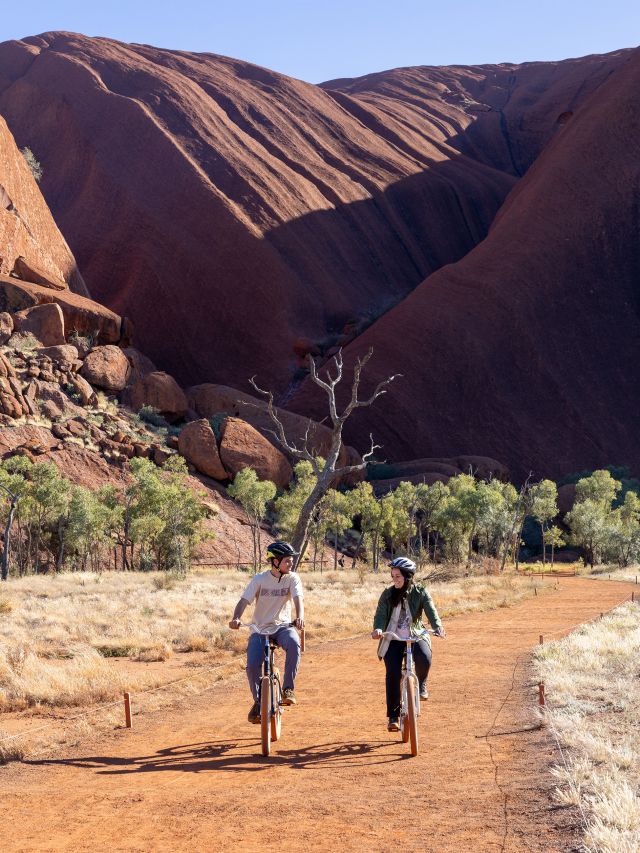
Hop on a bike and discover Uluṟu and its surrounding gems at your own pace with Uluru Bike Ride . Operated by Outback Cycling, this family-friendly, affordable activity is an adventurous way to see ancient rock art and waterholes before taking in the scale and detail of the magnificent Uluṟu.
For more information on Uluṯu & things to do in the NT, visit the official Northern Territory website at northernterritory.com

Australian Traveller
View profile and articles