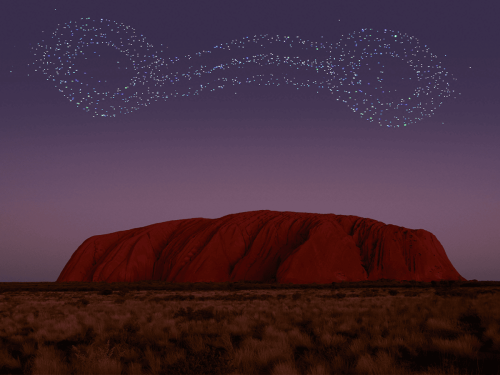
Taking flight at Wintjiri Wiṟu: Uluṟu’s breathtaking new light show

hero media
Discover the new cultural storytelling experience that is lighting up Uluṟu each night.

For the first time, visitors are receiving a privileged invitation to personally experience a Tjukurpa story, with the launch of Wintjiri Wiṟu in May this year. Uluṟu’s newest attraction is also its most culturally significant, telling a chapter of the ancient Mala story from Kaltukatjara to Uluṟu.

Aṉangu share the Mala story, from Kaltukatjara to Uluṟu, through a drone, sound and light show designed and produced by RAMUS.

The Wintjiri Wiṟu backstory

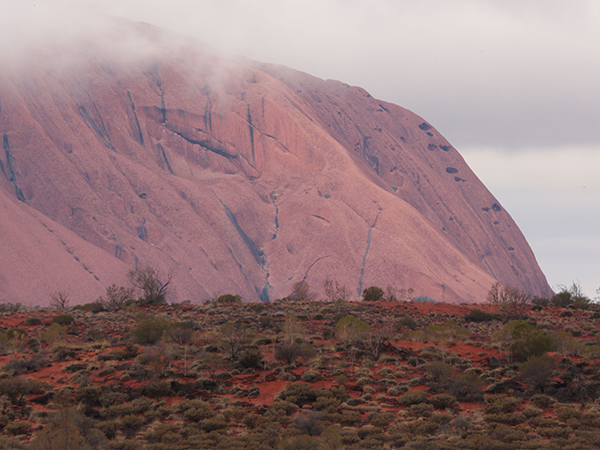
Venturing into the ancient Uluṟu-Kata Tjuṯa National Park is something you will never forget. Sacred to the Aṉangu people, Uluṟu holds secrets to many Aṉangu creation stories, or Tjukurpa (pronounced ‘chook-orr-pa’).

Tjukurpa is the foundation of Aṉangu culture and is what connects the Yankunytjatjara and Pitjantjatjara people to Country and their ancestors. It is all-encompassing. From important lessons on survival, to relationships and how to behave and the origins of the universe.

Passed on verbally through generations, you won’t find a book on Tjukurpa, and equally, you won’t be able to learn Tjukurpa stories on a whim. Aṉangu only share Tjukurpa with people they trust as it’s an intimate look into their culture.
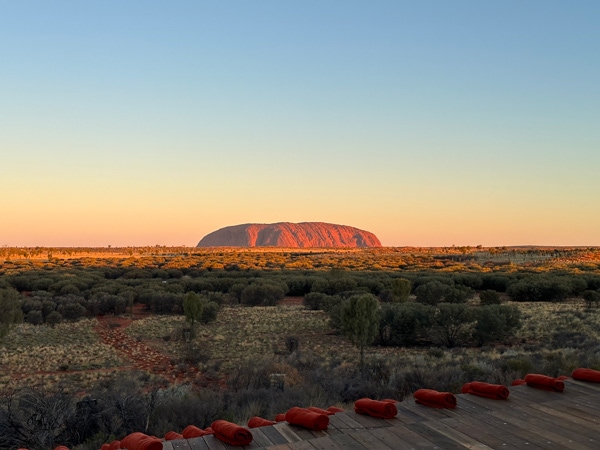
Uluru at sunset
Tjukurpa is the foundation of Aṉangu culture and connects the Yankunytjatjara and Pitjantjatjara people to Country and their ancestors. (Image: Emily Murphy)

Not only is Wintjiri Wiru the world’s largest permanent drone show, with more than 1100 of the unmanned aerial vehicles taking flight, but it’s also the first time an Indigenous story has been told through lights, lasers, projection and drone technology at this scale and frequency.

Meaning a ‘beautiful view out to the horizon’, the idea of Wintjiri Wiru came when light artist Bruce Ramus, through his world-renowned studio RAMUS, proposed to tell the Mala story using this technology.
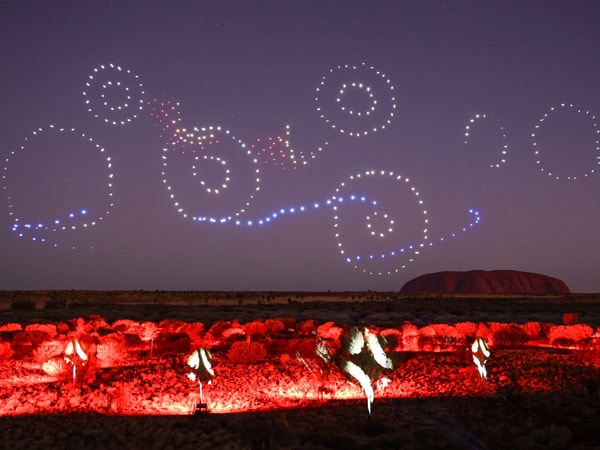
The Rocks drones during Wintjiri Wiru
Wintjiri Wiṟu is the world’s largest permanent drone show. (Image: Getty Images for Voyages Indigenous Tourism Australia)

The formation of the Wintjiri Wiṟu Working Group, comprised of senior Aṉangu from Kaltukatjara and Mutitjulu, was fundamental in ensuring the Tjukurpa story was accurate and sensitively told. Listening was at the core of the entire creative process for Ramus. Understanding through listening deeply from the heart. This enabled him to choose technology that would complement the story and leave the environment in the same state he found it in. “Technology was entirely secondary to the primary reason for telling the story," Ramus says.

Over three years, RAMUS and Voyages Indigenous Tourism Australia developed Wintjiri Wiṟu with the working group, and their resulting creation is groundbreakingly complex and oh-so-moving.
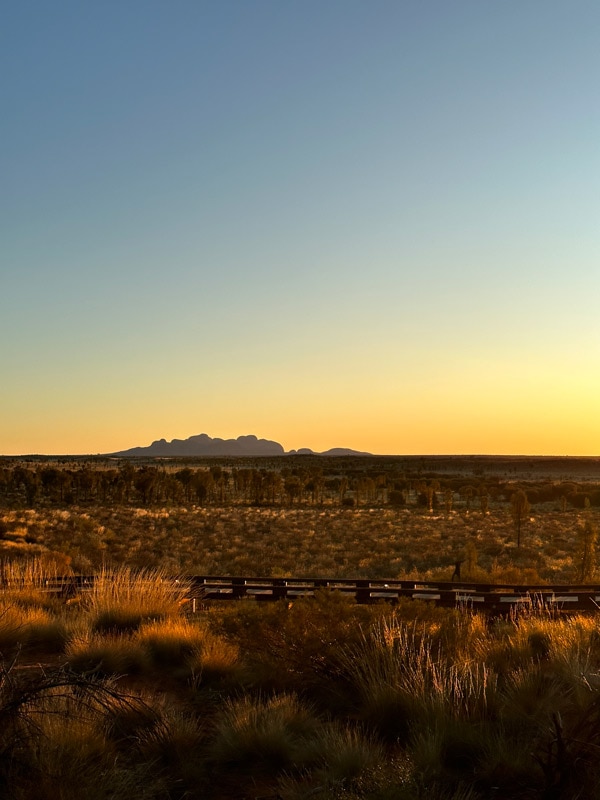
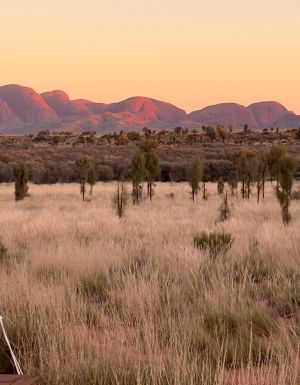
Sunset over Kata Tjuta in Uluru
Wintjiri Wiṟu was developed over three years.

Need tips, more detail or itinerary ideas tailored to you? Ask AT.

AI Prompt

The Wintjiri Wiṟu experience

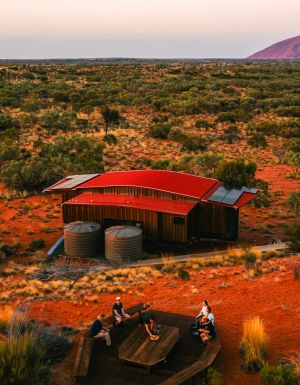
Arriving in time for the three-hour Wintjiri Wiṟu Sunset Dinner experience, I step off the bus and am instantly greeted with evidence of the care taken to ‘tread lightly’ on Country. A floating path has been constructed using recycled ironbark to protect the environment underneath and allow the flora and fauna to exist without disruption.

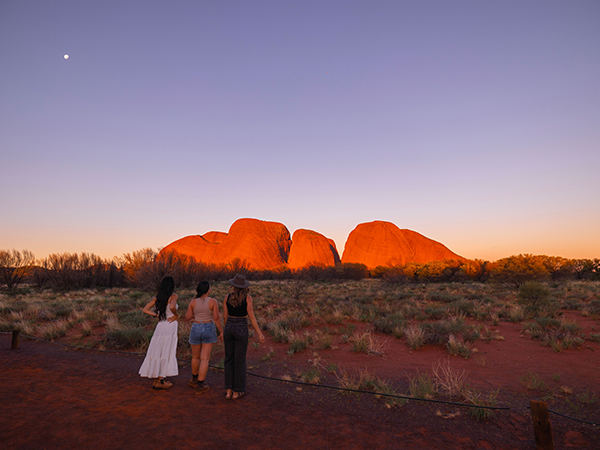
The winding path takes me between tufts of spinifex and mulga scrub until I am greeted with a spiced apple tonic cocktail with Koala Gin from Indigenous-owned Beachtree Distilling Co. The flavours burst in my mouth as I look over and see Uluṟu shining bright as the sun prepares to make its descent for the night.
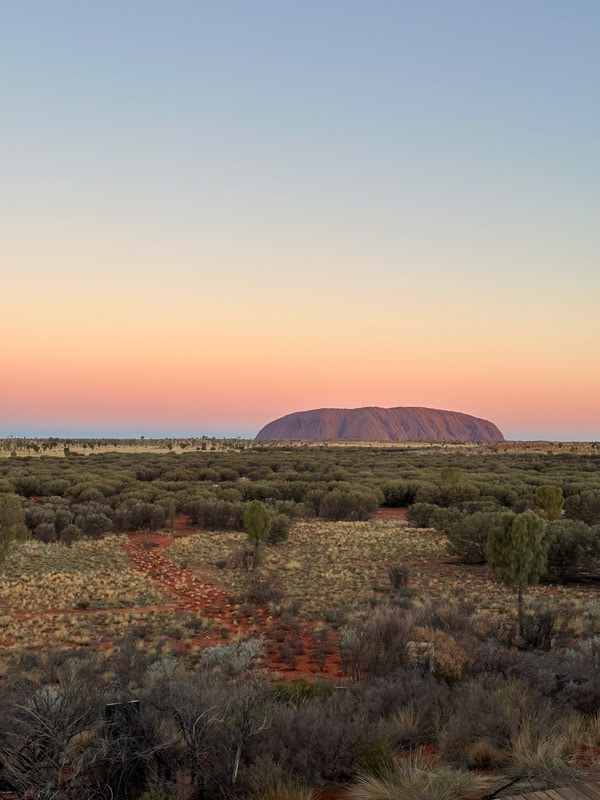
Ombre of colours of Uluru sunset
The 360-degree Uluṟu sunsets will leave you breathless. (Image: Emily Murphy)

The pure elation a 360-degree Uluṟu sunset evokes is almost indescribable. Complemented by the thoughtful culinary experience, the evening is off to an incredible start.
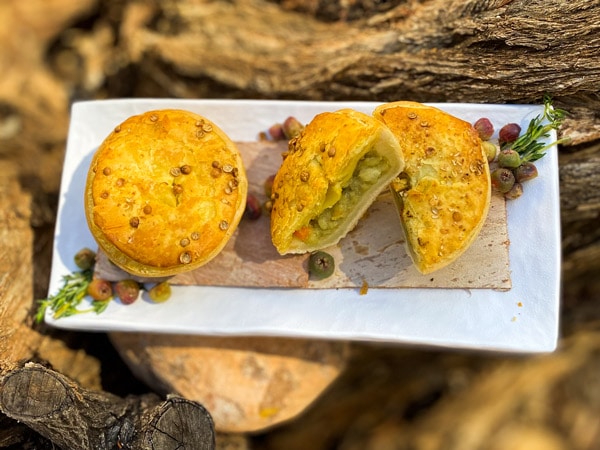
Mini lemon myrtle crocodile curry pies
The lemon myrtle crocodile curry pies are delicious.

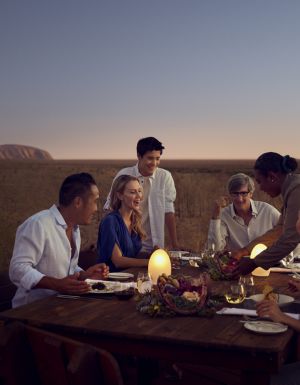
The Wintjiri Wiṟu food and beverage options have been created in consultation with Indigenous culinary expert and chef Mark Olive and showcase native Australian produce and Indigenous bush foods from both Indigenous and Australian-owned suppliers. The menu matches the innovation of the show itself, with canapés such as gin-infused cucumber with green ants and lemon myrtle crocodile curry pie combining contemporary culinary techniques with native ingredients.
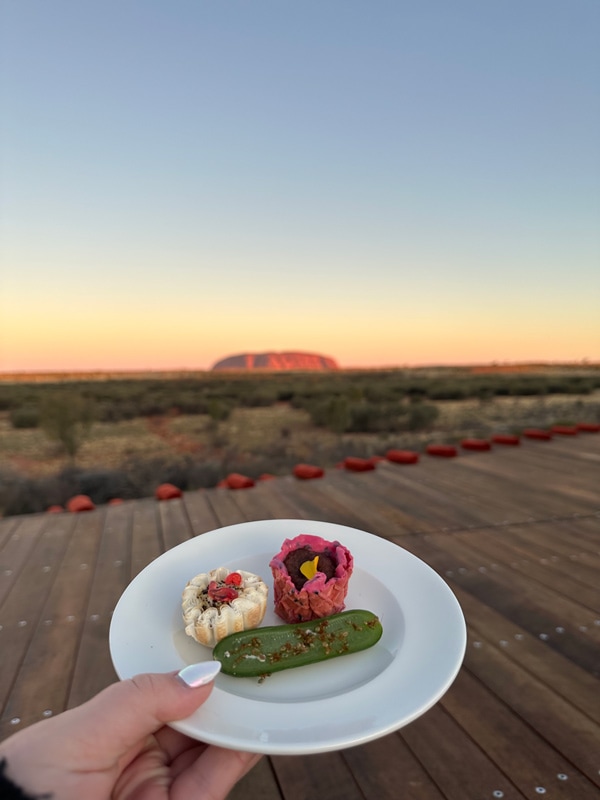
Canapes overlooking Uluru
The menu matches the innovation of the show itself, with canapés such as gin-infused cucumber with green ants. (Image: Emily Murphy)

Similarly, the show depicts the Mala story using modern technology and ancient traditions, resulting in a never-before-seen type of production. I take a seat at the front of the open-air theatre once darkness envelops the desert and watch as the tale starts to unfold. The drones shapeshift to tell the story of the Mala (rufous hare-wallaby) people and find remarkable expression, especially in the devil dog Kurpany, whose footprints remain embedded in Uluṟu.
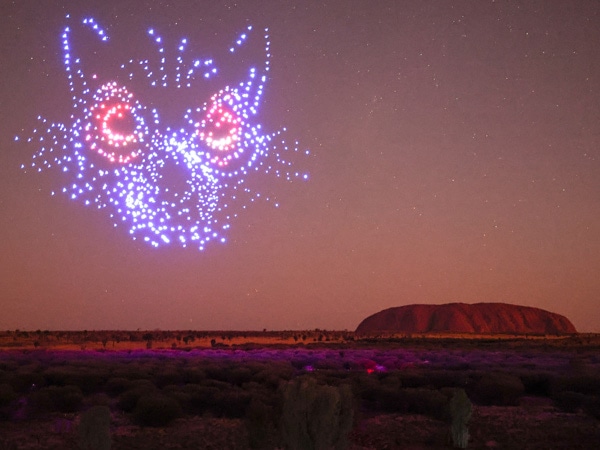
Kurpany over Uluru in Wintjiri Wiru.
Wintjiri Wiṟu depicts the devil dog Kurpany, whose footprints remain embedded in Uluṟu. (Image: Getty Images for Voyages Indigenous Tourism Australia)

My already-high expectations for the show are completely exceeded. The intricacy of each drone and how all 1100 are choreographed with the lights, lasers, projection and sounds to tell the story is mind-blowing.

The surround-sound audio is spatialised within the platform where the audience sits, which contributes to the immersive experience. But more impressively, you can’t hear the audio if you aren’t at the show, further contributing to Wintjiri Wiṟu’s commitment to treading lightly.
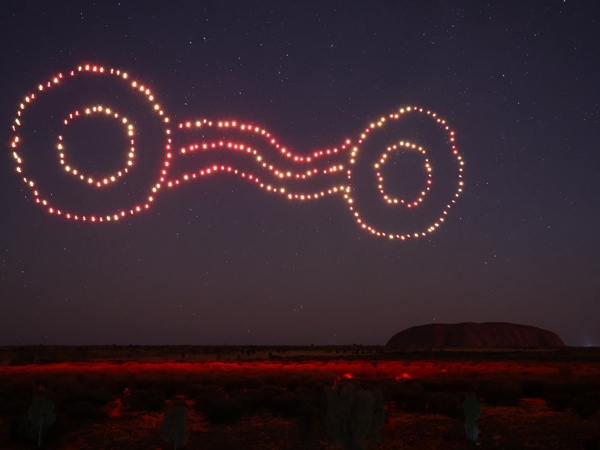
The Songline drones in Wintjiri Wiru
Watch how 1100 drones are choreographed with the lights, lasers, projection and sounds to tell the story. (Image: Getty Images for Voyages Indigenous Tourism Australia)

The Wintjiri Wiṟu impact

“People from every place have come to see Uluṟu. Now we want people to come and experience our story in a new way. We want visitors to know this is our story, to look and listen and feel with us," says Rene Kulitja on behalf of the Aṉangu Working Group.

One of the Aṉangu narrators of the show, Denise Brady, tells the story of how her grandmother taught her the Tjukurpa Mala story when she was just a girl, and that now when she watches Wintjiri Wiṟu, she sees her grandmother and hears “the voices of our old people". A beautiful sentiment for a moving show.

Wintjiri Wiṟu sets the standard for how to properly tell First Nations stories and encourage tourism to these deeply spiritual places.

“We always have open arms for people to keep coming to Uluṟu," Kulitja says. “We are one world, and we want to share something special with you. Wintjiri Wiṟu is a gift to the world."
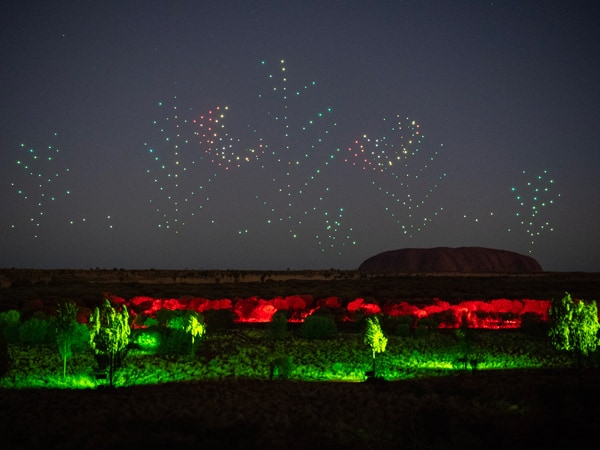
The Trees part of the Wintjiri Wiru drone show in Uluru
Wintjiri Wiṟu sets the standard for how to properly tell First Nations stories and encourage tourism to these deeply spiritual places. (Image: Getty Images for Voyages Indigenous Tourism Australia)

Weekly travel news, experiences
insider tips, offers, and more.

How can I see it?

There are two nightly performances of Wintjiri Wiṟu from March until December – the three-hour Wintjiri Wiṟu Sunset Dinner and the one-and-a-half-hour After Dark show. There will only be one show per night in January and February.

The Wintjiri Wiṟu Sunset Dinner is $385 per adult and After Dark is $190 per adult.
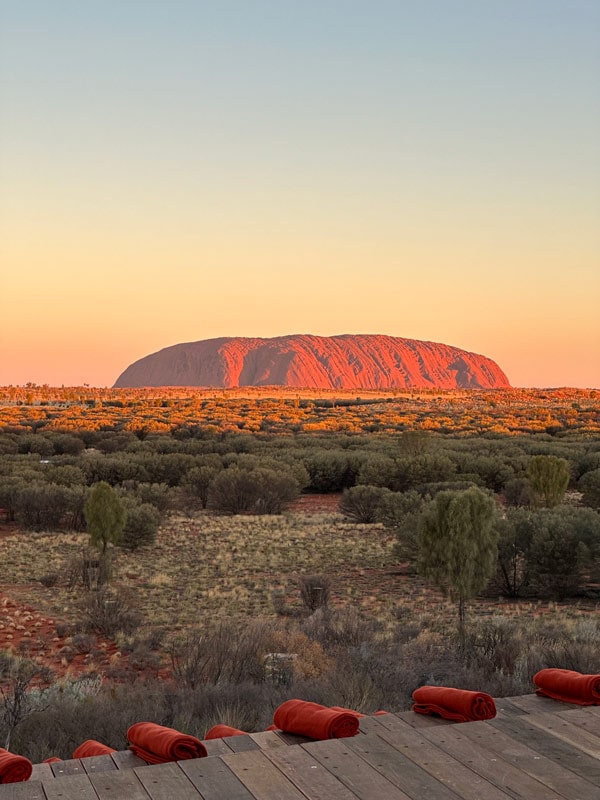
Sunset over Uluru before Wintjiri Wiru
The Wintjiri Wiṟu Sunset Dinner is $385 per adult. (Image: Emily Murphy)

Getting to Wintjiri Wiṟu

Qantas has direct flights to Uluṟu via Sydney on Mondays, Wednesdays, Fridays, Saturdays and Sundays. Jetstar has one flight per day.

Staying at Wintjiri Wiṟu

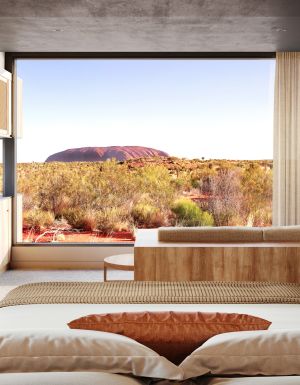
You’ll find all sorts of stays at Ayers Rock Resort from outback camping to the luxurious Sails In The Desert, where rooms start from $475 per night.

Aṉangu share the Mala story, from Kaltukatjara to Uluṟu, through a drone, sound and light show designed and produced by RAMUS.
Emily Murphy
Emily Murphy is Australian Traveller's Email & Social Editor, and in her time at the company she has been instrumental in shaping its social media and email presence, and crafting compelling narratives that inspire others to explore Australia's vast landscapes. Her previous role was a journalist at Prime Creative Media and before that she was freelancing in publishing, content creation and digital marketing. When she's not creating scroll-stopping travel content, Em is a devoted 'bun mum' and enjoys spending her spare time by the sea, reading, binge-watching a good TV show and exploring Sydney's vibrant dining scene. Next on her Aussie travel wish list? Tasmania and The Kimberley.
View profile and articles
hero media

Discovering East Arnhem: Australia’s most unique and rewarding corner

    Joanne Millares Joanne Millares

    Hard to reach and harder to forget, East Arnhem offers something rare in modern travel: the chance to slow down and experience Country on its own terms.

    The sky feels bigger in East Arnhem. It stretches wide and uninterrupted above rouged earth, stringybark woodland and beaches so empty they seem to belong to another era. The coastline curves for kilometres without a footprint and the horizon runs on forever.

    For comedian Lou Wall, the scale of the place was the first thing that hit them.

    “The sheer openness,” they say. “The sky feels infinite and the land stretches out endlessly. It’s pretty breathtaking visually.”

    But the physical landscape is only part of the story. The real reward isn’t only the scenery but the shift in perspective the journey brings. Visitors stop trying to tick off the destination and a real engagement takes over.

    “It made me never want to travel again,” Wall jokes. “In that I never wanted to leave East Arnhem.”

    Getting there

    Aerial shot of East Arnhem’s coastline as cars trace the curve of the shore.
    Sail along the remote coastline on an expedition cruise.

    Reaching East Arnhem is part of the adventure. Travellers typically fly into Gove Airport near Nhulunbuy via Darwin or Cairns, or arrive by expedition cruise along the remote coastline. Others make the journey overland along rutted dirt roads that cut through East Arnhem’s small pockets of monsoon forest.

    However you arrive, there’s a distinct feeling of crossing into somewhere different. Permits are required to visit the region, reflecting the fact that this is Yolŋu land where communities and traditional owners maintain deep cultural connections to Country.

    The extra planning becomes part of the experience. By the time visitors arrive, they understand they’re entering a place not just of respect, but also patience and curiosity.

    At one with nature

    East Arnhem’s  landscapes leave a strong imprint. For Wall, one place in particular still lingers in their memory: Ngalarrkpuy, also known as Lonely Beach, near Bawaka Homeland.

    “I genuinely felt like I was living inside an Instagram filter,” they say. “One of the most stunning feats of nature I’ve ever seen. The water was so clear I swear I could see even the fish smiling.”

    Across the region, natural experiences unfold at a slower pace. Fishing, beachcombing and island hopping reveal the rhythm of the coastline. The tides shape daily life and the vastness of the landscape makes even simple moments feel downright cinematic.

    For visitors with limited time, Wall says the Bawaka Homeland experience is unmissable.

    “I just left and I’m already planning when I can get back there.”

    The sense of remoteness is part of the appeal. In a country where many beaches are crowded and well-trodden, East Arnhem’s coastline still feels wonderfully wild.

    Immersing in local culture

    A visitor spends a meaningful moment alongside Yolŋu guides, gaining insight into their deep cultural knowledge and connection to the land.
    Experience authentic moments with the locals.

    Culture is woven through every experience in East Arnhem. Visitors have the opportunity to spend time on Country with Yolŋu guides and knowledge holders who share stories and traditions that have been passed down for generations.

    For Wall, one of the most powerful moments came during a conversation with a Yolŋu elder.

    “I got to meet a traditional elder, Mayalil, in Nhulunbuy,” they say. “Listening to her talk about her home made the land feel alive in ways I couldn’t have imagined.”

    The region is also home to internationally recognised Aboriginal art centres where artists shape works deeply connected to land and family knowledge.

    Music carries the same cultural energy. East Arnhem has produced globally recognised artists such as King Stingray and Baker Boy, blending Yolŋu language, storytelling and contemporary sound.

    Wall experienced this musical spirit first-hand.

    “A jam session around the fire was it for me,” they say. “Letting the deep joy and history of their music wash over me…  and meeting a few of the King Stingray musicians was unreal.”

    These moments of human connection often become the most memorable part of a visit.

    Spotting local wildlife

    An aerial view of the beach shows tiny figures lined up across the white sand, moving as if in a rhythmic dance.
    Step into a world where nature reigns.

    The wildlife of East Arnhem adds another layer to the experience. The region is home to an extraordinary range of animals, from waterbirds and turtles to dugongs, dolphins and the formidable saltwater crocodile.

    Wall admits they didn’t actually spot a croc during their visit.

    “Devastatingly, I didn’t see one,” they laugh. “But with all the stories from the locals I definitely gained a healthy respect for caution.”

    Some of the most memorable wildlife encounters can be surprisingly small., At Banubanu Beach Retreat on Bremer Island, Wall remembers walking along the beach one morning and watching it come alive.

    “As you walk through the sand you see hundreds of crabs scurrying into their holes as you pass by,” they say. “Such a small thing, but it was completely magical.”

    Moments like this reveal the quieter rhythms of East Arnhem, where even the smallest creatures seem to play a part in the landscape.

    Visitors who make the journey soon learn the most important travel tip of all.

    “Go in open-minded with a sense of curiosity,” Wall says. “Be prepared to ditch your plans. The land and the locals will guide you on an adventure no spreadsheets could ever compete with.”

    And most importantly, they add, don’t rush.

    “The land and people deserve your time and attention. You’ll be all the better for slowing down.”

    For more information on visiting East Arnhem, head to eastarnhem.com.au.