Once mocked by snooty southerners as a sleepy, backwards, big country town, over the past decade Brisbane has embraced its river and multicultural populace. The transformation couldn’t be more profound. By Tim Baker
I don’t know about anyone else, but I feel like singing pirate songs. Here we are on an otherwise unremarkable Monday evening in New Farm, Brisbane, and I’m witnessing the most beautiful form of urban commuting I’ve ever seen.
Quaint little ferries and sleek river cats come and go from a small wharf at the edge of a leafy park in the balmy, sub-tropical twilight. Cheery boatmen coil and uncoil thick rope with practiced efficiency, roll out the gangplank, greet passengers and collect fares like jolly, water-borne tram conductors. Commuters board and alight without hurry, the cares of the work day apparently washed away by the gentle river cruise.
There’s something about a port scene, even one as humble as this, that’s immediately transporting. The sense of voyage, of embarking on a journey, travelling over water and leaving behind a place stirs deep, subterranean, migratory instincts. My wife and I have only driven an hour north from the Gold Coast, depositing young children with grandparents for a rare night out, and already we feel as though we’re in another country.
We’re en route to South Bank for a performance of the Australian Chamber Orchestra at the impressive Queensland Performing Arts Centre. Rather than jump a cab and battle peak hour traffic, we decide to catch one of the modern city cats down the Brisbane River.
If this is how you start and end your every working day, you’ll get no sympathy from me. I’d rate it one of the world’s great urban transit experiences. Venetian gondolas, London cabs, Filipino tuk tuks – the Brisbane River ferries rival the lot. For a couple of bucks we enjoy a 20min cruise through the middle of the city, past the Story Bridge and newly installed riverbank walkways and cycle tracks, parks and gardens, sheer rock walls favoured by expert climbers, quaint old Victorian apartment blocks, the ubiquitous and meticulously restored Queenslanders and sleek modern towers of glass and steel. As South Bank rolls into view, we glimpse the setting that kicked off the whole revitalisation of Brisbane, the scene of the memorable world fair, Expo ’88.
Asian temples nestle alongside lush rainforest and a man-made beach, busy bars and eateries and the modern cubism of the imposing QPAC. At the time, Expo ’88 (with its theme: Leisure in the age of technology) was an event of such unfamiliar cosmopolitan intrigue and action, besotted Brisbane-ites were said to have descended into post-Expo boutsof inconsolable depression. Introduced to the wonders of the wider world, Brisbane simply wasn’t content to go back in its sleepy, overgrown country town box. Happily, successive local and state governments have embraced the spirit of change and sensitive redevelopment – opening the city to its river and promoting its thriving and distinct urban hubs.
URBAN RENEWAL
Locals sometimes call the place Bris Vegas, in mocking reference to that big country town stigma, but the tag is becoming less ironic and more literal as time goes on – a city caught mid-evolution somewhere between its cultural roots of cosy Nick Earl novels and Go Betweens songs, and bustling metropolis buzz.
If your image of Brisbane was shaped by the book or film He Died With a Falafel in His Hand, or old Fourex ads – all decrepit Queenslander share houses, cane toads and zinc-daubed beer guzzlers in blue singlets –it might be time to upload some fresh imagery.
The forecourt of QPAC, hung with Chinese lanterns on a fine spring evening as teeming concertgoers enjoy pre-show drinks and dinner. Fortitude Valley hipsters rummaging through markets, grazing in cafés and yum cha halls by day, cramming sweaty nightclubs and indie rock gigs and chic bars by night. New Farm diners and bar patrons enjoying a veritable potpourri of multicultural cuisine and watering holes of every shape, size and vintage. The West End café set chewing over the issues of the day, along with affordable fare from all corners of the globe.
While Sydney and Melbourne exchange slings and arrows about their respective drinking cultures – arguing the merits of the hole-in-the-wall haunts of the southern chardonnay sippers, and the waterfront panoramas of the Harbour City – Brisbane quietly and unaffectedly offers it all. Grand old pubs, cosy inner city grottoes, sleek riverfront dining. The idea of going to Brisbane for a holiday might once have seemed preposterous – somewhere to escape rather than embrace – but the city now has more than enough on offer to cater for all tastes.
The Brisbane buzzwords are “Urban Renewal," a concentrated, master-planned campaign that began in the early ’90s to bring people back into the city and breathe new life into long-neglected corners of industrial decay. Brisbane’s unique geography, the way the river snakes its way through the heart of the city, creates distinct precincts, or hubs, quiteremoved from each other.
The same topography that allowed little forgotten nooks and crannies to decay has also allowed for the evolution of numerous culturally diverse and unique villages within the city. The way Brisbane has gone about tidying up and breathing new life into some of those forgotten nooks has created thriving, mixed-use, retail, residential, dining and leisure precincts that have succeeded in their aim to bring people back to the city centre.
Need tips, more detail or itinerary ideas tailored to you? Ask AT.
AI Prompt
METRO MAKEOVER
While South Bank is the most dramatic and spectacular example, it’s not alone. A dedicated council department of urban renewal, the grandly titled Urban Renewal Task Force, came into being in 1991 under the direction of visionary Lord Mayor Jim Soorley. The late Trevor Reddacliff, Task Force chairman, architect and town planner, took Soorely’s vision and ran with it, overseeing a wide range of public and private sector developments which gave the city a modern, user-friendly makeover, earning no fewer than five national town planning awards along the way. Over the decade to 1998, Brisbane’s inner-city suburbs were the site of more than $1.4 billion public sector and $2.6 billion private sector investment in new construction. But it was the philosophy underpinning the mega-spend that has made the difference.
“We believe that what has made Brisbane’s Urban Renewal unique is our philosophy that people and lifestyle it’s this happy coexistence of new and old that creates a large part of Brisbane’s charm.
Must be the prime consideration," Reddacliff once said. It’s a philosophy that might inspire discrete chuckles or outright guffaws from developers in Sydney or Melbourne, but in Brisbane it seems entirely sincere.
Through more than 400 individual projects, some 76 hectares of large obsolete sites and industrial buildings were converted into vibrant mixed-use residential, work and recreational areas. Over five kilometres of riverfront promenades have been built, including the River Walk, a floating walkway that begins at the city end of the Story Bridge. New parks, upgrades to existing parks and modern street-scaping completed the makeover. New road works and enhanced public transport made the whole city easy to navigate. An emphasis on cultural diversity and affordable housing initiatives has kept the city’s distinct villages or hubs true to their roots.
One of the highlights of this ongoing process is the popular Brisbane Powerhouse arts and entertainment centre. Built originally as (you guessed it) a powerhouse in 1928, the imposing red brick riverfront building had fallen into disuse and disrepair before it was transformed into a state of the art facility for performing arts. Opened in March 2000, complete with dance, theatre, music, galleries, cafés and alfresco dining, the Powerhouse has become a popular arts centre for residents and visitors alike.
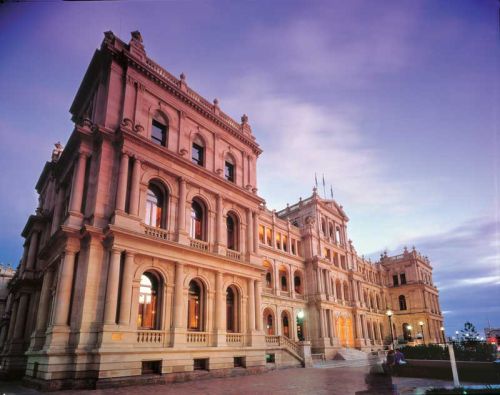
Like many such projects, it has also allowed for the preservation of an important heritage building, and it’s this happy coexistence of new and old that creates a large part of Brisbane’s charm. The conversion of the Teneriffe Woolstores into an apartment project has similarly breathed new life into an abandoned industrial precinct. Together with private and public mega-projects like the Convention Centre, the Conrad Treasury Hotel and Casino, the Roma St Railyard redevelopment, the City West precinct and the Lang Park super stadium, this programme of urban renewal has literally changed the face of the city.
AUSTRALIA’S ALL-CITY
Now renamed Urban Renewal Brisbane, the program covers some 1000 hectares of inner-city Brisbane, combining the master-planned efficiency of Canberra with the culture of Melbourne, the vibrancy of Sydney and the accessible scale and parochial charm of Adelaide or Perth. Add to all this a pleasant sub-tropical climate and it’s little wonder Brisbane has been recently dubbed one of the world’s most liveable cities.
Peak summer is probably the only time the city centre is best avoided for the sometimes stifling, humid heat that sends the locals scurrying for the coast or the hills. But throughout the rest of the year you can expect fine weather and idyllic temperatures in the low to mid 20s.
Brisbane is a culturally diverse city with more than 26 percent of its population born overseas; 15 percent of households speak a language other than English at home – including Cantonese, Italian, Vietnamese, Mandarin, Greek, Spanish, German, Tagalog (Filipino), Polish and Russian. The stats are borne out in quaint old national clubs and endless varieties of cuisine on offer.
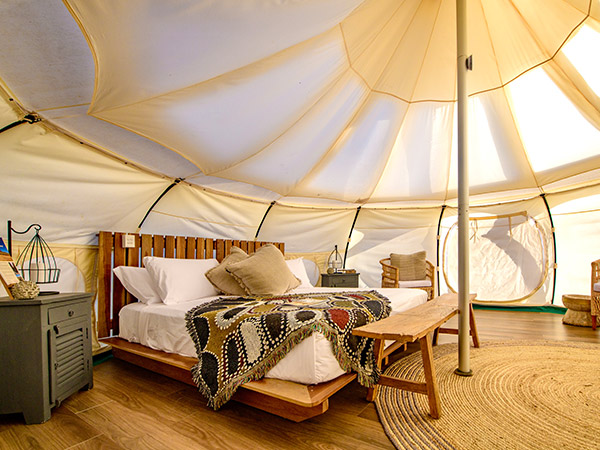
To make the most of your time in Brisbane it makes sense to base yourself in the midst of all this urban renewal, in any one of the upscale city hotels, serviced apartments of South Bank, or quaint guesthouses of New Farm. From there, everything in the city is within easy reach and you can decide what grander excursions you might want to embark on to surrounding areas like Moreton Bay, North Stradbroke and Moreton Islands, the Sunshine or Gold Coast, the hinterlands, or beyond.
To attract the city hordes to the coast back in the ’60s, the old song used to claim, “It’s hot in Brisbane, but it’s Coolangatta." Yet I know plenty of Gold Coast families who now drag their kids to the city, just to expose them to the wonders of the children’s section of the new Gallery of Modern Art, or school holiday programs at the Powerhouse. Culture starved young professionals will happily abandon the beach for a weekend for a dose of city living in Brizzy. And beleaguered parents can find unlikely sanctuary in a city escape, if only for a night.
Weekly travel news, experiences
insider tips, offers, and more.
BACK TO EARTH
Of course the world-renowned ACO play like angels, and we all file out into the evening feeling a little bit better about the world. My wife and I spend the night in a simple but comfortable B&B in New Farm, the Edward Lodge, for less than half the cost of a city hotel and stroll down to the legendary New Farm deli for sensational coffee and breakfasts to die for – traditional fry-ups and eggs anyway you want, or delicious toasted flat breads with pancetta, rocket and mozzarella.
It’s 8.30 on a Tuesday morning, rush hour in most places that call themselves a city, yet no-one seems to be rushing anywhere. Maybe it isn’t such a bad thing to hang on to a bit of that sleepy, big country town vibe a bit longer. But this urban renewal thing really works. Less than 24 hours in the city and we feel completely renewed.
South Bank
This former disused industrial site, transformed for the 1988 World Expo, remains a vibrant and exciting hub 20 years on. With more than 20 restaurants and cafés, a man-made beach, Wildlife and 40 acres of gardens, it’s open 24 hours and is always worth a visit.
Fortitude Valley
Whether you’re after yum cha, weekend markets, late nightclubs, multicultural cuisine, fashionable threads or obscure oriental remedies, the Valley should meet your needs. The Valley has a bit of a bad rep after dark because of a couple of well-publicised incidents, and it’s probably best avoided in the wee hours as the drunken throng spill out of clubs. But the rest of the time it’s a buzzy cross-section of Brisbane life and all its attendant delights.
New Farm
This well-to-do dining strip has plenty to recommend it – the fabulous New Farm Park, the Powerhouse performing arts centre, the iconic New Farm Deli and every culinary option you could imagine, from Nepalese to Mod Oz.
West End
Young groovies cram the cafés and smorgasbord of cheap eateries, including the hard-to-beat budget Vietnamese. There’s barely an international foodstuff you couldn’t source within a couple of blocks. The riverfront Orleigh Park makes a great venue for a picnic or to watch the river life drift by.
The Story Bridge
The little brother of Sydney’s Harbour Bridge, the Story Bridge might not be quite as grand but it did share the same engineer, (John Bradfield) and it does offer a bridge walk. Opened in July 1940, with rather less fanfare than its Sydney sibling, the Story is still an impressive structure and affords great views of the city. For just either side of $100 bucks for children and adults, there are dawn, day, night and twilight climbs seven days a week.
Cultural Precinct
Part of South Bank, the Cultural Precinct includes the Queensland Performing Arts Centre and the State Art Gallery. The new State Library next door opened in November and has proven an ideal venue for the annual Brisbane Writer’s Festival. Further along the Brisbane River, Australia’s biggest contemporary art gallery – the Gallery of Modern Art (GoMA) – also opened recently. GoMA holds most of Queensland Art Gallery’s contemporary works, and is joint host to the Asia-Pacific Triennial of Contemporary Art. Its interactive children’s section makes it an attractive destination for families.
Want to see more stories from Australian Traveller in your Google search results?
- Click here to set Australian Traveller as a preferred source.
- Tick the box next to "Australian Traveller". That's it.

Australian Traveller
View profile and articles