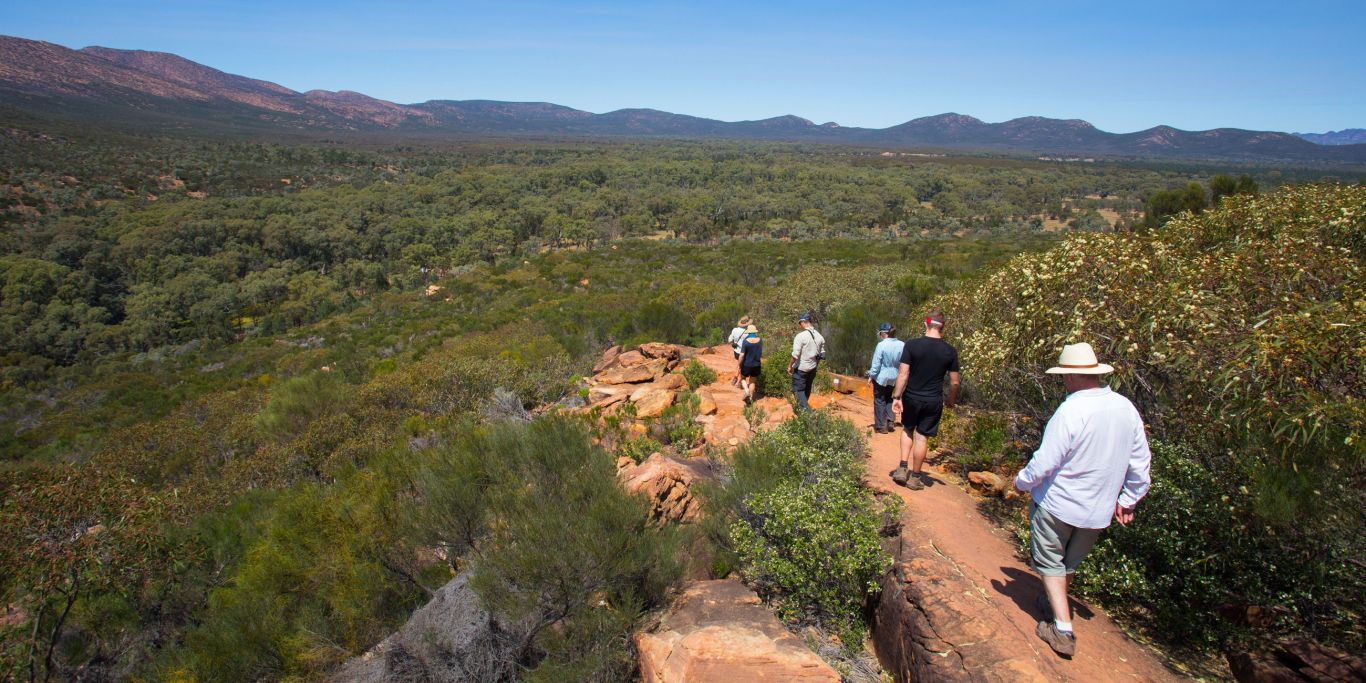

You don’t need to be a serious hiker to enjoy the Flinders Ranges. These walks range from short trails to challenging climbs, with plenty of options in between.
The Flinders Ranges are purpose-built for walking. Ridges rise from the plains like the spiky spine of a dinosaur, and red rock gorges cut through the landscape like a deep wound. Most of the time, you need either a 4WD or a good pair of hiking boots to see the region’s most spectacular viewpoints.
Whether you have an hour or a full day, these Flinders Ranges hikes showcase the best of the region.
In short
If you only do one hike in the Flinders Ranges, make it Wangara Lookout. If you only have time for one walk at Wilpena Pound, make it Wangara Lookout. It offers one of the best views into the interior of the pound without committing to a full-day hike.
1. Wangara Lookout
Best for: Short summit hike
Where: Ikara-Flinders Ranges National Park
Distance: 7km return
Difficulty: Grade 3-4 – steep and slippery sections, but no bushwalking experience needed
Time: 3–4 hours
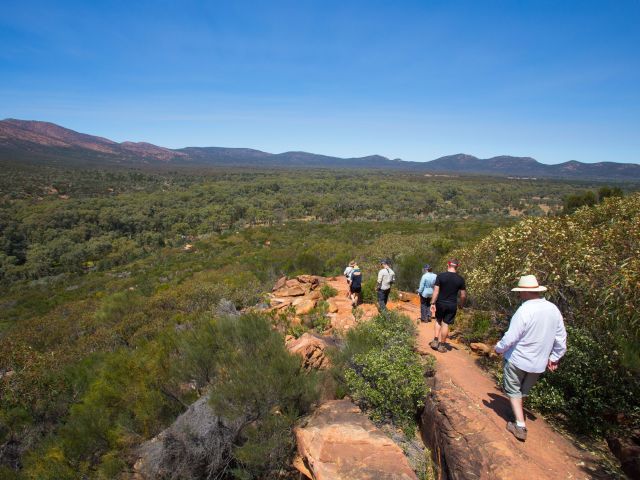
Wangara Lookout is one of the easiest ways to get a big-picture view of Wilpena Pound. Start from Discovery Resorts Wilpena Pound or take the shuttle to shorten the walk. The trail climbs behind Hills Homestead, passing two lookout platforms. Keep going past the first to reach the higher viewpoint, where the scale of the natural amphitheatre really comes into view. The climb at the top involves stepping on large, smooth rocks, which can be slippery when wet. Allow two to three hours return and bring water, as shade is limited.
Tip: Late afternoon is the best time to go, when the ranges turn orange and red in the fading light.
2. Mount Ohlssen Bagge
Best for: Short hike for landscape vistas
Where: Ikara-Flinders Ranges National Park
Distance: 6.4km return
Time: 3–4 hours
Difficulty: Grade 4 – steep and rocky terrain
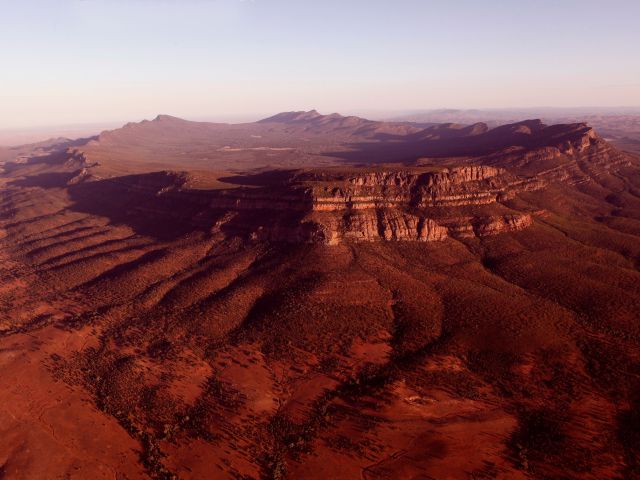
Want the famous Wilpena Pound views without tackling the full St Mary Peak climb? Mount Ohlssen Bagge is the sweet spot. It’s still a steep climb, with a 400-metre elevation and a lot of rocky terrain, but the view from the saddle extends across the Ikara-Flinders Ranges National Park. There are two routes from the Discovery Resorts Wilpena Pound trailhead: the shorter, steeper climb or the longer Boom and Bust loop, which is known for wildflowers and wildlife.
Tip: The trail is exposed, so bring sun protection and plenty of water. It’s a challenging walk, but the views arrive quickly, and the track sees fewer crowds than St Mary Peak. Keep in mind the trail closes during the summer months.
3. St Mary Peak
Best for: A summit hike
Where: Ikara-Flinders Ranges National Park
Distance: Approximately 14.5km return to Tanderra Saddle
Time: 5–6 hours
Difficulty: Grade 4-5 – Bushwalking experience is needed
St Mary Peak is the highest point in the Flinders Ranges and is considered the region’s ultimate hiking challenge. The full climb is a demanding day walk, with many hikers now choosing to stop at Tanderra Saddle out of respect for the Adnyamathanha people, who consider the summit a sacred place. There are two routes: a steep six-kilometre ascent or the longer 12-kilometre inside trail, which offers a gentler climb. You can also return via the inside trail for an easier descent. Expect rocky sections, some scrambling and plenty of wildlife, including lizards, goats and emus.
Tip: Pack plenty of water, sun protection, snacks, and layers. Weather conditions can change quickly.
Need tips, more detail or itinerary ideas tailored to you? Ask AT.
AI Prompt
4. Arkaroo Rock – best cultural walk
Best for: A cultural walk
Where: Ikara-Flinders Ranges National Park
Distance: 3km return
Time: 1.5–2 hours
Difficulty: Grade 3 – some bushwalking experience needed
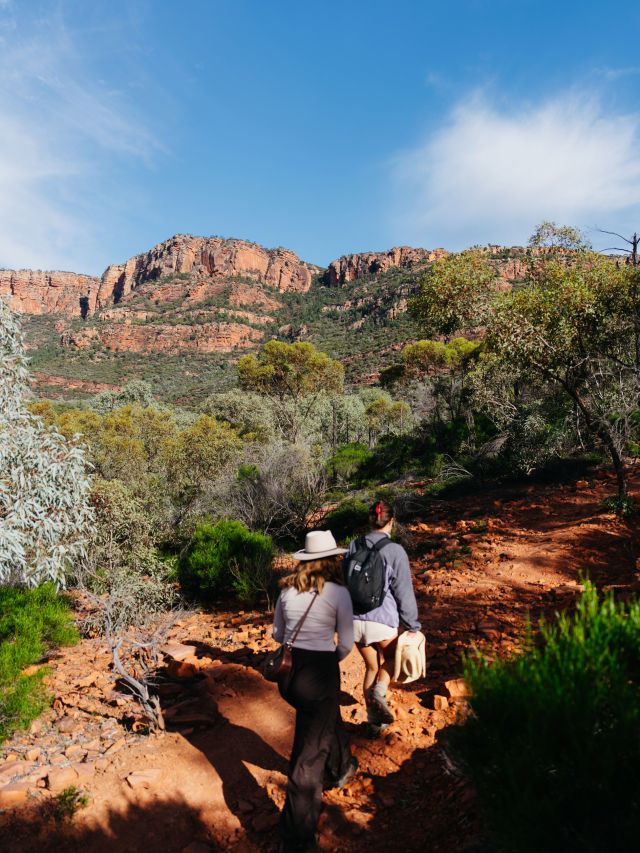
This protected site holds deep cultural significance for the Adnyamathanha people, with ochre and charcoal figures telling the creation story of Wilpena Pound. The walk itself is an easy loop through native bushland, making it one of the most accessible hikes in the park.
It’s also the only signposted Aboriginal rock art site open to the public in Ikara–Flinders Ranges National Park. The artworks, believed to be around 5,000 years old, sit behind a protective fence, while interpretive signs explain the stories, people and landscape connected to them.
Tip: This is a protected cultural site. Do not touch the rock art or climb on the surrounding formations.
5. Alligator Gorge
Best for: A gorge walk
Where: Wilmington
Distance: 9.5km loop
Time: 2.5 hours
Difficulty: Grade 3 – some bushwalking experience needed
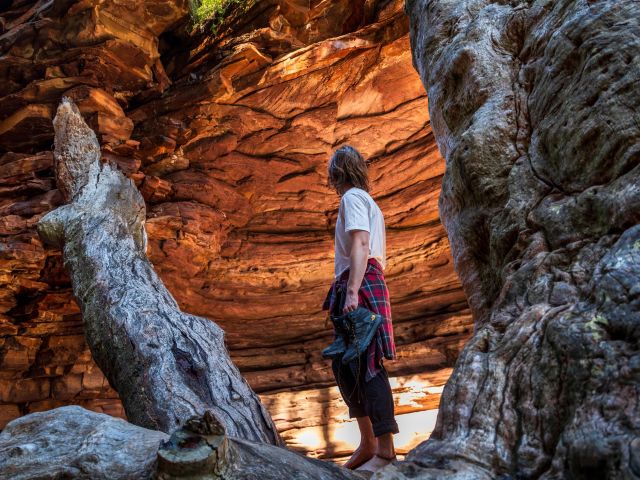
This short walk breaks from the Flinders’ usual dry plains and rugged peaks, leading you into a narrow gorge carved through ancient rock. The full Ring Route adds distance and elevation, but the shorter 3.3-kilometre circuit still takes you to the narrow slots and terraces that make this such a striking spot.
Tip: Unless you’re chasing extra kilometres, stick with the shorter route and spend more time exploring the gorge than walking the fire trail.
6. Devil’s Peak
Best for: An underrated walk
Where: Quorn
Distance: 2.8km return
Time: 1.5–2 hours
Difficulty: Grade 3 – steep climb
Devil’s Peak is short, sharp and far harder than it looks on paper. The trail climbs 275 metres in just 1.4 kilometres, with a rocky scramble near the top that will test your legs (and your nerves). But this is exactly why it’s worth doing. Once you pull yourself onto the summit, you’re rewarded with one of the best 360-degree views in the Flinders Ranges.
7. Rawnsley Bluff
Best for: Viewpoint of the ranges
Where: Ikara-Flinders Ranges National Park
Distance: 11km return
Time: 3.5–4 hours
Difficulty: Grade 4 – some bushwalking experience needed
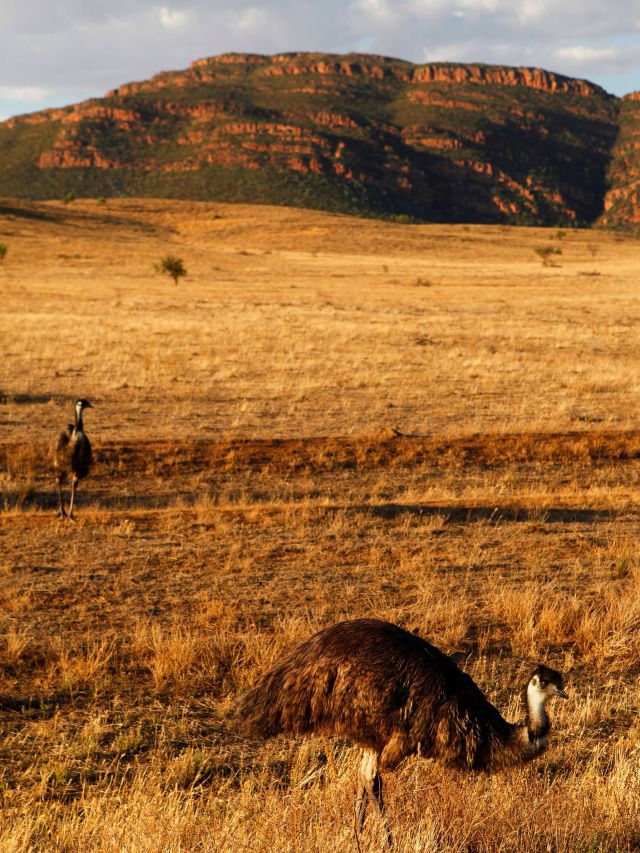
Rawnsley Bluff is a challenging but rewarding climb near Rawnsley Park Station. The trail’s steepest section tackles 565 metres of elevation through rocky steps, but once you reach the ridge, the views across Wilpena Pound make the effort worthwhile. Take it slowly, and you’ll find plenty of footholds to help you up. Once you reach the top, the hard work is behind you, and the ridge walk delivers sweeping views across the Flinders Ranges.
Weekly travel news, experiences
insider tips, offers, and more.
8. Heysen Trail – best for multi-day adventure and serious hikers
Best for: Multi-day adventure and serious hikers
Where: Ikara-Flinders Ranges National Park/Mount Falkland
Distance: 1,200 km (41km for Wilpena Pound to Parachilna Gorge)
Time: 3.5–4 hours
Difficulty: Grade 4-5 – experienced hikers only
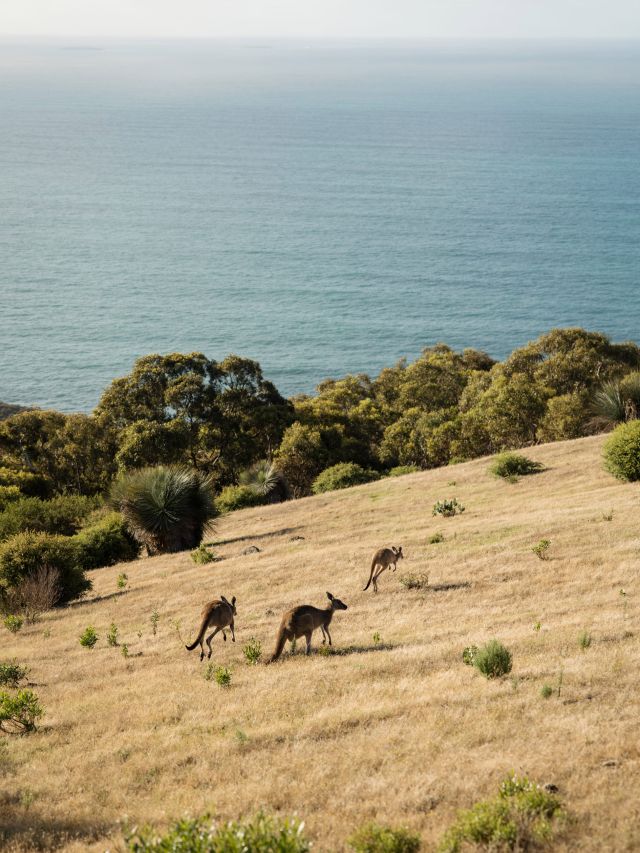
The Heysen Trail stretches 1,200 kilometres across South Australia, but the Flinders Ranges section is where many hikers argue it reaches its peak. Running between Wilpena Pound and Parachilna Gorge, a 41-kilometre section traverses rugged ranges, remote gorges and some of the state’s most impressive scenery. Allow around three days to complete it, with bush camping along the way. Unlike many of the shorter hikes in the Flinders, this one isn’t about reaching a single viewpoint, which makes it ideal for experienced hikers looking for a multi-day adventure.
Tip: The Wilpena Pound to Parachilna Gorge covers sections 58 to 61 on the Heysen Trail. See heysentrail.asn.au for more info.
9. Hills Homestead – best for a nature stroll
Best for: Nature strolls
Where: Ikara-Flinders Ranges National Park
Distance: 6km return
Time: 1-2 hours
Difficulty: Grade 2
For an easier day on the trails, head to Hills Homestead Walk. Following Wilpena Creek, starting at Discover Resorts Wilpena Pound, the track passes beneath towering river red gums and along sections of raised boardwalk before reaching the ruins of an early pastoral homestead. From here, you can climb up to Wangara Lookout or St Mary’s Peak or walk back to the resort.
Tip: The resort offers a shuttle service to the end of the trail road.
10. Dutchmans Stern
Best for: Wildlife spotting
Where: Quorn
Distance: 4.1km one-way or 10.5km loop walk
Time: 4-5 hours
Difficulty: Grade 3 – some bushwalking experience needed
With two routes to choose from, Dutchmans Stern works for both a half-day hike and a longer bushwalk. The summit track climbs to the top of the distinctive bluff, while the longer circuit takes you through the surrounding bushland where you’re likely to spot kangaroos and emus. Starting near Quorn, at the Dutchmans Stern carpark, the track climbs through the Dutchmans Stern Conservation Park before reaching a summit looking out to the surrounding ranges.
Planning a trip to the Flinders Ranges? Check out more of our recommendations here:
Best Flinders Ranges accommodation | The essential guide to the Flinders Ranges | Best camping spots in the Flinders Ranges
Want to see more stories from Australian Traveller in your Google search results?
- Click here to set Australian Traveller as a preferred source.
- Tick the box next to "Australian Traveller". That's it.