Would you drink sheep poo whisky?

hero media
This Tasmanian whisky maker is going to sheepish lengths to stand out. Don’t pooh-pooh it until you try it.

You’ve heard of Bali’s poo coffee, but how about a poopy product that’s a little more homegrown? Tasmanian whisky maker, Belgrove Distillery , has a lot of unique whiskey-making methods. They make 100 per cent rye whisky using rye corn they grow themselves. It’s distilled in a copper pot made by the distiller, Peter Bignell. They keep the processes closed-loop and sustainable, like using waste cooking oil to heat the fires, collecting the water for brewing and diluting from the roofs of their farm sheds, and feeding any remnants that aren’t whiskey to their sheep.

Of course, they also use their sheep to help flavour – and in a most unexpected way.
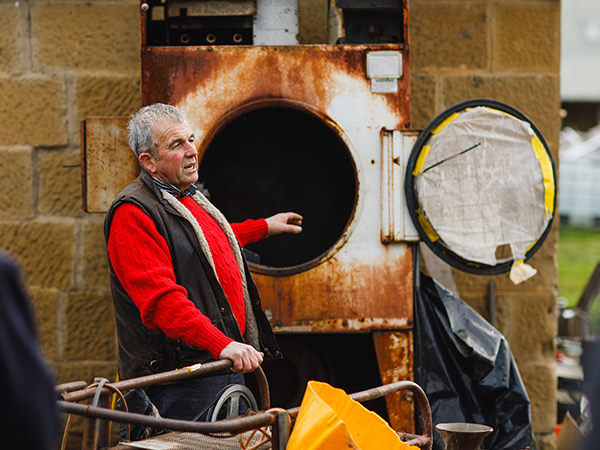
Belgrove Distillery distiller Peter Bignell giving a tour
Peter Bignell started smoking grains with sheep dung. (Image: Lusy Productions)

Known for being experimental and creating whiskies with a smokey flavour, Belgrove began by smoking peat. To keep the flavour unique in an ever-expanding market, that peat was soon replaced with sheep dung. So no, there’s not literally dung in your drink, but the smoking process is used to change the flavour profile of the grains before they’re turned into whisky. What’s left is aptly named Belgrove’s ‘Wholly Shit’ range . And apparently the result has earned Belgrove a loyal following.
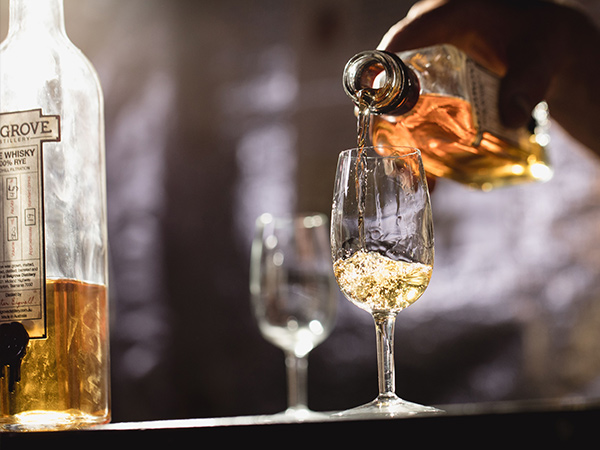
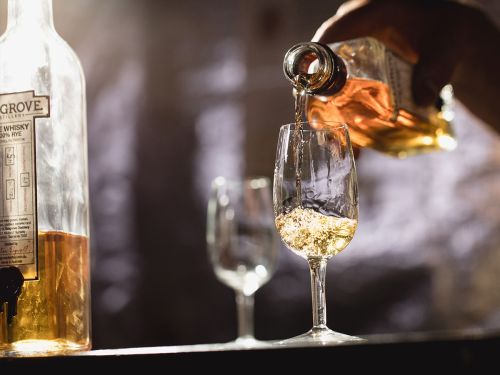
person pouring belgrove distillery whisky into a a glass of ice tasmania
Be whiskied into a frenzy. (Image: Samuel Shelley)

This certainly isn’t the first instance of animal poo being used as a culinary delicacy. In fact, Australian Traveller’s own Art Director was very quick to jump to the defence of elephant poo as a botanically delicious ingredient in a South African gin.

According to the owners Paula and Les Ansley, Indlovu gin was born when Paula was “sipping a G&T while watching a herd of elephants listening to the guide explain how particular elephants are in their browsing habits and yet how little of the plant material they actually digest". As it turns out, elephants only digest about half of their food, and what’s left is a veritable pooh-pooh platter of plant life – from roots and bark to fruit and flowers.
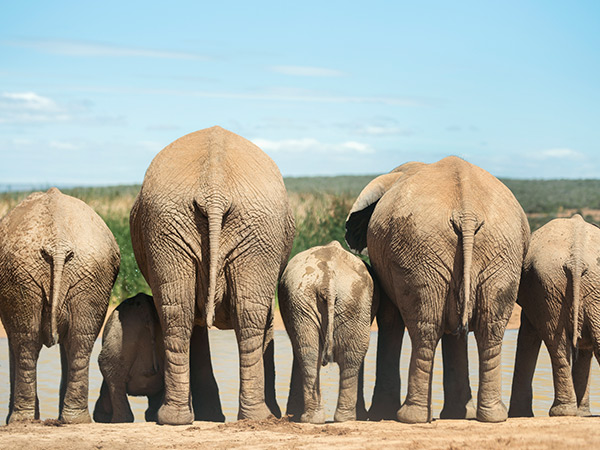
the backside of elephants drinking from waterhole in south africa
Looks like apperitvo hour. (Image: Getty/Nicky Lloyd)

Sounds a lot like a gin-tasting profile, no? Don’t worry, the dung is sterilised and dried before being added to the gin.

And, of course, there’s Indonesia ‘s infamous Kopi luwak, also known as civet coffee. It doesn’t get much more poopy than this, yet among coffee lovers it’s particularly coveted. Essentially, the coffee is made using beans that have been partially digested and defecated out by the mongoose-like Asian palm civet. The beans are fermented as they make their way through this little critter’s intestines and carefully collected by coffee makers. According to those in the know, this poopification adds an extra level of smoothness and richness to the flavour. Go figure. Of course, if you try it, be sure to source ethically made Kopi luwak, as this practice has led to the capture and containment of some wild civets.
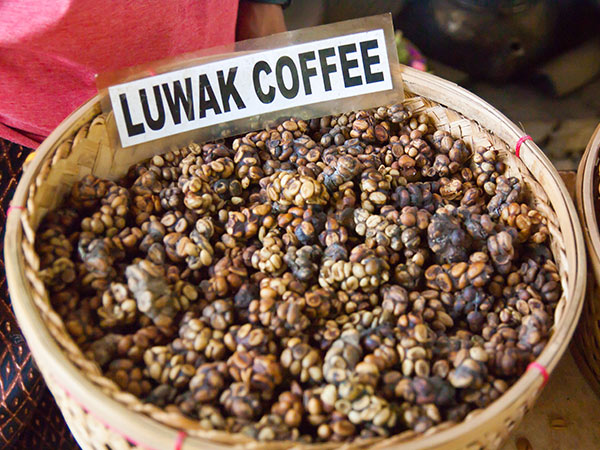
basket of luwak coffee in indonesia
Indonesia’s famous poop coffee is questionable for more than one reason. (Image: Getty/ hedge111)

Have we convinced you to give it a go? Let us know your thoughts in the comments below.

Kassia Byrnes
Kassia Byrnes is the Native Content Editor for Australian Traveller and International Traveller. She's come a long way since writing in her diary about family trips to Grandma's. After graduating a BA of Communication from University of Technology Sydney, she has been writing about her travels (and more) professionally for over 10 years for titles like AWOL, News.com.au, Pedestrian.TV, Body + Soul and Punkee. She's addicted to travel but has a terrible sense of direction, so you can usually find her getting lost somewhere new around the world. Luckily, she loves to explore and have new adventures – whether that’s exploring the backstreets, bungee jumping off a bridge or hiking for days. You can follow her adventures on Instagram @probably_kassia.
See all articles
hero media

5 of the best day trips from Hobart

Hobart has quietly become our coolest capital, but the real wonder lies just beyond the city limits.

In the cool shade of Kunyani/ Mt Wellington, Hobart has earned a reputation. Home to culture-defining Dark MOFO, the city blends rugged, raw wilderness and rule-breaking galleries. But, step beyond the thrumming capital’s border and you’ll find a new perspective: historic towns, Jurassic-era cliffs and a UNESCO City of Gastronomy. With ALL Accor as your home away from home, fill your days with epicurean odysseys and wild scenery on the best day trips from Hobart.

Where to stay

Behind every good road trip is the perfect home base. Somewhere central to review your camera roll, make the most of Hobart’s dining scene and relax before setting off again.

For modern, Tasmanian-inspired design, book a stay at the Movenpick Hotel Hobart . Standing at the Salamanca Markets, look to the Hobart skyline and the award-winning hotel will catch your eye. As the third-tallest building in the CBD, the views across the harbour toward Antarctica are totally unique to your room. Here, end each day at the daily free chocolate hour (plus a free Movenpick ice cream for the little ones).

For a more budget-conscious option, head to the picture book, sandstone buildings of Macquarie Street. Nestled along the buzzing, historic streetscape, you’ll find Tasmania’s biggest hotel: the Ibis Styles . Return home each day to defrost in one of the hotel’s two saunas. Make use of the proximity to MONA, or take an easy stroll to the candy-coloured cottages of Battery Point between your adventures.

A stylish, Tasmanian-inspired bedroom at Mövenpick Hotel Hobart, your perfect base for relaxing after the best day trips from Hobart.
Elevate your Hobart stay with sleek style at Mövenpick.

1. Bruny Island

Craggy cliffs and tropical-hued, white sand beaches signal your arrival to Bruny Island/ Lunawanna-Alonnah.

Start your day trip at the island’s most iconic spot, the Neck Game Reserve. Scale the Trunganini steps to gaze out over the teensy stretch of land that juts through the sea connecting the two ends of the island.

Catch a rare glimpse of the white furred wallabies that call Bruny Island home at Adventure Bay. Then, for ocean-fresh oysters, pull into the drive-thru window at Get Shucked . Sample Bruny Island cheese at the cellar door before catching the ferry home with an esky full of local produce.

Bruny Island Neck is an isthmus of land connecting north and south Bruny Island.
Begin your adventure with a climb and a view. (Image: Elise Weaver)

2. Mount Wellington

At 1271 metres, Mount Wellington watches protectively over Hobart. Follow the winding road to climb through alpine forest and tufts of snow to reach the summit. Gaze down over Hobart and out to sea, or over your shoulder to the southwestern wilderness.

Reset your adrenaline with a mountain bike ride back down. Or, make like the locals and head into the mountain on foot. Try the hike to the Jurassic-period Organ Pipes which slips under the mountain’s magnificent dolerite cliffs (perfect for families thanks to the trail’s minimal incline).

For a view of Mount Wellington itself, hike nearby Cathedral Rock.

No matter where you are in Hobart you are never far away from the City's beloved mountain, Kunanyi / Mount Wellington
Climb through alpine forest to the summit. (Image: Paul Flemming)

2. Port Arthur

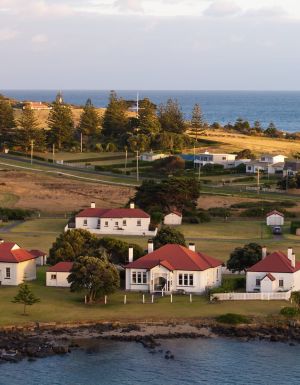
Constructed entirely by convicts, the manicured gardens and penal buildings of Port Arthur offer a day trip that practically hums with history.

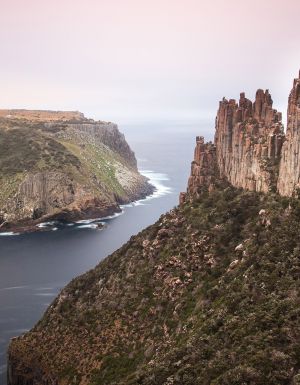
The rugged, seagirt location was chosen for its difficult escape conditions. Now, you can cruise the coast below the towering, jagged cliffs of the Tasman National Park or wander the sloping fields of fragrant lavender.

Tickets to Port Arthur include a walking tour and harbour cruise. See the Isle of the Dead where 1000 men are buried in marked and unmarked graves. And Point Puer, Britain’s first prison for children.

The Port Arthur Historic Site is one of Australia's most important heritage sites and tourist destinations. Located on the scenic Turrakana / Tasman Peninsula in the south east of Tasmania, it offers a unique and essential experience for all visitors to the area.
Wander convict-built grounds and gardens. (Image: Dearna Bond)

3. Launceston

You’ll find Launceston at the confluence of three rivers after an easy 2.5-hour drive from Hobart. Launceston is a patchwork of old and new. Here, heritage streetscapes meet modern architecture.

Visit Cataract Gorge, the green, sun-dappled heart of the town and sacred meeting point for Tasmania’s indigenous communities. Pull up at roadside produce stalls that dot the Tamar Valley, or dine out. Launceston is, after all, a UNESCO City of Gastronomy.

Should the local wine scene persuade you, simply extend your time in Launceston at Peppers Silo (but definitely at least stop by the onsite restaurant, Grain of the Silo , for a farm fresh menu) or Mercure Launceston before heading back to Hobart.

Walk the sunlit paths of Cataract Gorge. (Image: Nick H Visuals)

4. Bonorong Wildlife Sanctuary

Take a 35-minute drive from your hotel and you’ll find Bonorong Wildlife Sanctuary . This social enterprise is run by a team of extremely passionate Tasmanians with a mission to look after critically endangered species who have found sanctuary here after facing extinction on the mainland.

Choose to wander the sanctuary at your own pace or join a guided tour (free with your ticket) to come face to face with Tassie’s most iconic species. Tasmanian Devils, wombats and echidnas are part of the free tour. You can book up close encounters with your favourite animals, too.

Bonorong is a Sanctuary for wildlife run by a passionate team of like-minded people. We're a social enterprise: a little business with a big heart.
Snap a cuddle-worthy encounter. (Image: Tourism Australia)

5. Richmond Village & Coal River Valley

Richmond is a town that belongs in a snow globe. Fifty colonial-era, Georgian buildings have been painstakingly restored and turned into cafes, cosy restaurants and galleries. Visit Richmond Gaol , said to be the home of a prisoner so vile he inspired Charles Dickens to pen Oliver Twist’s Fagin.

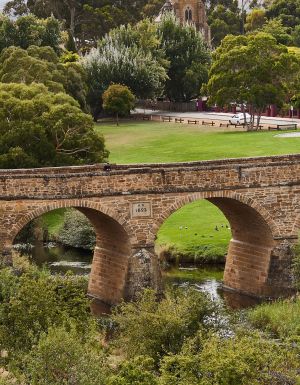
Then, follow the Coal River as it flows past grassy, duckling-dotted knolls and under the iconic Richmond Bridge, the oldest bridge in Australia. From the crest of the bridge, see the oldest Catholic Church in Australia. The river crawls past many cellar doors, perfect for a day of wine tasting.

Richmond is a picture-perfect town in the Coal River Valley wine region, offering a glimpse into early colonial life, one of the best day trips from Hobart.
Trace the river through history and wine country. (Image: Fin Matson)

Plan your trip to Hobart and beyond with ALL Accor at All.com .