Find Tasmania’s (not so) hidden Indigenous culture

hero media
Vernacular Indigenous Australian architecture is not something we hear about often. Yet it existed, and vestiges remain. On the west coast of Tasmania, you might come across depressions – large circular hollows dug into the top of small hills, dunes or middens – that were once Aboriginal huts: large beehive-shaped structures of wood and bark that would accommodate up to 14 people.

This is just one fascinating example of the Indigenous culture that is hidden in plain sight in a state where a pervasive myth throughout much of the 20th century did its best to erase it. Today, the word palawa refers to Tasmanian Aboriginal people as a whole, but encompasses the many different groups from all around Tasmania, or lutruwita, in the revived palawa kani language. Here are ways you can experience this culture through both a contemporary and historical lens today.

On tour
bay of fires larapuna tasmania
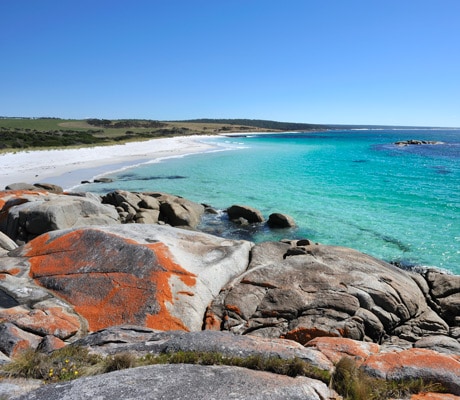
Larapuna/Bay of Fires.

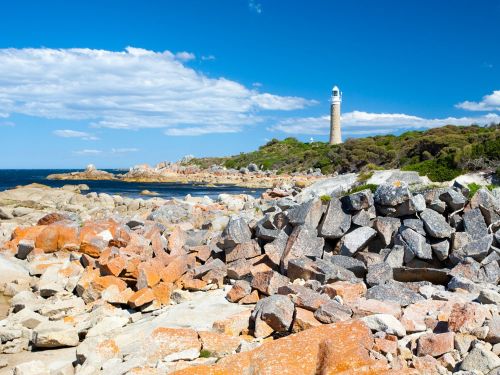
The Wukalina Walk was a quiet revolution when it launched in early 2018 as Tasmania’s first Indigenous owned and operated tourism venture. A four-day walk in the state’s north-east, around the spectacular landscapes of the larapuna/Bay of Fires and wukalina/Mt William areas, it invites guests to reacquaint themselves with this land as the cultural homeland of the palawa.


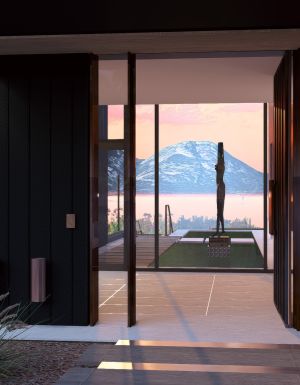
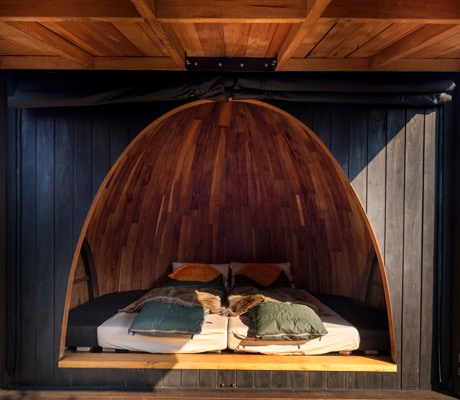
Two nights of the trip are spent at the bespoke camp, krakani lumi, which means place of rest; these award-winning communal huts are directly influenced by traditional Aboriginal Tasmanian domed architecture.
krakani lumi tasmania
Krakani lumi.

Local and family-owned Kooparoona Niara Tours runs bespoke day trips through the Meander Valley near Launceston that combine visits to Aboriginal cultural sites and a view of contemporary Indigenous culture with a taste of the region’s standout produce – think truffles, salmon and wine.


Local outdoor educator and cultural adventure tour operator Ben Rea, of Tasmanian E-Bike Adventures , has paired with Sheldon Thomas, a Tasmanian Aboriginal healer, cultural and ceremonial guide to create one of the most unique Indigenous experiences you’ll find in Tasmania.


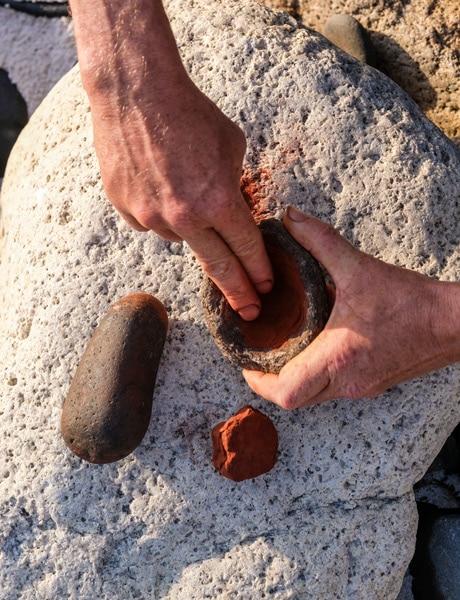
Their Nohoiner Adventure is a day-long Aboriginal on-Country adventure on the Forestier Peninsula in the state’s south-east – a remarkable historic place in the cultural story of Tasmania and Australia’s settlement history. Here, guests are immersed in cultural lore and healing ceremonies, are treated to a seasonal picnic of local bush foods, and visit the site of original contact and conflict between Tasmanian Aboriginal people and European explorers.
nohoiner adventure tasmania
The Nohoiner Adventure.

“Sheldon and I co-created the Nohoiner Adventure to empower an authentic experience for guests to connect with the Tasmanian Aboriginal story through a cultural immersion that deepens guests’ understanding of Aboriginal perspectives in a wild Tasmanian natural setting," says Rea. “It shines light on the spiritual healing knowledge and wisdom of our first people and their sacred connection to Country. Through conversation and story sharing framed with ceremony and ritual, guests gain insight and understanding that inspires personal growth and a deep appreciation of the cultural, historic and spiritual values of our island home, Tasmania." Watch this space for further joint ventures.

At museums and galleries

The always-engaging Tasmanian Museum & Art Gallery (TMAG) is a good introduction to Tasmanian Aboriginal culture, heritage and current perspectives. As well as hosting
contemporary exhibitions such as Julie Gough’s Past Tense, part of Dark Mofo’s lineup last year, it has two permanent exhibitions dedicated to engaging visitors on all things palawa.


The newly refreshed ningina tunapri (‘to give knowledge and understanding’) presents 40,000 years of Tasmanian Aboriginal culture in a highly engaging way and Our land: parrawa, parrawa! Go away! is an affecting exhibition in the old Bond Store Galleries that tells the story of Aboriginal people and colonists following the invasion of lutruwita, focusing on the Black War.


Not far from TMAG, a stone’s throw from Hobart’s waterfront, ART MOB is a gallery that specialises in Tasmanian Aboriginal art with a number of rare pieces as well as prints and paintings by well-known Tasmanian Aboriginal artists.

In your hotel

Check into MACq 01 – on the traditional lands of the Mouhenneener people – for an immersive portal into Tasmania’s Indigenous history. This slickly designed hotel on Hobart’s waterfront is a storytelling hotel that brings together the tales of real-life characters who have played a role in Tasmania’s past, palawa inspirations among them, including resistance fighter and chieftain of the Plangermaireener people, Mannalargenna, and his granddaughter Dolly Dalrymple, who became a hero in her own right.
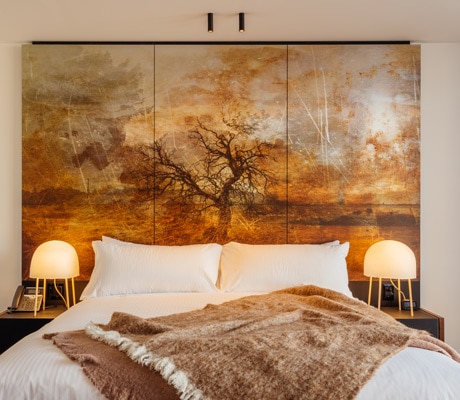
macq 01 hobart
Check into the MACq 01.

“Our Indigenous stories are some of our most powerful," says MACq 01’s storyteller Justin Johnstone, “and although tragedy is woven through their stories, the thing that keeps coming up and up in so many is a sense of grounded determination and resilience." One hundred and fourteen tales are told throughout the rooms and suites, and spill out beyond. “When you walk in the front door of MACq 01, the first thing you see are the palawa artefacts and stories," says Johnstone. “That’s as it should be. They’re our first stories."


The Lounge in particular is an ode to the palawa: centred around a fire pit, the original storytelling nucleus, and cast in light that represents the kelp forests of the Derwent River. “The kelp was a significant resource for the palawa in the coastal regions," explains Johnstone. “It could be worked like leather or shaped and hardened into carrying and storage vessels with an almost a Bakelite-like texture. The kelp also attracted aquatic life, providing many other sources of nutrition."

In the wild

Tasmania’s wilderness areas are living cultural landscapes that preserve the heritage of the palawa, who have lived in, used, managed and modified this landscape for more than 42,000 years.


The Takayna/Tarkine regio n of Tasmania’s north-west is a particularly interesting place that takes its name from the ancient culture of the Tarkiner people, who once occupied the coastal region near Sandy Cape.
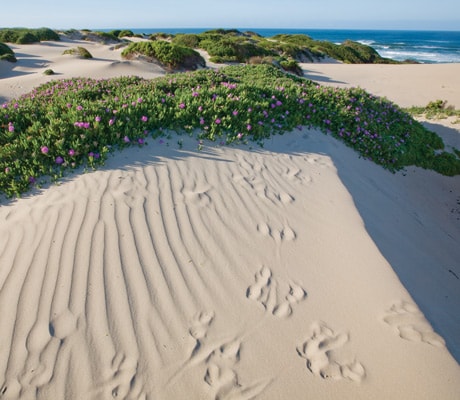
tarkine region tasmania
The Tarkine coast.

Today, the coastal area of this rainforest wilderness area is strewn with middens, hut sites and other artefacts that make this coastline one of the richest human archaeological zones on the planet. Follow the Tarkine Drive, packed with walking tracks, lookouts, cultural sites and picnic spots, or join a six-day walk of the Tarkine Coast with Tarkine Trails .


Discover the other destinations and experiences that made it into our Top 100 Ways to Holiday Here This Year special edition of Australian Traveller.
hero media

5 of the best day trips from Hobart

Hobart has quietly become our coolest capital, but the real wonder lies just beyond the city limits.

In the cool shade of Kunyani/ Mt Wellington, Hobart has earned a reputation. Home to culture-defining Dark MOFO, the city blends rugged, raw wilderness and rule-breaking galleries. But, step beyond the thrumming capital’s border and you’ll find a new perspective: historic towns, Jurassic-era cliffs and a UNESCO City of Gastronomy. With ALL Accor as your home away from home, fill your days with epicurean odysseys and wild scenery on the best day trips from Hobart.

Where to stay

Behind every good road trip is the perfect home base. Somewhere central to review your camera roll, make the most of Hobart’s dining scene and relax before setting off again.

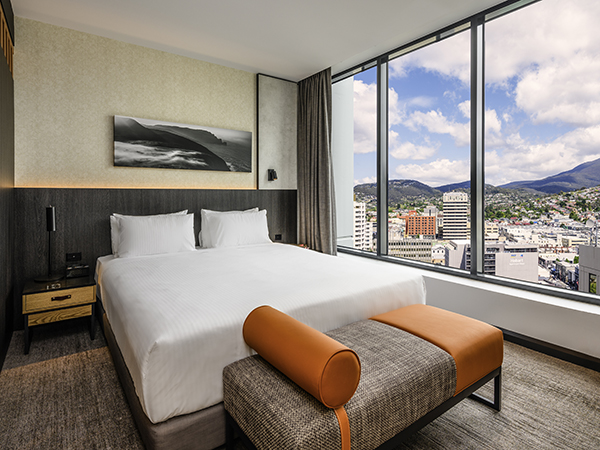
For modern, Tasmanian-inspired design, book a stay at the Movenpick Hotel Hobart . Standing at the Salamanca Markets, look to the Hobart skyline and the award-winning hotel will catch your eye. As the third-tallest building in the CBD, the views across the harbour toward Antarctica are totally unique to your room. Here, end each day at the daily free chocolate hour (plus a free Movenpick ice cream for the little ones).

For a more budget-conscious option, head to the picture book, sandstone buildings of Macquarie Street. Nestled along the buzzing, historic streetscape, you’ll find Tasmania’s biggest hotel: the Ibis Styles . Return home each day to defrost in one of the hotel’s two saunas. Make use of the proximity to MONA, or take an easy stroll to the candy-coloured cottages of Battery Point between your adventures.

A stylish, Tasmanian-inspired bedroom at Mövenpick Hotel Hobart, your perfect base for relaxing after the best day trips from Hobart.
Elevate your Hobart stay with sleek style at Mövenpick.

1. Bruny Island

Craggy cliffs and tropical-hued, white sand beaches signal your arrival to Bruny Island/ Lunawanna-Alonnah.

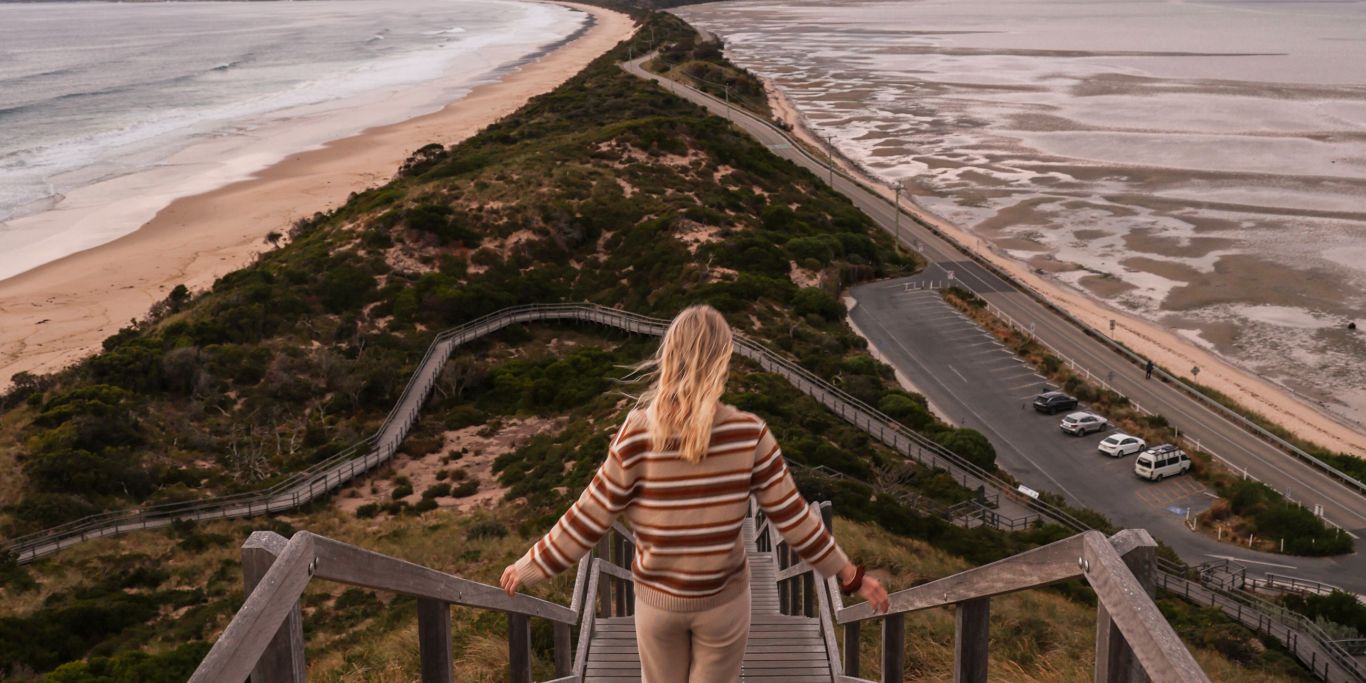
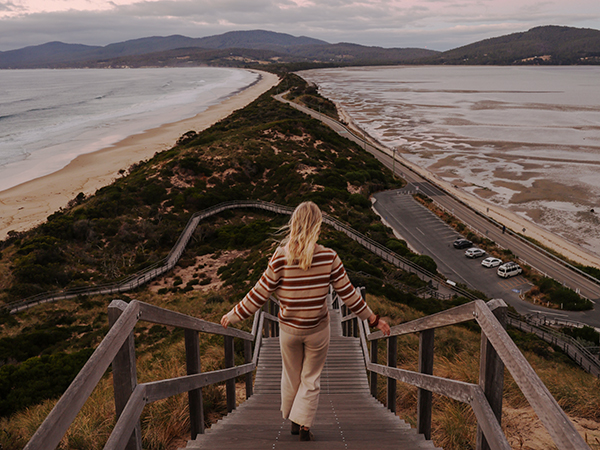
Start your day trip at the island’s most iconic spot, the Neck Game Reserve. Scale the Trunganini steps to gaze out over the teensy stretch of land that juts through the sea connecting the two ends of the island.

Catch a rare glimpse of the white furred wallabies that call Bruny Island home at Adventure Bay. Then, for ocean-fresh oysters, pull into the drive-thru window at Get Shucked . Sample Bruny Island cheese at the cellar door before catching the ferry home with an esky full of local produce.

Bruny Island Neck is an isthmus of land connecting north and south Bruny Island.
Begin your adventure with a climb and a view. (Image: Elise Weaver)

2. Mount Wellington

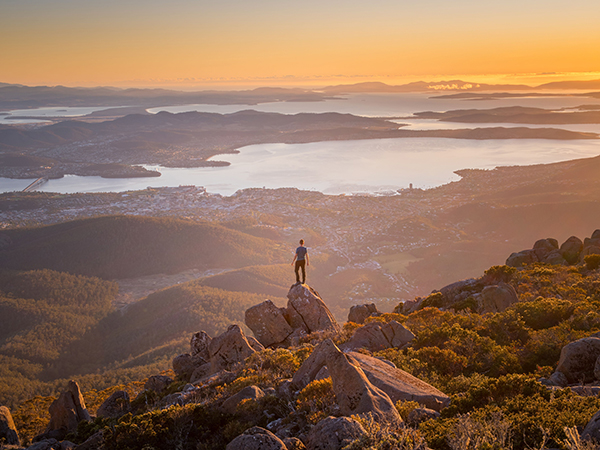
At 1271 metres, Mount Wellington watches protectively over Hobart. Follow the winding road to climb through alpine forest and tufts of snow to reach the summit. Gaze down over Hobart and out to sea, or over your shoulder to the southwestern wilderness.

Reset your adrenaline with a mountain bike ride back down. Or, make like the locals and head into the mountain on foot. Try the hike to the Jurassic-period Organ Pipes which slips under the mountain’s magnificent dolerite cliffs (perfect for families thanks to the trail’s minimal incline).

For a view of Mount Wellington itself, hike nearby Cathedral Rock.

No matter where you are in Hobart you are never far away from the City's beloved mountain, Kunanyi / Mount Wellington
Climb through alpine forest to the summit. (Image: Paul Flemming)

2. Port Arthur

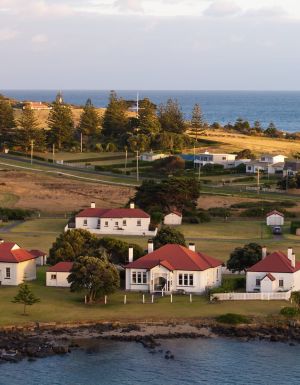
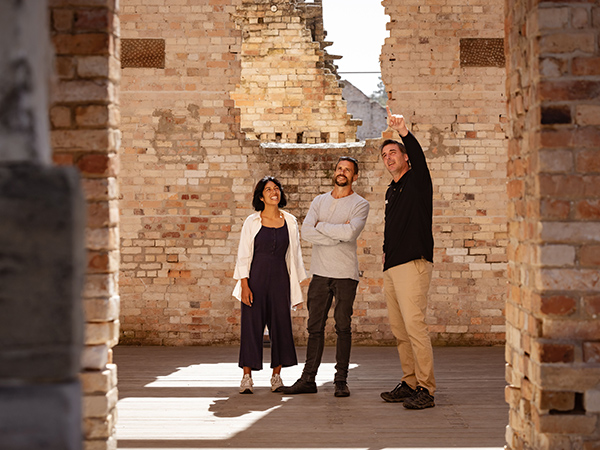
Constructed entirely by convicts, the manicured gardens and penal buildings of Port Arthur offer a day trip that practically hums with history.

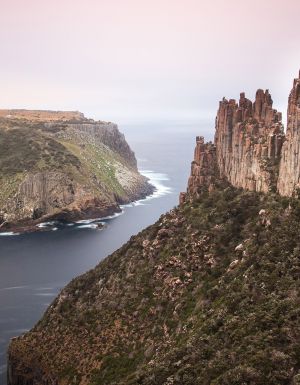
The rugged, seagirt location was chosen for its difficult escape conditions. Now, you can cruise the coast below the towering, jagged cliffs of the Tasman National Park or wander the sloping fields of fragrant lavender.

Tickets to Port Arthur include a walking tour and harbour cruise. See the Isle of the Dead where 1000 men are buried in marked and unmarked graves. And Point Puer, Britain’s first prison for children.

The Port Arthur Historic Site is one of Australia's most important heritage sites and tourist destinations. Located on the scenic Turrakana / Tasman Peninsula in the south east of Tasmania, it offers a unique and essential experience for all visitors to the area.
Wander convict-built grounds and gardens. (Image: Dearna Bond)

3. Launceston

You’ll find Launceston at the confluence of three rivers after an easy 2.5-hour drive from Hobart. Launceston is a patchwork of old and new. Here, heritage streetscapes meet modern architecture.

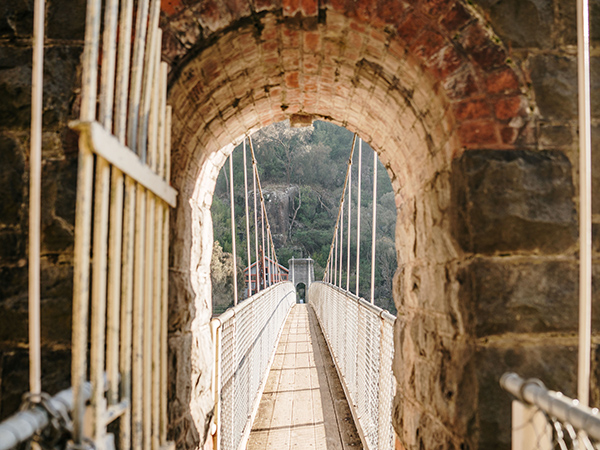
Visit Cataract Gorge, the green, sun-dappled heart of the town and sacred meeting point for Tasmania’s indigenous communities. Pull up at roadside produce stalls that dot the Tamar Valley, or dine out. Launceston is, after all, a UNESCO City of Gastronomy.

Should the local wine scene persuade you, simply extend your time in Launceston at Peppers Silo (but definitely at least stop by the onsite restaurant, Grain of the Silo , for a farm fresh menu) or Mercure Launceston before heading back to Hobart.

Walk the sunlit paths of Cataract Gorge. (Image: Nick H Visuals)

4. Bonorong Wildlife Sanctuary

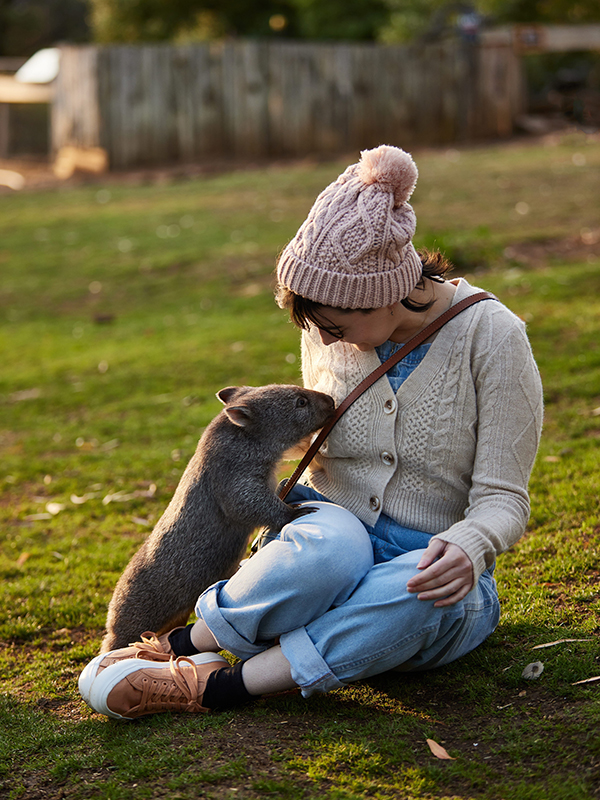
Take a 35-minute drive from your hotel and you’ll find Bonorong Wildlife Sanctuary . This social enterprise is run by a team of extremely passionate Tasmanians with a mission to look after critically endangered species who have found sanctuary here after facing extinction on the mainland.

Choose to wander the sanctuary at your own pace or join a guided tour (free with your ticket) to come face to face with Tassie’s most iconic species. Tasmanian Devils, wombats and echidnas are part of the free tour. You can book up close encounters with your favourite animals, too.

Bonorong is a Sanctuary for wildlife run by a passionate team of like-minded people. We're a social enterprise: a little business with a big heart.
Snap a cuddle-worthy encounter. (Image: Tourism Australia)

5. Richmond Village & Coal River Valley

Richmond is a town that belongs in a snow globe. Fifty colonial-era, Georgian buildings have been painstakingly restored and turned into cafes, cosy restaurants and galleries. Visit Richmond Gaol , said to be the home of a prisoner so vile he inspired Charles Dickens to pen Oliver Twist’s Fagin.

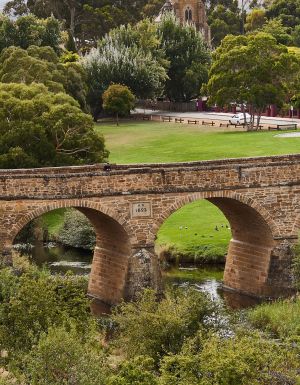
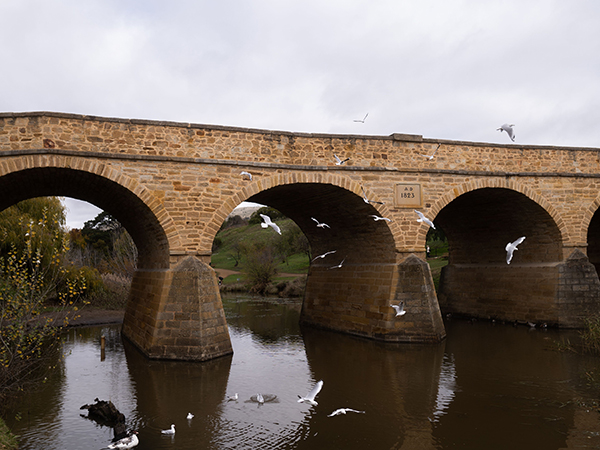
Then, follow the Coal River as it flows past grassy, duckling-dotted knolls and under the iconic Richmond Bridge, the oldest bridge in Australia. From the crest of the bridge, see the oldest Catholic Church in Australia. The river crawls past many cellar doors, perfect for a day of wine tasting.

Richmond is a picture-perfect town in the Coal River Valley wine region, offering a glimpse into early colonial life, one of the best day trips from Hobart.
Trace the river through history and wine country. (Image: Fin Matson)

Plan your trip to Hobart and beyond with ALL Accor at All.com .