hero media

The story behind Australia’s infamous Big Ned Kelly in Glenrowan

Driving out of your way to see a Big Thing on an Aussie road trip is a rite of passage for most of us, but the most infamous Big Thing of all has to be Big Ned Kelly in Glenrowan.

There are actually two Big Ned Kellys in Australia. But since the wild colonial boy and his mob never got within cooee of Maryborough, in Queensland, where a seven-metre high Ned fronts the Ned Kelly Hotel, we’ll stay in Glenrowan, the scene of The Kelly Gang’s last stand.

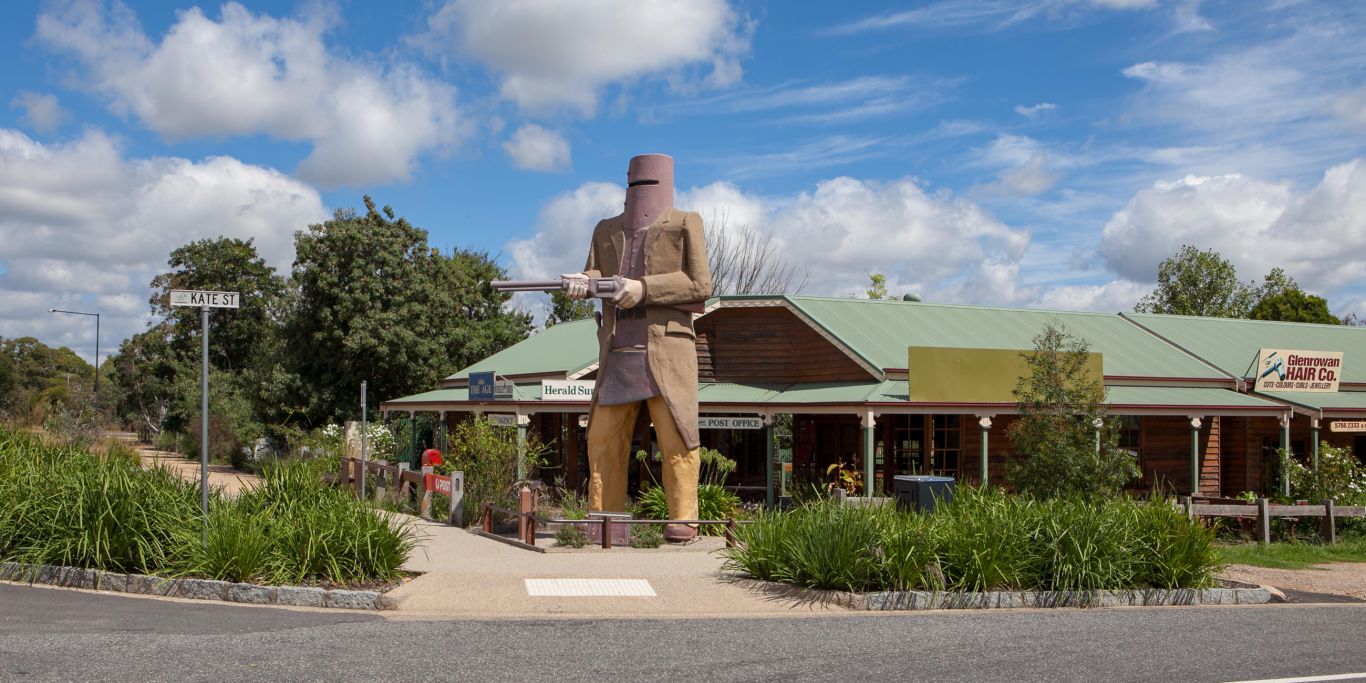
These days you’d be ill-advised to hold up the Glenrowan Post Office. Standing guard outside is a six-metre-high Big Ned Kelly, depicted just as he appeared when he was captured near the town, in June 1880, in his trademark charcoal armour and heavy mask, rifle in hand.

When was Big Ned Kelly in Glenrowen built?

Remarkably, no one quite remembers when the first Big Ned Kelly was built in Glenrowan, but it was stolen and dumped in the river. Bob Hempel built Ned Kelly II for his “Kellyland" video theatre and museum in 1980, the 100th anniversary of Ned’s death, but moved it inside the exhibit eight years later, where it could only be seen for a price. Rod and Chris Gerret, owners of Kate’s Cottage, which houses a Ned Kelly memorial museum , then decided to put Glenrowan on the map in a big way.

“We wanted somewhere people could be photographed for free and big things seemed to be all the rage at the time, so we decided to build a Big Ned Kelly to keep up with the rest," says Chris.

Who made Big Ned Kelly?

They commissioned Kevin Thomas, a Sydney special effects technician, to build the six-metre high, 1.5-tonne fibreglass outlaw at a cost of $12,000. It took eleven hours to truck down from Sydney (there were numerous hold-ups along the way) and Big Ned Kelly III was unveiled on 14 April, 1992. The occasion attracted newspaper coverage from around the country, including the front page of Melbourne’s Herald-Sun, alongside a story about another Australian outlaw, Alan Bond, who’d been jailed for fraud that very day.
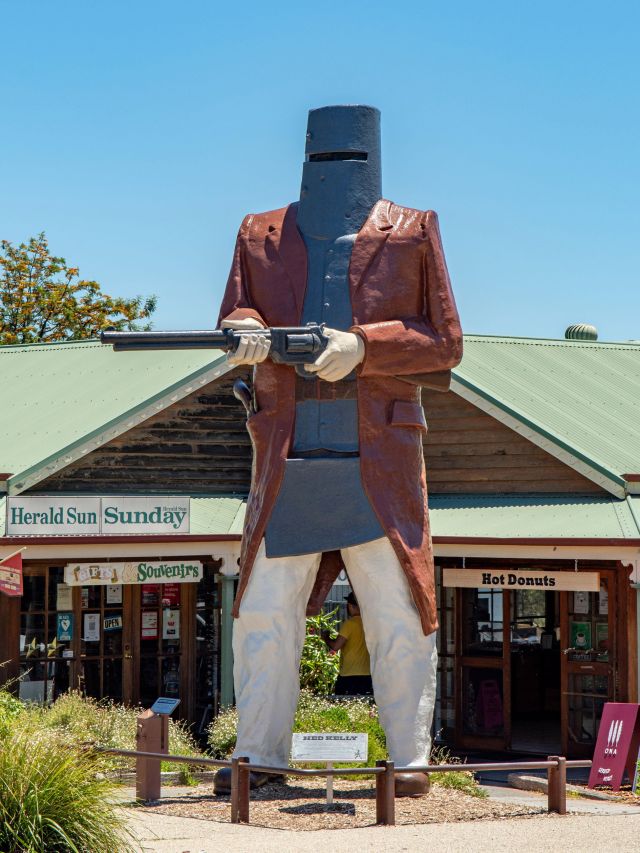
The statue of Big Ned Kelly outside the shops in Glenrowan
The imposing statue of the infamous Aussie outlaw stands in Glenrowan, the Victorian town where he took his last stand. (Credit: Robert Wyatt via Alamy)

Need tips, more detail or itinerary ideas tailored to you? Ask AT.

AI Prompt

Ned Kelly museums and attractions

There’s a wide range of Kelly memorabilia at Kate’s Cottage next door, including a replica of the Kelly homestead, complete with furnishings. They also sell two different kinds of Ned Kelly snowdomes. In fact, Glenrowan is a cornucopia of Kellyana – you’ll find Ned’s Burger House, the Kelly Country Motel, Kelly’s Cookhouse Cafe, and two Ned Kelly museums. Kellyland offers a live animated show called Ned Kelly’s Last Stand , comprising four different sets, each relating to a different part of the story and using original props including an authentic handgun once used by Ned himself. There’s even a Siege Site walk that winds its way past several of the locations featured in Ned’s last stand. You can take the guided tour or grab a map and explore with your own accomplices.

Since being bypassed by the Hume Freeway, Glenrowan, 220 kilometres northwest of Melbourne, is a pretty quiet village these days. We can’t help feeling Ned’s a bit lonely. Perhaps the good people of Glenrowan could see their way clear to having the rest of the gang (brother Dan, Steve Hart and Joe Byrne) take their place alongside him once more. I for one would certainly make the trip to see the first Big Ned Kelly Gang in the country.

Where to find Big Ned Kelly

The Big Ned Kelly
Gladstone St &, Kate St, Glenrowan VIC

Kates Cottage Kelly Homestead & Museum
Contact Phone (03) 5766 2448

This is an excerpt from Big Things Australia’s Amazing Roadside Attractions by David Clark published by Penguin Books, rrp $24.95. 

Australian Traveller

Australian Traveller

View profile and articles
hero media

A must-visit list of Victoria’s most iconic spots

From natural wonders to historical sites, we’ve rounded up Victoria’s most epic icons that deserve a place on your itinerary.

Grampians (Gariwerd) National Park

Mount William peak in Grampians (Gariwerd) National Park
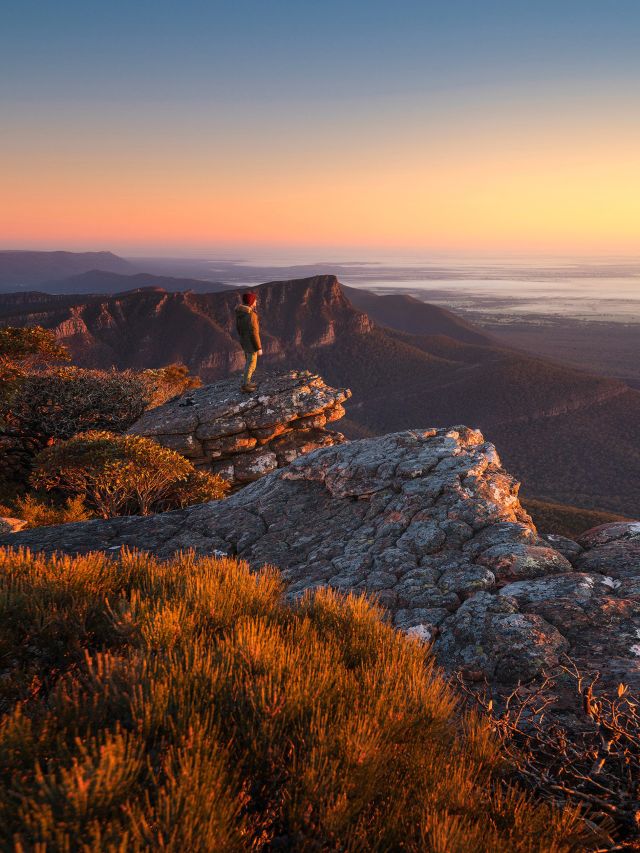
Mount William is the highest peak in the Grampians (Gariwerd) National Park. (Image: Matt Donovan)

From towering mountains to crystal cascades and ancient rock art sites, the Grampians (Gariwerd) National Park is a playground for both outdoor adventurers and nature lovers. Don’t miss the views from the highest peak Mount William or the iconic Pinnacle.

Murray River

A paddle steamer down the Murray in Echuca
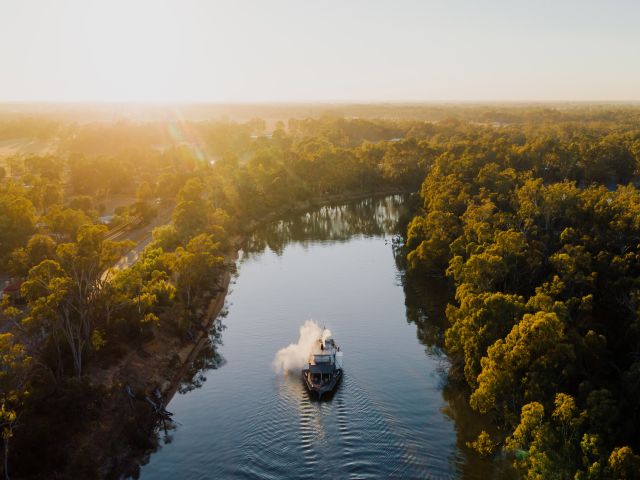
The wonders of the Murray are best experienced on board a paddle steamer. (Image: Visit Victoria)

A natural icon of majestic proportions, the Murray River flows for a staggering 2700 kilometres, making it one of the world’s longest navigable rivers. Meandering through Victoria before flowing out to sea at Goolwa in South Australia, the river is home to diverse wildlife, picturesque towns and secluded creeks and beaches.

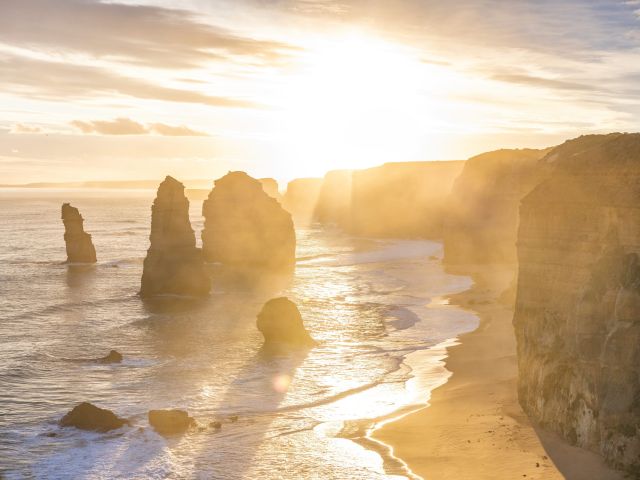
Twelve Apostles, Port Campbell

the Twelve Apostles, Great Ocean Road
The Twelve Apostles are a star attraction on the Great Ocean Road. (Image: Tourism Australia/Two Palms/Harry Pope)

These limestone sea stacks are arguably Victoria’s most famous icon . After an $8-million upgrade to its lookout, The Blowhole near Loch Ard Gorge/Poombeeyt Kontapool (meaning breath of the whale) has recently reopened. A brand-new Twelve Apostles Visitor Experience Centre, complete with rooftop lookout, will open in 2026.

You Yangs, Geelong

kangaroos in You Yangs
Kangaroos enjoy dusk in the You Yangs. (Image: Tourism Australia)

Rising 300-plus metres from the flat volcanic plains between Melbourne/Naarm and Geelong, the You Yangs are massive granite boulders named for the local Wadawurrung word ‘Youang’, meaning ‘big hills’. Hiking, biking, rock climbing and horse-riding are popular within this regional park.

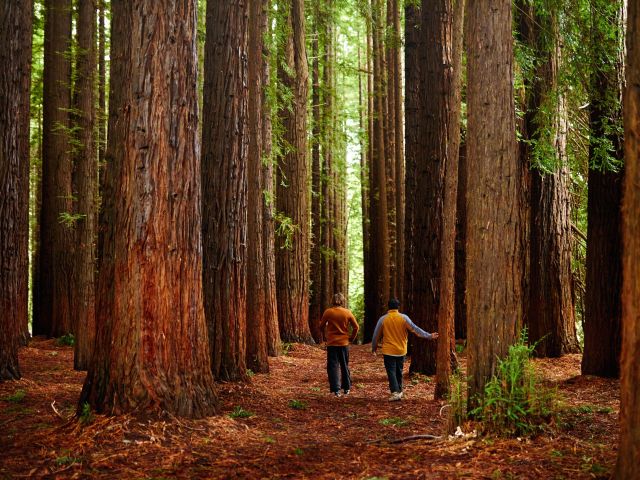
Redwood Forest, Yarra Valley

Redwood Forest, Yarra Valley
Yarra Valley’s soaring Redwood Forest. (Image: Tourism Australia)

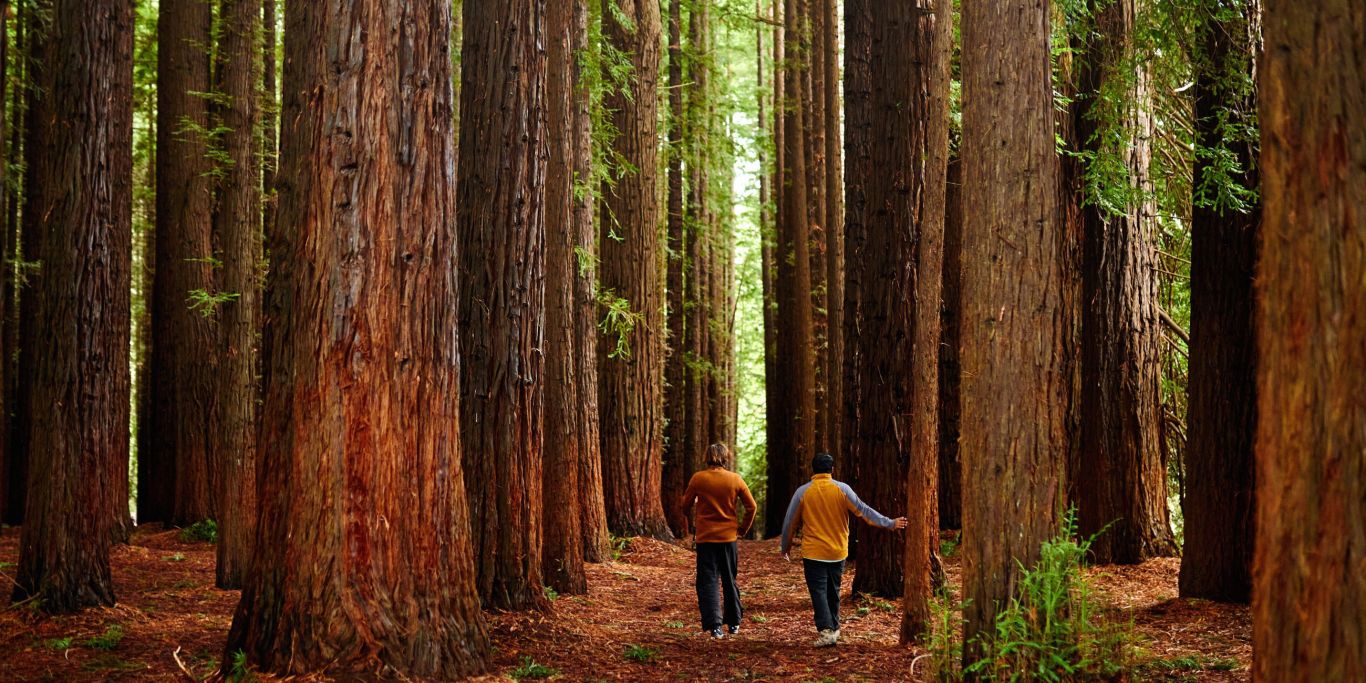
Near the town of Warburton, an extraordinary forest of some 1500 Californian Redwoods stands among native orchids, eucalypt trees and rich birdlife. Planted in the 1930s, these 55-metre-plus trees can live for 2000 years and will grow to be some of the world’s tallest.

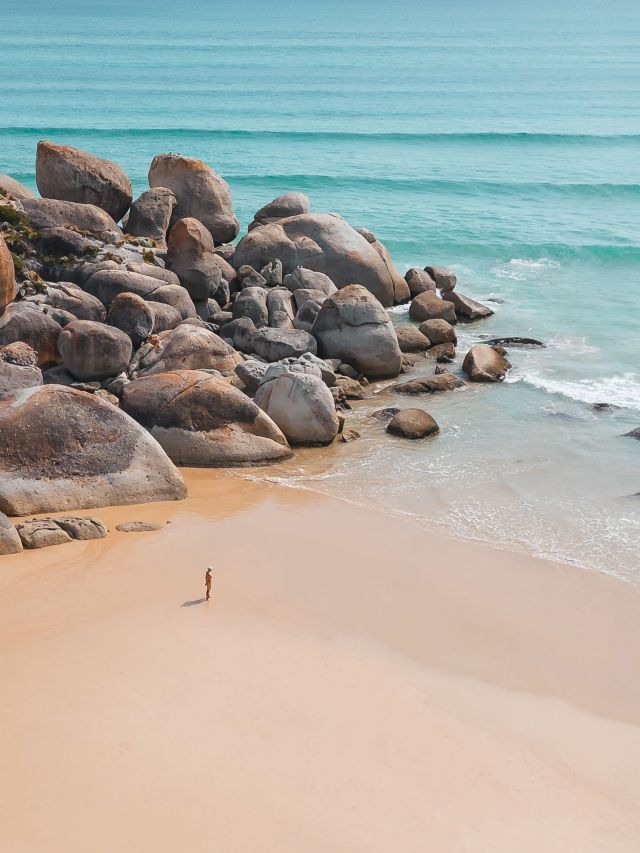
Wilsons Promontory, Gippsland

the Wilsons Promontory
Wilsons Promontory is home to the incredible Skull Rock formation. (Image: Tourism Australia)

The Prom, as it’s known locally, is the southernmost tip of mainland Australia. This 50,000-hectare reserve comprises granite mountains and forest, fringed by sandy beaches and surrounded by a marine park rich in marine biodiversity. It’s also home to the incredible and imposing Skull Rock formation.

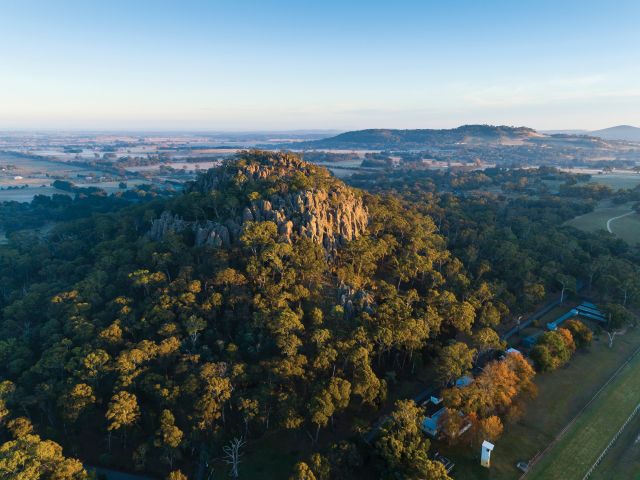
Hanging Rock Reserve, Macedon Ranges

the Hanging Rock Reserve, Macedon Ranges
Enigmatic Hanging Rock. (Image: Visit Victoria/ Rob Blackburn)

This six-million-year-old volcanic rock  was thrown into the national spotlight thanks to the 1967 novel and consequent 1975 film based on the fictional disappearance of schoolgirls in 1901. Mystery aside, visitors can walk the steep 105-metre summit, fish for trout and go twitching.

Sovereign Hill, Ballarat

exploring Sovereign Hill
Step back in time at Sovereign Hill. (Image: Tourism Australia)

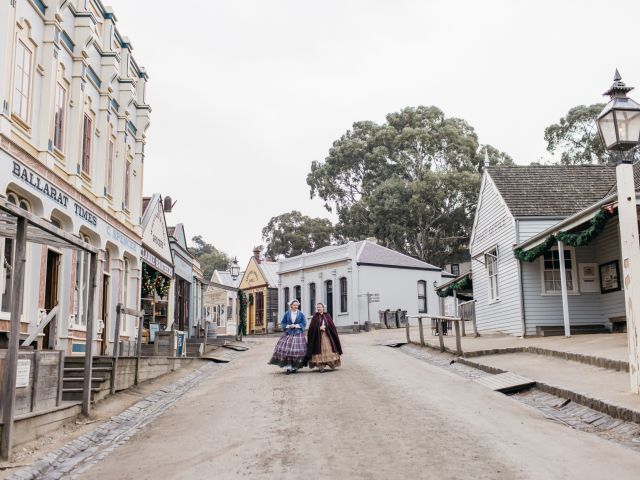
Cry ‘eureka!’ at Sovereign Hill , a living museum to the prosperous Gold Rush era of the 1850s, during which Ballarat produced the most gold in the world. Visitors to this much-loved attraction can walk historic  streets, enter a gold mine and try panning for the good stuff, too.

The Great Stupa, Bendigo

Great Stupa, Bendigo
The Great Stupa in Bendigo. (Image: Tourism Australia)

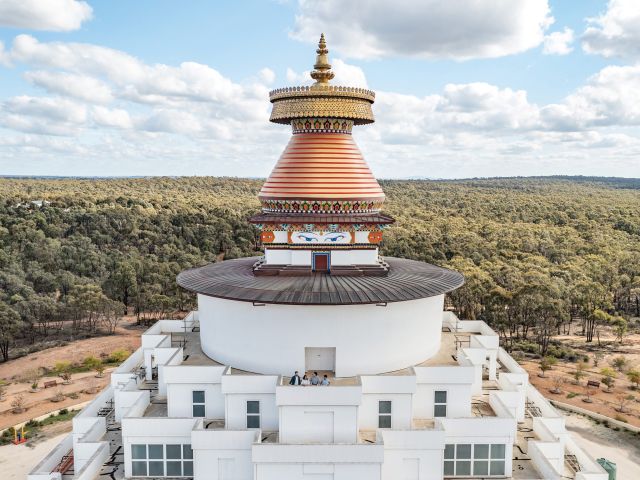
Who’d have thought the largest Buddhist temple in the Western world would be tucked away in Bendigo’s bushland? Welcoming visitors to explore, this sacred Buddhist pagoda is an epicentre for Tibetan culture, architecture, art and interfaith harmony.

Cape Schanck Lighthouse, Mornington Peninsula

the Cape Schanck Lighthouse from above
Heritage-listed Cape Schanck Lighthouse. (Image: Tourism Australia/Two Palms/Harry Pope)

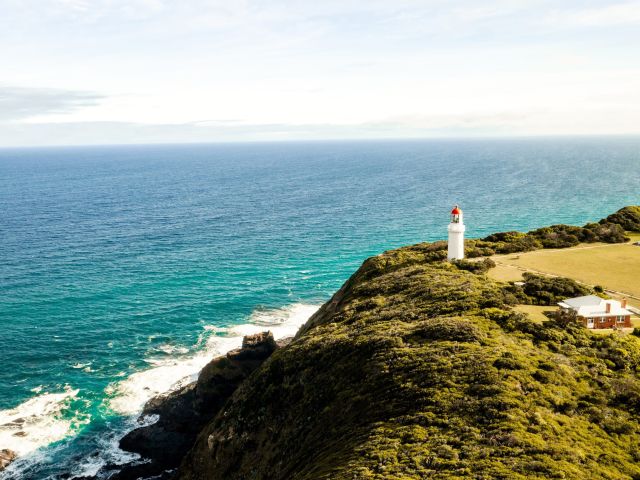
Ensuring the safe passage of ships in the notoriously treacherous Bass Strait since 1859, this heritage-listed lighthouse overlooks dramatic volcanic coast and wild beaches. The surrounding reserve is home to a plethora of wildlife including little penguins, seals and echidnas.