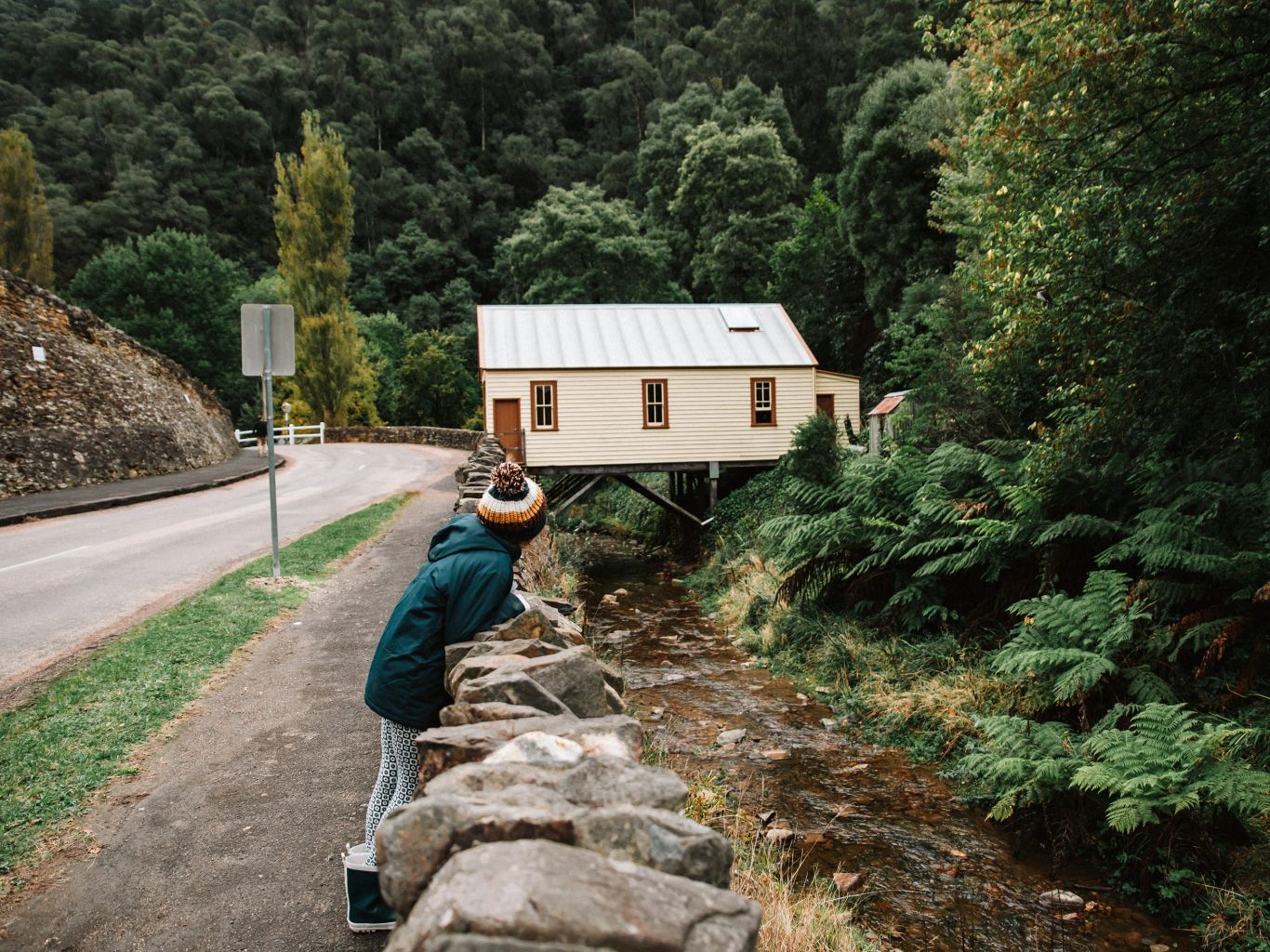

Take a trip back in time with a visit to Victoria’s most alluring ghost towns.
This is part of an Australian Traveller series on ghost towns in Australia. Read more about the ghost towns in Tasmania, Western Australia and New South Wales.
A modern state with a long history, Victoria is filled with whispers of the past, from sacred Indigenous sites and stories to historic buildings and long-abandoned towns filled with the relics, remnants and reflections of yesteryear.
In the 1850s, the discovery of gold in Victoria catapulted the state – and the new colony – onto the world stage. It not only changed its fortunes (within a decade they’d extracted enough gold to pay off all Britain’s debts and then some) but also led the way for a massive population increase, with towns popping up here, there and everywhere.
By the early 20th century, however, everything hit a bit of a snag. In a cycle still repeated around the world today, the boom went bust. Victoria’s mines shut up shop, abandoning a pockmarked landscape and a wave of broke and broken men, towns and machinery to their fate.
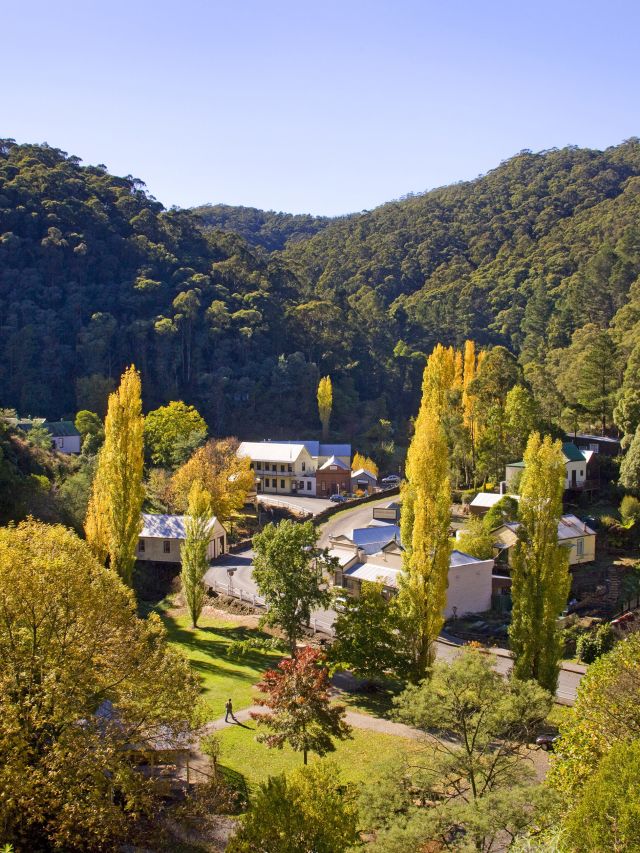
The exact fates varied. Some, like the regional hubs and heritage towns of Ararat, Ballarat, Bendigo, Castlemaine and Maldon, flourished, while others were all but razed from the map. Some were reborn as time capsule-esque recreations of old gold rush towns, like Ballarat’s Sovereign Hill, and the up-and-coming Porcupine Village. Others slipped through the cracks, becoming ghost towns.
Now, after decades of exposure to the elements, the winds of change have come back around for Victoria’s old ghost towns; once again bringing them their time in the sun (and snow, autumn leaves, and spring wildflowers). Popular tourist destinations in their own right, many are now protected by the state, with historic statuses, their own tour guides, and even restored accommodation where you can stay overnight.
Read on to discover more about some of the best ghost towns in Victoria and how to visit.
Walhalla, Gippsland
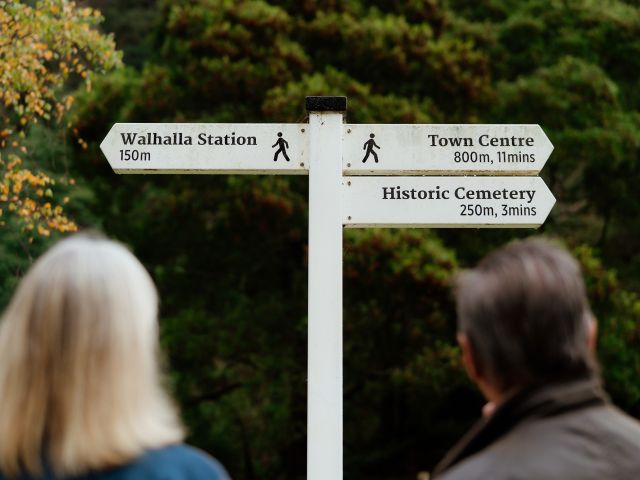
Once one of Victoria’s richest towns, producing over a billion dollars of gold in its heyday, Walhalla has fallen a long way since the 1860s. But, its loss is a Victoria ghost town lover’s gain. Now experiencing a new lease of life as a tourist attraction, the ghost town, which was named after a nearby mine, was once home to more than 4,000 people, along with all the trimmings of a flourishing town; more than a dozen hotels and breweries, a Mechanics’ Institute, shops, banks, a newspaper, chess club, and even a choral union.
Yet, by the time the railway arrived in 1910, much of Walhalla’s glory days were past. Instead of bringing business, the train ended up taking away half the town, including the Walhalla train station, which was relocated to Hartwell in Melbourne. However, by 1977, renewed interest in the town led to the restoration (and recreation) of many of the buildings – train station and all – and cemented Walhalla’s place in the hallowed halls of Victoria’s ghost towns.
Highlights
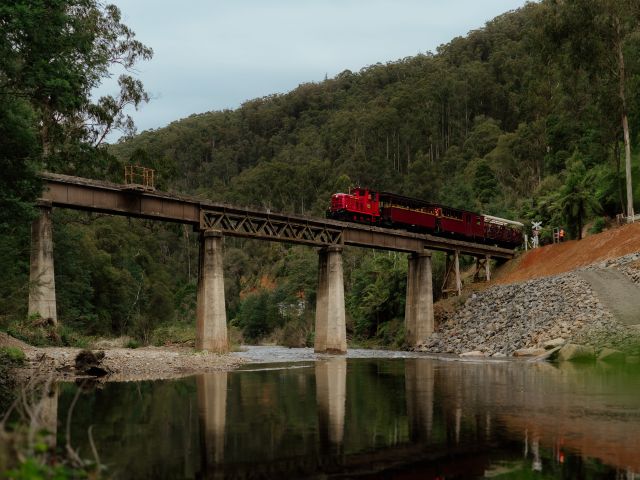
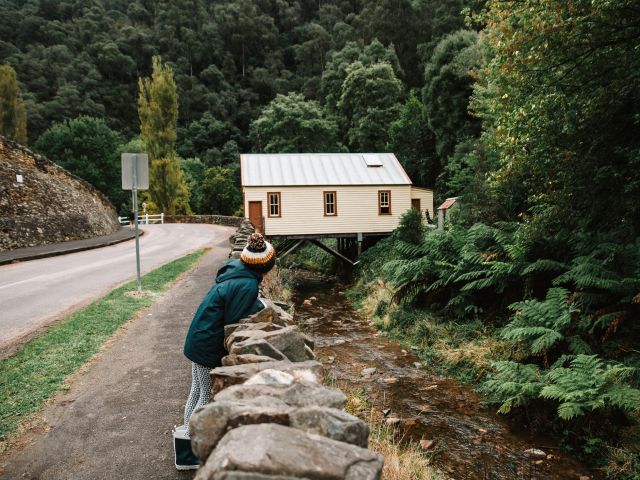
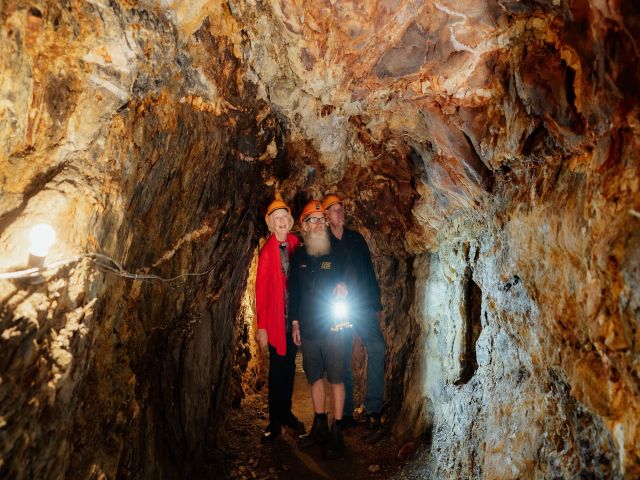
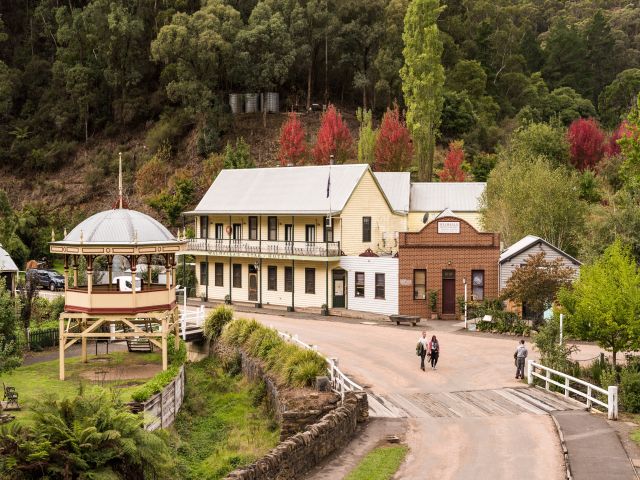
For a one-road-in-one-road-out ghost town in the mountains, Walhalla has a surprising number of things to do. Highlights include exploring the historic high street and heritage buildings, staying overnight in the town and joining a late-night ghost tour, taking a guided trip down into the Long Tunnel Gold Mine or riding on the volunteer-run Walhalla Goldfields Railway.
Especially popular in autumn, when the leaves on the trees around all turn orange and red, other must-sees in Walhalla include the cemetery, which is the final resting place of more than 1,100 people, the fire station, post office, and the Walhalla corner store. Stringer’s Creek is also a popular spot for gold panners hoping to get lucky.
How to get there
Walhalla is located in Victoria’s Great Dividing Range, roughly 2.5 hours east of Melbourne. Best accessed from the south via Moe and the Moondarra State Park, the town sits within its own designated historic area, which borders Baw Baw National Park.
Need tips, more detail or itinerary ideas tailored to you? Ask AT.
AI Prompt
Where to stay
There are a number of accommodation options both in and around Walhalla. Visitors can take their pick from guest houses, camping areas, restored lodges, and even the Walhalla Star Hotel. Located in the centre of the old town, the hotel (which was rebuilt after being destroyed by an unfortunate Christmas pudding-related fire in 1951) is ideal for those hoping to join the after-dark ghost walk around town.
Steiglitz Historic Area, Brisbane Ranges
Steiglitz, which takes its name from a misspelling of the Stieglitz family name, was first settled in 1835, long before the first gold was found in the area in 1854. Even though the von Steiglitz family had left by then, the town still ballooned in size almost overnight. Still, it wasn’t to last. By the 1870s, most of the easy pickings (and pick-ax wielders) were gone, although the mines crept along until 1941.
In the 70s, a renewed interest in the region’s past led to Steiglitz becoming a designated historic site, with the intention to preserve it as a prime example of an 1860s town. Although not quite abandoned (a fair few of the remaining residencies are privately owned), the town still offers an intriguing insight into the past.
Highlights
Thanks to its historic status, in recent years Steiglitz has been protected from the same fates that befell many of its counterparts. Before that, however, things were a little more iffy, with buildings like Steiglitz’s wooden St Thomas church being moved to a nearby town for a few decades then being returned. Now a good story, the church isn’t even the most impressive one in town, but it’s still worth a visit if only to imagine what moving it back and forth would have been like, way back when.
Other highlights include the former Scott’s Hotel, a post office and general store, and the heritage-listed courthouse, which now operates as a small volunteer-run museum (open most Sundays and public holidays). The historic town is also surrounded by some great walking trails which are especially spectacular in spring when all the wildflowers are out.
How to get there
The Steiglitz Historic Area in the Brisbane Ranges National Park, just over an hour from Melbourne. Roughly halfway between Ballarat and Geelong, it can be easily visited on a day trip from the Big Smoke.
Where to stay
Campers can stay on several campgrounds within Brisbane Ranges National Park, including Fridays Campground. If you prefer somewhere a little more comfortable to rest your head, there are a few nearby homesteads and B&Bs, along with plenty of options around Meredith or North Geelong.
Cassilis, East Gippsland
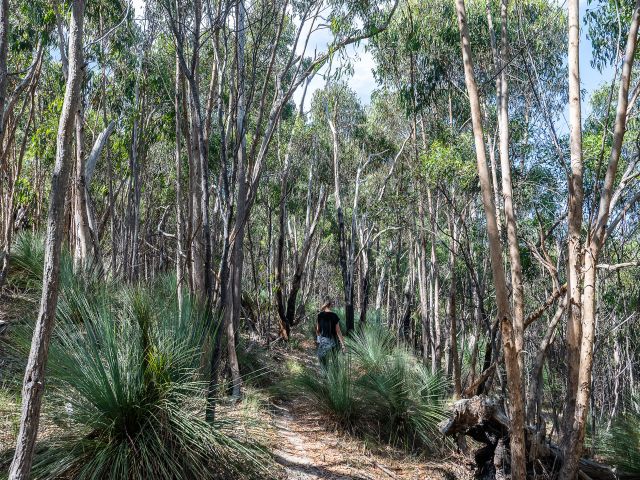
Taking its name from Cassilis in Scotland, Victoria’s Cassilis, which sits in the High Country on the edge of the Alpine National Park, was a small and fairly short-lived gold-mining town. Along with being home to around 500 people, two schools, two hotels, a butchery, bakery, bookmaker, and a coffee palace, the town’s biggest claim to fame was being the site of the state’s first hydro-electric power scheme, which was built in 1908 to generate power and light for the mine.
Yet, while the mine was lights out by 1916, it wasn’t the end for either the power plant or the town, with both enjoying new leases of life; the former in Tasmania and the latter as the Cassilis Historic Area.
Highlights
While much of the town was destroyed in a bushfire in 1931 and some of it subsequently removed, Cassilis still has enough going on to warrant a visit – including the Cassilis Estate winery and cidery. Perfect for those who prefer their ghost towns to be a little more rusty and rustic, other highlights include turn-of-the-century mining machinery, cars that look like they haven’t moved in 100 years, a couple of old huts, and the cemetery.
How to get there
Up in the Victorian High Country, Cassilis is located around 4.5 hours from Melbourne and six hours south of Canberra. The town itself is best visited by car and on foot, with plenty of good walks around the Cassilis Historic Area and King Cassilis Mine – just be careful around the old mine shafts.
Where to stay
There are a surprising number of accommodation options near Cassilis, including campgrounds, homesteads and B&Bs. If you’d prefer to be based in a town, Omeo, which is just 20 minutes up the road, is a pretty sweet spot, too, with heritage hotels, a holiday park, and the Snug as a Bug Motel.
Weekly travel news, experiences
insider tips, offers, and more.
Cambarville, Yarra Ranges
The only ghost town on this list that wasn’t known for gold mining, Cambarville was a timber mill town established in the Yarra Ranges National Park in the 1940s. Surrounded by temperate rainforest and giant mountain ash trees, including one of the tallest trees on mainland Australia, the town was actually set up to salvage timber after the 1939 bushfires ravaged the nearby area.
Unlike many of its 19th-century gold mining counterparts, life in Cambarville wasn’t all coffee palaces, dance halls, and digging. It was small, with no electricity, a dirt main road, and a sawmill that was destroyed (twice) by fire. However, it is also revered for being the place where, in 1961, a young naturalist saw a Leadbeater’s possum, confirming that the species wasn’t extinct, despite not having been seen since 1909. In 2011, a mountain ash was planted to commemorate the 50th anniversary of the occasion.
Highlights
While Cambarville isn’t really a place that most people will want to write home about, it’s still a fascinating Victorian ghost town that offers an insight into a long-gone way of life. Despite being fairly badly affected by bushfires over the years, you can still see the remnants of old houses and miller’s huts, saw-milling equipment, cut marks and old stumps.
Other highlights include the Big Culvert, a granite and bluestone arch dating back to the 1880s, the Beeches Rainforest Walk and the aptly named Big Tree. Taggerty Cascades, Phantom Falls and Keppel Falls are also well worth a visit. If you swing by in winter, you can also squeeze in a spot of skiing at Lake Mountain.
How to get there
Cambarville is roughly 2.5 hours from Melbourne via the Maroondah Highway. To get to Cambarville, follow the road towards Marysville and Lake Mountain and then keep going until you get to the historic township. Another ghost town best visited by car, the drive from Melbourne also includes two of the state’s best scenic roads: Black Spur Drive and Lady Talbert Drive.
Where to stay
Most visitors to Cambarville will probably base themselves in one of the many hotels around Marysville and spend a few days exploring the region. However, true ghost town/abandoned places aficionados may prefer to head the other way towards Woods Point. While accommodation options are more limited, the nearby Woods Point Gold-Mines Historic Area makes up for it.
Llanelly and Tarnagulla, Central Victoria
Despite having a little brush with internet fame for being an “abandoned Welsh town in Australia", the old gold rush town of Llanelly, and its neighbour, Tarnagulla, aren’t actually abandoned. However, despite not technically being ghost towns, they both have some pretty cool history, abandoned buildings, and rusty old architecture, which is just about enough to earn them a bonus spot on this list.
First settled in the 1850s and 1860s, both Tarnagulla and Llanelly have strong ties to Welsh culture, with the name Llanelly a reference to the town in Wales. While many Welsh prospectors made their way to the goldfields, it was around Llanelly and Tarnagulla that they struck lucky. In those days, they were fairly raucous places, with a local historian telling tales about how the Welsh miners would lower women from the town into the Poverty Mine (a misnomer) and let them dig out as much gold as they could in their dresses and finery.
Almost 200 years on, though, the towns are now pretty peaceful; the old historic buildings that sit side-by-side with modern houses and fruit growers the only real indicator of their wild, wealthy past.
Highlights
The main attractions around Llanelly and Tarnagulla are the historic buildings. In Llanelly, there isn’t too much beyond the old red-brick school, the mine manager’s house, and the bank. On the other hand, the striking facade of Tarnagulla’s old Wesleyan Methodist Church (circa 1865) is worth it the drive alone – the rest of the church was destroyed by a fire in 2000. The nearby Poverty Mine monument is also worth checking out, along with the Victoria Hotel and Theatre (1853), the courthouse and Uniting Church (1863) and the Colonial Bank, which still has its old gold smelting chimneys.
If you fancy making a day (or a week) of your visit to the Goldfields, you can also add on trips to nearby Dunolly, Maldon and Castlemaine. Or, for those who want some more ghost town action, the Castlemaine Diggings National Heritage Park has plenty of abandoned gold rush relics, including quartz ovens and stone miner’s huts.
How to get there
Llanelly and Tarnagulla are located in Central Victoria, about two hours northwest of Melbourne. The two heritage towns are also close to Maldon and roughly halfway between Bendigo and Dunolly, which are also all renowned for their gold rush-era heritage buildings.
Where to stay
The closest accommodation options to Tarnagulla and Llanelly are in Newbridge, Bridgewater, Dunolly, or Maldon. Alternatively, you can always head to Bendigo, where you can find comfy accommodation, charming Airbnb stays, and unique hotels to suit every traveller – along with some good brunch spots to help clear away the ghosts of the past (or the night before).
Want to see more stories from Australian Traveller in your Google search results?
- Click here to set Australian Traveller as a preferred source.
- Tick the box next to "Australian Traveller". That's it.