The passionate community that saved Bendigo Tramways has kept the story of this city alive for generations.
It was an absolute steal: a fleet of 23 trams for just $1. But such a fortunate purchase didn’t happen easily. It was 1972 when the Bendigo Trust handed over a single buck for the city’s historic collection of battery, steam and electric trams, which had transported locals since 1890.
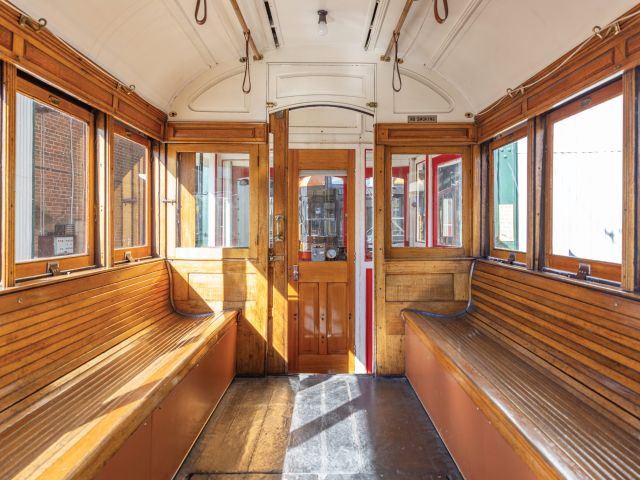
Bendigo Tramways is a historic transport line turned tourist service. (Image: Bendigo Heritage)
The city’s tram network had been declared defunct since 1970 due to post-war shortages in materials to upkeep the trams and declining passenger numbers as motor vehicles were increasing. However, determined locals would not hear of their beloved trams being sold off around the world.
The Bendigo Trust was enlisted to preserve this heritage, by converting the trams into a tourist service. The Victorian government approved a trial, however news spread that the Australian Electric Tramways Museum in Adelaide had acquired one of the streetcars for its collection.
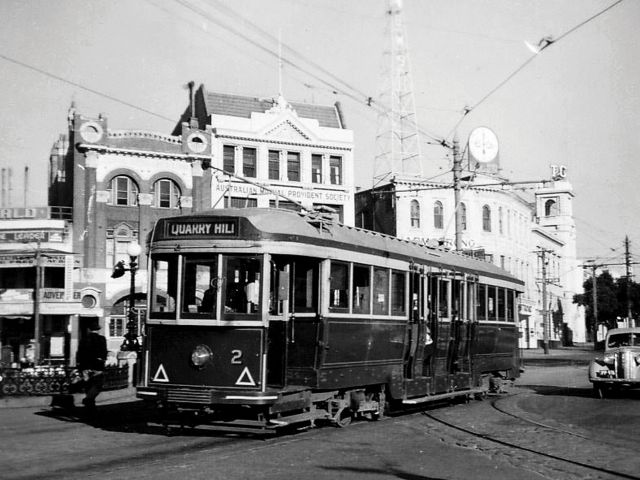
A tram on its way to Quarry Hill in 1957. (Image: Bendigo Heritage)
An impassioned group rallied together to make this physically impossible. Breaking into the tram sheds, they welded iron pipes to the rails, removed carbon brushes from the motors, and formed a blockade at the depot. The community response was extraordinary, and a $1 deal was sealed.
A new chapter for the city’s fleet
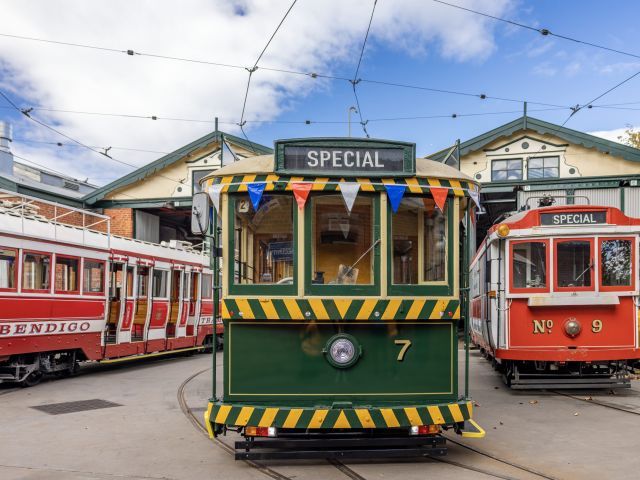
The old Tramways Depot and Workshop is one of the stops on the hop-on, hop-off service. (Image: Tourism Australia)
Today, Bendigo Tramways welcomes some 40,000 passengers annually, operating as a hop-on, hop-off touring service aboard the restored trams. Fifteen of the now 45-strong fleet are dubbed ‘Talking Trams’ because of the taped commentary that is played along the route. The trams loop between Central Deborah Gold Mine and the Bendigo Joss House Temple, which has been a place of Chinese worship since 1871, via other sites including the old Tramways Depot and Workshop.
The fleet comprises 45 trams that have been restored. (Image: Visit Victoria/Robert Blackburn)
Keeping things interesting, throughout the year visitors can step aboard different themed trams. Tram No. 302 becomes the Yarn Bomb Tram, decorated both inside and out with colourful crochet by an anonymous group of locals.
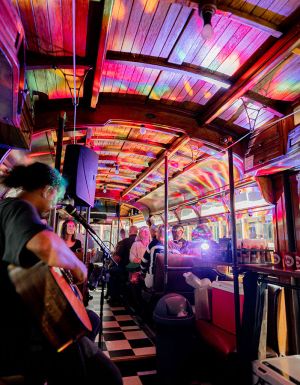
During the festive season, Tram No. 15 operates as a tinsel-festooned Santa Tram, and the big man himself hides out somewhere along the route for excited children to find. And on selected dates, the adults-only Groove Tram runs nighttime tours of the city, accompanied by local musicians playing live tunes and a pop-up bar.
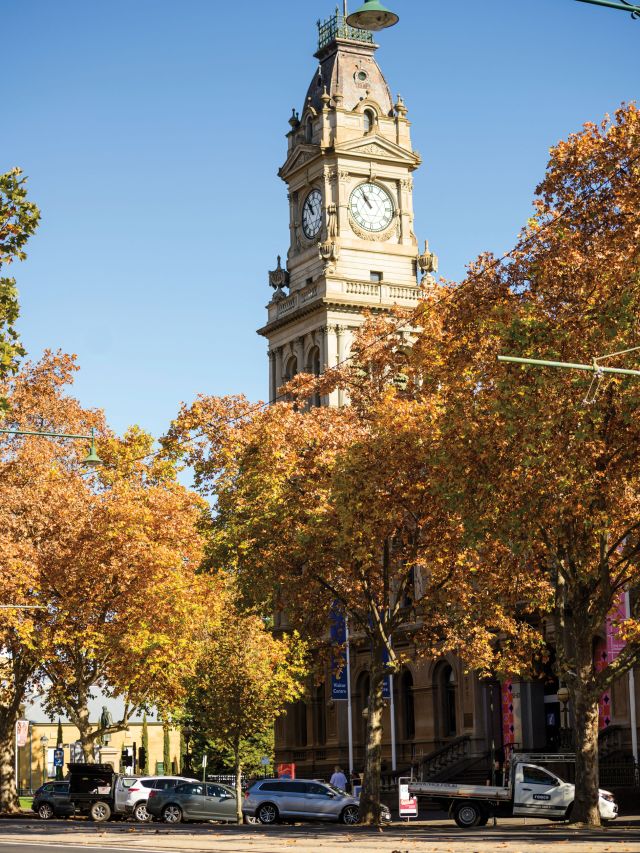
Visitors can hop on and off to see the city’s sites such as the historic post office turned visitor centre. (Image: Tourism Australia)
As well as preserving the city’s history, however, the continuation of the tram service has kept the skills of tram building and craftsmanship alive in a practical sense. Bendigo’s Heritage Rail Workshop is world-renowned for restoring heritage trams and repurposing vehicles in creative ways.
Locally, for example, Tram No. 918 was transformed into the Dja Dja Wurrung Tram with original Aboriginal artworks by emerging artist Natasha Carter, with special commentary and music that shares the stories and traditions of Bendigo’s first people. You can’t put a price on preserving history. Nonetheless, it was a dollar very well spent.
Need tips, more detail or itinerary ideas tailored to you? Ask AT.
AI Prompt
Megan Arkinstall is a freelance travel writer who you’ll often find at the beach, bushwalking or boating with her young family. She loves reliving travel memories through writing, whether that be sipping limoncello in a sun-drenched courtyard of Monterosso or swimming with green turtles in the aquamarine waters of Tropical North Queensland.
A change is as good as a holiday, but never more so than in the Bendigo region when it’s the seasons putting in the transformative work.
With its gold rush history, opulent architecture and booming food and wine industry, there’s no denying that the Bendigo region is beautiful to visit at any time of year. Visit between March and May, however, and you’ll find the Bendigo in autumn really comes alive. Foliage erupts in a canvas of golden colours and the cooling air makes immersing yourself in nature all the more enticing.
Need a few ideas to get you started? We’re so glad you asked.
1. Tackle the bike trails
Pink Cliffs Reserve in Heathcote can be seen on the O’Keefe Rail Trail. (Image: Visit Victoria/Emily Godfrey)
Welcome to a region that punches well above its weight when it comes to cycling. This is where hammies are tested on multi-day rides, and first-timers fall in love with the sport on short (and ridiculously pretty) trails.
The 49-kilometre O’Keefe Rail Trail is the headline act, following the old railway line between Bendigo and Heathcote. Cross the Campaspe River at Axedale Recreation Reserve and pause at the Platypus Compass Sculpture and the First Nations mural marking the connection between Djaara and Taungurung Country, with Axedale acting as the perfect halfway stop to refuel at a pub or cafe.
Pedal a little further Heathcote’s Pink Cliffs Geological Reserve to be rewarded with views of sculpted pink clay cliffs and narrow gorges that are perfect for a photo stop. Searching for a different type of reward? The Heatchote Wine Region is full of inviting cellar doors.
There are plenty of other options in the Bendigo region, from the 210-kilometre Goldfields Track , to the Bendigo Creek Trail and Back Creek Trail – both ideal for riders of all abilities. The 3.7 kilometre Little Lake Boort loop is a great family-friendly option.
Prefer something more adventurous? Spring Gully Mountain Bike Park has been keeping BMX Bandits’ dreams alive for years.
2. Enjoy the crunch of autumn leaves
Pack a picnic and head to the Valley of Liquidambers.
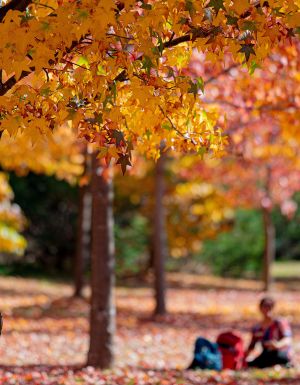
Blinding clusters of crimson, burnt orange and brilliant yellow; here, autumn leaves are crisp confetti of fire and gold. See the magic up close with a slew of parks seemingly dedicated to showcasing Mother Nature’s colour wheel, especially from mid April to early June.
Pack a picnic for an afternoon at Valley of Liquidambers in Heathcote, where Liquidamber trees transform into a wonderworld of magical foliage. Don’t miss taking a leisurely stroll across the swinging bridge back towards the main street.
Rosalind Park might be celebrated for its annual tulip display come springtime, but it’s hard to compete with the theatre of autumn. Here, many trees date back to the 1800s, and there’s no better place for a romantic stroll than along the elms, oak and Queensland Kauri that dominate this park.
Head straight to Lake Weeroona, where an ornamental lake begs for a leisurely lap around its edges, either on foot, or with pedal power.
3. Immerse yourself in First Nations culture
Explore Kooyoora State Park on a cultural tour.
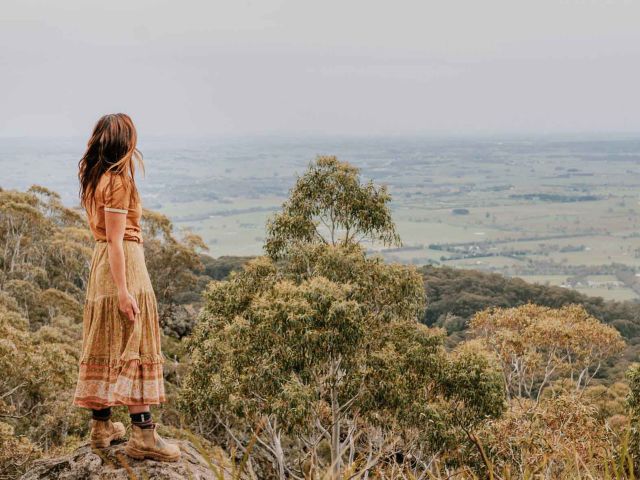
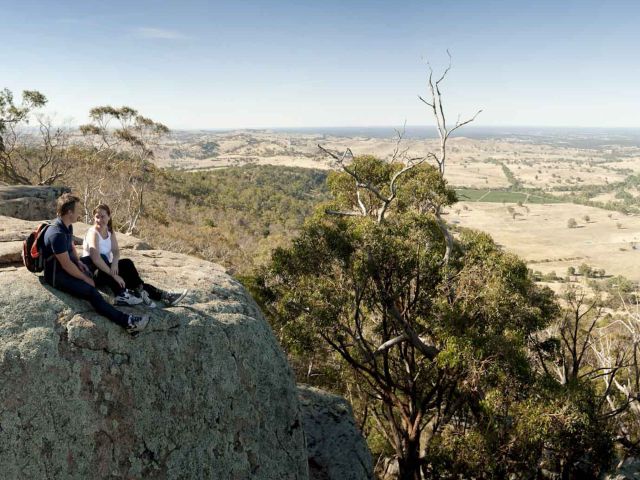
Its ‘Mountain of Light’ (Guyura in the Dja Dja Wurrung language) title is impressive, but so too is Kooyoora State Park’s rugged landscape of granite outcrops, rocky ridgelines and wide-open skies.
While there’s nothing to suggest you couldn’t explore Kooyoora’s walking tracks on your own, the best way to understand the 40,000 years of history behind its natural wonders is to book a 2.5-hour Kooyoora Cultural Tour with Dumawul Tours .
Led by Djaara cultural guides, expect a traditional Welcome to Country smoking ceremony, before engaging storytelling rewinds the clock to reveal the deep cultural significance of the land, its flora, fauna and its continuing connection to Country.
Keen to stay a little longer? Consider staying overnight at the campground and committing to the park’s wealth of walking trails, such as the 5.3-kilometre hike from the camping ground to the lookout on the Long Rock Walking Track.
4. Splash in the region’s waterways
Paddle through Serpentine Creek Canoe Trail. (Image: Visit Vic)
Water babies rejoice: the Bendigo region offers a wealth of waterways to explore.
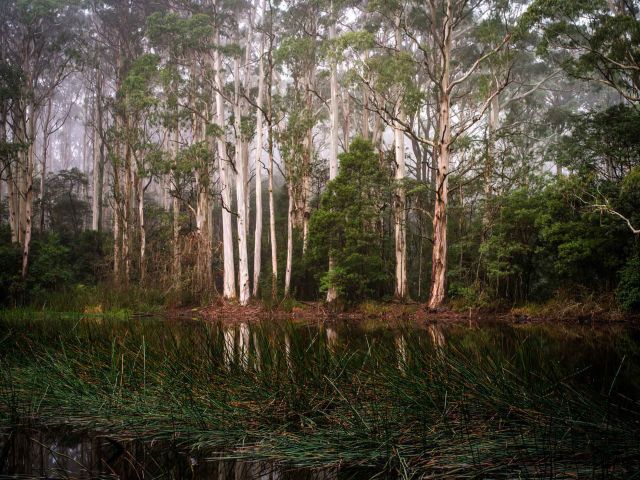
Flowing 392-kilometres from the Great Dividing Range to the Murray River, the best way to enjoy Loddon River is with a stop at Bridgewater. Here you can swim in the natural infinity pool or tackle the all-abilities, five-kilometre Serpentine Creek Canoe Trail before browsing the cute stores in town. Hungry? Grab a bite at Bridgewater Hotel .
Lake Eppalock is popular for water activities, but don’t miss a visit to Little Lake Boort and Big Lake Boort. Birders, in particular, will love the former, thanks to the large variety of bird species that nest in the boardwalk area surrounding the lake.
Meanwhile, Big Lake Boort is celebrated for its significant Indigenous history and over 400 scarred trees, and offers an opportunity to spot birds and go canoing.
Meanwhile, watersports and recreational activities at Crusoe Reservoir, located on the outskirts of Bendigo, are the order of the day. Take a walk to the picnic spots of No. 7 Park nearby, and maybe even camp there for the night.
5. View epic lookouts
Spend time at Peregrine Ridge.
Sometimes a holiday requires a phenomenal spot on which to perch as you survey your temporary kingdom below. The Bendigo region, happily, doesn’t do anything by halves.
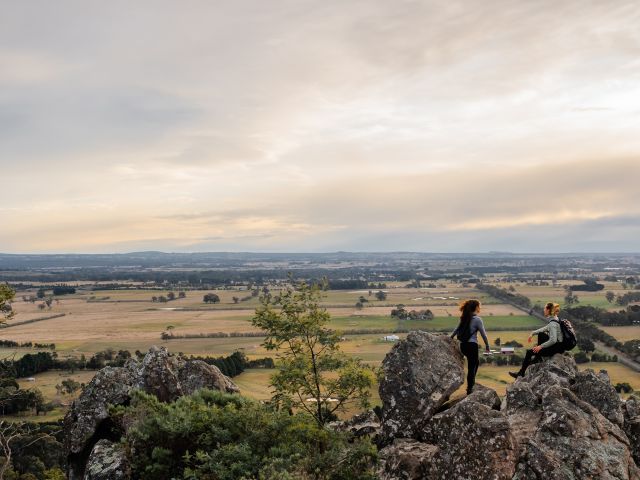
Located in Heathcote-Graytown National Park, Viewing Rock Lookout – a rocky outcrop offering spectacular views over Heathcote and surrounds – remains a popular choice. Take the hour-long Viewing Rock Circuit Walk and try your hand at gold prospecting nearby.
Prefer the romance of sunrise or sunset? Pyramid Hill, a stunning granite hill rising 187-metres above sea level, is the place to be (preferably with a coffee and a bagel)
Over in Terrick Terrick National Park, a walk to the summit delivers a full 360-degree panorama of woodlands, farms and open-sky plains. Pack lunch – and perhaps a tent – as picnic tables and camping are available.
Carve out time for Peregrine Ridge , a vineyard situated at the eastern side of Mt Camel Range with an elevation ranging from 250-290 metres. Be rewarded with delicious wine and a cellar door which offers floor-to-ceiling views.
6. Enjoy the Bendigo region’s parks and gardens
Stroll through Bendigo’s best gardens. (Image: Visit Vic)
Rosalind Park, located right in the centre of town, is considered Bendigo’s backyard and rightly so. Home to the Bendigo Easter Festival , it’s just as popular year-round for its sixty acres of rolling lawns, towering elms, fernery and winding paths – not to mention the playground which has plenty of little fans of its own. A short drive away, Bendigo Botanic Gardens – established in 1857 – offers a more tranquil space for deep-level nature immersion.
Those who favour something a little more formal, cottage-style Canterbury Park Gardens – famous for its dahlias in autumn – delivers. Stroll through its meticulously maintained ornamental gardens before checking out Lake Tom Thumb and Lake Neangar nearby.