10 of the best things to do on the Great Ocean Road

hero media
If you’re planning a Great Ocean Road trip, there are plenty of places to stop and things to do while driving on one of the world’s most scenic roads.

Travelling to Victoria soon? Of all the things to do, Great Ocean Road exploration should be at the top of your list. The world-famous Great Ocean Road cuts its way through a bewitching limestone wilderness that is fringed by native bushland teeming with wildlife on one side and the wild beauty of the Southern Ocean on the other.

Along the 255-kilometre route, there is plenty to see and do: from watching humpbacks breaching from a coastal whale-watching platform to booking into a chocolate-making masterclass. Here are the places worth stopping at on the Great Ocean Road.

1. Take in the wild beauty of the Port Campbell National Park

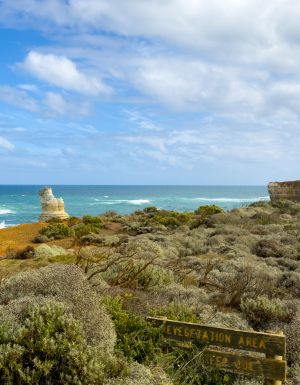
One of the better-known highlights along the Great Ocean Road is the Twelve Apostles. Do not miss seeing this offshore collection of limestone stacks rising proudly out of the ocean, standing 45 metres high. The lookout is located within the Port Campbell National Park and taking time to marvel at them is a requirement of every journey to the region.
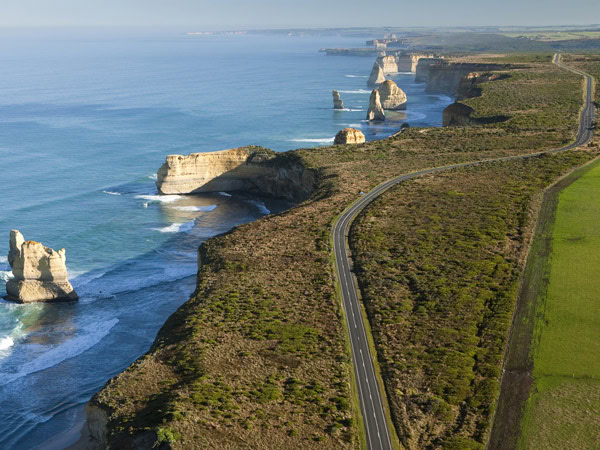
view of the Twelve Apostles from Port Campbell National Park
Capture the majestic Twelve Apostles from Port Campbell National Park. (Image: Visit Victoria)

But don’t just stop at the Twelve Apostles. The Port Campbell National Park has plenty more natural attractions to explore, including London Bridge, an offshore natural arch located just a few minutes’ drive west of the Apostles. The stack, which was formed by a gradual erosion process, was connected to the mainland until 1990 when it collapsed to create a detached double-span natural bridge.
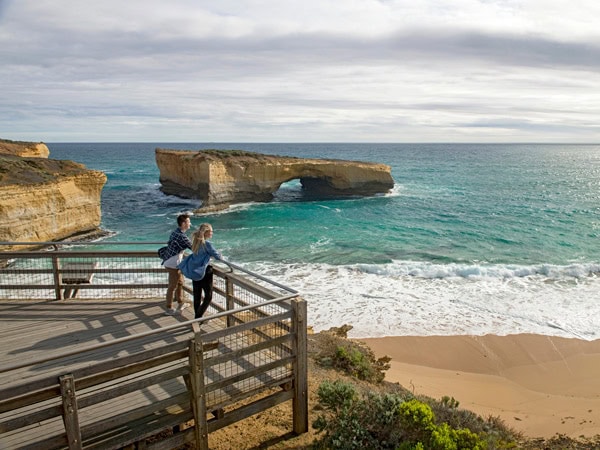
two people standing on the London Bridge lookout
London Bridge offers stunning views of the limestone stacks. (Image: Visit Victoria)

2. Get a sugar hit at Great Ocean Road Chocolaterie & Ice Creamery

Open every day except Christmas Day, this popular pitstop in Bellbrae is fun for all the family. Book a spot in the Chocolate Discovery class to craft your own chocolate bar and taste a selection of the chocolaterie’s finest or sit down for a decadent chocolate high tea in the private experience room. If you’re short on time and just want a bite to eat, the all-day cafe menu has a mix of savoury and sweet items, including waffles and croissants for brunch, burgers and stone-baked pizzas for lunch, and scones and old-fashioned sundaes for dessert.

3. Head to one of the famed lookouts

The Great Ocean Road provides much by way of rich scenic grandeur – best appreciated from one of the many viewing platforms you’ll find along the way.

Teddy’s Lookout

Take a short drive to the top end of George Street to find the renowned views of the Great Ocean Road sighted on many a Lorne postcard. It delights just as equally in person.

Logans Beach

Between June and September, female southern right whales return to Logans Beach in Warrnambool to birth their young. They often swim within a hundred metres of the shore and a specially constructed platform has been built to view them at play.
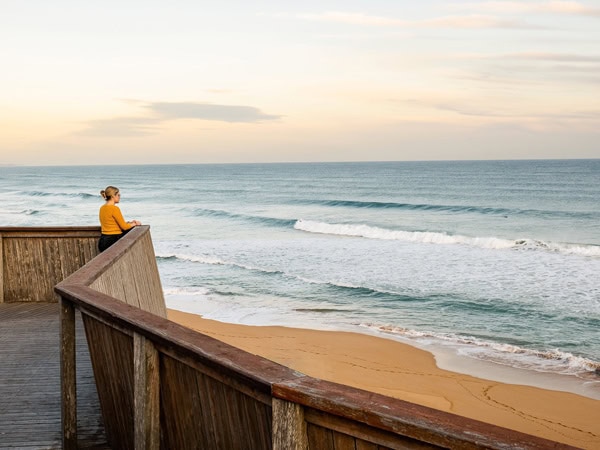
a woman looking out to the sea at Logans Beach
Logans Beach is renowned for its breathtaking views. (Image: Visit Victoria)

Cape Patton

Located between Kennett River and Wongarra, Cape Patton provides dramatic views of the windswept coastline. It marks the western end of what was considered the Great Ocean Road when first constructed by World War One veterans. A plaque at the lookout tells the story.
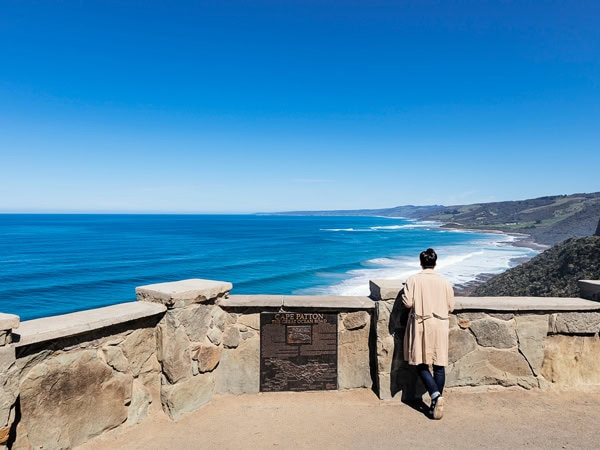
a woman admiring views at Cape Patton
Take in sweeping ocean vistas. (Image: Visit Victoria)

Need tips, more detail or itinerary ideas tailored to you? Ask AT.

AI Prompt

Twelve Apostles

Visit the Twelve Apostles at dawn or hang around after the sun goes down to see little penguins – they come ashore each evening on the beach at the base of the 70-metre cliffs.
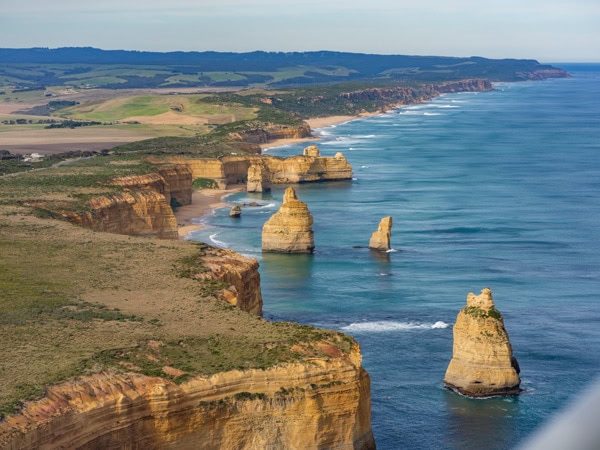
a scenic aerial landscape of the Twelve Apostles
The isolated sandstone pillars stand up to 50 metres high. (Image: Visit Victoria)

4. Pay a visit to QDos Arts in Lorne

While Lorne mightn’t be known for its artistic prowess, one venue does well to showcase its unassuming talent. QDos Arts is a studio, gallery, cafe and sculpture park that specialises in fine and contemporary art. It’s the first space of its kind in the region, hosting many gallery exhibitions each year. There is also boutique accommodation onsite, with luxury Japanese-style tree houses perfect for couples or solo travellers.

5. Become a part of the local festival scene

The residents of the Great Ocean Road love a good bash – and visitors can expect a celebration for everything from folk music to seafood.

In March, the Port Fairy Folk Festival – or ‘folkie’ – transforms the historic fishing village into a four-day reverie of musical and theatrical delights. Feast on international and local folk, blues and roots artists alongside street theatre, comedy performances, interactive workshops and inspiring talks.
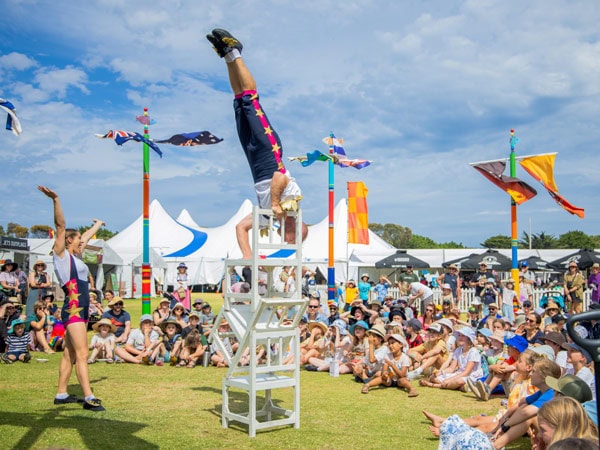
people gathering at the Port Fairy Folk Festival
Dynamic energy fills the air at the Port Fairy Folk Festival.

The Bonney Upwelling is the epic natural ocean occurrence that powers a seven-month feeding frenzy for the region’s marine animals. Upwelling Festival celebrates the commencement of this incredibly rich ecological food web with an epic one-day event. Held on the first Saturday in November, visitors and locals alike come for the music, market stalls and whale boat racing, and stay for the absurd street parade of aquatic ornaments and fish flags.

The Apollo Bay Seafood Festival is a great way to continue the marine celebrations. The gourmet extravaganza dishes up world-class, locally sourced seafood, straight from the ocean to the people. Take your pick of the morning catch direct from the fishermen, order food from the pop-up restaurants and drink your way through an extensive offering of craft beer, wine and cocktails.

6. Taste some of the Great Ocean Road’s finest

Located in the busy beach town of Torquay, the Great Ocean Road Gin distillery is open on select days seasonally. The owner, Ann Houlihan, uses local botanicals to produce her high-quality, small-batch gin. The citrus-forward Guvvos variety (named after a favourite surfing spot of Ann’s daughter) features a number of botanicals local to the Surf Coast region, including coast daisy, saltbush, pigface, kelp and indigenous eucalypts. Stop by the shop to grab a bottle of gin or some classic G&Ts in a can to take the edge off a warm summer afternoon.
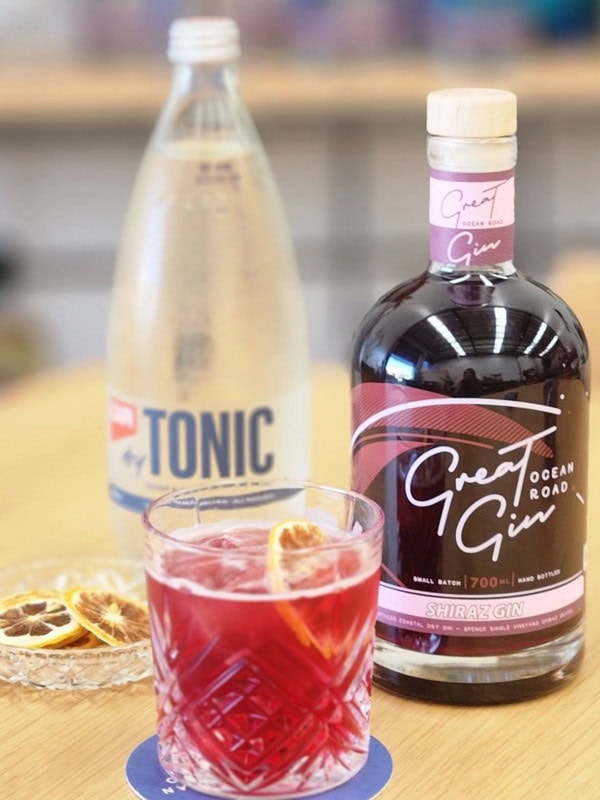
gins and classic G&Ts at the Great Ocean Road Gin distillery
Sip on classic G&Ts or a shiraz G&T.

7. Discover some under-the-radar natural gems

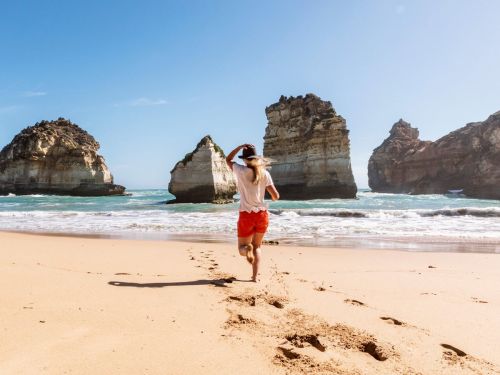
While the heavy hitters are definitely worthy of exploration, you should also consider adding some of these lesser-known gems to your itinerary. In summer, locals swim at Childers Cove. Drive 19 kilometres west of Peterborough and turn off the Great Ocean Road at Nirranda South to find its wonderful seascapes.
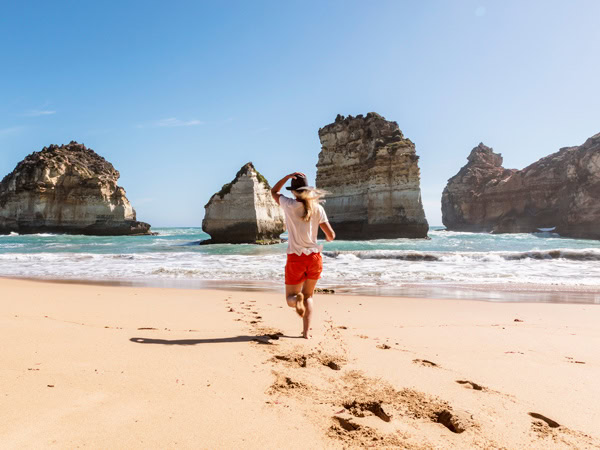
a person walking with trail of barefeet on the sandy beach at Childers Cove
Frolic barefoot in the sand at Childers Cove. (Image: Visit Victoria)

For striking limestone cliffs, dramatic rocks and relatively few people, try Bay of Islands and the Bay of Martyrs. Both are located near Peterborough and feature sprawling headlands to traverse and colourful wildflowers to admire, minus the heavy crowds that converge at some of the more famous sites during high season.
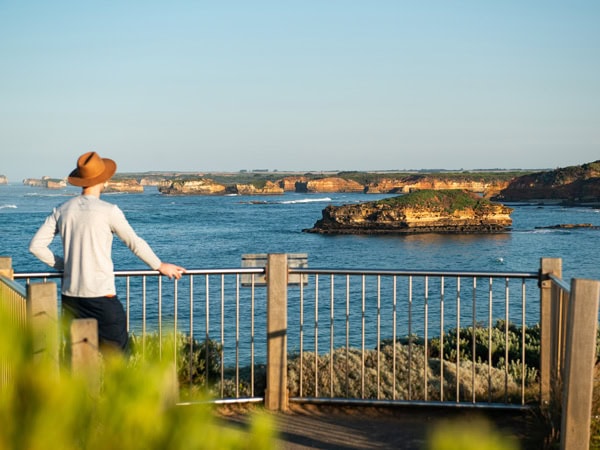
a man admiring the view on the Bay of Islands
Admire dramatic views of the bay. (Image: Visit Victoria)

8. Take a surfing history lesson in Torquay

Torquay is world-renowned as Australia’s surfing headquarters – making it worthy of a spot on your Great Ocean Road hit list. The Australian National Surfing Museum on Beach Road (of course!) is a great place to start.
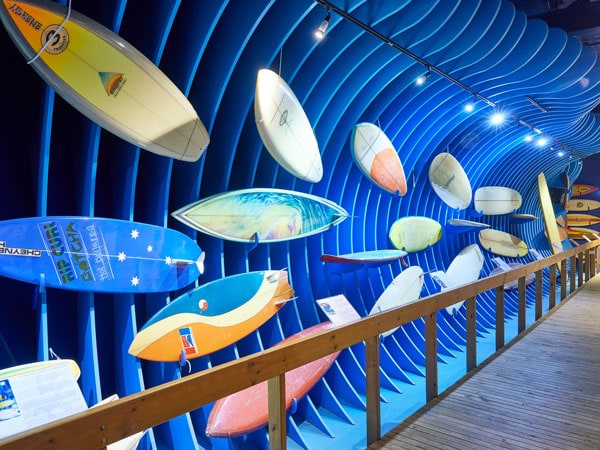
surfboards on a blue background at The Australian National Surfing Museum
Start your day by immersing yourself in the country’s vibrant surf culture. (Image: Visit Victoria)

Learn about the history and evolution of the sport and gain an understanding of exactly how it cemented itself as part of our national identity.
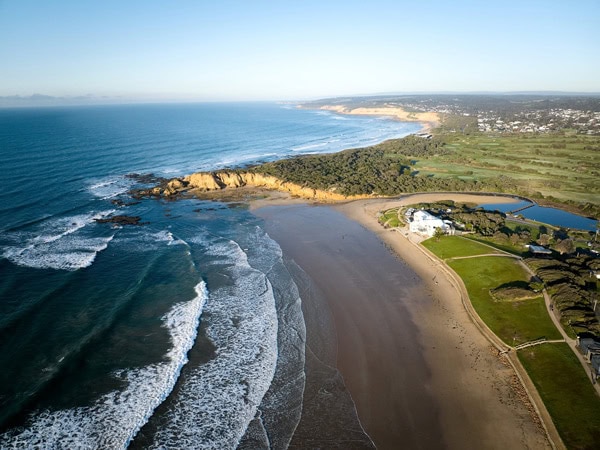
an aerial view of Torquay Beach
Torquay Beach is renowned for its spectacular surf breaks. (Image: Visit Victoria)

If you’re a keen surfer, you’ll find plenty of action at Jan Juc, Torquay front and Torquay back beaches. Finding breaks suitable for intermediate or beginner surfers shouldn’t be too hard, but as always, watch the conditions and ask for advice if you’re unsure.
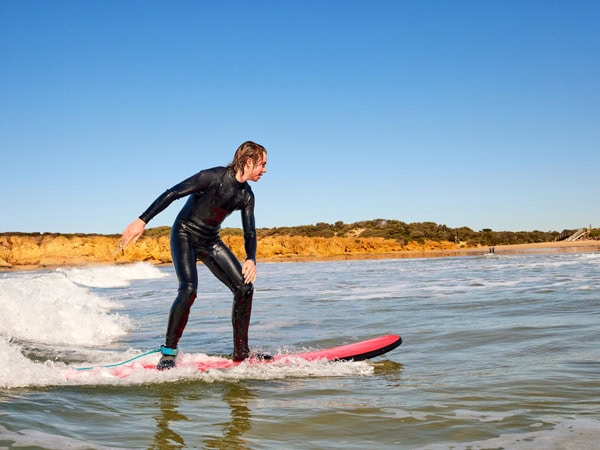
a surfer riding a surfboard at Torquay Beach
Surf’s up! (Image: Visit Victoria)

As the home of the famous Rip Curl Surfing Competition, Bells Beach is an iconic surf spot known around the globe.
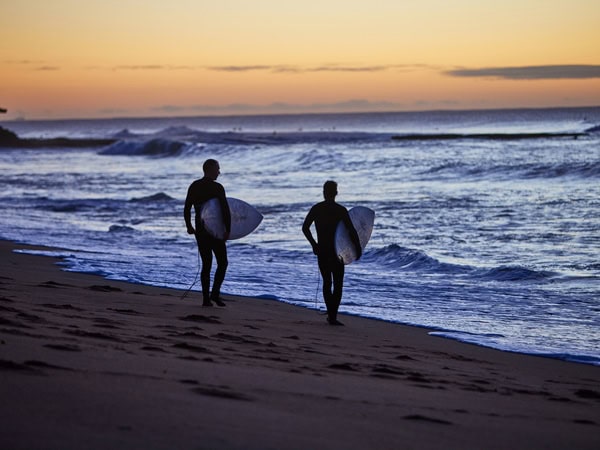
surfers holding their boards at Bells Beach
Get your surfboards ready at Bells Beach. (Image: Visit Victoria)

Powerful Southern Ocean swells roll in over the shallow reef, giving visitors a front-row seat to the waves that draw thousands of surfers from around the world each year.
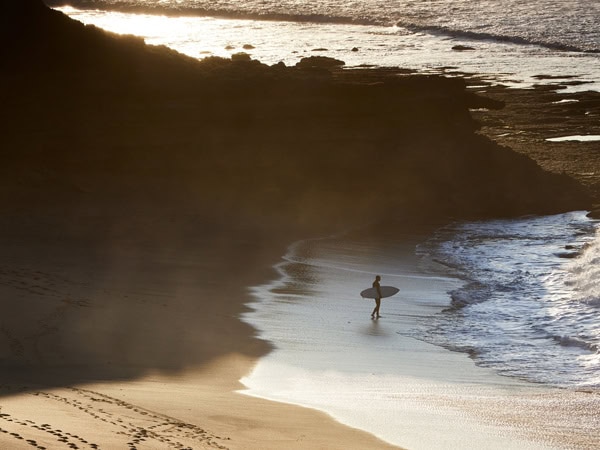
a surfer on Bells Beach at sunrise
Hit the waves at first light. (Image: Visit Victoria)

Watch local surfers ride the waves from one of the cliffside vantage points – the clifftop carpark has great views.

Top off your assimilation with a visit to one of the major surf brand giants that call Torquay home: both Rip Curl and Quicksilver have stores in town for you to visit to stock up on surf gear and summer threads.
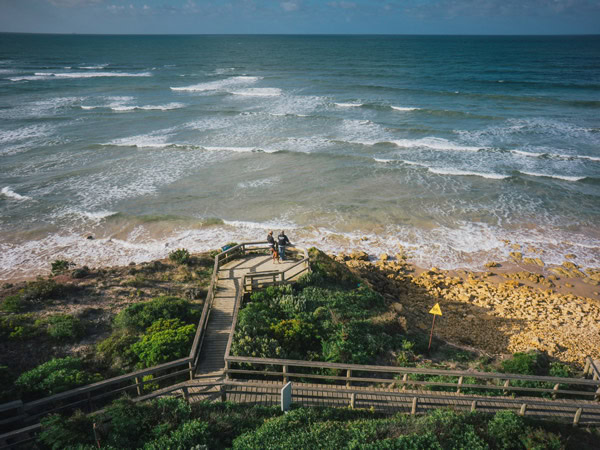
the lookout on Torquay Beach
The water conditions at Torquay Beach are ideal for surfing. (Image: Visit Victoria)

Weekly travel news, experiences
insider tips, offers, and more.

9. Walk to Griffiths Island

This ruggedly beautiful one-hour walk in Port Fairy takes in secluded beaches, a shearwater colony and the old 19th-century lighthouse. It’ll guide you along all the best scenic locations of Port Fairy, past heritage buildings and old stone churches.
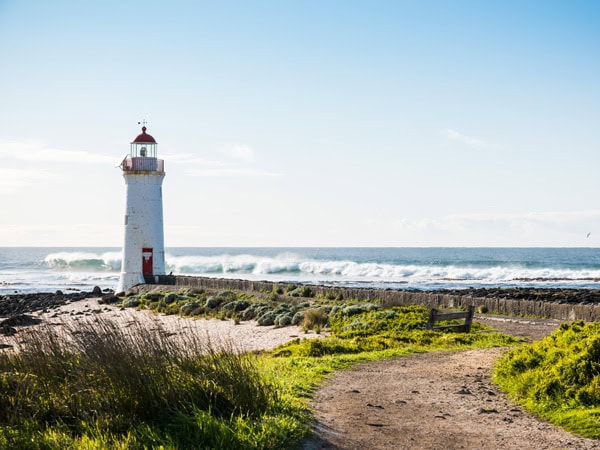
the Port Fairy lighthouse on Griffiths Island
The 19th-century lighthouse stands proudly on Griffiths Island. (Image: Visit Victoria)

Named after John Griffiths, who established Port Fairy’s whaling industry on the island in the 1830s, the island is home to a shearwater bird colony. Each day they return in swarms to their nests after fishing out at sea. Be sure to keep on the walking track to avoid disturbing the nests burrowed into the sand.
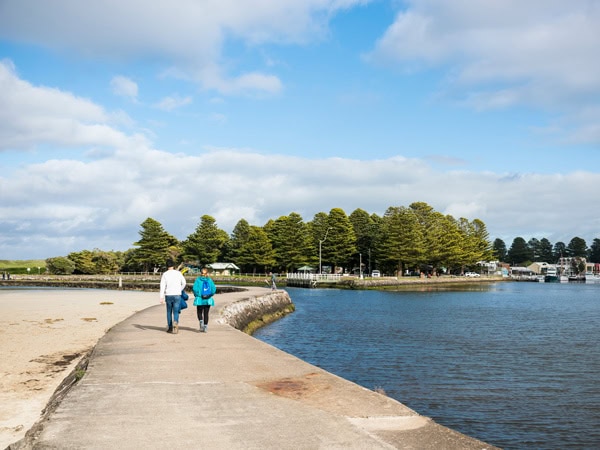
a couple walking on a piece of land at Griffiths Island
Go for a peaceful island walk. (Image: Visit Victoria)

10. Explore the Winter Whale Trail

If you’re travelling along the Great Ocean Road from May to September, be sure to keep the possibility of a whale sighting top of mind. During this period, it’s possible to spot migrating southern right whales, humpbacks, blue whales and even orcas if you’re lucky. There are some great vantage points along the trail, including the Logans Beach Whale Viewing Platform in Warrnambool, East Beach in Port Fairy and Wade Street Viewing Platform in Portland, although if you’re near the beach you could be blessed with a whale sighting at almost any time during this period – a solid reason to get along to the Great Ocean Road during the cooler months if ever there was one!

Discover the best restaurant along the Great Ocean Road.

Want to see more stories from Australian Traveller in your Google search results?

  1. Click here to set Australian Traveller as a preferred source.
  2. Tick the box next to "Australian Traveller". That's it.
Jo Stewart
Jo Stewart is a freelance features writer who pens stories about nature, pop culture, music, art, design and more from her home in the Macedon Ranges of Victoria. When not writing, you can find her trawling through vinyl records and vintage fashion at op shops, antique stores and garage sales.
View profile and articles
hero media

Good food, beautiful nature & history: your guide to a long weekend in West Gippsland

(Credit: Rob Blackburn)

    Carla Grossetti Carla Grossetti
    From rainforest walks and scenic drives to historic gold-rush towns and standout regional dining experiences, you can find it all in West Gippsland.

    Hover over West Gippsland on Google Earth and you’ll see vast tracts of land spread out like green velveteen around the Toorongo Falls Reserve. It’s a landscape that feels almost impossibly lush for a region sitting little more than an hour from Melbourne.

    Track southeast in late autumn and early winter and you’ll see pockets of the Mt Baw Baw Plateau dusted in snow. In addition to the forests of mountain ash veined with creeks and rivers, there are pastures and farmland cross-stitched together to form pretty patchworks.

    But West Gippsland isn’t defined by scenery alone: in addition to its awe-inspiring nature, a Venn diagram of the region includes gold-rush history and great culinary experiences.  Spend a long weekend here and it quickly becomes clear how often these three overlap.

    Getting there

    Messmates Dining west gippsland
    Spend the weekend eating and exploring in West Gippsland. (Credit: Messmates Dining)

    Getting to West Gippsland involves as easy drive – it’s just over an hour out of Melbourne along the Monash Freeway.

    Not driving? Catch the train from Melbourne on the Gippsland line, terminating at either Traralgon or Bairnsdale, and hop off at Warragul or Drouin.

    Visit historic villages

    Walhalla historic township
    Wander into Australia’s Gold Rush history at Walhalla. (Credit: Rob Blackburn)

    The West Gippsland region is on the Traditional Lands of the Kulin and Kurnai nations, specifically linked to the Bunurong, Gunaikurnai and Wurundjeri Peoples, whose connection to Country stretches back thousands of years.

    European settlement occurred in the 19th century as timber cutters, farmers and gold seekers pushed into the region’s dense forests. Small towns grew around sawmills and railway lines, and many of those gold rush settlements, timber towns and railway villages still shape the character of the region today.

    The most evocative of these is Walhalla Historic Township, a remarkably preserved gold-rush township tucked deep in the mountains. In the late 1800s, it was one of Victoria’s richest goldfields. Today visitors can step inside that history at the Long Tunnel Extended Gold Mine, where underground tours reveal the scale of the mining operation that once powered the town’s prosperity. Nearby, the Walhalla Goldfields Railway retraces part of the original narrow-gauge line through the valley, offering a slow journey past forest and river scenery.

    Further west, Noojee is a classic mountain village. It’s surrounded by dense forest and waterfalls and has become a natural base for exploring the Baw Baw region. Just outside town, Noojee Trestle Bridge stands as one of West Gippsland’s most striking relics of the rail era. The towering wooden structure is the tallest surviving trestle bridge in Victoria and today forms the centrepiece of an easy scenic walk with wide views across the valley.

    Alpine Trout Farm west gippsland
    Catch your own lunch at Alpine Trout Farm. (Credit: Nicky Cawood)

    At Alpine Trout Farm near Noojee, visitors can fish for trout in mountain-fed ponds before enjoying the catch prepared fresh onsite. It’s a simple experience that reflects the area’s long connection to the surrounding waterways.

    Back in Warragul, the region’s main service town, the story shifts from heritage to modern regional life. With galleries, restaurants and sweeping views across the rolling farmland of Gippsland, the town has become a lively hub linking the district’s past with its evolving food and cultural scene. Drive through the town and you’ll find heritage buildings, old pubs and weatherboard cottages that hint at the area’s early days as a frontier landscape.

    In other towns the past survives in quieter ways – a historic hall here, a century-old bakery there.

    Walks, waterfalls and wild places

    Toorongo Falls in west gippsland
    Stroll Toorongo Falls Reserve. (Credit: Nicky Cawood)

    Even simple roadside stops can feel cinematic in West Gippsland. The region also delivers plenty of opportunities to lace up your walking shoes.

    One of the region’s most rewarding nature escapes lies just outside Noojee at Toorongo Falls Reserve. A network of walking tracks winds through the cool-temperate rainforest where towering mountain ash trees filter the light and the air smells of rich, damp earth. The 2.2-kilometre trail to the viewing platform overlooking Toorongo Falls is short, but spectacular, as the water cascades down over moss-covered rock faces into a cool, green gully in Little Toorongo River.

    Further north, the Mount Baw Baw Alpine Resort offers year-round adventures. In winter, the mountain attracts skiers and snowboarders. The warmer months are just as compelling, with scenic drives to see alpine wildflowers, mountain bike trails and panoramic hiking routes that open across the plateau.

    Cyclists and walkers looking for a more relaxed pace can follow the Rokeby Neerim Rail Trail, which traces a former railway line through farmland and small Gippsland villages. The mostly flat trail passes rolling paddocks, creeks and historic bridges, making it an easy way to drop it down a gear when exploring the countryside.

    Taste the best eats of West Gippsland

    Hogget Kitchen west gippsland
    Taste the best of the region at Hogget Kitchen.

    For many travellers, the real drawcards of West Gippsland are the food and wine. The region sits in the heart of Victoria’s fertile dairy country, and that agricultural backdrop has helped shape a dining scene where seasonal produce and local provenance take centre stage.

    Hogget Kitchen has helped put Warragul firmly on the radar for serious regional dining in West Gippsland. Here, head chef and owner Trevor Perkins runs the kitchen alongside well-known winemakers William (Bill) Downie and Pat Sullivan. Hogget Kitchen lives up to its promise of exceptional destination dining; what lands on the table depends largely on what nearby farms have harvested that week as well as a wine list from Wild Dog Winery and other Gippsland producers.

    Warragul is also where you’ll find Messmates Dining where the kitchen team is led by Michelin-trained chefs. The Euro-leaning bistro and wine bar brings a polished edge to the local dining scene using produce sourced from across West Gippsland.

    For something more casual, the century-old Noojee Hotel is the kind of hub that every traveller dreams of finding after a long drive. Expect generous pub classics served on the sunny deck in summer or beside the crackle of a log fire in winter.  Nearby, rustic Toolshed Bar, Bistro & Cabins is the place to go for a wood-fired pizza topped with smoked local trout paired with Gippsland wine, making it a rewarding stop for lunch or an overnight stay.

    Time your visit with the Truffle Festival

    Food lovers visiting in winter should consider timing their trip to coincide with Noojee Truffle Festival, running from 10 July to 2 August 2026. The inaugural event celebrates the region’s emerging truffle industry with tastings, special menus and events built around one of winter’s most prized ingredients.

    Start planning your long weekend in West Gippsland at visitgippsland.com.au.