A guide to Phillip Island’s beaches for your next day out

hero media
Fishing, surfing, swimming, sunbaking: the choice is yours on Phillip Island’s plentiful supply of beaches.

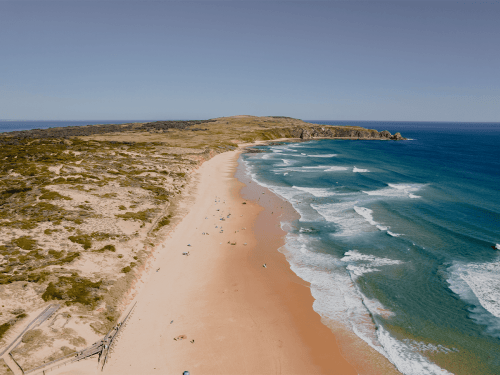
Home to Victoria’s first National Surfing Reserve, Phillip Island is a bit of a surfer’s paradise, but there’s plenty of coastal real estate for other activities too. Generally speaking, the sheltered north side of the island is great for swimming and stand-up paddleboarding, while the south side features more wild surf beaches, better suited to surfing and bodyboarding.

Planning a visit? Read on to learn about six of the best Phillip Island beaches to escape to.

Smiths Beach

Home of the fabled ‘Express Point’, a barrelling reef break that’s suitable only for experienced surfers, it’s known to many locals as the island’s premier wave. There’s plenty of white water action for beginners and bodyboarders too, however, with a number of surf schools offering lessons (try Girls on Board, Island Surfboards or Archy Surf) and surf shops with boards and wetsuits for hire. The one-kilometre-long beach is also great for a spot of family rock pooling – during low tide, there are pools to explore at both ends of the beach, and some are even large enough to snorkel in. After a morning spent in the sun, sand and sea, power up with a well-earned Allpress coffee and housemade sausage roll at the Smiths Beach General Store.
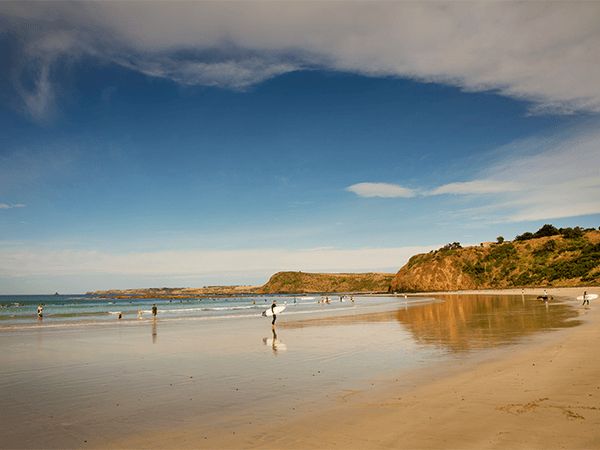
Smiths Beach Phillip Island
Surf’s up at Smith’s Beach. (Image: Visit Victoria)

See also: neighbouring YCW Beach, which has plenty of gentle and consistent swells.

Red Rock Beach

As the name suggests, this golden arc of silica is backed by – and peppered with – jagged, brick-red rocks. Not to be confused with ‘Red Rock’, in the island’s south-east, Red Rock Beach is a sheltered and scenic setting on the island’s north that’s great for brisk beach walks come sunrise or sunset, for lazy family picnics, and for hopping between wildlife-rich rockpools. The shallow and clear waters make it one of the safer spots for swimming too. Keen anglers also frequent these parts, which are popular for rock fishing, often reeling in King George whiting, snapper and flathead.
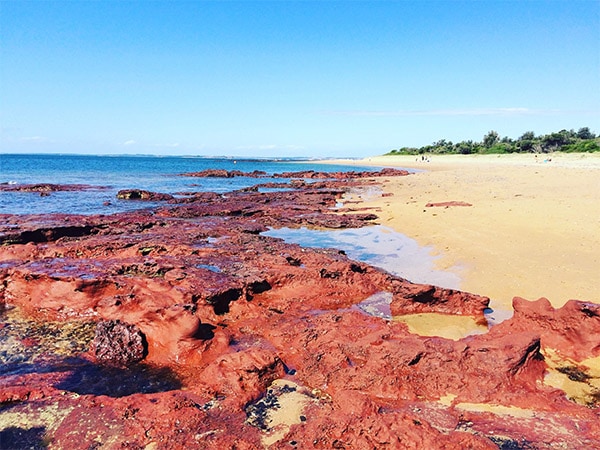
Red Rock Beach in Phillip Island
Red Rock Beach is a sheltered and scenic setting.

Need tips, more detail or itinerary ideas tailored to you? Ask AT.

AI Prompt

Cape Woolamai Surf Beach

A vast stretch of sand – the longest and most exposed on all of Phillip Island, in fact – Cape Woolamai is where you’ll find some of the best beach breaks in Victoria, with waves consistently measuring around 1.7 metres. Seasoned surfers will enjoy the long lefts and rights that peel over the wide banks.

Although the waters are patrolled by the Woolamai Surf Lifesaving Club during the summer months, the surf here is notoriously dangerous, so those looking for somewhere to take a dip are better off taking their beach towels to a different belt of sand.
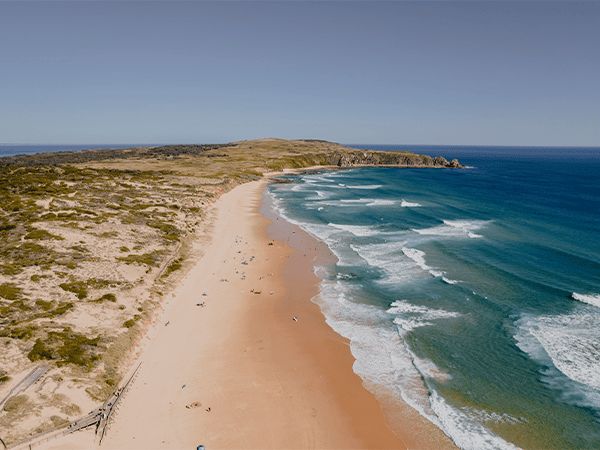
Cape Woolamai Surf Beach
Cape Woolamai is where you’ll find some of the best beach breaks in Victoria. (Image: Visit Victoria)

The beach is surrounded by the Cape Woolamai State Faunal Reserve, which is a great spot for a ramble or two: exploit one of the four coastal walking track loops, and admire the surf from the safety of the lookout points above (Cape Woolamai is Phillip Island’s highest point). There’s a small kiosk turning out hot coffees and cold ice creams too.

Kitty Miller Bay Beach

Primed for adventures both above and below the waterline, this snug little bay welcomes surfers, snorkelers, beach walkers, swimmers and fishermen. You can even take a little expedition to see the rusted remains of the SS Speke, which was shipwrecked on this very shore in 1906. Take your little ones and collect some shells, or inspect the beach’s many rock pools. The only downside to Kitty Miller Bay Beach is the lack of facilities: there are no toilets, showers or shops in the vicinity, but it’s only a 10-minute drive from the main township of Cowes.
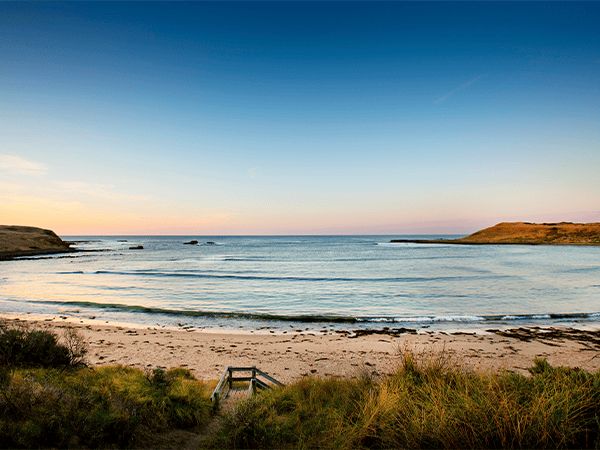
Kitty Miller Bay Beach
Kitty Miller Bay Beach is one of Phillip Island’s hidden gems. (Image: Visit Victoria)

Weekly travel news, experiences
insider tips, offers, and more.

Forrest Caves Beach

Offering visitors something a little different, this southern beach, which is effectively part of Cape Woolamai Surf Beach, has some secret features that can only be accessed during low tide: sea caves. Formed by erosion of the red basalt rocks over many years, you can wander through these hollowed out chambers and gaze up through naturally formed holes in its ceiling. From the Forrest Caves Car Park, it’s around a 45-minute walk, round-trip.
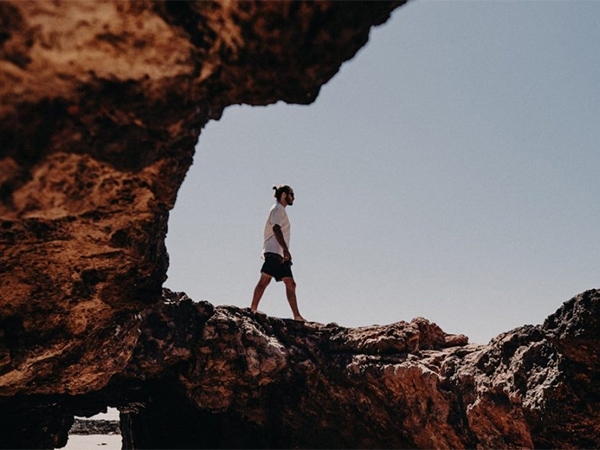
Man wanders through Forrest Caves.
Wander through the hollowed out chambers of Forrest Caves.

Due to its strong currents, high waves and rips, Forrest Caves Beach isn’t best suited to swimmers, but surfers and anglers often drop by. And throughout spring, summer and autumn, a plethora of feathered visitors stop by: the beach’s large sand dunes become home to thousands of short-tailed shearwaters between October and April, while hooded plovers come to nest on the beach between August and March.
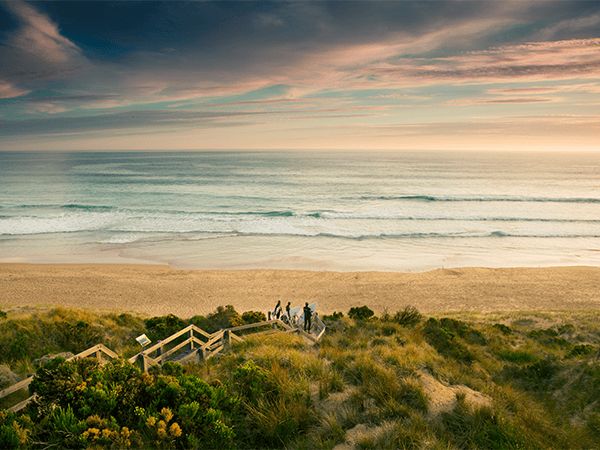
Forrest Caves Beach
The beach is popular for walkers, surfers and fishermen. (Image: Visit Victoria)

Cowes Beach

It wouldn’t be right to list Phillip Island’s best beaches without naming what is arguably its most popular sweep of sand: Cowes. A small swimming beach that’s right in the thick of the action, Cowes Beach is just a few steps from the township’s shops and cafes, making it a great spot for a lazy afternoon of sunbaking or a picnic. And once you’ve had your fill of sunshine and saltwater, pootle along the jetty and peer into local anglers’ buckets before hitting Thompson Avenue for a cool glass of crisp rosé at one of the bars or pubs.
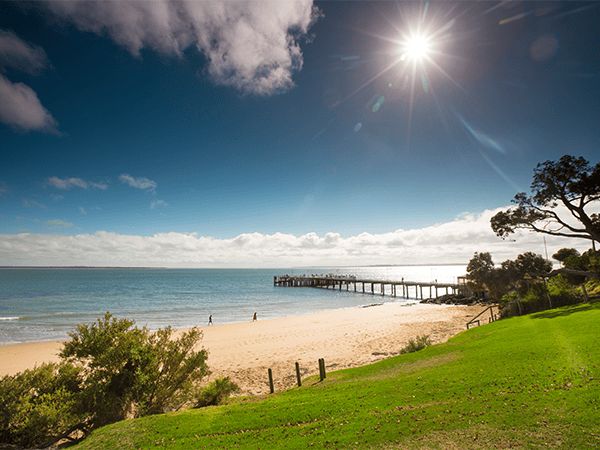
Cowes Beach
Cowes Beach is just a few steps from the township’s shops and cafes. (Visit Victoria)

Now read our guide to the top things to do in Phillip Island.

Want to see more stories from Australian Traveller in your Google search results?

  1. Click here to set Australian Traveller as a preferred source.
  2. Tick the box next to "Australian Traveller". That's it.
Chloe Cann
Chloe Cann is an award-winning freelance travel and food writer, born in England, based in Melbourne and Roman by adoption. Since honing her skills at City St George's, University of London with a master's degree in journalism, she's been writing almost exclusively about travel for more than a decade, and has worked in-house at newspapers and travel magazines in London, Phnom Penh, Sydney and Melbourne. Through a mixture of work and pleasure, she's been fortunate enough to visit 80 countries to date, though there are many more that she is itching to reach. While the strength of a region's food scene tends to dictate the location of her next trip, she can be equally swayed by the promise of interesting landscapes and offbeat experiences. And with a small person now in tow, travel looks a little different these days, but it remains at the front of her mind.
View profile and articles
hero media

8 experiences to get the most out of Victoria’s Great Ocean Road

    Louis Costello Louis Costello
    Beyond the winding bitumen and coastal views lies another side to Victoria’s most famous route.

    There’s something hypnotic about this stretch of Victoria’s coast. Maybe it’s the way the road hugs the ocean so tightly, or how the cliffs catch the sun in colours you can’t name. Or, for local Victorians who drove this route as kids, maybe it’s the memories of winding through the impossibly tall trees as they seemingly guide you on your journey like wooden guardian angels. Most travellers know it for the 12 Apostles, but there are plenty of alternate experiences on the Great Ocean Road equally as worthy of your time.

    So, next time you’re in that neck of the woods, park that car, stretch those legs and try these experiences.

    1. Discover living culture at Budj Bim

    Budj Bim Cultural Landscape Tourism
    Walk across the world’s oldest known aquaculture system. (Image: Visit Victoria)

    Breakaway Creek’s Budj Bim Cultural Landscape is a masterclass in educational storytelling. Join a guided tour with Budj Bim Cultural Landscape Tourism to walk across the world’s oldest known aquaculture system, where the Gunditjmara people built sophisticated eel traps and stone channels more than 6,000 years ago.

    Budj Bim’s aquaculture system predates Egypt’s pyramids by roughly 2,000 years, making it one of the oldest examples of human engineering on Earth. If that’s not enough to get your history-loving family members involved in this road trip, we’re out of ideas.

    2. Unwind in the hot springs at Warnambool

    woman relaxing at Deep Blue Hot Springs
    Let mineral-rich water heal you.

    If your legs need a break after a long drive, Deep Blue Hot Springs is your remedy. The geothermal pools sit just metres from the coastline, filled with mineral-rich water that bubbles up from deep underground. Move between open-air baths, waterfall pools and quiet zones made for meditation.

    The water in Deep Blue’s geothermal pools comes from an ancient aquifer nearly 850 metres below the Earth’s surface, which, in non-scientific terms, means it’s far more likely to have healing properties than the mineral water you’d find at the supermarket.

    3. Take to the air at Princetown

    12 Apostles Helicopters flight alternate experiences on the Great Ocean Road
    See an icon from a different view.

    You may have seen the Twelve Apostles from the trusty viewing platform, but a helicopter flight with 12 Apostles Helicopters shows you just how sprawling and rugged this coastline really is.

    The trip covers everything from Port Campbell to London Bridge (not to be confused with the UK’s own), giving you a rare chance to watch waves carving the limestone cliffs from above. It’s worth noting that the limestone stacks of the Twelve Apostles are said to erode by roughly two centimetres each year, so the longer you leave it, the less of the Apostles you’ll see.

    4. Step into the past at Flagstaff Hill

    Flagstaff Hill Maritime Village and Museum
    Visit a time of yore.

    Continue the tour through Warnambool at Flagstaff Hill Maritime Village and Museum, a recreated 19th-century port town. Hear stories from the days when shipwrecks were as common as seagulls, with an astounding 180 ships believed to have sunk along the Shipwreck Coast in less than five years.

    The night show, complete with lights, sound, and sea spray, brings the coastline’s most dramatic stories to life.

    If you’re staying the night, Simon’s Waterfront offers relaxed dining with fresh local seafood and oceanfront views. Order the catch of the day and toast to the sailors who never made it ashore.

    5. Learn to surf in Torquay, Lorne, or Anglesea

    kid having a lesson with Go Ride A Wave
    Learn how to hang 10. (Image: Visit Victoria)

    Whether you’ve surfed before or can barely stand on a board, Go Ride A Wave will have you upright in no time. Torquay’s calm beaches are ideal for first-timers, while Lorne and Anglesea bring a bit more energy for those unafraid to get dunked.

    Bells Beach, just down the road from Torquay, has even hosted the world’s longest-running professional surfing competition since 1962. So, for those eager to have a gander at pros using surfboards like they’re an additional appendage, the competition usually runs sometime in autumn.

    6. Tackle the trails in Forrest

    Barwon Flow Trails Otways Flow MTB
    Hire a bike and explore MTB trails through the Otways.

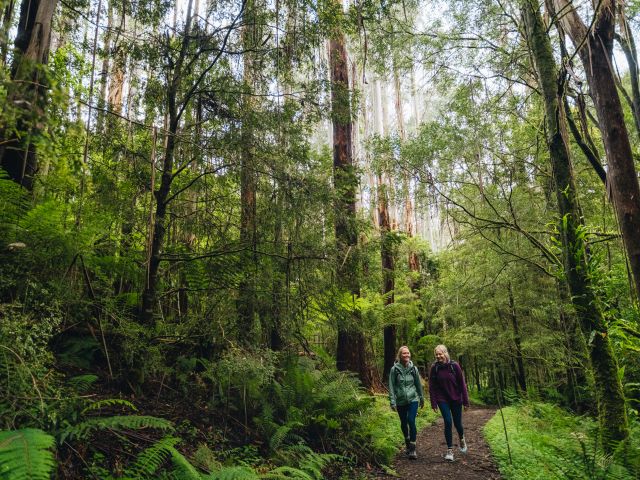
    Forrest is a haven for mountain bikers thanks to an expansive network of trails through stunning natural scenery. The Forrest trail network has almost 100 kilometres of singletrack across 36 trails, so there’s something for every level of rider. That’s including more than 60 kilometres of purpose-built mountain bike trails winding through the Otways’ dense forest. Cycle through ancient myrtle beech trees and towering tree ferns, with smaller ferns and soft mosses forming a carpet at your feet.

    Hire a bike from Forrest MTB Hire and take your pick from easy, scenic rides to more challenging singletracks, such as Red Carpet or Rollercoaster.

    7. See wildlife up close in Apollo Bay

    bush rat on Wildlife Wonders tour
    Get help spotting the locals. (Image: Doug Gimsey)

    If spotting koalas and kangaroos in the wild feels like winning the lottery, Wildlife Wonders gives you guaranteed sightings without cages or crowds. Every visit to the sanctuary helps fund the Conservation Ecology Centre which supports endangered species across the Otways, so your business is appreciated by humans and animals alike.

    The guided walk takes you through protected Otways habitat where you might spot potoroos (or joey lookalikes for those unfamiliar with a potoroo), wallabies, and sleepy koalas lounging in the trees.

    8. Visit the Cape Otway Lightstation

    Cape Otway Lightstation
    Delve into the tales of Cape Otway Lightstation.

    Towering over the sea on a cliff above the Southern Ocean, Cape Otway Lightstation has been guiding ships since 1848. Before the lighthouse was built, Cape Otway was one of the most treacherous points on the Victorian coast, with dozens of shipwrecks occurring in its surrounding waters. Pick the right day, and you may bump into a local willing to tell you about the wreck of Eric the Red.

    While at the Cape Otway Lightstation, explore the keeper’s quarters, walk the coastal trails, and take in views that only stop short at the horizon.

    And no, contrary to popular belief, the Round the Twist lighthouse is actually located in Split Point, just shy of two hours in the direction of Melbourne. Nothing’s stopping you from embarking on a lighthouse crawl, though.

    Plan your next no-stone-unturned journey along this iconic Aussie road at visitgreatoceanroad.org.au.