Spotted: The 8 best whale-watching locations in Australia

hero media
Whale migration in Australia is a magical time. Here is where to join in.

Humbling and fascinating, locals and tourists head out in droves to the headlands and on whale-watching tours during whale-watching season.

But where are the best places to go to make out the breaches and water spouts of thousands of migrating whales? Here are the top whale-watching locations in Australia.

1. Hervey Bay, Qld

Every winter, pods of humpback whales can be spotted off the east coast of Australia. They make their way up from Antarctica to the Great Barrier Reef to mate and give birth, before taking their calves out of the nursery and going back down south.
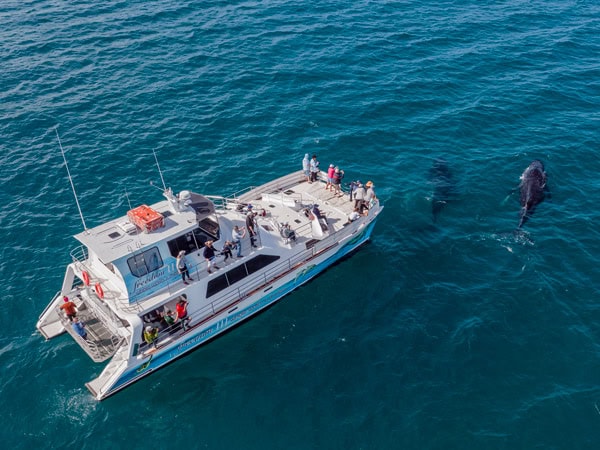
a whale-watching tour in Hervey Bay
Join a whale-watching tour in Hervey Bay. (Image: Tourism and Events Queensland)

It is for this reason that the warm and sheltered waters of the Great Sandy Marine Park on the Fraser Coast and nearby K’gari make for the ideal rest area for migrating whales.
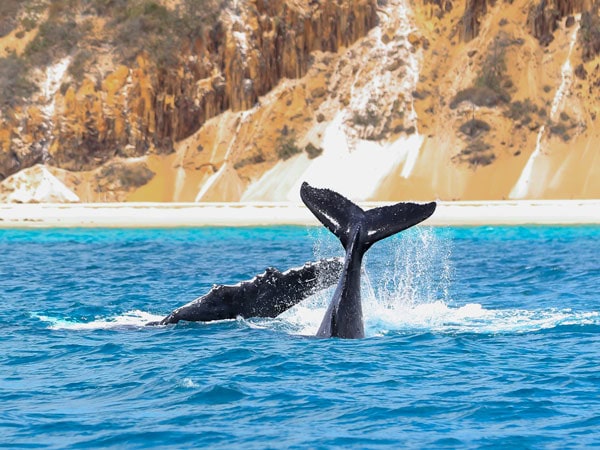
whales popping out of the water in Hervey Bay
The Great Sandy Marine Park is the ideal rest area for migrating whales. (Image: Tourism and Events Queensland)

Hervey Bay was the world’s first Whale Heritage Site , named by the World Cetacean Alliance and is one of the most popular places in Australia to observe the mighty tail slaps of these peaceful creatures.
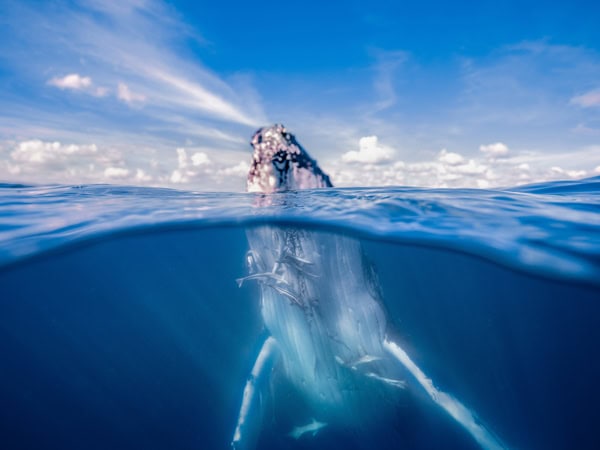
a whale breathing out of the water in Hervey Bay
You might even get a chance to swim with humpback whales. (Image: Tourism and Events Queensland)

2. South Coast, NSW

Whales are a regular fixture of the NSW South Coast during the colder months – in particular, close to the Sapphire Coast. From the waters of Bermagui to Eden, you will be able to see travelling humpback whales and southern right whales as they rest and feed in the waters.
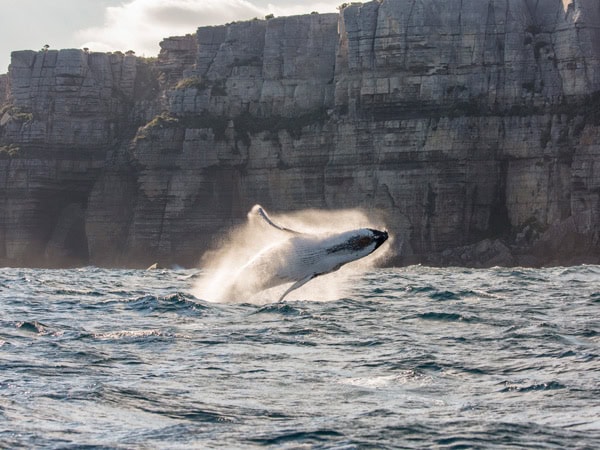
travelling humpback whales in Jervis Bay, South Coast, NSW
Spot humpback whales while on the South Coast. (Image: Jordan Robins)

There is also a fascinating history of whale and human collaboration here. Up until the early 20th century, it was rumoured that orcas would even help whalers to catch baleen whales – that is, until whalers killed and maimed some of their pod.
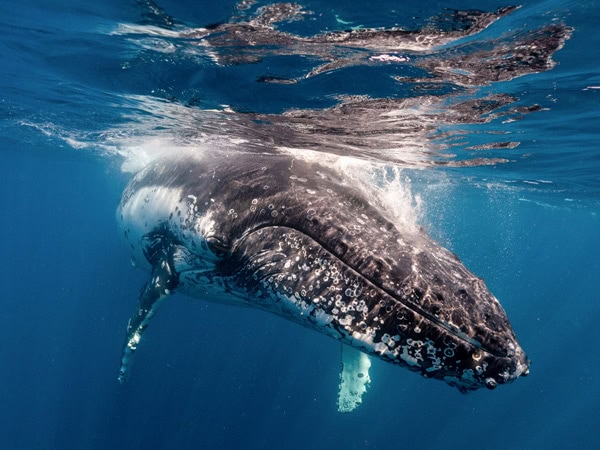
a whale underwater in Jervis Bay, South Coast, NSW
Southern right whales and humpback whales travel in the waters of the South Coast. (Image: Jordan Robins)

Need tips, more detail or itinerary ideas tailored to you? Ask AT.

AI Prompt

3. Bremer Bay, WA

From early in the year until April, family pods of orcas (also known as killer whales) begin turning up to Bremer Bay in the south of Western Australia. Why do they come here? It is still not 100 per cent certain. But whatever the reason, avid whale watchers can make their way out to watch them hunting in groups, stalking squid and other prey.
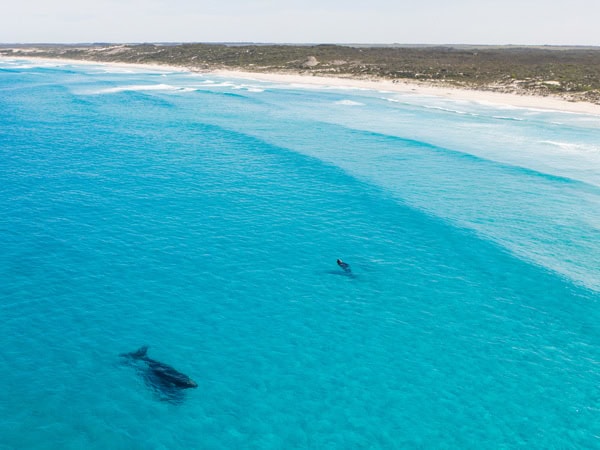
whales spotted along Bremer Bay
Orcas come to Bremer Bay from early in the year until April. (Image: Tourism Western Australia)

In autumn, you might also recognise sperm whales and pilot whales. In winter, keep an eye out for southern right whales, who arrive to raise their calves in the sheltered waters of Bremer Bay.
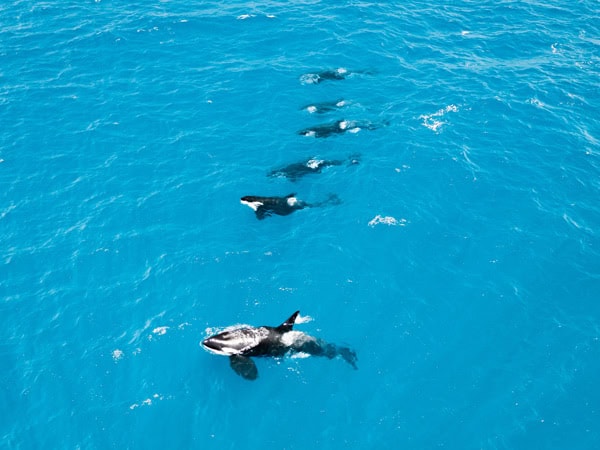
A group of Orcas in Bremer Bay.
Get a chance to spot orcas up close. (Image: Tourism Western Australia)

4. Victor Harbor, SA

Perched up on a lookout or steaming out to sea, from May to October it’s likely you’ll get a sighting of the southern right whale on South Australia’s Fleurieu Peninsula. Each year, they make their annual migration from Antarctica along the coast of southern Australia. This means that if you keep an eye out, you can catch a glimpse of them in beachside towns like Victor Harbor.
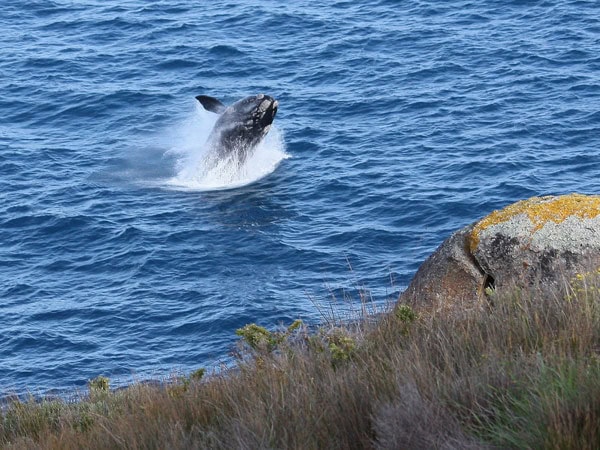
an aerial view of a whale popping out of the water at Victor Harbor
Catch the annual whale migration from Victor Harbor. (Image: South Australian Tourism Commission)

Chances are you will also experience other impressive marine wildlife sightings, like common and bottlenose dolphins, as well as New Zealand fur seals and Australian sea lions on a trip out – a bonus not to be sniffed at.
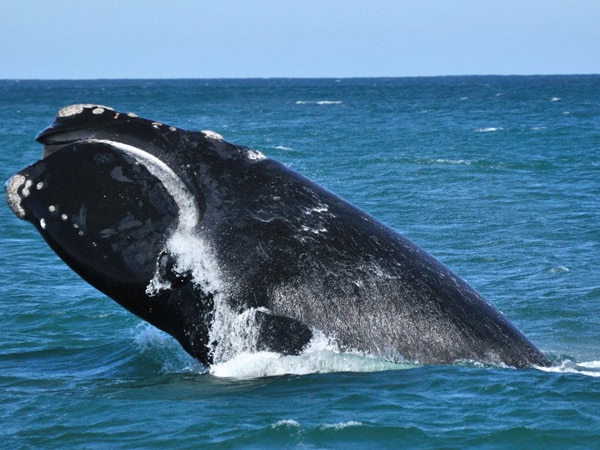
a southern right whale on South Australia
Get a sighting of the southern right whale. (Image: The Big Duck Boat Tours)

5. Freycinet National Park, Tas

Today, Freycinet National Park on Tasmania’s east coast is known as one of the best places in the island state to see southern right whales. But this was not always the case. During the early 19th century, whales found here were mercilessly hunted for their oil-rich blubber and useful bones.
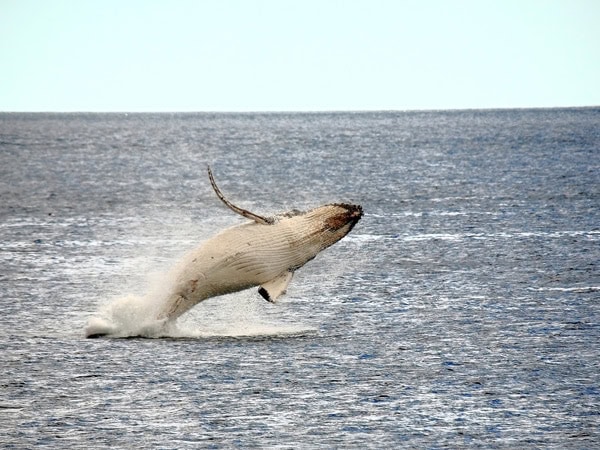
a southern right whale jumping out of the water at Freycinet National Park
Get an up-close look at southern right whales in Freycinet National Park. (Image: Tourism Tasmania/bodhiimages)

In fact, the lovely Wineglass Bay was named because of the way its blue waters were transformed into a gory ‘red wine glass’ when the blood of whales would fill it. A beautiful name for a gruesome practice.
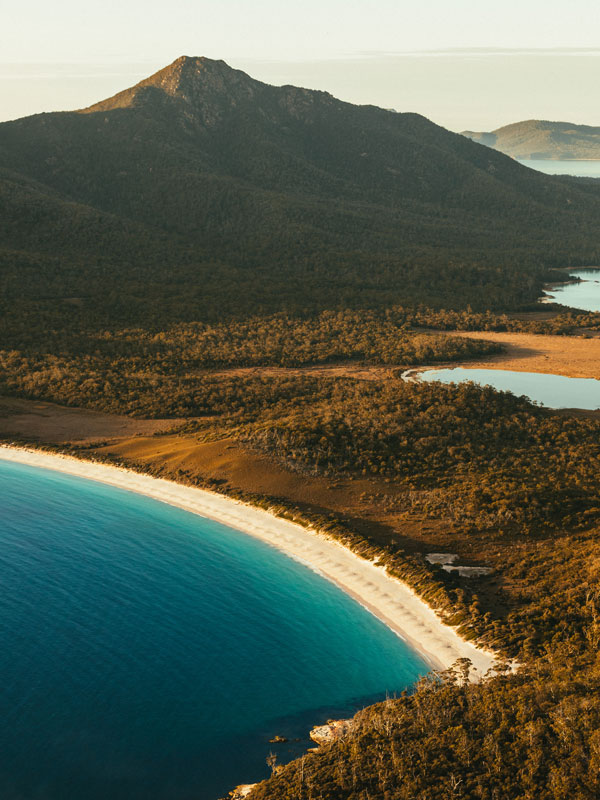
an aerial view of the mountains and white-sand beach at Wineglass Bay
Go whale-watching at the picturesque Wineglass Bay. (Image: Melissa Findley)

Weekly travel news, experiences
insider tips, offers, and more.

6. Whitsundays, Qld

The tropical waters of the reef in the Whitsundays are some of the best places to find whales and have also been named a Whale Heritage Site. So, keep an eye out for breaching and playing calves with their mothers here.

If you’re careful (and very, very lucky), you might even identify a female dwarf minke whale.
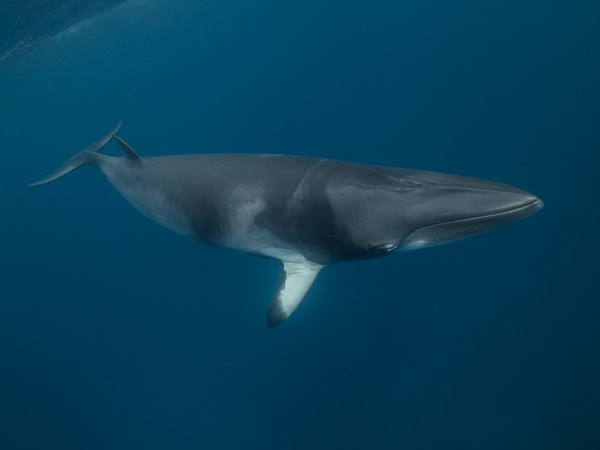
a dwarf minke whale spotted underwater in the Whitsundays
Have a chance to see a female dwarf minke whale. (Image: Tourism and Events Queensland)

7. The Kimberley, WA

The dry season from May to October is the best time to explore the red rock formations and dusty roads of the enormous Kimberley region.
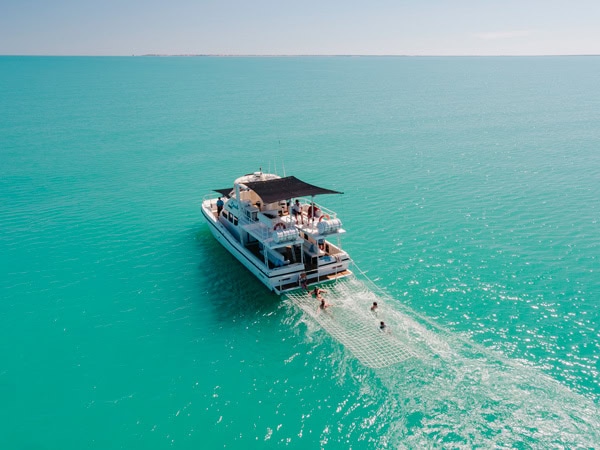
a whale-watching tour in Kimberley
Embark on a whale-watching tour off the coast of the Kimberley. (Image: Tourism Western Australia)

It’s also when humpback whales make their annual journey from Antarctica to this remote corner of Western Australia. Calves and adults alike are protected by islands and reefs, for the breeding season.
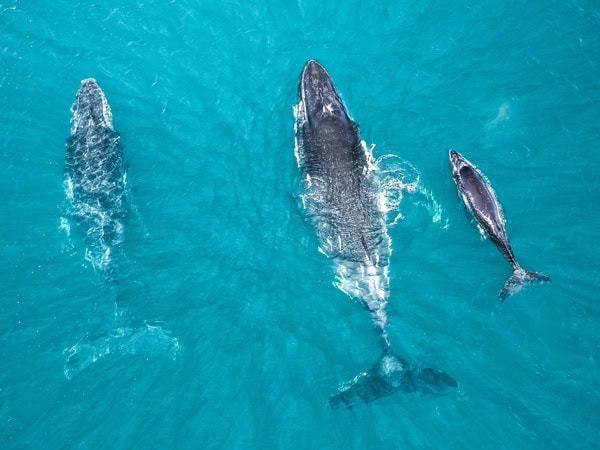
humpback whales migrating on the Dampier Peninsula Coast, Kimberley
Migrating humpback whales appear on the Dampier Peninsula. (Image: Tourism Western Australia/@from.miles.away)

8. Eyre Peninsula, SA

A 12 or so-hour drive in the opposite direction of Victor Harbor will take you to the high cliffs of the Head of Bight. Near the Nullarbor Plain on the Eyre Peninsula, the high vantage point offers another excellent location to see whales.
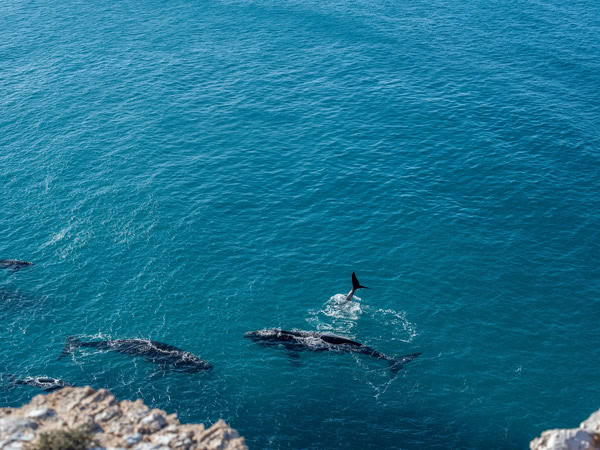
a group of whales gathering at the foot of Head of Bight, Eyre Peninsula
The Head of Bight is an excellent location to see whales. (Image: South Australian Tourism Commission)

Southern right whales give birth near here, meaning you will also make out calves playing with their mothers in the relatively safe waters. The best time to come to spot them here is in August.
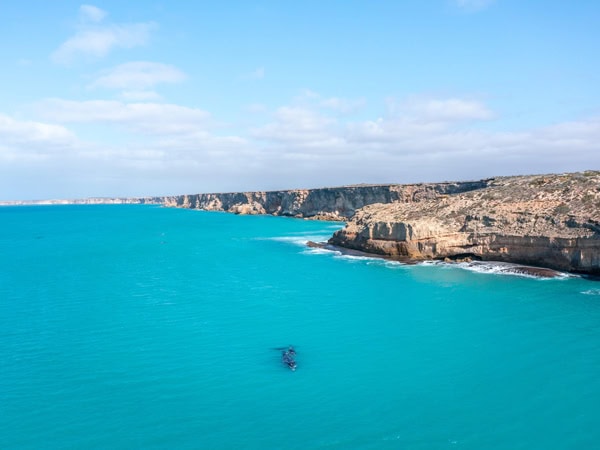
Eyre Peninsula Head of Bight whale watching
Spot mothers and calves playing together. (Image: South Australian Tourism Commission)
For more whale-watching inspiration, see our in-depth whale-watching guides to Sydney, Port Stephens, the Gold Coast and Merimbula.
Kate Bettes
Kate Bettes is a freelance travel writer. Whether having a picnic in Vietnamese jungle with new friends, or partying in the back of a limousine in Hollywood, Kate’s experiences have left her with the sneaking suspicion that the best travel memories happen when you least expect. It’s this feeling - and how to get it - that she loves to write about.
View profile and articles
hero media

Mornington Peninsula’s storied past: war, shipwrecks and a runaway convict 

    Kellie Floyd Kellie Floyd
    The Mornington Peninsula is a coastline of contrasts, where convict and military history meets shipwrecks, wild seas and adventures above and below the surface.

    The Mornington Peninsula can be the kind of place where salt-tangled hair feels like a badge of honour – proof you’ve been somewhere wild, raw and real. Peel back the layers and you’ll discover stories that anchor this region to something other than its famed food and wine.

    This land is the traditional Sea Country of the Bunurong/Boon Wurrung people. Long before grapevines were planted and artisanal goods were crafted, the Bunurong Traditional Owners lived in deep connection with the land and sea. Today, places such as Mushroom Reef Marine Sanctuary echo that tradition, with families exploring its rockpools in search of colourful sea stars and crabs at low tide and learning how these fragile ecosystems have been cared for across countless generations.

    a group of people visiting the Port Nepean National Park
    Take in the rugged coastal landscape at Port Nepean National Park. (Image: Tourism Australia)

    A visit to Point Nepean National Park feels like stepping back through time. The fort, built in 1882, protected the narrow entrance to Port Phillip Bay until the end of the Second World War. It was here that the first Allied shot of the First World War was fired – at a German cargo ship trying to escape just hours after war was declared. Nearby, the old Quarantine Station, one of Australia’s first permanent quarantine facilities, established in 1852, still stands. Walking through the hospital and disinfecting complex evokes stories of those who arrived from faraway shores.

    Not far from here is a story of survival that inspired the Aussie phrase ‘you’ve got Buckley’s chance’. In 1803, escaped convict William Buckley vanished into the bush near what’s now Sorrento. Everyone thought he had no hope of surviving, but he reappeared 32 years later, having lived with local Aboriginal people.

    Even the waters here hold history. The infamous stretch known as The Rip, just three kilometres wide at the entrance of Port Phillip Bay, is among the most treacherous waterways. Countless ships were lost here in the 19th and early 20th centuries, and in 1967, Australia’s own Prime Minister Harold Holt disappeared while swimming off the coast, never to be found.

    a seal swimming in Port Phillip Bay
    A seal swimming in Port Phillip Bay. (Image: Tourism Australia/Two Palms/Harry Pope)

    But for all its danger, the sea here also holds extraordinary beauty. Dolphins are often seen near Sorrento’s cliffs, while below the surface, seagrass meadows and rocky reefs teem with life. Marine tours offer a viewing to this underwater wonderland, while back on terra firma, walking trails lead along beaches, through coastal scrub, and over rock pools.

    And if you think you’ll forget about the Mornington Peninsula once you’ve left? You’ve got Buckley’s chance.

    A traveller’s checklist

    Staying there

    the suite interior at InterContinental Sorrento
    Luxury interiors at the historic InterContinental Sorrento. (Image: Greg Elms)

    Point Nepean Discovery Tents is immersive glamping beside the historic Quarantine Station. Or upgrade to luxury at the 1875-built InterContinental Sorrento .

    Playing there

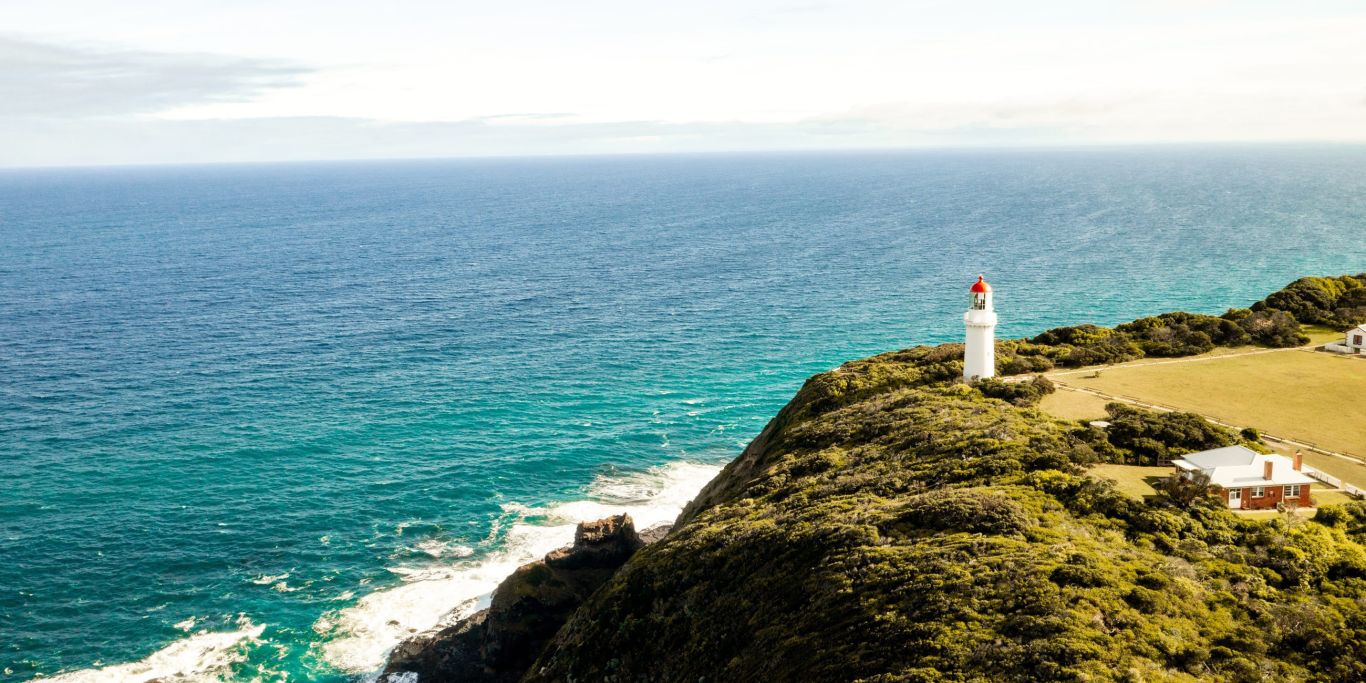
    an aerial view of Cape Schanck Lighthouse
    Make your way to the Cape Schanck Lighthouse. (Image: Tourism Australia/Two Palms/Harry Pope)

    Bayplay Adventure Tours offer eco-adventures from snorkelling with sea dragons to kayaking with dolphins and cycling Point Nepean. Cape Schanck Lighthouse is fascinating to explore on a guided tour, which takes you into the lighthouse and keeper’s cottage.

    Eating there

    Portsea Hotel is a beautifully restored 1876 Tudor-style pub right on the beach, serving seasonal local fare.