How to do the great Grampians road trip

hero media
The Grampians road trip is the road trip with it all, but one you’ve probably never done before, writes Phil Hawkes. Melbourne (or Adelaide) to the Grampians is a drive that offers delicious mix of cute historic towns, wineries, luxury experiences and plenty of the great Australian outdoors too.

Looking for a short break from Melbourne or Adelaide? Done the Ocean Road before? Driven Gippsland? It’s time to head to the Grampians.


That was my situation. The result: four days’ and three nights’ touring through Victoria’s Western Districts of flat grazing lands, straight roads followed by curvy hilly terrain with craggy peaks and verdant valleys to admire.


It’s an easy drive, with many options for breaks along the way, and a variety of interesting accommodation choices on offer. There’s much to see and do. Here are my highlights:

Ballarat

1. The ideal first stop if you’re leaving from Melbourne. Well known for its Gold Rush history, heritage-listed Victorian buildings, beautiful parks and gardens, and Lake Wendouree.


2. Great coffee (this is Victoria), many choices. Aim for Lydiard Street and Sturt Street. Try a chilli hot chocolate at Harvest Food Store and Café.


3. Historic Craig’s Royal Hotel for lunch in the Victorian-era Gallery Bistro. Or try the legendary high tea.


4. The Museum of Australian Democracy at Eureka for a history lesson, especially if you have kids. They’ll appreciate the interactive displays and the original Eureka flag.


5. Fill up with fuel on the outskirts of town – it’s much cheaper than where you’re going!

Next: Ballarat to Glenthompson 90 mins

Glenthompson

1. This quiet Glenelg Highway town is worth a break from the long, straight road.


2. The murals of St Peter’s Church are described, rather optimistically, as Victoria’s answer to the Sistine Chapel.


3. Try Grampians Pure Sheep Dairy for the best sheep cheese and yoghurt around. Talk to enthusiastic young farmhands Daniel or Ryan.

Haloumi at Grampians Pure Sheep Dairy
Haloumi stop: Grampians Pure Sheep Dairy (photo: Nicole Tujague).


Next:
Glenthompson to Dunkeld 15 mins

Dunkeld

Old Bakery Dunkeld Photo Nicole Tujague
Old Bakery Dunkeld: chocolate croissants to die for (photo: Nicole Tujague).

1. Be sure to explore the back streets of Dunkeld – you might be surprised at what you’ll find.


2. The Old Bakery serves genuine French pâtisserie and bread baked in the original 1886 oven. The chocolate croissants are to die for.


3. Dining at the highly awarded Royal Mail Hotel is a culinary experience to be savoured, especially the degustation menu.


Next: Dunkeld to Hamilton 30 mins

Need tips, more detail or itinerary ideas tailored to you? Ask AT.

AI Prompt

Hamilton

1. The region’s biggest city, centre of the agricultural industry, was once known as “the wool capital of the world".


2. Ideal for an overnight stopover in one of several B&Bs. Try Mourilyan House in town or Pierrepoint Winery just south of the city.


3. Hamilton Art Gallery is rated as one of Australia’s finest regional collections, including the watercolours of famous English artist Paul Sandby.


4. The impressive William Guilfoyle-designed Botanic Gardens is an ideal spot for a picnic lunch or tea.


Next: Hamilton to Halls Gap 75 mins

Halls Gap – the heart of the Grampians

walking in the Grampians
Walking in a the Grampians wonderland.

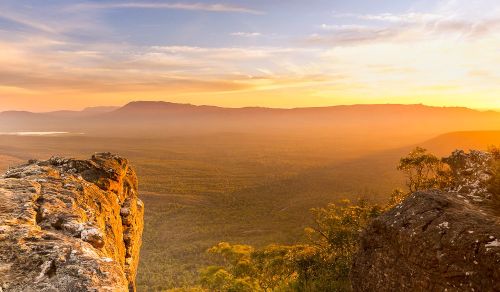
Now known by its traditional Indigenous name Gariwerd, the Grampians National Park attracts visitors from all over the world for its natural beauty, plentiful wildlife and adventure sports.

Pinnacle Halls Gap Grampians National Park
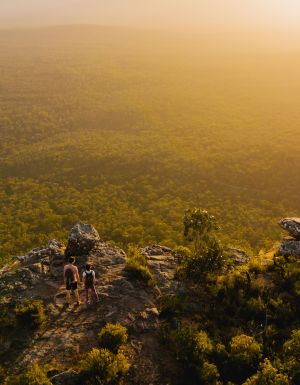
Pinnacle eye’s view of Halls Gap, Grampians National Park.

1. Stop at the Brambuk Cultural Centre on arrival for park information, accommodation bookings and interactive displays of Indigenous and Colonial history.


2. Book a tour to some of Australia’s best rock art sites, such as Bunjil’s Shelter, and several other caves.


3. There are more than 160km of walking trails, including a 33km trek with overnight camping facilities. (We managed the 2km walk to Venus baths easily, but our more adventurous friends went on to Mackenzie Falls, which they said was spectacular).


4. Try canoeing, fishing, horse riding, quad biking. Kayaking on Lake Wartook is a special adventure for kids, and there are many abseiling sites for more extreme exertions.


5. A wide range of accommodation is available, from campsites to five-star luxury at Boroka Downs Retreat (in total seclusion, 6km from town, south west along Ararat-Halls Gap Road).


6. Its well-appointed chalets have log fires, spa bath, first-class breakfasts – and inquisitive wildlife at your door.


Next: Halls Gap to Great Western 30 mins

Brambuk Cultural Centre Grampians'
The Brambuk Cultural Centre for all your Grampians’ info needs.
rock art Bunjil's Shelter The Grampians
Preserved rock art, Bunjil’s Shelter, The Grampians (photo: Nicole Tujague).

Weekly travel news, experiences
insider tips, offers, and more.

Great Western

With wineries dating back to the mid-1800s, this pioneer village is known as the birthplace of Australia’s sparkling wine industry. You’ll find many opportunities for local wine and cheese tastings in the area. Top choices include:


1. Best’s Winery, still a family-run business producing classic drops including award-winning Shiraz blends.


2. Seppelts Great Western, with labyrinthine cellars to explore and then taste the famous bubblies.


3. Grampians Estate, voted Best Small Cellar Door for wine and cheese tastings plus great coffee.


Next: Great Western to Beaufort 45 mins

Beaufort

Eurambeen Homestead, Beaufort
Homeward-bound accommodation option, Eurambeen Homestead, Beaufort (photo: Nicole Tujague).

On the Western Highway, it’s a pleasant village dotted with cafes and craft shops.


1. One of the state’s most picturesque wineries is nearby at Mt. Langi Ghiran. Taste the fragrant pinot noir.


2. Overnight in a restored 1850s country manor at Eurambeen Homestead with its three-acre garden designed by Edna Walling. The farmhouse roast dinners alone are worth the trip.


Finish: Back past Ballarat to Melbourne to edit the hundreds of photographs or videos you’ve accumulated…
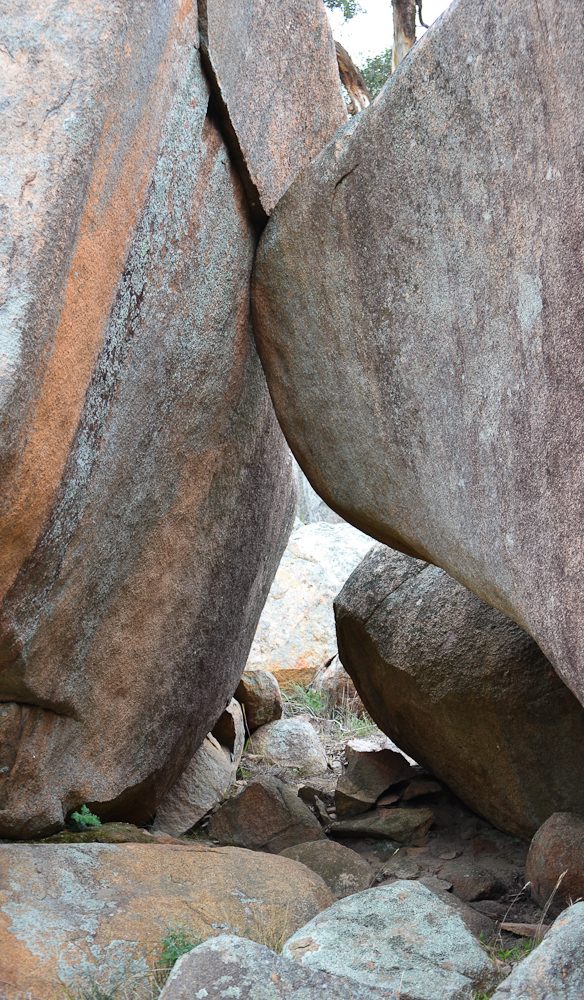
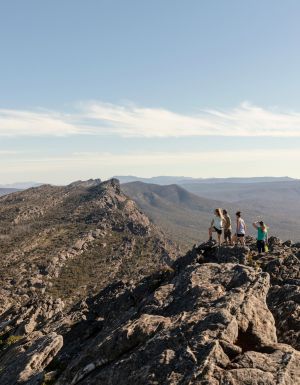
Exploring Grampians rock formations (photo: Nicole Tujague).
More: Planning you next road trip? See Australia’s best driving holidays

Want to see more stories from Australian Traveller in your Google search results?

  1. Click here to set Australian Traveller as a preferred source.
  2. Tick the box next to "Australian Traveller". That's it.
hero media

Heathcote has evolved into the ultimate eco-escape for foodies

    Margaret Barca Margaret Barca
    From cabins to canvas, craft distillers to destination dining, Heathcote locals reveal their eco-savvy passions in ways that resonate with those seeking to travel lightly. 

    Heathcote, on traditional Taungurung Country in Central Victoria, is synonymous with its garnet-hued shiraz, but wine isn’t the only string to its bow. The town itself is sprinkled with heritage buildings from the gold rush era, and beyond that a growing collection of sustainable gastronomy and eco-friendly escapes. Nearby Bendigo, one of only 65 cities in the world recognised as a UNESCO Creative City and Region of Gastronomy, plates up an astonishing calibre of produce, wine and food for its size. Increasingly the entire region is taking up the challenge, though Heathcote in particular shines with its focus on sustainability. 

    Pink Cliffs GeologicalReserve
    The dramatic landscape of Heathcote’s Pink Cliffs Geological Reserve. (Image: Visit Victoria/Emily Goodfrey)

    The eco-stays bringing sustainability to Heathcote 

    Yellow BoxWood’s safari-style tents
    Yellow Box Wood’s safari-style tents are nestled on 40 hectares of bushland. (Image: Emily Goodfrey)

    Andee and Lisa Davidson spent years working in southern Africa before settling in Heathcote. “We had a vision of how this could be,” explains Andee. “We wanted a retreat, but one that was off-grid and environmentally sustainable.” Now, at Yellow Box Wood, two luxury safari-style tents are at the heart of 40 hectares of rolling hills and native bush, with kangaroos, wallabies, echidnas, goanna and birdlife aplenty. It’s all solar-powered, wood for the fire is mainly fallen timber, and water is collected on the carport roof.  No lack of creature comforts though – en suite with rain shower, espresso coffee maker, comfy seating, wood-burning fire all set to go. There’s also a solar-heated, mineral salt pool in a bush setting, walking tracks, and even a mini bush golf course.  On my visit, I put the vision to the test. Cocooned in the plush four-poster bed I can glimpse the stars, while the heater casts a golden glow on the canvas. In the morning, I wake to a blush-pink sunrise, kangaroos feeding and a soundtrack of magpies.

    Mt Ida Eco Cabin
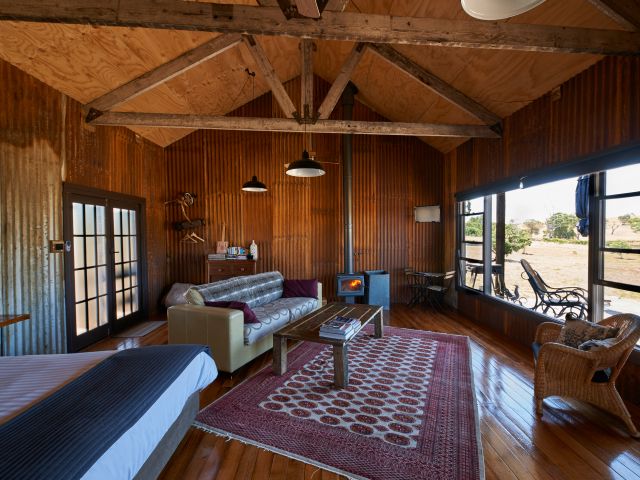
    Mt Ida Eco Cabin is rustic and simple but oozes comfort. (Image: Graham Hosking)

    If a tent is not your style, Stephen and Cally Trompp’s carbon-neutral Mt Ida Eco Cabin might entice with its generous deck and farmland views.   Inside the cabin, corrugated iron walls as rusty as a shearing shed, gleaming (recycled) floorboards, timber truss ceiling (crafted by Stephen), wood-fired heater and an old-school turntable with a pile of vinyls to spin. It’s fun, and a little boho. “Everything is recycled. The cabin takes maximum advantage of the sun in winter. It’s all solar-powered. Don’t panic, though,” says Stephen, “you can still charge your phone and get 4G reception!” Settle into an Adirondack chair on the deck or pedal off on a mountain bike to suss out the wineries.  

    A taste of Spain in Central Victoria 

    Three Dams Estate
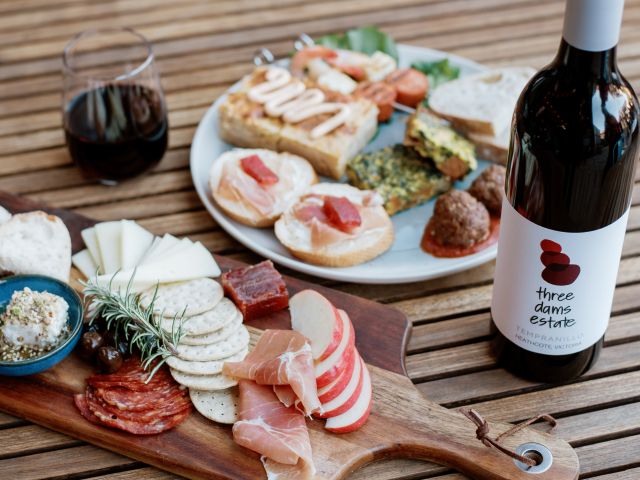
    Three Dams Estate make Spanish-style wine.

    Another person with a vision is Evan Pritchard at his Three Dams Estate where the wines reflect his deep love of Spain and of Spanish-style grapes, such as tempranillo. Afternoons in the ‘wine shed’ or cantina are matched with music (flamenco is a favourite), Spanish bites from tapas to paella (with Evan on the pans!) and views to Mount Alexander. Sustainability is also a passion. “You don’t need to buy anything. We decided to be off-grid from the start, but it is a lifestyle change,” he says. “You need to think about it and be careful.” Everything here is recycled, reassembled, refurbished. Evan has an electric car (with solar-powered charger), solar-power for the winery, and even a jaunty little electric tractor/forklift. “I love the idea of all the things you can do using the sun.” Sipping a crisp rosado (a Spanish rosé) with Evan in the sunshine, I couldn’t agree more. 

    The vineyard redefining sustainable winemaking 

    Silver Spoon winery
    The Silverspoon Estate winery is completely off-grid. (Image: Graham Hosking)

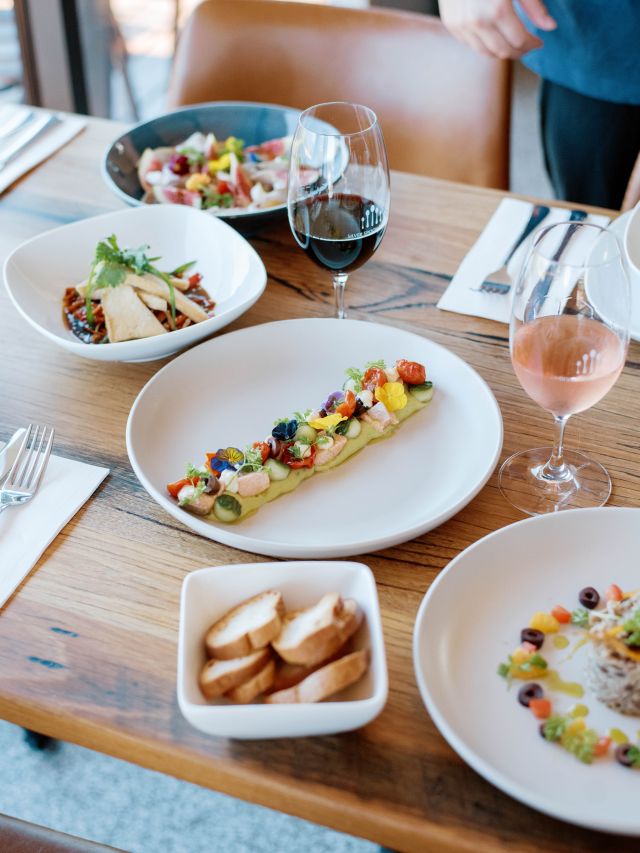
    On the other side of Heathcote, Silver Spoon Estate demonstrates sustainability on a more extensive scale. Tracie and Peter Young’s winery, cellar door, award-winning restaurant and their own house are all solar-powered and off the grid. Sustainability is intrinsic to everything they do.  The property sprawls across 100 hectares, with 20 hectares under vine – shiraz, viognier, grenache, tempranillo. As the climate has changed, so too has the approach. These are dry-grown vineyards. “We prune for drought. That means lower yields but more intense flavours,” says Peter.  The fine-dining restaurant offers sweeping views, a wood-burning fire and a deck for languid lunches. Head chef Ben Hong sources regional, sustainable ingredients and weaves estate wines into the menu – think crispy wild mushroom arancini, viognier-infused chicken breast.   

    Silver Spoon’s award-winning restaurant
    Silver Spoon’s award-winning restaurant.

    Heathcote’s other hidden gems 

    Heathcote Wine Hub
    Heathcote Wine Hub is housed in a 1855-built timber church.

    Not all local wineries have a cellar door, but I find local treasures at the Heathcote Wine Hub, a petite 1855 timber church in the main street, lovingly returned to life by Karen Robertson and Carey Moncrieff.  “Carey is a scrounger,” says Karen. “He doesn’t throw a single thing away.” He does, however, craft things into something quite special. Heritage floors, light-filtering lancet windows and shelves of regional wines create the perfect ambience for wine tasting. Or order a glass and linger over a cheese platter.  

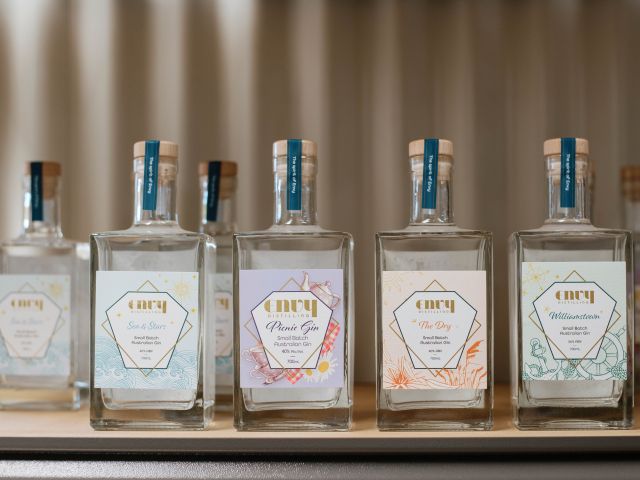
    Heathcote is not all wine, of course. Nathan Wheat and partner Vanessa Curtis run Envy Distilling with a committed sustainable ethic – and a serious love of gin. Their small-batch distillery produces grape-based gin, and soon brandy. Distilled water is reused in an ingenious cooling system. All waste is treated on site. They buy excess wine from winemakers to distil and buy recycled barrels. “Distilling with the sun,” as Nathan says. Each Envy gin has its own story. Spicy, award-winning The Dry, is designed to capture the region’s dry, rugged nature. Pull up a stool at the bar (reclaimed timbers and tiles, of course), order a Gin Flight, or kick back with a cocktail and let Nathan share his eco journey.   

    Envy gins
    Sample gins at small-batch distillery Envy.

    A traveller’s checklist 

    Getting there

    It’s less than two hours’ drive from Melbourne. The scenic route we take goes past Sunbury, then along a splendid country road through Romsey and the magic, boulder-strewn landscape of Lancefield. Watch for kangaroos on the road! 

    Staying there

    Go off-grid in style at Yellow Box Wood for glamping or try Mt Ida Eco Cabin for a couple’s weekend hideaway. 

    Eating there

    French dishes at Chauncy
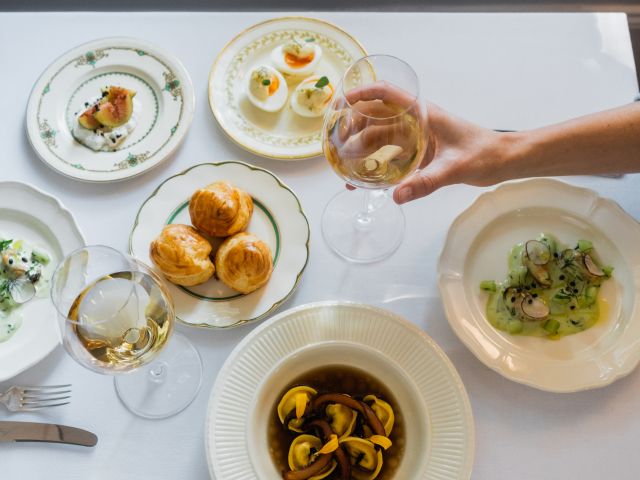
    Award-winning French restaurant Chauncy.

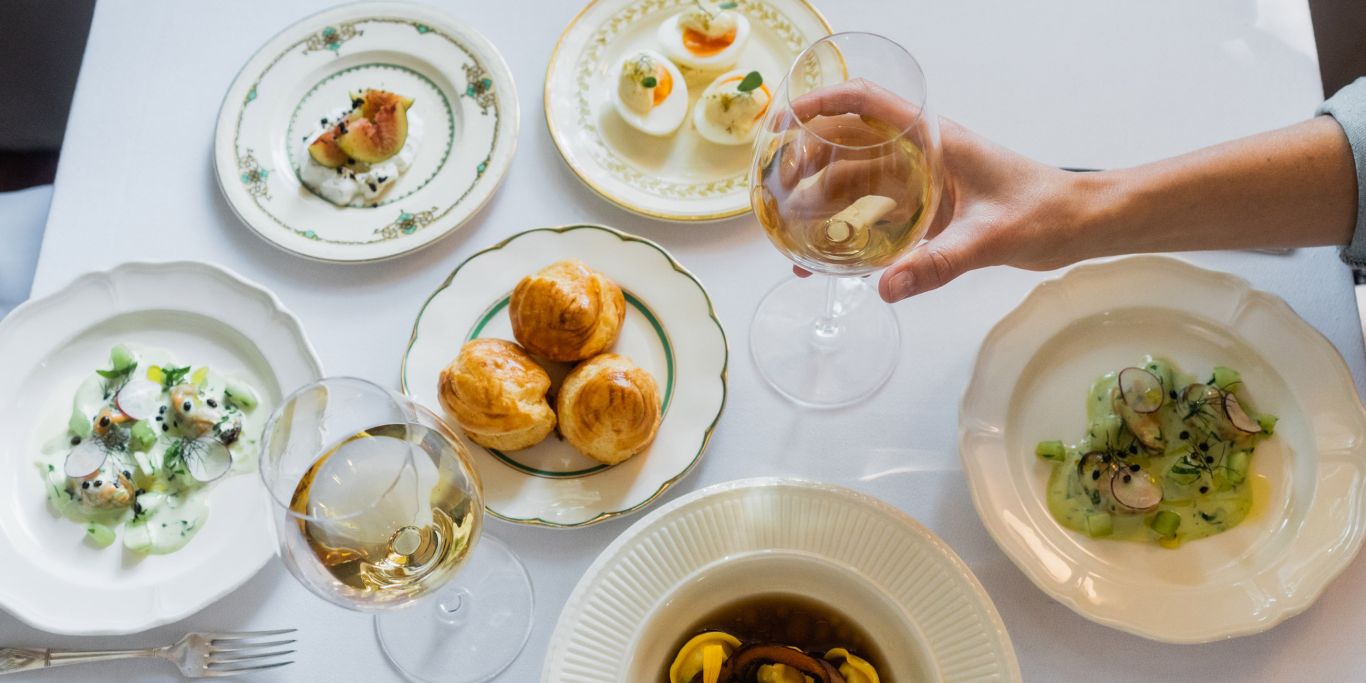
    At award-winning Chauncy, French chef Louis Naepels and sommelier wife Tess Murray have created a tiny, elegant pocket of rural France. Meticulously restored 1850s sandstone building, sun-drenched dining room, impeccable service, a menu suffused with local flavours and thoughtful wine pairings.  

    Fodder is both cafe and social hub. Chef Mo Pun and sister Lalita serve classic Aussie breakfast-to-lunch fare, though their Nepalese heritage sneaks through. 

    Playing there

    Sanguine Estate
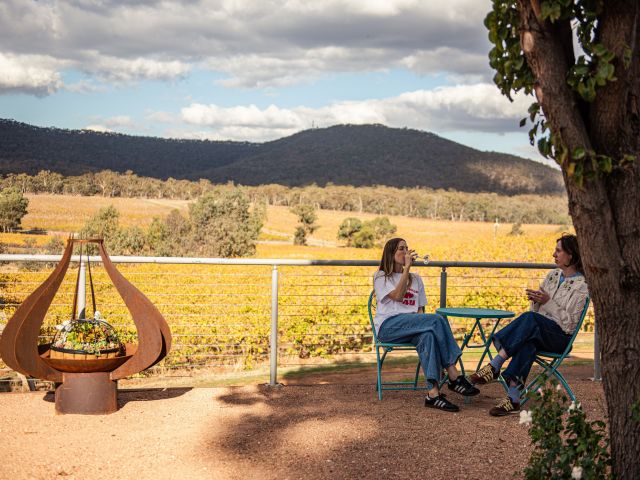
    Sip on wines among the vines at Sanguine Estate. (Image: Visit Victoria/Emily Godfrey)

    Sanguine Estate’s cellar door and terrace overlook bucolic vineyards. Its award-winning, dry-grown wines include the distinctive D’Orsa Blanc dessert wine, reflecting the family’s Swiss-Italian heritage. Order a charcuterie board and stay a while. Keep it carbon neutral by cycling some (or all) of the 50-kilometre O’Keefe Rail Trail to Bendigo.  

    At Bridgeward Grove, learn about the property’s Old Mission Grove heritage olive trees, do a sommelier olive oil tasting, and stock up on sustainably grown olives and oil. Explore the unique landscape, wildflowers and wildlife of pink cliffs geological reserve.