A guide to Phillip Island’s beaches for your next day out

hero media
Fishing, surfing, swimming, sunbaking: the choice is yours on Phillip Island’s plentiful supply of beaches.

Home to Victoria’s first National Surfing Reserve, Phillip Island is a bit of a surfer’s paradise, but there’s plenty of coastal real estate for other activities too. Generally speaking, the sheltered north side of the island is great for swimming and stand-up paddleboarding, while the south side features more wild surf beaches, better suited to surfing and bodyboarding.

Planning a visit? Read on to learn about six of the best Phillip Island beaches to escape to.

Smiths Beach

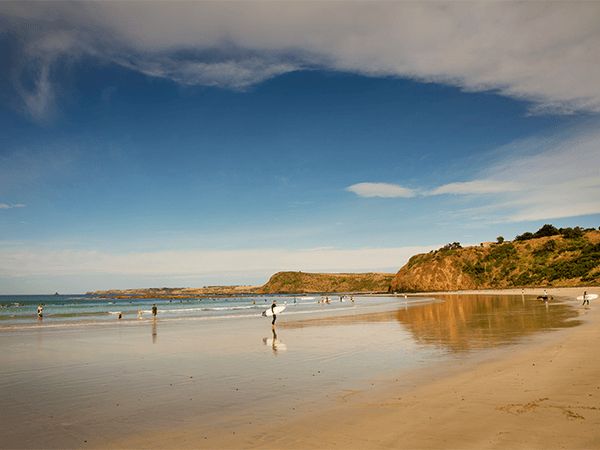
Home of the fabled ‘Express Point’, a barrelling reef break that’s suitable only for experienced surfers, it’s known to many locals as the island’s premier wave. There’s plenty of white water action for beginners and bodyboarders too, however, with a number of surf schools offering lessons (try Girls on Board, Island Surfboards or Archy Surf) and surf shops with boards and wetsuits for hire. The one-kilometre-long beach is also great for a spot of family rock pooling – during low tide, there are pools to explore at both ends of the beach, and some are even large enough to snorkel in. After a morning spent in the sun, sand and sea, power up with a well-earned Allpress coffee and housemade sausage roll at the Smiths Beach General Store.
Smiths Beach Phillip Island
Surf’s up at Smith’s Beach. (Image: Visit Victoria)

See also: neighbouring YCW Beach, which has plenty of gentle and consistent swells.

Red Rock Beach

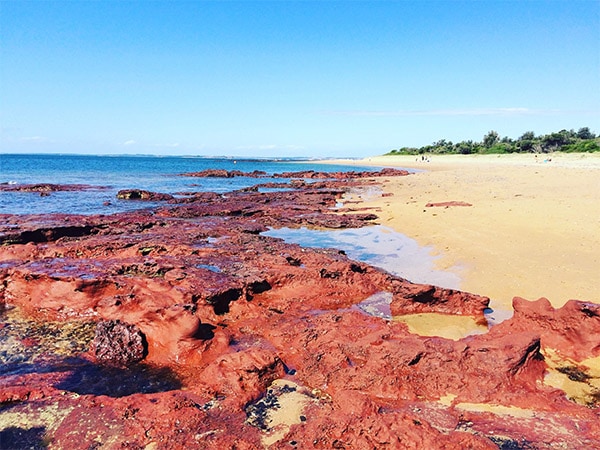
As the name suggests, this golden arc of silica is backed by – and peppered with – jagged, brick-red rocks. Not to be confused with ‘Red Rock’, in the island’s south-east, Red Rock Beach is a sheltered and scenic setting on the island’s north that’s great for brisk beach walks come sunrise or sunset, for lazy family picnics, and for hopping between wildlife-rich rockpools. The shallow and clear waters make it one of the safer spots for swimming too. Keen anglers also frequent these parts, which are popular for rock fishing, often reeling in King George whiting, snapper and flathead.
Red Rock Beach in Phillip Island
Red Rock Beach is a sheltered and scenic setting.

Cape Woolamai Surf Beach

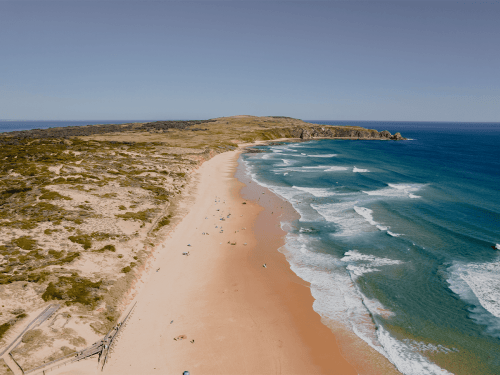
A vast stretch of sand – the longest and most exposed on all of Phillip Island, in fact – Cape Woolamai is where you’ll find some of the best beach breaks in Victoria, with waves consistently measuring around 1.7 metres. Seasoned surfers will enjoy the long lefts and rights that peel over the wide banks.

Although the waters are patrolled by the Woolamai Surf Lifesaving Club during the summer months, the surf here is notoriously dangerous, so those looking for somewhere to take a dip are better off taking their beach towels to a different belt of sand.
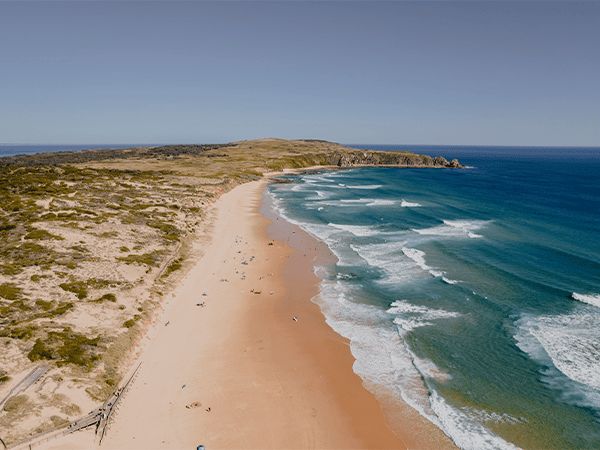
Cape Woolamai Surf Beach
Cape Woolamai is where you’ll find some of the best beach breaks in Victoria. (Image: Visit Victoria)

The beach is surrounded by the Cape Woolamai State Faunal Reserve, which is a great spot for a ramble or two: exploit one of the four coastal walking track loops, and admire the surf from the safety of the lookout points above (Cape Woolamai is Phillip Island’s highest point). There’s a small kiosk turning out hot coffees and cold ice creams too.

Kitty Miller Bay Beach

Primed for adventures both above and below the waterline, this snug little bay welcomes surfers, snorkelers, beach walkers, swimmers and fishermen. You can even take a little expedition to see the rusted remains of the SS Speke, which was shipwrecked on this very shore in 1906. Take your little ones and collect some shells, or inspect the beach’s many rock pools. The only downside to Kitty Miller Bay Beach is the lack of facilities: there are no toilets, showers or shops in the vicinity, but it’s only a 10-minute drive from the main township of Cowes.
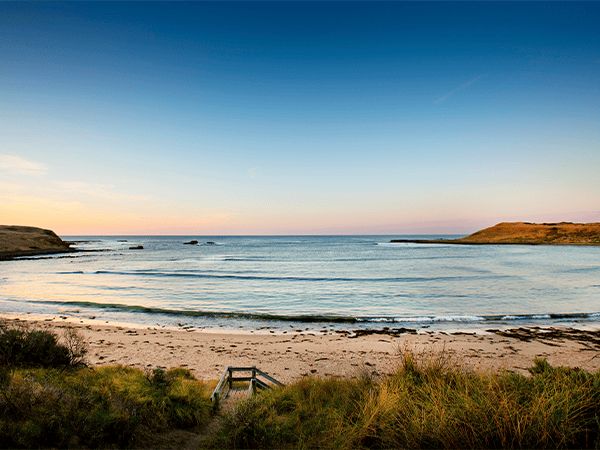
Kitty Miller Bay Beach
Kitty Miller Bay Beach is one of Phillip Island’s hidden gems. (Image: Visit Victoria)

Forrest Caves Beach

Offering visitors something a little different, this southern beach, which is effectively part of Cape Woolamai Surf Beach, has some secret features that can only be accessed during low tide: sea caves. Formed by erosion of the red basalt rocks over many years, you can wander through these hollowed out chambers and gaze up through naturally formed holes in its ceiling. From the Forrest Caves Car Park, it’s around a 45-minute walk, round-trip.
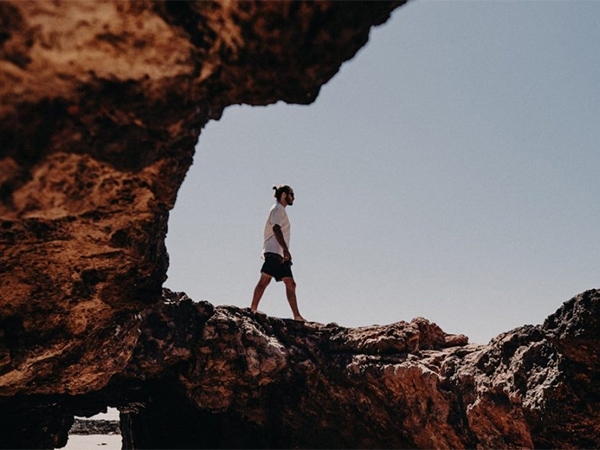
Man wanders through Forrest Caves.
Wander through the hollowed out chambers of Forrest Caves.

Due to its strong currents, high waves and rips, Forrest Caves Beach isn’t best suited to swimmers, but surfers and anglers often drop by. And throughout spring, summer and autumn, a plethora of feathered visitors stop by: the beach’s large sand dunes become home to thousands of short-tailed shearwaters between October and April, while hooded plovers come to nest on the beach between August and March.
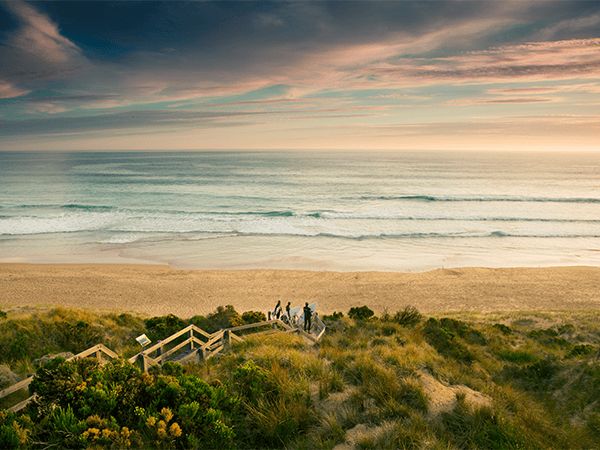
Forrest Caves Beach
The beach is popular for walkers, surfers and fishermen. (Image: Visit Victoria)

Cowes Beach

It wouldn’t be right to list Phillip Island’s best beaches without naming what is arguably its most popular sweep of sand: Cowes. A small swimming beach that’s right in the thick of the action, Cowes Beach is just a few steps from the township’s shops and cafes, making it a great spot for a lazy afternoon of sunbaking or a picnic. And once you’ve had your fill of sunshine and saltwater, pootle along the jetty and peer into local anglers’ buckets before hitting Thompson Avenue for a cool glass of crisp rosé at one of the bars or pubs.
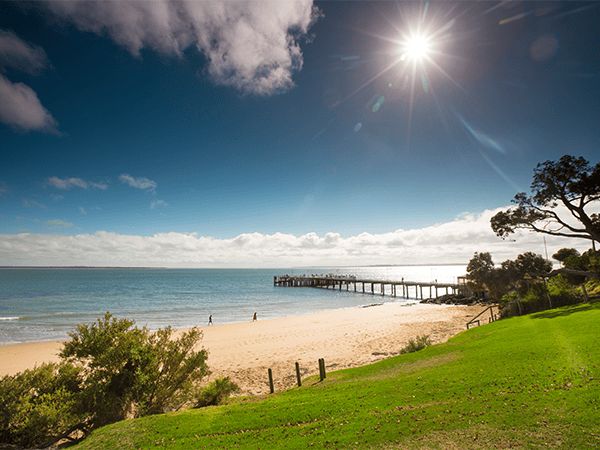
Cowes Beach
Cowes Beach is just a few steps from the township’s shops and cafes. (Visit Victoria)

Now read our guide to the top things to do in Phillip Island.

Chloe Cann
Chloe Cann is an award-winning freelance travel and food writer, born in England, based in Melbourne and Roman by adoption. Since honing her skills at City St George's, University of London with a master's degree in journalism, she's been writing almost exclusively about travel for more than a decade, and has worked in-house at newspapers and travel magazines in London, Phnom Penh, Sydney and Melbourne. Through a mixture of work and pleasure, she's been fortunate enough to visit 80 countries to date, though there are many more that she is itching to reach. While the strength of a region's food scene tends to dictate the location of her next trip, she can be equally swayed by the promise of interesting landscapes and offbeat experiences. And with a small person now in tow, travel looks a little different these days, but it remains at the front of her mind.
See all articles
hero media

Heathcote has evolved into the ultimate eco-escape for foodies

From cabins to canvas, craft distillers to destination dining, Heathcote locals reveal their eco-savvy passions in ways that resonate with those seeking to travel lightly. 

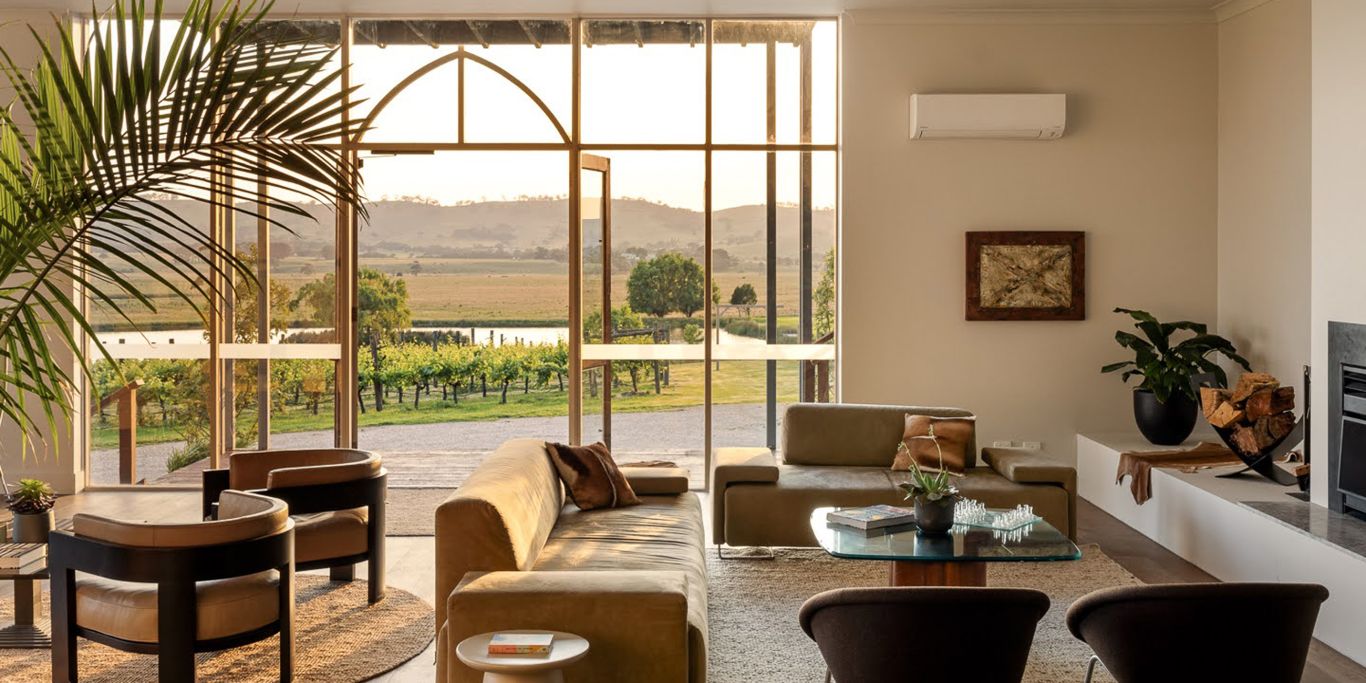
Heathcote , on traditional Taungurung Country in Central Victoria, is synonymous with its garnet-hued shiraz, but wine isn’t the only string to its bow. The town itself is sprinkled with heritage buildings from the gold rush era, and beyond that a growing collection of sustainable gastronomy and eco-friendly escapes. Nearby Bendigo, one of only 65 cities in the world recognised as a UNESCO Creative City and Region of Gastronomy, plates up an astonishing calibre of produce, wine and food for its size. Increasingly the entire region is taking up the challenge, though Heathcote in particular shines with its focus on sustainability. 

Pink Cliffs GeologicalReserve
The dramatic landscape of Heathcote’s Pink Cliffs Geological Reserve. (Image: Visit Victoria/Emily Goodfrey)

The eco-stays bringing sustainability to Heathcote 

Yellow BoxWood’s safari-style tents
Yellow Box Wood’s safari-style tents are nestled on 40 hectares of bushland. (Image: Emily Goodfrey)

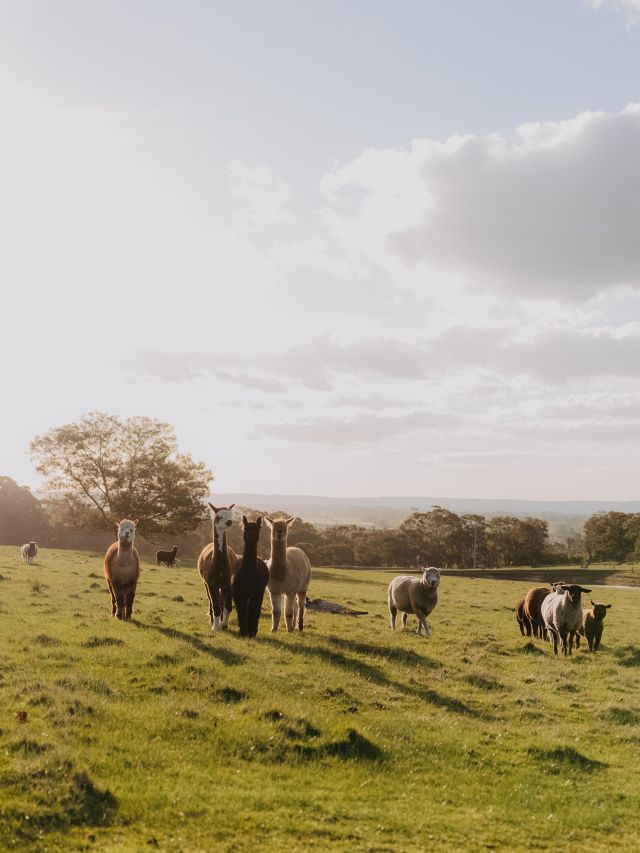
Andee and Lisa Davidson spent years working in southern Africa before settling in Heathcote. “We had a vision of how this could be,” explains Andee. “We wanted a retreat, but one that was off-grid and environmentally sustainable.” Now, at Yellow Box Wood , two luxury safari-style tents are at the heart of 40 hectares of rolling hills and native bush, with kangaroos, wallabies, echidnas, goanna and birdlife aplenty. It’s all solar-powered, wood for the fire is mainly fallen timber, and water is collected on the carport roof.  No lack of creature comforts though – en suite with rain shower, espresso coffee maker, comfy seating, wood-burning fire all set to go. There’s also a solar-heated, mineral salt pool in a bush setting, walking tracks, and even a mini bush golf course.  On my visit, I put the vision to the test. Cocooned in the plush four-poster bed I can glimpse the stars, while the heater casts a golden glow on the canvas. In the morning, I wake to a blush-pink sunrise, kangaroos feeding and a soundtrack of magpies.

Mt Ida Eco Cabin
Mt Ida Eco Cabin is rustic and simple but oozes comfort. (Image: Graham Hosking)

If a tent is not your style, Stephen and Cally Trompp’s carbon-neutral Mt Ida Eco Cabin might entice with its generous deck and farmland views.   Inside the cabin, corrugated iron walls as rusty as a shearing shed, gleaming (recycled) floorboards, timber truss ceiling (crafted by Stephen), wood-fired heater and an old-school turntable with a pile of vinyls to spin. It’s fun, and a little boho. “Everything is recycled. The cabin takes maximum advantage of the sun in winter. It’s all solar-powered. Don’t panic, though,” says Stephen, “you can still charge your phone and get 4G reception!” Settle into an Adirondack chair on the deck or pedal off on a mountain bike to suss out the wineries.  

A taste of Spain in Central Victoria 

Three Dams Estate
Three Dams Estate make Spanish-style wine.

Another person with a vision is Evan Pritchard at his Three Dams Estate where the wines reflect his deep love of Spain and of Spanish-style grapes, such as tempranillo. Afternoons in the ‘wine shed’ or cantina are matched with music (flamenco is a favourite), Spanish bites from tapas to paella (with Evan on the pans!) and views to Mount Alexander. Sustainability is also a passion. “You don’t need to buy anything. We decided to be off-grid from the start, but it is a lifestyle change,” he says. “You need to think about it and be careful.” Everything here is recycled, reassembled, refurbished. Evan has an electric car (with solar-powered charger), solar-power for the winery, and even a jaunty little electric tractor/forklift. “I love the idea of all the things you can do using the sun.” Sipping a crisp rosado (a Spanish rosé) with Evan in the sunshine, I couldn’t agree more. 

The vineyard redefining sustainable winemaking 

Silver Spoon winery
The Silverspoon Estate winery is completely off-grid. (Image: Graham Hosking)

On the other side of Heathcote, Silver Spoon Estate demonstrates sustainability on a more extensive scale. Tracie and Peter Young’s winery, cellar door, award-winning restaurant and their own house are all solar-powered and off the grid. Sustainability is intrinsic to everything they do.  The property sprawls across 100 hectares, with 20 hectares under vine – shiraz, viognier, grenache, tempranillo. As the climate has changed, so too has the approach. These are dry-grown vineyards. “We prune for drought. That means lower yields but more intense flavours,” says Peter.  The fine-dining restaurant offers sweeping views, a wood-burning fire and a deck for languid lunches. Head chef Ben Hong sources regional, sustainable ingredients and weaves estate wines into the menu – think crispy wild mushroom arancini, viognier-infused chicken breast.   

Silver Spoon’s award-winning restaurant
Silver Spoon’s award-winning restaurant.

Heathcote’s other hidden gems 

Heathcote Wine Hub
Heathcote Wine Hub is housed in a 1855-built timber church.

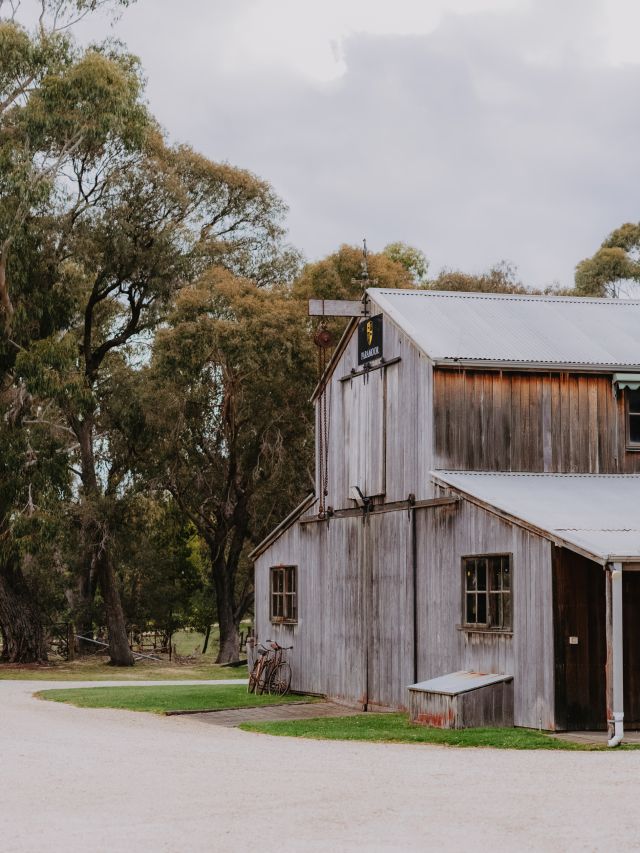
Not all local wineries have a cellar door, but I find local treasures at the Heathcote Wine Hub , a petite 1855 timber church in the main street, lovingly returned to life by Karen Robertson and Carey Moncrieff.  “Carey is a scrounger,” says Karen. “He doesn’t throw a single thing away.” He does, however, craft things into something quite special. Heritage floors, light-filtering lancet windows and shelves of regional wines create the perfect ambience for wine tasting. Or order a glass and linger over a cheese platter.  

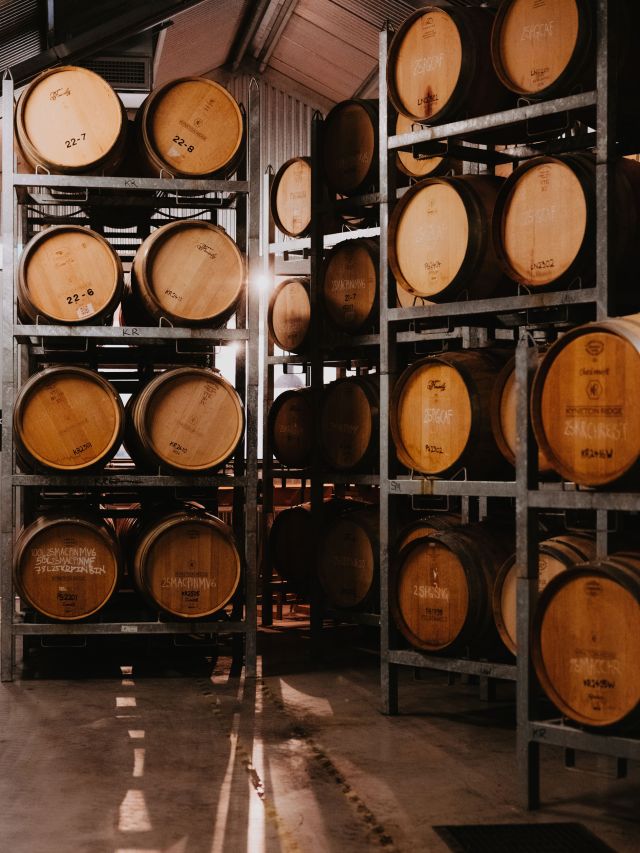
Heathcote is not all wine, of course. Nathan Wheat and partner Vanessa Curtis run Envy Distilling with a committed sustainable ethic – and a serious love of gin. Their small-batch distillery produces grape-based gin, and soon brandy. Distilled water is reused in an ingenious cooling system. All waste is treated on site. They buy excess wine from winemakers to distil and buy recycled barrels. “Distilling with the sun,” as Nathan says. Each Envy gin has its own story. Spicy, award-winning The Dry, is designed to capture the region’s dry, rugged nature. Pull up a stool at the bar (reclaimed timbers and tiles, of course), order a Gin Flight, or kick back with a cocktail and let Nathan share his eco journey.   

Envy gins
Sample gins at small-batch distillery Envy.

A traveller’s checklist 

Getting there

It’s less than two hours’ drive from Melbourne. The scenic route we take goes past Sunbury, then along a splendid country road through Romsey and the magic, boulder-strewn landscape of Lancefield. Watch for kangaroos on the road! 

Staying there

Go off-grid in style at Yellow Box Wood for glamping or try Mt Ida Eco Cabin for a couple’s weekend hideaway. 

Eating there

French dishes at Chauncy
Award-winning French restaurant Chauncy.

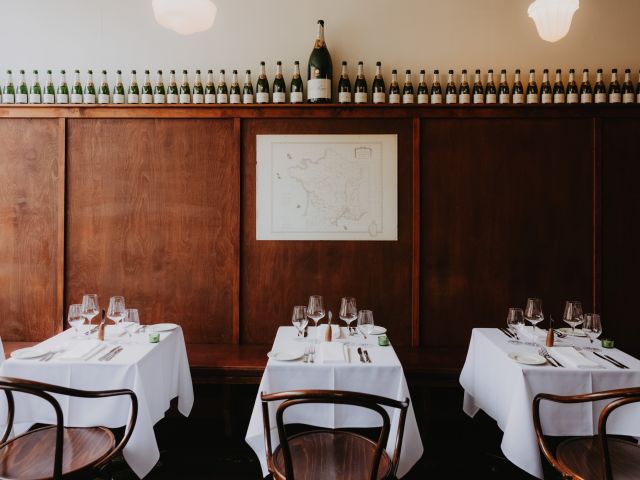
At award-winning Chauncy , French chef Louis Naepels and sommelier wife Tess Murray have created a tiny, elegant pocket of rural France. Meticulously restored 1850s sandstone building, sun-drenched dining room, impeccable service, a menu suffused with local flavours and thoughtful wine pairings.  

Fodder is both cafe and social hub. Chef Mo Pun and sister Lalita serve classic Aussie breakfast-to-lunch fare, though their Nepalese heritage sneaks through. 

Playing there

Sanguine Estate
Sip on wines among the vines at Sanguine Estate. (Image: Visit Victoria/Emily Godfrey)

Sanguine Estate ’s cellar door and terrace overlook bucolic vineyards. Its award-winning, dry-grown wines include the distinctive D’Orsa Blanc dessert wine, reflecting the family’s Swiss-Italian heritage. Order a charcuterie board and stay a while. Keep it carbon neutral by cycling some (or all) of the 50-kilometre O’Keefe Rail Trail to Bendigo.  

At Bridgeward Grove , learn about the property’s Old Mission Grove heritage olive trees, do a sommelier olive oil tasting, and stock up on sustainably grown olives and oil. Explore the unique landscape, wildflowers and wildlife of pink cliffs geological reserve.