At the heart of Australian folklore and some of NSW’s most idyllic countryside, and with exciting developments afoot, Gundagai and its surrounds are calling out to be rediscovered.
Anyone who has ever driven along the Hume Highway between Sydney and Melbourne is likely to have stopped in Gundagai: a classic country town on the Murrumbidgee River with a name so immortalised in folk song that it’s almost impossible to say without a musical lilt.
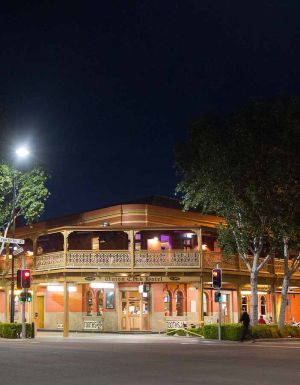
You’ll have topped up on fuel and had a pub lunch at the Criterion Hotel or perhaps a meal and a milkshake at the iconic Niagara Cafe: until recently the oldest continuously Greek-run cafe in Australia, with its Art Deco elements and long history of venerable patrons (it’s where then prime minister John Curtin famously had a midnight meal of steak and eggs with his war cabinet in 1942).
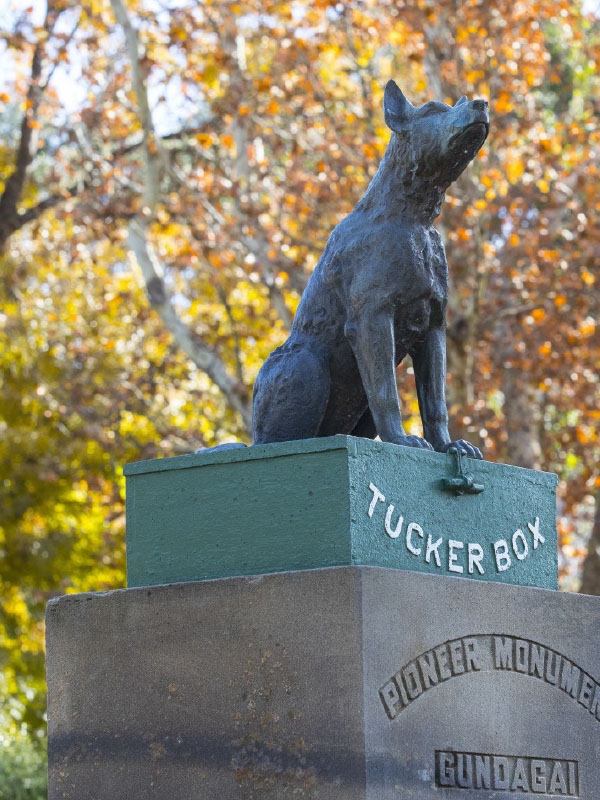
And you’ll have posed for a photo with the Dog on the Tucker Box – a historical monument, tourist attraction and fundraiser, via its wishing well, for Gundagai Hospital since 1932.
Day one
As we drive through town today it’s for more than just a pit stop – and there’s something different in the air. The undulating Riverina landscape that wraps around Gundagai, a shock of yellow with great flanks of canola fields come spring, is refreshed by rain and greener than ever. It’s the kind of landscape crying out for country drives where steering a course in any one direction will invariably land you at the doorstep of an artisan cheesemaker (Coolamon, one hour west), a licorice and chocolate factory (Junee, 45 minutes west) or the latest venture from Three Blue Ducks (more on that later).
The four-hour drive from Sydney (from Canberra just two) provides the perfect excuse to stop at the riverside village of Jugiong and enjoy the spoils of its reimagined pub, The Sir George. Here, my partner and I sit under a pressed-metal ceiling in the atmospheric Whisky Lounge for lunch and potter around the grounds before leaving, eyeing the on-site accommodation offering of restored stone stables and contemporary black barns for future weekends.
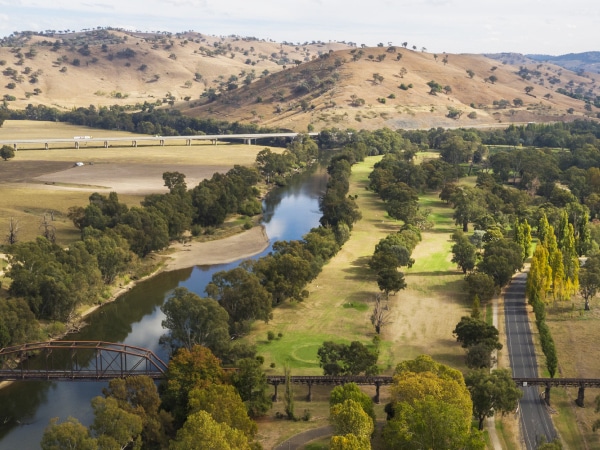
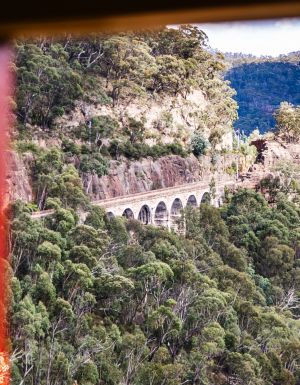
Gundagai is 30 minutes from here, and this time round we’re checking into its newest digs, Flash Jacks: a nine-room boutique hotel in a Victorian redbrick set high above town and built as a convent in the late 19th century. We play bocce on the grounds and soak in the peace and quiet of the property from the shady verandah that looks down over the town’s main street. Below this lie the historic timber viaducts that, rising up out of the Murrumbidgee floodplains where old Gundagai once stood, crisscross the countryside with a pleasing anachronism.
A hot tub is being added to Flash Jacks soon, so that guests can relax further with a Japanese onsen-like experience in a secluded corner of its garden. And we peer through the windows of the stunning old schoolhouse building adjacent to the main house that will become a restaurant in the near future, and no doubt a destination in itself.
What we’re seeing, and the reason this trip feels different, is a revitalisation. Of a town once so flush with gold mined from the surrounding hills that there were 11 jewellery stores on main strip Sheridan Street, but which suffered from the 1977 construction of a highway bypass. In the last few years, Sheridan Street has undergone a major facelift that has seen its grand heritage streetscape buffed and polished to reveal its former glory. Over breakfast and Pablo & Rusty coffee at The Coffee Pedaler here the next morning, I feel that buoyancy. And new developments are unfolding each week. All eyes are on the next-door Niagara Cafe, which having been closed since last year has recently acquired new owners. Movements are being made, too, at the 1928-built Gundagai Theatre.
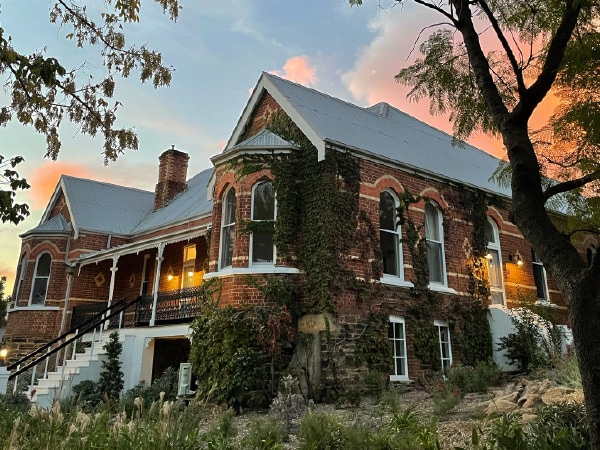
Gundagai’s unique identity was forged from gold mining and agriculture – a potent combination that made it not only a prosperous town but a magnet for bushrangers, creating a romantic bush appeal that earned it its place at the heart of Australian folklore. So it follows that this history and heritage will be preserved and celebrated in any new developments that take place. Our hotel itself references the Banjo Paterson poem Flash Jack from Gundagai. It was opened in 2020 by David and Emelia Ferguson, who jumped at the chance to buy one of the most beautiful buildings in Gundagai and were sure to retain its original character and stay sympathetic to place as they transformed it into knockout accommodation. “Even from the name of Flash Jacks, right through, we tried to make it a truly Australian theme without being too kitsch about it – like an honest, upmarket Australian boutique hotel," says David. This means artwork reflecting the local environment, natural fibres and materials like wool, timber and steel used throughout and a garden flowering with Australian natives. “Our underlying idea is to reconnect our city counterparts with their country roots," David continues, speaking of both Flash Jacks and the couple’s other property: Kimo Estate is a 10-minute drive out of town and has been a catalyst for the change that’s happening in these parts since it opened up to the world in 2014.
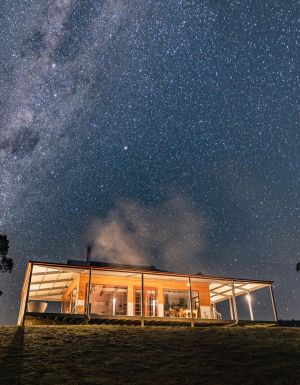
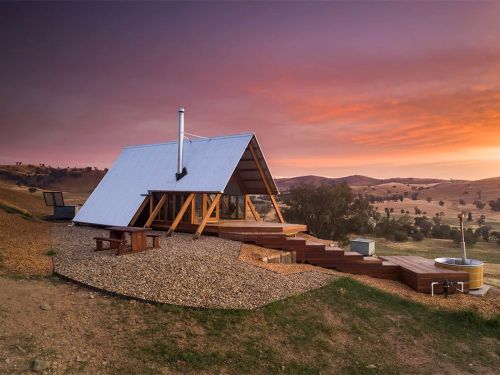
Kimo Estate is a vast working farm with a long and fabled history that has been in David’s family since 1978. Its topography is a mixture of river and creek flats, big rolling hills and views out towards Mt Kosciuszko that, David jokes, you could sell tickets to. In 2012 David and Emelia moved back from Queensland with their first child, Max, to run the farm and soon set about unlocking the potential they saw here for agritourism. Today it is home to a suite of three Insta-famous A-frame eco huts positioned high on the hilltops and booked solidly for almost a year in advance.

Elsewhere on the property, a grain store serves as a stunning wedding venue and two restored workers’ cottages, Windies and Daleys, provide further accommodation. Next on the agenda is adding three or four more huts in an attempt to keep up with demand, and – what will become the jewel in the crown, says David – transforming the farm’s old homestead that dates back to 1878 into a hotel, with plans to complete the set-up with a microbrewery and marketing gardening activities.
Need tips, more detail or itinerary ideas tailored to you? Ask AT.
AI Prompt
Day two
Half an hour south of Gundagai in the Snowy Valleys, where the plains of the Riverina dissolve into the stream-laced foothills of the Snowy Mountains, another set of fresh eyes is further unlocking the potential of the region. In November last year, Three Blue Ducks opened its fifth outpost at Nimbo Fork Lodge, bringing its signature farm-to-table philosophy to this historical fly-fishing site – an elegant retreat of blue weatherboard and country-chic style – at the fork of the Tumut River and Nimbo Creek.
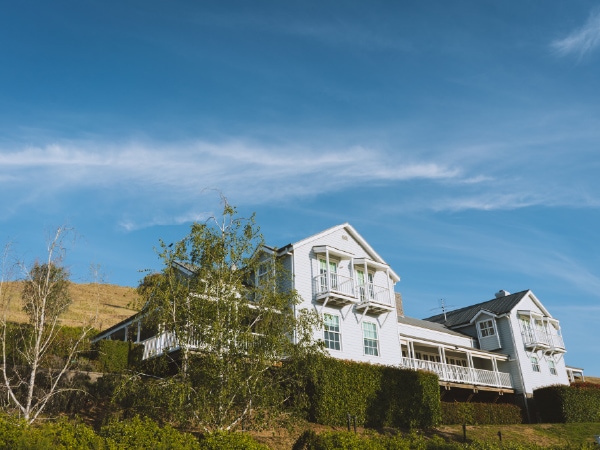
French head chef Edmee Driez was at the helm of Three Blue Ducks Bronte in Sydney when the city’s lockdown led to a tree-change. Here in sleepy Killimicat, not far from the tranquil river town of Tumut, she felt at home straightaway in a green landscape studded with cows and apple trees that reminded her of growing up in Normandy. A keen fisher and hunter, she set about exploring the area in typical Three Blue Ducks style: harnessing its local produce and learning about edible plants to create a menu that interprets and reflects the surrounding environment, and meeting and collaborating with local farmers and producers.
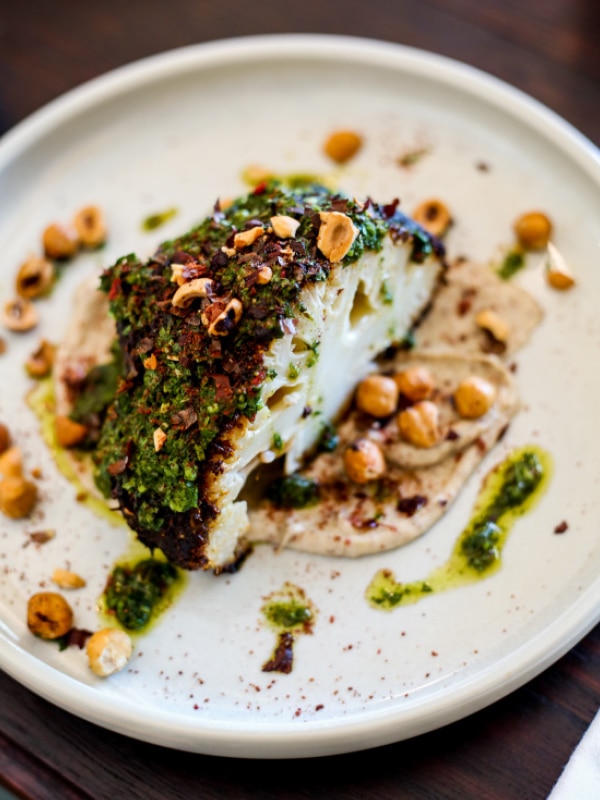
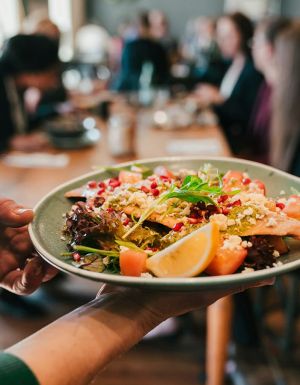
We check into Nimbo Fork and head straight to the restaurant, with its verandah casting out towards the river, for a delicious dinner. The star of the menu is trout farmed 30 kilometres downstream, while stinging nettles and oxalis (wood sorrel) foraged on the property find their way respectively onto dishes like Murray cod and a milk and honey panna cotta. We sleep soundly while La Niña empties a sky’s worth of rain overnight and wake to an early morning mist over a swollen river that burns off to reveal a crisp and sunny day and all the possibility that comes with it: we can drive west an hour and a half from here to the northern end of Kosciuszko National Park to delve into the Yarrangobilly Caves and Thermal Pool. Or south to Tumut for river walks and craft beer, and further south still for the rustic cellar doors of apple-growing Batlow and country charms and cold-climate wines of Tumbarumba. And all for lingering longer along the road to Gundagai.
Want to see more stories from Australian Traveller in your Google search results?
- Click here to set Australian Traveller as a preferred source.
- Tick the box next to "Australian Traveller". That's it.